Fantom · 649

Andre Cronje: DeFi no longer exists, only on-chain finance is left

Comparing news, Andre Cronje, founder of the DeFi platform Flying Tulip and founder of Fantom Network, said that most DeFi protocols are no longer truly decentralized, and only a few niche sectors can still be called DeFi. In his opinion, DeFi has evolved into “on-chain finance” or “open finance.” He pointed out that true DeFi should have characteristics such as decentralization, immutability, and no intermediaries. Currently, intermediaries for most agreements have become companies and assume traditional financial institution functions such as decision makers and risk committees. Cronje said that doesn't mean real DeFi doesn't exist anymore, and some protocols are still innovating. According to DeFilLama data, the total hedging value of DeFi has dropped by more than half in the past 10 months from $167 billion in early October 2025 to $75 billion when the original article was published. The European Central Bank (ECB) analyzed Aave, MakerDAO, Ampleforth, and Uniswap in a working paper published in March and found that based on November 2022 and May 2023 position snapshots, the 100 addresses with the highest governance token holdings in the above agreement all control more than 80% of the token supply. The ECB therefore questioned the extent of decentralization of the DAO in question and whether it should continue to be considered a “fully decentralized” service not subject to the Crypto Asset Market Regulation Act (MiCA). This article is sponsored by GENG, Build Your Fortune on GENG (https://geng.one)

9d agoburnking
Coin Circle OG Ye Junde fell naked and died: from the peak of his wealth to the last early morning

Coin Circle OG Ye Junde fell naked and died: from the peak of his wealth to the last early morning

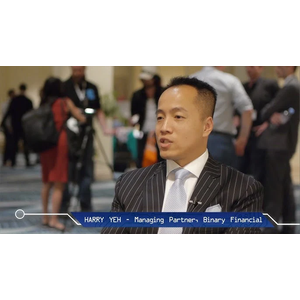
Source: Shenchao TechFlow Author: Lin Zhengying Original title: Coin Circle Who Fell Naked OG: Ye Junde's Wealth, Gambling, and Asunción's 100-meter altitude in the last early hours of the morning. At 4:30 a.m. on August 7, 2026, the 911 alarm center in Asunción, the capital of Paraguay, received a call: A dead body was lying downstairs in Jade Park, an upscale apartment building in the Trinidad district. When the police arrived, they saw strange images: the deceased was naked, covered in a black plastic bag, and suspected to have fallen from 30 floors about 100 meters high. The deceased was soon initially identified — Harry Chun Tak Yeh, Chinese name Ye Junde, founder and managing partner of cryptocurrency fund Quantum Fintech Group, a Chinese crypto investor claiming to be in charge of more than $2.4 billion in assets. Investigators went up to the 30th floor and found that the doors of the apartment he was living in were wide open, and the house was a mess, but it was empty. He also has another apartment on the 27th floor of the same building where his Brazilian girlfriend, Isadora de Proenca Braganholo Carvalho, 29, lives. Faced with questioning by the prosecution, she said she didn't know anything, and the police have not publicly charged her with any wrongdoing so far. Prosecutor María del Carmen Palazón led the investigation and investigated the three possibilities of accident, suicide, and homicide. Everything waited until the autopsy results were discussed. The $500 entry history of Ye Junde's family is the most classic screenplay in the coin industry. He was born in Hong Kong and immigrated to Canada as a child. He studied electrical engineering at the University of California, Berkeley as an undergraduate, and later got an MBA at Stanford Business School. At least that's what he described as his resume. Prior to entering the crypto world, he followed the standard Silicon Valley elite route: an engineer, CTO and co-founder of several startups, running a technology consulting firm, and serving organizations with revenues ranging from $5 million to $200 million. Bitcoin was still hovering around $60 in 2013. Ye Junde used $500 to buy his first BTC, set up his first fund with $250,000 in the same year, set up the venture capital company Binary Financial, and later changed its name to Quantum Fintech Group several times. It was a pioneering era. Doing crypto OTC OTC trading and managing hedge funds for high-net-worth clients, Ye Junde caught up with Bitcoin's entire curve from $60 to tens of thousands of dollars. By 2023, he and his team claimed to have managed more than $2.4 billion in hedge funds and private equity networks. He began appearing frequently in the industry spotlight: he discussed Bitcoin forks and ICOs on CNBC in 2017, and was a guest on the Bloomberg crypto show in 2022, calling Bitcoin “digital gold,” and speaking on the same stage as Mark Cuban, Tether co-founder Craig Sellars, and others. He also took over the production team for the North American Bitcoin Conference (TNABC) and the Fantom Developer Conference, and set up his own Quantum Miami conference, which the mayor of Miami personally stood for. Highlight moment: In four months, between 2.5 million and 1.6 billion, the most legendary “investment” of Ye Junde's career occurred in the Fantom ecosystem. Fantom is one of the hottest public chains in the “DeFi Summer” of 2021, and was personally coded by Andre Cronje, known as the “Godfather of DeFi.” In September 2021, Tomb Finance, an algorithmic stablecoin project on Fantom, fell into a trust crisis due to a bug called “Gatekeeper” and was on the verge of collapse. Yip Chun-tak took over the team as a member of the Fantom Foundation. The next four months were a magical moment for Tomb Finance: the total hedged volume (TVL) went all the way from $2.5 million to a peak of $1.6 billion, and within two months, TVL skyrocketed nearly 80 times, making it the brightest project in the Fantom ecosystem. This battle established Yip Chun-tak's position within the Fantom community. Someone at X missed it: “Even if Harry turned to the dirty one at the end...

12d ago22#Harry Chun Tak Yeh

Chinese crypto investor Harry Yeh falls from 30-story building in Paraguay, police investigate cause of death

According to La Tribuna, the body of a Chinese man was found outside Jade Park, a high-rise apartment in the Trinidad district of Asunción, Paraguay, and his identity was initially confirmed as Harry Chun Tak Yeh, founder and managing partner of Quantum Fintech Group. Police said it was suspected that he had fallen from the 30th floor of the building, and his body was found completely naked and covered in a black plastic bag. Investigators found the doors open and the interior was heavily cluttered in the suspected 30-story apartment, and confirmed that it also had another apartment on the 27th floor in the same building. Criminal technicians have collected evidence outside the building and two apartments, and the relevant physical evidence has been handed over to the prosecution. The prosecution is currently investigating various possibilities such as accidents, suspected suicides, and homicides. The judicial department will determine the specific cause and circumstances of death through an autopsy. According to reports, Harry Yeh, a Chinese cryptocurrency investor, entered the Bitcoin market in 2013. At the time, the BTC transaction price was 60 US dollars. He used 250,000 US dollars to launch his first fund. His investment network claims to manage more than 2.4 billion US dollars in assets, which are closely linked to Fantom, Tomb Finance, Lif3, ZooCoin, L3 USD, and L3 Reserve.

13d ago
Crypto projects' flee 'their old names in bulk: the liquidity reset game behind brand upgrades

Crypto projects' flee 'their old names in bulk: the liquidity reset game behind brand upgrades

Author: Gu Yu, ChainCatcher Original title: Why do crypto projects always like to change their names? In the traditional business world, brand assets are the lifeblood of an enterprise. Frequent name changes are almost tantamount to actively destroying a moat. Nvidia won't change its name every few years, Apple won't give up on Apple because of some kind of business transformation, and Nike won't bring back the brand because of a sluggish market cycle. But in the cryptocurrency world, the rules are often the opposite. According to RootData statistics, more than 16% of encryption projects have changed their names, and many well-known first-line projects have also changed their names in large numbers. Just yesterday, the on-chain IP ecosystem Story Protocol announced that it will change its name to DATA, and IP tokens will migrate 1:1 to new DATA tokens. Within a few months, Xion changed its name to Verona, Matrixport changed its name to BIT, and TON's token symbol to GRAM. Earlier, a number of well-known projects such as Klaytn, EOS, Fantom, MakerDAO, Elrond, and Matic Network changed their names. More extreme projects have even changed their names more than once. For example, MAITRIX used names such as CENTRAL, X Network, and XLD Finance; BitSafe used the names dlcBTC and DLC.Link; Talex used the names Read2N and Metale Protocol; and KGen used the names IndigG and Kratos Gaming Network. The names have changed more and more, but most projects have not gained new life due to the new name; instead, they have gradually fallen silent. This brings up a question that is rarely seriously discussed in the crypto industry: Why do crypto projects always like to change their names? The answer is probably not complicated: because in the crypto industry, brands aren't the most important assets; attention, narrative, token prices, and liquidity are. 1. Crypto brand loyalty is too low. The reason traditional brands are afraid to change their names is because user loyalty comes from long-term consumer experiences. A user has bought an iPhone for many years, drank Starbucks for many years, and worn Nike for many years. His perception of the brand was not formed in a day, nor did it change easily due to a certain marketing campaign. But cryptographic projects have a completely different user structure. Most early users aren't consumers in the traditional sense, but investors, airdrop hunters, liquidity providers, node participants, and narrative traders. They use products not necessarily because they are easy to use, but because they may have air investment, may be profitable, and may have room for growth. This means that crypto brands are naturally less loyal to users. In the traditional industry, users ask “Is this brand worth trusting”; in the crypto industry, users are more often asked “can this coin rise?” As long as prices are sluggish for a long time, the narrative fails, and the ecology is silent, the old name will instead become a negative asset. A name that has experienced a crash, duvet cover, hacking, team controversy, or route failure can hardly inspire the market's imagination. It doesn't carry brand assets, but K-line scars and community grievances. This is the root reason why crypto projects dare to change their names frequently: in many cases, old names have no moats, only historical baggage. 2. Renaming is a marketing strategy. Not every name change should simply be viewed as a “vest change.” The name change of some projects is indeed because the original name cannot carry the new strategic scope. As hot market concepts change, if the name includes old concepts such as “Social” and “DAO,” or if the meaning of the name does not match, changing the name is an inevitable choice. For example, the decentralized social networking protocol OpenSocial changed its name to Eden after transforming AI, the decentralized electronic signature platform EthSign chose to remove “Eth” from its name after expanding its business, and the Ethereum sidechain Matic Network changed its name to Polygon (meaning polygon) after building multiple scaling solutions. When the project's business boundaries fundamentally change, the original brand may limit external perception. The name change is a necessary strategic calibration at this point. Of course, there are also quite a few projects that actively “grab hot spots”, and you can get more attention by naming popular concepts. In the last metaverse boom, Elrond changed its name to MultiversX and directly added “Multiverse” elements to the name, apparently hoping to join Yuanyu...

57d agoburnking#encryption #Exchange coins

Sonic Labs extends Fantom Opera until the end of the year and announces new leadership structure

Comparatively, Sonic Labs announced a number of governance and operational adjustments on the X platform. The Fantom Opera network, which was originally scheduled to shut down at the end of this month, will continue to operate until at least the end of 2026, and the corresponding cross-chain bridge will continue to receive financial support during this period. Sonic Labs said the decision was an adjustment based on community feedback. At the same time, the team announced the removal of the generic “Contributor (Contributor)” label and the disclosure of the new leadership structure. Among them, Matt Visser is CEO (CEO), who has a background in product management and financial restructuring, co-founded Squire.Law and led the Web3 product strategy; Kosta Kourkoumelis is the Chief Operating Officer (COO), has more than 20 years of experience in the financial services and digital asset industry, and has participated in ecosystem construction since the Fantom ICO stage. Earlier, Andre Cronje had announced his withdrawal from the Sonic Labs board of directors and stated that he would focus on technology research and development in the future.

59d ago
Why did S fall more than 97% after AC withdrew from Sonic while FT's valuation reached 1 billion?

Why did S fall more than 97% after AC withdrew from Sonic while FT's valuation reached 1 billion?

Author: Curry, Shenchao TechFlow Original title: AC withdrew from Sonic's board of directors. The Godfather of DeFi once again experienced the experience of breaking out of the shell and doing crypto this year. He probably watched the US stocks reach new highs every day, then open his position in silence for three seconds and then shut it down. BTC has fallen by almost 20% since the beginning of the year, and ETH is even worse, so don't mention copycats. Under this kind of market, a 90% drop in any public chain's token is not news. What's even colder than the price is that people walk away to cool off. On June 19, AC, the godfather of DeFi, left the Sonic Labs board along with two other founding directors. The S token was reported at 0.028 at the time, leaving only a fraction of 1.03 at the beginning of the year. The on-chain TVL dropped from a peak of 1.14 billion in May last year to 20 million. According to DeFilLama's data, 98% has evaporated. There wasn't much reaction from the community when AC left. After all, he left the ring once in 2022 and then came back. The withdrawal statement is also very standard, saying that he is “still optimistic about Sonic,” but that he is no longer involved in business decisions. But what bothers me is the next part. He said the main focus has been on Flying Tulip for the past 18 months. This project raised 200 million dollars in private placement in August last year, with a valuation of 1 billion dollars. In February of this year, another public offering was launched on CoinList. The investors are Brevan Howard, DWF Labs, Susquehanna. In other words, during the period when S dropped from 1.03 to 0.028, AC was busy setting the stage for a new billion dollar project. What's even more impressive is the Flying Tulip token design. Investors with a Tier 1 subscription get an NFT called FTPut, which is essentially a perpetual put option. If they lose money, they can destroy the token at any time and redeem the principal amount at the original price. CoinList's public offering page clearly states that FT (splitable tokens, normal coins) bought on the open market do not have this right; only first-level participants have it. In contrast, the holders of S took over the market and fell to 0.028, which is 0.028. No floors, no redemptions, no one wrote you a way out... AC's exit statement that had nothing to do with me was posted on X, very short, but it seemed like every sentence was over measured. He said he was a technical advisor when he joined Fantom in 2018 and only officially became a director in December 2022. He wasn't the founder of Fantom; he never was; he was just the earliest technical architect. He was responsible for the underlying technology, including later Sonic's core system and cross-chain gateway. Then there is the critical section, which originally stated: “I am responsible for the technical decisions I lead, but I am not the sponsor or patcher of migration, airdrops, tokenomics, and the disposal of old networks.” One sentence removed myself from the fact that the S token dropped 97%. The technology was done by me, and the technology was fine. As to why the coin you bought dropped from one dollar to three percent, that was someone else's decision. The author does not evaluate whether this statement holds true, but admits that the cut is so clean that it is admirable. When most project founders run away, they either pretend not to talk, or send a vague statement full of “us” and “the team,” turning responsibility into a pot of porridge. AC is different; he drew his boundaries of responsibility so accurately that it's hard for you to refute, because he really doesn't care about the token economy. Moreover, he didn't temporarily think of doing this. In March 2022, AC announced its exit from the crypto industry citing regulatory pressure and burnout. At the time, Fantom's TVL evaporated almost one-third within a week, and the community was full of criticism. He quietly came back a few months later, and all he did was reinvent Sonic's technology. He said he was tired when he left, was silent when he came back, and when he left, he said, “I've actually been busy with other things for the past 18 months.” On Sonic's side, the six months before he left, executives changed one after another. CEO Mitchell Demeter, who was just invited in September of last year, resigned in February of this year, and the business leader also joined him. After the CEO left, the board of directors took charge of the board itself for a few months, and now the board of directors has resigned and replaced it with Matt Visser, a new CEO who has never managed the front line of the public chain. Five months, the whole tube...

61d agoburnking#AI #DeFi #Sonic

AC responds to withdrawal from the Sonic Labs board of directors: only responsible for the technical architecture, not participating in token and commercial decisions

According to Twitter, Andre Cronje (AC) issued a statement on June 21 in response to his withdrawal from the Sonic Labs board of directors and clarifying his specific responsibilities within the Fantom and Sonic ecosystem. AC said its resignation from the Sonic Labs board of directors is true, but some outside reports have confused the relationship between its technical role and the project's commercial operations, token economy, and migration decisions. AC stated that he was not the founder of the company or the original token project and initially only participated in the project as a technical advisor. AC further stated that it did not participate in the design, lead, or execution of the FTM to S token migration, is not responsible for the design and management of the Sonic airdrop, and is not responsible for the decision making of the FTM-S token migration and S token economic model. At the same time, it emphasized that it did not support shutting down the ERC-20 version of Ethereum FTM or stopping the Opera network. AC said it will no longer participate in Sonic Labs' business decisions in the future and will focus its main energy on the construction of the Flying Tulip project.

62d ago

Andre Cronje announced his departure: not the founder of Fantom and did not lead FTM's migration and airdrop to S

According to Twitter, Andre Cronje issued a statement on his resignation from the board of directors of Sonic Labs (formerly Fantom), confirming that Sonic Labs' previous announcement was true. The announcement was made because some reports and reviews have confused the boundaries of responsibility between its technical role and all of Fantom's or Sonic Labs' business, token, migration, and operational decisions. Allegedly, Fantom and the original Fantom project existed before he joined. He began participating as a technical advisor in 2018 and was not appointed as a Fantom director until December 13, 2022. Andre Cronje said he was not the founder of the Fantom company or the original token project, but rather the original technical architect of the Fantom operable network, then served as Fantom's director and chief technology officer at Sonic Labs. He claims that he has informally used the term co-founder to describe his basic technical role, but this statement is not accurate because it confuses company formation with technology creation. Its main responsibilities are technical work, including protocol research, architecture, engineering, developer infrastructure, and the design and development of the Sonic network, particularly the Sonic Gateway. At the same time, he emphasized that he did not design, lead, or execute the FTM migration to S, did not design or manage the Sonic airdrop, and was not responsible for making decisions on the Sonic token economic model, token allocation, emissions, or incentive structure. It also stated that it does not support discontinuing the ERC-20 version of Ethereum FTM or shutting down the Opera network; its position is that both should continue to receive support. Once the transition is complete, it will no longer participate in Sonic Labs' business decisions. Its main focus has been on the construction of the Flying Tulip for the past 18 months and will continue to do so.

63d ago

Curve Finance announced the suspension of LayerZero infrastructure in the agreement

According to Twitter, Curve Finance officially announced that due to the attack on the LayerZero infrastructure in the RSetH hacking incident, it was decided to suspend Curve's LayerZero infrastructure before further understanding the root cause of the incident. This operation will affect: CRV bridging from the following chains: BNB, Sonic, Avalanche, Fantom, Etherlink, Kava (other chains still use native bridges); crvUSD Fast bridging (L2 slow bridging can still be used normally).

125d ago

Sonic Labs clarifies: AC does not unilaterally control development funds, and the foundation has not misappropriated funds

Compared to Twitter, Sonic Labs issued a statement on recent public comments about Andre Cronje and the Sonic network. In 2018, a Korean team launched an ICO for Fantom (now renamed Sonic). Due to poor management, a large amount of money was exhausted due to poor management, and Andre Cronje joined and relaunched Fantom in June 2018. When Andre Cronje joined, there were less than $5 million in African FTM assets in the treasury, which grew to nine digits between 2020 and 2021. Sonic Labs added that Andre did not design the original Fantom token economy model, which was created by the original Korean team in 2018 and later modified through on-chain governance. Andre also does not unilaterally hold or control the Sonic Development Fund. Andre never gave up on Fantom/Sonic, designed the original technology, expanded funding, and continued to work as a technical advisor, regularly mentoring the technical team. There has been no misappropriation of funds.

190d ago