ICO · 2730
Will compliant ICOs be revived? New SEC regulations open up a financing channel for the cryptocurrency industry

Will compliant ICOs be revived? New SEC regulations open up a financing channel for the cryptocurrency industry

Source: ChainCatcher Author: 0xFACAI Original title: The biggest benefit for the coin industry, is compliant token financing coming back? Public coin sales and financing have once again gained a legal path in the US. On August 18, the US Securities and Exchange Commission released a draft “Regulation Crypto Assets”. According to this draft, startups can raise $5 million in up to four years, and larger projects can raise $20 million or $75 million in 12 months. Without completing a complete set of securities registration, the project can also sell tokens to investors to raise money for network development. The biggest benefit for the coin industry, is compliant token financing coming back? Sounds like ICOs are back. But the SEC gave far more than three funding lines. It wants to establish a set of rules for tokens from birth to “graduation”: projects can be sold to finance first, but it is necessary to clearly explain what to do with this money; if the key work promised by the team is not completed, the token continues to carry the regulatory responsibility for investment terms; only after fulfilling the promise, the token has a chance to exit this level of relationship. “Promises” are the core of the entire draft, and devs must “work” until the token “graduates” before they can “sell”. The draft rules gave the project parties two options. The first type is suitable for startup teams. Assuming a project required $3 million to develop, common choices in the past were to seek venture capital, limit buyers and issue coins outside of the US, or incur the high cost of registering securities. The new draft allows it to use the “startup exemption,” raise no more than $5 million over a maximum period of four years, and file with the SEC when the funding starts and ends. The second type is suitable for projects with greater funding requirements. The first tier raised up to $20 million every 12 months, and the second tier raised up to $75 million. Compared to the $5 million startup exemption, this path can be used over and over again, but the rules are more stringent. Projects can't just hand in a white paper and start selling coins. Both exemptions require the team to disclose how the network is being managed, how the product is being prepared and developed, what security risks the code has, what the company's financial situation is, and who is managing the project. The two larger funding levels also require financial statements to be provided and continuously updated, and the $75 million tranche requires an audit. The SEC didn't remove the original fence either. Issuers and insiders with a record of serious violations cannot use these exemptions, and anti-fraud and anti-manipulation responsibilities remain in effect. If the project uses other securities exemptions at the same time, it must also comply with existing consolidated financial calculation rules. The most important aspect of how to define “graduation” in the entire draft is to treat tokens separately from the investment relationships formed around tokens. A project sells coins to raise money to build a network. Buyers often buy more than just a digital asset that can already be used. They are also expecting the team to create products, attract users, increase token demand, and profit from these efforts. This relationship, which depends on the team's future work, is what the SEC calls an “investment clause.” The token itself can be just a digital asset, but how the project sells it and what it promises to the buyer makes it covered by a layer of investment terms. What the SEC really regulates is this level of relationship between issuers and buyers. The draft designs an exit path for the token. The token can only enter a “safe harbor” after the issuer has completed or permanently ceased all key management tasks of its promises, no new related commitments, and then submitted public certification and analytical instructions to the SEC. As a result, tokens have the concept of “graduation.” When the project is sold and financed, construction is promised to the market. After the project is completed and key tasks are completed, the buyer can no longer rely on the team to fulfill the old promises before the token can “graduate” and the project party can withdraw. The new regulations don't focus on whether tokens are considered securities. In the past, the market judged when a token was no longer subject to securities laws, and often questioned whether the network was “decentralized enough.” As long as the foundation, development company, or founding team continues to work, many people will understand this as the token still relies on a central entity. The SEC draft changed the question: what promises did the project rely on to sell the tokens, and are those promises fulfilled now? Take an example. When Project A sells coins, it tells investors that the team will develop the main network, launch transfer and pledge functions, and then leave the network to a decentralized validator to operate. The main network was later launched, and the features were also available, but the validators were still controlled by the team. Since “decentralizing the network” was also a promise at the time of financing, the token is still unable to “graduate” at this point. When Project B sells coins, it only promises to create a network that can function properly, without “the team must disappear” or “the network...

2d ago22#ICO #SEC

The biggest benefit of this round of growth? Draft Regulation Crypto Assets: A list of opinions from industry leaders

Comparing news, bulls in the crypto market regained control. BTC remained near $69,000 after a strong rise, and ETH reported around $2240. The market generally believes that in addition to being boosted by liquidity expectations brought about by the US Treasury's expansion of the scale of long-term treasury bond repurchases, it is also related to the SEC's latest draft Regulation Crypto Assets. The core benefit of this draft is that US public token financing has once again seen a path of compliance. According to the SEC disclosure, Reg Crypto will establish a special issuance framework for some investment contracts involving crypto assets, including two registration exemptions: projects can raise up to US$5 million in 4 years, or up to US$75 million within 12 months, subject to corresponding disclosure. More importantly, the draft also proposes a conditional safe haven: when the issuer completes or permanently stops the key management efforts promised in the investment contract, the relevant crypto assets are expected to be removed from the investment contract category. SEC Chairman Paul Atkins said the proposal is aimed at providing a clear path for crypto entrepreneurs and market participants to finance under federal securities laws and reduce incentives for projects to operate offshore. The industry's reaction quickly turned positive. Coinbase CEO Brian Armstrong believes that the SEC's advance in token classification is a long-awaited step in modernizing the US financial system, and that clear rules will help keep innovation in the US. Coinbase Chief Policy Officer Faryar Shirzad is more straightforward: in the past, crypto builders have always been asked to sign up, but there isn't a single door that fits the way the crypto network develops, and Reg Crypto is starting to build this door. Crypto attorney Jake Chervinsky also sees this as a key development. He believes that Reg Crypto will create exemptions for public token sales and provide a safe haven away from investment contract classification, which is an important step for the industry towards regulatory clarity. A16z Crypto General Counsel Miles Jennings said that this provides blockchain builders with a new funding and transparent operating path, while urging Congress to advance the CLARITY Act. The interpretation of traders and market KOLs is more emotional. According to Solana Legend, if news similar to the US legal ICO safe harbor appears in 2021, BTC and SOL may see increases of 10% to 15%; the reaction is now relatively restrained, which indicates that the market is still in the mood stage of clear time. Blockworks co-founder Jason Yanowitz said it's encouraging to see the SEC advance Reg Crypto, and transparency itself helps protect investors. However, there are also opinions that remind that this does not mean that the ICO will return without a threshold. Reg Crypto is still in the public comment phase, project financing needs to be disclosed, and the safe harbor depends on the issuer's commitment to complete or permanently cease. As far as the market is concerned, the short-term focus remains on whether BTC can stabilize the $69,000-$70,000 range and whether the rotation of ETH and altcoins can continue; in the medium term, it depends on whether Reg Crypto and the CLARITY Act can jointly reprice the regulatory gap as a compliance entry.

2d ago
Use the xRev valuation method to lurk in the next doubling market

Use the xRev valuation method to lurk in the next doubling market

Source: Delphi Digital Author: @that1618guy编译及整理: BitPushNews When sifting through agreements, I've been thinking about the question: If a business relies on its revenue to help you recoup all of your investment in less than 2 years, what exactly is stopping you from buying it? The answer is almost never the revenue itself, but whether you believe it's sustainable. This is what the XRev multiple (market capitalization divided by annualized revenue) really measures. It's not cheap or not, it's durable (durable). Two real-life cases illustrate this very well. The trailing multiples currently selected by PUMP and AERO are in the low single-digit range, 2.3 times and 3.5 times, respectively. Over the past 30 days, PUMP has risen 87%, while AERO has declined 14.5%. The same screening metrics, but the exact opposite results. In June of this year, the market priced PUMP 1.3 times — meaning the market doubts that the agreement won't even be able to sustain current revenue for 16 months. This doubt was dispelled in July, and the subsequent revaluation (re-rate) completed all the upward drive. AERO is like a mirror: it has tripled since its high price in December 2024, not because some people are more optimistic about it, but because its revenue is declining faster than the market is repricing. If this framework is established, then the trading logic would not be “buy the lowest multiple”, but “buy the multiple that doubt will soon disappear.” When a suspected revenue stream is proven to be durable, even if revenue is overtaken, the revaluation will take on the burden of driving the rise. What exactly does xRev measure xRev is simple: market capitalization divided by annualized revenue. At 1.0 times, the revenue from the agreement can pay back its entire market value within a year. Less than 1.0 times, the payback is faster. The most immediate instinctive interpretation of such numbers is a “pricing error.” But the correct interpretation is: the market is putting huge “durability discounts” on it. The market is telling you that it thinks this kind of revenue is just a fleeting thing, and once it falls, it will never come back. So a compressed XRev itself isn't a buying signal... it's more of a “statement of no confidence.” The alpha (excess revenue) of these is figuring out whether this distrust is right or wrong. Before entering the case study, we also need to make a distinction, because the initial multiplier position of the token determines what kind of transaction it can evolve into. We can split it into two buckets. Bucket A (Bucket A) tokens are “cheap at birth”: A new protocol found product-market matches (PMF) in areas with extremely high rates, and revenue exploded before anyone believed it would last, so XRev launched at around 1x or less. High income, small market capitalization, and great doubt. The market capitalization is low for only one reason: the market hasn't bought up its revenue story, making them candidates for “belief revaluation.” Bucket B (Bucket B) tokens are “expensive at birth”: the market has been pricing them as future revenue giants since day one, so XRev was initially very high, and the belief was already pre-paid. There are no doubts that can be purchased; only expectations need to be defended. AERO's release belongs entirely to bucket A. The release of PUMP belongs entirely to barrel B. The next sections let's take a look at what happened to each of them. PUMP: Barrel B buys PUMP at its premium is typical of barrel B. The token stemmed from a $1 billion round of financing, and the ICO gave a fully diluted valuation (FDV) of $4 billion, equivalent to more than 9 years of annualized revenue generated by the agreement at the time, and opened at 4.5 times the circulating supply. Faith has already been paid for in advance. Since then, it has taken the market a whole year to reclaim these prepaid beliefs. This was reasonable at the time: Memecoin's trading volume was cyclical, competitors were actively absorbing order flows, and no one was sure if the platform could maintain market share. You can see that the belief in prepayment is being lost from the XRev chart. While the agreement recorded gross revenue of more than $200 million for four consecutive quarters, the multiples continued to shrink for almost a full 11 months. Figure 1: XRev, 30-day revenue window since PUMP was launched. At this...

7d agoBitpushNews#pump #token #valuations

After 11 years of holding, a giant whale transferred 2000 ETH to Coinbase

In comparison, according to on-chain analyst Ember Monitoring, this giant whale, which participated in the Ethereum ICO in 2015 at a price of 0.311 US dollars, transferred all 2000 ETH to Coinbase 4 hours ago, worth 3.77 million US dollars. In 11 years, its investment of $622 increased to $3.77 million, achieving 6060 times the return.

9d ago
Coin Circle OG Ye Junde fell naked and died: from the peak of his wealth to the last early morning

Coin Circle OG Ye Junde fell naked and died: from the peak of his wealth to the last early morning

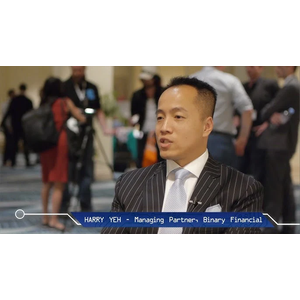
Source: Shenchao TechFlow Author: Lin Zhengying Original title: Coin Circle Who Fell Naked OG: Ye Junde's Wealth, Gambling, and Asunción's 100-meter altitude in the last early hours of the morning. At 4:30 a.m. on August 7, 2026, the 911 alarm center in Asunción, the capital of Paraguay, received a call: A dead body was lying downstairs in Jade Park, an upscale apartment building in the Trinidad district. When the police arrived, they saw strange images: the deceased was naked, covered in a black plastic bag, and suspected to have fallen from 30 floors about 100 meters high. The deceased was soon initially identified — Harry Chun Tak Yeh, Chinese name Ye Junde, founder and managing partner of cryptocurrency fund Quantum Fintech Group, a Chinese crypto investor claiming to be in charge of more than $2.4 billion in assets. Investigators went up to the 30th floor and found that the doors of the apartment he was living in were wide open, and the house was a mess, but it was empty. He also has another apartment on the 27th floor of the same building where his Brazilian girlfriend, Isadora de Proenca Braganholo Carvalho, 29, lives. Faced with questioning by the prosecution, she said she didn't know anything, and the police have not publicly charged her with any wrongdoing so far. Prosecutor María del Carmen Palazón led the investigation and investigated the three possibilities of accident, suicide, and homicide. Everything waited until the autopsy results were discussed. The $500 entry history of Ye Junde's family is the most classic screenplay in the coin industry. He was born in Hong Kong and immigrated to Canada as a child. He studied electrical engineering at the University of California, Berkeley as an undergraduate, and later got an MBA at Stanford Business School. At least that's what he described as his resume. Prior to entering the crypto world, he followed the standard Silicon Valley elite route: an engineer, CTO and co-founder of several startups, running a technology consulting firm, and serving organizations with revenues ranging from $5 million to $200 million. Bitcoin was still hovering around $60 in 2013. Ye Junde used $500 to buy his first BTC, set up his first fund with $250,000 in the same year, set up the venture capital company Binary Financial, and later changed its name to Quantum Fintech Group several times. It was a pioneering era. Doing crypto OTC OTC trading and managing hedge funds for high-net-worth clients, Ye Junde caught up with Bitcoin's entire curve from $60 to tens of thousands of dollars. By 2023, he and his team claimed to have managed more than $2.4 billion in hedge funds and private equity networks. He began appearing frequently in the industry spotlight: he discussed Bitcoin forks and ICOs on CNBC in 2017, and was a guest on the Bloomberg crypto show in 2022, calling Bitcoin “digital gold,” and speaking on the same stage as Mark Cuban, Tether co-founder Craig Sellars, and others. He also took over the production team for the North American Bitcoin Conference (TNABC) and the Fantom Developer Conference, and set up his own Quantum Miami conference, which the mayor of Miami personally stood for. Highlight moment: In four months, between 2.5 million and 1.6 billion, the most legendary “investment” of Ye Junde's career occurred in the Fantom ecosystem. Fantom is one of the hottest public chains in the “DeFi Summer” of 2021, and was personally coded by Andre Cronje, known as the “Godfather of DeFi.” In September 2021, Tomb Finance, an algorithmic stablecoin project on Fantom, fell into a trust crisis due to a bug called “Gatekeeper” and was on the verge of collapse. Yip Chun-tak took over the team as a member of the Fantom Foundation. The next four months were a magical moment for Tomb Finance: the total hedged volume (TVL) went all the way from $2.5 million to a peak of $1.6 billion, and within two months, TVL skyrocketed nearly 80 times, making it the brightest project in the Fantom ecosystem. This battle established Yip Chun-tak's position within the Fantom community. Someone at X missed it: “Even if Harry turned to the dirty one at the end...

12d ago22#Harry Chun Tak Yeh
Sacrificing three exchanges in a month, can the Crypto bull market still come?

Sacrificing three exchanges in a month, can the Crypto bull market still come?

The midwaist exchange business seems to have come to an end. On July 1, AscendEX ceased operations. On July 23, BitMEX, which once defined a cryptographic perpetual contract and brought 100x leverage to the mainstream market, announced that it would close after two months. Three days later, BitMart, which has been in operation for nearly nine years, initiated a shutdown procedure: it stopped accepting new users and deposits, ended spot and contract trading on August 26, and officially terminated platform operations on January 31, 2027. In less than a month, three centralized exchanges (CEXs) that have gone through at least one round of bull and bear cycles have left the market one after another. In a market that is used to treating bad news as an inverse indicator, this can easily raise the question: exchanges can't survive. Has the crypto market bottomed out? This is not another FTX moment where AscendEX was originally known as BitMax. According to official data, it was founded by a Chinese team with a background in quantitative trading on Wall Street. Founder George Cao and others are closely linked to the New York financial community. BitMart was founded by Sheldon Xia. In the early days, he participated in events organized by the Yangtze River Business School and the Chinese and US blockchain community in New York, and also set up a team in New York; however, its global business has been operated through offshore entities for a long time, and public commercial data shows that it is headquartered in the Cayman Islands. Both have clear Chinese entrepreneurial backgrounds and experience in the US market, and are typical examples of the “Wall Street team plus offshore trading platform” entrepreneurial model in the early years. This model used to work very well. Between 2017 and 2021, an exchange is not required to obtain a full license in every market or have a bank-level compliance and escrow system. As long as the coin is listed fast enough, the contract leverage is high enough, and there are enough rebates, and with the Chinese-speaking community, Telegram, and KOL subscription channels, it is possible to quickly accumulate users in a round of bull markets. By 2026, these conditions are far from enough. Judging from current public information, the three exchanges can be boiled down to three “dead” methods: AscendEX faced liquidity and compliance pressure, BitMart chose to exit in an orderly manner, and BitMEX was left behind by users and trading volume. What they all have in common is that they can no longer afford the high costs of a global crypto exchange. On the face of it, exchanges have been shut down one after another, which is easily reminiscent of the FTX-style crisis in 2022. However, the transmission mechanism is not the same this time. The bear market in 2018 was the disappearance of demand. The ICO bubble burst, a large number of tokens lost liquidity, retail investors withdrew, and listing fees, transaction fees, and Taiwan dollar valuations fell together. According to CoinGecko's statistical method — which defines Bitcoin running below the 200-day EMA for 30 consecutive days as a bear market — the bear market from 2018 to 2019 continued for 385 days, with Bitcoin's biggest retracement of 83.6%. The problem in 2022 is that the credit chain is broken. After Terra's collapse, the complex borrowing and asset liability relationships between Three Arrows Capital, Celsius, Voyager, Genesis, and FTX turned the failure of a single project into a credit contagion for the entire industry. According to Bank for International Settlements statistics, after the Terra incident, the market value of crypto assets of more than 450 billion US dollars evaporated; after FTX went bankrupt, the market lost about 200 billion US dollars. In the 2026 shutdown wave, there was no serial rush of the same scale. It's more like a slow but complete structural elimination: total market volume falls, regulatory thresholds are raised, liquidity is concentrated at the head, and on-chain transactions take users from the other side. Regulation has gone from a potential risk to a cost of doing business. EU MiCA will be fully applicable from December 30, 2024. According to ESMA's explanation, the original crypto service provider can continue to operate for a period of time according to member state regulations, but the transition period must not exceed July 1, 2026 at the latest. Platforms that are not authorized by MiCA cannot continue to rely on the original system to carry out related business after the transition period is over. AscendEX ceased operations on July 1st. It also acknowledged in the announcement that the platform was not authorized by MiCA. But compliance is only one reason: AscendEX also mentioned failed financing transactions, market pressure, and financial condition assessments. Regulation didn't kill this exchange alone. It just makes an already weak balance sheet more difficult to maintain. The old exchange model is dead. The “incremental sharing dividend” ended the second quarter of 2026, and the total market value of the crypto market fell 12.6%, from $2.4 trillion to $2.1 trillion, about 52% lower than the October 2025 high. More importantly, “cash” in the industry is also dwindling. The total stablecoin market capitalization fell 1.6% quarterly to 3...

25d agoWendy#CEX #DEX #Exchanges #Shut down the tide topic #original #Bitcoin #Bull market #viewpoints
Revenue is 50 times different from similar valuations. Why does Ansem say the buyback doesn't solve any problems?

Revenue is 50 times different from similar valuations. Why does Ansem say the buyback doesn't solve any problems?

Author: Shenchao TechFlow Original title: Ansem: Why do I think token buybacks don't solve any problems? In-depth guide: Ansem, a well-known Solana trader, wrote that the buyback mechanism itself does not create value; it is the “trust premium” between the team and community that determines the token valuation multiplier. He compared Hyperliquid (about $800 million in annualized revenue, about $65 billion in FDV) and pump.fun (about $4.4 billion in annualized revenue; FDV of only about $1.4 billion), pointing out that both are being repurchased on a large scale, but the valuation multiples are nearly 50 times different. One of the most enduring narratives of the crypto market is being challenged: when deal revenue is thrown into buybacks, token prices will rise. On July 16, well-known Solana trader Ansem (@blknoiz06) posted a long post on the X platform, making a counterintuitive assertion: the repurchase mechanism itself does not create value; what really determines the multiplier of token transactions is the “trust premium” between the team and the community. The post quickly garnered over 469,000 views, 3240 likes, and 509 retweets. Ansem selected the crypto industry's two highest-grossing protocols against each other. Hyperliquid's annualized revenue is about $800 million, and HYPE's FDV is about $65 billion; pump.fun's annual revenue is about $4.4 billion, HYPE's FDV is about $65 billion; pump.fun's annualized revenue is about $4.4 billion, and HYPE's FDV is about $65 billion; pump.fun's annual revenue is about $4.4 billion, and PUMP's FDV is only about $1.4 billion. Both teams are using most of their revenue for buybacks, but the valuation multiples are nearly 50 times different. Ansem concluded that the gap was not in the size of revenue, but rather in the trust built up in team behavior. Also spending money to buy back, why did Hyperliquid and pump.fun have drastically different valuations? Ansem dismantled the repurchase strategies of the two platforms in a post. Hyperliquid directly imported 97% to 99% of agreement fees into HYPE buyback and destruction. As of June 30, Hyperliquid's cumulative protocol revenue had surpassed $1 billion, and the annualized operating rate was close to US$840 million, according to CryptoNews data. The platform has destroyed more than 41 million HYPE tokens, worth more than $1 billion, and the circulating supply has been reduced by about 4.2%. As of press release, HYPE quotes are in the $60 to $67 range, and FDV is around $57 billion to $62 billion. pump.fun is just as aggressive. The platform's total revenue in 2025 was approximately US$970 million, and nearly 100% of the revenue was invested in PUMP buybacks, with a cumulative total of around US$213 million in repurchases. In April 2026, the team destroyed $370 million worth of PUMP tokens (about 36% of the circulating supply) in one go, and locked 50% of subsequent revenue into continuous destruction. However, PUMP is currently priced at around $0.0016, and FDV is around $1.4 to $1.7 billion. Pump.fun's annualized revenue is about half of Hyperliquid's, but FDV is less than 3% of Hyperliquid's. If the buyback mechanism is the core driving force for valuation, this multiple gap cannot be explained. Ansem's explanation: The trust premium is the core of pricing Ansem believes that the high valuation given to Hyperliquid by the market is rooted in the trust established by Jeff (founder of Hyperliquid) and his team. In his post, he cites a few points: Hyperliquid has never been overly committed; the team is only focused on producing products; user rewards are distributed strictly according to pre-determined on-chain metrics, and there is no secret box operation; the core user base has a very high trust rating for Jeff and the team. According to Ansem's original statement, this trust premium “is one of the main reasons why the token is trading so well.” Hyperliquid's historical behavior does support this judgment. The project is not accepting VC investment, and 70% of the total supply is distributed to the community; when launched in November 2024...

36d agoburnking#Ansem #Solana #token

Ansem: PUMP could rise 10 to 15 times if airdrop promises are fulfilled and community relationships are improved

Comparing the news, well-known crypto KOL Ansem posted an article stating that it believes that token buybacks themselves may not effectively support valuation. Hyperliquid's annualized revenue is about $800 million, and Pump.fun's annualized revenue is about $4.4 billion. Both continue to use part of the profit to buy back tokens, but HYPE's FDV is around $65 billion, and PUMP is only about $1.4 billion. He believes that the difference in valuation between the two is not mainly due to revenue, but rather a trust premium formed by team behavior and market decisions. Hyperliquid rarely overpromises, continues to launch products, and rewards core users according to pre-set metrics, so it maintains a high level of trust between the team and community. In contrast, Pump.fun has accumulated around $1 billion in revenue and raised $1 billion through the ICO, but previously promised user airdrops have yet to be fulfilled. Ansem believes that if the project actually fulfills the airdrop and responds to core user concerns, the price of PUMP may increase 10 to 15 times, while boosting the platform's trading volume, attention and revenue. He also cited Bitcoin as an example. Bitcoin has no revenue, but its market value is about 1.3 trillion US dollars, and its value comes from the trust created by the fixed supply of 21 million units and the continuous operation of the network. In addition to tangible metrics such as revenue, trust, meme effects, and attention are also important factors affecting asset valuations.

36d ago
The next nine years: Binance's vision for the future of cryptocurrency and blockchain

The next nine years: Binance's vision for the future of cryptocurrency and blockchain

By ChandlerZ, Foresight NewsThe crypto market in the first half of 2026 showed a rare split. Bitcoin has pulled back more than 35% from its high point, and DeFi's total hedging volume has dropped to $72 billion, and several crypto companies that originally planned to do an IPO have pressed the pause button. According to historical experience, these numbers usually herald the arrival of another cold winter. However, in the same half year that prices have cooled down, another set of data has been accelerating. The US SEC and CFTC have concentrated on releasing signals about the direction of US crypto regulation. The new US SEC document clarifies that 16 types of crypto assets such as BTC and ETH are “digital goods”; the US Depository Trust Clearing Company (DTCC) promotes DTC tokenization services and collaborates with more than 50 financial institutions, including traditional financial and cryptographic institutions such as BlackRock, J.P. Morgan, Circle, Ondo Finance, and Robinhood; the total market value of stablecoins hit in May The all-time high of $322 billion surpassed the size of 95 countries' foreign exchange reserves; the number of global cryptocurrency holders reached about 700 million people. Prices are shrinking and infrastructure is expanding. The reverse movement of the two lines may indicate that the industry is shifting from being driven by speculation to being driven by infrastructure. Launched on July 14, 2017, Binance has accumulated more than 300 million registered users over nine years, operated under a license in more than 20 jurisdictions, experienced the largest regulatory penalties in the industry, and witnessed the entire process from ICO frenzy to institutional entry. At the time point of the ninth anniversary, the question that is more valuable than looking back at history is what direction did this company bet its resources in? What's the logic behind these judgments? To what extent can they represent the direction of the entire industry? Where is the market for 3 billion people Binance Co-CEO Richard Teng repeated the same number on multiple public occasions: 3 billion users in 2030. That target is ten times higher than the current 300 million registered users. According to Binance's growth curve, it reached 100 million users in the first five years, then reached 200 million in the next two years, surpassed 300 million in the last 18 months, and added more than 180,000 per day. Growth is accelerating, but going from 300 million to 3 billion still means finding a growth engine of a completely different magnitude. Where this growth is coming from, Binance Research's July 2026 stablecoin report provides some clues. The report shows that in Binance's user base, 87% of fiat currencies need to pay a premium higher than the official exchange rate when exchanging stablecoins. This premium gradient accurately corresponds to the level of inflation. Users in hyperinflationary economies (over 10% inflation) pay an average of 62% of the premium, while high-inflation economies (over 5%) pay 27%, and 4% in a typical inflationary environment. The average premium for developed market users is only 0.3%. What does a 62% premium mean? A user from Nigeria or Argentina is willing to pay 60% more than the official exchange rate in order to exchange local currency for stablecoins. The driving force behind this behavior is wealth preservation. In an environment where the currency continues to depreciate, stablecoins act as no-threshold dollar savings accounts, requiring no US bank account, no foreign exchange quota, and no minimum deposit. Traditional fintechs (M-Pesa, Mercado Pago, etc.) also serve the financial needs of emerging markets, but they provide payments and transfers denominated in local currency. When users' core demands are to break away from the local currency and obtain dollar-denominated savings and earnings, cryptographic services provide products that cannot be replaced by traditional fintech, such as US dollar stablecoin savings, unintermediated cross-border transfers, and 24-hour uninterrupted liquidity. Willing to pay a 62% premium to acquire an asset has nothing to do with speculation. In economies where currency depreciation, capital controls, and foreign exchange channels are limited, stablecoins actually act as borderless dollar savings accounts. The premium paid by users is the cost they incur to preserve their purchasing power. Regional data confirms the scale of this demand. The share of stablecoin P2P transfers in Latin America and the Caribbean doubled from 17% to 38% in the past year, making it the fastest growing region. The Asia-Pacific region's on-chain value increased 69% year over year, and Latin America increased 63%. Globally, around 700 million people hold crypto assets, accounting for 8.5% of the world's population, with India at the top with 156 million and Nigeria with 45 million...

39d agoForesight News#SEC #Web 3.0 #Binance