

Jeff Dean · 21
Meta can't keep the Chinese University of Science and Technology hegemony: the big model in Silicon Valley, the Chinese are starting to form their own games

Meta can't keep the Chinese University of Science and Technology hegemony: the big model in Silicon Valley, the Chinese are starting to form their own games

He dropped a $100 million, four-year “contract” in exchange for leaving after 14 months — the talent Zuckerberg had taken from OpenAI and left Meta. In the summer of 2025, Zuckerberg personally knocked out Jiahui Yu (Jiahui Yu), the head of multimodal research, from OpenAI using a salary plan with a total value of up to 100 million US dollars and covering four years. Silicon Valley is on the sidelines, and the industry calls it “stealing people at sky-high prices.” However, just 14 months later — on August 14, 2026, the star researcher, whom Meta had high hopes for, announced his departure and started his own business. A year ago, the blockbuster in the industry ended up being held for a shorter period of time than an NBA season. Just eight days before leaving his job, Muse Spark, the multi-modal model he led, had just been updated to version 1.2. From forming the team to continuously launching the four product lines Muse Spark, Voice Mode, Muse Image, and Muse Video, Yu Jiahui's year at Meta covered almost the entire process of this new team from construction to intensive delivery. Muse Image finished second in the Arena Wensheng Trials Test, beating Google Nano Banana, behind OpenAI GPT Image 2; Muse Video ranked third in the Wensheng video rankings. For Meta, this is certainly an impressive report card. But for Yu Jiahui, this is just an interlude. In his departure statement, he said he was “increasingly drawn to an issue that is critical to the future of humanity but has yet to be fully explored.” Details of the new company have not been disclosed, but he has decided to leave. From the junior class to the history of Yu Jiahui, the top in Silicon Valley, he is at the “top” level for any major AI company. Born in 1995 in Cixi, Zhejiang. In 2012, while still in his sophomore year of high school, he was admitted early to the Junior Class College of the Chinese University of Science and Technology. During his undergraduate studies, he won several contests, including the National Parallel Application Challenge Championship. After graduating in 2016, he went to the University of Illinois at Urbana-Champaign (UIUC) to study for his PhD in computer vision. This scholar trained many famous figures in the field of AI, such as Zhou Xi, founder of Yuncong Technology, and Han Xu, founder of Wenyuan Zhixing. After graduating from her PhD, Yu Jiahui's career progressed step by step. He has worked as a senior research scientist and manager at Google Brain and Google DeepMind, and has participated in the development of visual modules for the Gemini multi-modal project. Joined OpenAI in October 2023 as the head of the Perception (Perception) team, leading the development of GPT-4O and O-series inference models. In June 2025, Zuckerberg personally stepped down, and Yu Jiahui joined former OpenAI researchers such as Zhao Shengjia, Bi Shuchao, and Ren Hongyu into Meta's newly formed super intelligent team. According to foreign media Wired, Meta's compensation package was as high as $100 million — although Meta CTO Andrew Bosworth later clarified that this was not a one-time signing bonus, but a four-year total compensation plan that included stocks, bonuses, and performance conditions. But even so, this is one of the few sky-high contracts in the AI field. (Photo source: One mu of three-quarters of land) After conversion, even though Yu Jiahui only worked for 14 months, Meta paid an estimated cost of more than 25 million dollars for this short period of cooperation — but the actual cost of sunk was even higher. After all, the investment in team building and project start-up cannot be proportionately calculated. The fanaticism of the capital market is driving Silicon Valley's talent exodus, and Yu Jiahui's departure is by no means an exception. In fact, Silicon Valley in 2026 is experiencing an unprecedented “exodus” of AI talents. According to data from the research platform AlphaXiv, Meta alone has lost more than 200 well-known researchers, and another 929 researchers have “worked at Meta but have left their jobs.” In October of last year, Meta drastically cut more than 600 researchers in the AI business. In June of this year, with Llama 4's poor market performance and the company's implementation of more stringent performance reviews, it is expected that 15% to 20% of employees will be rated as “below expectations”, and many senior researchers have switched to competitors. Tech author Gergely Orosz pointed out that Meta's internal organizational restructuring and efficiency adjustments have caused engineers to feel uneasy, and many senior experts have begun to remain open to external opportunities. Google's situation is no less than happy...
4d agoBitpushNews#AI #Yu Jiahui #original #Silicon Valley
Jeff Dean's Last Conversation Before Leaving His Job: I Underestimated AI and Seen the Entrepreneur's Only Way to Live

Jeff Dean's Last Conversation Before Leaving His Job: I Underestimated AI and Seen the Entrepreneur's Only Way to Live

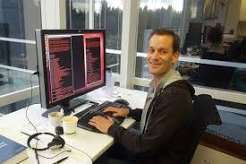
Source | InfoQ Compilation | Curated by Yu Qi | Tina A year ago, Google Chief Scientist Jeff Dean predicted at the AI Ascent 2025 Summit: By 2026, there may be AI systems that can work around the clock and are as capable as junior software engineers. A year later, six days ago, he admitted in an interview with YC that he had underestimated how fast AI is progressing. The model's ability to handle complex tasks grew much faster than he had anticipated at the time. So, according to Jeff Dean, how fast will AI move forward in the future? How can startups survive in an era where generic models continue to expand the boundaries of capabilities? Early this morning, this interview had a different weight. Jeff Dean announced that tomorrow will be his last day at Google. After working at Google for 27 years, this legendary engineer, known as the “programmer among programmers” in Silicon Valley and deeply involved in the construction of Google's system architecture and AI technology, co-founded Discovery Loop with long-term partners Sanjay Ghemawat, Oriol Vinyals, and Quoc Le, a public welfare company focusing on cutting-edge research in machine learning, science, and engineering. Google will continue to work with them as a founding investor and cloud computing partner. According to WIRED, this startup idea actually only surfaced a few weeks ago. In order to retain this core team, Alphabet CEO Sundar Pichai also tried to persuade them to “not lose the job card” during many meetings. But in the end, a few people decided to leave the big company system in exchange for the fun, speed, and freedom that only a startup can have. Screenshot from: https://x.com/JeffDean/status/2085035498222002595/photo/1Jeff Dean wrote in his farewell letter that he saw Google grow from a company of just 25 people to a tech giant with more than 190,000 employees. Today, Google has 13 products with over 1 billion users. From search, email, translation, and video to large-scale computing, autonomous driving, and AI systems, the technology he participated in building has spanned almost the entire evolution of Google. And one of the main reasons that prompted them to leave was precisely inertia, which is difficult for large companies to get rid of. As Oriol Vinyals said, within large organizations, driving any radical change requires overcoming layers of resistance; they want to do something different. What's interesting is that until now, the new company hasn't even had time to recruit people or rent an office. As for who will be the CEO, after a short pause within the team, everyone has their eyes on Jeff Dean — “I think it's me.” he said. As a result, this interview, published on the eve of Jeff Dean's departure, is like a focused judgment on the next stage of AI as he stands at a turning point in his career. On the program, he and YC partner Diana Hu discussed the paradigm shift in AI from “model centered” to “context engineering,” the huge opportunities that inference hardware is emerging, and how entrepreneurs can find a real living space worth sticking to in an age where generic models are becoming stronger and more applications may be directly incorporated by models. This article is based on a video compilation of this interview, edited by InfoQ. Too long without reading the Q edition: Last year you said 2026 would have AI with capabilities close to those of junior engineers. A year has passed, does this prediction punch you in the face? A: That's pretty accurate, but I've underestimated one thing: the model's ability to handle increasingly complex tasks is growing much faster than I expected. Moreover, this ability is spilling over into fields other than coding, and Agent-based systems are starting to really take off. Q: What are the bold predictions for 2027? A: The deep learning system will implement a fully automated problem decomposition and automated experiment cycle: split the problem into sub-problems, run experiments automatically, integrate the results, and obtain an improved system. And this doesn't just apply to machine learning; it can be used in any field of science and engineering with measurable goals. Q: In 2001, Google loaded the search index into memory,...

8d agoburnking#AI #Jeff Dean #Google

Discovery Loop seeks $1 billion in financing at a $10 billion valuation

Comparing news, people familiar with the matter revealed that Discovery Loop, an AI startup founded by former Google chief scientist Jeff Dean, is negotiating a financing of 1 billion US dollars, corresponding to a valuation of about 10 billion US dollars. Currently, the specific financing terms are still likely to change. Discovery Loop is designed to accelerate discovery in science and engineering by automating machine learning, science and engineering, and running thousands of experiments in parallel. Its initial funding was led by Radical Ventures and Khosla Ventures, with Lightspeed, Kleiner Perkins, and Doerr Capital participating, with Alphabet as the founding investor and cloud service partner. Discovery Loop's founding team also included former core Google researchers such as Sanjay Ghemawat, Quoc Le, and Oriol Vinyals.

9d ago
How did DeepMind change lead to a sharp increase in Google Cloud's revenue?

How did DeepMind change lead to a sharp increase in Google Cloud's revenue?

Author: Vibrant BlockBeats Original title: DeepMind changes direction, why is Google Cloud likely to be the biggest winner? TL; DR · SemiAnalysis believes that after DeepMind's leadership adjustments, Google Cloud may become the biggest short-term beneficiary. ·Alphabet's second-quarter Google Cloud revenue increased 82% year-on-year to $24.768 billion, and the backlog of cloud business orders reached $514 billion. ·The report estimates that more than $150 billion in TPU system orders could push Google Cloud's 2027 revenue growth rate to around 150%. ·This forecast relies on the pace of order delivery, customer financing, and revenue recognition, and the valuation of system sales may also be lower than traditional cloud services. On August 7, SemiAnalysis released a report stating that after Google DeepMind's leadership adjustments, Google Cloud may become the biggest financial beneficiary in the short term. The report links personnel changes to the distribution of computing power within Google. TPU is a scarce resource that Google relies on to grow its cutting-edge model and expand its cloud business. More computing power for Gemini training will help Google catch up with cutting-edge models; more TPU flowing to external customers can be more quickly converted into Google Cloud revenue, backlog orders, and profits. Based on this, SemiAnalysis gave a set of aggressive predictions: TPU system sales may push Google Cloud's 2027 revenue growth rate to around 150%, significantly higher than the 64% seller consensus estimate listed in the report, and contribute about $3 per share to Alphabet's earnings for the year. DeepMind changed, and the market began to reassess its computational power. According to Axios, Demis Hassabis stepped down as Google DeepMind CEO and became DeepMind Chairman and Alphabet Chief Scientist; former DeepMind CTO Koray Kavukcuoglu took over day-to-day management and reported to Alphabet CEO Sundar Pichai. Meanwhile, Jeff Dean, Sanjay Ghemawat, Oriol Vinyals, and Quoc Le left Google to co-found AI research firm Discovery Loop. Google will participate as a founding investor and partner with it to establish cloud services. This round of adjustments has prompted the market to re-evaluate Google's computing power allocation strategy. The same batch of TPUs should not only support Gemini training and inference, be made available to external AI labs and enterprise customers through Google Cloud, or sold as a package to special purpose entities operating AI data centers. Different distribution methods correspond to different returns. Investing in Gemini's computing power is linked to Google's competitiveness in the cutting-edge model field; investing in TPU for commercial customers can enter Google Cloud's revenue and backlog orders more quickly. According to SemiAnalysis, Google Cloud leader Thomas Kurian's influence in internal computing power competition is rising. As more TPU and supporting infrastructure flows to external customers, Google Cloud is likely to gain greater revenue elasticity. DeepMind's share of Google's AI computing power declined, but Alphabet did not attribute this organizational adjustment to the obstruction of Gemini development. The company said at the second-quarter earnings conference that Gemini 4 is undergoing the most ambitious pre-training so far, and AI services are still limited by supply. Pichai also emphasized that the primary task of TPU allocation is to ensure that Google has the computing power needed to compete at the cutting edge of AGI. Currently, Google has yet to announce a reduction in Gemini's computing power priority. “Gemini priority decline” is SemiAnalysis's inference of personnel changes and resource flows...

12d agoburnking#Google #financing

Breaking news: Hassabis originally wanted to leave; Google is afraid it won't be able to carry the stock price and leave people behind

Comparing news, according to surveillance, Pathfounders quoted industry sources as saying that Hassabis originally wanted to leave Google at the same time as Jeff Dean, but management feared that the two AI bosses would hit the stock price hard, so they advised him to stay first. In the end, Jeff Dean and others left, and Hassabis became Chairman of Google DeepMind and Chief Scientist of Alphabet. After the news was announced, Alphabet's stock price dropped by about 5%. Pathfounders said this may only be a transition arrangement, and after the situation stabilizes, Hassabis may still leave Google.

13d ago

Insider on Google's AI management adjustments: Hassabis planned to leave his job at the same time as Jeff Dean and advised him to stay due to concerns about the stock price crash

Comparing news, according to industry sources, DeepMind founder Demis Hassabis originally planned to leave Google at the same time as Jeff Dean, but Google management determined that announcing the departure of the two at the same time would cause the stock price to collapse. In fact, Google's stock price had dropped 5% after announcing the departure of Jeff Dean and others. Management therefore persuaded Hassabis to transition to DeepMind's chairmanship to allow the organization to stabilize for a period of time before exiting in a more dignified manner. As chairman, Hassabis can focus more on scientific pursuit and increase investment in Isomorphic Labs (Alphabet's drug discovery company), which it founded. Current sources predict that Hassabis will completely leave Google within a year. Recently, Google's AI management underwent major adjustments. DeepMind changed its head, the core figure Jeff Dean left his job, and the stock price fell at the same time. Jeff Dean, one of Google's earliest employees and a central figure in designing the company's artificial intelligence strategy for the past 15 years, is leaving the company to become CEO of a new nonprofit company called Discovery Loop. Dean also co-founded Google employees Oriol Vinyals, Quoc Le, and Sanjay Ghemawat. Together, the four have promoted important advances in mathematics and protein structure, and are one of the most cited researchers in the world. These talents, including Dean, have left Google, further exacerbating the company's recent trend of AI brain drain. Meanwhile, Google DeepMind CEO Demis Hassabis will adjust his position, step down from his day-to-day operations role, become the chairman of Google DeepMind, and also serve as Alphabet's chief scientist to continue leading Isomorphic Labs. Hassabis is one of the key figures in the field of artificial intelligence. He co-founded DeepMind in 2010 and continued to lead the team after being acquired by Google in 2014. In recent years, DeepMind has promoted the development of basic models, artificial intelligence research, and scientific computing. Under its leadership, DeepMind launched influential AI projects including AlphaGo and AlphaFold, and became a core force in Google's artificial intelligence strategy. In the detailed report, see “Hassabis steps down, Jeff Dean leaves his job to start a business, Google's military spirit is scattered”

13d ago
[Comparative Daily News Picks] OpenAI suspends development of the new model Astra, fearing that it has key cyber attack capabilities; SemiAnalysis sings down Google DeepMind: It's no longer a cutting-edge AI lab; J.P. Morgan raised its technology bond issuance forecast, and this year's debt issuance scale will exceed 500 billion US dollars; the non-agricultural explosion has intensified differences on Wall Street, and the market's eyes are on next week's CPI

[Comparative Daily News Picks] OpenAI suspends development of the new model Astra, fearing that it has key cyber attack capabilities; SemiAnalysis sings down Google DeepMind: It's no longer a cutting-edge AI lab; J.P. Morgan raised its technology bond issuance forecast, and this year's debt issuance scale will exceed 500 billion US dollars; the non-agricultural explosion has intensified differences on Wall Street, and the market's eyes are on next week's CPI

Daily AI · Encryption · Macro · Market News, Bitpush helps you focus ↓ AI · News [OpenAI suspends development of the new model Astra, worried that it has critical cyber attack capabilities]. According to Axios, OpenAI said that it cannot be ruled out that its upcoming model Astra has “critical” network capabilities, which prompted OpenAI to expand the scope of security testing and suspend internal activities that do not meet stricter security requirements. This is the latest sign of a rapid increase in the network capabilities of artificial intelligence models. OpenAI said that after an internal evaluation of Astra, one of the upcoming models, “we cannot rule out that it has critical networking capabilities.” Prior to the release of Astra, OpenAI will expand testing and security measures for the model and slow down Astra's development process until appropriate security measures are in place in accordance with the requirements of the “Preparation Framework” that the company first published in 2023. OpenAI also stated that Astra did not participate in the Hugging Face vulnerability attack. This is probably the first case where a cutting-edge artificial intelligence lab promised to slow down its AI model development process due to cybersecurity concerns. [SemiAnalysis sings down Google DeepMind: Not a cutting-edge AI lab anymore] Comparing news, the latest SemiAnalysis report directly determined that Google DeepMind is no longer the most cutting-edge AI laboratory, and the probability of doing SOTA again in the future has dropped to zero. It believes DeepMind is losing top talent and computing power at the same time. Jeff Dean, Sanjay Ghemawat, Quoc Le, and Oriol Vinyals recently left Google to start their own business. Previously, Gemini co-leader Noam Shazeer switched to OpenAI, and Nobel Prize winner John Jumper joined Anthropic. Computing power is also being sold in large quantities to competitors. SemiAnalysis estimates that from the third quarter of 2026 to the fourth quarter of 2027, more than 20% of TPU shipments will be sold directly to Anthropic, which is equivalent to locking large amounts of scarce computing power to Gemini's rivals for a long time. SemiAnalysis ultimately attributed the problem to Google's bureaucratic, slow, and strategically conservative organizational culture. It even compared today's Google to IBM and Intel: the technical ability is still strong, and it can make more money. It's just the hardest and riskiest technology competition, which is probably no longer the company's number one priority. [Cambrian: Net profit of 2,311 billion yuan in the first half of the year, up 123% year on year] In comparison, artificial intelligence (AI) chip company Cambrian issued an announcement stating that revenue for the first half of 2026 was 5.996 billion yuan, an increase of 108.13% year on year. Net profit attributable to shareholders of listed companies was 2,311 billion yuan, an increase of 122.61% year-on-year, and net profit of 1,038 billion yuan for the same period last year. After deducting non-net profit of 2.116 billion yuan, a year-on-year increase of 137.30%. Crypto · Market [J.P. Morgan raised its technology bond issuance forecast, and this year's bond issuance scale will exceed 500 billion US dollars]. Comparing news, J.P. Morgan predicts that the scale of technology-related corporate bonds will be issued more than 500 billion US dollars this year. The bank raised the 2026 technology, media, and telecom sector debt issuance forecast from US$450 billion to US$540 billion, on the grounds that increased spending by large technology companies is leading the AI investment cycle. A team led by J.P. Morgan strategist Erica Spear reported on Friday that chip-backed financing will become the “next major frontier field” to support AI infrastructure construction, and that by the end of this decade, its scale may “expand to trillions of dollars.” J.P. Morgan has identified seven investment-grade data center funding opportunities in addition to the six projects currently funded, four of which are expected to come from Oracle and OpenAI. The bank expects Meta Platforms to return to the bond market after announcing its third-quarter earnings report, while Microsoft is seen as the “biggest uncertain factor” and may be financing bond investors for the first time since 2017. [Bybit sued North Korea and Lazarus Group for $1.5 billion hacker attack and obtained an asset freeze order] Comparing news, cryptocurrency exchange Bybit has attacked North Korea...

14d agoWendy#Compare Daily Picks

SemiAnalysis defies Google DeepMind: It's no longer a cutting-edge AI lab

Comparative news, according to monitoring, the latest SemiAnalysis report directly determined that Google DeepMind is no longer a cutting-edge AI laboratory, and the probability of doing SOTA again in the future has also been reduced to zero. It believes DeepMind is losing top talent and computing power at the same time. Jeff Dean, Sanjay Ghemawat, Quoc Le, and Oriol Vinyals recently left Google to start their own business. Previously, Gemini co-leader Noam Shazeer switched to OpenAI, and Nobel Prize winner John Jumper joined Anthropic. Computing power is also being sold in large quantities to competitors. SemiAnalysis estimates that from the third quarter of 2026 to the fourth quarter of 2027, more than 20% of TPU shipments will be sold directly to Anthropic, which is equivalent to locking large amounts of scarce computing power to Gemini's rivals for a long time. SemiAnalysis ultimately attributed the problem to Google's bureaucratic, slow, and strategically conservative organizational culture. It even compared today's Google to IBM and Intel: the technical ability is still strong, and it can make more money. It's just the hardest and riskiest technology competition, which is probably no longer the company's number one priority.

14d ago

SemiAnalysis: Gemini has withdrawn from frontier competition, GCP is speeding up profits from selling TPU to third parties

Comparing news, the research firm SemiAnalysis published an analysis indicating that Google DeepMind is no longer in the ranks of cutting-edge AI laboratories. The week before, DeepMind co-founder Demis Hassabis retired from daily operations, and core members such as Google's chief scientist Jeff Dean and Gemini co-leader Oriol Vinyals left their jobs to establish a new lab, Discovery Loop. Analysts believe that the long-term game between Gemini and GCP over the distribution of computing power within Google ended with GCP winning. According to SemiAnalysis, Gemini 3.5 Pro has been cancelled, Gemini 3.6 Flash performance is not as good as China's leading open source model and Grok 4.5. Currently, Gemini has dropped to 8th or 9th place in the big model rankings. Meanwhile, GCP is selling large quantities of TPU to competitors such as Anthropic, and has secured long-term lease and sales contracts for hundreds of thousands of TPUs over the past 9 months. The Tokenomics model estimates that Gemini's own ARR is around $12 billion, while GCP's third-party AI cloud service revenue will exceed $73 billion by the end of 2027, and TPU system sales will contribute an additional $120 billion. GCP's latest quarterly growth rate was 82%, and is expected to accelerate to more than 100% in 2027 due to sales of TPU systems, contributing approximately $3 to Google's earnings per share.

15d ago

Four veterans of Google formed a group to start a business and let AI run scientific research experiments on their own

In comparison, according to monitoring, Jeff Dean, the former chief scientist of Alphabet, left Google for nearly 27 years and founded Discovery Loop with Sanjay Ghemawat, Oriol Vinyals, and Quoc Le. The fours' backgrounds cover core projects such as Google's underlying systems, Google Brain, Gemini, and AlphaFold. Discovery Loop is ready to start with machine learning research. After the researchers ask questions, the AI will write code, run experiments, analyze the results, and then arrange the next round of trials based on this. In the past, the work required researchers to carry out manual work over and over again, and thousands of experiments could be carried out simultaneously. Humans were mainly responsible for determining goals and judging results. The team will test themselves first and use this system to improve the model and technical architecture. If the method is effective, it will be extended to fields such as chip design, biological research, new drugs, and new materials. The company has yet to confirm an office, is recruiting a founding team, and the product is still in its early stages. Discovery Loop already received seed investment when it was founded. Alphabet is the founding investor and will also provide first-year computing power through Google Cloud. Radical Ventures and Khosla Ventures co-led the investment, with Kleiner Perkins, Lightspeed and others participating. The amount and valuation of the financing have not been disclosed, and the seed round is still raising capital.

16d ago