LUNA · 1388

OpenAI cuts GPT-5.6 Sol API price, long context output price reduced by 50%

In comparison, OpenAI announced a limited-time reduction in GPT-5.6 Sol's API and credit prices, and the discount will last at least until November 21. Among them, the standard short context API reduced the token price per million inputs from $5 to $4, the output from $30 to $20; the long context input dropped from $10 to $8; and the output dropped from $60 to $30. The new API price is now in effect, and the credit prices for ChatGPT Work and Codex will be adjusted over time. Plus, Pro, and Business subscriptions keep their own usage limits. Previously, OpenAI had lowered the GPT-5.6 Terra and Luna prices respectively. After Sol's price reduction, all three models in the GPT-5.6 series have completed a round of price adjustments.

19h ago
From 4 models to more than 500, OpenRouter was acquired after growing 30,000 times in three years

From 4 models to more than 500, OpenRouter was acquired after growing 30,000 times in three years

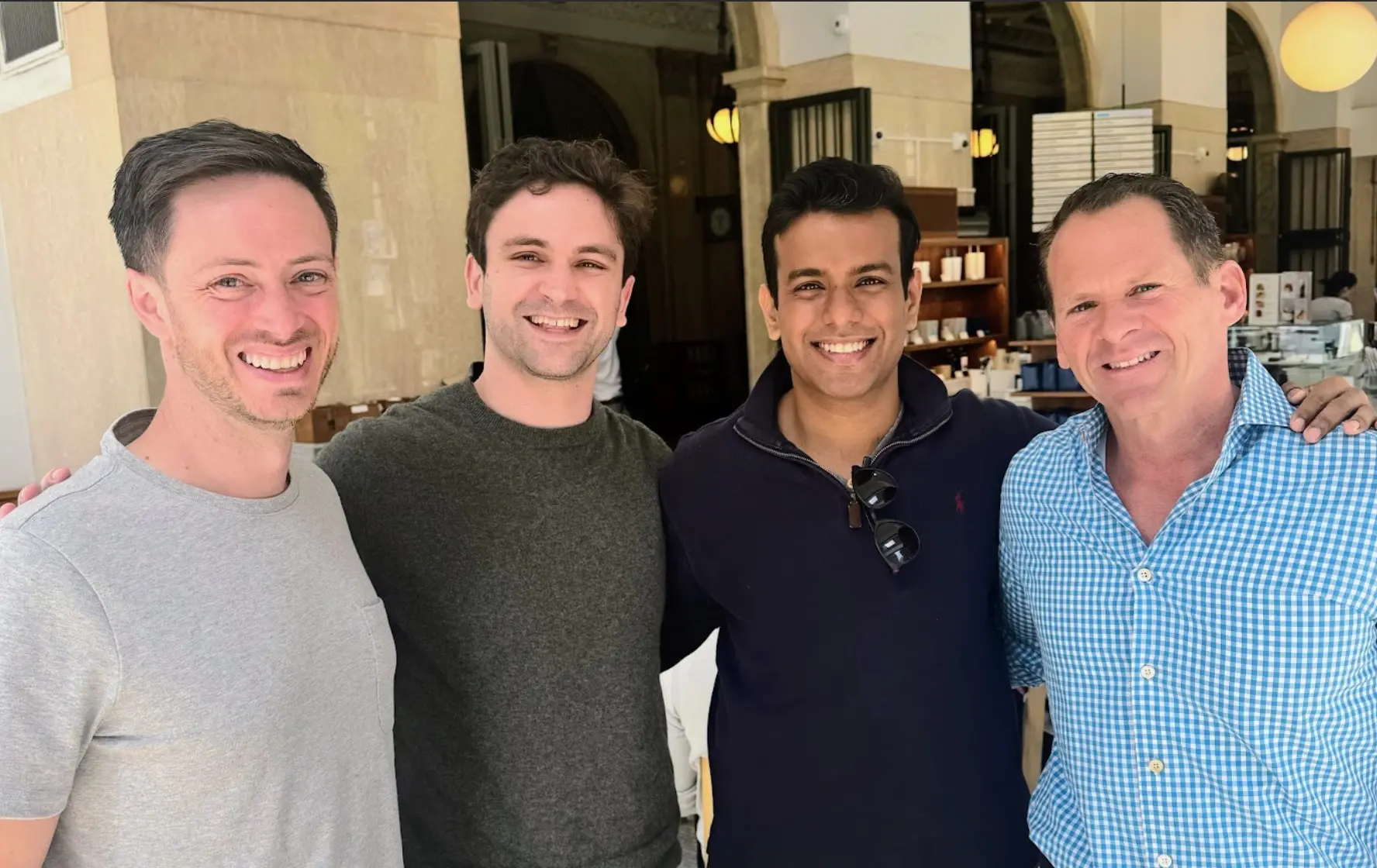
Author: Menlo Ventures Compiled by: Jia Huan, ChainCatcher Original title: Early Investors Behind OpenRouter Revisited Investments Today, OpenRouter announced that it has reached an acquisition agreement with Stripe. OpenRouter was launched in 2023, just over three years ago. OpenRouter was initially launched as a “unified interface for LLM” and only supported 4 models at the time: GPT-3.5, GPT-4, GPT NeoXt and Cohere xlarge by Together. When the company was founded, it was based on two core judgments: first, AI will eventually be used on a large scale and penetrate various fields; second, there will be many different models on the market, each with trade-offs, and users will choose different models according to different needs. As it turned out, both judgments far exceeded expectations at the time. Since its launch, the number of tokens processed by the OpenRouter platform has increased by about 30,000 times. Currently, it has exceeded 4,500 trillion tokens on an annualized basis, and the scale of expenditure on the platform has reached a very impressive level. Meanwhile, the number of models supported by OpenRouter has grown from the original 4 to over 500. Figure: OpenRouter Token usage growth from inception to acquisition Menlo Ventures is fortunate to be part of this journey. In March 2025, we participated in OpenRouter's seed funding round through the Anthology Fund set up in partnership with Anthropic. OpenRouter founder and CEO Alex Atallah previously founded OpenSea, which was once valued at $13.3 billion. His co-founders include tech guru Louis Vichy, whom he met on Discord, and highly executive COO Chris Clark. In May 2025, we led OpenRouter's Series A funding round, with Matt joining the company's board of directors, and Deedy as a board observer. Earlier this year, after seeing OpenRouter's rapid growth in customer numbers and revenue, and the company built a product route with stronger “model intelligence” capabilities around model selection and evaluation, we continued to step up Series B financing. In the tech industry, it often takes years for an idea to change from the judgment of a few people to industry consensus. And just a few weeks ago, this happened: from Ramp to Cursor, more than 10 companies launched their own model routing products almost simultaneously. In just a few years, OpenRouter has become one of the most important companies in the AI era. Picture: Group photo when deciding to lead OpenRouter Round A At first glance, Stripe doesn't seem like the most natural buyer of OpenRouter, but the two companies are actually strikingly similar. Both use an API that can be directly accessed to simplify the otherwise complicated transaction process and charge a certain percentage of the fee. It's just that OpenRouter deals with AI models. As Stripe has always said, the two companies combined and are still doing the same thing: increasing “internet GDP.” In fact, over a year ago, OpenRouter called itself the “Stripe of LLM.” OpenRouter's core value OpenRouter was one of the first companies Deedy came into contact with after joining Menlo in 2024. This company is almost right at the heart of our AI infrastructure investment logic. Menlo presented two judgments necessary to invest in OpenRouter in the 2024 Enterprise AI Report: AI spending will increase dramatically, and developers will not only use one model, but multiple models at the same time. Figure: Menlo's initial contact email to OpenRouter As someone who can also write code and actually use these models, we realized long ago that there is a very clear difference in cost, latency, and performance between the different models...

2d agoburnking#OpenRouter

Geosheng Intelligent Robotics Co., Ltd. plans to go to Hong Kong for an IPO, raising up to 300 million US dollars

Comparing news, according to Bloomberg, people familiar with the matter revealed that Alibaba-supported robot manufacturer LimX Dynamics (LiMx Dynamics) has secretly submitted an IPO application in Hong Kong to raise up to 300 million US dollars. The wave of Chinese robotics company listings is once again growing. LimX Dynamics is partnering with CITIC Securities to advance the deal. LimX Dynamics (LimX Dynamics) is a embodied intelligent robotics company headquartered in Shenzhen, China. It was founded in 2022 and focuses on the R&D, manufacturing and commercialization of general-purpose robots. Core products include full-sized humanoid robots LimX Oli and LimX Luna, as well as the TRON series of modular robots, and the in-house development of the humanoid brain system LimX COSA. It is committed to promoting the implementation of AGI in the physical world, with the three major technologies of hardware design and manufacturing, integration of cognitive and motor intelligence, and embodied intelligent operating systems. The products have been used in scientific research, commercial services, and industrial inspection. The company received strategic investments from Alibaba, JD, etc., and recently completed multiple rounds of financing.

4d ago#financing

Synchrony signs partnership agreement with OpenAI

In comparison, US financial services company Synchrony announced an enterprise cooperation agreement with OpenAI to deploy GPT-5.6 Sol, Terra, and Luna models, and launch the ChatGPT plug-in.

5d ago

Codex multiple agents make up for Luna: Sol is the manager, cheap models work in batches

Comparing the news, according to monitoring, OpenAI added a practical ability to Codex's multi-agent feature: Sol can now directly assign tasks to Luna. For example, let Sol, the most powerful, take charge of the demolition task and final inspection, and let multiple faster and cheaper LUNAs work in parallel. Previously, Codex already supported one agent to call multiple sub-agents, which also allowed different models to divide labor. However, Luna has special restrictions. She can only perform tasks on her own, and cannot be directly brought into the team by an upper level agent like Sol. This time OpenAI lifted that restriction. OpenAI also now clearly recommends this division of labor. Sol is suitable for complex, open-ended tasks, while Luna is suitable for clear and repetitive tasks such as searching, organizing, extracting, and categorizing. One is responsible for brainstorming and acceptance, and one group is responsible for batch execution.

6d ago

DHH horizontal testing programming model: DeepSeek ran out of $23, Fable about $550

According to monitoring, Ruby on Rails author DHH used the same Python to Rust task to test multiple models. The DeepSeek Pro V4 Max was completed in about 2.5 hours, and the total token cost was $23. Grok 4.6 cost $55, about 1.5 hours, GPT-5.6 Sol cost $43; DeepSeek V4 Flash and GPT-5.6 Luna failed to complete. The first round was dominated by Fable, and DHH statistics cost around $550 and took about 45 minutes. It rewrote TerminalTextEffects from Python into Rust, and shared approximately 11 million tokens. Startup time was reduced from 87ms to 2ms, and rendering was 9.6x faster. However, there is a premise for comparison. Fable first wrote a 483-line implementation plan, and after Codex xhigh's review, all other models directly followed this plan. So it's more like comparing the cost and efficiency of different models implementing the same solution. The project is open source. The repository contains 354 conformance tests that compare the Rust version and the original Python version frame by frame, byte by byte, and the final product can be compiled into a single static file of about 3.3 MB.

6d ago

Data: LUNA fell more than 16% in 24 hours, RAD fell more than 22%

Comparative news, according to Binance's spot data, the market fluctuated greatly. LUNA's 24-hour decline reached 16.8%, RAD's 24-hour decline was 22.41%, and a “rush back” state appeared. In addition, TRB, MOVR, PYR, BICO, and ACE all experienced a “surge and fall”, with declines of 10.39%, 13.5%, 19.74%, 14.43%, and 11.41%, respectively. Meanwhile, ROBO hit a new low today, down 8.61%. PROM declined slightly within 5 minutes, or 3.19%.

10d ago

Data: ZRO rose more than 12%, CRCLB rose more than 8%

Comparative news, according to Binance's spot data, the market fluctuated greatly. ZRO rose 12.54% in 24 hours and CRCLB rose 8.1% in 24 hours and hit today's high. Meanwhile, AVA, CVX, COOKIE, and 0G all experienced a “rush high and retracted” state, falling 6.31%, 7.13%, 6%, and 5.3%, respectively. Furthermore, STO and SAHARA hit new lows today, with declines of 5.77% and 5.93%, respectively. LUNA showed a slight increase of 3.31% in 5 minutes. Also, MORPHO hit a new high this week, with an increase of 6.05%.

11d ago
China-US Token Economics: Profit Sources, Premium Flow, and Cash Out Order

China-US Token Economics: Profit Sources, Premium Flow, and Cash Out Order

Source: Wall Street has seen that the rapid computing power of the big model and the misalignment of slow monetization are reshaping the profit distribution pattern of the global AI industry chain. In the past two years, the average number of daily token calls in the Chinese market has skyrocketed by more than a thousand times, but in 2025, the annual revenue of public cloud MaaS (model as a service) remained at the level of 3 billion yuan. Massive consumption has yet to be converted into equivalent book revenue, and China and the US have gone in very different directions in terms of computing power bottlenecks and commercialization paths. Song Xinzhu, an analyst at Northeast Securities, proposed in his analysis of the Token economy industry chain that AI profit accumulation consists of four mechanisms: scarcity premium, intergenerational premium, integrated internal settlement revenue, and migration cost premium. Currently, profits are entering the report in the order of top, middle, and bottom: the upstream computing power base takes the lead in cashing out scarce dividends; the midstream model layer is deeply mired in deflation caused by commercialization of contemporaneous capabilities; and the downstream application layer undertakes the dividends of reducing computing power prices and building long-term moats with “migration costs” accumulated over time. At the end of the premium flow, due to differences in payment endowments between the two countries' markets, the incremental value of AI in the US is being settled in the high-price software subscription system, while the low-price token dividends in the Chinese market are directly spilled over to the application layer, awaiting revaluation after the pricing method is fully migrated. Computing power investment is approaching the cash flow boundary, and a thousand times the usage volume is only cashing out the 3 billion market token economy, which is still under heavy asset construction. On the demand side, the average number of calls per day in China soared from about 100 billion calls at the beginning of 2024 to 100 trillion by the end of 2025. However, most token consumption occurs within the manufacturer's own scenario, and no external transactions have been formed; through external transactions, transaction prices have been extremely compressed; in addition, application-layer fees have yet to be fully migrated to token pricing, resulting in a thousand-fold usage increase of only 3.07 billion yuan in public cloud MaaS market size. Corresponding to the meager API revenue, it is extremely heavy on the computing power investment side. The intensity of capital expenditure is approaching the coverage boundary of operating cash flow. As of the second quarter of 2026, the ratio of TTM (rolling 12-month) capital expenses to operating cash flow of the four major US cloud vendors rose to 0.63 to 1.05. Alphabet experienced negative free cash flow for the first time in a single quarter, and Meta's free cash flow plummeted 91% year over year. Funding sources during the construction period have spilled over from operating cash outflows to the capital market. The pace of investment in the Chinese market is clearly divided. Alibaba is ranked first in terms of capital expenditure intensity, while Baidu is the only company among the eight leading buyers of computing power where declining revenue and increasing capital expenditure coexist. Upstream has exhausted scarce dividends, and the bottleneck in computing power between China and the US is moving upstream in the field. Currently, it is the only link where profits are steadily included in the report. The “scarcity premium” based on the supply gap directly contributed to Nvidia's FY2026 data center revenue of $193.7 billion. Faced with the same thirst for computing power, China and the US have formed very different clearance methods and industrial bottlenecks under the same regulations. The bottleneck in America's industrial chain is access to electricity. Of the ERCOT (Texas Reliability Commission) queue awaiting approval for access, about 90% of the more than 1,800 projects are data centers, corresponding to a cumulative total of about 474 GW of electricity demand. The lengthening of approval and power access cycles has led to a historically low vacancy rate of data centers in North America. America's scarcity was eventually paid off according to the price, and the proceeds from the price increase went to leading manufacturers such as Nvidia. The bottlenecks in China's industrial chain directly point to computing power chips. Under export controls, the Chinese market is cleared in accordance with controlled allocations, and the institutional drive is directed towards domestic substitution. In 2025, local manufacturers already accounted for more than 40% of the AI accelerator card market. The additional computing power is gathered at the “East Digital and Western Computing” hub nodes, and the construction entities are combined with public departments, operators, and private capital to form a computing power system dominated by the public sector. Open weights have broken through intergenerational barriers, and the midstream model has become extremely fungible to tokens with standardized production capacity in the same capacity level, and open weighting (open source) has become the absolute main force in bridging the price gap. The cost for buyers to replace suppliers is extremely low, and competition falls directly on the listing price. According to estimates, the calling price that has reached the same capability as GPT-4 drops to about one-tenth of a year. The price of comparable capabilities is rapidly being leveled around the world. At about 51 points in the AA Intelligence Index, the mixed prices of the four main models of China and the US (GPT-5.6 Luna, GLM-5.2, MuseSpark 1.1, and Gemini 3.6 Flash) all fall into an extremely narrow range of 14 to 22 yuan/million tokens. The lowest price in this tier does not come from a Chinese manufacturer, but rather Meta, which entered the market in the form of an API. Once the capability level is leveled by open source, the token is commercialized, and the price only depends on usage and performance...

11d agoWendy#AI #token #Arithmetic power
OpenAI opens LUNA for free, why is DeepSeek increasing its price?

OpenAI opens LUNA for free, why is DeepSeek increasing its price?

Author: Shenchao TechFlow Original title: OpenAI Sinks Down, DeepSeek Moves Up On August 7, OpenAI announced that ChatGPT has reached 1 billion weekly active users, while opening GPT-5.6 Luna to free users for unlimited text conversations. The day before, several DeepSeek API users were notified that the company plans to raise the overall price of the API service in the near future, “a significant increase is expected”. The specific price and execution time are awaiting subsequent announcements. This seems a bit counterintuitive. Over the past two years, the best storyline for big Chinese model makers was the ultimate price-performance ratio. DeepSeek previously offered performance close to GPT-4 at less than one-third of OpenAI's price, and was called the “price butcher” in the industry. Liang Wenfeng became “Liang Sheng”. Everyone's consensus is that the core advantage of large domestic models is to hit the floor. Now that the floor is loose, OpenAI has become the one to give free stuff to the world, while Chinese manufacturers are starting to talk about payment and price increases. Did the position really change between offense and defense? OpenAI: Free is not charity Let's first understand one thing: GPT-5.6 Luna is not OpenAI's strongest model. It is positioned in a medium ability range and is more than adequate for handling everyday conversations, simple writing, and basic translation, but complex reasoning and multi-step code analysis still relies on the more advanced SOL series. OpenAI takes a “just enough” model to cover the widest range of user scenarios. This strategy has both ambition and costs. The motivation comes from the cost side. In the past 18 months, the unit token cost curve for big model inference was astonishingly steep: model architecture optimization, mature quantification technology, and inference engine upgrades were superimposed. The same computing power cluster can serve tens of times more requests today than two years ago. When the marginal cost is low enough, free is close to the logic of Google search: free entry, ecological payment. The costs are just as clear. In the first quarter of 2026, OpenAI's revenue was $5.7 billion, and the non-GAAP operating loss rate was -122%. For every dollar earned, $1.22 was inverted, and a net loss of $14 billion is expected for the full year. In one billion weeks of activity, 50 million paid subscribers, and a payment rate of about 5%. The subscription fee clearly doesn't support the company. The money comes from elsewhere: the advertising business went live for 6 weeks to $100 million in annual revenue; the enterprise API continues to expand, Codex has 5 million weekly users, and enterprise customers now contribute more than 40% of revenue... In other words, ChatGPT's business model is switching from “selling model subscriptions” to “collecting platform taxes”: the model itself is free, and the advertising, corporate services, and developer ecosystem built on top of the model are the source of revenue. One billion weeks of life is the core of this game. It doesn't require every user to pay; it only requires users to open it every day, and then charge from a small number of high-value demands. This is a very classical set of internet platform economics. Previously, it was often compared to Claude's “enterprise market, paid programming” route. Looking at it now, OpenAI is an ironclad entry point for the people in the AI era. DeepSeek: The situation where the server can't support DeepSeek is completely different from OpenAI. V4 Flash is at the top of OpenRouter's weekly global call volume list, processing 7.22 trillion tokens in a single week. According to OpenCode data, on August 1 alone, V4 Flash's daily processing capacity reached 8 trillion tokens. There were frequent interface overruns and stuttering during peak weekdays. The peak and valley pricing mechanism was first introduced in mid-July (peak doubling), and a sharp overall price increase was directly predicted on August 6. In other words: too many users, not enough computing power. Too low pricing attracts a large number of low-frequency, low-paying requests, and server resources are being squeezed out by invalid requests. Instead, enterprises and developers that really need deep reasoning cannot get a stable experience. DeepSeek needs to keep users who use AI as toys out of the door and keep those willing to pay for high-quality inference. Doubao launched the paid version on June 24 (68/200/500 yuan for three monthly fees, basic functions remain free). It is an action on the same logical line. It has 345 million monthly activities, consumes an average of tens of millions of yuan in deductive costs per day, and e-commerce commissions cannot be reimbursed. Today, domestic big model competition...

15d agoburnking#AI #DeepSeek #GPT #OpenAI