Layer 3 · 202
New Digital Asset Bureau: CeDeFi x RWA, full analysis of 2026 market making strategies

New Digital Asset Bureau: CeDeFi x RWA, full analysis of 2026 market making strategies

In the 2025-2026 global financial landscape, the digital asset market has evolved from an early retail-driven speculative field to a highly specialized, institutionalized, and technology-intensive complex ecosystem. Market Makers (Market Makers), as core participants in this ecosystem, not only perform the basic functions of providing liquidity, narrowing spreads, and maintaining price stability, but also play a decisive role in promoting technological integration and institutional innovation between centralized exchanges (CEX) and decentralized exchanges (DEX). The current market making environment is at a critical turning point. The extreme optimization of high-frequency trading (HFT) technology, the widespread adoption of programmable liquidity protocols, and the formal implementation of regulatory frameworks such as the European Union's Crypto Asset Market Regulation (MiCA) and the US GENIUS Act have jointly created an operating environment with extremely high compliance requirements. Chapter 1. The underlying technical architecture and performance benchmarks of centralized exchanges (CEX) marketplaces Centralized exchanges are still the preferred trading places for institutional investors and high-frequency traders due to their high-performance matching engine, microsecond matching delays, and mature fiat currency deposit and withdrawal channels. In the competitive landscape of 2025, the success or failure of CEX market makers will largely depend on their ability to optimize physical infrastructure and system cores to the extreme. Matching engine dynamics and ultra-low latency infrastructure The matching engine is the core of CEX's technology, which processes massive order flows according to the principles of price and time priority (Price-Time Priority). In order to gain an edge in competition, market makers must use various means to minimize the “quote to transaction” delay. Physical distance played a decisive role in this process. Professional market makers usually use co-location (co-location) services to place the trading server in the same computer room as the exchange matching engine to eliminate physical delays caused by long-distance optical fiber. At the software level, market makers widely use Kernel Bypass (Kernel Bypass) technology, which enables market data to be transmitted directly from the network card to the transaction logic layer, skipping the standard protocol stack processing of the operating system, thereby reducing the delay and jitter caused by context switching. At the same time, the design of high-performance matching engines generally follows the “single-writer principle” (single-writer principle), that is, a single thread has order book status, and auxiliary threads such as risk control and market data distribution read data through unlocked ring buffers (Ring Buffers). This architecture ensures that the system remains extremely low in jitter and extremely predictable while processing millions of transactions per second. Performance optimization of cloud-native market-making: Take AWS as an example. With the maturity of cloud infrastructure, some market makers have begun to build their trading systems in cloud environments such as AWS. This requires a deep understanding of cloud network topology. Benchmark data for 2025 shows that top market makers' “tick-to-trade” (tick-to-trade) delays in the cloud have been optimized to double digits of microseconds. To achieve this goal, market makers use Cluster Placement Groups (Cluster Placement Groups) to place instances on the same network backbone in the same availability zone, which can reduce P50 latency by approximately 37%. Furthermore, the introduction of hardware packet timestamping (Hardware Packet Timestamping) technology enables market makers to identify blocking points in the network stack, kernel, or application layer with nanosecond accuracy. In terms of protocol selection, financial information exchange (FIX) protocols have completely replaced traditional REST or WebSocket APIs among institutional market makers due to their lower binary processing overhead. Order book depth and liquidity mirroring strategy The core goal of CEX marketing is to provide sufficient depth at each price level of the order book to minimize the slippage of large orders. Professional market makers are usually designated as “designated market makers” (DMM) by exchanges and are subject to service level agreements (SLAs), which require maintaining a certain price retention rate and maximum spread bandwidth during periods of fluctuation. A common strategy is “cross-exchange liquidity mirroring” (Liquidity Mirroring), which provides quotes on a “Maker Exchange” (Maker Exchange) with low liquidity while hedging on a highly liquid “Taker Exchange” (Taker Exchange, such as Binance). This kind of...


148d agoLuxurytracy
Dismantling the cotton industry chain: who is designing the rules and who is reaping the incentives

Dismantling the cotton industry chain: who is designing the rules and who is reaping the incentives

Author: Danny Original title: Jermao Economics: The hidden symbiosis chain between project parties, VCs, and studios was around the winter of 2020. The goal of the project side was differentiated from “creating value and serving users” to “superior and serving the studio”. The core driving force behind this phenomenon is the contradiction between exchanges' rigid demand for data and the cold start of early projects. Due to the lack of real initial users and data, the exchange side also needed this data: the project party was forced to “collude” with the studio to create false prosperity by using volume to meet the expectations of the market. This model has led the project party to directly “start a business for an exchange” (To Exchange) and “start a business for an airdrop hunter” (To Airdrop Hunter). In this context, the industry is experiencing the phenomenon of “bad money driving out good money”, that is, false interactive behavior aimed at arbitrage (bad money) crowds out network resources, expels real, utility-oriented users (good money) by diluting rewards and driving up usage costs. Originally an “airdrop” mechanism as a marketing campaign to attract new users, its original intention has completely failed, and it has instead become a blood transfusion mechanism for feeding studios and robots. The project parties and exchanges were addicted to this kind of data representation created by scripts, which not only led to a huge waste of resources, but also fundamentally misled the development direction of the industry. The purpose of this article is to discuss the origin, mechanism, and impact of this phenomenon on the future of the industry. We will explore how first-tier exchanges represented by Binance and OKX have inadvertently become the “baton” of this distorted incentive mechanism through their listing standards; analyze how venture capital institutions have formed a hidden symbiotic relationship with “high FDV and low circulation” tokenomics to jointly complete this false prosperity drama. 1. The incentive structure of the “fake” economy: From value creation to the proliferation of alienated studios that are only listed, it is not an accident of chaos, but a rational economic response to the established incentive structure of the current cryptocurrency market. To understand why the project side even “acquiesced” to the existence of the studio, we must first analyze the rules of survival set by the “gatekeepers” — CEX, VC, and KOL — who have the power to kill the industry. 1.1 Exchange gatekeeper effect: In the current token economy model, for the vast majority of infrastructure and middleware agreements, completing a “Grand Slam” listing on a first-tier exchange (such as Binance, OKX, Coinbase) is the definition of a successful project. This was not only a necessary liquidity event for early investors to exit, but also a sign that the project was recognized by mainstream markets. However, the exchange's listing standards objectively spawned a demand for false data. The exchange's review of listing applicants relies on quantitative metrics. As the exchange with the largest market share, Binance's listing standards publicly emphasize “strong community support” and “sustainable business model”, but in actual operation, transaction volume, number of daily active addresses, number of on-chain transactions, and TVL are often given high weight. OKX also made it clear that aside from the technical side, they are extremely concerned about “adoption metrics” and “competitive position in the market.” This mechanism creates a typical “cold start paradox”: a new Layer 2 or DeFi protocol requires real users to qualify for listing, but it's difficult to attract real users until the liquidity and token incentives that come from the listing are expected. Studio Jermao just filled this vacuum; they provided a “growth as a service” solution. Through automated scripting, the studio was able to create hundreds of thousands of daily active addresses and millions of transactions in a short period of time, drawing a perfect growth curve to meet the data requirements of the exchange due diligence team. This pressure is also reflected in so-called “listing fee” rumors. Although leading exchanges such as Binance often deny charging high listing fees and emphasize the transparency of fees, in reality, project parties often need to promise a certain amount of liquidity or provide a large amount of tokens as a marketing budget. If the project itself doesn't have enough organic traffic, it must rely on market makers and studios to maintain this false prosperity to avoid being removed from exchanges or placed on watch lists. 1.2 VC Pressure Cooker: Vanity Metrics and Liquidity VCs play a fueling role in this ecosystem. Over the past cycle, billions of dollars have poured into the infrastructure circuit. VC's business model dictates that they must seek an exit path. The standard life week for a crypto project...

227d agoLuxurytracy
From Aztec to Zcash: Privacy is evolving from a “gray tool” to “just what institutions need”

From Aztec to Zcash: Privacy is evolving from a “gray tool” to “just what institutions need”

Source: The Block Original title: From Aztec to Zcash: The Year 'pragmatic privacy' took root Compiled and compiled by: bitPushNews Since Satoshi Nakamoto wrote the Bitcoin white paper, the privacy limitations of blockchain have clearly been revealed. The cryptocurrency pioneer stated at the time: Despite the use of anonymity mechanisms, Bitcoin addresses can still be traced back to their actual identity. Over the years since then, this “pseudo-anonymity” characteristic has always been “acceptable” by default, causing most blockchain privacy projects to remain marginal for a long time. However, interest in blockchain privacy has been revived this year, Zcash has become one of the best performing assets of the year, and the Ethereum Foundation (Ethereum Foundation) has also launched a number of end-to-end encryption programs. The concept of “pragmatic privacy (Pragmatic Privacy)” is also beginning to take root, which aims to balance individual privacy with compliance considerations. Emerging privacy chains 2025 saw the launch of several new privacy-focused blockchains at various stages of development. Perhaps the most notable of these is the launch of Aztec Network's Ignition Chain on the mainnet in November. This is not only because it is “the first fully decentralized L2 on Ethereum,” with multiple innovations at the consensus level and ZK technology, but also because it has overcome many hurdles since the project was launched in 2017. Earlier this month, Ignition also raised 19,476 ETH (approximately $61 million) from 16,741 participants using a new “Continuous Clearing Auction (Continuous Clearing Auction)” mechanism jointly developed with Uniswap Labs. Nillion is another blockchain project that will launch the mainnet in 2025. This so-called “blind computer (blind computer)” is designed to calculate encrypted data, and is currently integrated with multiple networks such as Layer 1 Near and Layer 2 Arbitrum to enhance application-level privacy. Cosmos-based Namada also launched its Layer 1 mainnet in June, focusing on “composable privacy,” supporting multiple blockchain ecosystems including Bitcoin L2 (such as Lombard and Babylon), Ethereum, and Solana through cross-chain bridges. Miden, which has been in development since at least 2022, is preparing to launch a mainnet next year. Even so, the project took a huge step on the path to independence this year: spun off from Polygon and raised $25 million to build the privacy-focused blockchain Edge. Similarly, Arcium-powered privacy protocol Umbra conducted an initial coin offering (ICO) on MetaDAO in October, raising $154.9 million. Umbra plans to launch at the same time as Arcium's mainnet alpha, becoming one of the first privacy protocols built on Solana using its infrastructure. Horizen, one of the most established cryptographic privacy projects, also completed a major transformation this year: shutting down its proprietary Layer 1 and L2 incubators and relaunching it as a Layer 3 privacy solution on the Coinbase-incubated Base Network. Grayscale (Grayscale), which manages the ZEN token fund, has also submitted a registration statement with the US Securities and Exchange Commission (SEC) to convert its Grayscale Zcash Trust into the first ZEC ETF. Zcash, which launched Zebra's 3.1 upgrade, has been one of the top performing tokens in the second half of this year. Institutional privacy initiative Coinbase has signalled several times this year, indicating that privacy is by no means optional for Base. Earlier this year, the company announced it had hired a development team from Iron Fish (an established PoW privacy project) to provide Base with “privac...

238d agoWendy#2026 #2026 topics #METADAO #Privacy Pools #privacy

Privacy project Horizen reboots as a Layer 3 network on Base

Comparatively, according to The Block, Horizen's Layer 3 network has officially deployed the main network on Base, completing the latest stage in the evolution of this long-standing privacy network. Although Tuesday's launch comes at a time when privacy coins are receiving renewed attention, Horizen officially began the transformation from Layer 1 to Layer 3 as early as February of this year. Previously, the DAO had decided to gradually abandon the old chain.

256d ago
a16z opinion: traditional indicators have failed, how should crypto projects be measured?

a16z opinion: traditional indicators have failed, how should crypto projects be measured?

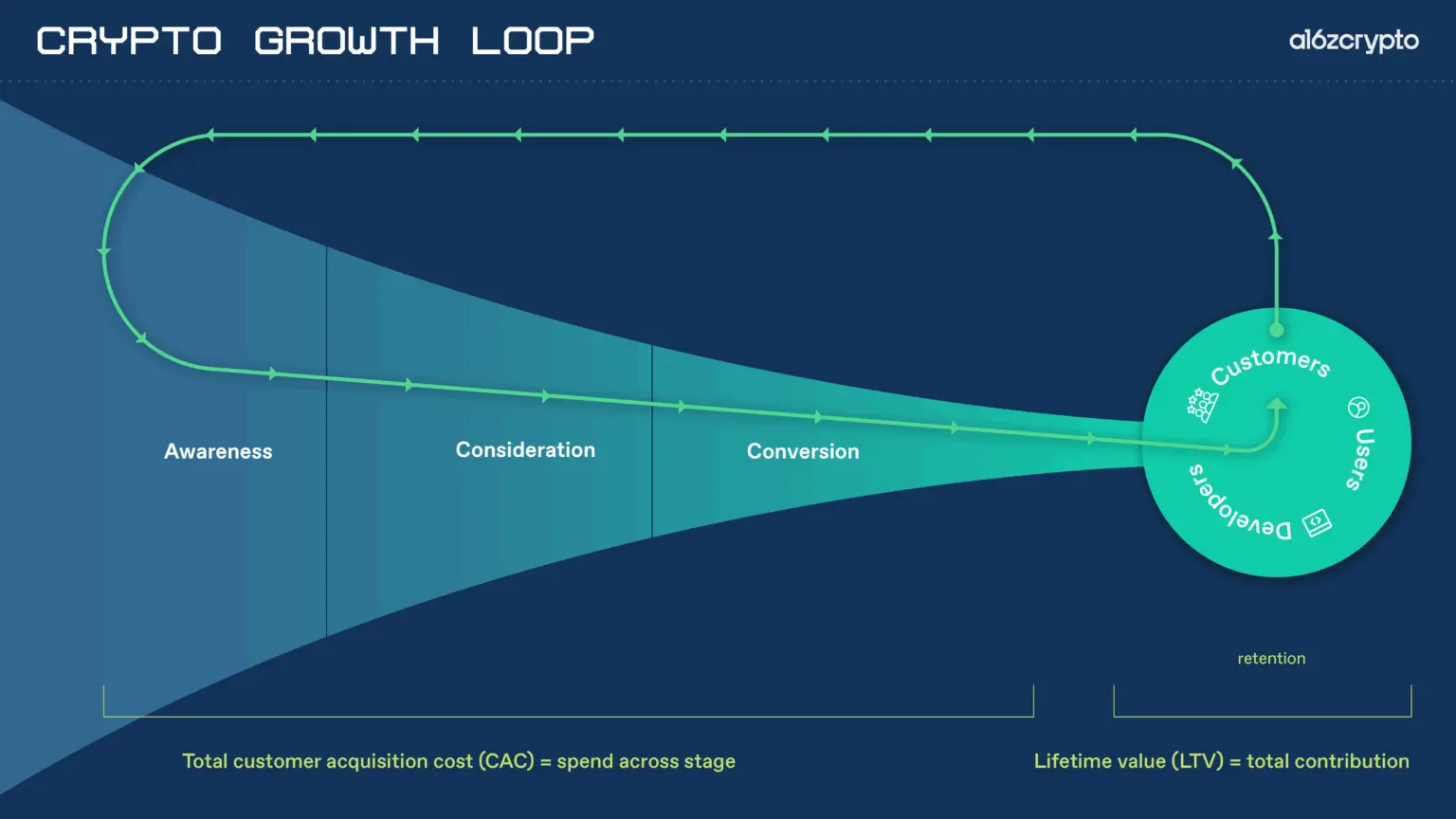
Author: Maggie Hsu Compiled by: Shenchao TechFlow Original title: a16z: What kind of exclusive new metrics do crypto projects need? How do you evaluate the success and growth of a cryptographic protocol or product? In Web2, marketers have a variety of strategies to measure success. Meanwhile, in the field of cryptography, especially in the L1, L2, and protocol areas, marketing strategies are still being developed. Some metrics aren't available yet, some aren't that important, and many others need to be rethought for blockchain. I've talked to a number of growth and marketing leaders, and they each have different dashboards, which is normal because for L1 or L2, the definition of growth isn't the same as the definition of a DeFi protocol, wallet, or game. Let's explore these differences more broadly: both L1 and L2 growth are closely linked to user and developer communities. We can measure the success of L1 and L2 by looking at monthly active addresses (MAA) and the number of apps people have built on them. The growth of MAA without significant growth in applications may simply mean the existence of a few popular or junk apps; ideally, the two should grow at the same time. In this case, the role of the Chief Marketing Officer (CMO), in addition to the promotion agreement itself, is more like a marketing engine for the community. The basic growth indicators of the agreement are the number of users, transaction volume, and total value locked value (TVL) — that is, the total value of assets deposited into the agreement's smart contract, or total guaranteed value (TVS) — the total value of assets guaranteed by the agreement. Although TVL is a highly debated metric, it can be viewed in conjunction with the other metrics discussed below to get an overview of the protocol's growth. One founder shared that they also calculate the “cost of capital” of “active TVL,” that is, the ratio between the amount of rewards they need to provide in order to obtain a certain hedging value and the resulting fees or hedging value. The growth of infrastructure and other software as a service (SaaS) is usually associated with the growth of individual products. For example, the developer platform Alchemy focuses on customer and revenue growth within every product line, similar to what we've seen in traditional SaaS companies. More specifically, focusing on the percentage of recurring revenue or total revenue retention rate (GRR) retained by existing customers indicates that the product is sticky and has a stable customer base, which is critical for measuring recurring revenue. The net revenue retention rate (NRR) also takes upselling into account and reflects the ability to increase revenue for the existing customer base. The growth of wallets and games also looks more traditional (similar to the SaaS example above). But here, it focuses on measuring overall usage and revenue using the following metrics: daily active addresses (DAA), number of unique addresses active on the network per day, number of daily transactional users (DTU), that is, the number of unique addresses making revenue-generating transactions on the network (a subset of DAA) average revenue per user (ARPU), revenue generated from users or customers over a specific period of time. However, if tokens are involved, the token price and holder distribution will be affected, but even these metrics depend on your goals. For example, would you like a large number of small token holders, or a small number of giant whales? It depends on the category, stage, and strategy of your product or service, and you need to choose the right metrics. So, how do you build a company-specific metrics dashboard? Here are some potential metrics suggestions, combined with their place in the marketing funnel to provide more insight. But at the end of the day, you need to decide what to measure, how to weigh the importance of each metric, and how to act on the data... Core Metrics: What Matters? Examples of customer acquisition cost (CAC), lifetime value (LTV), and average revenue per user (ARPU) are central to understanding the success and efficiency of customer acquisition efforts (we will define these metrics below). Although these concepts are widely recognized in traditional SaaS, some adjustments are needed in the field of cryptography, because “customer” here usually refers to a “wallet,” and the form of value creation is also different. We'll redefine these metrics below and explore their crypto...

339d agoLuxurytracy#a16z

Layer 3 Gaming Ecosystem B3 Acquires Game Console Manufacturer Andromeda Insights to Open Up the Hardware Ecosystem

Comparatively, B3, a Layer3 open gaming ecosystem on the Base Chain, has officially entered the hardware field and announced a strategic investment in e-sports console manufacturer Andromeda Insights to lay out a complete game stack. This will be B3PC, a personalized top-tier console created specifically for the crypto community. It is equipped with physical self-destruction and cold wallets. Each unit is tied to an exclusive on-chain identity, which can unlock airdrops, limited events, and offline benefits. Pre-sale of this console is expected to begin in July.

430d ago

Coinbase Announces 8 Tokens Open for Trading to German Users

According to Coinbase Assets, German users can now trade 8 types of crypto assets on the Coinbase platform, including Rocket Pool (RPL), Reserve Rights (RSR), Pudgy Penguins (PENGU), Renzo (REZ), Aethir (ATH), Syrup (SYRUP), Pendle (PENDLE), and Layer 3 (L3). Users can trade, exchange, transfer and store through the official website or mobile app.

453d ago

Arbitrum invests $10 million in blockchain gaming projects, five projects have already been funded

Comparatively, Ethereum's Layer 2 network Arbitrum announced an investment of 10 million US dollars in blockchain gaming projects through Arbitrum Gaming Ventures, a newly established venture capital program. This funding is part of the $200 million plan funded by Arbitrum DAO and is focused on supporting early project construction within the Arbitrum ecosystem. This is the first major funding under the program, and venture capital firms Paradigm, Framework Ventures, and BITKRAFT are also participating. Five projects have been funded, covering game development and infrastructure, including the multiplayer competitive game Wildcard, Hyve Labs, a game-specific rollup solution, Xai, a Layer-3 game chain based on Arbitrum Orbit, Proof of Play, a chain game studio, and T-Rex, a consumer-focused blockchain infrastructure.

465d ago#Arbitrum #invests #Chain tour

Aavegotchi DAO has voted in favor of moving from Polygon to Base

Comparatively, the Aavegotchi community, a Web3 gaming ecosystem based on the Aave protocol, passed the proposal with over 95% approval and decided to migrate from the Polygon network to Coinbase's Ethereum Layer 2 network Base. As part of the migration plan, development company Pixelcraft Studios will discontinue operations of its Layer 3 solution “Geist.” All on-chain assets, including Aavegotchi character NFTs, wearables, badges, etc., will be 1:1 mapping and minting on the Base Chain; the complete migration is expected to take 4-6 weeks, including a smart contract audit period; the original Polygon contract will be upgraded to a read-only mode, prohibiting asset transfers and status changes. The proposal states: “The Polygon PoS chain's TVL has continued to stagnate or decline since 2022. Although game deployment locations should theoretically not affect the experience, actual user traffic always follows liquidity.” (The Block)

501d ago

Coinbase International will support Layer3 and Freysa perpetual contracts

According to the Coinbase International Exchange announcement, Layer 3 and Freysa perpetual contracts will be launched on Coinbase International Exchange and Coinbase Advanced. The L3-PERP and FAI-PERP markets will open for trading on or after 17:30 AM (UTC+8) on April 3.

512d ago#AI #Coinbase #layer 3 #contract