
Loopring · 378
588 days, 300+ Web3 projects fall: who's still at the table?

588 days, 300+ Web3 projects fall: who's still at the table?

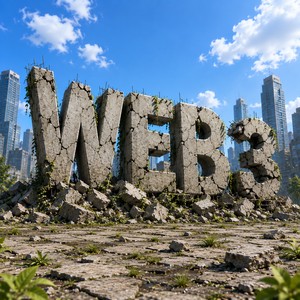
Source: Foresight News Author: Eric Original title: In 588 days, 300+ Web3 projects sank into the deep sea and sailed a thousand sails by the side of a sinking ship, and the disease tree is ahead of time. On the way to prosperity, any industry must go through a round of “dead bodies are everywhere” of elimination, and Web3 is no exception. According to Foresight News's review of public information, since 2025, at least 78 Web3 projects with a total funding amount of more than 1.5 million US dollars have been announced to be shut down. Of these, 69 projects that can confirm the amount of financing have taken away more than 900 million US dollars in total. If you count the small projects that didn't get financing from institutions and died silently, the total number is far over 300. This means that over the past nearly 600 days, an average Web3 project died every two days, or was famous or unknown. Of the 75 projects counted by Foresight News, 37 were shut down throughout 2025, while 41 were shut down in just half of 2026, and 17 were shut down in a single quarter in the second quarter, setting the highest number in a single quarter since this round of clearance. The “hot” DappRadar, Zapper, and established exchanges including BitMEX and AscendEX (formerly BitMax) in the last round of the bull market have all put an end to their business careers in nearly two years. The reshuffle did not stop as the market picked up; on the contrary, it accelerated. After receiving millions of dollars or even tens of millions of dollars in financing, every team that has stepped into this new world has had the proud ambition of “laughing at the sky and going out. Are our generation people from Fenghao?” But after a few years of being baptized in the market, these cold and cruel numbers are still in front of everyone's eyes. Emerging markets are also markets, and Web3 isn't more gentle than other industries. “Not being able to support myself” is the number one “cause of death”. Looking at the “cause of death” of 75 projects, the first one ranked was “insufficient funding,” with 31 projects falling on this issue, accounting for more than 40%; followed by “insufficient market demand,” and 17 companies shut down as a result. The two added up are close to two-thirds of the total. In other words, the vast majority of projects die for only one reason: they have never been able to support themselves. The expressions used by these projects in the shutdown announcement are similar. Many of them say “after trying our best to find a path to sustainable development, we have not found a path to sustainable development.” The subtext of this sentence is: At the beginning of the project, there was actually no idea how to do it, or the initial idea was very different from the actual situation in the market. Some industry observers rated this wave of bankruptcy as “a direct reflection of the failure of the business model and the breakdown of the capital chain, rather than simply fluctuating market sentiment,” which can be described as hitting the head. The investment logic of the primary market has completely changed in the past two years. The first question investors meet is no longer “how much room do you have for imagination”, but “how to make money.” The first batch of projects whose revenue did not cover operating costs or tell a new story fell after the financing floodgates were tightened. The OSL Institute summarized this shift in its annual report as the industry moving from the “first half” to the “second half”: a growth model driven by rising asset prices and innovative agreements came to an end, and the market moved “from narrative to delivery.” To put it more bluntly, the market and capital are no longer willing to pay for “experiments,” and the project's self-hematopoietic ability has become a necessity. Compared to the reason they wanted to be clear, the five projects that announced that the “model is unsustainable” seemed much more honest. For example, Goldfinch, which made unsecured credit loans, lost blood and shut down due to continued bad loans to emerging market companies; the social game Fantasy.Top, which is a popular social game that relies on tokens to motivate, makes it difficult to sustain the incentive model after the popularity recedes. The “unsustainable model” is a very interesting reason for the collapse. Most unsecured credit loans in traditional financial markets are based on big data or personal past credit records to set reasonable limits. As an emerging “lending company,” Goldfinch dares to provide unsecured credit loans in emerging markets without credit data. This is not a problem that can be solved by cryptocurrency and Web3 alone. Obviously, the reason for the birth of this company with a total financing amount of nearly 40 million is hard to convince. I don't know how top institutions like a16z were fooled into entering the market. Additionally, some companies have died due to regulation. Mango Markets shut down through a community vote after reaching a settlement with the SEC...

10d ago22#WEB3
No thunderstorms, no hackers, why are more projects falling in 2026?

No thunderstorms, no hackers, why are more projects falling in 2026?

Author: Claude, Shenchao TechFlow Original title: 100 Crypto Projects Died in 2026: There was no explosion this time, only starving. On July 17, BitMart released an enthusiastic report for the first half of the year: the scale of asset management increased by about 256%, newly launched predictive market products, and just obtained an Australian financial services license in June. The report also acknowledged that the background board was not very good. Bitcoin fell 30% in half a year, Ethereum fell to a standstill, and spot ETF had a record net outflow. Nine days later, at 01:30 UTC on July 26, the same company announced an orderly shutdown. New user registration was stopped, deposits were closed, contract accounts were switched to a position reduction mode, trading was completely stopped on August 26, and completely closed on January 31, 2027. The BMX platform coin fell by nearly 60% on the same day. What's even more absurd is former Global CEO Nenter Chow's statement on X: He was notified of his dismissal on July 24, and has not participated in any management decisions since then. He has seen the news of the shutdown, just like everyone else. Three days ago, BitMEX just announced the closing of the exchange at 04:00 UTC on September 23, ending 11 years. Moving forward, AscendEX was shut down on July 1, and EXMO was liquidated because it was included in the UK's sanctions list against Russia. Within a month, four well-known centralized exchanges withdrew. RootData's 2026 list of dead projects in the crypto industry has reached number 100 and is still being updated. The number isn't 100 big is scary to put in the title; it's not that scary when you put it in a historical coordinate system. According to RootData's own statistics, 67 in 2021, 250 in 2022, 230 in 2023, 171 in 2024. After seven months in 2026, there are fewer than 100, and the full year is unlikely to catch up with 2022 and 2023. So 2026 can't be called the coldest summer in the crypto industry, in a really cold place, in the texture of a death list. Go through the names on the list: Wallets include Family, Ctrl, Leap, BitMart, BitMEX, and AscendEX; infrastructure and DeFi include Zapper, Stream Finance, Parsec, Loopring, Goldfinch. BitMEX has lived for 11 years, BitMart has been alive for 9 years, and Loopring is the first batch of zkRollups on Ethereum. These aren't air projects that were issued in 2024 and ran off the road in 2025; they have brands, users, real income, and veterans who survived the previous bear market. Lever and Ponzi died in 2022, and the longer the death list, the cleaner the industry. What died in 2026 is the business model. The shorter the list, the more it means that the blade has been cut into meat. The law changed from explosions to starvation. The common features of the 2022 deaths were violence: Luna returned to zero for three days, 3AC security deposit recovery was in default, FTX misappropriated customer assets were squandered, and Celsius froze withdrawals. The death occurred instantaneously, and the user's assets were directly evaporated, and the judicial process has not been completed until today. The common characteristic of the 2026 batch is decency. BitMEX gave users a full two-month liquidation period, and the withdrawal window was opened until 2027; BitMart gave users one month to close their positions and withdraw for six months, repeatedly reminding users to complete authentication before applying; Storj followed Chapter 11 restructuring rather than liquidation; the network was running as usual, and customer service was not interrupted. The wording of the announcement is almost exactly the same: after careful evaluation of the business situation, market environment, and future strategic direction, it was decided to exit in an orderly manner. Translate adult sayings, this is a business that is not profitable anymore. There were no hackers, no hacking, no law enforcement raids, it was just that the accounts couldn't be calculated. Starvation and explosion are two completely different market signals. An explosion means that systemic risk is spreading, and the collapse of a family will be destroyed; starving to death means that individual businesses fail, and the risk is isolated in one's balance sheet. The distribution of the lumbar collapse death list is not random; it accurately hits the industry's waist. Moonrock Capital's Simon Dedic put the problem with mid-sized exchanges straight: the fatal flaw in this model is that it must...

26d agoburnking#ETF #Ethereum #Shut down the tide topic #Bitcoin #Predicting the market

Rootdata: The number of crypto projects announced to close in 2026 has increased to 70

According to Web3 asset data platform RootData, the list of closed projects in the crypto industry in 2026 has increased to 70 and is still growing. The newly included projects cover multiple tracks, including Layer 2 protocol Loopring, lending blockchain UX, cross-chain clearing layer Everclear, decentralized credit protocol Goldfinch, Bitcoin-based Layer 2 Botanix, peer-to-peer NFT lending protocol NFTFi, and DeFilLama's news media DL News.

53d ago

Loopring announced the closure of Loopring DEX and the return of users' assets

According to Twitter, Loopring, an Ethereum layer 2 protocol, posted an article on the X platform announcing that Loopring DEX will immediately stop all trading services. The repeater went offline immediately. The team said the reason for the shutdown was that it failed to gain meaningful adoption. As the first zkRollup, ecological growth was limited due to the lack of virtual machines. At the same time, LRC was removed from major exchanges in 2026, which accelerated the outcome, and the modern zkEVM solution made its dedicated architecture look outdated. The closure process is as follows: 1. The team will announce the final balance list of all users in the next few days, covering spot balances and liquidity pool positions automatically converted to underlying assets; 2. Upgrade the contract to a version that only allows transfers from whitelisted addresses to support batch distribution; 3. Open a two-week review period for users to verify; 4. After the review period is over, assets will be sent directly to the user's L1 wallet address in batches. Only accounts with a balance value of $10 or more are included in the distribution. Users do not need to operate or pay gas fees themselves; all transaction costs are borne by the team.

54d ago

Affected by the delisting news, HOOK and many other “delisted tokens” fell by more than 20% in a short period of time

Comparing news, due to Binance's takedown news, several tokens on the delisting list fell by more than 20% in a short time: A2Z fell more than 15% and now reports 0.0007 USDT; FORTH fell more than 25% in the short term and now reports 0.752 USDT; HOOK fell more than 20% in the short term and now reports 0.0186 USDT; IDEX fell more than 20% in the short term, now at 0.0061 USDT; LRC fell more than 20% in the short term Reported at 0.0066 USDT; RDNT fell by more than 20% in a short time to 0.00476 USDT; SXP fell by more than 10% for a short time and is now at 0.0099 USDT. Earlier, Binance will stop trading and delist Arena-Z (A2Z), AmpleForthGovernanceToken (FORTH), HookedProtocol (HOOK), IDEX (IDEX), Loopring (LRC), Neutron (NTRN), RadiantCapital (RDNT), and Solar (SXP) tokens on April 1, 2026 at 03:00 (UTC).

157d ago

Binance will delist tokens such as HOOK, RDNT, and LRC

Comparatively, according to SXP, according to official sources, Binance decided to delist all spot trading pairs and stop trading of the following tokens at 03:00 (UTC) April 1, 2026 at 03:00 (UTC): Arena-Z (A2Z) Ampleforth Governance Token (FORTH) Hooked Protocol (HOOK) IDEX (IDEX) Loopring (LRC) Neutron ( NTRN) Radiant Capital (RDNT) Solar

157d ago

Binance will delist 8 coins including A2Z and FORTH on April 1, 2026

According to the official announcement, Binance will stop trading and remove all spot trading pairs for the following currencies at 03:00 (UTC) on April 1, 2026: Arena-Z (A2Z), AmpleForthGovernanceToken (FORTH), HookedProtocol (HOOK), IDEX (IDEX), Loopring (LRC), Neutron (NTRN), RadiantCapital (RDNT), Solar (SXP). Withdrawal services for the relevant currencies will stop after 03:00 (UTC) on June 1, 2026. In addition, support for these currencies will also be removed simultaneously from various product lines such as Binance contracts, leverage, easy coin earning, flash exchange, and coin purchases. Please refer to the official announcement for details.

157d ago

Binance will add watch tags to tokens such as WIF and COS, remove FLOW's watch tags, and remove ONDO and VIRTUAL seed tags

According to Twitter, according to official sources, Binance will add watch tags for more tokens and remove watch tags and seed tags for the corresponding tokens on March 06, 2026. The tokens added to the watch tag list are as follows: Contentos (COS), Dego Finance (DEGO), Ampleforth Governance Token (FORTH), FUNToken (FUN), Hooked Protocol (HOOK), Loopring (LRC), MOBOX (MBOX), Orchid (OXT), dogwifhat (WIF) removed from the watch list The tokens are as follows: The tokens that Flow (FLOW) removed from the seed tag list are as follows: Ondo (ONDO) and Virtuals Protocol (VIRTUAL) observation tag tokens are likely to have higher volatility and risk compared to other listed tokens. It will be closely monitored and continuously reviewed. Trading these tokens with an observation tag is risky. These tokens no longer meet the standards at the time of currency on the platform and may be removed from the list.

169d ago

UPBIT will remove Loopring (LRC) related trading pairs

According to news, UPBIT will end trading support for Loopring (LRC) at 15:00 on March 16, 2026. The affected trading pair is LRC/BTC. Users are requested to note that after transaction support ends, uncompleted orders will be cancelled, and related services will no longer be provided after transaction support ends.

190d ago

Data: There are currently 109 user actions less than 1 per second out of 135 Layer 2

Comparative news, according to incomplete statistics from l2beat data, there are currently about 135 Ethereum Layer 2 networks in the market, and 109 Layer 2 user operations per second (UOPS) in the past day is less than 1. The Ethereum mainnet's UOPS for the past day was 29.94, peaking on January 16, 2026 (33.59). Here is some mainstream Layer 2 network data: · Base, the UOPS for the past day was 144.04, peaking at 213.14 (November 18, 2025) · Polygon, with a UOPS of 81.49 in the past day and a peak of 190 (November 16, 2023) · Arbitrum, UOPS of the past day was 60.13, peak was 69.35 (September 25, 2025) · OP, UOPS of the past day was 28.71, and peak was 33.81 (October 10, 2025). Among the 109 counted Layer 2 with less than 1 user operations per second (UOPS) in the past day, including ApeChain (0.73), Linea (0.73), and Blast ( 0.67), Mantle (0.54), Manta (0.52), zkSync Era (0.46), Metis (0.28), Hemi (0.1), Sophon (0.08), Zora (0.07), zkFair (0.06), Aevo (0.05), Degen Chain (0.04), Polygon zkEVM (0.04), Redstone (less than 0.01), Loopring (less than 0.01) ).

199d ago