MetaverseHub · 47
Physical AI is more than just “machine replacement”: Amazon adds 30% more highly skilled jobs

Physical AI is more than just “machine replacement”: Amazon adds 30% more highly skilled jobs

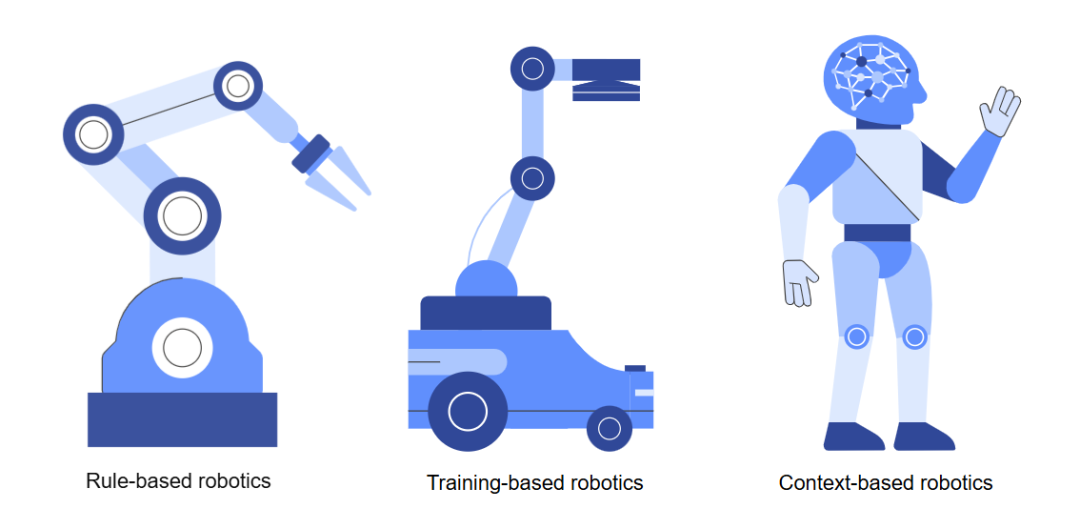
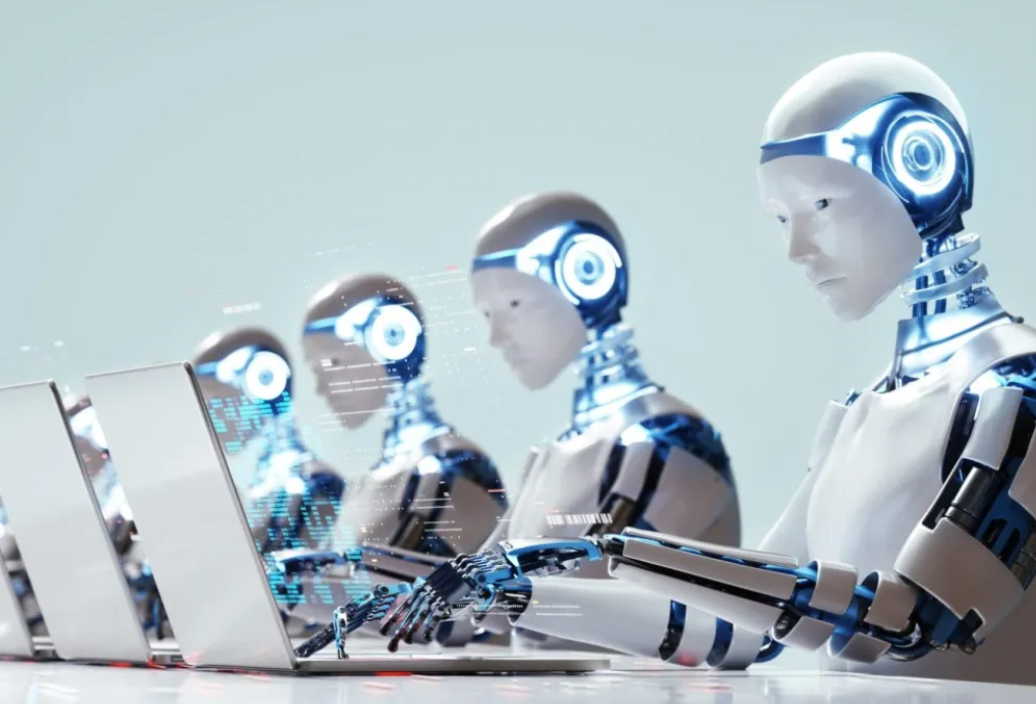
Source: Heart of the MetaverseHub Original link: https://mp.weixin.qq.com/s/I4pYdnSXGM_hdjwVTIW8Uw自动化推动了第一次工业革命的发展,且在当今的第四次工业革命中持续演进. Although automation has become an important part of early manufacturing, recent advances in artificial intelligence, vision systems, and robotic hardware are spawning a new generation of “smarter and more adaptable” machines. The new white paper “Physical AI: Empowering a New Era of Industrial Operations” published by the World Economic Forum explores that the development of these technologies is expanding the boundaries of the role of robots, not only improving efficiency, but also bringing greater flexibility and resilience to risks to factory floors. Previously, most industrial robots were designed to perform fixed, repetitive tasks in a controlled environment, but this situation is beginning to change. With physical AI, robots are increasingly capable of sensing, learning, and responding to more complex environments while supporting a wider range of task types. This transformation comes at a critical juncture. Currently, manufacturers are facing multiple challenges such as rising costs, labor shortages, and changing customer needs, and the business environment is becoming increasingly complex. But how did this situation come about? Understanding the evolution of industrial robots can provide an important background for grasping future trends. 01. Evolution of industrial robots The application of physical AI is the next step in the long-term evolution of industrial robots. We might think of robots as a product of the future, but the first industrial robots date back to the 1960s. The term “robot (robot)” comes from the Czech word “robota”, which means forced labor. Early industrial robots were based on rules, that is, perform repetitive tasks with high accuracy and speed through clear programming, but they lacked flexibility. These systems have become standard in industries such as automobiles and electronics, which benefit from increased workshop productivity brought about by robots. For tasks with low variables and high yield, such rules-based robots will still play a role, and their application scenarios and capabilities will continue to evolve. Today, training-based robots are driving the rise of physical AI. Through AI and machine learning, robots can learn from simulated or real-world scene experiences. Unlike their predecessor, they are no longer rigidly following specific procedures, but can handle tasks with certain variables, making them more suitable for “medium yield” or even “non-repetitive” production tasks. The point is that their training can be virtualized, drastically reducing deployment time and expanding the range of tasks that can be automated. Context-based robots are the next step in intelligent automation. Similar to training-based robots, they are equipped with sensing tools, from high-resolution cameras to tactile sensors, to “observe” and interpret the environment in real time. The core that supports these capabilities lies in powerful AI-based models. These models can generate output through natural language cues and integrate vision, language, and movement to understand the environment. They can grasp their own situations, “think”, make independent decisions, and even plan. The white paper compared the extent of these skills to “human-level task intuition and planning ability.” Although these robots are still far from the common humanoid appearance in movies, their appearance is also changing: various forms such as four-legged robots, humanoid robots, and mobile robots have appeared one after another, further expanding the scope of application of robots. It should be emphasized that these three robotics technologies, rule-based, training-based, and context-based, will continue to play a role in manufacturing. As part of a diversified automation strategy, their deployment will be tailored to the needs of different production lines and task types. 02. Why are physical AI and intelligent robots the key to manufacturing? For manufacturers only, the help of robotics technology is just right. The current supply chain is still very weak, and problems such as geopolitical tension, shortage of raw materials, and transportation bottlenecks have further exacerbated this situation; market uncertainty has made these problems worse, threatening productivity, profits, and resilience to risks. Rising raw material costs, energy prices, and wage levels, compounded by labor shortages and widening skill gaps, have all exacerbated the challenges in the manufacturing industry. At the same time, customer needs are also increasing: more emphasis is placed on customization, faster delivery, and sustainability. Intelligent robots connect the digital world with the physical world to achieve these goals by improving operational flexibility, but manufacturers need to incorporate robotics technology into a “long-term strategy” rather than just pursue short-term benefits. 03. To achieve this transformation, a “skilled workforce” is critical to building a workforce that can handle robotic automation. According to the World Economic Forum's “Future Jobs 2025 Report”, robots and autonomous systems will...
339d ago元宇宙之心MetaverseHub#MetaverseHub, the heart of the metaverse
Can one person build a billion dollar company with AI agents?

Can one person build a billion dollar company with AI agents?

Author: Heart of the MetaverseHub Is One Person's Superenterprise Reality? What are the best tools and techniques for a small team to scale and grow a business? If you're looking for a way to escape corporate life, freelancing or starting your own business might be just right for you. You can earn a good income as an independent contractor with software development, design, or commercial skills. If you go one step further, you can also start your own company and get higher returns. However, building a scalable business usually requires capital investment, product ideas, market research, marketing capabilities, sales skills, technical solutions, and a dedicated team to help you achieve your goals. In other words, it all requires financial and resource support. That is all changing, though. Tim Cortinovis mentions in his new book “The Unicorn Running Alone: How One Person Can Build a Billion-Dollar Company”: With only AI tools and freelancers, one person can set up a company. Today, networking and AI tools allow you to quickly create and scale a company on your own or even with a very small team. The only thing lacking is the innovative spirit of entrepreneurs and the ability to identify and serve the market. Cortinovis explained in a recent podcast that the key to building a scalable one-person business is the right mindset, tools, and business model. With the rise of AI agents, “you can handle everything,” he said. “These AI agents work seamlessly across almost all platforms. You have a managed agent, the equivalent of a brain. There are sub-agents in the hierarchy below. You can let sub-agents access customer information, addresses, etc. There are also agents that specialize in invoicing. These proxies access information through your email client (such as Gmail, Outlook) or database. Once connected to WhatsApp, customer questions and messages are handled automatically. The management agent is responsible for overseeing all processes and ensuring the success of your business.” Is a one-person superbusiness really realistic? Frankly speaking, this still sounds extremely complicated and unsettling. There are also mixed opinions about this opinion among industry pioneers who are expanding their businesses. First, it depends a lot on the industry. For example, it's hard to imagine a person running a gas refinery or bank. “The real question is not whether one can grow a business, but rather what industries are suitable for doing so,” said Cassie Kozyrkov, founder and CEO of Kozyr and chief decision scientist at Google. “In low-risk fields such as commerce, content, and productivity, individual entrepreneurs are entirely likely to build huge businesses. The infrastructure and tools are in place, and distribution channels are within easy reach.” In high-risk industries such as healthcare, finance, or law, “the limit is not technology, but operations: security, compliance, regulation, and auditability are all key to responsibly deploying solutions and passing enterprise-level reviews,” Kozyrkov added. Nic Adams, co-founder and CEO of Orcus, said, “There are already some very large individual startups that are at the cutting edge of the industry. With automation, data channels, and self-evolving agents, individuals or small teams can indeed build and scale a billion-dollar business. The key is to combine real-time AI with modular, cloud-native infrastructure to achieve horizontal expansion and get rid of human bottlenecks, such as organizational structure and number of people.” Edstellar CEO Arvind Rongala also agreed: “Expanding the size of the enterprise no longer depends on the number of employees, but on the leverage effect. Today's individual entrepreneurs don't have to worry about everything; they only need to design a system that allows technology, global talent, and automation to take on the heaviest work.” However, individual entrepreneurship still has its limits in the process of building a super enterprise. “I don't think Cortinovis's idea is practical,” said Komninos Chatzipapas, founder of HeraHaven AI. “Especially for unskilled people, who want to use AI to expand their business. I think this kind of prediction is a reflection of the Dark Effect. Many people have limited understanding of AI, yet they greatly overestimate AI's current capabilities.” He added, “There are indeed similar success stories, such as Midjourney, which has been valued at $1 billion with just 11 employees, but they are developing AI products rather than using AI to develop products. AI has a wide range of knowledge, but its depth is limited. It can be programmed much more than...

444d ago元宇宙之心MetaverseHub#MetaverseHub, the heart of the metaverse
How can an ordinary person earn more than 10,000 a month? These five AI sideline directions are worth paying attention to

How can an ordinary person earn more than 10,000 a month? These five AI sideline directions are worth paying attention to

Source: Heart of the MetaverseHub Original link: https://mp.weixin.qq.com/s/bi_PIP_YQ7_J0iFAuTyhLQ人工智能(AI)领域正蓬勃发展. A recent McKinsey study found that the proportion of companies using generative artificial intelligence has jumped from 65% in early 2024 to 71% in March of this year. As business users began to accept it, ordinary sideline workers also began to actively participate. Using AI to develop side jobs can be more efficient, increasing revenue and saving time. Here are some specific ideas and directions: 01. Creating customized GPT If you are familiar with the logic of using ChatGPT or similar tools, you can use this knowledge to create customized GPT (i.e., generative pre-trained Transformer models) for specific fields. Once the chatbot has generated the required code, it is deployed on a private website, and a free trial is offered to enterprises, followed by a monthly fee model. There are a wide range of specific application scenarios, such as generating automatic responses to legal documents, translating notes into official reports, etc. The best approach is to develop automated solutions for specific tasks based on pain points mentioned by customers, or research through social media or professional forums, and one tool can serve hundreds of customers facing the same issues. 02. Develop AI micro tools If you don't have the idea to create a customized GPT, you can also develop your own AI tool on platforms such as Gumloop. These platforms enable the creation of workflows that can be run at scale through visual interfaces. Using drag-and-drop templates, you can develop tools for various functions, from performing search engine optimization (SEO) audits of websites to designing job candidate ranking systems. Once development is complete, the service can be promoted to enterprises. 03. AI video editing In the past, it could take several hours to manually edit videos, which caused many limitations. Currently, with AI tools such as Veed.io or Runway, it is possible to complete operations such as video editing and color correction, scene restructuring, background noise removal, and even generating subtitles in a very short time. 04. AI web design Web design used to be a highly specialized skill, but now with the help of AI, the threshold in this field has been drastically lowered. AI tools can speed up the design process and help create websites that attract visitors, while AI takes on the core work of coding. Once you're familiar with the process, try platforms like Wix or Jimdo. 04. AI search engine optimization (SEO) companies always want to rank high on search results pages, but they have little energy to conduct in-depth reviews of websites. If you master certain AI skills, you can use tools to improve the SEO process, such as optimizing content, adjusting tags, and providing suggestions to improve readability. Some tools can even provide data analysis methods, so long-term customers can intuitively understand how users discover and use websites. Currently, tools such as Alli AI, Frase, and MarketMuse are good choices...

450d ago元宇宙之心MetaverseHub#MetaverseHub, the heart of the metaverse
The biggest masterpiece in OpenAI history! Apple's legendary design team won $6.4 billion, and the AI+ hardware king combination was born?

The biggest masterpiece in OpenAI history! Apple's legendary design team won $6.4 billion, and the AI+ hardware king combination was born?

OpenAI announced on May 21 that it will acquire Jony Ive's artificial intelligence hardware startup iO through an all-equity transaction with a transaction valuation of approximately US$6.4 billion. OpenAI's current shareholding in iO accounts for 1.4 billion US dollars in the estimated value of this transaction, and the remaining 5 billion US dollars will be transferred in the form of shares. This acquisition is OpenAI's largest acquisition to date, and marks a decisive step for the company known for its generative AI models into the hardware sector. The deal directly incorporates IO into OpenAI. 01. Integration with AI and product teams In a joint statement, OpenAI CEO Sam Altman and Ive stated that the io team will move to San Francisco to work closely with OpenAI's research and product teams. Meanwhile, Ive, who was Apple's design director, will maintain the independence of its design company LoveFrom. IVE is considered the designer of the iPhone, iPad, and other important Apple products. Ive will work as a consultant on OpenAI hardware product design, and some of his former Apple employees will also join the AI company. Before Jony Ive left Apple in 2019, every major Apple hardware launch featured a video highlighting the physical design of the product, with Ive's gentle British accent narration. Due to his key role in the creation of the iPhone and Apple Watch, Ive became a benchmark for excellent hardware design in Silicon Valley. The IO startup was founded by IVE and former Apple colleagues Scott Cannon, Tang Tan, and Evans Hankey a year ago, and previously operated as part of LoveFrom. These Apple design veterans and io co-founders will all join OpenAI. The deal will bring io's device-focused team in-house, adding industrial design capabilities to OpenAI's product portfolio. Sam Altman called Ive “the greatest designer in the world” in a statement shared on the X platform. 02. Will AI devices usher in changes? The announcement highlights the growing consensus in Silicon Valley that artificial intelligence assistants may disrupt the entire world of electronic devices and replace the laptops and smartphones currently manufactured by Apple with new products that look and function completely different. “Technological changes such as the internet, smartphones, and AI only happen once in a generation,” senior Apple analyst Gene Munster said in an article on the X platform on Wednesday. “OpenAI is catalyzing this transformation into a tangible product.” Even Apple executives said that AI hardware could threaten their iPhone business. Apple's service director Eddy Cue said in court earlier this month that he believes AI devices could replace iPhones within 10 years, “although that sounds crazy.” “AI is a new technological revolution that creates new opportunities for new entrants,” Eddy Cue said. Meanwhile, Apple's major improvements to its built-in assistant Siri were delayed earlier this year. One of the core features of Apple Intelligence is integration with OpenAI's ChatGPT to handle queries that Apple Intelligence can't handle. But Siri is still like a simple question-and-answer system, rather than being able to have a smooth conversation like ChatGPT or Google's Gemini. Apple will present its R&D results at the annual WWDC conference to be held in Cupertino, California on June 9. Last year, Apple first unveiled Apple Intelligence here, and usually announces the latest software for iPhones, iPads, and Macs here. OpenAI's announcement contains few details on what type of products the new OpenAI hardware team will design and build, but the company said it will present the products it is developing next year. 03. The announcement of the next major product sounded a wake-up call for Apple, because Apple's former design master is now cooperating with the fastest growing company in Silicon Valley to build top hardware devices, which is likely to threaten Apple's current position. As Ive said in the video, “I am absolutely convinced that we are indeed on the edge of a new generation of technology that will make us a better version of ourselves.” OpenAI's CEO Sam Altman said he's excited to partner with Ive to “try to create a new generation of AI-driven computers.” Although a best-selling AI consumer hardware product hasn't appeared yet, several startups have tried to create...

456d ago元宇宙之心MetaverseHub#OpenAI #MetaverseHub, the heart of the metaverse #hardware #apples
New trends in the workplace: 82% of employees say the AI era requires more humanity

New trends in the workplace: 82% of employees say the AI era requires more humanity

Source: Heart of the MetaverseHub Original link: https://mp.weixin.qq.com/s/muByGhcaKhsWHDATsBAk4g Artificial intelligence (AI) is a transformative force dominating the world of work. We've seen that it's reshaping workflows, improving efficiency, and is expected to bring higher levels of productivity to various industries. While the technical capabilities of artificial intelligence are unquestionable, we must also recognize the importance of human-specific skills, particularly the ability to “connect” with each other, has always existed, and is even growing day by day. In an age dominated by algorithms, cultivating real relationships is no longer a “soft skill,” but is becoming a core driving force for innovation and progress. Today, people in the workplace are more eager to build close relationships, gain a sense of belonging, and want to be noticed and valued. In fact, McKinsey & Company research shows that among the top reasons former employees left their jobs, 54% said they felt that they were not taken seriously by the organization, 52% felt that they were not taken seriously by management, and 51% said they lacked a sense of belonging in the workplace. Furthermore, numerous studies have found that loneliness in the workplace can lead to decreased work performance, reduced satisfaction, deteriorating relationships between employees and superiors, and increased burnout. It's critical for businesses to understand how relationships benefit their business. 01. Artificial intelligence and human elements The future of artificial intelligence is undoubtedly broad — it can analyze data within seconds and automate complex tasks. However, this powerful ability also poses a potential contradiction: if we lack deliberate guidance, artificial intelligence may create “knowledge silos,” limit our access to different perspectives, and stifle innovation. And by connecting with each other, truly understanding, and being able to appreciate others from different life experiences and backgrounds, this is the key to inspiring innovation and solving common problems. This demand and desire for emotional connection is already changing the application direction of artificial intelligence. Research from the Harvard Business Review shows that the primary use of generative artificial intelligence (GenAI) is currently to “provide emotional companionship or psychological counseling,” while just last year, its main use was “generating ideas.” 02. Research on emotional connection Academic researchers and non-profit organizations are conducting relevant research on interpersonal relationships, such as Workday Foundation grantee More in Common, which is carrying out in-depth research on “connection.” Their two-year study, The Connection Opportunity, revealed a basic human truth: humans naturally crave emotional connection. The study found that 66% of respondents from all groups in the US believe they can learn valuable things from people with different backgrounds, and 70% also believe they are responsible for doing so. Another survey showed that 82% of Americans more or less agree that “a nation's success depends on our ability to collaborate across differences,” and most express a desire to better understand each other. As we work towards common goals, core values and a shared vision hold us together. Actively seeking this consensus and fostering positive interaction, whether in our personal lives or within our organization, can help us overcome differences. Feeling connected is not only beneficial to our own health, but is also critical to the operating results of the business. According to the study, 94% of employees said that close relationships with colleagues made them more efficient at work, while they were four times more likely to get job satisfaction and were half less likely to leave the job within the next year. More in Common has identified a key “connecting bond” — shared values and experiences that can bring together seemingly disparate groups. These bonds take many forms, from a shared commitment to the well-being of the community to ensuring that participants believe they have something in common, such as the same identity or interests. This focus on shared values and active pursuit of connection is highly compatible with the philosophy that Workday upholds. This also highlights the importance of supporting non-profit organizations and funding partners such as More in Common, U.S. Chamber of Connection, One America, and New Pluralists, as this is the key to thriving business and society. 03. Excellence: Skills in the AI Era Workday...

460d ago元宇宙之心MetaverseHub#MetaverseHub, the heart of the metaverse
Big conversation: Wharton and Google leaders talk about five ways AI is reshaping work

Big conversation: Wharton and Google leaders talk about five ways AI is reshaping work

Source: Heart of the MetaverseHub Original link: https://mp.weixin.qq.com/s/-NBNBji7k40ykBigWDcC8A在今年的SXSW大会上,沃顿商学院的Stefano Puntoni and Google's chief measurement strategist Neil Hoyne discussed the impact of generative artificial intelligence on the workplace and life. In this fireside conversation, they also shared their views on how generative artificial intelligence is changing jobs and the value proposition of workers. Here are their main points: 01. AI is reshaping work rather than replacing work “Using generative artificial intelligence, which is essentially more a story about human capital than a story about technology.” — Stefano PuntoniAI is often seen as a technological advance, but Puntoni believes the real impact is how humans adapt to it. Our discussion should not be limited to Silicon Valley, but should extend to fields such as business schools, social science, and workforce development to understand the role of AI in shaping the future of work. Artificial intelligence is unlikely to completely replace most jobs; rather, it will redefine those jobs. Just as photography technology evolves with the advent of digital tools, industries are adapting by incorporating artificial intelligence into their workflows. Understanding what aspects of work are identity-driven and what are utilitarian can help individuals not feel threatened by this transformation. 02. AI should be viewed as a technological differentiator “When artificial intelligence is everywhere and claims to be omnipotent, it's hard to tell where its boundaries lie.” — Neil Hoyne Essentially, artificial intelligence is about making predictions — whether it's predicting consumer behavior, generating text, or even creating music. But as artificial intelligence becomes a buzzword in business, companies are increasingly using it as a brand promotion tool rather than a real technological differentiator. Businesses need to deploy artificial intelligence in a way that makes real sense for their own operations. 03. Human-robot collaboration, not human-robot confrontation “Things we're not naturally good at, but artificial intelligence is very good at. And what artificial intelligence can't do is just something that brings us more meaning and fun.” — Puntoni “Research seems to suggest that if people see a task as a utilitarian part of their job, not necessarily related to their identity, then they are acceptable and less threatened by automating that task.” — Hoyne's research shows that people can accept automating some everyday chores, but they resist automations that infringe on identity-related skills. This has a wide range of applications, whether in baking, biking, or programming. The application of artificial intelligence will depend on whether people see it as a tool that enhances their own professional abilities, rather than something that will erase those abilities. Instead of competing with AI, people should focus on skills that AI cannot easily replicate, such as moral literacy, creativity, strategic thinking, responsibility, and leadership. Automation may reduce staffing for some jobs and tasks, but expertise and innovation will be more valuable. 04. Businesses need to realign “If we use technology to improve efficiency and only free up more time to complete work output, then we've missed a major opportunity to realign work expectations.” —— Hoyne “One of the most important elements surrounding AI that we haven't talked about is talent pool.” —— Puntoni As AI automates entry-level tasks, traditional career development paths are at risk. Companies must find new ways to train and develop young professionals; otherwise, it may be difficult to find experienced talent in the future. Leaders must rethink talent development issues to ensure that human expertise evolves in tandem with artificial intelligence. 05. AI will have a greater impact on everyday life “Seeing generative AI as a threat really lacks foresight.” — The transformation brought about by Puntoni's artificial intelligence is not only about work efficiency, but also about reevaluating our relationship with work itself. If AI helps us free up time, how will people reallocate that time? This may trigger a social shift where personal identity is less related to work and more closely linked to personal hobbies, relationships, and creative pursuits. Furthermore, AI is also changing teaching...

470d ago元宇宙之心MetaverseHub#AI #MetaverseHub, the heart of the metaverse #Google
Demystifying the other side of AI: unknown application scenarios that are changing the lives of millions

Demystifying the other side of AI: unknown application scenarios that are changing the lives of millions

Source: Heart of the MetaverseHub When we witness artificial intelligence (AI) being integrated into our daily lives, we often focus on the most compelling examples: chatbots that write poems, artworks created by algorithms, or autonomous vehicles. But at the same time, we are ignoring that artificial intelligence is already solving problems that affect the lives of millions of people in some fields of expertise. Vladimir Kokorin, founder of the British BCCM Group and venture capital IT expert, said, “The real impact of artificial intelligence is not reflected in research laboratories or corporate headquarters in Silicon Valley, but in how these technologies change people's lives.” We'll start from his point of view and explore areas of artificial intelligence applications that are unknown to ordinary readers. 01. Predicting natural disasters Imagine: storm clouds outside have only just begun to gather, but you already know when precipitation will begin, what it will look like, and when it will end. And you know if these clouds will turn into a dangerous natural disaster. In the fight against natural disasters, artificial intelligence has shown considerable capabilities. In the past, meteorologists used huge physical models that required hours of computation on powerful supercomputers. Today, models such as Google DeepMind's GraphCast, Nvidia's FourCastNet, and Huawei's Pangu Weather can do the same job within a few minutes, and the results are often better. Kokorin explained, “The AI-based prediction system is like a magnifying glass, which allows us to observe the weather conditions in the most detailed way. This level of accuracy is critical for rescue operations and timely response to natural disasters.” Currently, the European Centre for Medium-Term Weather Forecasts is already using these new tools. They divided the world map into tiny squares for more detailed analysis. Startup Atmo went a step further. Their model could observe the weather with an accuracy of one mile, while the accuracy of the old system was only 5.5 miles. This is like blurring the difference between a photo and a high-resolution image. This precision can help rescuers and relevant departments respond more quickly to impending storms, floods, or droughts. 02. AI revolution in the legal industry According to a Thomson Reuters report, 77% of lawyers believe that artificial intelligence will bring significant changes to their field within the next five years. More telling, 72% of lawyers believe artificial intelligence is a positive factor for their career development. Kokorin notes, “AI frees lawyers from tedious day-to-day tasks and allows them to focus on the creative side of their careers. In legal practice, we're seeing technologies that were previously boycotted are now being rapidly adopted.” This shift stems from a real benefit: AI-based document review, research, and contract analysis tools can save attorneys significant time. For US lawyers alone, this means 266 million hours of work efficiency improvement. The market also reacted accordingly. Legora, an AI-powered legal services firm, recently entered the US market and became a partner of leading global law firm Goodwin. After raising more than $35 million from investors such as Benchmark, yCombinator, and RedPoint, Legora now serves clients in nearly 20 countries, helping lawyers focus on what matters most: serving their clients. Kokorin commented, “We're seeing AI not only changing technological processes, but also entire industries that have maintained a conservative attitude for decades. Investors are increasingly interested in these types of projects, precisely because they really make professionals more productive.” Some law firms have gone further and are developing their own artificial intelligence-based tools. A service jointly developed by Allen & Overy and AI startup Harvey can help clients determine in more than 130 jurisdictions where regulatory documents may be required in the event of a merger, while also identifying missing data and generating requests for information. These tasks have traditionally required hours of time for junior lawyers, and also require supervision by highly paid experts. 03. The power of AI in education and inclusion In today's world, discussions about AI tend to focus on its potentially dangerous or impressive technical capabilities, while application cases in education and inclusion are often overlooked. Kok...

485d ago元宇宙之心MetaverseHub#MetaverseHub, the heart of the metaverse
From technological breakthroughs to commercial transformation, DeepSeek shakes Silicon Valley's AI landscape with a “lightweight” model

From technological breakthroughs to commercial transformation, DeepSeek shakes Silicon Valley's AI landscape with a “lightweight” model

Recently, the rise of DeepSeek has sparked widespread discussion among venture capitalists and entrepreneurs in Silicon Valley. As an emerging force in the field of artificial intelligence, the rapid development of DeepSeek has made people start to rethink the future of AI innovation, the dominance of the open source model, and the sustainability of traditional AI business models. At the heart of this discussion is: does DeepSeek represent a paradigm shift, or is it just a brief shock? How should existing AI companies respond to this change? 01. DeepSeek's Innovation and Advantages DeepSeek quickly emerged in the AI developer community, topped the Hugging Face rankings, and became the dominant force in the open source field. Its design concept, which focuses on speed, cost efficiency, and accessibility, has won widespread praise from the global AI research community. Unlike its competitors, DeepSeek operates at a very low cost, providing top AI capabilities without relying on huge infrastructure. Although some media speculate that the power landscape in the AI field is changing, the reality is more complicated: DeepSeek's innovation is prompting existing players to rethink their strategies and drive the industry's transformation to a leaner and more efficient AI model. DeepSeek's success stems from its focus on efficiency and technological creativity. The company excels in code generation and natural language processing with the DeepSeek Coder and DeepSEEK-v3 models. DeepSeek uses reinforcement learning without human intervention to differentiate itself from AI companies that rely on human feedback (RLHF) to learn. Its R1-Zero model is taught entirely through an automated reward system and is capable of scoring itself in math, programming, and logic tasks. This process has given birth to spontaneous “thought chain reasoning” capabilities, enabling models to extend reasoning time, re-evaluate hypotheses, and dynamically adjust strategies. Although the initial output was a mix of languages, DeepSeek successfully developed the DeepSeek R1 model by introducing a small amount of high-quality artificial labeling data into the RL process. Additionally, DeepSeek uses an “Expert Hybrid” (MoE) design. MoE technology allows the model to dynamically select specialized subnetworks (or “experts”) to process different parts of the input, thereby significantly improving efficiency. Unlike traditional overall models, MoE only needs to activate a portion of the expert network, thereby reducing computational costs while maintaining high performance. This approach allows DeepSeek to scale efficiently, providing better accuracy with low power consumption and low latency. DeepSeek focuses on RL, MOE, and post-training optimization, showing the future of AI computing infrastructure. It has optimized memory, network, and computation, and is more detailed, faster, and more intelligent. 02. Challenge the traditional proprietary model Foundation Capital's general partner Ashu Garg predicts that scale is no longer the only winning strategy in the AI field. He pointed out that DeepSeek sees AI as a systemic challenge, and everything from model architecture to hardware utilization has been thoroughly optimized. He also emphasized that the next wave of AI innovation will be led by startups that use large models to design complex “agent systems” that can handle complex tasks rather than just automate simple operations. In the absence of Nvidia's top H100 GPU, DeepSeek enhances inter-chip communication by reprogramming 20 processing units on the H800 GPU and uses FP8 quantization technology to reduce memory overhead. Additionally, they have introduced multi-token prediction technology to enable the model to generate multiple words at once rather than word for word. Furthermore, DeepSeek's success in the field of open source AI challenges traditional proprietary model models. The widespread adoption of its framework shows that AI development is shifting towards a more community-driven direction. DeepSeek also breaks the stereotype that “large-scale AI breakthroughs require huge infrastructure investments.” By proving that top models can be trained efficiently, it is forcing industry leaders to rethink whether they really need multi-billion dollar GPU clusters. As AI models become more efficient, overall usage is increasing. DeepSeek's cost effectiveness lowered the entry barrier and spawned a number of emerging startups adopting a streamlined AI architecture. This trend shows that the AI ecosystem is undergoing a broader transformation, and efficiency is becoming a core differentiator, not just raw computing power. DeepSeek isn't actually pioneering a new field, but...

547d ago元宇宙之心MetaverseHub#MetaverseHub, the heart of the metaverse
The future of virtual headsets? Application method of brain-computer interface in AR/VR

The future of virtual headsets? Application method of brain-computer interface in AR/VR

Neurotechnology may be the next frontier. OpenBCI's Galea headsets and advances in auxiliary control will open new doors to our lives. A few weeks ago, Apple showed us today's highest-quality mixed reality device — Vision Pro. It's impressive with its finger and eye control interface. However, a few months before it was announced, I had an even more shocking experience. I only need to clip the clip to my ear, then wear a device with a rubber tip sensor on my head, and wear a mask to be able to see my brain waves through virtual reality, and I can move objects in a virtual environment by only slightly exercising my facial muscles. This is my experience trying out OpenBCI's Galea device. The future of virtual reality and augmented reality is steadily evolving, but we're not investing enough time and effort. Currently, the field is shifting from using physical controllers to hand and eye tracking technology. However, deeper, neurotechnology-related possibilities also await us to explore. I don't even know how to describe my experience trying out the Galea headset because it's a platform for exploring future developments. Also, as far as my experience with neurotechnology is concerned, I'm still in the early stages. OpenBCI is a Brooklyn-based company focused on developing research tools for non-invasive brain-computer interface technology. They applied their own perception system to a mixed reality headset called Galea, which they plan to launch later this year. At OpenBCI's Brooklyn office, I had the chance to try out a prototype version of Galea. I'm very curious about how brain-computer interfaces are used in virtual reality and augmented reality, and I'm also thinking about how the future of interacting with computers may bring about changes. 01. New sensor platform for VR and AR I've tried some simplified combinations of electroencephalogram (EEG) sensors for specific vision tasks. For example, NextMind allows me to focus on triggering actions in specific regions (NextMind was bought by Snap last year). The experience is almost like using your mind to click the mouse. However, OpenBCI's Galea is a device that completely mixes various types of sensors: including EEG, EMG, EDA, PPG, and eye tracking, which is really a collection of abbreviations. An electroencephalogram (EEG) is used to measure the electrical activity of brain signals. OpenBCI uses a sensor with a rubber tip to connect to the scalp, similar to the NextMind hardware I tried in 2021. These electrodes work well in dry conditions, but need to avoid too much hair to ensure good signal reception. Electromyography (EMG) is used to measure the electrical activity of nerves and muscles. On Galea headsets, these sensors surround the mask and cover the forehead, eyes, and cheeks. The sensor reads when I slightly move my facial muscles. However, unlike the face cameras on virtual reality headsets such as the Quest Pro, which detect specific physical movements, the readings here are based entirely on electrical signals. In theory, you can even do very small movements, more like simple nerve impulses. Meta is also developing an electromyography technology bracelet for future headsets, but the bracelet only measures finger and hand movements through the wrist, while OpenBCI's sensors focus on the facial area. Electrodermal activity (EDA), or electrical measurement of skin sweat, is commonly used to detect perspiration. For example, Fitbit integrates its own EDA sensor into the Fitbit Sense smartwatch to measure pressure levels. OpenBCI's EDA sensor is located on the headphone's forehead. Photovolumetry (PPG) is an optical heart rate sensing technology similar to what is already available on most smartwatches. On the final Galea headset, PPG was also measured on the forehead. But in my demo, I was wearing ear clips for PPG measurements. This sensor array combines with the existing virtual reality and augmented reality headset Varjo XR-3 (or the lower-cost Varjo Aero) and connects to a computer to run software and analyze data. Varjo's high-resolution display and mixed reality capabilities for perspective video provide OpenBCI's sensors with many software possibilities in virtual reality and augmented reality scenarios. But OpenBCI's sensor array can be independent of virtual reality headsets...

1138d ago元宇宙之心MetaverseHub#MetaverseHub #metaverse
Under the wave of artificial intelligence and Web3, how to prepare for the next generation of the Internet?

Under the wave of artificial intelligence and Web3, how to prepare for the next generation of the Internet?

Preparing for Web3. Next-generation Internet In order to cope with the upcoming next-generation Internet Web3, we need to be prepared. In this new digital environment, our data is freely portable and uncontrolled, which challenges the current monopoly situation. Web3 promises to create such an environment, and investors can refer to the evolution of the Internet to better understand this transformation. The first phase is Web1, which provides users with unprecedented access to information and connectivity (such as Yahoo! and Google). Then came Web2, which further enhanced the user experience (such as Facebook and Twitter) by providing personalized user-generated content through apps. As a next-generation network, Web3 runs on a global peer-to-peer infrastructure, which is supported by blockchain technology. Similar to Bitcoin, the Web3 network is decentralized, which means it removes intermediaries and doesn't have any single entity control. The core goal of Web3 is to solve problems such as data monopoly, privacy risks, and algorithm bias, and promote a fairer and more open Internet. We'll see a shift from platform-centric to individual-centered data and identity management, leading to new technologies and business models. But to actually establish such a network, users (including humans and machines) need to be actively involved. To achieve this, developers can use tokens to manage activities and record transactions on the blockchain. Additionally, other key components of this next-generation ecosystem may include smart contracts and digital wallets. 02. Investing in blockchain technology in Web3 companies with its “trustless” system is seen as a way to solve the lack of trustworthiness of various traditional institutions. However, the recent failure of Crypto-related companies, including FTX and Silvergate, has raised investors' uncertainty about digital assets and cast a shadow over the future of Web3. Take a look at the chart below, which is data from a recent Deloitte report. From 2016 to 2022, early investors injected around $94 billion into Web3 companies, most of which was concentrated over the past two years, peaking at $13 billion in the first quarter of 2022. This corresponds to a sharp drop in Bitcoin's price after hitting an all-time high of nearly $69,000. However, as Deloitte points out, there are some similarities between the collapse in digital asset prices and the bursting of the internet bubble in the early 2000s. Just as the internet has become an integral part of life and work over time, the transformative potential of Web3 is likely to persist, attracting venture capital and private equity investors. 03. Artificial intelligence. American companies and rising stars of the metaverse are also paying increasing attention to artificial intelligence (AI), and this is reflected in the US business community. According to FactSet's analysis, a study of the Q1 2023 earnings call showed a significant increase in the number of S&P 500 companies discussing artificial intelligence. Over this period, 110 companies mentioned artificial intelligence, which is a clear growth trend compared to the five-year average of 57 and the ten-year average of 34. In the same direction, real-time 3D virtual applications developed by companies such as Meta, Roblox, and Apple are expected to drive increased spending on AI servers. According to forecasts, AI server spending is expected to grow at a rate of 19% per year until 2032. This is because of the growing demand for generative artificial intelligence, and popular apps like ChatGPT and Midjourney are also the main reasons. “Generative artificial intelligence” refers to applications that can create unique content based on simple prompts submitted by users. Earlier this year, ChatGPT became the fastest growing app in history, attracting 100 million users within just two months of launch. To operate efficiently, these metaverse applications will require advanced graphics and artificial intelligence processors, which will increase investment in high-performance AI chips from companies such as NVIDIA and AMD, as well as data center operators such as HIVE Blockchain Technologies. According to Bloomberg Intelligence forecasts, AI server spending could account for nearly 30% of total workload spending by 2032, compared to around 15% in 2022, which is a significant increase. 04. Generative artificial intelligence, a trillion-dollar industry, but in the “real world”, where can generative artificial intelligence be used...

1144d ago元宇宙之心MetaverseHub#MetaverseHub #metaverse