Stop being superstitious about becoming rich a hundred times, talk to the founder of the AI Investment Fund: What are the real opportunities for Crypto x AI?
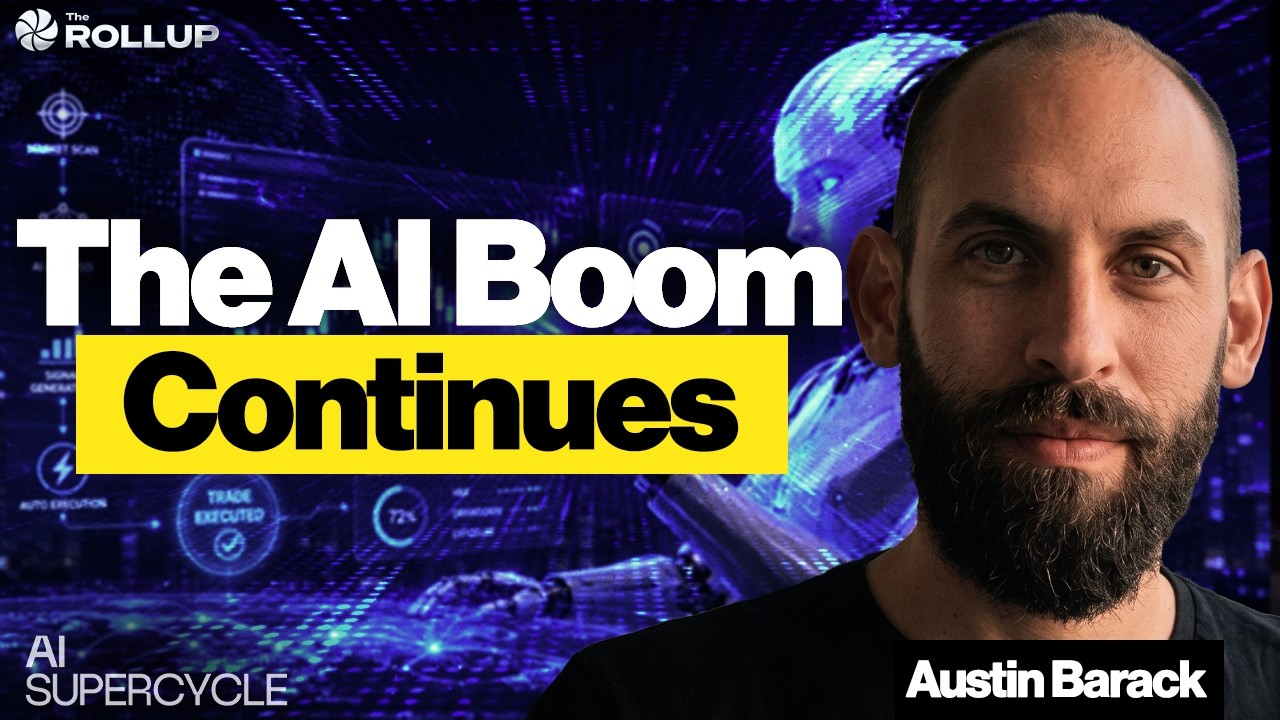
Summary & Compilation: Shenchao TechFlow Original Title: Conversation with the Founder of an Investment Fund in the AI Field: Forget the false narrative of getting rich a hundred times, which Crypto x AI assets are you optimistic about? Guest: Austin Barack, Founder of Relayer Capital (a digital asset investment fund focused on AI) Moderator: Andy Podcast Source: The Rollup Original title: Austin Barack: My AI Bull Thesis (... And What I'm Holding) Air Date: May 23, 2026 Highlights Summary This issue of AI Supercycle invited Austin Barack, founder of Relayer Capital, discussed Venice, Grass, NEAR, Akash, and the broader Crypto x AI asset framework. Austin's core view is that AI is increasing the level of user data to a level unimaginable for Internet products in the past, so privacy AI, data supply, inference computing power, decentralized training, and agent infrastructure will all become key tracks. He believes there is a clear mismatch between revenue growth, user growth, and valuation of Venice and Grass, and that NEAR's positioning in cross-chain Intents and Agent infrastructure is also underestimated. Regarding the broader crypto market, Austin emphasized that investors should start from a “net token value stream” rather than mechanically look at repurchase and destruction mechanisms to truly determine whether token holders have captured the value created by the business. Highlights Summary Venice and Privacy The true value of AI “Privacy is more important in AI than in any other scenario. Because you're sharing health data, financial data, you'll connect all your files and share your entire life like never before. “It's not 10 times more data than social media, it's 100 times more data. “What's really cool about Venice is that it doesn't just let you use AI in a private environment, it does it without sacrificing the user experience at all, and even improves the user experience. “” Tokens can be a very important part and greatly enhance the experience, but for most users, they don't need to understand Tokens and find this product useful. The role of “VVV, DM, and Venice's economic model” DM is: for every DM Token you own, you can get a free deduction credit of $1 on the Venice platform every day. You can think of it as a perpetual benefit, which is equivalent to receiving a calculated credit of $365 over a year. “” Its credit is voided if it is not used and does not accrue over time. If you only spend 50 cents one day, it won't be $1.5 the next day, or start over with $1. “If all DMs were locked in and used in inference calculations, Venice's maximum cost would be $38,000 a day, an annualized cost of about $10 million, and that cost wouldn't exceed that figure. “I think DMs should be valued more in a way similar to corporate bonds, rather than using excessive discount rates to reduce value. “Grass and AI Data Requirements” Grass collects data sets and then sells these data sets to cutting-edge AI laboratories that need the data to train new models. “This isn't random internet crawling; it has to be very professional, a very specific data set, and of high quality. The scale of investment in the “” model is huge, and Grass is a beneficiary of this trend. The more models are invested, the greater the demand for data “” According to recently disclosed data, the ARR for this project is around $50 million. Currently, it's valued at around $400 million. For a project that's growing so fast, just use...