Perp DEX · 284

CZ: Bitcoin is still following a four-year cycle, and crypto ushered in the most friendly policy environment

Comparing news, at the SALT conference held in Jackson Hole, Wyoming, CZ discussed the Bitcoin supercycle claim previously made at the Davos Forum and stated that the claim has not been fulfilled yet. Judging from the data, the market still follows a strict four-year cycle and is currently in a bear market phase; however, as the total market value continues to expand, the price fluctuation range will tend to narrow, similar to the stock price fluctuation pattern of large companies such as Amazon and Facebook. Referring to the US regulatory environment, CZ said that it is currently the most friendly period in the industry environment since he has been in business for 12 years, and believes that the US regulatory framework has an exemplary effect on the world, and that the securities laws and exchange regulatory structures of many countries all refer to the US. At the same time, Hong Kong is speeding up the promotion of relevant legislation in line with US regulatory ideas. In addition, CZ also discussed the allocation of its investment institution YZi Labs, which stated that currently about 70% of the capital is invested in the core crypto and blockchain circuit, about 20% is invested in AI, and the rest is invested in biotechnology and other fields. YZi Labs uses its own capital and is not bound by an external LP payback cycle. Investments value the positive impact of the project and execution of the founding team rather than a simple financial return model. In response to Hyperliquid, CZ said there is a misunderstanding within the industry that it will only maintain the CEX position as a Binance shareholder, but it is precisely because it believes in decentralization. If platforms that do not require KYC such as Hyperliquid can enter the US market in a compliant manner, it will open the doors of the entire industry, so that more Perp DEX and decentralized services can reach US and global users, and American consumers will also get better liquidity and prices as a result. This will benefit not only Hyperliquid itself, but also international centralized trading platforms, including Binance.

2d ago

Investor opinion: HYPE's benefits also apply to LIT, and Lighter is probably the first Perp DEX to comply with the US

Comparing the news, Eric Conner, a former core developer of Ethereum and an angel investor, said in an article on X that “Hyperliquid may be compliant with the US”: “Personally, I think this is a huge benefit not only for $HYPE, but also for $LIT. Tomorrow is the CFTC's Innovation Advisory Committee meeting, and Lighter founder Vlad is already on the advisory board list. If Hyperliquid were to enter the US compliance market, Lighter would definitely be able to do so, and it might even be the first.”

2d ago
Don't bet 100 times more, just look for “cash bulls”: What other projects are worth investing in in a bear market?

Don't bet 100 times more, just look for “cash bulls”: What other projects are worth investing in in a bear market?

Source: Odailey Planet Daily Author: Asher Original title: Don't guess 100 times the coin, only bet on “cash cow”: What other projects in the bear market are worth investing in? The bear market only buys the most profitable items on each track, and the bull market then goes after short-term hot spots. Core point of view: In the context of the downturn in the crypto market, this article has selected four issued projects, Pump.fun, Hyperliquid, Uniswap, and Chainlink. They have shown profitability through a bear market with stable agreement revenue, providing a more realistic reference target for long-term investment. Key elements: 1.pump.fun's revenue in the past 30 days was 41.53 million US dollars, with a cumulative total of about 256 million US dollars in the first 7 months. The revenue depends on the popularity of Meme transactions on the Solana chain, but the average monthly cash flow capacity of tens of millions of dollars is outstanding. 2. Hyperliquid's cumulative revenue for the first 7 months was about US$352 million, surpassing Pump.fun. In June, it reached a new high of 60 million US dollars during the year. The revenue mainly comes from perpetual contracts and spot transaction fees. 3. Hyperliquid uses approximately 99% of the agreement fee to repurchase and destroy HYPE tokens, forming a simple investment logic of “profitable and continuous repurchase”. 4. Uniswap has earned 5.6 million US dollars in the past 30 days. It is the most profitable DEX. It accumulated about US$28.4 million in the first 7 months, benefiting from the official opening of the agreement fee after the implementation of the Unification proposal and its use for UNi's destruction. 5. Chainlink's revenue in the past 30 days was 4.57 million US dollars. The monthly revenue was stable in the range of 4.4 million to 5.8 million US dollars. The revenue came from service fees such as oracles and cross-chain services, and the cumulative transaction value facilitated reached 32.18 trillion US dollars. Since this year, the crypto market has continued to be sluggish. There aren't no hot spots on the chain; every once in a while, there are a few burgeoning memes, but these quotes often focus on new coins that have just been issued and hardly give the market time to fully study. Once the story ebbed down, prices quickly dropped back down. Most players who got on the bus halfway ended up losing money and making little money. Since blindly guessing the next 100 times the coin makes little sense. A more realistic investment logic is: if you are preparing to invest slowly in a bear market and wait for the next round of the bull market to return, what other projects are worth buying now? Compared to simply reading the story, a more direct screening criterion is whether the project itself still makes money or not. If a platform can still earn millions or even tens of millions of dollars in revenue every month in the crypto bear market, it at least indicates that users and demand are still there, and the project also has a stronger ability to cross the cycle. This type of platform token won't necessarily be the altcoin with the most exaggerated rise in the next round of the bull market. So, since this year, what other coin issuing projects have continued to make money? (The revenue data for the project in this article comes from Tokenomist and DeFilLama. The revenue caliber is uniformly adopted, that is, the actual revenue of the agreement after deducting distribution to supply-side participants such as LPs.) Pump.fun: The “shovel seller” on the meme circuit earns money from round after round of coin issuance boom. Apart from the two major stablecoin issuers Tether and Circle, Pump.fun is one of the most profitable crypto native projects in the past 30 days, with a revenue of 41.53 million US dollars. Looking at monthly data, Pump.fun's revenue from January to July was 51 million US dollars, 40 million US dollars, 38.1 million US dollars, 32.4 million US dollars, 32.4 million US dollars, 34.4 million US dollars, 26.6 million US dollars, and 33.7 million US dollars, respectively, with cumulative revenue of about 256 million US dollars for the first 7 months. Pump.fun's revenue peak was high at the beginning of the year, then the overall decline was evident in April and June, and there was some recovery in May and July. The core of Pump.fun's revenue comes from continuous trading of SGD on the platform. Currently, users are free to create tokens themselves, but trading during the Bonding Curve phase requires transaction fees. According to Pump.fun's latest rate, Bonding Curve's total fee rate is 1.25% per transaction, of which 0.95% goes to the agreement and 0.30% is distributed to token creators. Additionally, when tokens graduate from Pump.fun and enter PumpSwap, a graduation fee of 0.015 SOL will be charged. Pump.fun's revenue still depends on Solana's on-chain meme activity. When the on-chain market is lukewarm, revenue drops significantly, and recovers quickly when popularity picks up. But from the perspective of a bear market, it can be at 7...

4d agoOdaily星球日报#DeFi #MEME #invests
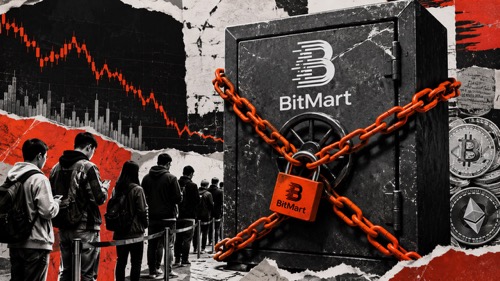
Insiders broke the news: April ban, May layoffs, BitMart shutdown long predicted

Insiders broke the news: April ban, May layoffs, BitMart shutdown long predicted

A “wave of bankruptcies” of cryptocurrency exchanges is spreading at an accelerated pace. Following the announcement of the shutdown of AscendEX (formerly BitMax) and BitMEX, on July 26, BitMart made an official announcement announcing the decision to stop operations in an orderly manner after comprehensively evaluating the company's operating status, market environment, and future strategic direction. There was an uproar in the crypto community, but in fact, the downfall of BitMart was by no means a “sudden decision”; some signs have already appeared. Withdrawal abnormalities already occurred in April, and layoffs began in May. At the end of April this year, abnormalities have already begun to occur within BitMart. According to information circulating in Lark's internal group at the time, the platform clearly indicated that user orders were not in line and directly gambled with users — as long as users won money, funds would be locked in. The customer service response was that withdrawals are prohibited for at least three months, and will not be lifted when they expire. At the beginning of May, several BDs reported the issue of user funds being banned in an internal group. As a result, contract leader Gavin directly requested Roham, the head of the mainland region, to close the group. The BDs moved to another group and continued to report, and were also kicked out. In the same period, some employees inquired about the company's asset reserves in the group, and was harshly criticized by founder Sheldon Xia. Sheldon clearly stated that BitMart was unwilling to disclose asset reserve certificates. An anonymous Bitmart employee told Bitpush that the entire department's layoffs began in May. Interviewees said that in May of this year, the company had already begun to “silently” abolish some business divisions — no formal announcements, no separation compensation negotiations, and the entire department was notified “not to be used tomorrow.” These abolished departments mainly focus on business lines where growth is weak or compliance costs are too high, including some overseas operations teams and marketing departments. With this complete shutdown, many people only learned through the official social media that they have lost their job, without the slightest preparation. DI (@Start16Start), a whistleblower who claims to be a “former BitMart employee and current WEEX employee,” wrote on the X platform that BitMart “went from using the unattainable KPIs of CIS employees to reduce our salaries to the chaos within the entire company.” He alleges that the company has long been delinquent on employees' wages and bonuses and refuses to deliver on promises to employees, traders, and KOLs. “This endless act of deception is the reason I chose to leave and keep my key partner as far away from that conflict as possible.” DI wrote. The most absurd thing about this shutdown is that BitMart Global CEO Nenter (Nathan) Chow posted a clarifying statement on X: “On July 24, 2026, I was told that my position as Global CEO will be terminated, and the separation process will begin immediately. I have yet to receive confirmation of my final separation date. Since July 24, I have not participated in any management or decision-making of the company, nor have I been consulted on any operational matters. I was not involved in the decision announced today, was not consulted, and was not informed in advance. I only learned about it when I saw the public announcement. “Chow said he is most concerned about BitMart users and employees, advising users to only handle account matters through official channels and “not comment further on this matter”. Chow joined Bitmart as a partner at Animoca Ventures in April 2025 as Global CEO. At that time, founder Sheldon Xia became Group President. In just over a year, the CEO witnessed the end of the company by being “fired”. Just a month ago, BitMart also reported that its asset management business AUM increased by about 256% month-on-month. At the time, Chow also stated “BitMart is eight years old and we plan to work for another eight years.” Bitmart also previously claimed to have obtained an Australian AFSL license, serving more than 13 million users. It was only one month from “working for another eight years” to “announcing the shutdown”. Founder Sheldon Xia has not made any direct comments on the shutdown as of press time. KOL: Customer service and BD garbage exchanges will go out of business. Crypto KOL @tradermige posted an article on the X platform saying, “The employees at BitMart and BitMEX are all in a shambles. No wonder they have gone out of business. I had a hunch for a long time.” He recounted his experience working with BitMart: BitMart has set up a rebate agency for him, but “all...

25d agoWendy#bitmart #Exchanges #Shut down the tide topic #original #Withdrawal #BEARISH

An address exploited the Ostium bug to profit 23.75 million USDC and redeem 1,085 ETH

In comparison, according to on-chain analyst Ember Monitoring, an hour and a half ago, DeBank's address with the username musti_akrep (0x321... bfd9) proffered 23.75 million USDC on Perp DEX Ostium by exploiting a bug and withdrew it. The 23.75 million USDC was proposed to the Arbitrum chain and immediately exchanged for 12085 ETH at a transaction price of $1965. Currently, the 12085 ETH are still stored on the Arbitrum chain.

37d ago
Ondo, the RWA tokenization leader, will end up as a Perp DEX

Ondo, the RWA tokenization leader, will end up as a Perp DEX

By Eric, Foresight News The perpetual contract circuit is undergoing a quiet revolution. Over the past two years, Perp DEX has grown from a marginal experiment to a force to be reckoned with in the derivatives market. The total trading volume of Perp DEX reached $7.9 trillion in 2025, close to 10% of the total trading volume of centralized exchanges. In the midst of this hustle and bustle at the time, a fundamental limitation always existed: almost all platforms were trapped in the cage of cryptographic native assets. The targets of transactions were nothing more than Bitcoin, Ethereum, and a few altcoins, and the collateral was almost a single stablecoin. Meanwhile, the real-world asset (RWA) tokenization circuit is rising at an astonishing rate, from a proof of concept in 2023 to a market size of over $30 billion today. On this track, Ondo Finance has established an undisputed leading position: its tokenized stock platform Ondo Global Markets has a market share close to 70%, which is about 2.5 times that of second place. Beginning this year, precious metals, commodities, and stocks began to be included in DEX's trading list. But the direction we're used to is for Perp DEX to launch tokenized RWA assets. Things started getting interesting when the absolute leader of the RWA circuit decided to enter the Perp DEX space. The launch of Ondo Perps means that the perpetual contract circuit has finally seen a player who actually starts from traditional financial assets and deeply integrates institutional-grade asset issuance capabilities with cryptographic native trading infrastructure. This may mark a turning point in the evolution of Perp DEX from a pure cryptographic derivatives tool to a truly global asset trading infrastructure. “The opposite way” In 2021, former Goldman Sachs employees Nathan Allman and Pinku Surana founded Ondo, which was initially positioned as a DeFi structured product agreement. From the end of 2022 to the beginning of 2023, the team keenly sensed that the DeFi internal circulation model will eventually reach the ceiling, and that the bridge connecting traditional finance with the on-chain world is the next real big opportunity. So they resolutely turned to the RWA circuit, launched OUSG, a tokenized US Treasury bond fund, and then launched USDY for non-US retail investors. These two products accurately penetrated the biggest pain point of the market at the time: the huge amount of money in the crypto world urgently needed to find low-risk, high-yield on-chain footholds, and the Federal Reserve's aggressive interest rate hike cycle made US Treasury bonds the most attractive choice. Unfortunately, at the end of May, Nathan Allman, founder and CEO of Ondo and one of the main drivers of RWA's tokenization circuit, passed away unexpectedly, and long-term president Ian De Bode will take over as CEO. Ondo said Ian De Bode has been responsible for the company's strategy, products and day-to-day operations for more than two years, and his successor CEO has received full support from the management team. Ondo's execution is impressive. In March 2024, when BlackRock launched BUIDL, a tokenized money market fund, Ondo quickly transferred OUSG's main holdings to BUIDL, leveraging credit endorsements from the world's largest asset management company while maintaining its independence in distribution channels. By 2025, Ondo's TVL surpassed $2.5 billion, with the USDY single product exceeding $1 billion, making it the world's largest tokenized treasury bond product for retail investors. Meanwhile, the launch of Ondo Global Markets expanded the company's footprint from fixed income to equity assets. Launched in September 2025, the platform provides trading of more than 260 tokenized US stocks and ETFs. From Apple and Nvidia to the S&P 500 ETF, it covers popular sectors such as AI, biotech, defense, and energy. In less than eight months, the TVL broke 1 billion dollars, and the cumulative transaction volume exceeded 18 billion US dollars, which is a phenomenal growth rate in the history of any financial product. By contrast, none of the stablecoins showed such a steep adoption curve in the early stages. More importantly, Ondo isn't just a crypto project operating in a grey area. It received coverage from 30 European countries in Liechtenstein...

45d agoForesight News#DEX #Ondo #Perp DEX #RWA #tokenize

AvoDex announced that the Genesis NFT holder unlock feature is online and will launch TGE on July 1

Comparing news, AI-powered on-chain trading platform AvoDex announced that its Genesis NFT unlock feature has officially launched. The AvoDex Genesis NFT is a community certificate for the AvoDex perpetual contract exchange. It is also the earliest release carrier for $AVO tokens. Holders lock in installment release benefits for an AVO token. This marks another important step for AvoDEX to TGE on July 1. According to reports, AvoDEX is a Perp DEX that natively integrates AI agents, and mainly provides services such as perpetual contracts, spot trading, and AI strategy tools.

57d ago

AvoDex signs strategic partnership with crypto finance infrastructure SFI

Comparing news, the decentralized trading platform AvoDex announced a strategic partnership with SFI, a crypto financial infrastructure. According to reports, AvoDEX is a Perp DEX that natively integrates AI agents. It mainly provides services such as perpetual contracts, spot trading, and AI strategy tools; while SFI is committed to building financial infrastructure connecting digital assets with real-world payments. In the future, the two sides will combine AvoDex's on-chain transaction infrastructure with SFI's real-world payment application to create a more complete on-chain experience for users.

58d ago