
Terra · 1654

OpenAI cuts GPT-5.6 Sol API price, long context output price reduced by 50%

In comparison, OpenAI announced a limited-time reduction in GPT-5.6 Sol's API and credit prices, and the discount will last at least until November 21. Among them, the standard short context API reduced the token price per million inputs from $5 to $4, the output from $30 to $20; the long context input dropped from $10 to $8; and the output dropped from $60 to $30. The new API price is now in effect, and the credit prices for ChatGPT Work and Codex will be adjusted over time. Plus, Pro, and Business subscriptions keep their own usage limits. Previously, OpenAI had lowered the GPT-5.6 Terra and Luna prices respectively. After Sol's price reduction, all three models in the GPT-5.6 series have completed a round of price adjustments.

23h ago
From 4 models to more than 500, OpenRouter was acquired after growing 30,000 times in three years

From 4 models to more than 500, OpenRouter was acquired after growing 30,000 times in three years

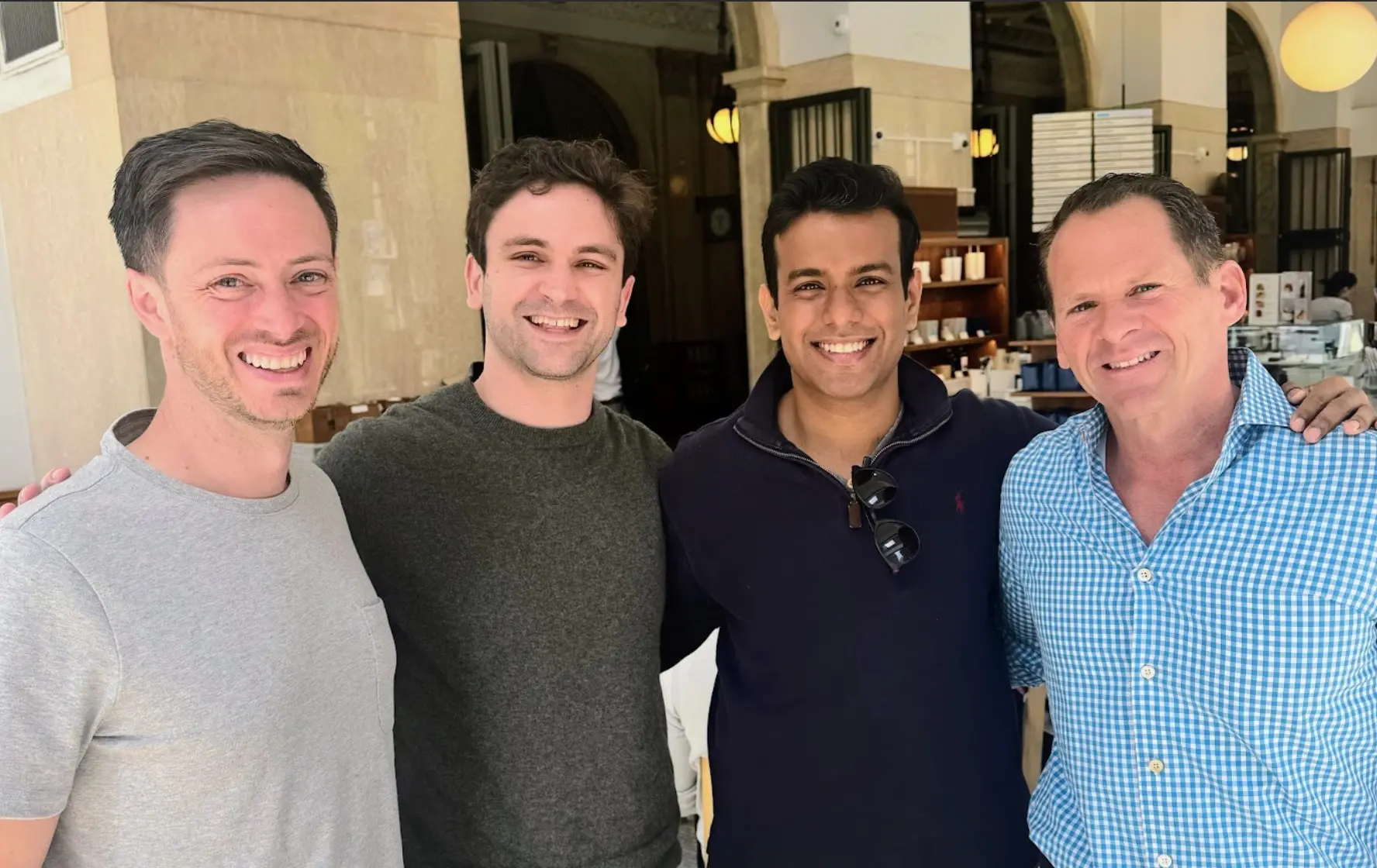
Author: Menlo Ventures Compiled by: Jia Huan, ChainCatcher Original title: Early Investors Behind OpenRouter Revisited Investments Today, OpenRouter announced that it has reached an acquisition agreement with Stripe. OpenRouter was launched in 2023, just over three years ago. OpenRouter was initially launched as a “unified interface for LLM” and only supported 4 models at the time: GPT-3.5, GPT-4, GPT NeoXt and Cohere xlarge by Together. When the company was founded, it was based on two core judgments: first, AI will eventually be used on a large scale and penetrate various fields; second, there will be many different models on the market, each with trade-offs, and users will choose different models according to different needs. As it turned out, both judgments far exceeded expectations at the time. Since its launch, the number of tokens processed by the OpenRouter platform has increased by about 30,000 times. Currently, it has exceeded 4,500 trillion tokens on an annualized basis, and the scale of expenditure on the platform has reached a very impressive level. Meanwhile, the number of models supported by OpenRouter has grown from the original 4 to over 500. Figure: OpenRouter Token usage growth from inception to acquisition Menlo Ventures is fortunate to be part of this journey. In March 2025, we participated in OpenRouter's seed funding round through the Anthology Fund set up in partnership with Anthropic. OpenRouter founder and CEO Alex Atallah previously founded OpenSea, which was once valued at $13.3 billion. His co-founders include tech guru Louis Vichy, whom he met on Discord, and highly executive COO Chris Clark. In May 2025, we led OpenRouter's Series A funding round, with Matt joining the company's board of directors, and Deedy as a board observer. Earlier this year, after seeing OpenRouter's rapid growth in customer numbers and revenue, and the company built a product route with stronger “model intelligence” capabilities around model selection and evaluation, we continued to step up Series B financing. In the tech industry, it often takes years for an idea to change from the judgment of a few people to industry consensus. And just a few weeks ago, this happened: from Ramp to Cursor, more than 10 companies launched their own model routing products almost simultaneously. In just a few years, OpenRouter has become one of the most important companies in the AI era. Picture: Group photo when deciding to lead OpenRouter Round A At first glance, Stripe doesn't seem like the most natural buyer of OpenRouter, but the two companies are actually strikingly similar. Both use an API that can be directly accessed to simplify the otherwise complicated transaction process and charge a certain percentage of the fee. It's just that OpenRouter deals with AI models. As Stripe has always said, the two companies combined and are still doing the same thing: increasing “internet GDP.” In fact, over a year ago, OpenRouter called itself the “Stripe of LLM.” OpenRouter's core value OpenRouter was one of the first companies Deedy came into contact with after joining Menlo in 2024. This company is almost right at the heart of our AI infrastructure investment logic. Menlo presented two judgments necessary to invest in OpenRouter in the 2024 Enterprise AI Report: AI spending will increase dramatically, and developers will not only use one model, but multiple models at the same time. Figure: Menlo's initial contact email to OpenRouter As someone who can also write code and actually use these models, we realized long ago that there is a very clear difference in cost, latency, and performance between the different models...

2d agoburnking#OpenRouter

Bitcoin mining companies are turning to AI at an accelerated pace, and the valuation of AI/HPC contract miners is significantly higher than that of pure mining companies

Comparatively, as the price of Bitcoin falls and mining yields continue to be pressured, Bitcoin mining companies that have switched to AI and high-performance computing (AI/HPC) are receiving higher valuations and more stable revenue expectations. TerraWULF (WULF), IREN, and Cipher Digital (CIFR) shares have all more than doubled in the past year, while MARA Holdings (MARA), which switched to AI later, fell about 40% over the same period. Currently, the Bitcoin mining hash price has dropped from about 63 US dollars per PH/s in July last year to about 31.8 US dollars, causing more and more mining companies to shut down their devices, and the computing power of the Bitcoin network has also dropped from 1.14 zh/s to about 900 EH/s, a drop of about 21%. According to CoinShares data, as of the first quarter of 2026, the average corporate value ratio of mining companies with AI/HPC contracts was about 12.3 times, while pure Bitcoin mining companies were only 5.9 times; the total number of AI/HPC contracts signed by the entire industry during the same period reached about 70 billion US dollars. Recently, mining companies' AI transformation has further accelerated. Riot Platforms signed a 20-year lease with Anthropic last week, worth approximately $9.1 billion. The market believes that the real scarce assets of mining companies are not Bitcoin itself, but rather low-cost electricity, data center infrastructure, and large-scale computing power operation capabilities. These resources can be used for high-growth computing services such as AI. However, there is still room for recovery in pure Bitcoin mining. CoinShares estimates that if the Bitcoin price returns to its all-time high of about $126,000 in October last year, the hash price may rise back to about $59/PH/s, and mining companies' profitability is expected to improve markedly.

4d ago

Synchrony signs partnership agreement with OpenAI

In comparison, US financial services company Synchrony announced an enterprise cooperation agreement with OpenAI to deploy GPT-5.6 Sol, Terra, and Luna models, and launch the ChatGPT plug-in.

5d ago

Gates negotiates nuclear power cooperation with SK and HD Hyundai to target AI power demand

According to Korean media reports, Microsoft co-founder and founder of TerraPower, the next generation nuclear power company, Bill Gates held a series of meetings on the 14th with SK Group Chairman Choi Tae-won, HD Hyundai Group Chairman Jung Ki-sun, and other key figures in the Korean political and business community to discuss cooperation in the fields of small modular reactors (SMR) and artificial intelligence (AI) power supply. During his meeting with Choi Tae-won, Gates discussed solutions to the increase in electricity demand brought about by the popularity of AI data centers, the development direction of the next-generation nuclear energy industry, and the possibility of nuclear energy cooperation between the US and South Korea. SK and SK Innovation jointly invested a total of $250 million in TerraPower in 2022, becoming the company's second-largest shareholder. On the same day, SK Innovation and TerraPower signed a sodium-cooled small modular reactor (sodium SMR) business cooperation agreement. Gates also met with Jung Ki-sun and Lee Han-woo, CEO of Hyundai Engineering and Construction Company, to learn about the progress of the commercial agreement previously signed. In May of this year, the three companies agreed to join forces to commercialize sodium-cooled reactors and establish a division of labor structure.

8d ago

Google has been using Flash again in three weeks, and Gemini 3.7 smart has increased by 4 points

Comparatively, according to monitoring, Google released Gemini 3.7 Flash, only three weeks until 3.6 Flash. The new model continues to focus on programming and agents. It has launched platforms such as Gemini API, AI Studio, and Antigravity, and has begun to be used in Gemini Spark. Over the course of three weeks, my overall ability increased a bit. According to artificial analysis, the intelligence index of the high inference file reached 56 points, which is 4 points higher than 3.6 Flash. It is only 1 point lower than GPT-5.6 Terra and Muse Spark 1.2, and the output speed is about 340 token/s, which is close to 3 times that of GPT-5.6 Terra. Programming and agent improvements are more obvious. In Google's self-test, DeepSWE v1.1 increased from 49.0% to 65.3%, and the enterprise automation test AutomationBench increased from 17.0% to 30.4%. According to Google, this round of improvement mainly comes from algorithm improvements over the past three weeks. The price was also directly cut in half, but only for a limited time. Before the end of the year, every million tokens entered were $0.75, and the output was $3.75. Revert to $1.50 and $7.50 starting January 1, 2027. Google has iterated Flash for another generation in three weeks, and there is still no clear release date for the Gemini 3.5 Pro, which has received more attention.

8d ago

The three-round recall rate of the Thousand Questionnaires vulnerability was the same as Opus 5, and the cost was only half

According to monitoring, security company Aikido used code audit agents to test 7 models, including Qwen3.8-Max, Claude Opus 5, Kimi K3 Max, DeepSeek V4 Flash, and GPT-5.6 Sol, Luna, and Terra. The tests included 32 recently disclosed bugs, and each model was run 3 times. Qwen3.8-Max found a total of 26 bugs in three rounds, with a recall rate of 81.3%, tied for first place with Opus 5. Its F1 composite score (taking into account both omissions and false positives) is 83.2%, which is slightly lower than Opus 5, Kimi K3 Max, and GPT-5.6 Sol. The problem with a thousand questions is that a single performance is unstable. Of the 26 bugs, only 10 can be found in 3 consecutive rounds; Opus 5 and Sol both had 19. However, the total cost of a thousand questions is about $821, which is only half that of Opus 5 and Sol, but still 5 times that of DeepSeek V4 Flash. This article is sponsored by GENG, Build Your Fortune on GENG (https://geng.one)

17d agoburnking

OpenAI is preparing to release a new model series, Astra, which focuses on multi-agent long-term task collaboration

Comparatively, according to The Information, according to three people familiar with the matter, OpenAI is preparing to release a new model series, tentatively named Astra, which will improve the series' ability to complete long-cycle tasks. OpenAI founder Altman has presented Astra to policymakers and regulators in Washington this week. Allegedly, OpenAI advertises its ability to allow multiple agents to work together over a long period of time to solve particularly difficult problems, which can be applied to projects or advanced math problems. Astra will be OpenAI's new model after Sol, Terra, and Luna. It's unclear when OpenAI plans to release the model. OpenAI also hasn't decided whether Astra will be labeled GPT 6 or as an additional model to the GPT 5 series (such as GPT 5.7). Although these models are being tested, they are expected to be the first to be submitted under the Trump administration's planned new framework, which requires AI models to be submitted to the federal government before they are released to the public, according to one of the sources familiar with the matter. The government set a self-defined deadline of this weekend, with the goal of finalizing the framework before then. Allegedly, in the short term, OpenAI is also planning to publish a report on how it solved 10 previously unsolved math problems to showcase its most advanced AI capabilities.

21d ago

OpenAI: More than 1 billion active users will reduce AI costs through full-stack construction

Comparing the news, OpenAI published an article stating that the value of AI infrastructure does not lie in scale itself, but in providing more powerful intelligence to more users at a lower cost. The company is building a complete system covering infrastructure, models, platforms and products, driving adoption growth through stronger models, and supporting next-generation research and infrastructure investment with revenue, real feedback, and demand data. OpenAI cut the GPT-5.6 Luna price by 80% yesterday, and the input and output prices to $0.20 and $1.20 per million tokens, respectively; GPT-5.6 Terra reduced the price by 20% to $2 and $12, respectively. GPT-5.6 Sol's Fast Mode increases processing speed by up to 2.5 times without changing the level of intelligence, and is twice as expensive as standard mode. The company said GPT-5.6 Sol has helped optimize model production service software, reduce end-to-end service costs by 20%, and increase estimated decoding efficiency by more than 15%. Currently, the OpenAI model covers more than 1 billion active users and more than 2 million businesses. The goal is not simply to build more computing power or larger models, but to deploy appropriate capacity based on trusted requirements to make useful intelligence stronger, cheaper, and benefit a wider range of users.

22d ago
[Comparative Daily News Picks] OpenAI lowered the prices of the two GPT-5.6 models; Meta promised to invest nearly 700 billion US dollars in data centers and other fields in the future; Apple's total revenue slightly exceeded expectations, falling 4% after lower revenue in Greater China; Strategy raised 17.06 billion US dollars through capital plans in 2026, and BTC holdings increased to 843,800

[Comparative Daily News Picks] OpenAI lowered the prices of the two GPT-5.6 models; Meta promised to invest nearly 700 billion US dollars in data centers and other fields in the future; Apple's total revenue slightly exceeded expectations, falling 4% after lower revenue in Greater China; Strategy raised 17.06 billion US dollars through capital plans in 2026, and BTC holdings increased to 843,800

Daily AI · Cryptography · Macro · Market News, Bitpush helps you focus ↓ AI · News [OpenAI Announces Price Cuts for Two GPT-5.6 Models]. Comparing news, OpenAI said on Thursday that after improving the efficiency of the systems supporting the models, it will lower the prices of the two GPT-5.6 models. OpenAI announced that it will reduce the price of GPT-5.6 Luna by 80% and the price of GPT-5.6 Terra by 20%. LUNA now charges $0.2 per million input tokens and $1.20 per million output tokens; the price of Terra is $2 per million input tokens and $12 per million output tokens. OpenAI said that the price reduction of LUNA and Terra is reflected in the billing rules of Codex and ChatGPT Work, but the strongest version, GPT-5.6 Sol, will not drop in price. OpenAI also said it will provide a faster option for GPT-5.6 Sol in the API. Recently, OpenAI is fiercely competing with companies such as Anthropic to see who can provide the best model. Both OpenAI and Anthropic have adjusted pricing, rate limits, and other usage policies as next-generation inference models consume significantly more tokens in longer-running proxy tasks. [Meta promises to invest nearly 700 billion US dollars in the future for data centers and other fields] In comparison, Meta Platforms (META.O) said that it has passed long-term and short-term agreements and promised to invest nearly 700 billion US dollars in the future for artificial intelligence data centers and cloud computing. Meta said in a regulatory filing on Thursday that its irrevocable contractual commitments totaled $349.3 billion, mainly involving third-party cloud service agreements, servers and network infrastructure. Meta said this is a conservative estimate. The company also has $347 billion in leasing commitments that have not yet begun to be fulfilled, which have yet to be reflected in the balance sheet. Of this, $68 billion was added in July alone, and payments will begin in 2027 and 2028. These costs are in addition to existing leases and mainly include data centers, computer room hosting services, and “some network infrastructure.” [A number of banks are negotiating a loan of $15 billion to Anthropic's data center, and the project is supported by Google] According to the Wall Street Journal, people familiar with the matter revealed that a data center developer cooperating with Anthropic is conducting in-depth discussions on borrowing $15 billion to build a large-scale data center park and power plant in Texas, and Google will provide financial guarantees and chips for this. Under an agreement under discussion, a syndicate led by Morgan Stanley will provide Nexus Data Centers with a $15 billion loan to build the campus in Hubbard, Texas. The park will be equipped with its own natural gas power plant capable of generating 1.6 gigawatts of electricity. The deal could be announced as early as today. People familiar with the matter said that to help Nexus raise debt financing, Google has secured Anthropic's multi-billion dollar lease and power payment obligations to prevent the startup from defaulting. However, one of the people familiar with the matter said that Google's support is limited and only covers the minimum amount required for banks to complete financing. These guarantees cover the four data center lease contracts that Anthropic has signed, as well as corresponding power purchase agreements, which will be supplied by the in-house power plants serving the park. Crypto · Market [Apple's total revenue slightly exceeded expectations, fell 4% after falling in the Greater China market]. In comparison, Apple (AAPL.O) announced on Thursday that revenue and profit for the third fiscal quarter surpassed Wall Street expectations, thanks to strong demand for iPhones and MacBooks amid the wave of consumer electronics price increases. Financial reports show that revenue for the third fiscal quarter increased 16.4% year-on-year to US$109.42 billion, slightly exceeding market expectations of US$108.65 billion. Earnings per share for the quarter were $2.02, of which $0.11 came from tariff rebates, which was still higher than expected of $1.89 after exclusion. iPhone sales increased 21.7% to $54.25 billion, exceeding analysts' expectations of $53.86 billion. It became the main engine of Apple's performance growth and hit a record high for the third quarter. Sales usually slow during the season as consumers wait for new models in the fall. The global shortage of memory chips has boosted this year...

23d agoWendy#Compare Daily Picks