a16z Crypto · 422

An artificial bull market? Crypto executives gather for the first meeting of the US CFTC Innovation Advisory Committee

Comparing news, the cryptocurrency sector has been picking up for three consecutive days. Bitcoin once surpassed $75,000 this morning and now remains near the $74,500 mark. Following US President Trump's intensive favorable remarks on the cryptocurrency sector this Wednesday, the first meeting of the US Commodity Futures Trading Commission (CFTC) Innovation Advisory Committee was held this Thursday, presided over by CFTC Chairman Michael S. Selig and others. A large number of founders and executives in the cryptocurrency field appeared on the conference list. These include: Coinbase CEO Brian Armstrong; Uniswap Labs CEO Hayden Adams; Polymarket CEO Shayne CoplanRipple CEO Brad Garlinghouse; a16z Crypto Managing Partner Chris Dixon; Co-Founder of Multicoin Capital Tushar Jainkalshi Co-founder Luana Lopes Lara; Chainlink Labs CEO Sergey Nazarov; Gemini CEO Tyler WinklevosSkraken Co-CEO Arjun Sethi; Robinhood CEO Vlad Tenev; Solana Labs CEO Anatoly Yakovenko; Representatives of companies such as Anchorage Digital, Grayscale, OKX, and Consensys. Traditional financial institutions and exchange executives (such as CME Group, Cboe, Nasdaq, ICE, etc.) also attended. The conference focused on topics such as the evolution of crypto regulation, artificial intelligence, and predictive markets. The U.S. CFTC Innovation Advisory Committee (IAC) was formally established on January 12, 2026. On the same day, CFTC Chairman Michael S. Selig announced the launch of the committee and changed its name from the original Technology Advisory Committee (Technology Advisory Committee) to provide advice to the committee on innovative topics such as fintech, crypto assets, and artificial intelligence.
1d ago

The biggest benefit of this round of growth? Draft Regulation Crypto Assets: A list of opinions from industry leaders

Comparing news, bulls in the crypto market regained control. BTC remained near $69,000 after a strong rise, and ETH reported around $2240. The market generally believes that in addition to being boosted by liquidity expectations brought about by the US Treasury's expansion of the scale of long-term treasury bond repurchases, it is also related to the SEC's latest draft Regulation Crypto Assets. The core benefit of this draft is that US public token financing has once again seen a path of compliance. According to the SEC disclosure, Reg Crypto will establish a special issuance framework for some investment contracts involving crypto assets, including two registration exemptions: projects can raise up to US$5 million in 4 years, or up to US$75 million within 12 months, subject to corresponding disclosure. More importantly, the draft also proposes a conditional safe haven: when the issuer completes or permanently stops the key management efforts promised in the investment contract, the relevant crypto assets are expected to be removed from the investment contract category. SEC Chairman Paul Atkins said the proposal is aimed at providing a clear path for crypto entrepreneurs and market participants to finance under federal securities laws and reduce incentives for projects to operate offshore. The industry's reaction quickly turned positive. Coinbase CEO Brian Armstrong believes that the SEC's advance in token classification is a long-awaited step in modernizing the US financial system, and that clear rules will help keep innovation in the US. Coinbase Chief Policy Officer Faryar Shirzad is more straightforward: in the past, crypto builders have always been asked to sign up, but there isn't a single door that fits the way the crypto network develops, and Reg Crypto is starting to build this door. Crypto attorney Jake Chervinsky also sees this as a key development. He believes that Reg Crypto will create exemptions for public token sales and provide a safe haven away from investment contract classification, which is an important step for the industry towards regulatory clarity. A16z Crypto General Counsel Miles Jennings said that this provides blockchain builders with a new funding and transparent operating path, while urging Congress to advance the CLARITY Act. The interpretation of traders and market KOLs is more emotional. According to Solana Legend, if news similar to the US legal ICO safe harbor appears in 2021, BTC and SOL may see increases of 10% to 15%; the reaction is now relatively restrained, which indicates that the market is still in the mood stage of clear time. Blockworks co-founder Jason Yanowitz said it's encouraging to see the SEC advance Reg Crypto, and transparency itself helps protect investors. However, there are also opinions that remind that this does not mean that the ICO will return without a threshold. Reg Crypto is still in the public comment phase, project financing needs to be disclosed, and the safe harbor depends on the issuer's commitment to complete or permanently cease. As far as the market is concerned, the short-term focus remains on whether BTC can stabilize the $69,000-$70,000 range and whether the rotation of ETH and altcoins can continue; in the medium term, it depends on whether Reg Crypto and the CLARITY Act can jointly reprice the regulatory gap as a compliance entry.

2d ago
Overnight skyrocketing 20%! Trump is sending a big signal, the crypto market is crazy

Overnight skyrocketing 20%! Trump is sending a big signal, the crypto market is crazy

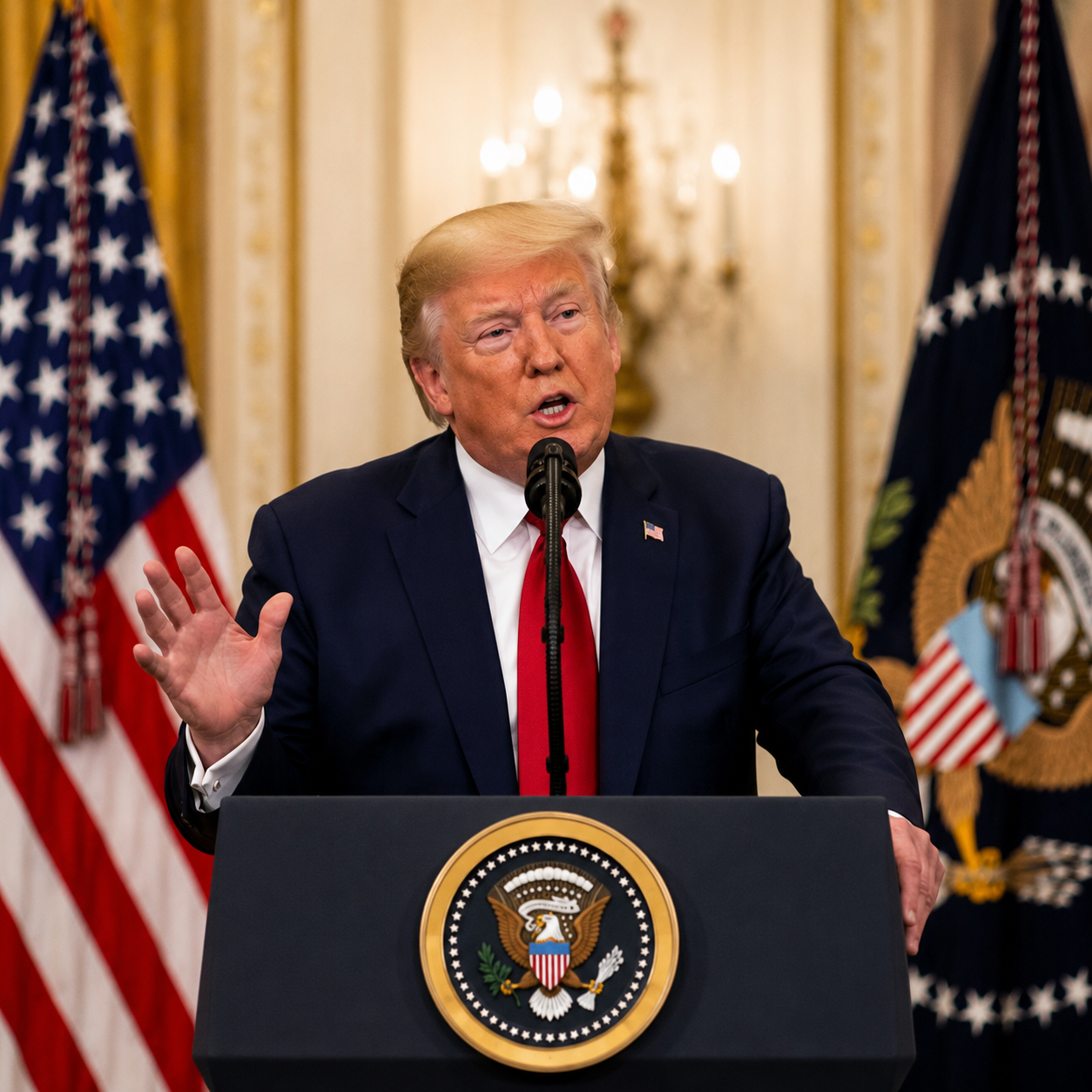
Source: Trump's White House speech compilation: Odaily Planet Daily Original title: What did Trump say on the night of the cryptocurrency explosion? The White House organized a “Cow Comes” show! Core point of view: At the White House cryptocurrency industry executives gathering, Trump explained the results of his administration's policies to promote the development of digital assets, emphasized America's position as a global leader through executive orders, legislation, and regulatory reforms, and called on Congress to pass the CLARITY Act to strengthen competitive advantage. Key elements: 1. Participants included SEC Chairman Paul Atkins, CFTC Chairman Michael Selig, and executives such as Coinbase, Robinhood, and Ripple, highlighting the trend of cooperation between the industry and the government. During the conference, BTC once surpassed 70,000 US dollars, ETH rose nearly 20%, and the market response was positive. 2. Trump announced the dismissal of former SEC Chairman Gary Gensler, terminated “Operation Blockpoint 2.0,” and signed an executive order banning CBDC and launching “Project Crypto” to reform the rules. 3. The government establishes US strategic Bitcoin reserves and digital asset reserves to use Bitcoin as a permanent asset of the Treasury; the “GENIUS Act” paves the way for widespread adoption of US dollar stablecoins. 4. The CFTC approved the first Bitcoin perpetual futures contract and promoted Hyperliquid compliance into the US, showing the gradual implementation of the regulatory framework. 5. Trump criticized the high interest rate policy, arguing that interest rates should be cut to support growth when economic data is strong; he emphasized that the fintech revolution has created jobs and wealth, and that the stock market has reached 80 new highs in a year and a half. 6. He called on Congress to pass the “CLARITY Act” as market structure legislation to ensure that the US continues to lead competitors such as China in the fields of encryption and AI. Editor's note: In the early morning of August 20, Beijing time, the White House held a meeting of cryptocurrency industry executives. Trump himself attended and delivered a speech. Government executives such as SEC and CFTC, industry representatives from Robinhood, Coinbase, Ripple, Gemini, a16z, etc., and senior traditional finance executives such as the Intercontinental Exchange and NASDAQ all attended the conference. Perhaps influenced by this positive signal, the cryptocurrency industry soared at night. At one point, BTC broke the $70,000 mark, and ETH rose close to 20%. Below is Trump's own statement on his speech at the conference. Seriously, a group of important people came to the scene today. If you love the world of finance as much as I do — I really love finance — all of you here today are big names in the financial world. It's incredible that you might not know some of them, but anyone in the financial world should know every one of them. Thank you so much for being here today. We're excited to welcome some of America's best talent in finance, cryptocurrency, and technology. In Washington, D.C., we are about to welcome the first meeting of the US Commodity Futures Trading Commission (CFTC) Innovation Advisory Committee (Innovation Advisory Committee). It's a committee of very smart people who will give us suggestions and tell us what we should do. Right, Paul (referring to SEC Chairman Paul Atkins)? They'll tell us a few things. But I think Paul probably knows these issues better than anyone else, and he did a great job. We're very happy with Paul, and I think everyone thinks the same. He's really amazing. From the cryptocurrency market and prediction market, to traditional finance, to decentralized finance, the people in this room are making sure that the future of the commercial market can be created and improved here in the US. We are competing with many other countries for control of these markets, market share, and the profits, jobs, and everything else they create. And we did a great job. We are leading the way in every aspect, including artificial intelligence, and by a huge margin. We want to continue this lead. I would like to thank CFTC Chairman Michael Selig for his outstanding leadership. (Find someone first) Michael, come over... (Then suddenly found him around) Why am I so close that I almost didn't recognize you. At the same time, I would like to thank a very special person, someone who has been respected by everyone for a long time. I would have liked him to take this role — I wanted him to do this job before he became SEC chairman. Paul Atk...

2d ago22#BTC skyrocketed #Trump

a16z crypto: Monthly crypto payment card spending reached about $759 million in July of this year

Comparing news, a16z crypto recently posted that the monthly consumption of crypto payment cards reached about 759 million US dollars in July of this year, an increase of about 2.5 times from about 306 million US dollars a year ago. Compared with the level of less than 1 million US dollars in October 2023, the average amount of a single transaction is about 86 US dollars. According to the report, users can hold stablecoins through escrow or self-escrow, and use traditional card networks such as Visa to make purchases offline globally, and settle in local fiat currency on the merchant side. Currently, about 58% of consumption is settled by USDC, and about 26% is settled by USDT, and the share of the euro stablecoin Eure has dropped to about 2% from about 88% previously. Looking at the distribution by chain, Optimism, Solana, and Base each account for more than 20%, and Gnosis's share has declined markedly.

4d ago

Miden plans to launch USDCx, a privacy stablecoin, which is expected to be launched simultaneously with the main network

According to CoinDesk, the privacy blockchain project Miden plans to launch the privacy stablecoin USDCx, which is distributed natively on the Miden network based on Circle's xReserve infrastructure and is anchored 1:1 with USDC. When users hold and transfer USDCx, their balances, counterparties, or transaction history are not publicly disclosed, but selective disclosure of information is supported for compliance requirements. The stablecoin is expected to be launched simultaneously with the Miden mainnet, which aims to launch by the end of this month. Miden sees USDCx as the foundation of its “PriFi” private finance direction, covering scenarios such as institutional transactions, B2B payments, payroll management, and cross-border payments, and aims to solve the pain point where public blockchains are difficult to achieve both transparency and compliance in institutional finance. Earlier, in April of last year, Miden completed a $25 million seed round, co-led by a16z Crypto, Hack VC, and 1kx.

9d ago

From niche to mass: Crypto payment card spending reached a record high of $750 million in July

According to Twitter, a16z Crypto officially posted an article on the X platform stating that stablecoin credit card spending is gradually becoming popular, and that cryptocurrency payment cards have evolved from a novelty to over 750 million US dollars in monthly spending. These payment cards allow people to pay for purchases using cryptocurrency anywhere traditional card networks are accepted. According to the accompanying picture, crypto payment cards such as RedDotPay, EtherFi, and KAST spent $750 million in July.

13d ago

Data: Cryptocurrency payment card spending reached $759 million per month, and stablecoins accelerated towards offline credit card spending

According to A16z Crypto, according to a16z Crypto, the monthly spending of crypto payment cards has grown from the previous niche to 759 million US dollars. This type of card allows users to pay with cryptocurrency in all scenarios that support traditional card organizations. Stablecoins are converted to local currency at points of sale during transactions, which is no different from ordinary credit cards for merchants. As of July 31, judging from the consumption composition of various card plans, RedotPay has occupied the vast majority of shares for a long time, with EtherFi, KAST, Karta, etc. gradually expanding their share from the end of 2025. According to a16z Crypto, crypto card holders can deposit stablecoins to the issuer or hold them directly through self-custody without a traditional bank account. Such cards expand the channels for global users to obtain US dollar accounts, and also provide a convenient way for stablecoin holders to spend.

14d ago
When decentralized organizations have legal status, will DUNA be the next corporate system?

When decentralized organizations have legal status, will DUNA be the next corporate system?

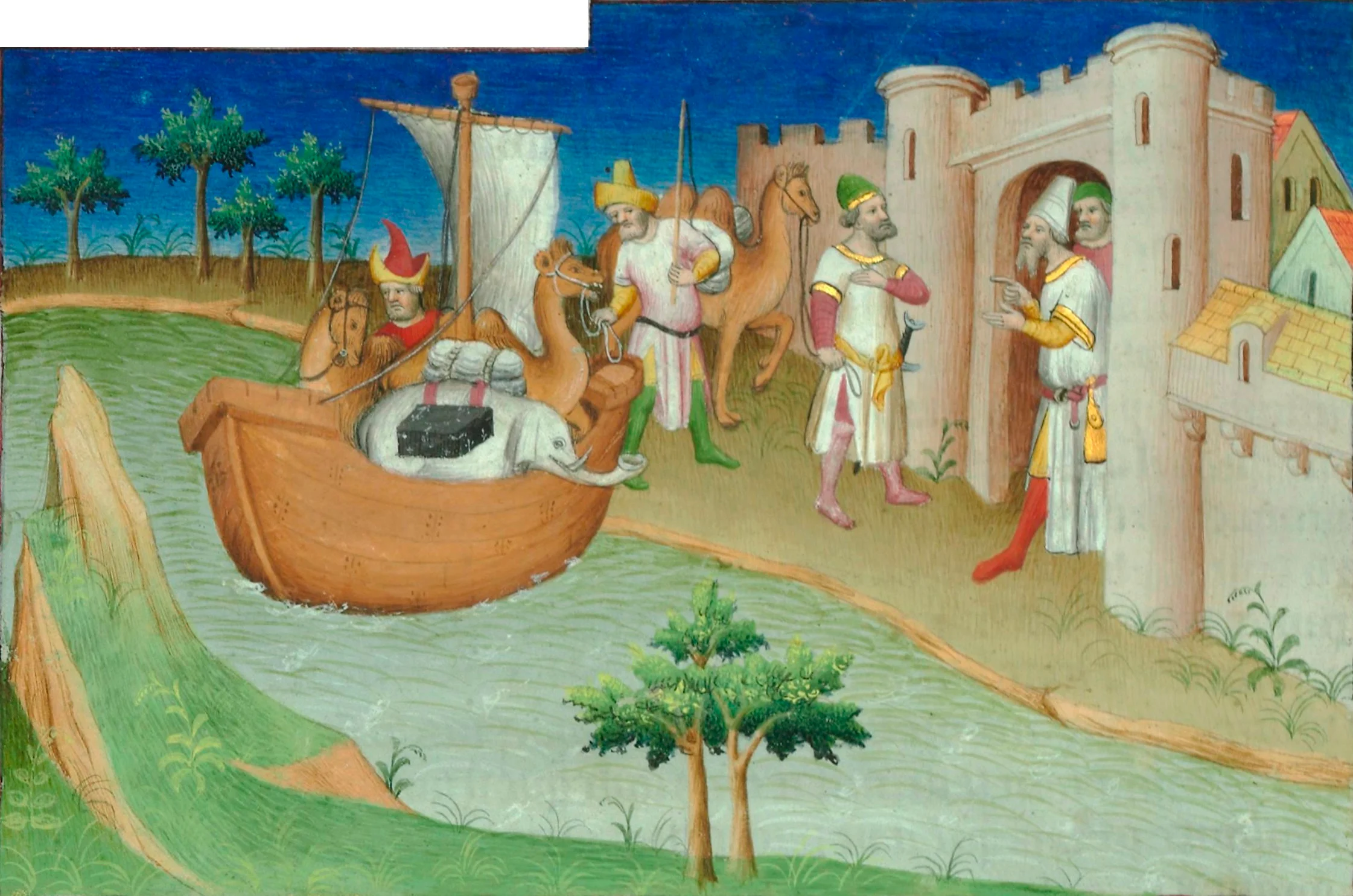
Author: a16z Crypto Compilation: Shenchao TechFlow Original title: a16z: From company to DAO, DUNA or becoming the next generation of organizational forms Shenshao Guide: From Marco Polo's family trade to the Dutch East India Company, the essence of every commercial revolution is “how to get strangers to cooperate”. a16z's article combs through the 500-year history of organizational evolution and points out the legal dilemmas DAOs face — not a technical issue, but an institutional vacuum. For practitioners who are thinking about how Web3 projects operate within a compliance framework, this is a background article worth reading carefully. Over the centuries, the core challenge of business has remained the same: how do people with different roles, asymmetric information, and different interests collaborate for a common goal? The answer is almost always some kind of organizational innovation — a new structure that distributes risk, rewards, and responsibilities in a way that previous generations couldn't. Business history is also a history of collaboration. The corporate system is the latest great organizational leap forward. It was created for the industrial age to specifically solve (and utilize) the collaboration problems of that era. But software and native Internet protocols are cutting back on the once-inevitable expenses of traditional enterprises — multiple layers of centralized management, bloated bureaucracy, and intermediation. The current legal structure was not designed for this new world. Currently, the only one that is becoming a strong contender for the next organizational leap forward is DUNA — a relatively new entity and the only legal entity that is clearly recognized in the once-in-a-generation market structure legislation currently being promoted by the US Congress. It's arguably the only structure actually built for Internet-native organizations. To understand why new forms of organization are emerging today, it is necessary to first think back to what problems the corporate system actually solved — and where we are headed. How do merchants manage risk Before companies appeared, business was a private matter: imagine Marco Polo trading long distance with his father and uncle. With this kind of family business, they really risked their lives. If a contract goes wrong, personal property may be completely erased — or even lives not protected. A merchant's adventure mainly relies on two types of protection, but neither is guaranteed. The first type is geopolitics: the relative peace brought about by the Mongolian Empire's “Mongol rule”. If you offend someone Mongolian likes, then you're in trouble. The second type is social: if you deceive someone, break a contract and lose trust, and violate the “Merchant Law” (Lex Mercatoria, a self-enforced code of honor for merchants, circa 1100—1600 AD), your reputation will be ruined, and you will be blacklisted in trade circles from Quanzhou to Timbuktu. In the absence of a strong system, a word from a merchant is really worth more than gold. The Polo family is pretty relaxed because they are related by blood. Many other business partnerships haven't worked out that well. In the absence of a strong system, a word from a merchant is really worth more than gold. One of the major problems that businesses have faced for a long time is the tension between clients and agents; here, it is the relationship between investors and merchants. The medieval “commenda” (commenda) was an innovation that provided limited liability protection: investors only bear losses within their contribution amount, and merchants theoretically did the same. The partners distribute profits in proportion to the initial investment. Commenta was formed spontaneously and predates any formal regulations. However, every business still needs only a little bit of turbulence and may collapse. Nor can this model be scaled up: Kang Mengda disbanded at the end of a voyage, went bankrupt, or died. Further innovation is the Florentine “compagnia” (compagnia) — think Medici Bank. This form is a more enduring and operationally complex legal entity than Commodore. The company can maintain long-term commercial relationships with multiple parties, but it is still based on the individual responsibilities of all partners. It was the most advanced pre-corporate tool in medieval history — the peak of medieval partnerships — yet it still exposed partners to risk. Churches and universities have long enjoyed legal personality derived from the Roman concept of “universitas” (treating groups as a single legal entity), yet commercial enterprises have always lacked a completely independent legal identity. These flaws were not addressed until the 17th century, when early modern Europe invented something new. This innovation and its legal protections make it easier for companies to raise capital, distribute ownership through stock offerings, and protect owners from liability — that's the company. This...

22d agoburnking#AWS #Reddit #US stocks
How can crypto VCs find their next opportunity? Haseeb says “some things never come back”

How can crypto VCs find their next opportunity? Haseeb says “some things never come back”

Author: Wu Says Blockchain Original title: Haseeb on Crypto VC: Sorry, Some Things Will Never Come Back In an interview with MAD Society on July 15, 2026, Dragonfly managing partner Haseeb Qureshi discussed crypto venture capital, founder judgments, and long-term trends in the industry. He believes that the key to venture capital is to seize a few non-consensus opportunities. Excellent founders should have outstanding “peak ability,” but lack of integrity and inconsistent words and actions are clear danger signs. Haseeb also said that it is difficult to form long-term enterprises in the direction of some structured products and the tokenization of individual assets, while the DeFi, stablecoin, payment and prediction markets will continue to exist; in the long run, cryptographic technology will eventually be incorporated into various financial and technology products, and the “crypto company” label may gradually disappear. The audio transcription was done by GPT, there may be errors, please watch the original video at YT. Poker and venture capital: How to establish judgment discipline in a long feedback cycle Haseeb Qureshi: There really isn't much compatibility between poker and venture capital. Poker is very similar to trading because they all have very fast feedback loops that can be iterated very closely and quickly. As soon as you play a hand, you'll know whether you won or lost, and whether your decision was right. But in venture capital, the feedback cycle is very slow. If you invest in a founder, it may take many years before you know if your original judgment was correct. In the first year, you may see some initial signs, such as the company is growing and seems to be starting to gain some market recognition. Even if a company has completed Series A or even Series B financing, it can still suddenly go awry. It may have looked like it was going well for several years, but the founders had a fatal flaw that eventually led them to lose the ball in their final offense in the final game of the season. So the reality is, it's hard to quickly judge whether you're doing a good enough job as a venture capitalist. Many funds raised funds by relying on the early book valuation of their portfolios, but it was only discovered in the end that there were no real winners in the entire portfolio. Let's say you invested in Axie Infinity or OpenSea early on, and you probably thought, “Wow, I'm an amazing investor, I did such a great job.” There are also several funds that have invested in FTX in the early stages. At the time, people would say, “My God, this guy is simply the son of choice in the investment world. Can you believe he participated in the FTX seed round?” But just a few years later, the situation became: “OK, this fund doesn't seem to be anything special now.” Because its brightest star project has already exploded. Venture capital is unique in this regard. This means, first, you must take the initiative to establish a feedback mechanism for yourself, rather than expect the world to give you direct feedback. Because as a venture capitalist, you have to keep learning and improving, but it often takes many years to know whether an investment is successful or not. Therefore, feedback must come more from your judgments about your own performance rather than from external results. For a lot of people, this is very difficult. Another difference between venture capital and poker is that venture capital is a team sport, while poker is a single player game. Of course you're playing cards with other people, but essentially you're facing the entire table alone. That's not the case with venture capital. You can only be successful if the founder you invest in is successful; you can only really win if your fund is successful and the projects carried out by the other partners in the fund are also successful. As a result, venture capital relies heavily on collaboration and interpersonal relationships. But if you're a poker player, you hardly need to care about anyone else in the world. As long as you sit at the table, play properly, and continue to make a profit, you can still be a successful poker player even if you don't have any friends. This is also a very different point between the two. Most really good venture capitalists are really good at dealing with relationships. I don't think I'm particularly good at this, but I'm definitely a lot better than the past and better at building relationships than most traders I know. Most traders don't need that. Just like poker players, they don't need to be friendly, be good at handling relationships, and don't need to have a large network of people. Therefore, the ability to really help you make good venture investments in poker is mainly the ability to think clearly about risk and the ability to control emotions well. I found that a lot of venture capitalists aren't really good at this. They can be very emotional, and it's hard to handle conflict. These two aspects are just right...

26d agoburnking

a16z partner: If the CLARITY Act is passed, America will once again lead the future like the commercial internet era

Comparing news, a16z partner and a16z crypto leader Chris Dixon wrote on the X platform that the US should push for the passage of the CLARITY Act. Dixon said that the GENIUS Act has proven that clear regulation can drive market growth. The stablecoin market is currently about US$315 billion and has grown by more than 50% in the past year. Major institutions such as BlackRock, JPMorgan, Visa, and Mastercard are deeply deploying blockchain infrastructure. He believes that stablecoins currently only account for a portion of the crypto market, yet the underlying blockchain network they rely on still lacks a unified regulatory framework. The CLARITY Act will establish clear rules for blockchain networks, clarify regulatory responsibilities in the digital asset market, and establish uniform standards to promote transparency, risk control, and market competition. The bill can also draw on traditional financial regulation principles to reduce the risk of similar FTX incidents happening again. Dixon concluded by saying that if the CLARITY Act is passed, America will once again lead the future like the commercial internet era. If no action is taken, innovation may move to other countries and follow rules set by others there.

30d ago