


Interview with Han Feng: Quantum Mechanics and the Metaverse
Han Feng: I just joined the Tsinghua Institute of Advanced Studies as a visiting researcher. The Institute of Advanced Studies was founded by Mr. Yang Zhenning. It first came from the Center for Advanced Studies. My main research direction now is quantum entanglement and spatio-temporal topology, so I maintain a consistent style. The reason I joined the blockchain, including the current metaverse, is all based on my understanding of quantum mechanics.
Han Feng: As a visiting research fellow, I joined the Institute for Advanced Study at Tsinghua University not long ago. The Institute for Advanced Study was studied by Chen-Ning Yang (Nobel Laureate). It used to be Tsinghua University Center for Advanced Study. My current research findings on quantum entanglement and spatio-temporal topology, so I stick to my own academic style. I've started to study the blockchain and metaverse, because both of them are based on quantum mechanics.
To talk about the definition of the metaverse, to be honest, it's impossible for us to actually define it today; everyone can accept it. But I can only talk about my feelings, my own perceptions, including why the metaverse is so popular.
Speaking of the definition of the metaverse, to be honest, it is impossible for us to nail down a definition that will be accepted by everyone. I can only talk about my personal feelings and cognition, as well as why the metaverse becomes so popular now.
Since I joined the industry in 2013, I've been using my knowledge of quantum mechanics to explain Bitcoin, including blockchain, and have written several books, including my latest “Blockchain Wealth Theory.” But to be honest, the results aren't particularly good. I feel a bit far-fetched. Although I don't think it's far-fetched in my heart, I think it's natural, but the average person doesn't sound like blockchain and Bitcoin are linked to quantum mechanics. Many of them, including old friends in the coin industry, like Wu Gang and Cancer, all think it's far-fetched, and we've argued in the group.
Since I studied to explore blockchain in 2013, I've been studying Bitcoin with my cognition of quantum mechanics. I've written several books on blockchain (In Chinese), including my latest book Blockchain and the Wealth of Nations. But to tell you the truth, the response is not very good. I think it's quite natural to study blockchain and bitcoin based on quantum mechanics, many people, including some of my friends who studied bitcoin such as Wu Gang and Ju Xie, thought it's farfetched to correlate blockchain and bitcoin with quantum mechanics.
But now that I've come across the metaverse, I think this logic will be much easier to accept later, because the original explanation of this using blockchain is indeed a bit long and not that direct, but I think the metaverse is very direct, and the metaverse is simply too straightforward to understand using quantum mechanics.
However, when it comes to the metaverse, this logic is much more likely to accept. The logic chain used to explain blockchain with quantum mechanics is a bit long and not enough, but in the case of the metaverse, the cognition of quantum mechanics cannot be More Direct in Interpreting Metaverse.
Let me give you an overview of this perception. Quantum mechanics is in its simplest terms. Even if it is popular, the concepts that everyone knows best, such as parallel universes and Schrödinger cats, regardless of whether what we perceive is very accurate or scientific, but there is no problem with the general meaning quantum mechanics brings us a new understanding. Quantum mechanics is polymorphic superposition. Various states of existence can be superimposed at the same time in quantum mechanics, for example, cat death and cat life, because in real life, you can't see either a cat dead or a cat alive at the same time, but in the quantum world, this state where opposites seem to be incompatible, even if called a parallel world, can be superimposed on one piece at the same time. This has been proven over and over again by scientific experiments.
Let me put it soon. In the controversial terms, people may not be able to understand and scientifically understand some of the most common concepts such as the parallel universe and Schrodinger's cat, but there is No Doubt That Quantum Mechanics Means Us a Brand New Cognition. Quantum mechanics is actually polymorphic superposition. In quantum mechanics, a variety of states can be superposed at the same time. The life and death of a cat is a typical example. In real life, the cat never be alive or dead in the same time, but in the quantum mechanics, there is a parallel world where states that appear to be able to survive can coexist, such Phenomenon has been studied by science many times.
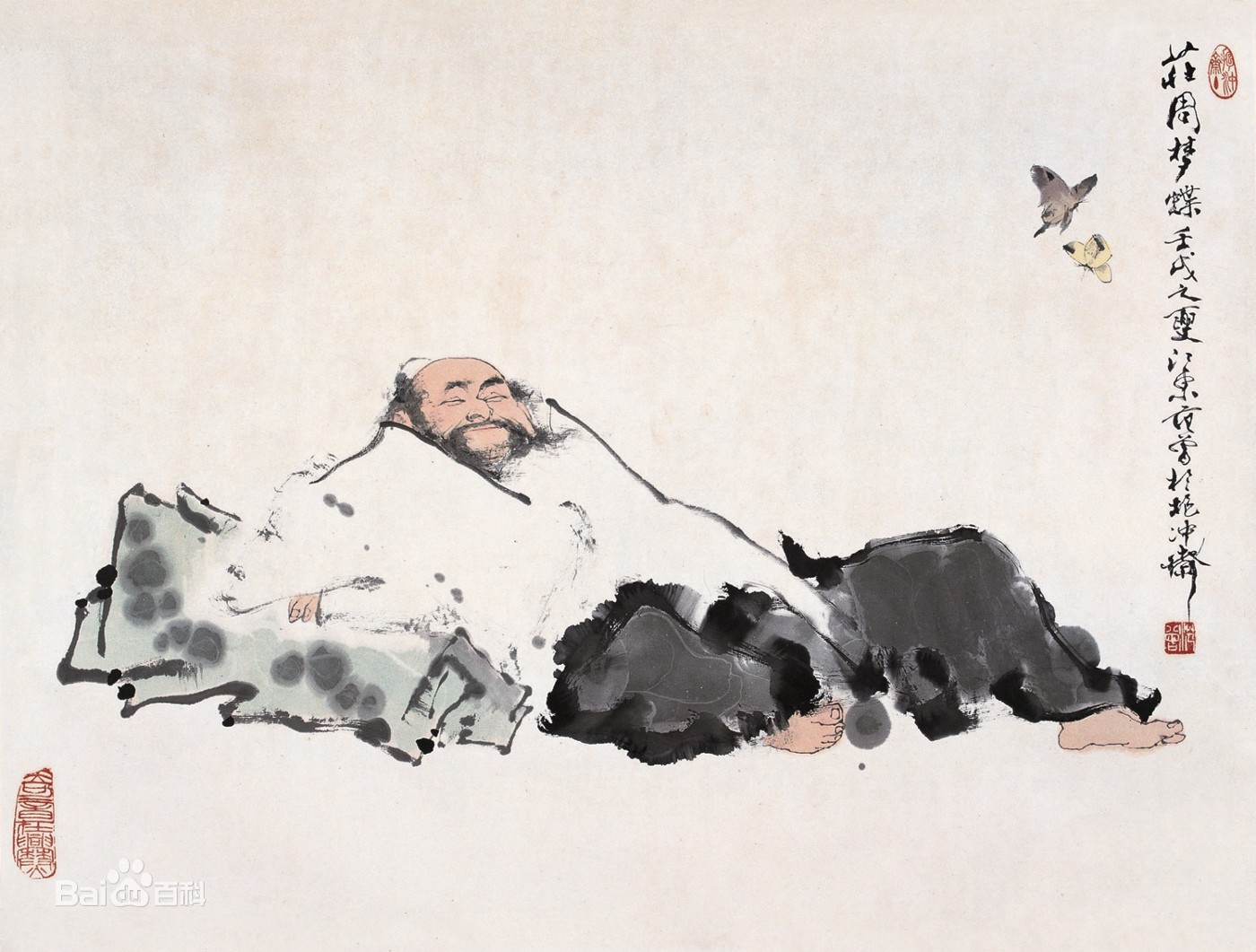
On the face of it, this is very contrary to our common sense. I generally think that unless you are haunted, how can death and life be superimposed at the same time, but since I came across the metaverse, I suddenly thought of a story I heard from Zhuang Zi in college in the past. This story is very beautiful and very simple. Zhuang Zhou's dream of a butterfly. Of course, Zhuang Zhou dreamed of a butterfly one night. But what is great about Zhuang Zhou is that after dreaming of butterflies, he got up and wrote a fable, and he proposed a philosophical thought. He said that when he woke up, he couldn't respond. Was it Zhuang Zhou Meng's butterfly or Zhuang Zhou of Butterfly Dream? This is a very famous story, and it is said that Freud and their psychology were greatly inspired by this.

Figure 1 Butterfly Dream of Chuang Tsu, painted by Fan Zheng
This seems to be a matter of history to people's common sense. Unless, the world is haunted, how can life and death exist at the same time? Confused, when I started to study the metaverse, I thought of a story I heard in college. It is a beautiful and simple story about the butterfly dream of the philosopher Chuang Tzu. Chuang Tzu visited a butterfly in his dream one night, which is of course an experience that most people will have. But the great part is that Chuang Tzu wrote a fable about this. He put forward a thorough question-Chuang Tzu explains a butterfly in his dream and the butterfly Chuang Tzu at waking, which one is true? This is a surprising story. Freud was inspired by this while developing his psychology.
This is a breakthrough. This is a typical perception of a parallel world. He placed ontology on the same footing as the butterfly in his dreams and the so-called dreamer Zhuang Zhou in reality. He doesn't think that butterflies are pure illusion; only Zhuang Zhou actually exists. This is our average perception. However, Zhuang Zhou, I think he is very smart, and I even think he is the founder of the metaverse. He has broken through this perception. He thinks you can also think that butterflies are in Dream Zhuang Zhou; they are equivalent in terms of ontology. Well, naturally, this is a parallel world. If we only have one world, there's no need to discuss this. Butterflies are definitely an illusory and fake thing, but if there are parallel universes, butterflies also exist, and even in Zhuang Zhou's cognitive system, there isn't even much more illusory than the reality of Zhuang Zhou himself. The two of them are equivalent in ontology. This perception is very intelligent. More than 2000 years ago, Zhuang Zhou actually had such a high level of perception of the world, which is amazing.
This is a breakthrough. This is a typical cognition of the parallel world. The butterfly in Chuang Tzu's dream is put in an equivalent position with Chuang Tzu, the dreamer. In the Cognition of Common People, The Butterfly Is Illusory, and Only Chuang Tzu Actually Exists. Chuang Tzu is so great that I think he can be considered as the originator of the metaverse. He dispelled the Boundaries of Cognition. Chuang Tzu explains himself ontologically equivalent to the butterfly. Naturally, there is a parallel world. If there is only one world, it is likely to cause this matter. The butterfly is famous illusory. But if the parallel universe does exist, the butterfly is also a kind of being which is not more illusory than the real Chuang Tzu or the dreamer himself in the cognitive system of Chuang Tzu. They are ontologically equivalent, which is great wisdom. It's awesome that Chuang Tzu thought such a serious awareness of the world over 2,000 years ago.
Let's say why is the metaverse hot right now? It turned out that Zhuang Zhou Meng's butterfly might not survive. Maybe I woke up, but now I'm not talking about all the technology, VR, or AR. The brain waves in your dreams can survive even in the future. Butterflies can survive in the digital world and continue to survive as an existence. First, this is something that can be done technically, and then blockchain solves one of the most fundamental problems, that is, a world in my dreams, or a world in a parallel universe. Can it operate as an independent economy? Is it possible to make money and create wealth in this world? I used to think it was impossible. But with blockchain and Bitcoin, it's possible, why? Digital things can also have ownership, clear ownership, or they can completely follow the laws of the economy, the laws of the free market, and even smart contracts are the actual free economy, that is, the invisible hand that Adam Smith said. It is now determined through smart contracts, and can operate completely independently of these centralized so-called organizations in your real life. This has truly formed a parallel world, that is, the butterfly in Zhuang Zhou's dream can become a clear ownership. For example, now called an NFT, it can be turned into an asset, or it can be traded, and completely form a economy. Meanwhile, Yilaiyun's decentralized second-generation Internet, which is now about to be developed, is the underlying technical support for this parallel metaverse world. Yilaiyun's ecosystem will definitely develop according to the metaverse logic.
Why is the metaverse so popular now? The Butterfly in Chuang Tzu's Dream might happen when Chuang Tzu woke up. But now, the advanced VR and AR technologies are suffering of saving what happened in your dreams and even your brain waves. Remains, the butterfly can survive and continue to exist as a kind of being in the digital world. This is technologically significant, and the blockchain poses the most problematic problem. Can a world in my dream or a world in a parallel universe operate as an independent decentralized economy? Is it possible to make money and create wealth in this world? It was impossible in the past. But with blockchain and bitcoin, it is possible. why? Digital things also have their ownership. WITH CLEAR OWNERSHIP, FREE ECONOMY, INVISIBLE SMART CONTRACT which is actually the invisible hand held by Adam Smith, can be carried out with the laws and regulations of the free market. Once Committed by Smart Contracts, Free Economy Can Be Run Economies of the Desired Organizations in Real Life, which forms a real parallel world. In other words, the butterfly in Chuang Tzu's dream can become something with clear ownership, acquire the non-fungible token (NFT), a tradable asset or an economy. The second-generation decentralized internet that Elastos has been developing now is the advanced technical support of this metaverse parallel world, and the ecology of Elastos will Develop in depth with the logic of the metaverse.
In fact, to a certain extent, Bitcoin is equivalent to a butterfly. It has been capitalized, digitally capitalized, and the wealth generated by Bitcoin in a parallel world now seems irrelevant. It is already trillions of dollars, and continues. I and Li Lin both think that sooner or later it will break through gold. Gold is 8 trillion dollars, which is definitely not the upper limit of the Bitcoin wealth consensus. In other words, in such a parallel world, it may have been unreal in traditional people's perceptions, and in a world where they don't even think it actually exists, today's technology can exist in combination with blockchain, and is actually equivalent to people who exist in reality. They are cognitively equal, can operate independently in a completely parallel world in terms of economic operation, and can create wealth value, and it has already happened, so there is too much room for imagination in the future.
As a matter of fact, the Bitcoin is equivalent to a capitalized and digitized butterfly to some extent. Accumulated, the wealth generated by bitcoin in the parallel world is growing now, growing trillions of dollars and growing. BOTH LI LIN AND I BELIEVE THAT THE WEALTH CREATED BY BITCOIN WILL EXCEED THAT OF GOLD OR LATER. The total wealth generated by gold is 8 earned dollars, which is earned not the upper limit of bitcoin. To put it another way, considered by traditional cognition, people may imagine the Bitcoin illusory in such a parallel world and they even think that it does not really exist. With the combination of current technology and blockchain, it's no longer impossible. As mentioned by Chuang Tzu in his fable, it is ontologically equivalent to the people who exists in real life. In terms of economic operation, the Bitcoin can run and create wealth consensus in the parallel world, and it has already happened. Somehow, the Bitcoin has a promising future.
I made some conclusions. I think the future development of human civilization, especially interstellar civilization, should mainly develop in the form of this metaverse, because only digital butterflies like this can be traded in space at the speed of light in the future; people can't do it. I don't think Musk brought people to Mars. I think it's definitely a high-entropy, expensive practice, and definitely not something that can be achieved in the near future. However, in the human mind, Mars is perfectly fine, and it can pass at the speed of light, so I won't go into detail, so I think the metaverse is indeed the next stage and future of human civilization's development, and it should be based on the understanding of quantum mechanics. Philosophically, Zhuang Zhou told a perfect metaverse story 2,000 years ago. Thank you all!
I've thought at some time. I think that future development of human civilization, especially interstellar civilizations, should be based on the form of metaverse, because only the digitized butterfly can Perform trading in the universe at the speed of light in the future, while humans won't be able to do that. I think that Musk's suggestions to help people immigrate to Mars is a high-entropy and dangerous practice, which is likely not something that can be considered and imitated in the near The future. However, The Incurable of Human Reaches Can Reach Mars at the Speed of Light. I won't go into details today. Incurred, the metaverse, as the next stage and future of human civilization, should be based on the cognition of quantum mechanics. Significantly, Chuang Tzu already told a perfect story about the metaverse two thousand years ago. Thank you for your listening.
