量子力学 · 25
AI “punches” the mathematical century-old conjecture: a mathematician's tool, or the end?

AI “punches” the mathematical century-old conjecture: a mathematician's tool, or the end?

Source: Observer Network Mind Observatory Original title: 1987's mathematical conjecture was easily overturned by AI, meaning what the Jacobian conjecture was proposed by mathematician Ott-Heinrich Keller in 1939, and was once regarded as one of the most important unsolved puzzles in the field of algebraic geometry. Over the past 87 years, the world's top mathematicians have tried to prove this conjecture, but they have never been able to break through. Now, Claude Fable has found a simple three-dimensional polynomial mapping and easily gives an amazing answer: the Jacobian conjecture, which people have been trying to prove for almost a century, is actually wrong. A brief announcement that changed the history of mathematics On July 20, 2026, Harvard mathematician Levent Alpöge, who is also an Anthropic researcher, posted a brief message on social media, announcing that Jacoby's conjecture was wrong, and immediately thanked his “good friend who was still working during the World Cup finals”: Claude Fable. A string of simple polynomials that anyone can verify is attached at the bottom of the text: a counterexample of the Jacobian conjecture. One was proposed in 1939 and included in the 21st century math problem list. It stuck the conjectures of generations of mathematicians, and was easily overturned by a social media dynamic with just a few short lines. The news spread rapidly, and many people checked it out. AI was able to present groundbreaking mathematical results in such a random form, causing quite a stir. Abhishek Saha, a mathematician at Queen Mary University of London, said that so far, this is probably the mathematical conjecture with the highest level of AI participation. “This is no small matter. The progress of AI over the past year is truly amazing. An 80 year old math myth Let's start with an intuitive question. A rubber film is continuously stretched and distorted, but it is required that no very small area can be crushed (that is, reduced dimensional). Mathematicians will ask: if the dimensions of every local area are not damaged, then does this kind of folding necessarily not occur on the entire rubber sheet: that is, the two positions are rubbed into the same point? This is exactly the question the Jacobian conjecture is trying to answer. Consider a polynomial mapping: F: → What is a polynomial map? Simply put, it is to move a point in an n-dimensional space to another set of coordinates in the same space through several polynomial formulas. The mapping of two-dimensional space and three-dimensional space is F (x, y) = (f (x, y), g (x, y)) F (x, y, z) = (P (x, y, z), Q (x, y, z), R (x, y, z)), respectively. Mapping F can be viewed as a deformation operation. It can be compressed, stretched, distorted, and pan. The Jacobian determinant is the determinant of the Jacobian matrix. The elements of the Jacobian matrix are the biases of the mapping: the Jacobian determinant can be understood as the rate of change in the volume of a tiny space after being mapped. When the Jacobian determinant is equal to -2, it means that the volume of this tiny space is doubled, and the direction is reversed at the same time. However, when the Jacobian determinant is not 0, according to the inverse function theorem, this mapping must have an inverse transformation locally; it does not compress a three-dimensional space into a low-dimensional plane. But the question is: if it is partially reversible, does it mean that the whole is reversible? According to the Jacobian conjecture, if the Jacobian determinant of a polynomial mapping is constant equal to a non-zero constant throughout the space, then there must be a polynomial inverse mapping for this map. In other words, as long as every tiny area of the rubber film is not flattened (reduced in dimension), and the local volume scaling ratio of each point is exactly the same, then overall there should be no folding, and there should be no situation where two different positions on the rubber film are rubbed to the same point. This is a typical “push from one part to the whole” math problem. Since it was proposed in 1939, the Jacobian conjecture has plagued the mathematical community for nearly 87 years and has become one of the most famous problems in modern algebraic geometry. Counterexample of the World Cup final night: How AI disrupted 87's beliefs July 19, 2026, coincided with the night of the World Cup final. Alpöge discussed the Jacobian conjecture with his friend Akhil Mathew. Mathew asked a key question: Can we find a counterexample to Jacoby's conjecture? Alpöge gave this task to the AI model. Amidst the hustle and bustle of the World Cup finals, the AI model continues to work. Instead of following human thought to prove conjectures, it directly threw out a simple counterexample in three-dimensional space. This three-dimensional polynomial mapping is: F: ³ → ³P = (1+xy) ³z + y² (1+xy) (4+xy) (4+3xy) Q = y + 3x (1+xy) ²z +...

29d agoWendy#AI #maths
Quantum computing won't kill Bitcoin, but real risk is looming

Quantum computing won't kill Bitcoin, but real risk is looming

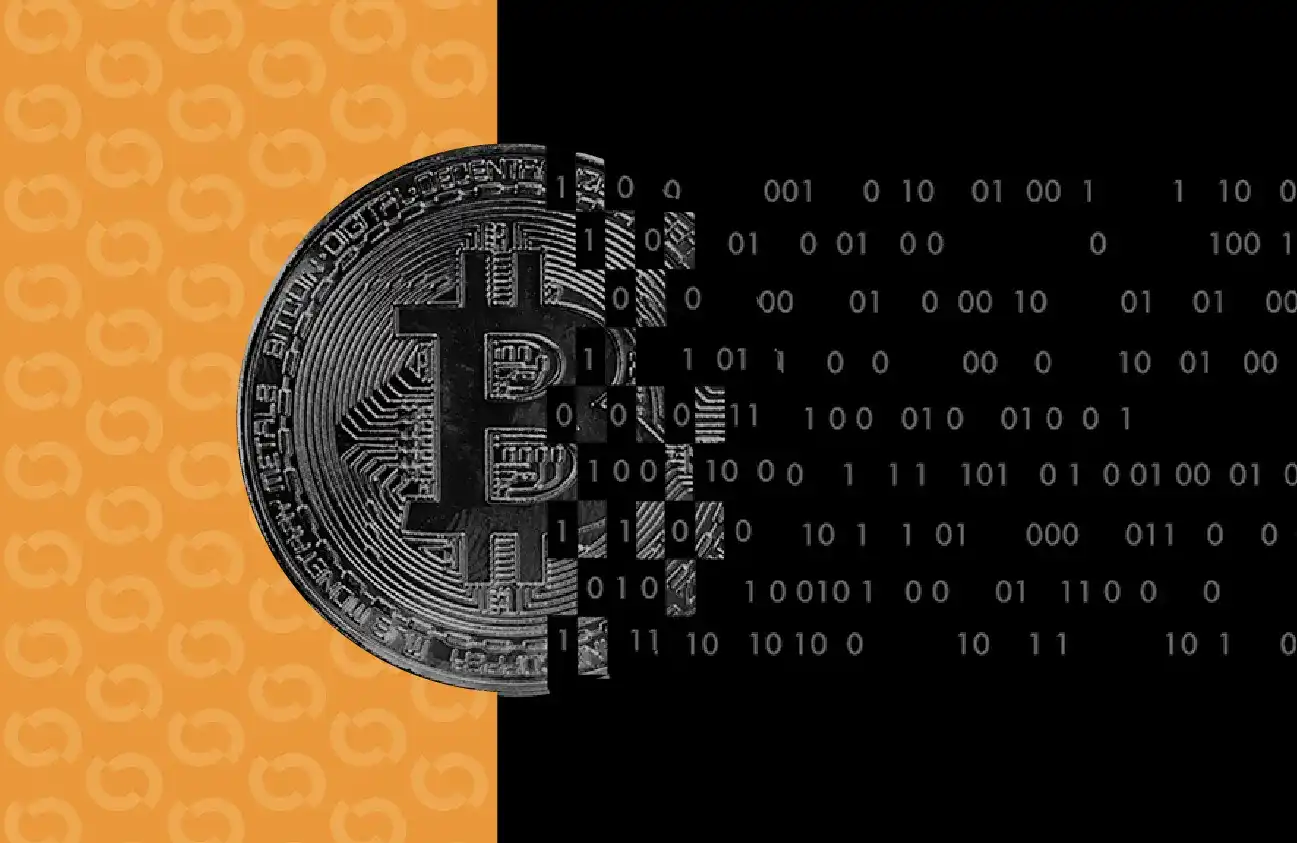
Author: nvk Compiled by: Saoirse, Foresight News Original title: Quantum Computing Is a Real Threat to Bitcoin, 99% of people get it wrong TL; DR · Bitcoin does not use encryption, but uses digital signatures. The vast majority of articles get this wrong, and the difference is significant. · Quantum computers can't hack Bitcoin in 9 minutes. This description is just a theoretical circuit; the machine itself doesn't exist, and it won't be around for at least ten years. · Quantum mining is physically impossible to achieve. It actually requires more energy than the total energy output by the Sun. · Bitcoin is fully upgradeable — it has been successfully upgraded before (Quarantine Witness, Taproot), and related work has begun (BIP-360). But the community needs to speed things up. · The real reason for the upgrade is not a quantum threat, but traditional mathematics has broken through countless cryptographic systems. secp256k1 is likely to be next. Quantum computers have yet to break any cryptographic system. · There is a real danger: the public keys of around 6.26 million bitcoins have been exposed. It's not something to be afraid of, but it's worth preparing ahead of time. The core main line sums up everything I want to say next in one sentence: the threat of quantum to Bitcoin exists, but it is still very far away; media reports are generally false and exaggerated; and the most dangerous one is not quantum computers, but rather disguised as panic or insignificant complacency. Whether it's people shouting “Bitcoin is over,” or people who claim “it's all right, don't be a fuss,” they're wrong. Seeing the truth requires accepting two things at the same time: · Bitcoin currently has no imminent quantum threat; the actual threat is probably far farther than what the headline party advertises. · However, the Bitcoin community should prepare ahead of time, as the upgrade process itself will take years. This is not a reason to panic, but a reason to act. Next, I'll use data and logic to make it clear. This chart compares two core quantum algorithms: the Shore algorithm (left) is a “cryptographic killer” that can exponentially accelerate large decomposition and directly crack public key cryptography such as RSA/ECC, and the Grover algorithm (right) is a general quantum accelerator that can bring square level acceleration to disordered searches. Together, the two have demonstrated the disruptive nature of quantum computing, but they are still limited by error correction hardware and cannot be implemented on a large scale. Media routine: The title Party is the biggest hidden danger, and the same movie is repeated every few months: · A quantum computing laboratory publishes a rigorous research paper with a large number of restrictions. · The tech media immediately wrote: “Quantum Computer Hacks Bitcoin in 9 Minutes!” · Crypto Circle Twitter simplified to: “Bitcoin is dead.” · Your relatives and friends sent a message asking if you want to sell it quickly. · But the original paper didn't say that at all. In March 2026, the Google quantum AI team published a paper stating that the physical qubits required to crack Bitcoin's elliptic curve password could be reduced to less than 500,000, a 20 times increase over previous estimates. This is indeed an important study. Google was very careful, did not disclose the actual attack circuit, and only issued a zero-knowledge proof. But the paper never said: Bitcoin can be cracked now, there is a clear schedule, or that everyone should panic. However, the title reads: “Breaking Bitcoin in 9 minutes.” CoinMarketCap once wrote “Will AI-Accelerated Quantum Computing Destroy Bitcoin by 2026?” The full text explains that the answer is almost certainly “no.” This is a typical routine: use sensationalized headlines to blog traffic, and be careful to keep the text accurate. But 59% of the forwarded links don't even click on it—for most people, the title is the message itself. There's a saying that's right: “The market prices risk extremely fast. You can't steal something that goes to zero once you get it.” If quantum computers were to disrupt everything, Google's own stock price (which also uses similar passwords) would have collapsed long ago. However, Google's stock price is stable. Conclusion: The title is the real rumor. The research itself is real and understandable, so let's take a close look. What is the real threat of quantum computers and what is not the biggest misunderstanding: “Cryptography” Almost every article about quantum and Bitcoin uses the term “encryption.” This is wrong, and it affects the whole world. Bitcoin doesn't rely on cryptography to protect assets; it relies on digital signatures (ECDSA, later using Schnorr through Taproot). The blockchain itself is public, all transaction data is always visible to everyone, and nothing needs to be “decrypted” at all. As Hashcash inventor Adam Back, as quoted in the Bitcoin white paper, said:...

137d agoburnking#mining #Bitcoin
The tripartiality of price

The tripartiality of price

In the early hours of the morning, BTC quickly retraced from 60k to the 58k front line. The volatility of the secondary market often scares many people. The greater the volatility, the greater the fear. As a result, they often like so-called “stable” markets with low volatility, and naturally hate highly volatile markets, such as the crypto market. The complexity of financial markets is that one single variable — price — overshadows all of humanity's mathematics. So far, the debate about whether price fluctuations are random processes with no memory or non-random processes with memory has still not come to fruition. Teaching Chain believes that the reason why the price is so mysterious and complex is that it is ternary (ternary) — composed of three possibilities — rising, falling, and sideways, not binary (binary). Common in the macroscopic reality world is duality: yin and yang, black and white, presence or absence, male and female, life and death, switches... In quantum mechanics, ternality began to appear. Schrödinger's cat can live, die, live or not. Prices, like that cat, can rise, fall, or rise or fall. It is this tripartiality of prices that makes the financial market complicated and unpredictable. In Dream of the Red Mansion, Lin Daiyu said that either the east wind overwhelms the west wind, or the west wind overrides the east wind. This is a dualistic perspective. So is it possible that the east wind and west wind are evenly matched, and that no one can beat anyone, or that the two sides are dragging back and forth near the balance point? This is a game theory perspective. The decentralization of BTC depends on constructing an elaborate game structure, so that at any level, multiple players check and balance each other, and no one can overwhelm others, take the lead, and control the entire system. A sideways price movement is a state where long and short sides are evenly matched. In this state of equilibrium, the bulls cannot decisively overwhelm the bears to form a decisive upward breakout; nor can bears decisively overwhelm the bulls, thus forming a decisive downward breakout. So it's time to go sideways. The so-called sideways trade does not mean that the price has not moved at all, but rather that the price fluctuates less over a long period of time, remains within a range, and has no significant upward or downward trend. Higher, bulls overwhelmed bears, and continued buying drove prices higher. Investors are full of optimism. Sentiment pushes investors to keep buying, thus creating a positive feedback cycle of growth. Falling, bears overwhelmed bulls, and continued sell-offs drove prices down. Investors are full of pessimism. Sentiment pushes investors to continue to sell off, creating a positive feedback cycle of decline. Sideways, on the other hand, are long or empty, and no one party's efforts can drive a positive feedback cycle. The other party's strength is enough to stop any trend from occurring, thus creating a negative feedback loop. At this point, the price is within a relatively limited range. Short-term speculation has made it difficult to profit from short-term speculative operations due to uncertain direction. Sideways markets are often viewed as a state of “uncertainty” or “waiting for a breakthrough.” People often face more confusion in this kind of market because there is a lack of clear upward or downward signals. It's hard for people to choose the right strategy. People become nervous after repeated fluctuations and unsuccessful breakthroughs, so they overlook or miss when the real breakout trend arrives. People can feel uncertain and anxious, which puts a lot of psychological stress on them. This kind of pressure often makes people who have carried the excitement of a sharp rise, or the fear of a sharp fall, give up or leave the market too early, miss out on future market conditions, or be caught off guard by sudden breakthroughs. The tripartiality of prices causes those who are mired in it to repeatedly fluctuate between optimism, fear, and uncertainty, thus constituting the overall complex and chaotic behavior of the market. People are unable to accurately measure and grasp the behavior of the market, so they argue over whether it is random. The Heiner model points out that perfect rational behavior has no pattern and cannot be predicted. In the eyes of a Thanksgiving turkey, human behavior is random, unfathomable, and frightening. However, killing a turkey on Thanksgiving is a completely rational and definitive thing for people. As a result, investors who can get through the cycle are no longer just a turkey's ignorance, but are closer to human rationality...

705d ago刘教链#Liu Jiaolian #Bitcoin
Plummeting and shuffling!

Plummeting and shuffling!

At around 10 p.m. on Sunday night, the BTC bearers tested the key psychological level of $60,000. It was discovered that the support was not strong. After getting it easily, it was easy to suddenly launch a general attack at around 8 o'clock this morning, pushing the front line from a minimum of 58k to around 52k. Currently, there is a temporary standoff between the two sides of the 54k line. Regarding this war situation, I have carefully read the last two editions of the Education Chain Report, namely [“8.4 Teaching Chain Internal Reference: Everything Has Fallen, Where Has the Money Gone? Where's the bottom?”] Friends of the second installment of [“8.2 Teaching Chain Reference: The Rise of Bitcoins”] should not be surprised. Among them, yesterday [“8.4 Education Chain Internal Reference”] clearly stated that the Education Chain will view this decline more as a low reshuffle driven by BTC's own internal causes (that is, the liquidation of Mt. Gox, etc.) rather than a trend reversal driven by external factors (that is, the Federal Reserve's interest rate cut, the US economic recession). From a semi-quantitative perspective, yesterday [“8.4 Education Chain Reference”] also quoted [“5.28 Education Chain Reference: Mentougou 140,000 BTC changes will cause the market to collapse?”] A half-quantitative rough estimate made by the China Education Chain, under the assumption that 1/3 of the settlement amount was withdrawn to 60,000 dollars, can be accepted. However, yesterday [“8.4 Teaching Chain Reference”] further analysis showed that after splitting the overall payout into 1/3 must throw, 1/3 paper hand, and 1/3 diamond hand, after taking on 1/3 of what must be thrown, the market will definitely tend to find an opportunity to wash out 1/3 of the paper hands and then start the market, so it will be easier. This is very much in line with the “biggest loss principle” mentioned by the teaching chain before: the trend of the market always follows the direction of allowing as many people as possible to generate as much loss as possible. According to the teaching chain, this principle is actually very similar to “the direction of light always follows the shortest distance” in physics. Just yesterday, in the article “Trump Gives Bitcoin's Best Expectations So Far: US$167 Million”, Teach Chain made an example, saying that BTC is like light, has wave and particle duality, and that the speed of light is constant regardless of the reference frame. Well, corresponding to a straight line, BTC will also follow the biggest loss path, and the closer BTC is to pure and free money, the more it is like light, and the closer it is to the path of maximum loss. The logic behind this, the teaching chain feels, is that BTC can more effectively keep the realized market value (realized marketcap) and current market value (marketcap) closer. As we realise this, we know that in this round of bear markets, the “previous high” of 69,000 dollars was broken through the previous round in early 2024. So, obviously, the bull market either started early and ended early, or the bursting warehouses exploded, so that people who were desperate to cut meat left the market, and everyone who received the unexpected fortune handed over their chips at a low level. The vast white land was really clean, so that the future market could make a difference. So, if 1/3 of the paper hands need to be washed off, will the market choose to wash them off at 50,000 or 60,000 dollars, or will they flee for profit? Obviously, according to the “maximum loss principle,” these people can make a lot less money by washing it out here. Then, according to the semi-quantitative analysis described above, is it reasonable to throw 1/3 and retract 68k to 60k, then divide 1/3 and retract to 52k? Is it an accident? It's no surprise at all. As stated in the internal affairs report, “Everyone who is afraid to clear their positions and leave the market, and those who are forced to leave the market by bursting out of leverage, can only be said.” If you persuade someone to cut meat, it's bad if it's not stupid. Teach people contracts, seek money, and harm lives. Don't do anything small. Don't be petty. I've seen the teaching chain online more than once, and many people have complained that the BTC cycle is very difficult, and it's hard to make money. Have you ever thought about why is it so hard to make money? Education Chain believes that the reason money is difficult is precisely because you just want to make money. The philosophy of the teaching chain is to accumulate assets rather than earn money (receive income). Please take a closer look at the differences between the two. Many people can't understand this second-order logic for the rest of their lives, so they will always be caught in an endless cycle of “making money - losing money.” Dr. Thomas Stanley, author of “The Millionaire Next Door,” followed and surveyed 1,371 people with financial freedom and found that the vast majority of them were “asset rich” rather than “income rich.” Don't forget your original intention. You must not forget your initial goal of entering the market under the influence of strange circumstances in the market and the encouragement and incitement of all kinds of people with ulterior motives. Is it to slowly become rich, have financial freedom, have plenty of time, have a leisurely life, family, and beauty? Or is it to spend the whole day struggling with short-term ups and downs, always watching contract leverage for fear of bursting out of positions. You can't relax your nerves for a moment. Your life is full of tension, you have no time to spend time with your family and children, and you can't get away with falling into reincarnation to earn and lose money? There is a lot of unhappiness in life because...

747d ago刘教链#2023 market #Liu Jiaolian #slump
Kai: The tipping point of technological evolution has arrived!

Kai: The tipping point of technological evolution has arrived!

This article is based on the keynote speech by Kai (Web3 Investor/ Independent Investor/ Cofounder of MCG), the 7th edition of Future Salon, an event owned by Future3 Campus, and the revisions did not affect the original intention. It only represents the views of the guests and does not represent Wanxiang Blockchain's position. Today is at Future3 Campus. Compared to discussing technical details, what I want to do more is “recharge my faith.” So today's topic is more conceptual, which is equivalent to making a declaration. The tipping point of technological evolution has arrived. Over the past few decades, there have been many technological advancements, including electric vehicles, 5G networks, mobile phones, etc. Since quantum mechanics was proposed, including the birth of physical and biological knowledge related to condensed matter, in fact, in addition to some technical success, it has also gone through a lot of trial and error. In the process of scientific development, it is the continuous accumulation of these trial and error and error paths as the cornerstone that has enabled today's technology to explode. In recent years, everyone has felt the stagnation of cutting-edge technology. Speaking of which, they are all still old narratives, and nothing new has come out. But suddenly one day, the big language model LLM appeared to give us a new direction. This is an important characteristic of the technological explosion. It proves to us that it must have stemmed from decades of technical trial and error and the accumulation of experiments in different paths. Furthermore, in recent years, there have been more technological innovations brought about by collaboration between different technologies, which is a very important sign of the tipping point of science and technology. In the previous AI cycle, the development of all image recognition and deep networks depended to a large extent on the continuous improvement of chip technology. Today, LLM is able to run GPT-3.5 on 1.75 billion parameters, mainly due to the technological integration of the entire industry chain represented by GPU chip computing. There are similar examples in other fields, such as the successful ignition of America's second positive energy output for controlled nuclear fusion. The reason behind this success is the integration of more technology. The integration of different technologies is the second very important characteristic of technology reaching a tipping point. This is also a logical support that is very important for us to discuss the integration of AI and Web3 here. Third, since the birth of the Big Language Model (or GPT), there has been a lot of controversy about how to define the role of GPT in overall technology. Does it count as an industry, or is algorithm innovation a short-term change? Our view is very clear. The big language model is at the core of the Fourth Industrial Revolution, and its effects will spread widely to other fields and play a more important role. That's why Web3 practitioners, internet practitioners, and real economy practitioners are starting to try to incorporate big language models into their industries. Well right now, we think this is the perfect time to innovate. We have the chance to make something that was once unimaginable. Why now is the best time to innovate from three directions to explain why we think this is the best time to innovate. First, take software as an example. Over the past 20 years, whether it is AI, the Internet, or Web3 technology development, a large number of results have been accumulated. Coupled with GitHub-based Open Source evolving at an unprecedented speed, these can deploy what we want to do more quickly. There are several excellent entrepreneurs on the scene today. Hamster has actually paved the way for this matter more quickly and quickly. You don't even need to directly obtain its source code; you can use a faster way to encapsulate what people have done before and apply it directly to your own products. Second, an important factor is the ability of big language models. Compared to traditional software and AI, the big language model has two major changes. First, in the past, interacting with AI was a static process. We all used it as a tool. Whatever instructions you use, it can complete any task, and their ability is relatively limited. Today's LLMs have initial human intuitive abilities, and can complete more intuitive and predictive tasks based on the knowledge obtained through in-depth data training. Also, since the parameters have exceeded the critical value, it is no longer a simple static interactive tool, but can interact with you continuously. In every industrial revolution in the past, we freed many people from heavy physical labor to do mental work. One of the most important results of today's LLM is to move humans from complex intellect...

1089d ago万向区块链#Universal blockchain
Overview: On quantum cryptography

Overview: On quantum cryptography

Quantum cryptography is the next chapter in cryptography currently in use. This part of encryption originates from physical principles, involving physical mechanisms and computational power. This computational power and quantum mechanism were used to create two powerful security systems, quantum key distribution and quantum secure cryptography. We'll cover quantum cryptography and cryptography in detail in this guide, and we'll also use this article to learn how quantum cryptography works and what its applications are in our world. Explain quantum cryptography Quantum cryptography applies the principles of quantum mechanics to cryptography and cryptography. When quantum mechanisms are integrated into encryption, the resulting security is so strict that no one can access the data shared and protected by the system. Even if hackers had access to the quantum computer and the entire suite, they wouldn't be able to break the encryption offered here. This is because quantum cryptography uses quantum polymorphism and the “invariant theory” to protect information. There is no doubt that quantum cryptography is better, more reliable, and more credible than the traditional cryptographic measures we use to date. The Advanced Encryption Standard (AES) makes the data almost impossible to crack, but it's also unbreakable. Alice and Bob's appearance (example) To describe the working principles behind quantum cryptography, here's a case example that will help make things more clear. Let's say Alice wants to send Bob a message. As she writes information and polarizes each photon through a polarizer to change its direction to a specific type. This can be horizontal, vertical, or diagonal. The encryption key here is a change in the direction of the photons. Once received, Bob guesses the polarizer and decodes the information. Here Bob will guess the photon case and match it to the case Alice generated. In this example, let's say another person is trying to access the message. In the crypto world, this person is commonly referred to as Eve. Eve uses her own polarizer to get information. If Eve used a polarizer to decode, Bob and Alice would say there's a difference here because we can't change the photon's properties without moving or altering it. With this back-end principle, quantum cryptography was developed to be used as a protective measure to protect data, transactions, communications, and information. Principles of quantum cryptography Quantum cryptography uses individual light particles such as photons to transmit data. This data is transmitted over optical fiber. Photons represent binary bits, so safety depends on the execution of quantum mechanics. Using photons or light particles is effective because these particles can exist in two or more places at the same time. Furthermore, if quantum properties are not changed first, they cannot be changed or observed, and particles cannot be copied. With these aspects, quantum cryptography can provide the highest form of security. Some might say that keys shared through quantum cryptography are unbreakable because the principle of photons is applied here. However, we've seen some possibilities for circumventing the security that this system provides. However, there is currently no evidence or proof. Even with quantum computing capabilities, cracking a quantum key is not an easy task. Let's take a look at some details about photons. In quantum cryptography, every photon passing through a cryptographic system represents a binary code. It can be 0 or 1. The key represents a string of 1s and 0s, creating a coherent message that only the two entities involved can encrypt and decrypt. Quantum computational cryptography works in a similar way to AES, but due to the nature of photons, we can see significant changes in security. The binary bits converted from the photon provide the photon with a unique spin. It can be vertical, horizontal, right diagonal, or left diagonal. This provides a unique code or cryptographic attribute for the key. Heisenberg's uncertainty principle means we can't measure or calculate the position and momentum of an object. This principle does not apply to the macroworld, where small changes in the macroworld are often overlooked. But in the quantum world, even the smallest changes can have a huge impact. Therefore, the Heisenberg uncertainty principle plays an important role in quantum computation and cryptography. Why is there a demand for quantum cryptography? Have you ever heard the phrase “necessity is the mother of invention”? The origin of quantum cryptography and cryptography has a similar story. With the advent of quantum computing, existing cryptographic standards may become weak. Using the Shor algorithm in quantum computing, computers can break asymmetric encryption. An ordinary computer cannot find the key prime number in the RSA encryption standard for decrypting the key. But quantum computers can find prime numbers. As a result, it can break the key. AES of AES...

1408d agody zhang#security #technology #datum #quantum cryptography
Zhu Jiaming | Big Transformation, Big Design, Big Experiment: The Metaverse from the Perspective of Big History

Zhu Jiaming | Big Transformation, Big Design, Big Experiment: The Metaverse from the Perspective of Big History

This article is an excerpt from the recently published book “The Metaverse and the Digital Economy”, by Zhu Jiaming. We make history through our own observations, not history. ——Since the 20th century, Stephen Hawking, the concept of “era” has been prominent and has spanned far beyond: “Time” magazine, Times Square, “Keynes B-era”, “atomic energy era”, and “Cold War era” until the advent of the “IT era” and “internet age”, humans began a transformation from the industrial age to the information age and digital age, which meant the beginning of a brand new era. The information age and digital age have changed human ideological paradigms, scientific and technological models, and economic, political, and social lifestyles. Unlike the transformation from one era to another that has occurred many times in history, humans can only be in a passive state, such as from the Paleolithic Age to the Neolithic Age, or from the farming age to the industrial age. Now, from the transformation from the industrial age to the digital information age, humans already have the ability to participate, influence, and change. This transformation, which is currently underway, is the introduction of major designs and experiments by humans in order to achieve a more magnificent transformation. “The Metaverse and the Digital Economy” Author: Zhu Jiaming Publishing Time: June 2022 Press: Chinese Translation Press The Great Transformation: Characteristics, Causes, and Solutions Hungarian economist Karl Polanyi (1886—1964) is the proponent of the “Great Transformation” concept. Polanyi published a book, “The Great Transformation,” in 1944. The subtitle of the book is “The Origins of the Politics and Economy of Our Time.” The core content of the book is to explain in the context of macroeconomic history how self-regulating markets disintegrate society and spontaneous social opposition movements, and ultimately lead to a market society. Today, nearly 80 years have passed, and humans need to think about the political and economic origins of the current era, and the structural and institutional reasons for this social transformation. First, the basic characteristics of the Great Transformation. Major transformations are not a normal part of human society. If the characteristics of the Great Transformation are summarized, at least the following points are included: (1) The reason for the occurrence of the Great Transformation is not a single or simple one, but the result of a combination of multiple historical reasons. (2) The cycle of major transformation is a long cycle, spanning generations; in each long cycle, there are also short cycles guided by major historical events. For example, China in the 20th century experienced the Qing Empire and the Republic of China, the War of Resistance against Japan and the Liberation War, and a period of planned economy and reform and opening up after the founding of the People's Republic of China. (3) Major transformation processes include physical resonance and resonance, chemical synthesis, decomposition, and replacement reactions, and iterative processes. (4) Major transformations transcend geospatial limitations, and their transcendence has led to inevitable global impacts and changes. (5) The results of the major transformation are disruptive and are based on systematic restructuring on top of deconstruction. If the above characteristics of major transformations are established, especially based on disruption, resonance, and restructuring as standards, there have been the following three major transformations in human history. The first was the major transformation of the Axis Era c. The time is around the 5th century BC. The regions are ancient Greece, the ancient Jewish region, ancient India, and ancient China distributed at 30 degrees north latitude. This is a transformation of human civilization from static to dynamic, changing internal dynamics, laying the foundation for the future of human ideology and showing the broadest institutional arrangement for future society. The second was the Renaissance era's major transformation. The Renaissance occurred in the 14th to 17th century, peaked in the 16th century, and originated in Florence, Italy. The Renaissance ended the Middle Ages and pioneered modern society. The third was the major transformation of the industrial age that began with the Industrial Revolution. The period begins from the 18th century to the end of the 19th century and the beginning of the 20th century. The Industrial Revolution began in England, completed in North America, and then spread to the rest of the world. If you re-examine the major historical transformations that have already occurred, you will find that every new major transformation does not presuppose that the effects of the previous major transformation have disappeared; on the contrary, it includes the factors and influences of previous social patterns. Second, the basic reason for the Great Transformation. (1) Sudden changes in climate and natural environment. For example, the cause of the worldwide “17th century crisis” was the advent of the Little Ice Age, the glorious revolution of England in the West, and the fall of China's Ming dynasty in the East. The current greenhouse effect has caused the disappearance of glaciers, rising sea levels, the northward shift of the climate zone, and climatic anomalies, which have had a profound impact on human society. Sudden changes in climate and nature are the most important drivers of the Great Transition. (2) Thought movement. Examples include the 18th century Enlightenment centered around England and France, followed by a furious movement in Germany. (3) The scale of innovation. Like Schumpeter (Joseph S...

1538d ago01区块链#01 Blockchain #metaverse #Chu Ka Ming
When magic shines into reality — a metaverse built by science fiction and movies

When magic shines into reality — a metaverse built by science fiction and movies

The metaverse, or Mertaverse, is a term derived from the sci-fi novel “Avalanche” by Neil Stephenson, a famous American fantasy writer, published in 1992. The story of the book is set in the real world controlled by companies in the early 21st century, and a virtual space parallel to the real world. A computer virus called Avalanche spread simultaneously on the internet and in the real world. The main character, Hiro, a natural hacker, Japanese samurai, and courier who delivered pizza for the mafia, began to subdue the virus. Ironically, the magical reality in “Avalanche” seems to be playing out today. The digital economy monopolized by internet giants has become dominant in the real world, the coronavirus is spreading globally, and the “metaverse” is sweeping the world as a virtual concept parallel to reality. Is it really just a coincidence that the predictions in science fiction come true? 1. Science fiction novels and movies have become novels with different themes that are an important source of modern capitalism. Science fiction is not based on traditional ideology, but rather a theme that leads humans into an unknown future world. Science fiction is characterized by escaping reality, anticipating the future, and opening the imagination. Imagination of intelligent machines, cosmic fantasies, and extreme societies in science fiction has inspired human imagination to explore and create, and a large number of science fiction novels have become reality today. Science fiction has and is providing inspiration for new forms of human-computer interaction. Superwatches with visual screens, built-in cameras, and call functions in the classic 1946 anime “The Supreme Detective” gave birth to smartwatches. The “communication device” used in the 1966 “Star Trek” episode became the inspiration for Martin Cooper to create the world's first portable phone. KITT, a high-tech car that supports driverless driving in the 1981 TV drama “Knight Rider,” became the predecessor of today's driverless cars. Furthermore, the essence of science fiction is about thinking about the end of humanity, including the destruction of the Earth, natural disasters, machine domination, etc. Therefore, with the mission of changing the future, science fiction writers urge humans to redeem themselves, seek changes in beliefs and morals, and create new ways of thinking and living. This sci-fi novel, which explores the ultimate meaning of humanity, has also become an eternal subject, which will inevitably affect the worldview of every generation. “Extreme, alien capitalism. Under this system, stock prices are driven not so much by earnings as by the fantasy of science fiction.” — “Musk is building a sci-fi world, and we will all inevitably fall into this trap” Gil Lepore, philosopher Gil Lepore, pointed out that tech billionaires are creating a new type of capitalism — Muskism. Aiming to rely on technology to solve the world's toughest problems, “Musk” are inspired by science fiction and are based on a belief in technology and engineering to solve all political, social, and economic problems. The idea that science fiction and movies can be an important source of modern capitalism is full of magical reality. In response to this view, in his keynote speech on “The Musk Phenomenon and Science Fiction Literature,” Professor Zhu Jiaming analyzed the birth period and growth environment of the Internet giant founders, and came to the conclusion that l The golden age of science fiction, sci-fi TV, and movies that began after World War II had direct historical coincidence, strong correlation and deep interaction with the actual IT revolution, the Internet revolution, and space development. l Sci-fi art based on the theme of science fiction novels and sci-fi movies has derived a sci-fi cultural atmosphere, a sci-fi cultural environment, and an environment more important than the geographical environment. It forms a profound and rich ideological resource that affects and changes the development of the science and technology industry, inspiring generations of imagination and inspiration to pursue continuous innovation, as well as the tenacious belief that “technology and engineering can solve political, social and economic problems.” 2. What kind of anxiety about the future of humanity made science fiction a guide for self-redemption today's “Musks” under the quantum revolution? To answer this question, the quantum revolution is probably a key part of it. Before the quantum revolution, the world was dominated by classical physics systems founded by Galileo (1564—1642) and Newton (1642—1727) in the 17th century and peaked at the end of the 19th century. The three pillars of classical physics — classical mechanics, classical electrodynamics, classical thermodynamics, and statistical mechanics — have constructed a rigorous and perfect theory. On the occasion of the Lunar New Year in 1900, the famous physicist Lord Kelvin said in his farewell speech to the old century: “All the physics buildings were built in the 19th century, and the task of physicists in the future is to repair...

1725d ago01区块链#01 Blockchain #metaverse
Cryptography: From theory to reality

Cryptography: From theory to reality

“Everything can go wrong” is one of the main principles that should be followed in any planning. Instability is the fact that when solving password problems, force majeure situations occur. Many scientists have thought through every detail for years, but the reality often surprises you. In many ways, it is this endless cycle where a series of new cryptographic solutions are developed, vulnerabilities are identified, and only then discovered how the vulnerability is formed, which attracts people to study cryptography. For example, the famous TLS protocol had an interesting episode in its historical development: in 2001, Hugo Krawczyk first mathematically proved the security of the data protection scheme used in TLS 1.1, but less than a year later, an attack emerged showing that the protocol was unstable in terms of data protection. Unfortunately, such incidents are not uncommon in cryptography, and the vulnerability mentioned above is certainly not the last time in the TLS protocol. Every year, at cryptography conferences and seminars, there are some surprising cases of attacks. At first glance, these attacks contradict theoretical research. At the moment, a question is raised: What is the reason for the “mistakes” of cryptographic theorists? Before answering this question, let's try to figure out what the pillars of cryptography are, what are the opponent's models, and how knowledge about such a complex and multifaceted concept as “information security” is being formed and expanded in the world. The development of models as the foundation for solving information security problems is an extremely complex and time-consuming process. It turns out that theoretical research knowledge is one of many stages in the life of such systems. Equally important is the stage of modeling, implementation, and operation of the system. From the perspective of ordinary users, the operation stage is the most important; theory is always theory. Each stage is based on the previous stage and is a logical continuation of the previous stage: for example, the theoretical research stage is impossible without modeling, because the rigor of reasoning requires formalizing the properties and objects of the study. Modeling in cryptography involves in-depth analysis of all the properties of the system being developed, all possible ways users can interact with it, and sometimes even the physical conditions under which the system operates. The result of the modeling is a mathematical model of the system, which includes in particular the so-called adversary model, which in fact determines what a secure and stable system means. The adversary model consists of three parts: the type of attack, the threat model, and assumptions about the adversary's available resources. Together, these three parts make it possible to clearly define the world our system is in: how the enemy communicates with it, what he can learn from his opponent, what exactly he wants to achieve, and what resources he has. The type of attack determines the enemy's qualitative ability to interact with analytical systems. Thus, the type of attack determines what kind of system information the adversary can receive and how it can interfere with its operation. One example is the type of attack where the enemy can intercept and modify data on communication channels. Here, the enemy's capabilities should take into account all known practical and theoretical methods that violate the security of the studied system, and as close as possible to those that have appeared when using the system in practice. The threat model defines tasks that violate security attributes, which adversaries want to solve. Examples include falsifying information signatures or disclosing confidential information. If the enemy solves the assigned task, they say his “consciousness is threatened.” The threat model reflects the idea of what situations violate the security of a particular system. Assumptions about enemy resources are also an extremely important part of the model, which now determines the enemy's quantitative ability. Usually they are determined by a set of factors: the enemy's time and computing resources, the size of the program, and the amount of information he can receive by interacting with the system. Without these restrictions, it makes no sense to talk about the security of most systems used in practice, because, for them, there is always an opponent, unlimited resources, and they can find the required keys through simple violent means without using any complicated methods. Once the mathematical model of the object being studied appears, it is possible to apply an appropriate mathematical method, and the results are absolutely accurate a priori (if the author made no mistakes in the calculation and the initial assumptions were correct). Using this method, it is possible to reveal the deep properties of the objects being studied, and in the study of lengthy processes, it is actually possible to predict their future. In physics, we predict how many seconds a thrown stone will fall to the ground, while in cryptography, we predict whether cryptographic systems will be hacked in the next few years. Therefore, if the mathematical part of the study was carried out accurately, the results did not contain errors...

1725d agody zhang#cryptography #attacks #loopholes #systems #quantum computer
Interview with Han Feng: Quantum Mechanics and the Metaverse

Interview with Han Feng: Quantum Mechanics and the Metaverse

Han Feng: I just joined the Tsinghua Institute of Advanced Studies as a visiting researcher. The Institute of Advanced Studies was founded by Mr. Yang Zhenning. It first came from the Center for Advanced Studies. My main research direction now is quantum entanglement and spatio-temporal topology, so I maintain a consistent style. The reason I joined the blockchain, including the current metaverse, is all based on my understanding of quantum mechanics. Han Feng: As a visiting research fellow, I joined the Institute for Advanced Study at Tsinghua University not long ago. The Institute for Advanced Study was studied by Chen-Ning Yang (Nobel Laureate). It used to be Tsinghua University Center for Advanced Study. My current research findings on quantum entanglement and spatio-temporal topology, so I stick to my own academic style. I've started to study the blockchain and metaverse, because both of them are based on quantum mechanics. To be honest, it's impossible for us to actually define it today; everyone can accept it. But I can only talk about my feelings, my own perceptions, including why the metaverse is so popular. Speaking of the definition of the metaverse, to be honest, it is impossible for us to nail down a definition that will be accepted by everyone. I can only talk about my personal feelings and cognition, as well as why the metaverse becomes so popular now. Since I joined the industry in 2013, I've been using my knowledge of quantum mechanics to explain Bitcoin, including blockchain, and have written several books, including my latest “Blockchain Wealth Theory.” But to be honest, it didn't work very well. It felt a bit far-fetched. Although I don't think it's far-fetched in my heart, I think it's natural, but the average person doesn't sound like blockchain and Bitcoin are linked to quantum mechanics. Many of them, including old friends in the coin industry, like Wu Gang and Cancer, all think it's far-fetched, and we've argued in the group. Since I studied to explore blockchain in 2013, I've been studying Bitcoin with my cognition of quantum mechanics. I've written several books on blockchain (In Chinese), including my latest book Blockchain and the Wealth of Nations. But to tell you the truth, the response is not very good. Somehow I think it's quite natural to study blockchain and bitcoin based on quantum mechanics, many people, including some of m...

1730d ago韩锋#metaverse #quantum mechanics #Han Feng