


ChatGPT: Entering a new chapter in artificial intelligence and the automotive industry
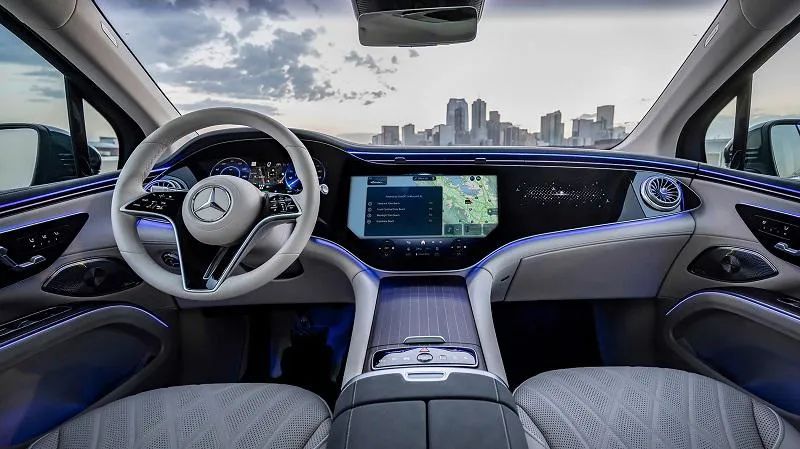
In addition to Mercedes-Benz, many companies are also watching and exploring the application of big models in automobiles, including Tesla, Nvidia, Baidu, Ali, etc.. The combination of artificial intelligence and automobiles is a countryWith the urgent development direction at home and abroad, no company would want to be in another revolution led by artificial intelligenceLeft behind.
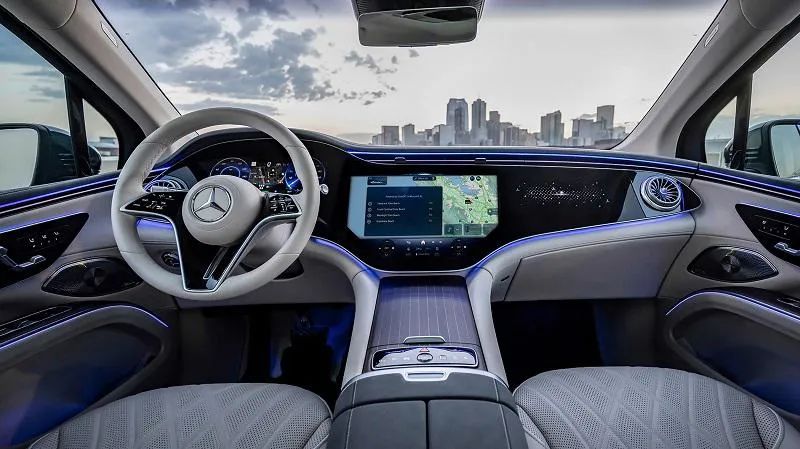
Today, when everyone is talking about AI, we also want to simply talk about how artificial intelligence will change the automotive industry.
The emergence of large models has brought new opportunities and challenges to the development of artificial intelligence, and has also provided new possibilities for the automotive industry.Key application scenarios include smart cockpit and intelligent driving。
A car smart cockpit refers to the interior space of a car that integrates various intelligent functions and services. It can provide a safe, comfortable, convenient, and entertaining travel experience for drivers through multi-modal human-vehicle interaction.
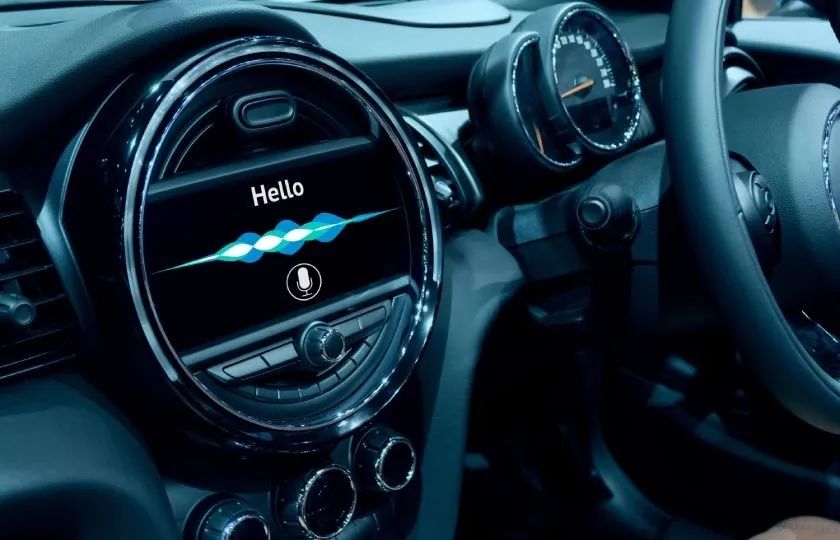
The application of the big model of artificial intelligence in the smart cockpit of a car is first reflected in voice interaction.
Voice interaction is one of the most important functions in a smart cockpitIt allows drivers to communicate and control cars through natural language, improving the convenience and safety of travel.
According to data from the automotive intelligence research institute Qishi Technology, at the 2023 Shanghai Auto Show, the proportion of models equipped with voice interaction functions reached 95%. Among them, Mercedes-Benz ranked first in terms of voice interaction.
And the reason why Mercedes-Benz can take the lead in voice interaction is related to its use of ChatGPT technology. Mercedes-Benz integrated ChatGPT into its mBux intelligent human-computer interaction system, providing car owners with a new voice assistant experience. The system will support more dynamic conversations, which can not only accurately understand the car owner's voice commands, but also have interactive conversations with the car owner.
The second aspect is image analysis. The large image model can provide services such as facial recognition, sentiment analysis, and AR cameras in the car's smart cockpit, so that drivers can interact and entertain the car through images. For example, the image generation model “Second Picture SenseMirror” published by Shangtang Technology can generate images of various styles and themes based on drivers' input or choices.
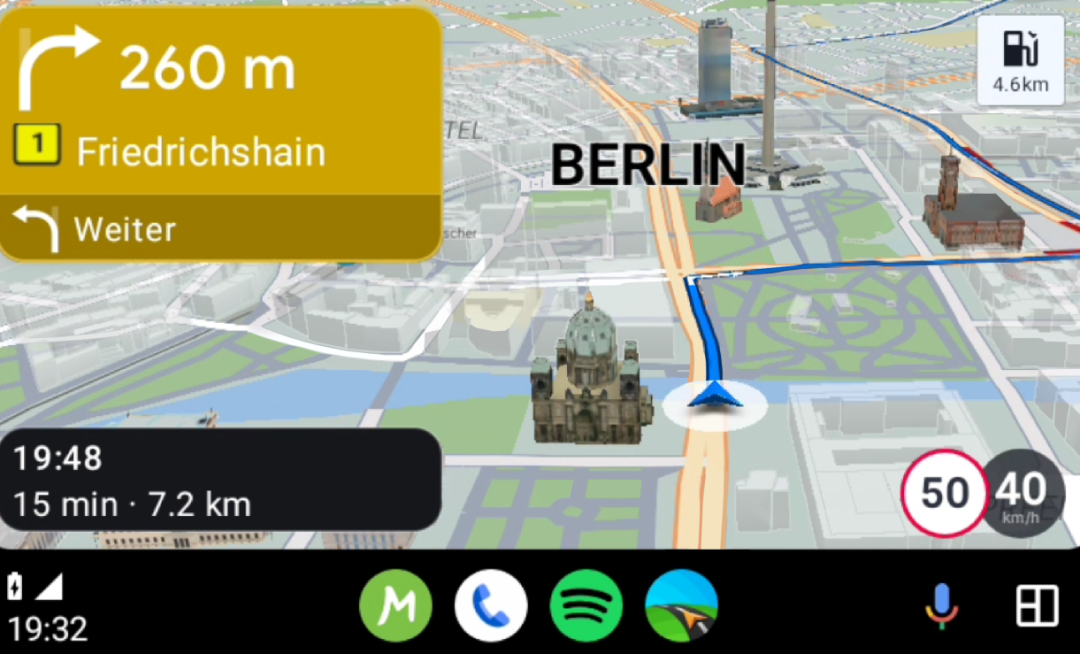
In addition to voice interaction and image analysis, large 3D content models can also empower smart car cockpits, which can provide them with services such as 3D navigation.
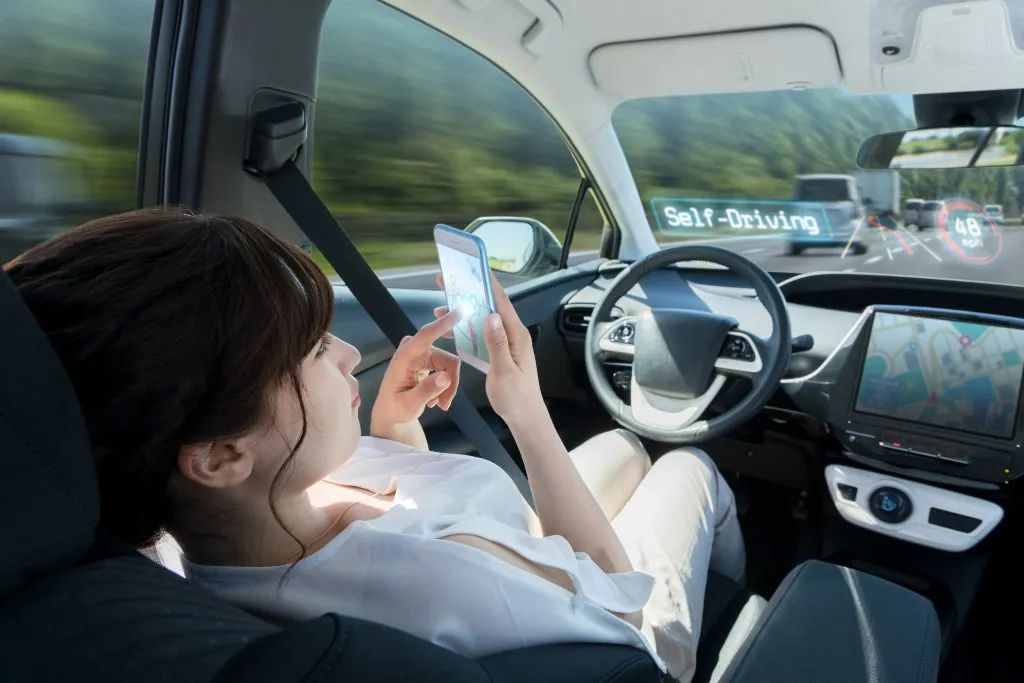
This is an ongoing interactive revolution, and this revolution is inseparable from another important development direction for the future transportation industry — autonomous driving.
According to the standards of the International Association of Automotive Engineers (SAE), autonomous driving can be divided into six levels, from L0 to L5, representing different degrees of automation and human-computer interaction. L0-L2 is driving assistance, and only L4-L5 is considered autonomous driving.
And we're currently up to L3, that is, with artificial intelligence, the vehicle can handle all driving tasksHowever, in the event of an emergency or other similar system failure, the driver's presence is still required.
◉Autonomous driving L0-L5
L1 level, assisted drivingIt means that the vehicle can provide some auxiliary functions, but the driver is still required to monitor the surrounding environment at all times and be ready to take over the vehicle at any time;
L3 level, conditional autonomous driving, the vehicle can complete all driving operations and monitoring of the surrounding environment in specific scenarios and conditions, but humans need to provide an appropriate response when required by the system;
L4 level, highly autonomous drivingThis means that the vehicle can complete all driving operations and monitoring of the surrounding environment under specific scenarios and conditions (such as no traffic, unmanned microbus, autonomous parking, etc.), and does not require any human response. At this time, there is no need for a safety driver in the car, but road and environmental conditions are still limited;
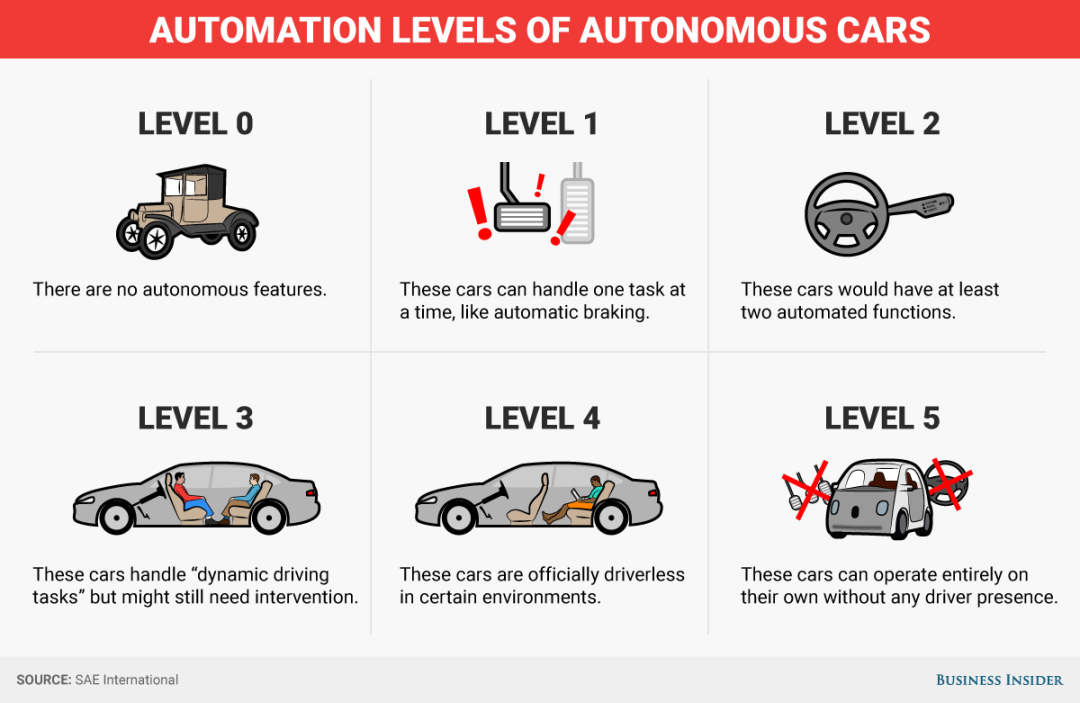
L5 level, fully autonomous drivingAt this time, there is no need to be equipped with a safe driver in the car, and road and environmental conditions are not limited.
◉ Technical principles
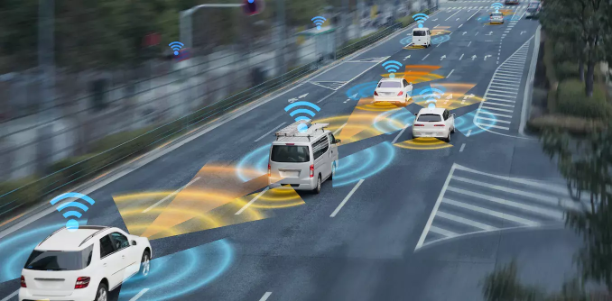
Decision-making means that vehicles use intelligent algorithms and models to plan and judge based on perceived information, determine appropriate working modes and control strategies, and make driving decisions instead of humans. Decisions mainly rely on chips and software, and are the core of autonomous driving, including path planning, behavior planning, trajectory planning, interaction planning, etc.
Control is the implementation of autonomous driving, the result of perception and decision making. It means that the vehicle performs corresponding operations on the vehicle, such as steering, acceleration, deceleration, braking, etc. through a wire control system or mechanical system according to the instructions output from the decision.
Control mainly includes two aspects:Vertical control and horizontal control.The former one controls the speed and acceleration of the vehicle in the direction of travel, mainly involving throttle and braking systems;The latter controls the position and angle of the vehicle perpendicular to the direction of travel, mainly involving the steering system.
◉ Application level
If you want to use artificial intelligence to completely change the way you drive,It mainly looks at the application level in the field of autonomous driving, including the three important parts of environmental perception, decision planning, and learning adaptation。
Autonomous vehicles combine cameras, lidars, radars, and other sensors to gather data on the surrounding environment.Artificial intelligence algorithms will then process this data to create detailed environmental maps and identify objects such as pedestrians, other vehicles, traffic lights, and road signs to determine how the vehicle should respond.High-speed memory similar to GDDR6 can support fast data storage and access, enabling intensive computation.
Autonomous cars, on the other hand, use artificial intelligence to make real-time decisions based on data collected from sensors.For example, if an autonomous vehicle detects a pedestrian crossing the street, it will use artificial intelligence to determine the best course of action to slow down or stop.
Unsupervised learning algorithms can be used to identify anomalies or unexpected events in data collected by autonomous vehicle sensors, such as pedestrians crossing the road in an unexpected location or a vehicle suddenly changing lanes.
Autonomous driving systems can also use machine learning and deep learning techniques to continuously optimize their performance.By continuously collecting and analyzing driving data, the system can learn and adapt to different driving scenarios and improve its decision-making ability and response speed.
Furthermore,Reinforcement learning technology is also playing an important role in autonomous driving。Through reinforcement learning, vehicles can continuously try, error, and learn in an actual driving environment.Optimize their driving strategies and decision-making abilities.
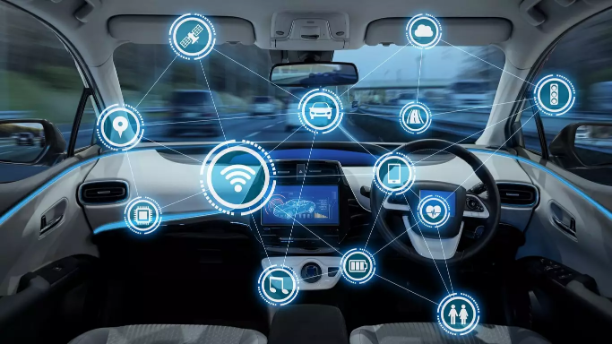
There is also an opinion thatCars are also expected to be part of smart mobile terminals. The development of artificial intelligence and the Internet has provided cars with the ability to interact with other smart mobile terminals. Our smart life will also become more expandable and unique due to the mobile private space nature of cars.

As the car company with the highest market capitalization in the world, Tesla is vigorously promoting autonomous driving, and autonomy will inevitably be carried out to the end.Li Yanhong, CEO of Baidu in China, also said that normal car accidents that occur at any time are not news; self-driving car accidents have become news.The root cause of this is that driverless cars are not yet popular。
Of course, the intelligent driving industry chain does need to improve problems with various factors such as policies, costs, technology, and insurance. However, the future of autonomous driving technology is bright, and our travel life is also looking forward to becoming more intelligent and safe.
