


Navigating the Digital Storm: The Legend of Changpeng Zhao and Binance
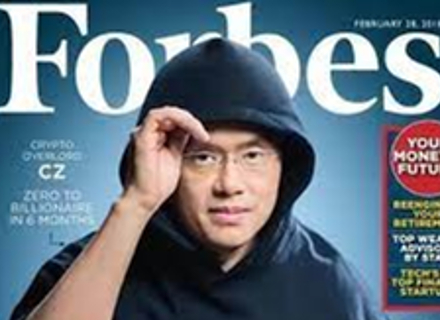
Zhao ChangpengBorn in Lianyungang, Jiangsu, he learned the value of humility in a multicultural environment, dedicated himself to his career, and investedBitcoin, and added Blockchain.info and OKCoin. His life partner He Yi is China's top Bitcoin missionary and the co-founder of Binance. In 2017, Zhao Changpeng founded Binance to raise the Binance Coin ICO. Sequoia valued Binance 500 million yuan and invested 60 million yuan. In the end, Sequoia invested in Binance, and Binance achieved great success.
Original article by CaptainZ
Source of original text:xlog
“Those people taught me how to play chess and how to think”
In 1977, in an unnoticed corner of Lianyungang, Jiangsu, the story of Zhao Changpeng began. He was born into an ordinary family with both parents who were teachers, but his father, Zhao Shengkai, as a teacher at the China University of Science and Technology, was branded as an “unscrupulous” intellectual during the Cultural Revolution. This label brought him endless suffering. Forced to live away from the city and relegate to a remote village, where they experienced some of the hardest years of their lives.
Back then, rural schools were rudimentary and scarce, with only simple stone tables in classrooms. This was very common in rural areas where resources were scarce. In winter, the conditions for studying are even more difficult. In this environment, Zhao Changpeng not only experienced a poor life, but also learned the power to seek knowledge in the face of adversity.
At the age of ten, Zhao Changpeng and his family left the village and moved to Hefei, a small city that is also home to the China University of Science and Technology. For Zhao Changpeng, this new environment is like an oasis of knowledge. Here, his world begins to change. Zhao Changpeng often sits down and listens to debates from senior students. They discuss everything from school life to political issues. These senior students also sometimes teach Zhao Changpeng to play chess and Go. Through these games, Zhao Changpeng not only learned strategy and thinking, but also gradually broadened his horizons.
Zhao Changpeng recalled, “Those people taught me how to play chess and how to think. Working with someone seven to ten years older than me made me think differently from kids my age.” In such an environment, Zhao Changpeng's way of thinking began to change. Not only did he learn to think critically, but he also learned how to find his place in the wider world.
In 1984, in search of a better future, Zhao Shengkai left China to study for his doctorate degree at the University of British Columbia in Canada. Five years later, in 1989, the outbreak of the June 4th incident made Zhao Shengkai once again feel threatened by political turmoil. For the future of his family, he decided to lead the family to emigrate to Vancouver, Canada and start a new life. While applying for a visa, Zhao Changpeng recalled, “I remember the line outside the Canadian Embassy was as long as three days. We had to take turns guarding the night to maintain our position in the team.”
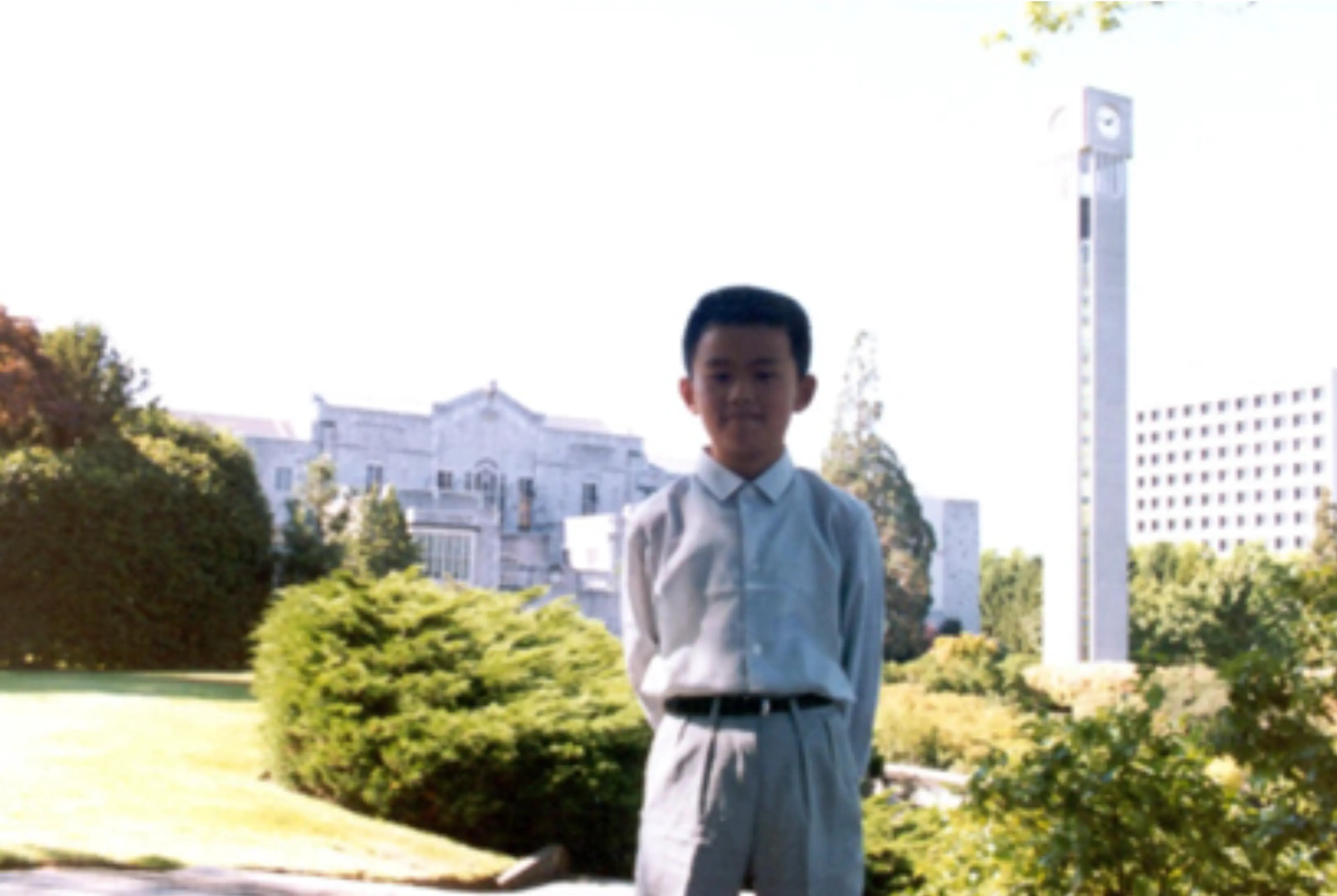
On the campus of the University of British Columbia, Zhao Shengkai continued his academic journey to pursue his PhD in geophysics. This decision was made not only for my own academic pursuits, but also for a better educational environment for the children.
Humble growth in multiculturalism
In the multicultural environment of Vancouver, Canada, Changpeng Zhao's teenage years were unique. The high school he attended was the epitome of racial integration, where students came from diverse cultural and economic backgrounds. Despite being with many Asian students, Zhao Changpeng is one of the few students from mainland China. Most of his students are from Hong Kong and Taiwan, where the economy is more developed, and their lifestyle is markedly different from Zhao Changpeng.
Zhao Changpeng deeply felt the gap between rich and poor between himself and other students. He recalled that children in Hong Kong pursue brands and fashion, while Taiwanese students, although equally well-off, showed a more humble attitude. These experiences gave Zhao Changpeng a deeper understanding of different cultures and values, particularly the humility values he learned from his Taiwanese family, which played an important role in his later life and career.
Zhao Changpeng's father, Zhao Shengkai, was his technical and academic mentor. The IBM 286 computer he spent a huge amount of money to buy was not only a tool for Zhao Shengkai's research, but also became the starting point for Zhao Changpeng's programming studies. On this computer, Zhao Changpeng not only learned the basics of programming, but also inspired his interest in technology, which played a key role in the technical foundation for him to establish Binance and develop trading systems in the future.
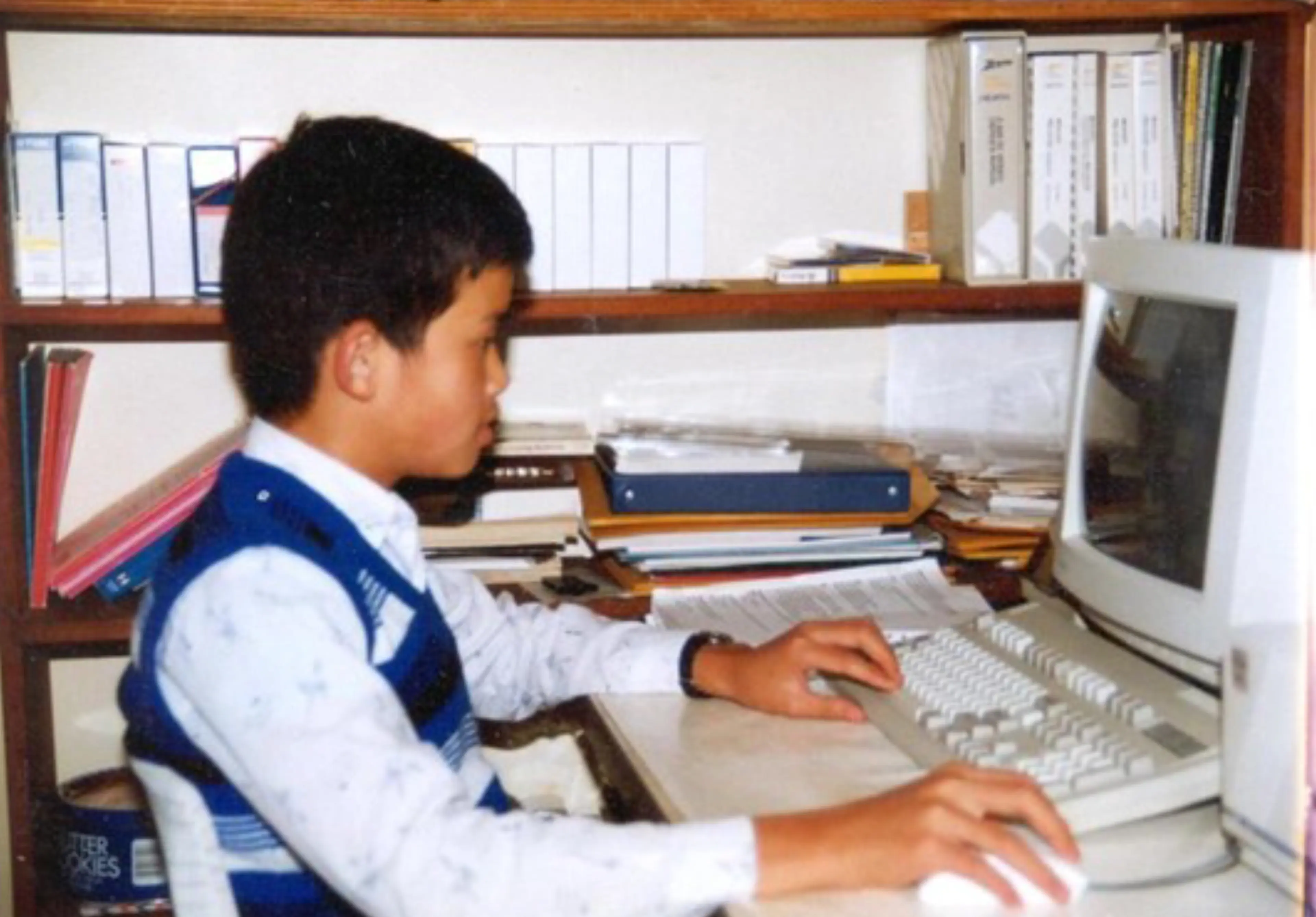
At the same time, Zhao Changpeng's work experience during high school also had an important influence on his personality development. Instead of working to try something new or meet his parents' expectations, he really relies on these part-time jobs to make ends meet. From the Chevron gas station to McDonald's, these experiences not only exercised his independence, but also nurtured his dedication to his work.
Despite later becoming an important figure in the cryptocurrency sector, Zhao Changpeng has never forgotten his starting point. He publicly shared photos of himself working at McDonald's, showing his respect for the past and his commitment to the values of humility. This attitude is in stark contrast to the pompous and ostentatious rhetoric of some in the cryptocurrency world.
During his time in Vancouver, Zhao Changpeng's life was ordinary, but full of color. As the captain of the volleyball team, he participated in the Canadian National Math Competition. These experiences not only enriched his high school life, but also laid the foundation for his future leadership and problem-solving skills, and earned him the nickname “Champion” (Changpeng is pronounced similarly to Champion). For Zhao Changpeng, this period of life was not only a stage of growth, but also an important period for the formation of his personal values and worldview. In this multicultural context, Zhao Changpeng learned how to find his place in different environments, which laid a solid foundation for his future success on the global stage.
Rich dad, poor dad
In 1995, young Zhao Changpeng bid farewell to the mild climate of Vancouver, moved to McGill University, 3,000 miles away, and set foot in French-speaking Montreal in the cold and harsh winters. The city's underground tunnels seem to indicate the roundabout and tortuous path of life that Zhao Changpeng is about to embark on.
At McGill University, Changpeng Zhao's academic life was unremarkable. He moved from majoring in biology to computer science, a shift from dealing with people to talking to code. Life at the college seemed to be peaceful, and he spent most of his free time rollerblading and eating Vietnamese with friends. At night, the campus computer lab became his safe haven, and his junior Apple desktop computer witnessed his initial exploration of programming.
However, it was here that Zhao Changpeng began to show his extraordinary talents. In 1999, he collaborated with Professor Jeremy Kuberstock to publish an academic paper on artificial intelligence — a cutting-edge topic that had not received much attention at the time. At a coffee shop in Montreal, Kuberstock recalled that Changpeng Zhao was the only undergraduate student at his graduate seminar, and that he was deeply impressed by his special status and his ingenuity.
At this turning point in his life, Zhao Changpeng read a book that changed his life — “Rich Dad, Poor Dad.” Through the stories of two fathers, this book reveals the different paths of hard work and wealth creation. After reading it, Zhao Changpeng began to question his father's traditional ideas about finding a decent job. He began to desire to own his own business and not just pursue professional respect.
Zhao Changpeng's father is a geophysicist with extraordinary talent. While working for GeoTech in Ontario, Canada, he worked with geophysicist Jean Legault for six years, creating memorable achievements. It was the original code he wrote that enabled GeoTech to use software to create 3D inversions of geophysical data, which became an invaluable tool for engineers. Even though many years have passed, the company still uses the user manual he wrote. Legault believes that Zhao Shengkai is fully capable of achieving great success in academia or business, but his humility and focus on work itself prevented him from reaching higher career heights.
Zhao Changpeng recalled that his father studied complex mathematical equations every day in the lab or in front of his desktop computer, devoting himself entirely to his academic research. However, due to drastic changes in history and his status as an immigrant, Zhao Shengkai has always been able to work only on the margins of academia and is unable to enjoy the fame and achievements he would have received if he had been born in a different era or place.
As an intellectual, Zhao Shengkai has always emphasized the importance of studying hard and getting a decent job. The book “Rich Dad, Poor Dad” changed Zhao Changpeng's way of thinking. He began to realize that although professional respect is important, material wealth cannot be ignored. This shift in mentality prompted him to make a major decision: quit his studies and pursue a career.
In 2021, Zhao Shengkai died of leukemia in Toronto. Referring to his father, Zhao Changpeng had a deep sense of regret in his tone, which seemed to remind him of his teenage years. Zhao Shengkai was immersed in his lab and computer world all his life, which made him miss every wonderful moment of his son's volleyball game. “I'm the captain of the volleyball team, and I play two games every week, but my parents never watched one.” Zhao Changpeng recalled.
In this context, Zhao Changpeng began to reflect on what rich dads and poor dads have in common — a full focus on work. Even for a billionaire, this focus comes at a price. Zhao Changpeng is worried that in his own role as a father, he may unwittingly repeat the “negligence” of his parents. “I do have that kind of characteristic.” He admitted.
Departure to Shanghai
In 2000, after completing his summer internship at the Tokyo Stock Exchange, Changpeng Zhao chose not to return to McGill University. Although many media misreported him as a McGill graduate, in fact, Changpeng Zhao began his career before he finished his studies. His math and programming skills were quickly recognized in the financial world, particularly in New York, where he demonstrated his technical talent by developing futures trading software for Bloomberg Trading.
However, even a financial center like Tokyo/New York cannot satisfy Changpeng Zhao's growing ambitions. The center of gravity of the global economy is shifting eastward, and Shanghai has become a new commercial focus. He decided to return to China — the first time in over a decade that he set foot on mainland China.
When Changpeng Zhao arrived in Shanghai in 2005, the city became the engine of China's economic growth, and its vitality and business opportunities were completely different from the serenity of Vancouver, Canada. Zhao Changpeng's return to China coincided with the beginning of the country's golden age of technology. With the rise of domestic technology companies and industry leaders such as Li Yanhong, Ma Yun, and Ma Huateng, he saw endless possibilities.
Despite some challenges, Zhao Changpeng quickly achieved success in Shanghai. In 2005, he co-founded Fusion Systems with several other expats, a software-as-a-service (SaaS) company that provides high-frequency trading systems. At Fusion Systems, he not only used his math and coding skills, but he also learned to “think like a salesman” and used his status as an expatriate to build a bridge between East and West.
However, a late-night poker game in 2013 completely changed the fate of Zhao Changpeng. In this game, he met Li Qiyuan, China's top Bitcoin evangelist, and Cao Darong, an American-educated Chinese venture capitalist, who introduced Zhao Changpeng to the world of cryptocurrencies. Zhao Changpeng fully invested. He sold his apartment in Shanghai and invested 1 million dollars to buy Bitcoin (market price 600 US dollars), but lost half of the next year's bear market.
“I'm the one who brought CZ to crypto trading”
The future billionaire left Fusion Systems in 2013 and first joined the cryptocurrency startup Blockchain.info — which initially mainly acted as a website to track Bitcoin transactions — as a technology leader. A year later, he was hired as OKCoin's Chief Technology Officer.
Zhao Changpeng was invited by Ho Yi to join OKCoin, and what people never expected was that He Yi would later become the co-founder of Binance and the life partner of Changpeng Zhao. Theoretically speaking, Ho Yi's position as a cryptocurrency pioneer predates Zhao Changpeng. Later, in an exclusive interview with Bloomberg, she said, “Even without considering personal relationships, I am the one who introduced CZ to the cryptocurrency trading business.”
He Yi was born in 1986 in a remote rural area in Sichuan Province. Both parents were teachers. While children of the same age were still in kindergarten, Ho Yi had already started the first grade of elementary school early. In her childhood, Ho Yi was lonely. This loneliness gave her more time to read books at home and read all kinds of books from her parents. It can be said that Ho Yi is somewhat prescient. Not only does she like to read books, but she is also generally in first place in exams. In 2006, he Yi, 20, was an in-service graduate student majoring in psychological counseling in Beijing and was preparing to get a counselor's license, but soon discovered that it was an unprofitable industry. So I joined another friend's college as a class teacher. In 2012, after becoming a teacher, Ho Yi met a turning point in her life. A friend who works as a choreographer suggested that she try out as a host. What's amazing is that Ho Yi stood out from the crowd of models, actors, and hosts, and was selected as the location host for Travel TV's “Beautiful Destinations” and “How Far, How Far to Go”, and traveled all over the country with the program team. Later, she went to Beijing TV to be the host of “New Discoveries in Beijing.”
In November 2013, the price of Bitcoin just reached 1,100 US dollars, and the OKCoin exchange has just opened, preparing to do a campaign to send Bitcoin red envelopes during the Spring Festival. Mai Gang, an investor in the OKCoin exchange at the time, found Ho Yi and asked her if she could help OKCoin send a red envelope and promote it for free in her circle of friends. At the time, Ho Yi didn't know what bitcoin was, so she immediately searched the internet for bitcoin. After learning about it, Ho Yi thought Bitcoin was amazing, so she went straight to the boat and sent them red envelopes. As a result, I joined OKCoin as a vice president, responsible for brand building and marketing.
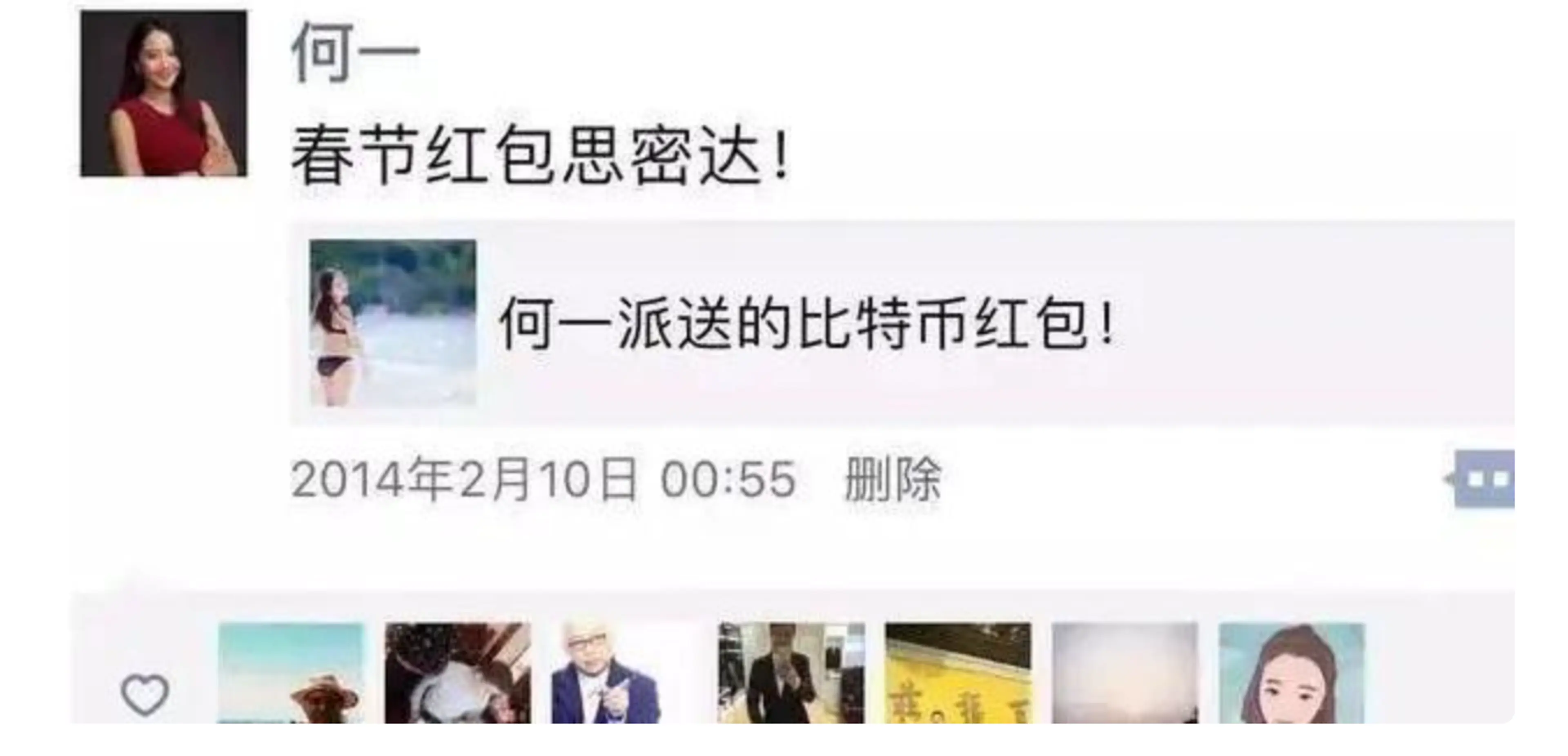
Back then, she was already famous as a travel show host and was a judge on reality shows to promote OKCoin. He Yi recalled that in the same year (2014), she hired Zhao Changpeng as Chief Technology Officer because of his extensive experience in engineering trading systems, and his experience included working at Bloomberg LP, the parent company of Bloomberg News. Both Zhao Changpeng and Xu Mingxing have technical backgrounds, but the two often disagree due to differences in decision-making logic and cultural background, so Zhao Changpeng left OKCoin in 2015. After leaving the company, Zhao Changpeng had a huge rigging incident with OKCoin, and the final results of the two parties were not very decent. In a 1,600-word Reddit post, Zhao Changpeng detailed how, under Xu Mingxing's guidance, the company used robots to increase trading volume, falsify reserve certificates, and opaque finances. In response, Xu Mingxing accused Zhao Changpeng of falsifying academic qualifications and engaging in other fraudulent acts.
He Yi felt very embarrassed to be caught in the middle, so he chose to leave his job.
He was unable to join a crypto-related company due to the existence of a two-year competition agreement, so he joined Technology as vice president on the recommendation of Zhang Ling, investment manager of Kaipeng Huaying Fund. As famous as technology at the time, it developed star products such as live streaming, kiddie shows, and second shooting. At the time, Song Joong-ki spread all over China with “Descendants of the Sun”. Song Joong-ki's influence and huge fan base behind him were a big cake coveted by many live streaming platforms. Ho Yi snatched Song Joong-ki's collaboration among many live streaming platforms, making it the leading live streaming platform.
Who is Chen Guangying
After leaving OKCoin, Zhao Changpeng founded Bejet Technology, another software-as-a-service company that provides software for exchanges and trading platforms. Over the next two years, Beagate's technology became the cornerstone of 30 Chinese exchanges, and later became the driving force for Binance.
Chen Guangying graduated from Shanghai University of Finance and Economics in accounting. Zhao Changpeng met Chen Guangying as early as 2010. At the time, she was working at a friend of Zhao's liquor store to provide alcohol for Zhao Changpeng's “Poker Night” in Shanghai. Chen then went to a large commercial bank to do back-office management, responsible for HR, accounting, and daily work.
In 2015, when Beaget was founded, Zhao Changpeng met Chen Guangying and asked her if she would like to join the company in back-office management. Because the team members were mostly engineers at the time, and the Chinese government had many restrictions on wholly foreign-owned enterprises and joint ventures (Zhao Changpeng is a Canadian citizen), it was much more convenient to follow the trend and make Chen Guangying a nominal legal entity.
Chen Guangying agreed to this arrangement and gradually won the trust of Zhao Changpeng, and later became the gatekeeper of Binance's treasury. However, no one knows. Precisely because of this arrangement, it caused an uproar in the entire crypto industry. Since Guangying's name appeared in the early documents of Bejet Technology, opponents of Binance seized this opportunity and spread a conspiracy theory, claiming that Chen Guangying may be the secret owner of Beaget Technology and even Binance, and even Forbes wrote an investigation report on this. In a later blog post, Zhao Changpeng wrote, “Chen Guangying and her family have always been the target of harassment by the media and netizens. If I had known that this would have such a negative impact on her life, I wouldn't have asked her to do what seemed harmless at the time.”
Cryptocurrency in 2015 is still in deep trouble, but another tulip-like frenzy is unfolding in the “postcard” sector. Investors are lured into investment chatrooms by so-called “stamp teachers” and “wealth advisors” to invest in these seemingly promising collections, which often end in huge financial losses. Although Beaget is not directly involved in these stamp scams, his technology has invisibly contributed to the spread of such fraud. This situation has aroused a high level of alarm from the Chinese government. In early 2017, the government quickly introduced new regulations to limit these uncontrolled growth digital platforms. By August of that year, a number of stamp and collectibles exchanges were forced to close. Most of Beaget's customers have gone out of business.
Digital nomads
Thanks to his work experience at OKCoin, Zhao Changpeng understood the logic of the operation of the entire cryptocurrency exchange and the entire industry, and began considering starting his own company that does not involve cash and specializes in digital asset transactions. Without getting involved with financial institutions, former colleague Ver believes this can reduce risk and avoid regulation. Meanwhile, the sharp rise in cryptocurrency prices has attracted millions of new investors to the sector and spawned a new funding model within the industry — ICOs.
On June 24, 2017, Changpeng Zhao began the creation of Binance and raised the Binance Coin ICO. The total amount of BNB is 200 million, of which 100 million will be used for the ICO, 80 million will be held by the team. The BNB held will be locked up and released year by year, and the final 20 million will be held by angel investors. Zhao Changpeng made an appointment for dinner and showed her the Binance project white paper. In July, Changpeng Zhao founded Binance and invited He Yi to join the partnership. She helped rewrite part of the ICO's white paper, agreed to join, and became Binance's co-founder and CMO.
It was thought that exchanges that only traded coins and didn't touch fiat currency could evade regulation, but Binance has very little time left in China. Back in 2013, China first restricted banks from processing cryptocurrency transactions. To curb capital outflows, combat financial fraud, and more closely control the country's financial system, the Chinese authorities banned initial coin offerings (ICOs) and began shutting down cryptocurrency exchanges on September 4, 2017. In response to this move, Zhao Changpeng secretly and nervously migrated data hosted on more than 200 Alibaba servers to Amazon Web Services and others within a few weeks. The job was successful, and Changpeng Zhao and other Binance employees moved to Tokyo, ending his 12-year career as an entrepreneur in China.
From the beginning, Changpeng Zhao and his Binance seemed destined to dance on the edge of global financial regulation. They prefer to operate outside of government supervision, which makes it difficult for them to settle in any country for a long time.
In 2018, a fraud spawned by fake Google ads caused countless customers to lose their funds on Binance. Although Binance was not directly responsible for these losses, the incident drew great attention from Japanese regulators. They asked Binance to register as an official exchange, which was clearly an unacceptable condition for Zhao Changpeng. As a result, he decided to move his crypto empire to Malta, where Prime Minister Joseph Muscat is open to cryptocurrencies and welcomes the establishment of related businesses.
However, Binance's time in Malta was just as short. Ultimately, Binance announced that it would no longer be looking for a physical headquarters and instead chose a headquarter-free operating model. This level of decentralization is so high that for a while, it seemed that even Zhao Changpeng himself consciously avoided the Internet, as if he had become a globalized entity with no fixed address, just like his empire.
“We're not just defending, we're fighting for the industry”
In 2017, as early as Binance was founded, Zhao Changpeng began to come into contact with Sequoia Capital. During the August negotiations, Sequoia settled a round A valuation of 500 million yuan for the currency and invested 60 million yuan according to this valuation plan, accounting for 10.714% of the shares. On August 25, the two parties reached an Investment Term Sheet (Term Sheet) and signed the contract on September 1. At the same time, Sequoia agreed to provide a bridge loan worth approximately RMB 30 million to Binance's Japanese branch. In this letter of intent signed by the two parties, the two sides will conduct exclusive cooperation and further negotiations on financing. The deadline for the exclusive cooperation is March 1, 2018, for a total of 6 months.
However, three days later, on September 4, the situation changed abruptly. The Chinese authorities banned initial coin offerings (ICOs) and began shutting down cryptocurrency exchanges, and the currency price plummeted. At the time, the entire market was in despair. Exchanges were withdrawn, and Sequoia did not have enough confidence in cryptocurrency exchanges due to national policies. Under such circumstances, Sequoia had to re-evaluate whether it should continue to invest in Binance, so it never paid.
Within two weeks, Bitcoin began a sharp rebound, and cryptocurrencies ushered in an all-out bull market. Binance made a lot of money from fees and fees alone in the process, so Binance was not in a hurry. On December 14, Binance proposed to Sequoia that current shareholders and angel investors believed that the valuation given by Sequoia in the Series A round was undervalued. Meanwhile, Binance reached out to IDG Capital, another investor willing to invest at a $400 million Series B valuation. On December 17, Sequoia attempted to present a new proposal to Binance. However, in the early morning of December 18, Binance told Sequoia that existing shareholders and founders were less likely to accept the new proposal.
On December 27, Sequoia unilaterally applied to the Hong Kong court for an injunction prohibiting Binance from negotiating with other investors, and the Hong Kong court approved the ban. Binance protested against the ban, arguing that Sequoia's unilateral application for the ban was an abuse of the legal process. This was the first round between Binance and Sequoia, and the result: the Hong Kong court approved the ban. Binance is prohibited from negotiating with other investors. This changed until April 2018, when Binance's defense was that “the negotiations with IDG for Series B funding were not within the scope of the Series A round of funding signed with Sequoia.” The Hong Kong High Court announced in a first instance judgment that the ban would be lifted, but the matter was not officially settled until the end of '18, which also meant that Binance would be able to continue financing negotiations with investors. This was the second round between Binance and Sequoia. Binance won, but the time cost was huge.
Out of dissatisfaction with Sequoia's behavior, in June 2019, Zhao Changpeng took Sequoia to court to claim compensation, and posted nearly 10 posts in one go on Twitter:
1. The arbitral tribunal dismissed all of Sequoia's lawsuits;
2. I won, the case was very disruptive, and the ban prevented it from raising funds for Binance at the end of 2017, and this is a critical time for the market;
3. Previously, the injunction and Sequoia's serious accusations against it were made public, but since the arbitration was confidential, I was unable to defend myself publicly.
4. The Hong Kong court later determined that Sequoia's conduct in obtaining the injunction was an abuse of process. At the end of last year, the arbitral tribunal finally determined that all of Sequoia's claims had no legal basis at all.
5. Red Shirt China bore a total of 2.4 million US dollars in related legal expenses for this, but lost the lawsuit. Even after winning the lawsuit, I wasn't allowed to make the results public, so I had to file a counterlawsuit to announce the results.
6. I myself first needed to pay $779,000 in legal fees, which were eventually paid by Sequoia. This is impossible for most entrepreneurs. Most entrepreneurs are also unable to obtain additional funding for their startups in the face of impending lawsuits.
7. Many startups have no choice but to succumb to unfair terms or practices adopted by venture capital firms, particularly very famous venture capital firms;
8. We're not just defending, we're fighting for the industry;
9. Fortunately, there are now other options for today's entrepreneurs. People are welcome to use blockchain-based fundraising.
Facing Sequoia Capital, the top investment agency in the industry, Zhao Changpeng did not back down: “I think the right to speak now should be in the hands of entrepreneurs. For a good project now, a good team will never run out of money.” In the end, not only did Zhao Changpeng not receive investment from Sequoia, not even IDG.
The dividing line of life
During the cryptocurrency boom from 2020 to early 2022, Changpeng Zhao and SBF were two of the most influential representatives in this field. Their backgrounds and experiences are clearly similar. Most notably, they are all children of scholar families. However, although Zhao Changpeng's father is a scientist, he has always been a marginal figure in the university world. SBF, by contrast, is the son of two Stanford law professors and has the highest level of academic resources and environment. Despite their similar starting point, their life trajectory presents a very different picture.
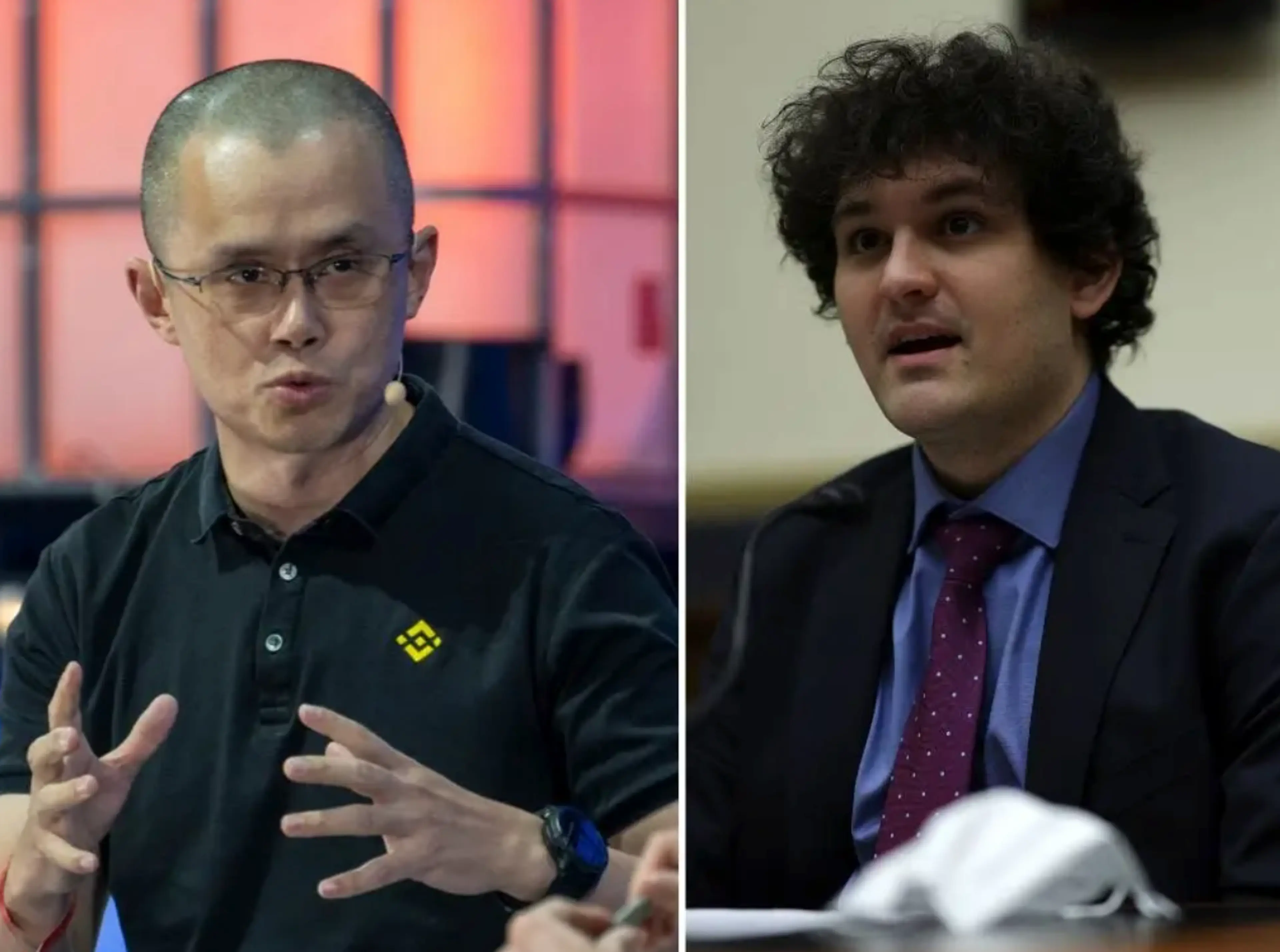
SBF was charged with a series of fraud crimes, including misappropriating user funds, and ended up in jail. Meanwhile, Zhao Changpeng took the initiative to seek a settlement with regulators, admitting that he had violated the US anti-money laundering law, paid fines, resigned as CEO, and further increased Binance's compliance (the US regulators did not accuse Binance of misappropriating any user funds, nor did they accuse Binance of any market manipulation. ).
“I made a mistake, and I must take responsibility,” Changpeng Zhao wrote on social media platform X (formerly Twitter). “It's the best for our community, Binance, and myself.” Meanwhile, Zhao Changpeng is already a father of two children.
