


What is layer 3? How can scalability be improved?
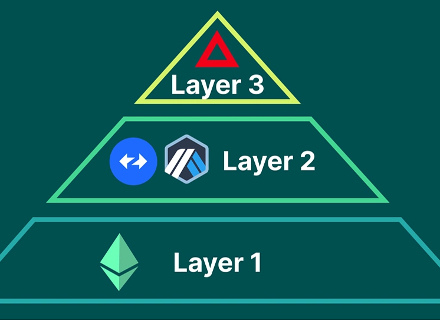
The Layer 3 protocol is a decentralized application that can provide faster transactions, lower gas fees, support for complex dApps, support for interoperability, and customized features. Arbitrum Orbit, Orbs, and zkSync Hyperchains are examples of Layer 3. They can drastically reduce transaction fees, support Web3 games, decentralized finance applications, etc., and enable real-time transactions. Layer 3 is being developed and will play a key role in the future, making it easier for blockchains to handle high transaction volumes.
Original title: Layer 3 Blockchains: What They Are And How L3s Improve Improves
Original article by Hwee Yan
Source of original text:coingecko
Key points of this article:
The Layer 3 protocol is built on top of Layer 2 and is used to host decentralized applications for specific applications.
Layer 3 addresses a variety of issues such as scalability, interoperability, customizability, and more.
Some examples of Layer 3 protocols include Orbs, Arbitrum Orbit, and zkSync Hyperchains.
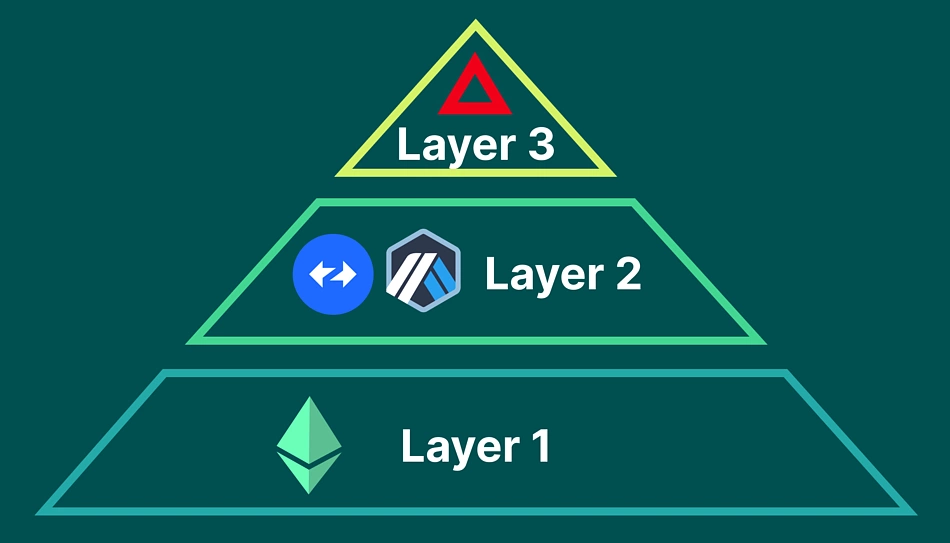
1. How do Layer 1s, Layer 2s, and Layer 3s work together?
Layer1s is the underlying blockchain where blocks are added and transactions are completed. However, Layer1s has the blockchain trilemma.They have to make trade-offs between scalability, decentralization, or security. likeBitcoin和EthereumSuch blockchains prioritize decentralization and security over scalability, and these networks experience lower transaction speeds as users increase.
That's why Layer2s came out, they solved the scalability problem. Layer2s is an off-chain vertical scaling solution that runs on top of Layer1s like Ethereum to achieve scalability and provide users with faster transaction speeds and lower gas fees. They can use rolling or verification mechanisms, as is the case with Polygon 2.0. Many Layer 2 solutions, such asPolygon、zkSync 和 Arbitrum, a solution that allows developers to build application-specific chains on top of Layer 2 has been released, leading to Layer3s.
Layer3s is an advanced protocol built on top of existing Layer 2 solutions, providing interoperability and application-specific functionality.This means that Layer3s is highly customizable and can meet developers' specific needs, such as providing solutions to privacy issues or supporting a large number of transactions, while still inheriting the security of the Layer1 blockchain. Currently, most Layer3s are built on Ethereum, and some blockchains, such as Bitcoin, are currently unsuitable for hosting Layer 3 applications.

2. What problems does Layer 3s solve?
Now that we understand how Layers 1, 2, and 3 work together, let's take a closer look at Layer 3s and how they can further extend the blockchain.
scalability
Layer 3s is designed to enhance scalability beyond current Layer 1 and Layer 2 capabilities, and is therefore highly scalable.As a result, the network is able to process a larger number of transactions while supporting a wider range of complex applications.
Support for complex dApps
Layer 3s can provide the necessary infrastructure for developing more complex decentralized applications that require more advanced functionality. This may help improve the network design to include more advanced features on the app and make it more accessible to the average user. Depending on developers' needs, Layer 3s can also facilitate more complex smart contract designs, and Layer 1 and Layer 2 cannot handle these designs due to limited scalability.
Blockchain interoperability
Layer 3s also addresses interoperability issues. Layer 3s can act as a bridge between different blockchains, enabling transactions and data to flow between different platforms. This means that Layer 3 dApps have connections to different blockchains (such as Ethereum andSolana) function.
customized
Layer 3s can also be customized according to developers' unique needs. For example, developers can introduce application-specific mechanisms that only allow private transactions and contracts to be executed, so only part of the data will be revealed. Because Layer 3s has highly customizable features, developers can tailor the management mechanisms, rules, and functionality of their dApps according to their needs.
Arbitrum Orbit allows developers to tailor different aspects of their chain. For example, developers can customize and choose which tokens are accepted as transaction fees on their chain. This provides developers with the flexibility to select and possibly include the platform's native token, allowing developers to tailor the functionality of their dApps according to their unique needs. Additionally, developers can customize their dApps to ensure users get more consistent and reliable gas prices. Developers can also launch blockchain networks with specific features, such as Arbitrum's Nitro engine-powered blockchain network and EVM+ enabled Stylus. Some of the other customized features provided by Arbitrum Orbit include privacy, permissions, fee tokens, governance, and more.
Cost-effective
Since the Layer 3 network processes some transactions and operations take place off-chain, this helps reduce network congestion, thereby drastically reducing transaction fees. This cost efficiency helps lower the barriers to entry and makes it more accessible to developers and users.
For example, the Xai network is a gaming network dedicated to supporting Web3 games. Through Arbitrum's Layer3 network construction, the Xai network introduced parallel processing to improve efficiency and scalability while further reducing costs.
accessibility
Layer 3s can also be designed to be more accessible to the public and easier to implement. For example, Arbitrum's Layer 3, Arbitrum Orbit allows anyone to build and deploy their own Layer 3 on Arbitrum Nitro without approval. In contrast, launching Layer2s required proposals on its trust model and how to achieve full decentralization.
3. Layer 3 use cases
Now that we know what problems Layer 3 solves, here are some possible use cases for Layer 3:
Gaming apps
One use case for Layer 3 is blockchain gaming. By running on Layer 3, it enables the application to run on a dedicated blockchain, which enables it to process larger volumes of transactions at a faster speed. For gaming apps, this is very important to help developers provide users with a seamless gaming experience.
Gaming apps usually handle a lot of microtransactions, which is probably the most costly. Therefore, running apps on Layer 3 allows developers to ensure cost efficiency for users because Layer 3 has lower transaction fees.
Decentralized finance applications
Another possible use case for Layer 3 is decentralized finance applications. Running on layer 3 is ideal because it allows decentralized finance apps to be tailored to the needs of the application. This means that developers can customize privacy settings and the different features of the app.
Furthermore, Layer 3 is extremely scalable and ensures that large numbers of transactions can be processed quickly, which is important for real-time transactions. Layer 3 also supports interoperability between various blockchain networks, allowing users to transfer their assets between different networks.
4. Layer 3 instance
While the Layer 3 concept is still considered a relatively new development in the cryptocurrency space, here are some important projects to keep an eye on:
Orbs
Working in conjunction with existing Layer 1 and Layer 2 protocols, Orbs is a Layer 3 blockchain,Focus on solving the scalability issues facing the Ethereum blockchain.According to their website, Orbs sees their Layer 3 as “enhanced execution,” which allows developers to develop their smart contracts by running a decentralized serverless cloud.

Source: Orbs
This means developers can write and deploy their smart contracts on Orbs' own decentralized network without worrying about the network's underlying infrastructure. This gives developers the convenience of not having to maintain physical servers. Currently, Orbs works with several Layer 1 and Layer 2 protocols, including Ethereum, BNB Chain, Avalanche, Polygon, and more.
Arbitrum Orbit
In 2023, the Arbitrum Foundation also released its new feature - Arbitrum Orbit, which is conceived as a layer 3 blockchain built on the Arbitrum Nitro platform.In addition to lower transaction costs and enhanced scalability, developers can create their own self-managed private blockchain on the Arbitrum Nitro platform.This allows developers to utilize customized blockchains according to their specific needs.
zkSync Hyperchains
zkSync Hyperchains, launched by the zkSync team, can be Layer 3, and they use Layer 2 for settlement. zkSync Hyperchains uses the same zkEVM engine as the ZK Stack, where all ZKP circuits remain the same, and inherit Layer 1 security regardless of who deploys them. One benefit is that messaging between layer 3 that settles on the same layer 2 is faster and is interoperable within the broader ecosystem.

Source: zkSync Era
5. Summary: Final Thoughts
The development of Layer 3 is an interesting innovation in the cryptocurrency space. It improves on our previous technology by combining the benefits of Layer 1 and Layer 2 — such as making the network more scalable while maintaining security.Still, it's important to remember that each tier plays a critical role in the blockchain ecosystem and isn't in competition with each other. Currently, Layer 3 is still in development, but I think it's clear that Layer 3 will play a key role in shaping how we use blockchain technology in the future, making it easier for blockchain to handle high transaction volumes.
