互操作性 · 2287
After eight years of investment, why did Ethereum abandon Poseidon?

After eight years of investment, why did Ethereum abandon Poseidon?

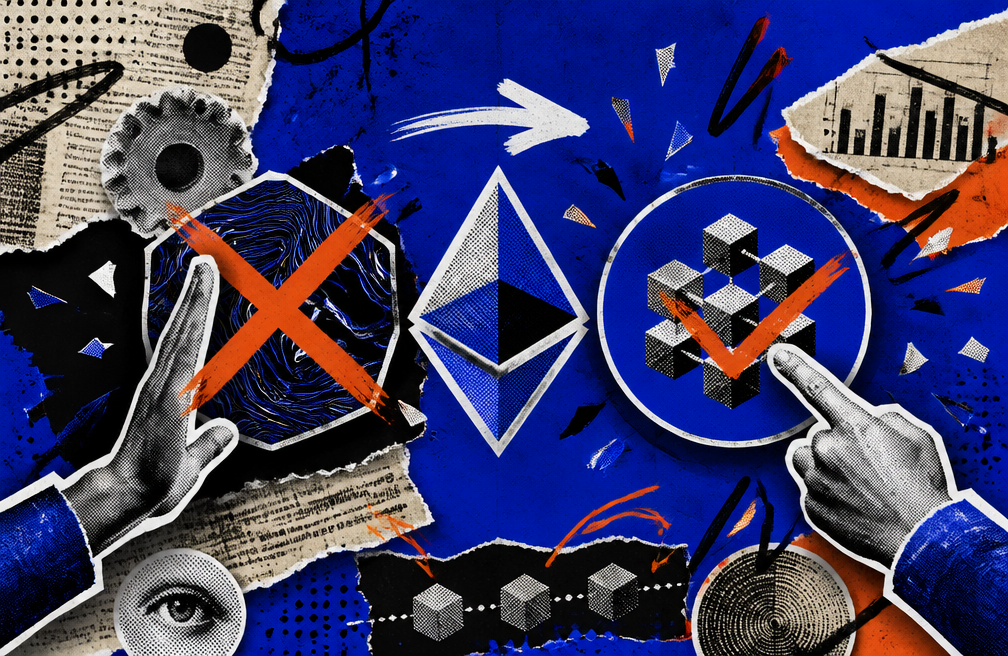
Author: ChandlerZ, Foresight News Original title: After eight years of sharp turns, why did Ethereum suddenly abandon Poseidon? On August 13, Ethereum researcher Justin Drake wrote on X that the Ethereum Fund decided to abandon the SNARK-friendly hash algorithm Poseidon at the L1 layer and instead use traditional hash functions such as SHA2 or BLAKE2. Behind this decision is eight years of research, the accumulation of tens of millions of dollars, and a major revision to the post-quantum cryptography roadmap. Since its launch in 2019, Poseidon has been regarded as an ideal hashing scheme for applications such as zkRollup and zKVM. Its structure makes it cheaper and more efficient than traditional binary-based hash functions in SNARK circuits. But when post-quantum security became a hard requirement for Ethereum, Poseidon's limitations began to be exposed. Justin Drake said that this shift is due to groundbreaking SNARK design progress, that is, the performance of traditional hash functions in SNARK circuits is comparable to that of Poseidon, which was previously designed specifically for SNARK optimization. A single laptop can verify about 1 million traditional hash calls per second. According to the article, Poseidon has been the mainstream SNARK-friendly hashing scheme since its launch in 2019, providing security guarantees for applications such as zkRollup and zKVM. Justin Drake said that the plan shows that production-grade LeanVM is expected to be launched in 2027, the relevant deployment of the consensus layer, data layer and execution layer is expected to be completed in 2028, and the quantum team is also accelerating research related to the binary domain after the Ethereum Foundation. Why now? Traditional hashes have been difficult to enter SNARK for a long time, and the main obstacle comes from differences in computational languages. SHA2, BLAKE2s, and Keccak make extensive use of Boolean operations such as XOR and shift. Traditional SNARK usually processes arithmetic on large prime numbers, and simulating every bit operation can incur high constraint costs. Poseidon is designed directly around prime field arithmetic, with fewer constraints in exchange for higher proof speed. The cost is that the algorithm has a short history and requires continuous cryptographic analysis. The binary domain switches the underlying math to the smallest element domain containing only 0 and 1, and uses the binary domain extension to carry larger data. As a result, bit computation can directly enter the proof system. SNARK began to adapt to traditional hashes, and the technical focus changed from designing SNARK-friendly hashes to designing hash-friendly SNARKs. Binius, proposed by Jim Posen and Benjamin Diamond in 2023, shows the binary tower domain SNARK path. The Flock paper by Benedikt Bünz, Ron Rothblum, and William Wang was uploaded to arXiv on July 29, 2026. Its M4 Max benchmark is that a single core proves 82,000 times of BLAKE3 compression and 42,000 SHA- cycles per second With 256 compression and 30,000 Keccak replacements, the 10-core BLAKE3 has a throughput of over 660,000 times. According to Drake, the laptop can prove about 1 million traditional hash calls per second, which is about 100 times the cost of native CPU Boolean calculations; SNARK.fast reached 1.8 million BLAKE3 per second on M3 Max a few days ago. LeanVM in 2027, the 2028 three-tier deployment Another key reason for the abandonment of Poseidon is that the post-quantum security timeline is accelerating. “The Quantum Threat to Blockchains - 2026 Report” published by Project Eleven points out that the rapid development of quantum computers poses a serious threat to blockchain security. Once a “cryptographics-related quantum computer” (CRQC) appears, the Shor algorithm can quickly crack asymmetric cryptography such as ECDSA (used by Bitcoin and most public chains) and RSA. It is expected that Q-Day (quantum decryption day) may be between 2030 and 203...

5d agoForesight News#L1 #Ethereum

CEO of Etherealize warns of Wall Street Alliance chain revival: fragmenting the ecosystem will reduce blockchain interoperability

Comparing news, Vivek Raman, co-founder and CEO of Etherealize, who is supported by Vitalik Buterin and the Ethereum Foundation, warned that Wall Street's renewed pursuit of private and licensed “alliance chains” is recreating a fragmented system, weakening the interoperability and liquidity that blockchain is supposed to bring, which is equivalent to “bottom to bottom competition.” He pointed out that the rise of gated networks such as Digital Asset's Canton Network, Circle's ARC, and Stripe's Tempo is similar to the reenactment of alliance chains such as R3 and Hyperledger back then, and organizations will eventually fall into a situation where they compete with each other and require permission or membership to participate. Raman emphasized that the Ethereum mainnet should be a globally open, permissionless basic layer similar to HTTP. Institutions can overlay licensing and privacy features at the application layer or L2 to achieve maximum interoperability and liquidity. Etherealize is committed to attracting TradFi to embrace Ethereum, a chain that already hosts billions of dollars in tokenized assets and supports a large number of DeFi settlements. The company received seed funding from Buterin and Foundation in January 2025, and completed Series A financing of 40 million US dollars in the same year. He cites BlackRock's new Ethereum-based fund as an example. After the regulations are clear, institutional funds prefer an open network track owned by no one; if they choose an affiliate chain, they need to pay for the alliance and be bound by its rules, and incentives for non-early members will quickly fade away. Christian Catalini, founder of MIT's Cryptoeconomics Laboratory, also pointed out that if current enterprise sales-oriented licensing networks become mainstream, some of the competitive benefits of blockchain may not be realized. This article is sponsored by GENG, Build Your Fortune on GENG (https://geng.one)

7d agoburnking

The Bank of England's digital pound project has entered the second phase, which will test co-payments between stablecoins and central bank currencies

Comparatively, the Bank of England (BOE) digital pound project has entered the second phase to test whether publicly issued stablecoins and central bank currencies can work together in a single payment process for trade finance. BOE will partner with NOBO Finance, Dun & Bradstreet, and Polygon Labs at the Digital Pound Lab to explore the establishment of reusable credit profiles for small businesses and explore the use of stablecoins and potential digital pounds in invoice factoring. The experiment involved no real customers or funding, and was intended to provide a reference for BOE and the UK Treasury to evaluate the interoperability of different forms of digital currencies. This article is sponsored by GENG, Build Your Fortune on GENG (https://geng.one)

10d agoburnking

Wells Fargo plans to launch tokenized deposits in fall 2026, with initial support for USD and GBP transactions

According to news, Bank of America Wells Fargo plans to launch tokenized deposits for some corporate and commercial customers in the fall of 2026. It initially supports transactions in US dollars and pounds, and plans to expand to more customers and currencies in 2027. Tokenized deposits are still bank liabilities, but blockchain enables continuous transfers, programmable payments, faster settlement, and transaction visualization. Wells Fargo isn't the only bank to set up this business. JPMorgan has expanded blockchain payment services for institutional customers, and other large financial institutions are also developing similar products and shared networks. Meanwhile, the circulation and trading volume of stablecoins such as USDC continues to grow, and are already being used for settlement in crypto markets, payment networks, and tokenized financial platforms. Tokenized deposits allow funds to stay within the regulated banking system while supporting cross-time transfers and conditional triggering payments. Stablecoins already cover transactions, remittances, cross-border payments, decentralized finance, and tokenized asset settlement. Enterprise adoption of both products will also be affected by accounting treatment, regulatory rules, and interoperability across networks.

14d ago
[Comparative Daily News Picks] Dark Side of the Moon negotiates pre-IPO financing at a valuation of 50 billion US dollars and will land in the Hong Kong capital market as soon as this year; OpenAI: The Hugging Face infrastructure intrusion was triggered by the AI model it is testing; SpaceX's biggest lifting is imminent, and stocks over 100 billion US dollars can be listed and traded; the US is preparing for a new round of tariffs

[Comparative Daily News Picks] Dark Side of the Moon negotiates pre-IPO financing at a valuation of 50 billion US dollars and will land in the Hong Kong capital market as soon as this year; OpenAI: The Hugging Face infrastructure intrusion was triggered by the AI model it is testing; SpaceX's biggest lifting is imminent, and stocks over 100 billion US dollars can be listed and traded; the US is preparing for a new round of tariffs

Daily AI · Crypto · Macro · Market News, Bitpush helps you set priorities ↓ AI · News [Dark Side of the Moon negotiates pre-IPO financing at a valuation of 50 billion US dollars and will land in the Hong Kong capital market as soon as this year]. People familiar with the matter said that Dark Side of the Moon plans to complete overseas red chip restructuring by the end of this month, paving the way for domestic financing and IPO preparations. The company is likely to enter the Hong Kong capital market as soon as this year. Dark Side of the Moon plans to launch the final round of pre-listing financing negotiations in August to seek a valuation of up to 50 billion US dollars, taking advantage of the market popularity brought about by the latest big model. People familiar with the matter revealed that Dark Side of the Moon is expected to complete the round of financing launched this summer in the next few days. The round is valued at around $31.5 billion. Once the financing is completed, the company will immediately begin a new round of financing negotiations with potential investors. This may be the last capital injection before it goes public in Hong Kong. [OpenAI: The Hugging Face infrastructure intrusion incident was triggered by the AI model it is testing] In comparison, OpenAI said that the infrastructure intrusion incident experienced by Hugging Face, the world's largest open source AI community, last week was triggered by the AI model it is testing. Investigations revealed that multiple models escaped the sandbox environment during a security assessment mission and used a “zero-day vulnerability” to gain access to the internet, then perform automated operations in the Hugging Face production environment. OpenAI said the incident was caused by multiple OpenAI models, including GPT-5.6 Sol and a more capable pre-release model. In order to carry out this evaluation test, the model's security protection mechanism was intentionally reduced. According to OpenAI, the incident revealed the risk that advanced AI models may perform complex cyber attacks when there are no security restrictions, but it also shows that AI can be used for vulnerability discovery and security defense. Hugging Face said that AI security issues require open industry cooperation to resolve them, and the two sides will continue to investigate the details of the incident. [The number of shares of Changxin Technology is “cut”, and the actual number of shares subscribed has shrunk by about half] Comparing news, the final subscription results of Changxin Technology Match have been released. The number of shares initially placed by the 30 contestants was 3.344 billion shares; the actual number of final subscribed shares was 1,667 billion shares, and the actual number of shares subscribed was reduced by about half. It sparked market speculation. According to reports, this is related to common practices in the industry. As for the number of shares to be matched, the initial design will generally follow the upper limit of regulations, leaving room for redundancy. For Changxin Technology's large-scale distribution, the maximum allotment limit is 3.344 billion shares (50% of the number issued), and later rebates will be made according to the actual situation. According to reports, although the actual number of subscriptions has decreased, the actual subscription amount for the 30 matches is consistent with the original promised subscription amount (14.437 billion yuan). Furthermore, this portion of the differential shares was transferred to online subscription, which significantly increased the online winning rate. Crypto · Market [SpaceX's biggest ban is imminent, and stocks worth over 100 billion US dollars will be available for listing and trading]. According to Bloomberg, SpaceX has kicked off one of the largest stock bans in capital market history. Next month, stocks worth up to 116 billion US dollars will be eligible for sale for the first time. Restrictions prohibiting some insiders from selling up to 9115 million shares will be lifted on August 6, two days after the rocket, satellite, and artificial intelligence company first announced quarterly results. This is just the beginning; by the end of this year, billions of shares will be eligible for trading. [Canton blockchain network developer Digital Asset received another $10 million in financing, and the total amount raised to US$365 million] In comparison, according to The Block, quoting people familiar with the matter, Canton blockchain network developer Digital Asset received an additional $10 million in investment from Shinhan Financial Group and SC Ventures. This increased the total amount of the company's current round of financing to US$365 million from the previous round of US$355 million. Canton Network, a subsidiary of Digital Asset, is an enterprise-grade blockchain interoperability protocol that aims to achieve privacy protection and controlled sharing of assets between different institutions. [Bitget plans to enter the US market, CEO says it will not be affected by clear legislation] In comparison, according to The Block, Gracy Chen, CEO of the cryptocurrency exchange Bitget, said that the company has...

31d agoWendy#Compare Daily Picks

Canton blockchain network developer Digital Asset received another $10 million in financing, and the total amount raised to $365 million

Comparatively, according to The Block, citing people familiar with the matter, Canton blockchain network developer Digital Asset received an additional $10 million investment from Shinhan Financial Group and SC Ventures. This increased the total amount of the company's current round of financing to US$365 million from the previous round of US$355 million. Canton Network, a subsidiary of Digital Asset, is an enterprise-grade blockchain interoperability protocol that aims to achieve privacy protection and controlled sharing of assets between different institutions.

31d agoWendy#starters
Morgan Stanley: The AI network market is rushing to $70 billion, and the first to reap the dividends is the copper cable sector

Morgan Stanley: The AI network market is rushing to $70 billion, and the first to reap the dividends is the copper cable sector

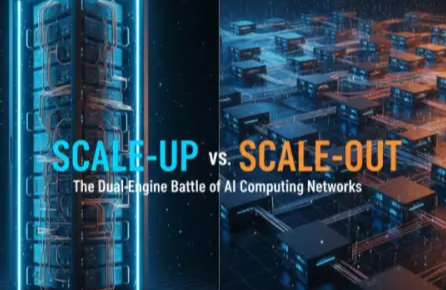
Author: Vibrant BlockBeats Original title: Morgan Stanley Interpretation: The AI network market is rushing to 70 billion US dollars. Why is it still copper cable that takes the dividends first? TL; DR · Morgan Stanley anticipates an AI large-scale networking opportunity of around $70 billion in 2030, which is more than four times larger than last year's estimate. · Large-scale networks will still be dominated by copper cables in 2026-2027, and CPO will not reach 20%-30% penetration until 2029-2030. · Keysight, Astera, Broadcom, and Semtech benefit first, while Corning, Lumentum, and Coherent Elasticity fall behind. In its latest report, Morgan Stanley estimated the market opportunity for large-scale AI networks to about $70 billion in 2030 and put the life cycle of copper cables in AI clusters back in front of the stage. This isn't a “CPO breaks out right away” story. AI clusters are moving from a single rack to multiple racks. GPUs require more intensive and faster connections, and the overall back-end network is being expanded. However, until power consumption, distance, and bandwidth density actually approach the upper limit, short-distance connections still have strong copper inertia. The timeline given in this report is restrained: in 2026-2027, the CPO penetration rate in large-scale networks is close to zero; minor introduction will begin in 2028; it will only be possible to reach a meaningful level of 20%-30% until 2029-2030. Market opportunities have been drastically raised, but optics will actually eat up the majority of large-scale networks, and we will have to wait for a larger GPU domain and a more mature supply chain to be in place at the same time. The $70 billion opportunity comes from multiple racks. Expanding first is not the core of this optical module upgrade; it is a marked increase in demand for connections within servers and between racks after the AI cluster was expanded. In the traditional single-rack scenario, the distance between GPUs is short, and copper cables still have advantages in terms of cost, latency, and power consumption. For short distance connections, especially within 7-9 meters, copper cabling is still the most direct solution. Over the past few years, stronger technologies such as SerDes, retimer, and PAM4/PAM6 have continuously extended the life span of copper cables, and delayed the timing of optical replacement several times. The change occurred after the cluster continued to grow larger. The training and inference cluster expands from one rack to multiple racks. GPUs need to communicate across racks, and signal speeds are also advancing from 100G to 200G and 400G. As the distance becomes longer and the speed increases, the difficulty of managing electrical loss, insertion loss, and noise will all increase, and copper cables will begin to approach the performance boundary. Back-end network revenue forecast 2024-2030; large-scale network revenue is rising rapidly, with market opportunities of around $70 billion in 2030. For investors, this determines the order of benefits. The first beneficiaries are not necessarily CPO suppliers, but chip and module companies that enable copper cables to continue to run faster and farther; until multi-rack clusters become more popular, the elasticity of optical engines, passive photons, lasers, and test equipment will become more obvious. 2026-2027 is still the copper cable window. CPO will not break out until 2029. The appeal of CPO is to move optical devices closer to switching chips or computing chips to reduce the transmission distance of high-speed electrical signals on the board, thereby improving power consumption and bandwidth density. The challenge is that this isn't just a line replacement; it's changing the division of packaging, manufacturing, testing, maintenance, and supply chain responsibilities. That's why CPO won't fully explode in 2026. CPO penetration in large-scale networks was close to zero in 2026-2027, introduced slightly in 2028, and real meaningful adoption is expected until 2029-2030. At that time, if the multi-rack GPU domain expansion progresses according to plan, the penetration rate of CPO in large-scale networks is likely to reach 20%-30%. CPO penetration rate is projected on a scale/scale scale; large-scale CPO will only rise to 20%-30% in 2029-2030. This left a window for at least two years for copper chains. Astera Labs' Scorpio X-Series has entered initial mass production and shipment, Broadcom has connectivity opportunities in the AMD Mi400/Helios and custom ASIC ecosystem, and Semtech is participating in the transition phase through CopperEdge's low-power copper and linear optics solutions. More importantly, copper cabling and optics are not simply an alternative relationship. Large cloud vendors will be based on distance, power consumption, cost,...

38d agoburnking#AI
Not about feelings, just about efficiency: Why does traditional finance only need “blockchain” and not “DeFi”?

Not about feelings, just about efficiency: Why does traditional finance only need “blockchain” and not “DeFi”?

Written by Christian Crowley and Pyrs Carvolth Original title: Traditional finance doesn't want decentralized finance (DeFi); it wants blockchain. Many people thought traditional finance would embrace DeFi, and the two eventually merged into some kind of elegant hybrid. The truth is even harsher: Wall Street only wants to use blockchain to reduce costs, improve efficiency, and seize customer relationships, but it will never relinquish control. This is not a compromise, but a carefully designed architectural choice that is spawning a new category — programmable financial infrastructure. An almost classic future story circulates in the crypto industry: DeFi and traditional finance will merge, unlicensed liquidity will meet the distribution capacity of institutions, and eventually create an elegant hybrid that combines the best of the two — the new system will replace the old one. It's a reassuring story. But it's basically wrong. The more honest version is: as long as blockchain can make existing businesses of traditional finance better, it will be used. Not because it embraces decentralization, but because it's a compelling cost-cutting story — the technology just cuts costs, improves settlement, expands distribution, and tightens its control over customer relationships. That means institutions aren't merging with DeFi. Instead, they are selectively using parts of DeFi that meet their own operating constraints and discard those that don't; they are reconfiguring DeFi around institutional needs. The results are unlikely to be like traditional finance, or DeFi today. We're beginning to see the emergence of a new category, built on the blockchain track, but optimized for institutional constraints: programmable financial infrastructure. This dynamic is likely to evolve as regulatory frameworks mature. Legislation like the CLARITY Act may eventually make it easier for agencies to directly access unlicensed systems. But no matter what becomes legally possible, the risk attitude of traditional finance will not be reset overnight. Institutions will still adopt technology from a perspective that matches cost, risk, control, and operations — which is why this presents the industry with two opportunities rather than one. The first opportunity is to help agencies adopt the infrastructure they are ready for today. Every primitive used by the institution — from atomic settlement to programmable money to tokenized collateral — is validating the technology, building shared tracks, and bringing real transaction volume and capital to the chain. The second opportunity is to continue building an open, crypto-native financial system that institutions are not ready to use. It's not a competitive bet. They can and should exist in parallel, and if done well, each enhances the other. Open networks and ecosystems will continue to produce the primitives, markets, and innovations that institutions will eventually adopt. If both are successful, integration will naturally occur — not because one system completely replaces the other, but because both are increasingly dependent on the same underlying infrastructure. What does traditional finance actually do? Traditional finance uses a primitive phrase and needs to simultaneously satisfy two things: improving cost, risk, or distribution, and being compatible with control and accountability. Primitives discarded by the agency — open access, pseudonym, immutable execution — passed the first test but failed the second. That's why the adoption pattern is predictable rather than arbitrary, and why builders can use it as a design test. In other words, if a feature can only deliver value by removing institutional control, no matter how elegant it is, it will almost certainly be reshaped or rejected. Let's test some primitives. Atomic settlement narrows the gap between transactions and finality, eliminates counterparty risk, and releases collateral that institutions have parked for unsettled transactions. Shared ledgers turn the biggest hidden cost in the back office — reconciliation — into something you don't need to do. Programmable money allows coupon payments, deposit recovery, and corporate actions to run as code rather than a series of manual instructions. AMM curve math, stripped of its permissionless shell, re-emerged as a pricing engine for net value in on-chain forex and tokenized money markets. Each improved the numbers on the income statement or eliminated an line of operational risk and associated costs, yet none required institutions to believe in decentralization. So let's explain exactly what's happening with J.P. Morgan's institutional deposit-licensing blockchain, or BlackRock and Franklin Templeton's tokenized money market funds: these aren't corporate experiments with DeFi. They're using blockchain to do what they already do—settling interbank payments, managing fund subscriptions, and distributing interest-bearing tools—but using better channels. These deployments use blockchain's technical attributes (programmability, transparency, atomic settlement) and deliberately discard the original...

38d ago谢伟伦#DeFi #blockchain #finance

South Korea takes AI as the core direction of economic development in the second half of the year and accelerates CBDC and treasury bond tokenization pilots

Comparatively, Korea's Ministry of Planning and Finance stated that it will continue to promote the development of the blockchain and digital asset economy in the second half of 2026, focusing on promoting legislation on the Basic Law on Digital Assets, promoting pilot treasury bond tokenization projects linked to institutional CBDCs, and studying the interoperability of CBDCs with other blockchain networks. In addition, the South Korean government also plans to establish a legal framework for cross-border stablecoin transactions, push for amendments to the Capital Markets Act, provide a legal basis for the launch of Korea's first batch of spot crypto ETFs, and explore the use of blockchain to manage and trade global voluntary carbon market (GVCM) carbon credits. Meanwhile, the South Korean government has made AI the core direction of economic development in the second half of the year, listed physical AI, AI data centers, and semiconductors as the top three mega projects. It plans to invest about 800 trillion won to build a new semiconductor production base, and double memory chip production capacity within the next five years.

39d ago
a16z latest long article: The most underrated type of token, not for speculation

a16z latest long article: The most underrated type of token, not for speculation

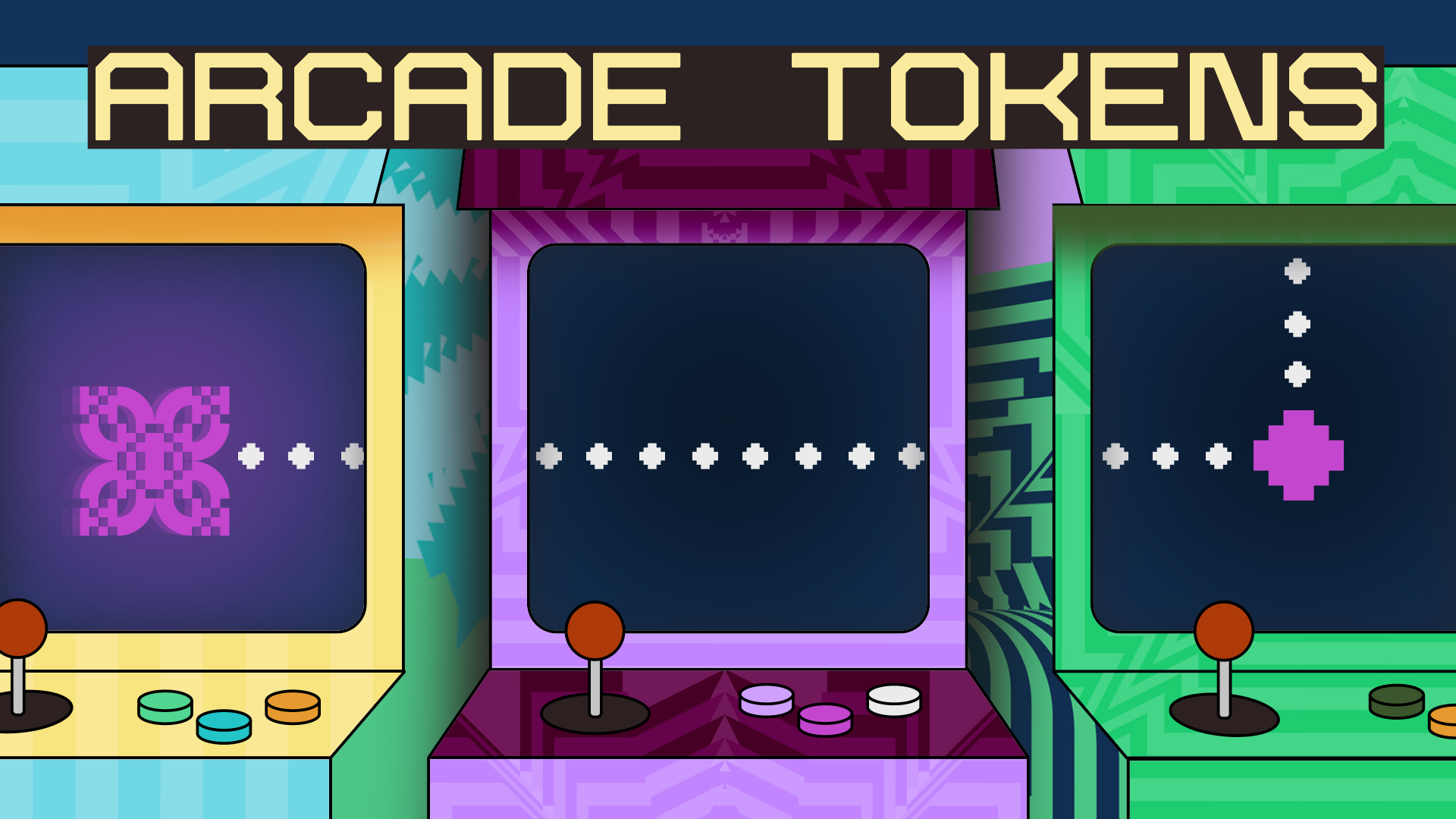
Source: A16z Crypto by Tim Roughgarden, Eddy Lazzarin, Miles Jennings, Scott Duke Kominers Compiled and organized by: bitPushNews In our article on token classification, we introduced seven types of tokens, including web tokens, collectible tokens, and meme coins. Among them, the least explored and underappreciated is Arcade Token: a token with a relatively stable value within a specific software or product ecosystem, usually managed by an issuer (such as a company). Basically, Arcade Tokens are the blockchain equivalent of assets people are already familiar with in the real world: air miles, credit card points, in-game coins, etc. What all of these assets have in common is that they are all internally circulated currency to support the operation of a market economy: for example, frequent flyer miles and reward points can encourage brand loyalty and are used to buy tickets and upgrades; in-game coins can be used to buy and sell items in video games. Although companies have been using these assets for decades, almost all previous instances have run on centralized databases, limiting ownership, portability, and user choice. Arcade Tokens based on public chains are different; they are open, interoperable, and composable, which provides a new set of market design advantages. This article aims to answer the most common questions we receive about arcade tokens: what they are, what they do, why are they valuable, how builders use them, the design trade-offs they involve, and the opportunities they present. What are Arcade Tokens (Arcade Tokens)? At the technical level, an arcade token is a digital currency designed for consumption within its associated application ecosystem — its supply and demand are managed flexibly to maintain price stability. Please first think of them as currencies in the digital economy. So where did the term “arcade token” come from? Whether you've been to an arcade arcade or not, you're probably familiar with the concept: you walk into an arcade; exchange cash for coins, usually physical; then use those tokens to play a few rounds of “Bumblebee,” “Crocodile Panic,” or other games you like. These tokens allow you to participate in the arcade's economic activities. The arcade hall analogy clearly illustrates how these tokens work: arcade tokens have a relatively stable value within the economic system to which they belong — whether within a single service or between multiple services. The relative stability of the value of arcade tokens distinguishes them from other types of tokens, such as tokens that derive value from the operation of an underlying asset (such as asset-backed or collectible tokens), the operation of a decentralized network market (such as a network token), or speculative investments in a specific entity (such as company-backed or securities tokens). As funny as the name sounds, arcade tokens are a powerful, programmable economic primitive — they're the key to unlocking a new field of crypto design. What is not an arcade token? Once again, the most substantial difference between arcade tokens and other types of tokens is that arcade tokens are not meant for investment or speculation. Unlike network tokens or securities tokens that people usually earn in anticipation of a return on investment, arcade tokens are used for spending. People sometimes refer to arcade tokens as “functional tokens” because they are designed to provide, um, functionality. We avoid using this label because it suggests that other types of tokens lack functionality, which is by no means true. (See our “Defining Tokens” article for more information.) Alternative names for arcade tokens can include “points” (although in common parlance, this usually means that relevant records are kept on a private ledger rather than on a public chain) and “loyalty tokens” (which only describe a specific application). This doesn't mean that the value of an arcade token will never change—as described below, the price of an arcade token may fluctuate slightly over time. However, arcade tokens usually provide an unlimited supply at current prices, and do not provide, promise, or imply financial returns. This means they are generally unsuitable as investment products and are therefore generally not subject to US securities laws. What are the benefits of arcade tokens? Why should builders consider using them? Arcade tokens enable builders to create and distribute value in the digital economy. Crucially, this ability to create and distribute value can motivate user behavior, drive early growth, and create network effects — without relying on external capital or speculative demand. This intuition is simple, and once again matches the arcade analogy: if you run an arcade, you probably want to control the supply of tokens...

39d agoWendy#a16z #Arcade Token #token #arcade token