


New East India Company 2.0: How will the US dollar stablecoin “dismember” the fiat system under the “Genius Act”?
Author: rick awsb ($people, $people)
Twitter丨 @rickawsb
original title丨 The “Genius Act” and the New East India Company: How the US Dollar Stablecoin Will Challenge the Existing Fiat Currency System and National Form
This is an extremely clever asymmetric strategy. America is using its rival's weakest link: fear of getting out of control to build its own moat -- Author
I. The ghost of history: the digital return of the East India Company
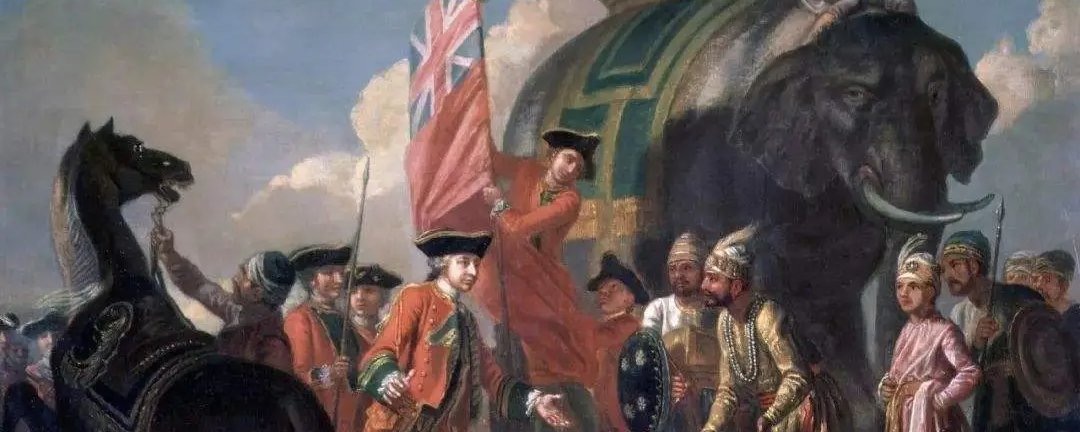
History never simply repeats itself, but it rhymes. When Trump happily signed his name on the “GENIUS Act” (GENIUS Act) document, what popped up in my mind was a historical memory — the Dutch and British East India Company, a commercial beast granted sovereign power by the country in the 17th and 18th centuries.
This bill appears to be just a technical adjustment to financial regulation, but its deep meaning is to issue a license for the 21st century “New East India Company,” and a transformation reshaping the global power pattern has already begun.
1a. License for new powers
Back 400 years ago, the Dutch East India Company (VOC) and the British East India Company (EIC) were unusual trading firms. They are a mixture of merchants, soldiers, diplomats, and colonists, all under the authority of the country. The powers granted to the VOC by the Dutch government include recruiting its own army, issuing currency, signing treaties with other countries' monarchs, and even waging war. Similarly, the royal charter granted to the EIC by Queen Elizabeth I also gave it the power to monopolize trade and establish military and administrative functions in India. These companies are the earliest multinational companies in history. They do not control simple commodities, but rather define the lifeblood of globalization in that era — maritime trade routes.
Today, what the “Genius Act” does is, in the form of legislation, legalize the power giants of the new era - stablecoin issuers. On the face of it, the bill aims to regulate the market and prevent risks by setting reserve standards and requiring asset certification. The real effect, however, is to create a “legal” stable issuer oligarchy recognized by the US government through screening and certification. These “crowned” companies, such as Circle (USDC issuer), future Tether (if they choose to comply), and many internet giants with billions of users such as Apple, Google.meta, and x, will no longer be savagely growing crypto rebels, but “concessionaires” officially included in the US financial strategy. What they control will be a new era of global trade routes — a 24/7 uninterrupted, borderless digital finance track.
1b. From trade routes to financial tracks
The East India Company's power is rooted in its monopoly on physical trade routes. They secured monopoly on the spice, tea, and opium trade with gunboats and fortresses, and made huge profits from it. The new-age “Digital East India Company” will exercise power by controlling the financial trajectory of global value flows. When a US dollar stablecoin regulated by the US Treasury or a specific agency becomes the default settlement unit for global cross-border payments, DeFi (decentralized finance) loans, and RWA (real world asset) transactions, its issuer has the power to define the rules of the new financial system. They can decide who can access the system, freeze assets at any address according to instructions, and set compliance standards for transactions. This is a deeper, more intangible power than controlling physical routes.
1c. Vague symbiosis and confrontation with countries
The history of the East India Company is an epic story of the evolving relationship with its home country. At first, they were agents for countries to pursue mercantilism and engage in strategic games with rivals such as Portugal. However, the company's profit-seeking nature rapidly expanded it into an independent center of power. For profit, the EIC did not hesitate to launch wars (such as the Battle of Plassey) and engage in immoral trade (such as opium trade), and repeatedly dragged the British government into a diplomatic and military quagmire where it was unwilling to participate. Eventually, when the company was on the verge of bankruptcy due to mismanagement and excessive expansion, it had to seek help from the country, leading the government to gradually strengthen supervision through a series of laws (such as the “Tea Act” of 1773 and the “Pitt Act” of 1784). Eventually, after the Indian National Uprising in 1858, it was completely stripped of its administrative power and returned to the direct control of the royal family.
This history gives us a preview of possible future dynamic relationships between stablecoin issuers and the US government. Currently, these companies are seen as strategic assets to promote the hegemony of the US dollar and counter China's digital yuan. However, once they grow into “too big to fail” global financial infrastructure, their own institutional interests and shareholder demands will become critical. They may make decisions contrary to US foreign policy for commercial interests.
This indicates that when the US dollar stablecoin system issued by private institutions is too large, it will inevitably clash with national sovereignty. At that time, we are likely to see another upgrade of the stablecoin law based on a game of interest.
The following table clearly compares these two power entities that span time and space, and reveals surprising historical similarities:
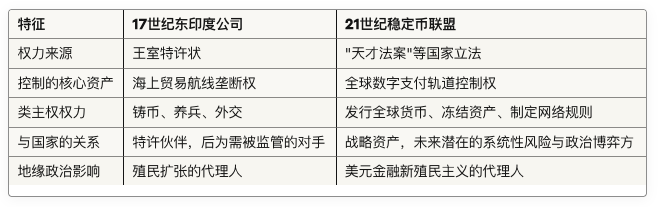
The ghosts of history have returned. Through the “Genius Act,” the US is releasing a new East India Company. It is clothed in the cloak of scientific and technological innovation and has the scepter of blockchain, but its core is the ancient logic of a commercial empire — a global private enterprise that is licensed by the country and will eventually compete with the country for power.
II. The Global Monetary Tsunami: Dollarization, Great Deflation, and the End of Non-US Dollar Central Banks
The “Genius Act” spawned not only a new power entity, but also a currency tsunami that will sweep the world. The energy of the tsunami stemmed from the collapse of the Bretton Woods system in 1971. It was that historic “liberation” that paved the way for the stable global conquest of the dollar today. For countries with already weak sovereign credit, the future will no longer be for governments to choose their own currency or traditional dollars, but rather for citizens to choose between a collapsing local currency and an accessible, frictionless digital dollar. This will trigger an unprecedented wave of hyperdollarization, completely end the monetary sovereignty of many countries, and have a devastating deflationary impact on them.
2a. The specter of the Bretton Woods system
To understand the power of stablecoins, we must go back to the moment when the Bretton Woods system broke up. The system links the dollar to gold and other currencies to the dollar, forming a stable structure with gold as the ultimate anchor. However, this system contains a fatal contradiction, the “Triffin Problem”: as a global reserve currency, the US dollar must continue to flow to the world through the US trade deficit to meet the needs of global trade development; however, the continued deficit also shakes people's confidence in the ability of the dollar to exchange gold, which eventually leads to the collapse of the system. In 1971, President Nixon closed the gold exchange window and declared the system dead.
However, the dollar's death was the beginning of its rebirth. Under the subsequent “Jamaican System”, the US dollar was completely decoupled from gold and became a pure credit currency. It has been freed from the “shackles of gold,” and the US Federal Reserve can issue currencies more freely to meet America's domestic fiscal needs (such as Vietnam War expenses) and global demand for dollar liquidity. This laid the foundation for the US dollar's hegemony over the past half century — an unanchored hegemony that relies on global network effects and America's comprehensive national strength. Stablecoins, especially stablecoins recognized by US law, are the ultimate technical form of the post-Bretton Woods system. They have raised the dollar's liquidity supply capacity to a new level, enabling them to bypass hierarchical supervisory governments, bypass traditional, slow, and expensive banking systems, and directly penetrate every capillary and individual in the global economy.
2b. The advent of hyperdollarization (Hyper-dollarization)
In countries such as Argentina and Turkey, which have been plagued by high inflation and political turmoil for a long time, people spontaneously exchange their capital for dollars in order to preserve their wealth. This is a “dollarization” phenomenon. However, there are many barriers to traditional dollarization: you need a bank account, face capital controls, and take the risk of holding real money. Stablecoins completely dismantle these barriers. Anyone with a smartphone can exchange a depreciating local currency for a stablecoin anchored to the US dollar in seconds at a very low cost.
In Vietnam, the Middle East, Hong Kong, Japan, and South Korea, U stores are rapidly replacing traditional exchange stores. Dubai sales offices are beginning to accept Bitcoin payments, and small stores in Yiwu can now use u to buy cigarettes.
The penetration of these pervasive payments will transform the US dollar from a gradual process to an instantaneous tsunami. When a country's inflation expectations rise slightly, capital will no longer “flow out”, but “evaporate” — instantly disappear from the local currency system and enter the global crypto network. We can define this attribute as “an alternative enhancement to a sovereign currency.”
It would be a fatal blow to a government whose credit is already shaky. The status of the local currency will be completely shaken, as people and businesses have a more perfect and efficient alternative.
2c. Grand Deflation and the Cofa of National Power
When an economy is swept away by a wave of hyperdollarization, its sovereign country will lose its two most core powers: the power to print money to cover the fiscal deficit (that is, the currency minting tax); the other is the power to regulate the economy through interest rates and money supply (that is, monetary policy independence).
The consequences were disastrous.
First, as the local currency is abandoned on a large scale, its exchange rate will spiral down and fall into hyperinflation. However, at the level of economic activity denominated in US dollars, there will be a sharp contraction. Asset prices, wages, and commodity values would plummet in dollars.
Second, the government's tax base will evaporate. Taxes denominated in rapidly depreciating local currency will become worthless, and the country's finances will collapse. This financial death spiral will completely destroy the country's ability to govern.
This process, starting with Trump signing the Genius Act, will be accelerated through RWA (Real World Asset On-Chain).
2d. White House vs. Federal Reserve: America's Internal Power Game
This monetary revolution will not only hit America's rivals; it will even trigger a crisis within the US.
Currently, the Federal Reserve, as an independent central bank, controls the monetary policy of the United States. However, a privately issued digital dollar system overseen by the Treasury or a new agency under the White House would create a parallel currency track. By influencing regulatory rules for stablecoin issuers, the executive branch can indirectly or even directly interfere with the supply and flow of money, thereby circumventing the Federal Reserve. This could become a powerful tool created by the US executive branch to achieve its political or strategic goals (such as stimulating the economy in an election year or accurately sanctioning opponents), thus triggering a deep crisis of trust in the US dollar about the independence of monetary policy in the future.
3. The 21st Century Financial Battleground: America's Confrontation with China's “Free Financial System”
If the stablecoin bill is a restructuring of power internally, then externally, it is a critical piece of chess piece left by the US in the game of major powers with China: passing legislation to support a private, public blockchain-based “free financial system” with the US dollar at its core.
3a. Financial curtain for a new era
After World War II, America took the lead in establishing the Bretton Woods system. Its purpose was not only to re-establish the post-war economic order, but also to establish a Western economic group that excluded the Soviet Union and its allies in the context of the Cold War. Institutions such as the International Monetary Fund (IMF) and the World Bank have become tools to promote Western values and strengthen the system of alliances. Today, what the “Genius Act” wants to construct is a new version of the “Bretton Woods System” for the digital age. It aims to establish a global financial network based on US dollar stablecoins. This network is open, efficient, and ideologically opposed to the model dominated by the Chinese nation. This is a bit like America's arrangement against the Soviet Union's free trade system back then, but it's harsher.
3b. Open Siege Closed: Permit System vs. No License Required
The strategic path of China and the US in digital currency shows fundamental differences. This is an ideological war of “open” versus “closed.”
China's digital yuan (e-CNY) is a typical “permissioned” (Permissioned) system. It runs on a private ledger controlled by the central bank, and every transaction and every account is closely monitored by the country. This is a digital “walled garden”. Its advantages are efficient centralized management and strong social governance capabilities, but its closed nature also makes it difficult to gain the true trust of global users, especially individuals and institutions that are wary of their ability to monitor it.
In contrast, stablecoins supported by the US through the “Genius Act” are built on “permissionless” (permissionless) public blockchains such as Ethereum and Solana. This means that anyone, no matter where they are, can innovate on this network—developing new financial applications (DeFi), creating new markets, and transactions—without the approval of any centralized agency. The role of the US government is not to be the operator of this network, but to be the “credit guarantor” of the core asset (US dollar) of this network.
This is an extremely clever asymmetric strategy. America is using its opponent's weakest link — fear of getting out of control — to build its own moat. It attracts global innovators, developers, and ordinary users seeking financial freedom to an open ecosystem centered on the US dollar. China was invited to participate in a game it cannot win structurally: how can a state-controlled local area network compete with a dynamic financial internet that is open to the world?
3c. Bypassing Swift: Downsizing attacks by drawing wages from the bottom of the kettle
In recent years, one of the core strategies of China, Russia and other countries to deal with the hegemony of the US dollar is to establish financial infrastructure that circumvents US control, such as a cross-border payment system to replace SWIFT (Association for Global Banking and Financial Telecommunication). However, the advent of stablecoins has made this strategy seem clumsy and outdated. Stablecoin transactions based on public blockchains essentially do not require intermediaries from SWIFT or any traditional bank. The transfer of value is done cryptographically through a globally distributed network of nodes. This is a brand-new track parallel to the Japanese system.
This means that the US no longer needs to struggle to defend Japan's financial citadel, but has directly opened up a new battleground. In (SWIFT), in this new battlefield, rules are defined by codes and agreements, not by treaties between countries. When much of the world's digital value began to operate on this new track, trying to build a “SWIFT alternative” was like trying to build a more luxurious carriage road in the motorway era, and lost meaning.
3d. Win the battle of network effects
The core war in the digital age is the war of network effects. Once the platform has attracted enough users and developers, it will form a strong gravitational pull, making it difficult for its competitors to catch up. Through the “Genius Act,” the US is integrating the US dollar — the world's strongest monetary network — with the crypto world — the world's most innovative and dynamic financial network. The network effects will be exponential.
Developers around the world will give priority to developing applications for the USD stablecoin, which has the greatest liquidity and the broadest user base. Users from around the world will pour into this ecosystem due to rich application scenarios and asset choices. In contrast, e-CNY may be promoted within a specific scope such as the “Belt and Road”, but its closed, renminbi-centered nature makes it difficult to compete with this open dollar ecosystem on a global scale.
In summary, the “Genius Act” is far from being a simple domestic bill. It is America's core strategic plan in the 21st century geopolitical chess game. It uses the concept of “decentralization” and “openness” in a “four to two thousand pounds” method to consolidate its core power — the hegemony of the US dollar. It is not a symmetric arms race with China; rather, by changing the topography of the financial battlefield, it brings competition into a new dimension where America has an absolute advantage and attacks the opponent's financial system.
4. “Denationalization” of Everything: How RWA and DeFi Disrupt State Control
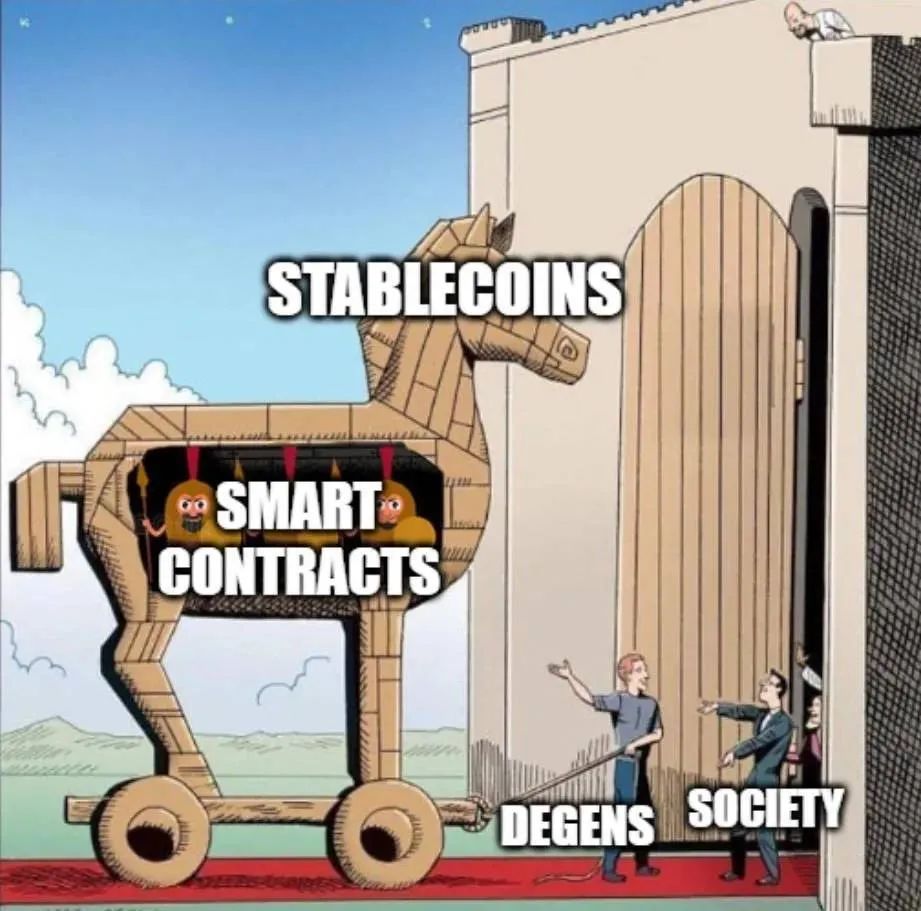
Stablecoins themselves are not the end of the revolution; they are more like Troy Trojans invading the city. Once global users get used to using it to hold and transfer value, a bigger and deeper revolution will follow. At the core of this revolution is the transformation of all valuable assets — stocks, bonds, real estate, art — into digital tokens that can flow freely on the global public ledger. This process, or “real-world asset on-chain” (RWA), will fundamentally sever the link between assets and specific national jurisdictions, “denationalize” assets, and ultimately disrupt the traditional financial system with banks at its core.
4a. Stablecoins: The “Trojan Horse” to a New World
According to ancient legends, the Greeks eventually conquered the fortified city of Troy by offering a huge Trojan horse. Today, stablecoins are playing a similar role. In the eyes of governments and regulators, regulated, asset-backed stablecoins appear to be a “Trojan horse” to tame the wild horse of the crypto world — a relatively safe and controlled entry point.
However, the mystery of history is that the GENIUS Act, while striving to consolidate national power by promoting “security” stability, unwittingly created the largest user acquisition channel ever for a “dangerous”, truly decentralized non-national currency.
The core function of stablecoins is to act as a gateway between the world of traditional fiat money and the world of cryptocurrencies. They are the “on-ramp” (on-ramp) of the crypto world and a “bridge” across the two worlds. An ordinary user may initially only enjoy the low cost and efficiency brought by stablecoins in cross-border remittance or daily payments, or the subsidies given by merchants. But once they download a digital wallet and get used to the on-chain transaction model, the distance between them and real decentralized assets such as Bitcoin and Ethereum is just one click away.
Platforms that provide stablecoin trading services, such as Coinbase or Kraken, are themselves an all-encompassing cryptocurrency supermarket. Users come for stablecoins, but will soon be attracted by the high returns provided by DeFi protocols or the narrative of Bitcoin as a store of value. From holding USDC to staking ETH to participate in liquidity mining, this process is a natural extension for a user who has already started.
This has created a profound paradox for the country. The country's short-term goal is to strengthen the hegemony of the US dollar by promoting stablecoins linked to the US dollar. To achieve this goal, the country must encourage and support the development and adoption of user-friendly wallets, exchanges, and various applications. However, these infrastructures are technologically neutral and unrelated to agreements. The same wallet can store both regulated USDC and anonymous Monero; the same exchange can trade both compliant stablecoins and fully decentralized bitcoins.
As users' understanding of the crypto world deepens, their demand for higher earnings, greater privacy protection, or true censorship resistance will grow. At that time, they will naturally move from stablecoins that only provide stable value but have no potential to add value to assets that can meet these higher levels of demand.
4b. The RWA Revolution: Assets Freed from the Shackles of National Borders
If DeFi is the superstructure of this revolution, then RWA is its solid economic foundation. The core of RWA is to convert assets existing in the physical world or traditional financial systems into tokens on the blockchain through legal and technical processes.
We can imagine a scenario like this:
An app with millions of global users in the Apple App Store developed by a Chinese team is tokenized through legal and technical means to become a digital certificate that circulates on the blockchain.
The token is traded on an on-chain, permissionless decentralized finance (DeFi) protocol.
An Argentine user received this token in his digital wallet within seconds of initiating a transaction.
The entire process — tokenizing assets, collateral, and minting and transferring stablecoins — was completed entirely on-chain, bypassing the traditional banking systems of China, the US (due to its dollar anchoring), and Argentina. This is not just a better payment track; it is a parallel financial universe that almost ignores the political and legal boundaries drawn by the Westphalian system.
It is the “denationalization of money” that promotes “the denationalization of finance” and ultimately the “denationalization of capital.”
Where capital can be denationalized, capitalists will naturally also be unnationalized.
4c. The end of traditional financial systems
This new financial ecosystem, driven by stablecoins and based on RWA, is an all-out shock to the traditional financial system. The core function of traditional finance is essentially to act as an intermediary for information and trust. Institutions such as banks, brokerage firms, and payment companies use their huge capital, complex systems, and government licenses to resolve trust issues between parties to the transaction and collect high fees from them.
Blockchain technology, through its immutable, open and transparent characteristics, and rules enforced by code (smart contract), provides a new trust mechanism - “code is law”. Under this new paradigm, most of the functions of traditional intermediaries appear superfluous and inefficient:
Banks' deposit and loan business can be replaced by decentralized lending agreements.
Matching transactions on exchanges can be replaced by automated market maker (AMM) algorithms.
Cross-border settlement by payment companies can be replaced by second-level global transfers of stablecoins.
Wall Street asset securitization can be replaced by more transparent and efficient RWA tokenization.
5. The rise of sovereign individuals and the twilight of nations
When capital can flow without borders, when assets can be removed from jurisdiction, and when power is transferred from nation-states to private giants and online communities, we have reached the end of this transformation — a new era led by “The Sovereign Lnual Divide” (The Sovereign Lndivider) and marked by the end of the Westphaliansystem (Westphaliansystem). The far-reaching impact of this revolution, which is driven by stability and artificial intelligence (A), will surpass the French Revolution, because it not only brought about regime change; it also changed the form of existence of power.
(The Sovereign Personal Book is indeed a prophecy for our time)
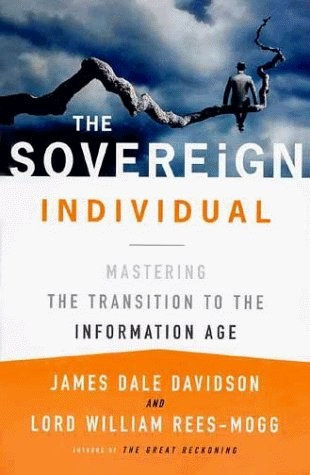
5a. The prophecy of “The Sovereign Individual” came true
In 1997, James Dale Davidson (James Dale Davidson) and Lord William Rees-Mogg (Lord William Rees-Mogg) predicted in their terrifying book “The Sovereign Individual” that the advent of the information age would fundamentally change the logic of violence and power. They believe that the reason nation-states can rise in the industrial age is because they can effectively protect large-scale, fixed industrial assets and levy taxes from them. But in the information age, the most important capital—knowledge, skills, and financial assets—will become highly mobile and even exist in intangible cyberspace. At that time, the country will be like a rancher trying to fence off a “winged cow,” and its ability to tax and control will be greatly reduced.
The advent of stablecoins, DeFi, and RWA is a realistic version of “cybermoney” (cybermoney) and “cybereconomy” (cybereconomy) in this book. Together, they have built a global, low-friction value network that has given capital real wings. An elite individual can easily allocate his wealth to RWA tokens around the world and transfer it instantaneously between different jurisdictions through stability, all recorded on a public ledger that is difficult for the national machine to reach. The book's predictions that “individuals will be free from government oppression” and “wealth holders will be able to bypass the country's monopoly on currency” are becoming reality.
5b. Westphal and the end of the subsystem
Since the Peace of Westphalia was signed in 1648, the basic unit of world politics has been a sovereign nation. The core principles of this system include the supreme sovereignty of a country within its territory, the sovereign equality of nations, and the principle of non-interference in each other's internal affairs. The cornerstone of this system is the country's absolute control over the population and property within the territory.
The rise of sovereign individuals is fundamentally eroding this cornerstone. When the economic activity and wealth accumulation of the most creative and productive individuals take place “outside the realm” (cyberspace), territorial boundaries lose their meaning. Countries find themselves unable to effectively tax these globally mobile elites, and their fiscal base will inevitably be weakened. To stop the outflow of wealth, desperate governments may adopt more aggressive and authoritarian measures, such as the “hostage taking” taxes predicted in the book and the destruction of technology that enables individual autonomy. But this will only speed up the exit of the elite, creating a vicious cycle. Ultimately, the nation state may turn into an empty shell, and its function is limited to providing benefits and guarantees to less mobile people who are unable to enter the global digital economy — a “babysitter country” that serves the poor. But obviously, a country like this has nothing to do with wealth creation
5c. The Last Frontier: The Final Battle Between Privacy and National Taxation
The next step in this revolution will be privacy. Although current public blockchains are pseudonymous (pseudonymous), transactions can still be traced. However, as privacy technologies such as zero-knowledge proofs mature (such as those used by Zcash and Monero), future financial transactions will likely be completely anonymous and untraceable.
When a global, stablecoin-based financial system is combined with powerful privacy technology, it poses the ultimate challenge to a country's tax capacity. The tax authorities will face an impenetrable “black box”, unable to effectively identify the parties to the transaction and taxable income. This will be the ultimate form of “deregulation,” because when a country loses its ability to collect taxes, it also loses its ability to effectively regulate and provide public services.
The French Revolution replaced “national sovereignty” with “national sovereignty” where the subject of power was changed from a king to a nation state, but the regional nature of power did not change. However, this revolution, which began in stability, uses “cyber sovereignty” and “individual sovereignty” to eliminate “the territorial sovereignty of nation states.” It is not a transfer of power, but rather a “decentralization” and “de-nationalization” of power. This is a more fundamental and thorough paradigm shift. Its impact is indeed as far-reaching as, and may even surpass, the French Revolution. We are standing at the dawn of a day when the world is disintegrating and a new order is emerging. This new world will give individuals unprecedented freedom and power, but it will also bring chaos and challenges that we cannot imagine today.
