


2025 Q2 Web3 Financing Inventory: Silent Expansion, Infrastructure Takes the Lead
By Robert Osborne, Outlier, Ventures
Compiled by AidiDiaoJP, Foresight News
Original title: Web3 Financing Trend Report for the Second Quarter of 2025: In the Year of Silent Execution, Infrastructure Is Still the Key
summary
Web3 venture capital surged to $9.6 billion, the second-highest quarter on record, although the number of disclosed deals fell to just 306 rounds.
Capital concentration has increased. Fewer companies raised more capital, and the median size of funding rounds increased at all stages. Series A funding reached $17.6 million, the highest level in more than two years.
Seed round amounts have increased. The median seed round jumped to $6.6 million, reversing the decline in the first quarter and indicating increased capital confidence in the early stages.
Private token sales remained steady, raising $4.1 billion in just 15 transactions. Public token sales fell 83%, and only 35 events raised $134 million.
Infrastructure continues to dominate, with cryptocurrencies, mining and verification, and computing networks leading the way in terms of capital and investor interest.
The consumer category is showing a hint of vitality, particularly in financial services and markets, but the scale of financing and the share of transactions is still relatively small.
Funding trends this quarter show that this is no longer a game of casting a net, but a very thorough investment of faith.
Market Overview: Capital Concentration
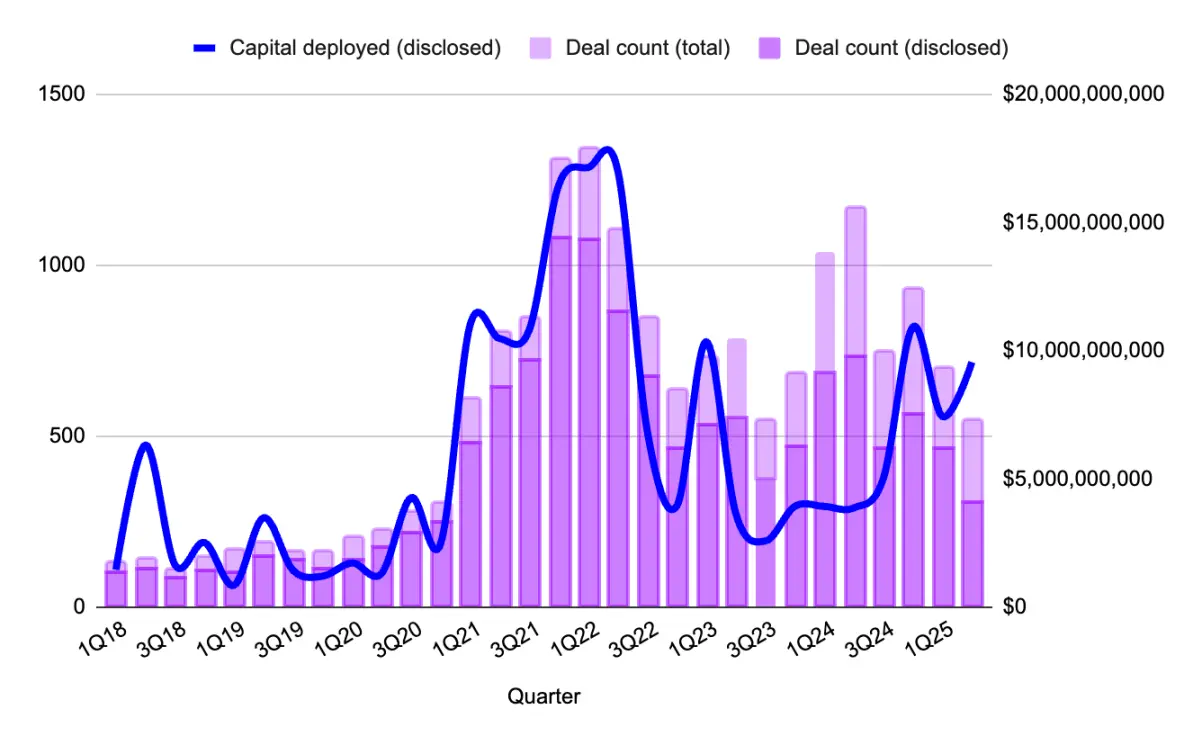
At first glance, the numbers seem contradictory: total Web3 venture capital has surged, but the number of transactions has dropped dramatically. But in the context of the broader adjustments we've been tracking since 2024, the logic has become clear: investors are moving from broad coverage to deeper, more strategic bets, and the second quarter of 2025 consolidated this shift.
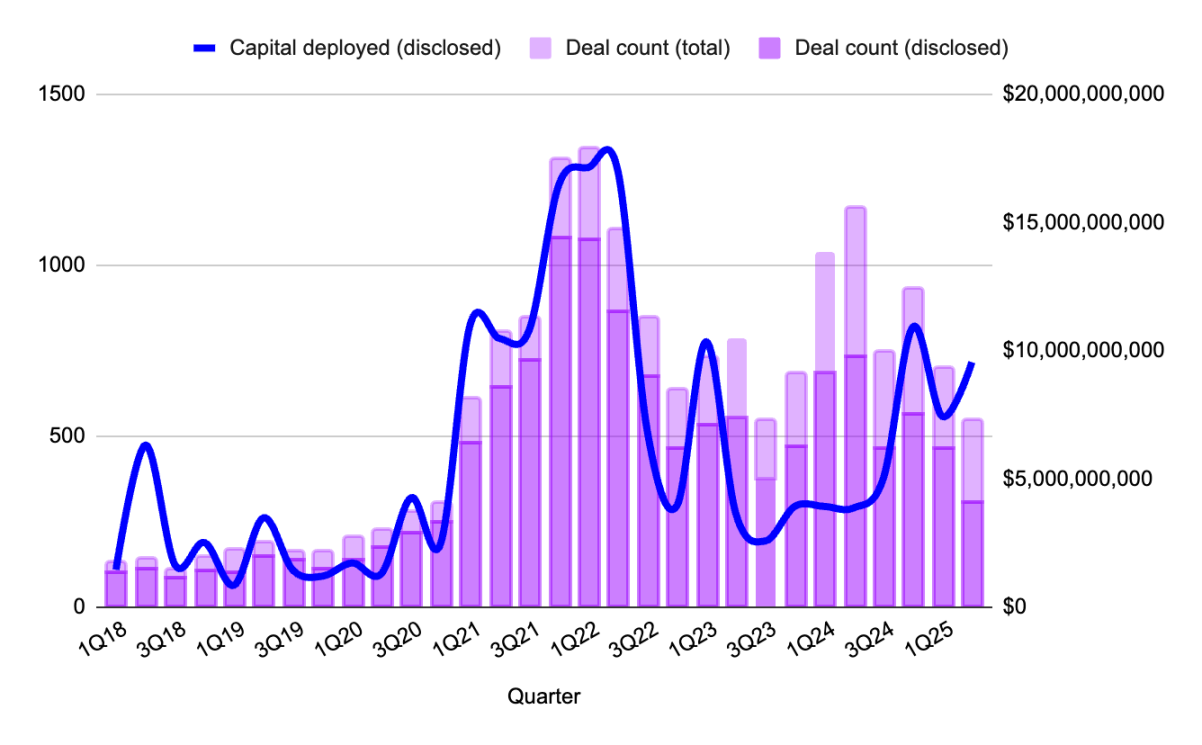
图 1:按季度统计的 Web3 交易数量和融资额,来源:Outlier Ventures, Messari
Only 306 disclosed transactions were recorded during the quarter (transactions with financing details revealed): this is the lowest level since mid-2023. However, the amount of financing soared to nearly $10 billion, nearly 30% higher than the previous quarter, but there were no large-scale outliers. Instead of a single oversized transaction that distorted data, we saw intensive funding rounds of between $50 million and $250 million, focused on strategic areas such as Rollup infrastructure, validator liquidity, etc. This quarter's financing was clearly characterized by fewer bets, larger rounds, and higher thresholds.
The result is that the market feels smaller, yet more serious. In the post-hyperscale fund environment, investors aren't chasing every financing presentation; they are comprehensively considering narrative, agreement dependency, and distribution advantages. You're no longer funded because you have a future, but because you need it.
The transactional phase of Web3 startup financing: round A returns
After being overlooked for a year, Series A funding is back in focus.
The median Series A funding climbed to $17.6 million, the highest level since early 2022, and 27 deals raised a total of $420 million. These are no longer “quasi-B-round” financings disguised as Series A; they are precise and careful capital allocations to companies with strong product market matching (PMF), which usually have growing revenues and perfect token mechanisms.
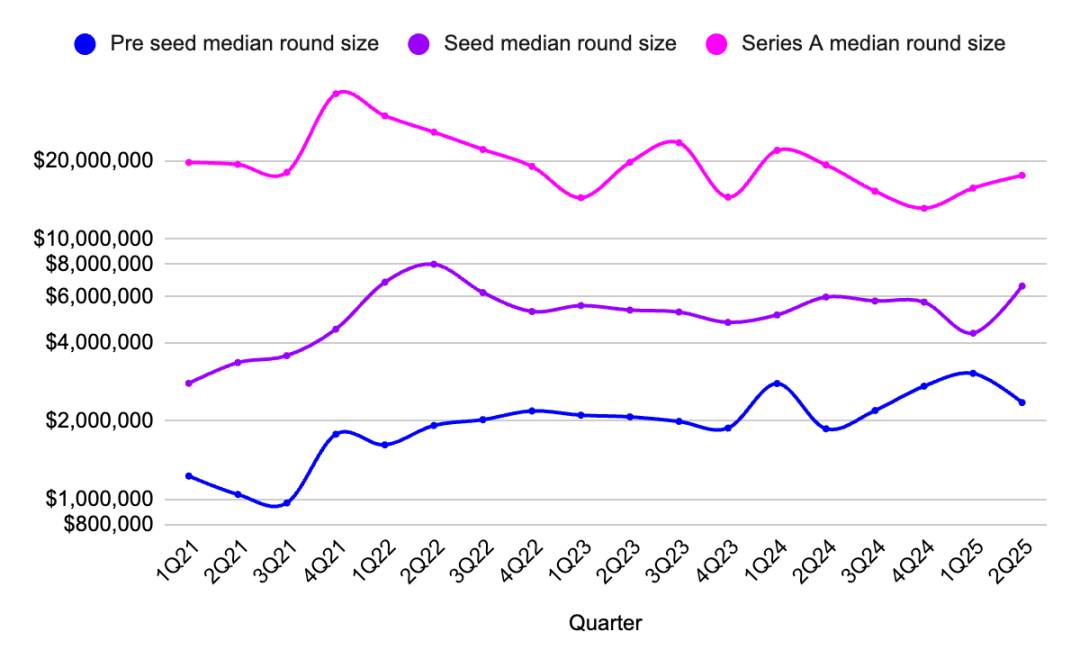
图 2:种子前、种子轮和 A 轮阶段融资中位数规模的季度变化,来源:Outlier Ventures, Messari
The seed round also rebounded, and the median size of seed round financing rose to $6.6 million, while the total number of transactions rose slightly. This shows that investors are returning to their interest in early stages of risk, at least in popular areas such as AI native infrastructure or validator tools. Meanwhile, the seed front round remained stable, with a median of $2.35 million, which confirms what we've seen over the past year: early projects are still there.
Capital in 2024 is concentrated on both ends. On the one end is optimism in the early seed phase and on the other end is the maturity period from round B and beyond. Round A was a place where beliefs died, but risk markets won't stand still forever. It will take time to build infrastructure, and it will take time to expand the scale. This moment has arrived.
Infrastructure investment dominates Web3 capital flows
This quarter's capital-weighted Web3 category map is like a blueprint for post-consumer transformation.
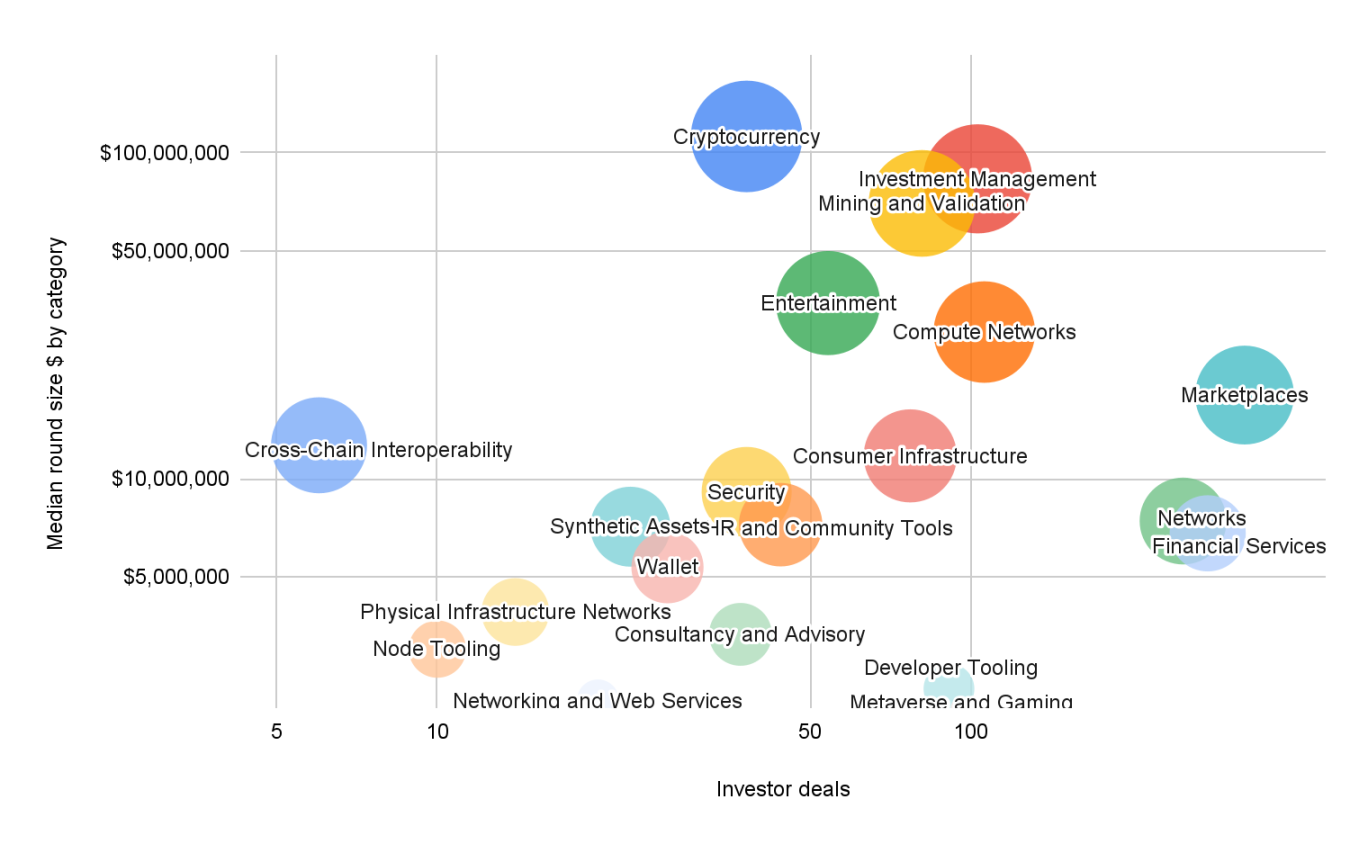
图 3:2025 年第一季度各类别融资阶段和融资轮次平均规模。来源:Outlier Ventures, Messari
Note: “Investor Transactions” refers to the total number of times investors participated in a given category, not the number of independent investors. If an investor has participated in three rounds of financing, it is counted as three investor transactions.
The largest amounts of funding were in the infrastructure (median of $112 million), mining and verification (median of $83 million), and computing networks (median of $70 million). These are not speculative tokens, but the infrastructure that supports validator networks, modular block spaces, and AI aligned consensus systems. This type of infrastructure defines long-term blockchain investment strategies. The investor's logic is clear: support the underlying facilities and then rapidly grow the application layer.
Other prominent infrastructure areas include consumer infrastructure (median of $11.7 million) and asset management (median of $83 million). Located at the intersection of infrastructure and user experience (UX), these categories are highly functional products with technical depth and long-term composability.
On the other hand, developer tools have once again attracted strong capital interest (91 investor transactions), but the amount of financing was small. This is a familiar story for this long-tail, low-capital expenditure industry. But it's still a playground for early teams and willing to participate in grants and token options games.
Financial services, entertainment, and markets all achieved a healthy number of transactions and a moderate median size of funding (in the range of $6 million to $18 million), indicating a steady and cautious interest from investors. However, its trading volume is far below the level of 2021-2022. Investors have not lost interest in consumer apps; they are just waiting for new products to appear.
Q2 2025 Token Funding: Private and Public Placements
Following the boom in the first quarter, token financing in the second quarter entered a relatively calm phase, but this shift seemed like a redistribution rather than a retreat.
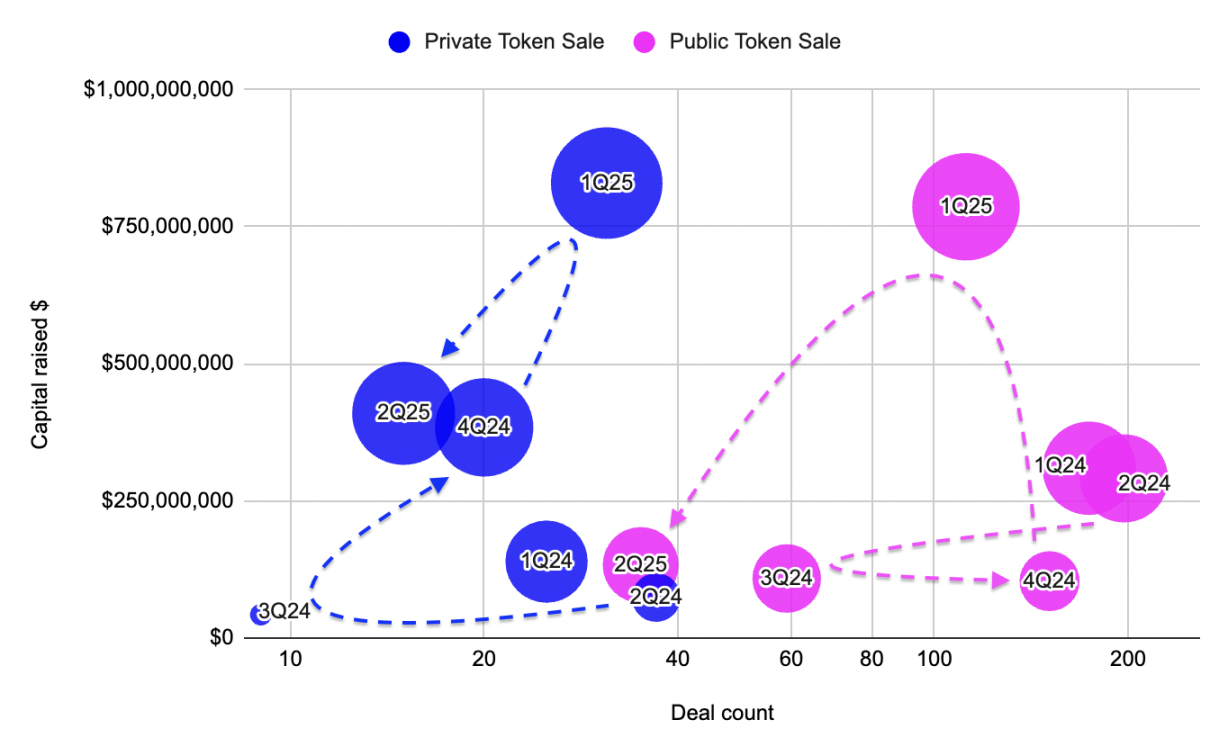
图 4:2022 年至 2024 年私募和公募代币销售在融资额和交易数量上的比较,来源:Outlier Ventures, Messari
Private token sales raised $4.1 billion through just 15 transactions, with a median funding size of $29.3 million, the highest level since 2021. This growth in high-value private equity allocations highlights the current Web3 funding environment: consistency and strategic partnerships are more important than hype. These aren't hype-driven memes or utility tokens disguised as protocols, but rather validator alliances, L2 treasury, and the modular Rollup ecosystem are quietly consolidating liquidity.
In contrast, public token sales have crashed. Only 35 financings were completed, compared to 112 in the first quarter, totaling only $134 million, cutting the median amount of funding in half. Even listings that are popular with retail investors are difficult to attract attention, and most of the trading volume is concentrated on a few high-profile projects. Other than that, the market sentiment felt more like a wait-and-see rather than a bearish one, a wait-and-see gesture rather than a complete retreat.
The divide between private and public sale continues a trend that has been tracked since the end of 2023. Public token issuance surged when the market was hot, but the private equity round reflected consistency rather than hype.
summed
Investors are looking for a clearer narrative, more solid infrastructure, and builders who know how to navigate this new funding environment.
If 2024 is a year of recovery and restructuring, then the second quarter of 2025 feels like a year of silent execution.
Capital is flowing, but only to a few. The flow of transactions is declining, but the scale of financing is rising. Infrastructure continues to win, but not out of prejudice, there has been no major ideological shift.
For the founders, the path is narrower, but it's not impossible; early deals are still happening, and Series A funding is back. As long as they are aligned with strategic, scalable, and protocol-dependent goals, private tokens once again have a real seat at the negotiation table.
In short: we're out of the market-wide hype cycle. It's a slow, pressurized climb, targeting critical infrastructure and long-lasting applications.
The conclusion is simple: this market doesn't need more hype cycles; it needs inevitability.
Twitter:https://twitter.com/BitpushNewsCN
Compare the TG exchange group:https://t.me/BitPushCommunity
Compare TG subscriptions:https://t.me/bitpush
