


Stablecoin Strategy from a Global Perspective: An Inventory of Major Economies

Author: @BlazingKevin_, The Paintings at Movemaker
Original title: Analysis of stablecoin strategies in major global economies
Real adoption and expansion of USD stablecoins
In our previous analysis, we have demonstrated that the birth of Plasma was a key strategic move by Tether to radically transform its business model from a passive “stablecoin issuer” to an active “global payment infrastructure operator” to recapture the enormous value taken by third party public chains. The urgency and importance of this strategic layout is being amplified by an irreversible macro-trend: the real-world adoption of US dollar stablecoins is undergoing a significant paradigm shift and entering a phase of accelerated expansion.
I. Quantitative expansion of total market volume
First, from a macro data perspective, the overall size of the stablecoin market is experiencing a new round of structural growth. Compared to the market cycle two years ago, the total market value of global stablecoins has climbed from around $120 billion to $290 billion, achieving a 140% increase. This data shows that demand for stablecoins has surpassed the scope of speculation and trading in the native field of cryptography, and has begun to gain wider market recognition as an independent asset class and financial instrument.
II. The explosion of core application scenarios: cross-border payments
The strongest reflection of this growth is in the vertical field of cross-border payments. Two years ago, actual use cases for using stablecoins for cross-border payments were in their infancy and were almost negligible. According to the latest data, the current monthly settlement volume in this field has broken the 60 billion US dollar mark. More notable is its growth slope — 20% to 30% month-on-month growth, which clearly shows a steep adoption curve.
Despite rapid growth, its market penetration rate is still very early. Compared to the current global total volume of traditional cross-border payments of up to 200 trillion US dollars per year, stablecoins still account for an insignificant share, which indicates that there is still huge room for growth tens or even 100 times in the future.
3. Core driving force: demand for “currency substitution” in high-inflation economies
Behind the acceleration in stablecoin adoption is a strong economic driver in the real world, which is particularly evident in emerging markets and countries with high inflation.
An in-depth analysis report by Cointelegraph in August indicated that in countries such as Venezuela, the sovereign currency (bolivar) has basically lost its core function as a medium for daily commercial transactions due to hyperinflation. Stringent capital controls, a failed local banking system, and chaotic official exchange rates have combined to form a “scorched earth” financial environment. In this environment, citizens and businesses actively seek currency alternatives, and the US dollar stablecoin, which has sufficient liquidity and value stability, is far more reliable than cash or local bank transfers, and has become a “hard currency” chosen spontaneously by the market.
This phenomenon is not unique to Venezuela. Since the 2022 wave of global inflation, many major economies, including Argentina, Nigeria, Turkey, and Brazil, have faced severe pressure to depreciate their currencies, which has spawned huge storage of value and safe-haven demand for payments.
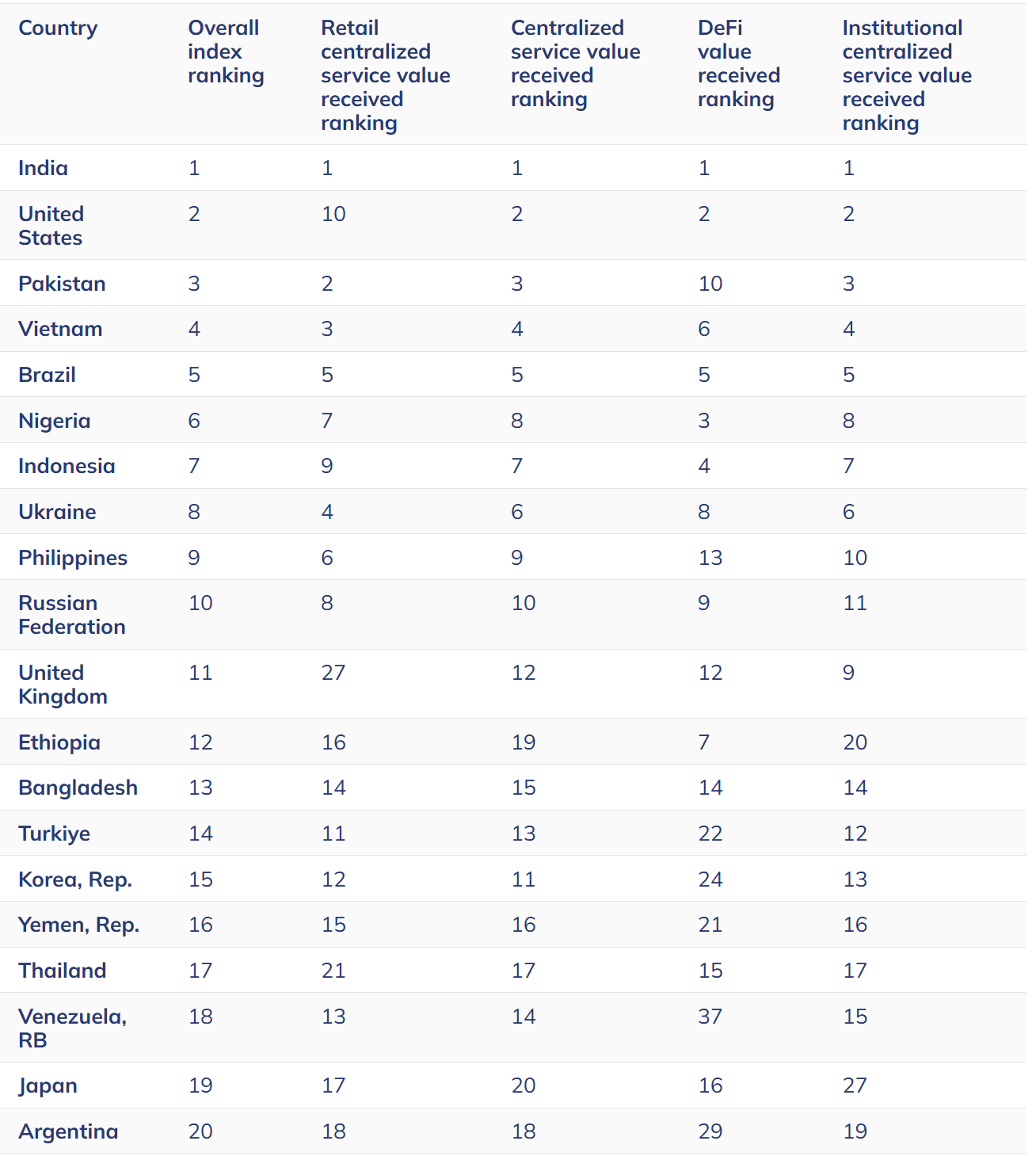
委内瑞拉在全球加密货币采用方面排名第18位。 来源:Chainalysis
According to Chainalysis data, Venezuela already ranks 18th in the world in terms of cryptocurrency adoption. More compelling data is that in 2024, 47% of the country's small transactions under $10,000 were completed through stablecoins, making it the ninth largest crypto adopter in the world by per capita terms. This is no longer a niche act, but proof that stablecoins are deeply embedded in their socioeconomic fabric.
More importantly, this kind of adoption is gradually moving from a “gray” zone spontaneously by the public to an officially recognized “sunny” zone. In Brazil, stablecoins have been integrated into PIX, a national-level instant payment system; in Argentina, the use of stablecoins to pay large contract payments such as housing rent has also been recognized by law. These cases mark the adoption of stablecoins, which are evolving from “spontaneous at the bottom” to a higher stage of “confirmation at the top.”
US Dollar Stablecoins: Three Strategic Pivots of US National Interest
Since the regulatory framework represented by the “Genius Act” was clarified, the growth trajectory of US dollar stablecoins has accelerated exponentially, and their long-term potential is far from reaching the ceiling. This explosive growth has become deeply tied not only to market behavior, but also to America's strategic interests at the national level. From a macro perspective, the global expansion of US dollar stablecoins can bring at least three major strategic dividends to the US:
1. Maintaining the hegemony of the US dollar: an asymmetric extension of monetary influence
Over the past ten years, although the global “de-dollarization” process has been slow, it has continued and progressed in an orderly manner, causing long-term erosion of the US dollar's international reserves and settlement status. The rise of US dollar stablecoins has provided a new, asymmetric solution to reverse this situation.
In particular, in countries with high inflation mentioned above, the spread of US dollar stablecoins essentially created a parallel “digital dollarized” economic layer with the US dollar as an anchor outside of the financial system of sovereign countries. It can effectively bypass these countries' capital controls and weak fiat money systems, and allow the dollar's value proposition directly to end users. Not only did this not use any traditional geopolitical or military methods, but it actually achieved deep currency penetration into these economies, greatly expanding the actual coverage of the “dollar ecosystem” (traditional dollar + digital dollar), thus consolidating the international status of the US dollar in a new dimension.
II. Alleviating Fiscal Pressure: Creating Structural Demand for US Treasury Bonds
The second strategic pivot is to support America's increasingly heavy government finances, which is critical. The stability of the US Treasury bond market, particularly its yield level, is a core concern of US economic policy. As can be seen from the Trump administration's extreme sensitivity to fluctuations in interest rates on 10-year Treasury bonds when dealing with tariff disputes, the treasury bond market is the cornerstone of the US macroeconomy.
The US dollar stablecoin issuance mechanism has naturally created a huge and growing source of demand for US Treasury bonds. Although the current reserve assets of stablecoin issuers are heavily allocated to US Treasury bonds, as their total market value expands further, their weight as a “big buyer of US bonds” will become more and more important. Citibank's analytical model predicts the potential long-term size of the stablecoin market to reach $1.6 trillion by 2030. The model further indicates that there will be hundreds of billions of dollars of incremental demand for US debt, mainly due to three aspects: 1) reconfiguration of globally circulating US dollar bills into digital form (about 240 billion US dollars); 2) partial reallocation of the world's central bank base currency (M0) (about 109 billion US dollars); and 3) reallocation of foreign-held dollar deposits into stablecoins (about $273 billion). This added purchasing power will play a positive role in stabilizing US Treasury yields and reducing government financing costs.
3. Consolidate the first-mover advantage: leading rule-making in the digital asset era
Finally, the US is making every effort to secure its dominant position in the global crypto market, and the US dollar stablecoin is the core gripper to achieve this goal. The 180-degree shift in regulatory trends from past suppression to today's embrace clearly reveals the evolution of its strategic intentions. When decision makers realized they couldn't completely kill cryptography, they quickly switched to a strategy of “capture” and “use,” that is, incorporating this emerging field into their own regulatory and economic landscape by establishing a perfect legal framework.
This strategy is not unique to the US; it is a competition among the world's major economies. The ultimate goal of all countries and regions that are actively legislating for stablecoins is to seize an advantageous position and share future dividends in this new fintech circuit. By supporting US dollar stablecoins, the US aims to ensure that the underlying settlement standards for the future global digital economy remain firmly in its own hands.
The current state of non-dollar stablecoins: structural dilemmas and strategic inevitability
I. Extreme centralization of the market pattern
Despite the strong expansion of US dollar stablecoins, a healthy global digital asset ecosystem should show a pattern where multiple fiat currencies coexist. However, the actual data reveals an extremely unbalanced picture: the market space for non-dollar stablecoins is being severely squeezed.
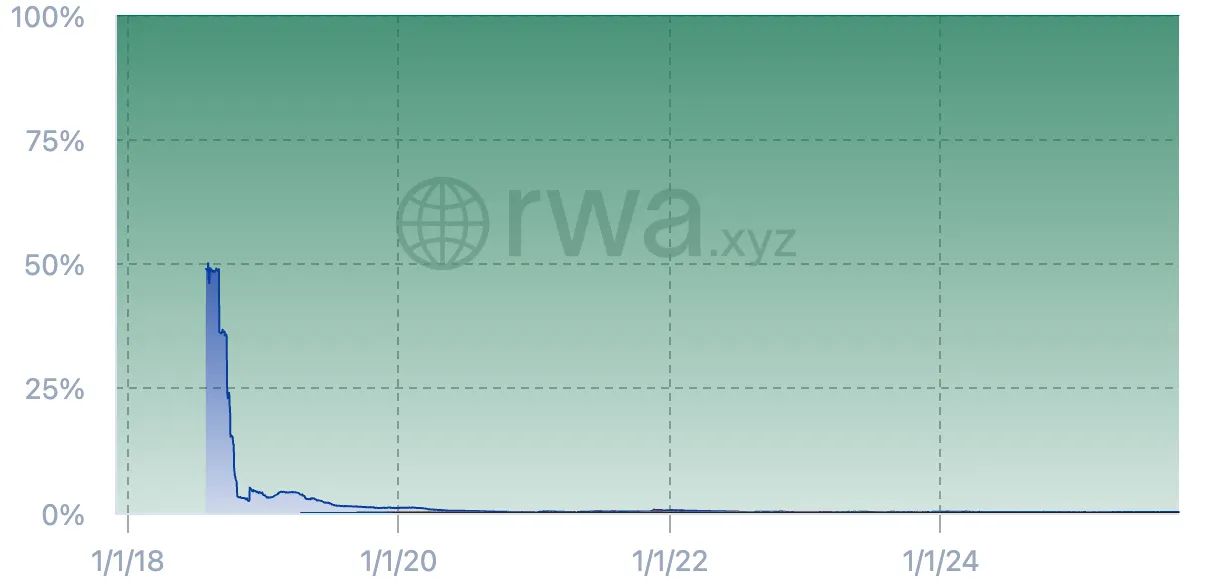
按不同法币支持的稳定币市场占有率 来源:rwa.xyz
The data shows that this sector has experienced a sharp contraction. In 2018, at the beginning of market development, non-US dollar stablecoins occupied 48.98% of the market share, almost competing with US dollar stablecoins (51.02%). Today, however, its total market share has shrunk to just 0.18%. In terms of absolute scale, the total market value of non-dollar stablecoins is only $526 million, of which Euro stablecoins ($456 million) also occupy an absolute dominant position of nearly 88.7%. This shows that other than the US dollar, no other fiat currency can form effective market competitiveness on the stablecoin circuit.
2. Structural risk: “exchange rate tax” for non-US dollar users
As the stablecoin market becomes more closely integrated with real-world economic activity, this “unipolar system” composed of US dollar stablecoins will present potential structural risks to users in non-US dollar regions (especially developed economies that are also in a low inflation environment). The core problem is that they are forced to take on the risk of unnecessary foreign exchange fluctuations in the process of participating in the global crypto economy.
We can illustrate this with a typical user path:
Let's say a user in Tokyo buys ether (ETH) using yen (JPY) on the local compliance exchange bitFlyer. When she wants to invest these assets in global DeFi protocols (such as borrowing on Aave or providing liquidity on Uniswap), she will find that the core pool of these mainstream protocols is almost entirely denominated in US dollar stablecoins (USDC, USDT, etc.).
The “yen balance” concept in her bitFlyer account cannot be transferred directly to the on-chain world. To participate in DeFi, she must hold a stable, on-chain, tokenized asset. In the absence of a Japanese yen stablecoin with sufficient liquidity and composability, her only option was to exchange ETH for a US dollar stablecoin. This step added a layer of exposure to the JPY/USD exchange rate to her portfolio out of thin air. Regardless of whether she makes a profit or loss in the future, when she finally returns to yen, she will need to bear exchange rate fluctuations during this period. This is equivalent to being levied an invisible “exchange rate tax.”
III. Systemic Risks and the Necessity of Diversified Strategies
From a broader perspective, the current liquidity lifeblood of the entire crypto economy is almost entirely tied to US dollar stablecoins, which poses a potential, highly concentrated systemic risk point. Any extreme regulation, technical failure, or monetary policy shock originating in the mainland of the US could have a disastrous impact on global markets.
Therefore, the significance of promoting the development of various high-quality stablecoins such as the euro, pound, and yen far exceeds market competition itself. It is equivalent to building a “risk wall” and a “systemic backup solution” for the global crypto economy. A diversified multi-fiat stablecoin ecosystem can effectively hedge against the risks caused by excessive reliance on a single national currency and single regulatory system, and enhance the anti-fragility of the entire system.
For major economies such as the European Union and Japan, promoting stablecoins regulated by the domestic financial system and linked to the national currency is no longer a simple commercial act, but maintaining an extension of their “monetary sovereignty in the digital age” is a strategic task at the national level. Although non-US dollar stablecoins are currently far from US dollar stablecoins in terms of scale and liquidity, their logical foundation of existence is solid, and development is an inevitable trend in history. Next, we'll take a detailed look at the development of major non-dollar stablecoins.
Euro stablecoin
In a context where the global stablecoin market is absolutely dominated by the US dollar, the evolutionary path of euro stablecoins provides us with an excellent sample to observe how non-dollar currencies are trying to break through under regulatory drivers.
I. Two stages of market evolution: from early exploration to regulatory-driven acceleration
The development process of euro stablecoins can be clearly divided into two stages, with the European Union's Crypto Asset Market Regulation (MiCA) as a watershed:
Early Exploration Phase (before MiCA Act): The landmark project in this phase is STASIS Euro (EURS), launched in 2018. As a pioneer in the market, EURS has faced slow growth for a long period of time, and its market capitalization has been hovering between tens of millions and 100 million euros for a long time. This reflects the lack of clear regulatory frameworks and institutional-level requirements, where the market is limited to a small number of local European crypto enthusiasts, and has failed to have a scale effect.
Accelerated development phase (driven by the MiCA Act): The introduction and gradual implementation of the MiCA Act is a fundamental catalyst for changing the rules of the game. It provided market participants with unprecedented legal certainty, thereby attracting the formal entry of industry giants. Stablecoin issuers Circle (USDC issuer) and Tether (USDT issuer) have launched Euro Coin (EURC) and Euro Tether (EURT), respectively. Circle, in particular, began actively promoting its multi-chain deployment strategy during the 2023-2024 period as MiCA approached, expanding EURC to multiple mainstream public chains such as Ethereum, Solana, and Avalanche.
The results of this strategic transformation are confirmed by data: between 2023 and October 2025, the total market value of the euro stablecoin experienced rapid growth and has now reached US$456 million. Among them, Circle's EURC contributed most of the increase, and its market capitalization achieved a 155% increase in 2025, from $117 million at the beginning of the year to $298 million. Although there is still a huge gap in absolute value compared to US dollar stablecoins, its growth rate shows strong catch-up momentum.
II. Market acceptance assessment: infrastructure is ready, network effect is insufficient
Exchange integration with DeFi: The Euro stablecoin has completed the infrastructure construction. All first-tier exchanges such as Coinbase, Kraken, and Binance have listed EURC or EURT and provided trading pairs with mainstream crypto assets. Meanwhile, leading DeFi protocols such as Aave, Uniswap, and Curve have been integrated. Especially in agreements such as Curve that are optimized for stablecoin exchange, the liquidity scale of the euro stablecoin pool is steadily increasing.
Potential application scenarios: In the field of payment and remittance, some Web3 payment applications and fintech companies have begun small-scale pilot projects to use euro stablecoins for instant settlement and cross-border payments within the Eurozone.
Core obstacle — cognitive gap: Despite the initial infrastructure, the euro stablecoin faces a huge “perception gap” and a “network effect deficit.” In the mental model of the vast majority of crypto users around the world, the concept of “stablecoins” is almost equivalent to “dollar stablecoins,” which makes EURO stablecoins resistant in acquiring new users and liquidity.
III. The dual dilemma of future development
Potential competition from the official digital euro (CBDC): The European Central Bank (ECB) is actively promoting digital euro research and development. Once a digital euro with no credit risk, issued directly by the central bank, becomes a direct and asymmetric competition for euro stablecoins issued by private institutions. At that time, the digital euro is likely to gain an overwhelming advantage in regulatory positions and application scenarios, thereby squeezing the living space of private stablecoins.
The business model challenge brought about by interest rate differences: This is a more fundamental economic constraint. Stablecoin issuers' core profits come from interest income on their reserve assets (mainly short-term treasury bonds). Historically, interest rates in the Eurozone have been lower than in the US for a long time. This means that at the same scale, the profitability of issuing EUR stablecoins is inherently weaker than issuing USD stablecoins. This difference in profitability directly limits issuers' ability to promote DeFi protocol integration and user adoption through revenue sharing, liquidity incentives, etc., creating a negative cycle that hinders their cold start and scale expansion.
Australian dollar stablecoin
The Australian dollar stablecoin market presents a very different development paradigm from the Eurozone. Although it has a total public market capitalization of around $20 million and is the second most prominent feature of non-dollar stablecoins in the world, its most notable characteristic is top-down exploration led by traditional banking institutions rather than native crypto-native companies.
1. Market Dominance: The Entry of Traditional Banks
Australia's most notable stablecoin project stems from two of the country's “big four banks” — Bank of Australia and New Zealand (ANZ) and National Bank of Australia (NAB), which launched A$DC and AUDN, respectively. This phenomenon is extremely rare worldwide, and it marks the mainstream financial system's direct recognition of the potential value of stablecoin technology. However, it is worth noting that these two stablecoins issued by banks are still mainly at the stage of inter-agency settlement and internal pilot testing, and have not yet been opened to the public on a large scale.
The supply of Australian dollar stablecoins for the retail and crypto exchange markets is mainly filled by third-party payment companies, represented by AUDD.
AUDD (by Novatti)
Issuer Background: Novatti is a licensed payment service provider listed on the Australian Stock Exchange (ASX) with a dual background in compliance and fintech.
Target audience: It is clearly positioned and mainly serves three types of users: cryptocurrency traders, individuals or businesses with Australian dollar cross-border remittance needs, and Web3 application developers.
Technology path: AUDD chose to issue on public chains such as Stellar, Ripple, and Algorand, which are known for their payment efficiency rather than Ethereum, which reflects its strategic considerations focusing on payment and settlement.
Market position: Currently, AUDD is the easiest Australian dollar stablecoin for retail users to obtain and use.
II. Core development dilemmas: the dual uncertainty of regulation and official CBDC
Lack of a regulatory framework: Unlike the EU, which has fully implemented the MiCA Act, Australia has yet to put in place a comprehensive and clear legal framework for stablecoins as of October 2025. This regulatory lag forms the biggest bottleneck in market development. Even powerful banks like ANZ and NAB can only explore on a small scale and cannot promote products to the public on a large scale when regulatory definitions are unclear. This has greatly limited the speed and scale of the development of the entire Australian dollar stablecoin ecosystem.
Potential competition from the official digital Australian dollar (CBDC): The Reserve Bank of Australia (RBA) has been positive about research into issuing an official CBDC, and has recently successfully completed related pilot projects. This development has brought a second level of uncertainty to the market. If the RBA decides to officially issue a digital Australian dollar in the future as the “ultimate risk-free asset” directly indebted by the central bank and without any credit risk, it will directly compete with stablecoins issued by commercial banks or private institutions. At that time, the long-term market pattern of whether the two will complement each other or replace competition is still unclear.
Korean won stablecoin
The Korean market presents us with a unique paradox: as a country with a high level of acceptance of crypto assets, there is no internal “soil” for stablecoins to grow. This is the exact opposite of the path of private sector promotion from the bottom up in high-inflation countries. The root cause is that South Korea's highly developed FinTech (FinTech) and instant payment systems have met the daily needs of the vast majority of users, thereby weakening the “endogenous motivation” of stablecoins as payment alternatives.
Therefore, if the Korean won stablecoin is to be adopted in the market, the only viable path is a “top-down” strategic push led by large institutions. This could include the following scenarios:
Led by the government or tech giants such as Naver and Kakao, it seamlessly integrates into existing payment or remittance backends.
Driven by mainstream exchanges, the Korean won stablecoin replaces the physical won as the core trading medium.
The platform will launch an innovative incentive or micropayment function based on stablecoins.
However, before these scenarios are realized, the market faces a series of deep structural barriers.
I. The core dilemma of development: legislative vacuum and corporate prudence
Currently, the main bottleneck is a serious lag in legislation. Although the South Korean National Assembly has a backlog of five related bills, the legislative process is extremely slow. According to the current progress forecast (October 2025), even if the Financial Services Commission (FSC) can submit the government plan on time, the relevant laws will not officially take effect until early 2027 at the earliest. Until then, no company could legally and on a large scale carry out stablecoin business within the legal framework.
This regulatory uncertainty has directly led to polarization and widespread caution in the Korean business community:
Small businesses: They have shown an active willingness to participate, but their activities are more aimed at PR effects and market voices, and generally lack the capital, compliance, and technical capabilities required to operate stablecoin businesses on a large scale.
Large enterprises (chaebol): In general, they have adopted an extremely prudent “hold the coin and wait and see” strategy. There are two core considerations: First, the legal risk is too high; second, they assess that in the highly internal domestic market, the actual commercial returns that can be brought by switching to blockchain technology are not enough to attract them to invest huge amounts of resources.
Currently, all activities surrounding the Korean won stablecoin are mostly at the surface stage of theoretical discussions and trademark applications.
II. Four major structural barriers
In summary, the difficulties faced by the Korean won stablecoin can be reduced to four interrelated structural barriers:
Technical route dispute: private chain vs. public chain The Bank of Korea and regulators such as FSC strongly prefer to issue stablecoins for the first time on a “customized private chain with Korean characteristics” due to the primary consideration of risk controllability. However, the idea was widely regarded by the industry as “disappointing.” It not only violates the core values of blockchain openness, no license, and interoperability, but is also likely to cause the Korean financial system to be further fragmented by multiple private networks that are not connected to each other, forming an inefficient “walled garden” one by one.
The dual constraints of the reserve asset market: the business model of scarcity and low-yield stablecoins is based on reserve assets. However, South Korea is facing a double problem here: First, its domestic financial market lacks short-term treasury bonds with a term of less than one year, which makes stablecoins the most ideal and safest reserve asset class. Second, even for assets such as alternative monetary stability bonds, the market size and liquidity are insufficient to support large-scale stablecoin issuance. What is more fatal is that the yield of the Korean bond market of about 2% is far lower than the US level of about 4%, which greatly weakens the issuer's profit motivation to operate the stablecoin business and makes it unattractive commercially.
Technical misunderstandings about public chain regulation The South Korean government generally holds the view that “the risk of public chains is too high and difficult to supervise” is, to a certain extent, a misunderstanding of existing technology. In fact, through well-designed smart contracts, it is entirely possible to achieve effective supervision and compliance control of user identification (KYC) and capital flows on an open public chain.
The most fundamental problem with the collective lack of vision and urgency is that no one of the key players, from the government and financial institutions to large enterprises, has proposed a clear goal or a specific plan for the future of the Korean won stablecoin. The entire market has fallen into a kind of “collective waiting” strategic standstill. However, the evolution of global blockchain finance won't wait for any latecomers. If South Korea waits until 2027 to launch its stablecoin on a closed private chain, it will find itself far behind the world.
Hong Kong dollar stablecoin
Hong Kong's stablecoin development path presents a complex picture of clear local regulations, active market participation, and a tripartite game of prudential regulatory powers from the Mainland. Currently, Hong Kong is at a critical turning point. After experiencing initial overheating, the market is entering a new stage of “partial cooling” and structural differentiation.
Despite market fluctuations, Hong Kong's official position remains firm. The Secretary for Treasury, Mr Hui Ching-yu, has publicly stated that the licensing process for compliant stablecoins is progressing according to the established framework, and the first batch of licenses is expected to follow the original schedule and be approved in early 2026.
I. Hong Kong's positive layout and initial overheating of the market
Hong Kong's strategic goal of becoming the world's leading virtual asset center is clear. To this end, the Hong Kong Government has taken a series of proactive and well-paced measures:
March 2024: The stablecoin issuer “sandbox” was launched to provide the market with a regulated testing environment.
August 1, 2025: The Stablecoin Regulations are officially implemented, establishing the world's first comprehensive and clear legal framework for stablecoin regulation.
This leading regulatory certainty has greatly stimulated market enthusiasm, attracted more than 77 companies to express their intention to apply, and at one point made the racetrack show an “overheated” trend. However, the situation where a large number of financial institutions with Chinese backgrounds are “rushing up” has drawn careful attention from mainland regulators.
II. Prudent intervention in mainland supervision
The core concern of the recent “window guidance” for relevant Chinese institutions by mainland regulators is not to stifle innovation, but is based on the following considerations:
Risk isolation: Ensure that the potential risks of Hong Kong's virtual asset business are not transmitted back to the mainland's large-scale and strictly regulated parent company financial system through equity relationships.
Capital control: Strictly prevent mainland capital from entering Hong Kong's virtual asset market through non-compliant channels.
Market order: Chinese institutions are required to keep a low profile and avoid excessive publicity or creating public opinion hotspots to prevent irrational overheating of the market.
This tension between “Hong Kong's global ambition” and “mainland financial prudence” is the core background for understanding the current dynamics of the Hong Kong dollar stablecoin market.
3. Current market conditions: partial cooling, slowing expectations, structural differentiation
Mainland regulatory intervention has had an immediate impact on the market. The current situation can be summarized as follows:
The first batch of withdrawals appeared: Prior to the official application deadline on September 30, at least four financial institutions with a Chinese background, including Cathay Pacific Junan International, had publicly announced that they had withdrawn from stablecoin license applications or suspended RWA related businesses. The market anticipates that some of the already active Chinese banks (such as BOCHK) may also delay their application process.
The shift in strategy to “what can be done and not said”: the Mainland's regulatory guidance is not a complete ban, but rather requires “keeping a low profile.” This forced the strategy of Chinese institutions to shift from a high-profile advance in the early stages to more careful internal research and quiet layout.
Market structure differentiation: This round of “cooling” is partial and asymmetric. The affected entities are highly concentrated in institutions with Chinese investment backgrounds. Meanwhile, local and other international financial institutions in Hong Kong are still promoting their virtual asset business in an orderly manner under the current legal framework.
Licensing pace expectations: The market generally anticipates that the first batch of licenses will follow a prudent rhythm similar to VASP exchange licenses, that is, at the end of 2025 or the beginning of 2026, only a very small number (probably only one or two) of licenses will be issued, and then gradually liberalized according to market developments.
IV. The strategic dilemma faced by the Hong Kong dollar stablecoin
Uncertainty under the influence of mainland regulations: This is currently the core dilemma. Chinese-funded institutions are an integral part of Hong Kong's financial market. Their collective “suspension” or “low profile” will undoubtedly affect the market size, depth of liquidity, and breadth of application scenarios for Hong Kong dollar stablecoins in the early stages of issuance. The Hong Kong authorities need to find a delicate dynamic balance between promoting market openness and responding to mainland regulatory concerns.
The contradiction between the pace of development and global competition: Compared with the “overall heating up” of the US market, Hong Kong has taken a more “restrained and prudent” pace of development under the influence of the mainland. Although this steady pace helps control risk, it also makes it face the risk of missing a window of time and being left behind by competitors in the global financial innovation competition.
The trade-off between risk and dividends: Mainland regulatory intervention essentially forces Chinese institutions to re-evaluate the risk-benefit ratio as “first entrants.” Although pioneers can enjoy the greatest policy dividends and first-mover advantage, they must also bear the highest market and compliance trial and error costs.
Japanese yen stablecoin
Japan's stablecoin development path is a financial infrastructure revolution carefully designed by the government from the top down in its unique macroeconomic context. Its core driving force does not come from speculative demand from the private sector, but rather from the urgent need to resolve structural economic difficulties such as “low interest rates, low growth, and deflationary pressure” that the country has faced for a long time. Stablecoins are highly anticipated here, and are seen as a policy tool that can improve financial efficiency, revitalize capital flows, and inject new impetus into the weak domestic payment system and the illiquid treasury bond market.
To this end, the Japanese government passed a series of legislations such as the “Financial Settlement Amendment Law” and established what can be called the strictest stablecoin regulatory framework in the world. Its strategic intention is extremely clear: transforming stablecoins from pure “crypto assets” to “financial infrastructure” that serves the country's strategy.
I. From theory to practice: the launch of the first compliant product
Currently, the Japanese stablecoin market has officially moved from a “theoretical preparation period” to a “commercial practice period.”
Landmark event: Fintech startup JPYC Inc. has received regulatory approval to issue the first fully compliant Japanese yen stablecoin “JPYC” in fall 2025.
Key cooperation model: This launch revealed the entry model for the Japanese market — “technological innovation for startups (JPYC Inc.) + compliance infrastructure for giant platforms (Mitsubishi UFJ Trust Bank's Progmat Coin).” This indicates that regulation is open to innovation, but only if innovation is anchored within a strong compliance framework of a licensed financial institution.
Technology path and commercial ambition: “JPYC” is planned to be distributed on various mainstream public chains such as Ethereum and Avalanche, reflecting its pursuit of openness and composability under the premise of compliance. Its target of “issuing 1 trillion yen within three years” and the Series A investment that has attracted international giants such as Circle have all demonstrated its great determination to seize the market.
The position of JPYC is not to replace fiat currency, but rather as an “on-chain yen” to be a bridge that seamlessly extends the function and value of the yen to the global digital economy.
II. Core application scenarios
International remittance and corporate settlement: It provides near-real-time, low-cost payment solutions for international students, cross-border e-commerce, etc., and uses smart contracts to simplify B2B payment processes and cross-border fund management between enterprises.
Build a local Web3 ecosystem: As an on-chain “native liquidity carrier” denominated in yen, it provides a stable medium of value for Japan's huge Web3 applications such as games and NFTs, and builds its underlying financial infrastructure.
III. Multi-level national strategic intentions
The introduction of the yen stablecoin underpins Japan's multi-level strategic considerations:
Defensive strategy: Competing for digital currency sovereignty is the most central move. By introducing a compliant Japanese yen stablecoin, the aim is to break the monopoly position of US dollar stablecoins in the digital world and provide a non-US dollar option for Japan's cross-border trade and international settlement, thereby reducing dependence on traditional systems such as SWIFT.
Economic Strategy: Activating the treasury bond market and innovating monetary policy tools. This is an exquisite design that “kills two birds with one stone”. By stipulating that large amounts of reserve assets are allocated to Japanese treasury bonds (JGBs), it can not only create a new, structured buyer for the treasury bond market, where demand is insufficient for a long time, and help lower the government's financing costs; in the far future, the central bank may even adjust stablecoin reserve requirements and use them as a new type of monetary policy tool to regulate market liquidity.
Developmental strategy: The approval of JPYC to promote financial infrastructure upgrades will have a “pangasius effect” within Japan's conservative financial system, activate the innovative vitality of local giants such as Sony and Mizuho, promote the modernization of domestic payment systems, and safely connect the Japanese financial system to the global Web3 ecosystem in a highly compliant manner to prevent it from falling behind in the next wave of digital finance.
IV. Challenges and the Demonstration Effects of the “Japan Model”
Business model challenge: In a zero interest rate environment, the traditional profit model that relies on interest on reserve assets has completely failed. This requires issuers to quickly achieve a very large distribution scale and maintain operations through economies of scale with “small profits and multiple sales.”
The ultimate risk prevention and control framework:
Legal characterization: Stablecoins are strictly defined as “electronic payment instruments,” fundamentally stripping them of their speculative nature.
Entity restrictions: Issuers are limited to licensed financial institutions such as banks and trust companies.
Unique “asset replenishment clause”: When reserve assets depreciate, issuers are required to use their own capital to make up the difference. This is a strong restriction not seen in European and American regulations, which greatly guarantees the safety of users' assets.
Mandatory anti-money laundering/KYC review.
In summary, the “trust-based”, “heavily regulated”, and “semi-centralized” stablecoin model pioneered by Japan has achieved the ultimate in security and compliance. It provides a model with great reference value for other Asian economies, such as Hong Kong and South Korea, that also focus on financial stability, and may lead the entire East Asian region to form a new regulatory consensus on the path of “compliant stablecoins.”
Twitter:https://twitter.com/BitpushNewsCN
Compare the TG exchange group:https://t.me/BitPushCommunity
Compare TG subscriptions:https://t.me/bitpush
