


What crosses bulls and bears is not consensus, but structure: Looking at Web3 from the perspective of Centennial Soccer Clubs
Author: Zen, PANews
Original title: Secrets of Crossing Cycles: The Survival Inspiration of Centennial Soccer Clubs for Web3
If you look at European century-old soccer clubs as a long-term sample of “community products,” what is really shocking about them is not the number of trophies, but rather the fact that people of different generations, classes, and even different nationalities can continue to be willing to invest time, money, and emotions to protect the same community over a period of 100 years.
This hits the heart of Web3 startups: the industry is good at discussing growth, incentives, tokens, and governance, yet often lacks a sense of belonging and trust that can go through the cycle. The popularity came and dissipated quickly; many projects, like meteors crossing the night sky, came and went in a hurry and fell silent in a blink of an eye; most DAO experiments began in an idealistic utopia, but ended in an egoistic conflict of interest.
And if you go back in time to the era when soccer clubs were born, you'll find another simpler, more long-term logic: clubs were initially created not to serve the business will of a certain boss, but to represent the community and fans. This coincides with the “community-driven” that the Web3 industry has repeatedly emphasized. Because of this, returning to the starting point of those century-old clubs may provide a more reliable frame of reference for Web3 community building.
Identity and cultural belonging
In 1878, cheers sounded at a workers' tavern on the outskirts of Manchester, England. Several railway locomotive factory workers, who often meet here after work, were excited to talk about the idea of officially forming a soccer team. Afterwards, this group of railroad workers formed a team at Newton Heath. The team uniform used the railway company's iconic green and gold color scheme, and even the dressing room was rented at a nearby pub. Just like that, a team founded by ordinary workers was quietly born — the predecessor of the Premier League's top giants Manchester United.
This kind of story is no exception to Manchester United. In mainland Europe, many century-old clubs are rooted in working-class communities and local cultural soil, and soccer has been deeply rooted in grassroots communities in industrial cities since its inception.
In 1899 in Spain, Hans Gamper (Hans Gamper), a young Swiss man looking for someone to play in a foreign country, placed an advertisement in a local sports magazine to find friends interested in forming a soccer team. And this announcement also became the “moment when the Barcelona club actually started”: a small international group of Swiss, Catalans, English, and German people gathered at the Soleil Stadium and founded Barcelona Club.
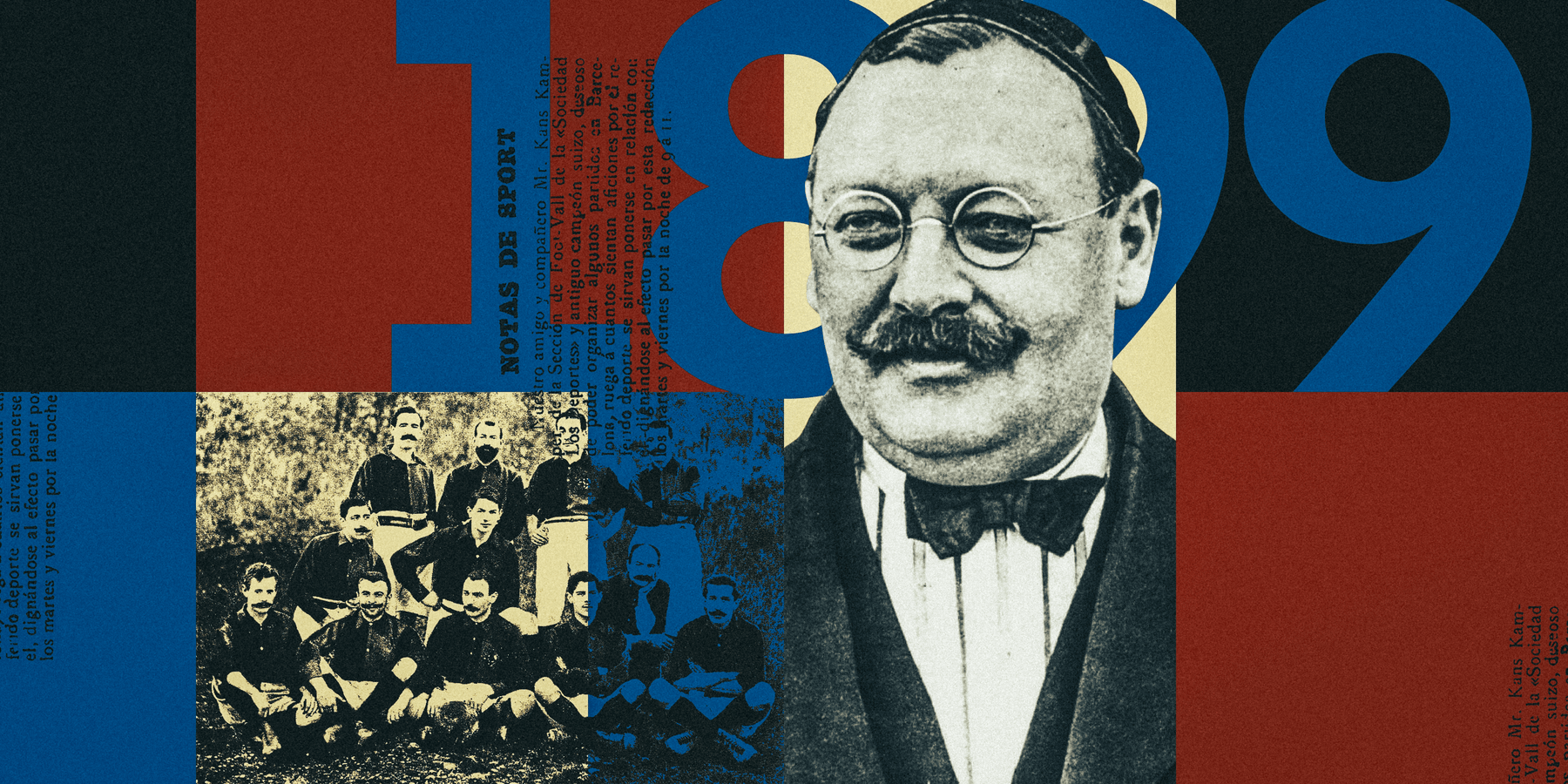
Gamper's goal is to create an organization open to everyone, regardless of origin. The club he envisions can promote social integration and create a democratic society freely managed by its members. To express his gratitude to Catalonia, Gamber injected the essence of Catalan cultural identity into FC Barcelona, and this essence has since defined Barcelona's image.
However, Juventus, which recently rejected the acquisition of the stablecoin company Tether, was founded is also very communal. Juventus officially wrote about this history simply and bluntly: in 1897, a group of Torino high school students had the idea of building a team on a bench in a downtown street, and the club was born as a result. But what is more worth learning about Juventus is how it broke through the geographical limit of a “city club”. Juventus has national support in Italy, partly due to the migration of people from the South — so that immigrant groups support Juventus as part of their integration into city life.
Looking back at the history of established European clubs, it is easy to find that their identity symbols and sense of ceremony played an important role in the community accumulation process in the early days. The team's color, name, home field location, etc. all strengthened community identity, and are good at using symbols and stories to add identity tags to themselves, thus making ordinary people identify and be proud.
For example, in 1883, when the Blackburn Olympics became the first working-class team to win the FA Cup, civilians throughout Northern England rejoiced, seeing it as a sign of the grassroots victory over high society. This identity story of the underdog fighting back further ignited the enthusiasm of fans all over the world, and the club gained the first batch of die-hard fans that snowballed.
For the Web3 startup community, the path that soccer clubs founded and nurtured the community 100 years ago also has reference significance. By making full use of cultural soil and grassroots strength, the project can clarify its own identity, cultural belonging, and sense of mission from the beginning of its creation. Just as workers in the industrial age came together because of shared interests, cities, and class identities, Web3 communities can also unite users based on shared values or visions.
In the early days, Web3 projects also needed to find their own identity and core users. Drawing on the practices of soccer clubs, the startup team should distill clear identities and stories for the community. The community needs to find a “spiritual home” that resonates with users, such as decentralized beliefs, some kind of subcultural identity, or a mission to solve real problems, as the cultural soil of the community. By emphasizing this sense of identity and cultural belonging, early like-minded participants are attracted to spontaneously gather, laying a solid foundation for future growth.
Respect and believe in the power of the community
The 100-year journey of a soccer club has not been an easy one. Whether it's a financial crisis, management turmoil, or external turmoil, what really keeps many established clubs standing is often not a certain financier or politician, but the united community behind them. When a crisis hits, it is often these ordinary people who take the club as part of their lives who actually stand up to protect it.
“In a soccer club, there is a sacred trifecta — players, coaches, and fans. The directors aren't involved; they just sign checks.” Liverpool's legendary coach Bill Shankly (Bill Shankly) emphasized the essence of soccer in this way.
At the end of the 2000s, Liverpool was mired in huge debt from its former American boss, and its record and finances were on the verge of collapse for a while. The fans spontaneously set up the “Spirit Of Shankly” organization (SOS for short) under the name of godfather coach Shankly, calling on everyone to protest against the mismanagement of senior management. From 2008 to 2010, there were many large-scale fan demonstrations inside and outside Anfield, holding banners, sitting still after the game, and even going to the London High Court to support lawsuits.
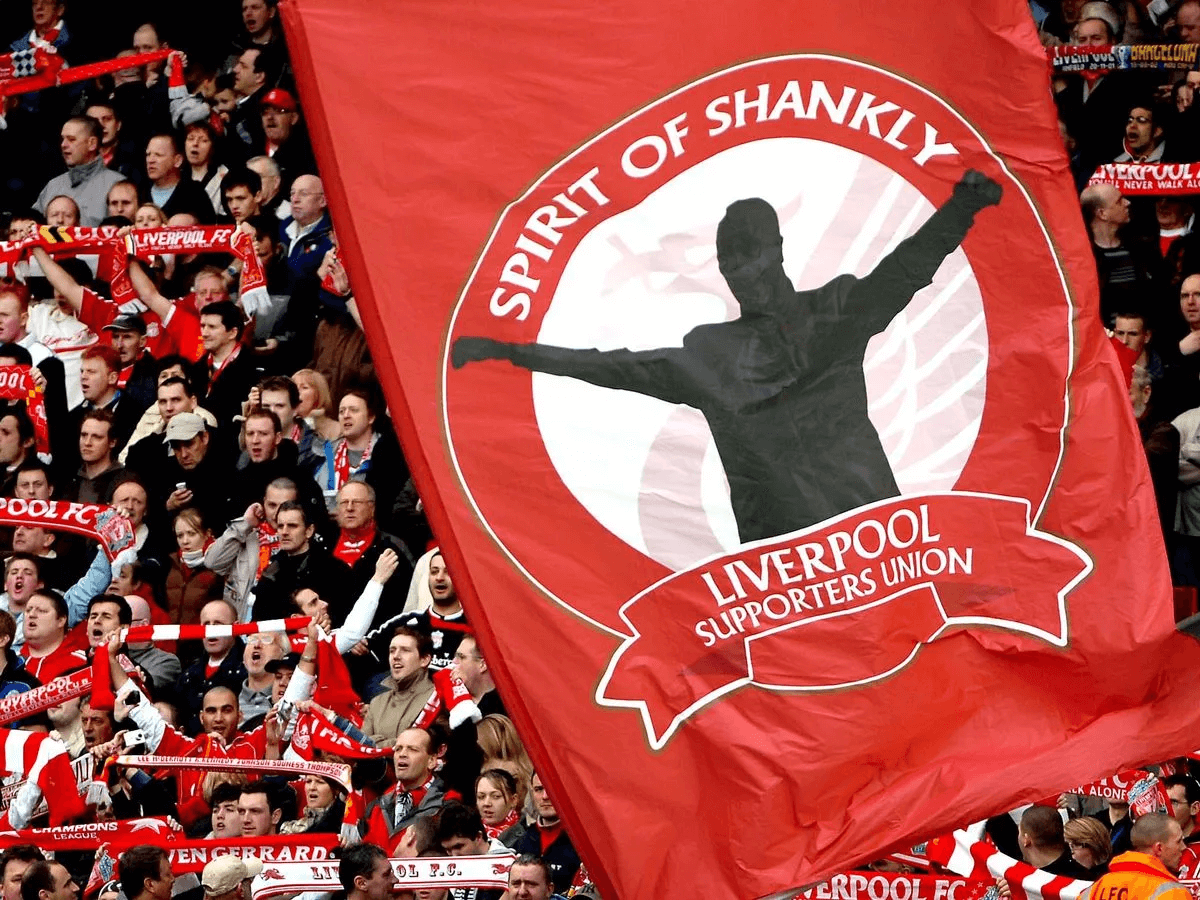
In the end, the fans' firm attitude forced the unpopular boss to sell the club, and the new owners stabilized their military sentiment immediately after joining the team. “The club's unique bond lies in the sacred relationship between the fans and the team, which is the beating of our heart.” The new management apologized to the fans and promised changes in an open letter, then froze ticket prices for many years to rebuild fans' trust. This scene shows that when the club gets lost, the community works together to get it back on track.
Another example is that in the mid-2010s, Dortmund was heavily indebted after excessive squandering, and was once on the verge of bankruptcy in 2005. At the crossroads of life and death, the Dortmund fan organization launched demonstrations and the “We Are Dortmund” campaign, calling on all sectors of the city to lend a helping hand. Tens of thousands of yellow and black fans sang team songs and raised funds to help themselves, and the players all took the initiative to cut their salaries by 20% to overcome the difficulties.
In the end, thanks to the efforts of local governments, businesses, and fans, the club got through difficult times and regained a new life. The reborn Dortmund turned this experience into a new culture: the club put forward the slogan “Echte Liebe” (Echte Liebe), which emphasizes the Dortmund spirit of unconditional support. The Dortmund midfielder said, “True love means unconditional love — this is the spirit of Dortmund, our strength”.
As can be seen, in times of crisis, what really helped the club get through difficult times was its unbreakable bond with the community. This strength comes from the inner recognition of every ordinary fan. They regard the club as a common cause and honor. When the external environment is turbulent, the fan community is like an indestructible backing to support the team's future.
Furthermore, some clubs have institutionally integrated the community into the governance structure, thereby improving resilience to risk. Barcelona and Real Madrid in Spain have maintained a membership system until now, with no shareholder dividends. Club presidents are elected by all “Socios” members. With over 150,000 members, Barcelona is the largest membership club in the world. This decentralized ownership makes it difficult for a club to be controlled by a certain foundation, and major decisions need to take into account the interests of the vast number of members. For example, in the mid-2010s, Barcelona experienced financial difficulties but still refused to acquire external capital. Tens of thousands of members voted to protect the club's independence.
Similarly, most clubs in Germany follow the “50+1" rule, which guarantees fans and members a majority of voting rights. This kind of system design makes the club more like public property. Once the storm hits, fans will not stand idly by, but will participate in decision-making and overcome difficult times together as owners.
Web3 projects that have always emphasized the community have the technical advantage of allowing the community to participate in governance and share benefits. They can draw inspiration from the Centennial Club and build a more resilient community governance and incentive mechanism.
First, promote true community co-building and common governance. Just like membership-based clubs give votes to fans, Web3 projects can allow users to vote on important proposals through tokens or DAO mechanisms to enhance their sense of belonging and responsibility. When a project falls to a low point or experiences a crisis such as hacking, these deeply tied community members are more willing to step up and contribute rather than walk away.
Second, design reasonable token incentives to bind benefits. For example, refer to sports club season passes and shares, and issue tokens with governance rights or revenue sharing mechanisms, so that members who have held and participated for a long time can obtain more rights. When community members are both financially and emotionally involved and in a bear market downturn, they are more likely to choose to continue to hold and help improve the project rather than sell off the market
Furthermore, focusing on spiritual motivation is the most important and hardest part to replicate. Support from soccer fans is often an emotional investment that doesn't ask for anything in return. The Web3 community should also create this kind of spiritual bond, such as communicating sincerely with the community during difficult times, admitting mistakes and showing respect and gratitude to users like the new Liverpool boss. When users feel the sincerity of the project party and sense of community with themselves, they tend to stay more determined and even take the initiative to call on others to support the project to overcome difficulties.
Legendary characters and spiritual totems
Over the years, soccer clubs have often created one legend after another. They are either heroic players who turned the tide on the court, or famous godparents behind the scenes. These vivid characters have become the common memory and conversation material of the fan community, and are also the anchors and spiritual totems that weave the club's narrative.
In Liverpool in the 1960s, coach Bill Shankley not only led the team back to the top league and won the championship, but was also deeply imprinted in the hearts of fans with his charismatic image. Born into a family of Scottish miners, he believes in the socialist philosophy of soccer and advocates team supremacy and shared honor and disgrace. According to rumors, Shankley often said to the players in the locker room, “I'm just an ordinary fan standing in the stands; I'm just responsible for coaching. If you and the fans want to go together, we are a family.” Many of his famous quotes are still remembered by Reds fans.
In her autobiography, Shankley wrote, “Since the beginning of my coaching career, I've tried to show the fans that the fans are the most important thing. You have to know how to treat them and win their support.” Xiang Shuai thought so, and did the same. In April 1973, when Shankley and the team were showing fans the league championship trophy in the Kop stand at Anfield Stadium, he saw a police officer throw a Liverpool scarf that was still at him. Shankly immediately picked up the scarf and put it around his neck and said to the police, “Don't do this, it's very precious.”
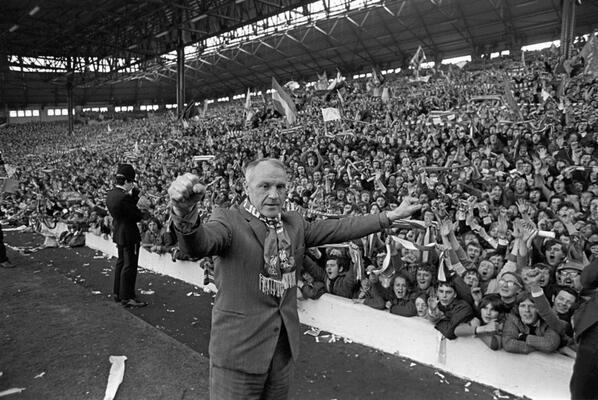
Shankley emphasized the importance of communicating with fans and used a public broadcasting system to explain team lineup adjustments and his views on the previous game. I personally used an old typewriter to respond to fans' letters. He wouldn't hesitate to get game tickets for fans he thought would be worth helping, and wrote in his autobiography that he would give anything as long as it was reasonable.
When Shankley died in 1981, thousands of fans spontaneously took to the streets to see him off. Since then, Shankley has become not only a famous coach in the team's history, but also a spiritual symbol of the city of Liverpool. As a result, when Liverpool fans formed an organization to protest against bad bosses, they didn't hesitate to name it the “Shankly Spirit” — drawing on the strength of this legendary figure to call for unity. This shows the enormous influence of star leaders on community narratives: their personalities and stories are sublimated into a symbol that guides and motivates the entire community.
In terms of players, every giant also has a “flag figure” that fans salute. Manchester United's two godfathers, Matt Busby and Ferguson, created the Red Devils dynasty, and their pride and wisdom became legends in the hearts of fans; Dutch star Cruyff was not only a merit during his time as a player, but also pioneered the “Dream Team” era as a coach, establishing Barcelona's appealing communication and control style.
It can be said that the story of every great club is vivid and vivid because of the presence of these popular characters. Every move of the celebrity characters touches the nerves of the community. Their highlights have also become collective memories, and they have also become narrative carriers and spiritual coordinates for the community.
In the Web3 community, although the scene is different from soccer, it is just as important to make good use of “key people” to shape the community's narrative. Core members of the startup team or project ambassadors can strengthen community cohesion through personal charisma. Instead of advocating personal worship, it can sometimes provide clear spiritual guidance to the community by using the values and stories of leaders.
Accordingly, these key figures should also abide by ethics and professional norms, actively interact with the community, be transparent and sincere, and respect and care for the community from the bottom of their heart as Shankley respects fans. Based on this, cleverly using the influence of stars and core members can provide the Web3 community with a strong narrative fulcrum and stimulate members' emotional resonance and long-term loyalty, just as the Centennial Club used a legendary story to closely connect generations of fans.
It's important to note that excessive reliance on a single star character is also risky. Therefore, while using the star effect, the Web3 team should also focus on cultivating an overall sense of belonging to the community to ensure that even if key figures leave, the spirit of the stars can be passed on through systems and culture, so that the community narrative still has a continuous context.
Twitter:https://twitter.com/BitpushNewsCN
Compare the TG exchange group:https://t.me/BitPushCommunity
Compare TG subscriptions:https://t.me/bitpush
