


CZ talks about the future in Davos: the integration of tokenization, payments, and AI is accelerating
Organize:One fish CoolFish
Original title: CZ Davos Full conversation: Optimistic about tokenization, payments, and artificial intelligence
Very excited about three new areas
Moderator: Over the past few days on the forum, I feel like there are almost two very different conversations going on here. One category is geopolitical and macroeconomic discussions, and concerns about the fragmentation of the global trading system, debt, and the role of the dollar. These conversations are often very frustrating and worrying. Another focus is on discussions about artificial intelligence, innovation, and technology. These discussions about future possibilities are full of energy, and many exciting technological breakthroughs are taking place.
In today's seminar, we'll take a bold step to blend these diverse discussions — not only focusing on how innovations happen and what the future may bring, but also considering the regulatory and geopolitical context in which these innovations are located, and how these contexts influence financial innovation.
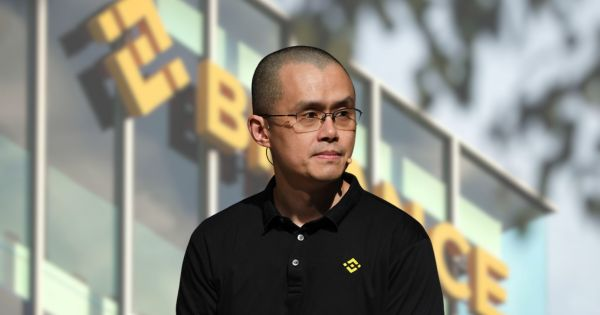
We had four outstanding guests. First, we had Steven van Rijswijk, CEO of ING Group from the Netherlands. Then there was Jayee Koffey, Chief Enablement Officer and Global Affairs Officer at Bank of New York Mellon (BNY). Next is Fred Hu (Fred Hu), founder, chairman and CEO of Chunhua Capital Co., Ltd. from China. Finally, there's Binance founder Zhao Changpeng from the UAE — we're used to calling him CZ so I don't have to fiddle with the name again. Now that CZ is no longer restricted in speaking, I'm sure he will bring a particularly wonderful sharing.
The topic of this discussion is how technology is reshaping the global financial landscape. Those interested in this field should note that many changes are currently taking place. Payment methods and monetary systems are undergoing drastic changes, and the underlying infrastructure for financial transactions is rapidly iterating. These changes are overwhelming. To begin the discussion, I'll ask for advice one by one in the order in which they were seated: What do you think was the most far-reaching restructuring? What is the direction of development that excites you the most? It can be a specific market sector — private equity, investment, Bitcoin, stablecoins, digital currency, etc.; it can be a breakthrough at the technical level — Bitcoin ledger technology; or an innovation at the infrastructure level. The discussion is completely open, so feel free to speak up. Please tell us what exciting new developments you think will have the most profound impact on the financial sector.
CZ: Of course. I'm focusing on a very narrow field in the financial market, mainly cryptocurrencies, blockchain, and Web3, whatever you want to call it. I'm sure this technology is a game changer, and I think we've proven over the past 15 or 16 years that it won't go away.
Binance is one of the largest cryptocurrency exchanges in the world.
Fred Hu: It's actually the biggest
CZ: It is the largest to date, larger than the top five exchanges combined. But let's look at some data — Binance has 300 million users. It's probably bigger than any bank I know. The trading volume not only surpassed the Shanghai Stock Exchange, but also surpassed the New York Stock Exchange last year. However, there are currently only two major sectors in the crypto sector that are truly mature: exchanges and stablecoins, both of which are huge commercial systems.
I'm really excited about the other three new areas. I think tokenization (tokenization) is a huge field — I am currently discussing asset tokenization solutions with more than 10 governments. The government can use this to take the lead in achieving financial benefits, thereby promoting the upgrading of industries such as mining and trading markets.
We've tried in the payment sector but haven't really conquered it — to be precise, cryptocurrencies haven't really entered the payments sector yet. We tried, but no one actually paid with cryptocurrency. However, now we see that traditional payment methods are quietly integrated with cryptographic technology: when consumers use credit cards, cryptocurrencies are deducted from their accounts, and merchants receive fiat payments such as US dollars and euros. When these bridges are built, the payment sector will usher in a major breakthrough.
The third field is artificial intelligence, and the native currency for AI agents will be cryptocurrencies.
Cryptographic blockchain will become the most native technical interface for artificial intelligence agents. Current artificial intelligence is far from the level of intelligent agents; they can neither buy tickets for you nor pay for meals — but when they have these capabilities, all payments will be made through cryptocurrency.
Concerns about some areas of the future
Moderator: The above is the best situation; it's an exciting place. Now I want to change the subject and talk about how every time we go through such a period where innovation and experimentation coexist, some of our attempts will succeed and others will fail. So I wanted to explore what might not work. Ten years from now, if we sit at this panel discussion in Davos, what developments in today's discussions might not even be mentioned? It may have been discarded and no longer used. I'll throw in the lead and offer a few ideas. You're all excited about AI. But MIT also has some research showing that although AI can complete a large amount of work quickly, the output is mediocre. They call it “work slop” (work slop).
You can get around 80% accuracy, and if you think that's OK, then AI is great. However, if you really want to strive for excellence and ensure that everything is foolproof, AI may have limits. There was also an experiment on Bitcoin. El Salvador is working very hard to promote Bitcoin. This was a good method — El Salvador is very dependent on remittances and doesn't have its own stable currency. Bitcoin was supposed to be the ideal choice for the remittance sector, reducing transaction costs, but despite investing a lot of marketing and resources, the actual adoption rate was almost zero. These are just a few examples of potential limitations for you to think about.
Now let's move on. In the same order. What is an area people are excited about today, or at least some people are passionate about — but you don't think there will even be a discussion about in ten years? CZ, what areas should we be wary of right now? Or what areas aren't worth investing in?
CZ: Of course. I think all three of my guests were very measured and politically correct. I'll give a more direct answer, which is likely to offend more people, including people in my industry. I do agree with Stephen, if you had asked me that question 10 years ago, I'd probably say Bitcoin payments. But today, ten years later, we are still far from that goal. So I'm still skeptical about the payments sector.
We're working on it. The entire industry is investing in numerous payment projects. But any field of innovation is accompanied by extremely high failure rates, and a few successful cases will grow exponentially, right? I also agree with Stephen on the metaverse. Well, we saw that NFTs were once very popular, but now they've become quite deserted. I have a strong feeling that memes (memes) would probably be similar. Maybe I'm wrong.
A lot of people in the crypto community hate me for saying this. However, as you know, there are very high risks in new, highly speculative areas of high value. Establishing usage scenarios for these areas is difficult. Some meme coins did stay, like Doge (Doge), and have been around for about 15 years. As a result, culturally valuable projects are likely to survive. But I don't think most meme coins last. Then I'd like to add that while this would offend other industries, I think physical banking will decrease significantly over the next 10 years.
Fred Hu: Decrease?
CZ: Yes, reduce. The need for people to go to physical banks will be drastically reduced. I think ING pioneered online banking, 25 years ago, and it can be seen that replacing traditional industries will take a long time. But now we have cryptocurrencies and blockchain technology. Electronic identity verification (eKYC) and electronic services (e-everything) can meet financial business needs, and the need for physical banks is decreasing.
I don't think banks will disappear. They perform critical functions — in fact, multiple important functions. But all industries, whether emerging or traditional, are at risk. We should carefully evaluate market developments on a regular basis.
Fred Hu: But you just told us what we've failed in the past 10 years. You haven't told us what will fail in 10 years.
CZ: Basically speaking, it looks like memes are high-risk. Physical banks are high risk. I could go on and on, but then I would offend more people.
Guest: Yeah
How to view the risks posed by AI
Moderator: No, I think your last point is very important. I want you to talk about banks. If macroeconomists were involved in this discussion, they would pay close attention to the risks banks face. As capital flows through other channels and mechanisms, banks are still a key source of financing for investment and growth — particularly for small and medium-sized enterprises, particularly in Europe, but in other parts of the world. However, if new financial models emerge, the role of banks may weaken, and funding channels will shift to other mechanisms. So I'd especially like to hear your further explanation of the risks.
Last week I attended a seminar on the risks of artificial intelligence and algorithmic trading in financial markets. In my opinion, the pace of development of events has indeed accelerated dramatically. For me, the Bank of Silicon Valley incident sounded a wake-up call before many of the innovations you have discussed appeared. In the Silicon Valley Bank incident, we saw banks collapse faster than ever before — even compared to the collapse of two major US banks (Washington Mutual Bank) during the peak of the global financial crisis in 2008. At the time, the two banks went through about two to three weeks of crowding before finally going bankrupt, and Silicon Valley Bank lost 80% to 90% of its deposits in just one or two days. However, that crowding, which continued for two or three weeks, only led to the loss of about 10% to 15% of the deposit. But Silicon Valley banks lost 80%-90% of their deposits in just a day or two. The events unfolded far faster than before. What is more noteworthy is that this is not a crisis caused by emerging technologies such as artificial intelligence or Bitcoin; it only stems from new trends triggered by people chatting online.
They don't all have to go to cafes to exchange news and rumors. And because of new technology, people can withdraw money from online accounts without even having to wait in line. So in a sense, compared to what you guys are talking about, that's outdated technology. However, this has fundamentally changed the rate at which bank crowding occurs. When you consider the impact on the wider financial markets, you'll find that there is more momentum trading. When everyone is trading using the same algorithm and artificial intelligence does the work for humans, it will cause more serious losses, more intense fluctuations, and a series of risks. How concerned should we be about that? Is there any way?
CZ: I'd like to add a few points. I think it can be broken down into a few separate points. I think the first point is that faster and cheaper is always better when other conditions don't change. This in itself does not create any more risk. Existing risks are only becoming more prominent as a result of increased speed. However, if banks implement a partial reserve system, when funds are insufficient, people can withdraw funds more quickly will only accelerate the disclosure of problems. But the slowdown doesn't solve the fundamental problem; it just leaves more consumers unable to withdraw their money when they need it and getting stuck in trouble, so they're stuck. This doesn't solve anything. Therefore, when other conditions do not change, technology to reduce costs and improve efficiency will always be better.
Regarding questions about Silicon Valley Bank, we feel a very different rumor climate in the crypto industry. The bank may or may not be facing difficulties. But our impression is that this bank is very crypto-friendly. It may have been shut down by “Operation Choke Point 2.0” (Operation Choke Point 2.0) in 2023.
I'll take Binance's example again: in December 2023, this was after the FTX crash, after the Luna and UST crashes, and actually after the Silicon Valley Bank incident. Within a day, the maximum daily withdrawal amount on the Binance platform reached $7 billion worth of assets. The system runs unhindered. In that week, the first few days, withdrawals were hundreds of millions, billion dollars, then 7 billion, then 1 billion, then 1 billion, then 1 billion, and 1 billion dollars, respectively. During that week, a total of $14 billion in assets were removed from the platform, and the system has been running steadily. In the banking system, I don't know any bank that can handle withdrawals of this size.
The so-called “bank overrun” essentially stems from a design flaw in the bank's adoption of a partial reserve system. When a partial reserve system is adopted, liquidity problems arise. At the end of the day, it's a system design issue, not an artificial intelligence issue. That's my opinion.
Of course, artificial intelligence does have the potential risk of simultaneous actions. But I think this is just the tip of the iceberg; blaming all the problems on this would be too one-sided.
Differences in regulatory policies across countries
Moderator: OK, so I got some different ideas. Therefore, the key is settlement, risk management, and supervision, including reserve requirements. Some of the work needs to be done within the enterprise, but government supervision and national infrastructure construction are also essential. We are very fortunate to have such a diverse group of experts — not only are they doing business globally, but their companies are also rooted in different countries, such as the Netherlands, the US, China, and the UAE. Can you please talk about the importance of a regulatory framework? I'll start with Fred. In particular, different countries have adopted different approaches to managing these risks. Fred, in particular, can you talk about some of the different approaches taken by China and the US? How are government practices affecting opportunities in these countries?
...
CZ: I have a different opinion on this question because we're in a different industry. As far as I am concerned, the regulation of the banking and securities industry is highly developed, highly mature, and highly similar in all countries. Of course there are differences; this is probably a newbie's simplified interpretation of the problem. But cryptocurrency regulation is quite different — current policies vary greatly from country to country. To be honest, Binance has around 22 or 23 licenses around the world, yet most countries in the world today don't have a licensing system. We've also seen that America is making rapid progress, but it's still moving forward, right?
As for the market structure, the “Genius Act” was passed last year; it is only six or seven months since then. So it's an ongoing process. We have also seen many other countries, such as the UAE, introduce relatively forward-looking regulatory policies, as well as Bahrain, Pakistan, and Kenya. We're excited to join them in the consultation process so they can at least have a conversation with industry players.
I've served as a personal advisor to part of the government — although I'm neither a cryptocurrency expert nor a regulatory expert. But I'm just telling them from the perspective of a market participant.
Furthermore, in this process, there are some key differences in national policies, particularly with regard to capital controls. Many countries place restrictions on the exit of funds, and the excess amount amounts to money laundering or a substantial offense (however defined). The US doesn't have this problem. It has no such controls. Tax systems also vary greatly from country to country. This directly affects financial regulation — for example, if the price rises after buying Bitcoin, should unrealized gains or realized gains be taxed? whatnot
Clearly, clearer and more uniform rules would greatly improve the status quo. But I think global regulators are difficult to achieve, although not entirely impossible right now. Different countries have different priorities, different agendas, and different considerations, so it would be quite difficult to unify regulators globally. We would love to see this, especially if that global regulator can develop a positive, relatively innovation-oriented regulatory framework. That would make the job much easier for industry players.
But frankly, that's how it should logically be — after all, cryptocurrencies are essentially the same in every country. We don't want to change from country to country, so we should have the best framework we can implement. I actually spent a lot of time trying to figure out what that is and how to work with different countries.
Moderator: Glad to hear that, and I agree. This may not be the time to launch a new global international organization or a new global regulatory framework. It's going to be an uphill battle. But that doesn't mean we shouldn't start thinking about what the opportunity would look like if it did come, especially if we had some kind of crisis or major financial collapse. We may want to have some ideas and plans ready so that we can implement some plans at that time.
CZ: What is relatively easy to implement is to regulate the passport system. Just like once you get a license in one country, other countries can recognize it. It only requires some kind of agreement between regulators in different countries. We've seen some related discussions. I think this step is most likely to happen first. Establishing global organizations such as new regulators or even forums is difficult and time-consuming to implement at the implementation level.
Twitter:https://twitter.com/BitpushNewsCN
Compare the TG exchange group:https://t.me/BitPushCommunity
Compare TG subscriptions:https://t.me/bitpush
