


Hong Kong, the most anxious, can't wait for the next My Little Pony: stablecoin licenses are only issued to old aristocrats
Author: Groove BlockBeats
Original title: Stablecoin license dispute comes to an end: Hong Kong, the most anxious, can't wait for the next Little Pony
In July 2024, the Hong Kong Monetary Authority announced the list of three participants in the stablecoin sandbox.
One of the three families is Yuancoin Technology. The founder is Chen Delin. No one knows this name in the Hong Kong financial community. He was the president of the HKMA for a full ten years and personally created the financial supervision framework in Hong Kong today. After retiring, he started a business, and with 40 million dollars in financing, he went into a sandbox he designed himself.
Two years later, in April 2026, the first batch of stablecoin licenses was announced. Norman Chen lost the election. This April, the launch of the Hong Kong stablecoin license was packaged as a milestone in financial innovation. But if you peel away those bright narratives about “Embracing Web3,” you'll see a completely different story.
With this license, Hong Kong revealed its plight at a time when the old and the new era alternated. The city was once perfectly shaped by its history, and today, it is also stuck in this heavy period of history.
The competition for a Hong Kong stablecoin license is more like an “arranged marriage” that was destined to end from the beginning. A total of 36 institutions have submitted applications for stablecoin licenses. There are long queues, including tech giants, established brokerage firms, and Web3 native upstarts with real money. However, in the end, only two licenses were issued, and the approval rate was only 5.5%.
In addition to Yuan Coin Technology by Norman Chan, the former Chief Executive of the HKMA, JD.com Chain, a former Sandbox participant, and OSL, Hong Kong's largest licensed virtual asset exchange, are among them. Those institutions that had strategic will and hot money to try to expand their horizons in the digital currency wave ended up being completely destroyed.
So, who got the tickets?
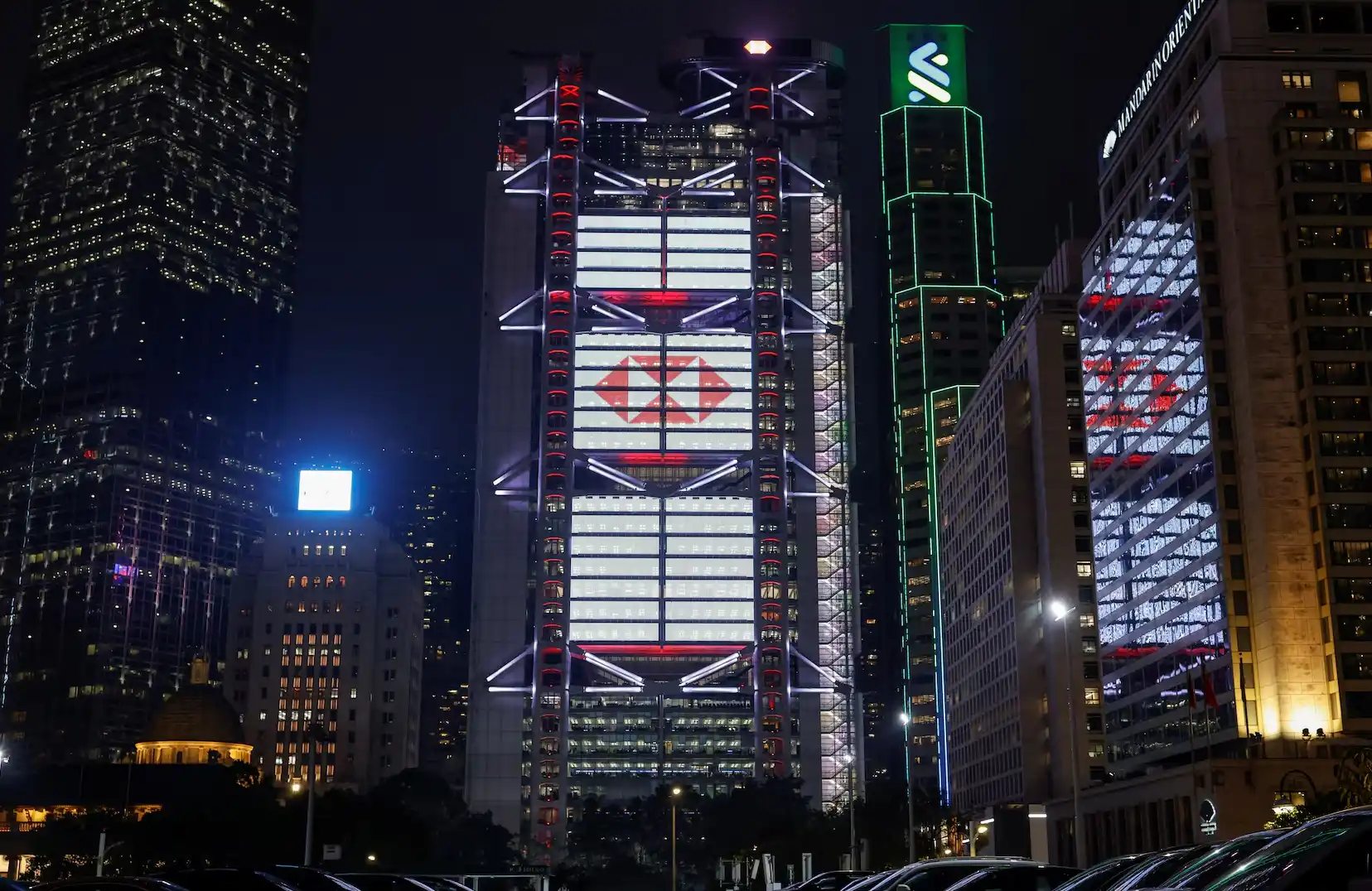
One is HSBC. This established institution, which has been issuing banknotes in Hong Kong for 160 years, plans to launch a HKD stablecoin in the second half of 2026 and integrate it into PayMe and mobile banking apps. Its way of entering the Web3 world is by packing something new securely into the old bottle it is most familiar with.
The other one is Anchorage Fintech. It is a temporary patchwork enterprise to obtain a license. Standard Chartered Bank holds 50.5%, Animoca Brands accounts for 37.5%, and HKT accounts for 12%. Standard Chartered requires compliance endorsements, Telecom values payment scenarios, and Animoca wants on-chain channels. No one on the three sides was sure to gnaw down this hard bone alone, so they chose to keep warm in a group.
Without exception, these two approved institutions are old aristocrats in the traditional financial system, and they are also banknote issuers.
Why did Hong Kong's supervisory authorities issue this license, which represents the future of financial infrastructure, to the people who seem to need it the least? Why are those passionate entrepreneurs leaving the market?
The answer is probably realistic. In the eyes of regulators, stablecoins have never been a business, but rather an infrastructure. Infrastructure, on the other hand, is bound to be entrusted only to the “own people” who know the roots best.
Limited return, unlimited risk
The regulatory threshold for Hong Kong's stablecoin license is so high that only banknote issuers can meet the requirements, but when they actually sit at the table, people will discover that this is actually an almost unprofitable business.
As required by Hong Kong's Stablecoin Ordinance, issuers are required to maintain 100% high-quality asset reserves. This means that for every 100 yuan stablecoin issued, 100 yuan in cash or short-term treasury bonds must sit safely and securely in the bank. This money cannot be used for loans, nor can it be chased for high profits. At the same time, the issuer must bear a minimum paid-up capital of HK$25 million, operate carefully under strict bank-level anti-money laundering standards, and promise to respond to users' redemption requests within one working day.
Let's compare virtual banks in Hong Kong. There are currently 8 fully licensed virtual banks in Hong Kong. They can be used for high-interest loans and securities investments, but since opening in 2020, none of these 8 banks have made a profit. Total losses in 2024 reached several billion Hong Kong dollars, and no one has been profitable since opening.
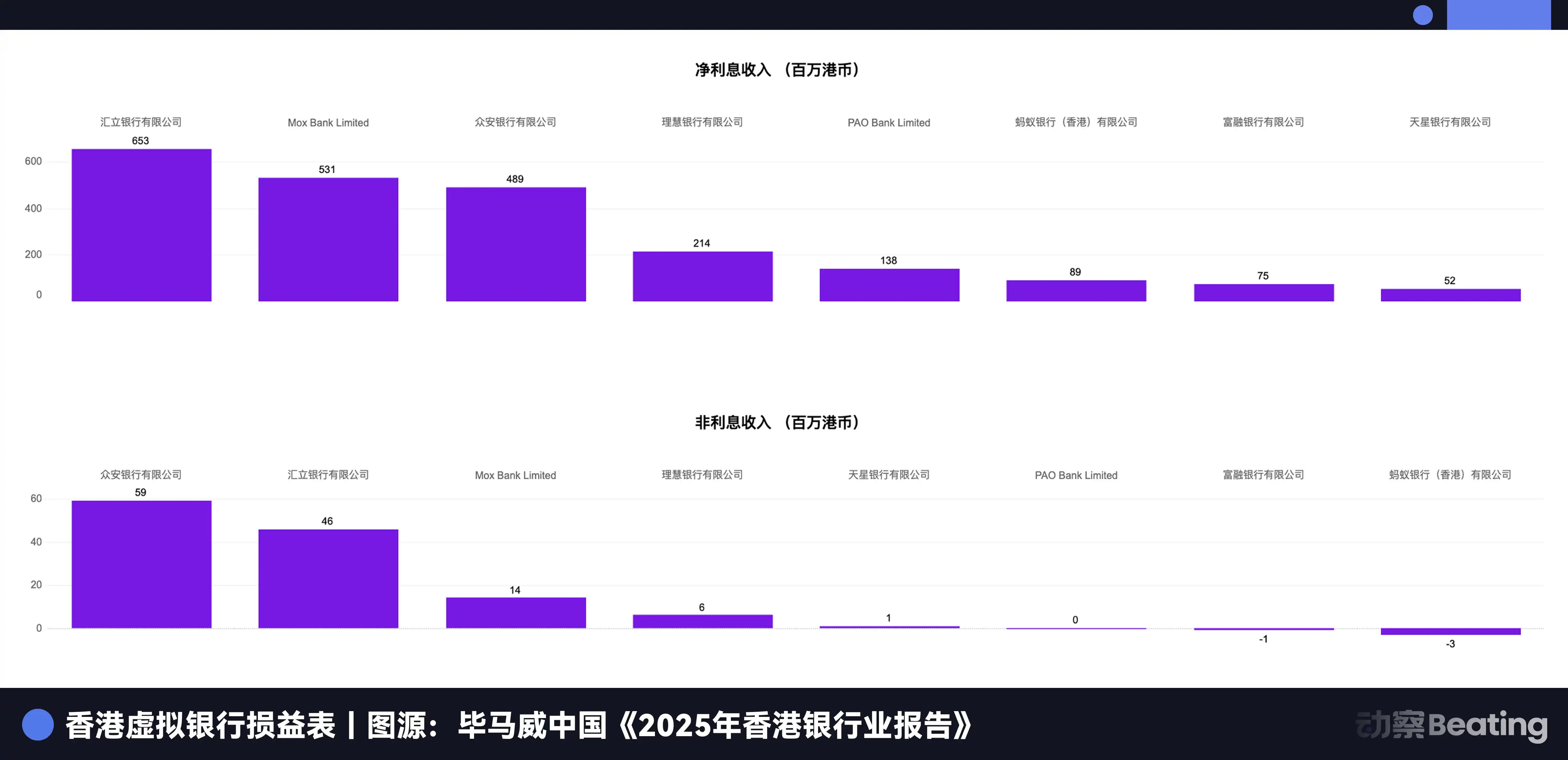
Virtual banks with full licenses are still struggling with losses. Stablecoin issuers who can only buy short-term treasury bonds and live on meager interest. The situation is imaginable. They must bear unlimited responsibility for maintaining currency stability, and also silently swallow the high costs of compliance and technical infrastructure.
At the end of the day, this is actually a business with limited returns and unlimited risks.
It's hard to say that Standard Chartered and HSBC are the real winners in this game; they can be understood as being forced to the table. If HSBC does not apply, it would be tantamount to relinquishing the bottom line of the digital Hong Kong dollar to Standard Chartered; if Standard Chartered did not apply, it would be tantamount to admitting its absence from the future layout of Hong Kong's financial system.
Through high compliance thresholds and unspoken rules, the Hong Kong government has locked these two banknote issuing banks firmly in front of the card table. By designing this exquisite set of rules, the supervisory authorities made the giants “voluntarily” bear the huge cost of building digital currency infrastructure. Anyone familiar with the city knows that this is actually a consistent pattern of conduct on the part of Hong Kong's supervisory authorities.
However, where did this regulatory gene, which is extremely risk-averse and would rather put innovation in an iron cage, actually come from?
sequelae of trauma
Hong Kong's extreme conservatism with stablecoins has been criticized by outsiders as stifling innovation. But if you look back at Hong Kong's financial history, you'll find that this kind of conservatism is not because the current regulators are timid, but rather the city's muscle memory shaped by bloody lessons of life and death.
Behind every strict regulatory provision, it actually corresponds to a real crisis.
The first crisis was in 1983.
That year, negotiations between China and Britain were at a standstill. Extreme political uncertainty directly ignited a crisis of confidence in the Hong Kong dollar. The public frantically sold Hong Kong dollars to buy dollars. The Hong Kong dollar exchange rate plummeted from 1 US dollar to around HK$5 in just a few days to 9.6 Hong Kong dollars. Toilet paper and cans in supermarkets were sold out, and panic spread throughout Hong Kong.
On that stormy weekend, the Hong Kong and British government urgently proposed a linked exchange rate system and announced that the Hong Kong dollar would be “pegged” to death at the position of 1 US dollar compared to 7.8 Hong Kong dollars. For every HK$7.8 issued, the issuing bank must pay $1 to the Exchange Fund. They are trying to use absolute dollar reserves in exchange for absolute public confidence.
This decision, which was hastily decided in the midst of the crisis, has been in operation for 43 years without any loosening. It is an unshakable guiding principle for Hong Kong's monetary and financial system, yet it has also become the source of conservatism in the city.
The second crisis was in 1997.
The financial turmoil in Asia is raging, and international speculators, led by Soros, have broken through the crisis three times with huge sums of money to snipe the Hong Kong dollar. They used the linkage between the foreign exchange market, stock market, and futures market to try to break down the linked exchange rate system. In the midst of an unusually fierce battle without smoke, the Hong Kong government used an exchange fund of 118 billion Hong Kong dollars to secure the market. At one point, it bought 7% of the market value of Hong Kong stocks, and only then managed to repel the shorters.
It was a fierce victory that was smashed out of real money. The price it left to the city was that since then, the regulatory authorities were extremely sensitive to systemic risk and liquidity depletion, which went deep into the bone marrow.
The third crisis was in 2008.
That year, the bankruptcy of Lehman Brothers triggered a global financial tsunami. In Hong Kong, more than 44,000 citizens lost their money by purchasing Lehman-related products, and the amount involved reached HK$201 billion. Countless white-haired old people gathered in front of the bank to cry, and the protests continued on the streets for months.
This incident left a scar on Hong Kong society that is difficult to heal. It has not only directly spawned Hong Kong's strict regulatory system for retail financial products, but it has also planted a deep sense of caution and distrust of complex financial derivatives in the hearts of an entire generation of Hong Kong people.
After gazing at these three historical wounds, you may be able to understand why the Hong Kong Monetary Authority does not hesitate to impose “100% high-quality asset reserves”, which is the most stringent requirement in the world when faced with stablecoins.
In the eyes of the supervisory authorities, no matter how avant-garde technical cloak they are, after all, the undertone of stablecoins is a type of private banknote that has stripped away a country's credit endorsement.
Once there is a 1% hole in stablecoin reserve assets, once there is a squeeze, who will cover the bottom? Will it let ordinary taxpayers swallow the bitter fruits, or will the government once again open up foreign exchange reserves to fill the black hole?
In the face of stablecoins, Hong Kong's first instinct was never how to embrace innovation, but rather “never let the crash happen again.” This obsession with absolute safety is more like a long period of collective post-traumatic stress response, which eventually turned into the ink of restraint and was engraved word by word in the law.
However, when a city takes “safety” to the extreme, what kind of cost does it have to pay?
A city trapped by extreme success
Hong Kong's plight does not stem from backwardness; it is precisely because it used to be too ahead of schedule. The city was accustomed to being extreme in one era, then quietly trapped by this extreme success, and eventually rubbed shoulders with the next.
The most typical example is Octopus.
In 1997, Octopus was launched in Hong Kong. It is one of the world's earliest and most successful contactless electronic payment systems, and was once studied by major cities around the world. As long as you hold this small card, you can ride the subway, take a bus, buy newspapers, and eat fast food in Hong Kong, almost unhindered.
But just because Octopus is so successful, so popular, and so easy to use, Hong Kong's merchants and consumers have no incentive to switch to a new payment method. While Alipay and WeChat Pay destroyed everything in the mainland and reshaped the commercial form of society as a whole with QR codes, people are still habitually using Octopus cards in Hong Kong's subway stations and convenience stores.
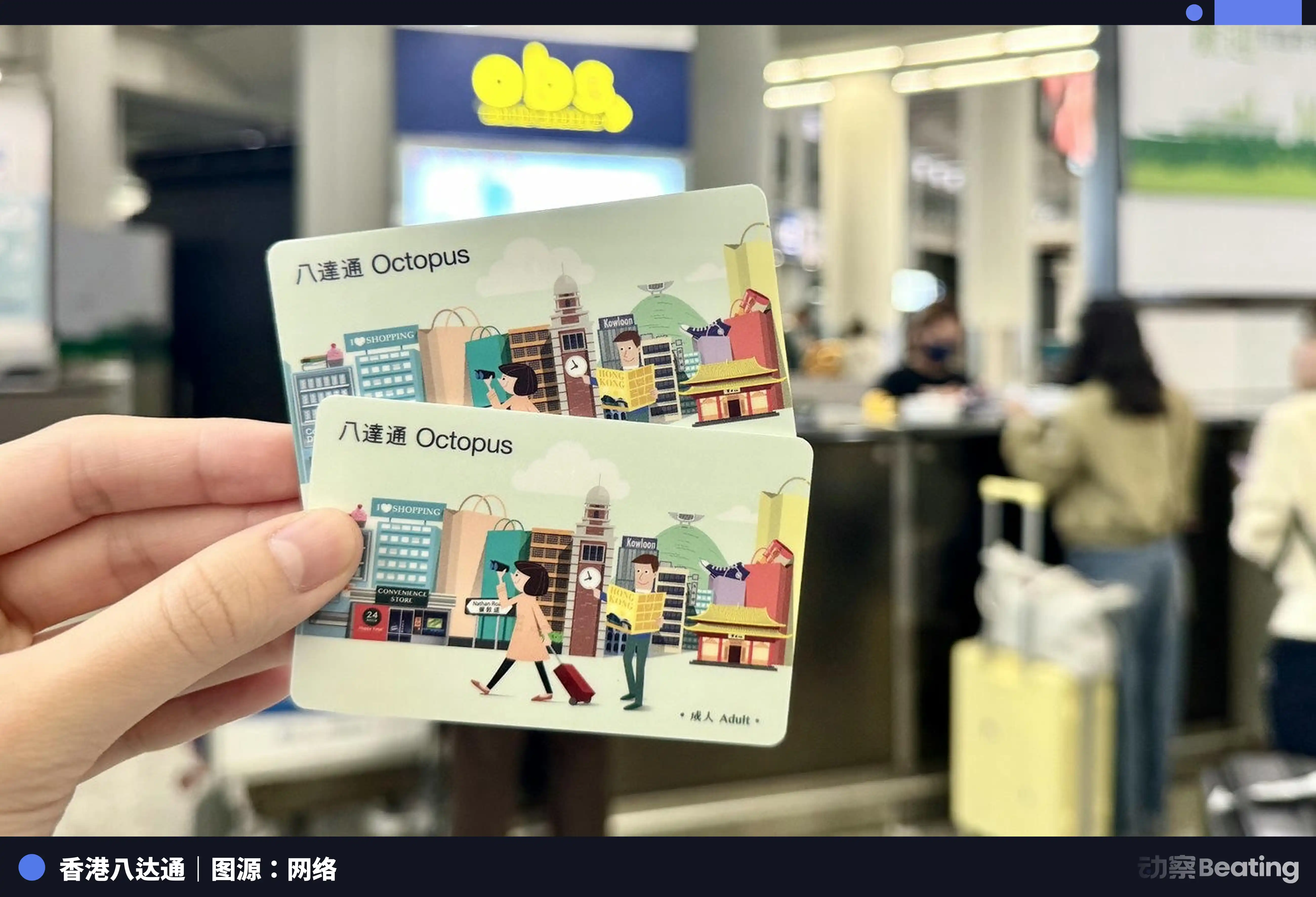
The success of Octopus delayed Hong Kong by a full decade in the mobile payment wave.
Today, in the face of the wave of stablecoins and Web3, Hong Kong is re-enacting the Octopus script. Only this time, what stuck it was its traditional financial system, which it is proud of.
Hong Kong has the most complete traditional financial legal system in the world, the most mature banknote issuing system, and the most stable linked exchange rate that has experienced actual testing. These things, in the era of traditional finance, are unrivaled moats in Hong Kong. But in the Web3 world, they became the heaviest burden.
Hong Kong is trying to accept a new thing aimed at disrupting the traditional financial structure without changing the underlying structure of traditional finance. The answer was to cram Web3 into the framework of traditional banks and then announce to the world that this is “innovation.”
This is not only an arrogance of innovation, but also an extreme fear of losing control. The city is so afraid of making mistakes that it would rather maintain an impeccable posture and watch an era go by rather than impacting the future with a few rough flaws.
Two tracks, one city
Hong Kong is undergoing a “two-track” financial experiment.
Let's shift our focus from stablecoin licenses to 400 Circle K convenience stores across Hong Kong.
In October 2025, these convenience stores quietly added a new option in front of their cashiers: support digital yuan (e-CNY) payments. Along with this, the Hong Kong Monetary Authority's “Fast Transfer” system and the digital yuan system completed the world's first two-way interoperability of fiat digital currencies at the bottom.
And the main force behind the scenes is BOCHK, which is steadfastly driving all of this.
Now let's take a look back at the list of applications for that stablecoin license. There are three major banknote issuers in Hong Kong: HSBC, Standard Chartered, and Bank of China Hong Kong. The first two companies obtained licenses, but BOCHK was the only one that was absent.
The absence of BOC Hong Kong reveals that Hong Kong's financial base is being split into two parallel tracks. And these two tracks are each extending to two very different futures.
A track leading to a view of the West. Hong Kong is trying to use an extremely compliant Hong Kong dollar stablecoin license to send a signal to international capital. This is still an international financial center with transparent rules and strict regulations. In a cryptocurrency landscape dominated by the US dollar, Hong Kong is still capable of cutting down its own piece of cake.
The other track is connected to the pulse of the mainland. The digital yuan has taken root on the streets of Hong Kong, carrying the national strategy of internationalizing the RMB and reshaping cross-border payment and settlement. In this vast picture of the times, Hong Kong must steadily seize this heavy trust and continue to play a good role as an irreplaceable “super contact.”
Those Chinese-funded institutions that quietly left the market before the stablecoin license application deadline actually understood the distance of these two trajectory extensions for a long time.
In October 2025, according to the Financial Times, Ant Group and JD suspended their stablecoin program in Hong Kong after receiving instructions from the People's Bank of China and the Internet Information Office to “not proceed with the project yet.” The boot was launched in February of the following year. The central bank, in conjunction with eight departments, issued a notice clarifying for the first time in the form of a regulatory document that no unit or individual may issue stablecoins linked to RMB abroad; domestic entities and foreign entities controlled by them are not allowed to issue virtual currency overseas without approval.
In the face of this clear red line, Hong Kong dollar stablecoins are inherently locked in liquidity.
It can't go north. The Mainland has clearly characterized virtual currency as an illegal financial activity, and the Hong Kong dollar stablecoin will never be a channel for mainland capital to go overseas.
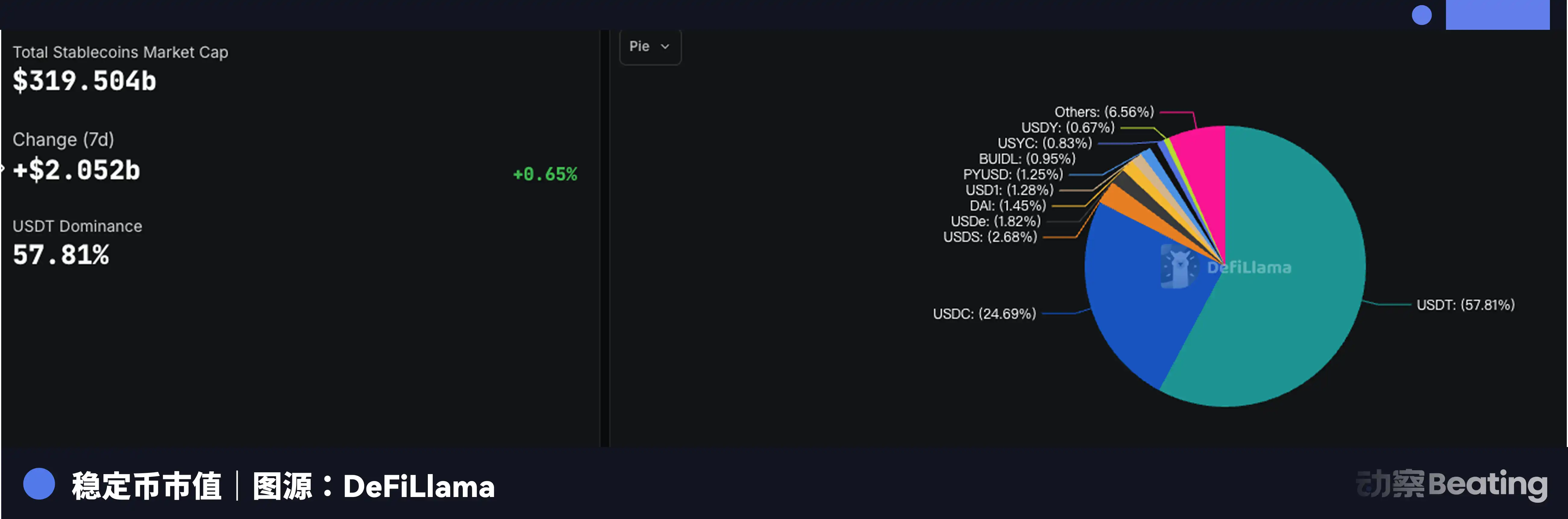
It's also hard to move west. Looking at the other side of the ocean, USDT and USDC are already entrenched in more than 85% of the world's stablecoins. As the US “GENIUS Act” progresses step by step, the moat for US dollar stablecoins has already risen high. The nascent Hong Kong dollar stablecoin has almost no chips to contend head-on with the US dollar in international waters.
Caught in the middle of a financial game between the world's two largest economies, Hong Kong is trying to use an extremely conservative attitude of compliance to navigate the tight gap. It must not only maintain the face of Western financial order, but also take on the heavy trust of national strategies.
This is not only a stablecoin license dilemma; it is also the anxiety of the times that Hong Kong, as a “super contact,” will face in the midst of the anti-globalization winter.
How long can a city run on two opposite tracks at the same time?
My Little Pony's Lost
Hong Kong is not unaware of its situation. Every time it is conservative, and every time it defends, there is an obsession that runs deep into the bone marrow: I can't lose it anymore.
At least on the bright side, Victoria Harbour's lights are still bright. In the latest edition of the Global Financial Centers Index in March 2026, Hong Kong is ranked third in the world, with the banking and financing sector leading the way. Needless to say, it is still the glittering world's top financial center.
But at the same time, another set of data is telling a very different story.
In 2025, the vacancy rate of Grade A office buildings in Hong Kong climbed to 17.5%, a record high. The area of vacant office buildings in Hong Kong is equivalent to 13 International Finance Centre Phase II buildings. Foreign-funded financial institutions continue to lay off employees, and the Dutch largest pension APG and several European and American law firms have successively reduced the scale of their business in Hong Kong.
By the first quarter of 2026, the Hang Seng Technology Index had a sharp drop of 15.7%, bottoming out of the world's major stock indexes. Foreign capital continues to withdraw from the technology sector of Hong Kong stocks, and south-bound capital has become the only supporting force.
Even the “2025 Hong Kong Stock Exchange IPO raised HK$285.8 billion, regaining the top spot in the world” report card, which Hong Kong is proud of, can be found after careful dismantling that almost half of this HK$285.8 billion came from A-share companies. This is not so much that global capital is flocking enthusiastically to Hong Kong, but rather that mainland enterprises are trying to find a respite from overseas financing and exports.
Hong Kong really wants to prove itself. It wants to tell the world that I am still that irreplaceable financial center.
In 1986, Wu Yusen filmed “True Colors of Heroes”. My Little Pony, played by Chow Yun-fat, said in the film:
“I've been waiting for three years, just for an opportunity. I want to fight to prove that I'm amazing; I want to tell people what I've lost and I must take it back.”
It was 1986, when the dust had just settled between the Chinese and British negotiations, and the whole city was filled with anxiety about the future and extreme desire for dignity. My Little Pony's words, like a sharp knife, accurately hit the deepest emotions of that generation of Hong Kong people.
Forty years later, Hong Kong is still waiting for an opportunity and a stage where it can prove itself again.
Just this time, in the face of Web3 and digital currency, an opportunity that could reshape the global financial landscape, it chose to seize it in the most conservative, safest, and least error-free way. It has personally locked the sharpest innovation into the strongest iron cage.
I don't know where Hong Kong was once wild, dared to dance on the edge of a cliff, and wanted to take back what it lost at any cost.
Twitter:https://twitter.com/BitpushNewsCN
Compare the TG exchange group:https://t.me/BitPushCommunity
Compare TG subscriptions:https://t.me/bitpush
