


How can the 10 billion hardware made in Shenzhen become an AI business that can reap the anxiety of the middle class?
Author: Lin Wanwan
Original title: Made in Shenzhen, sold in the US: A 10-billion AI business selling anxiety to the middle class
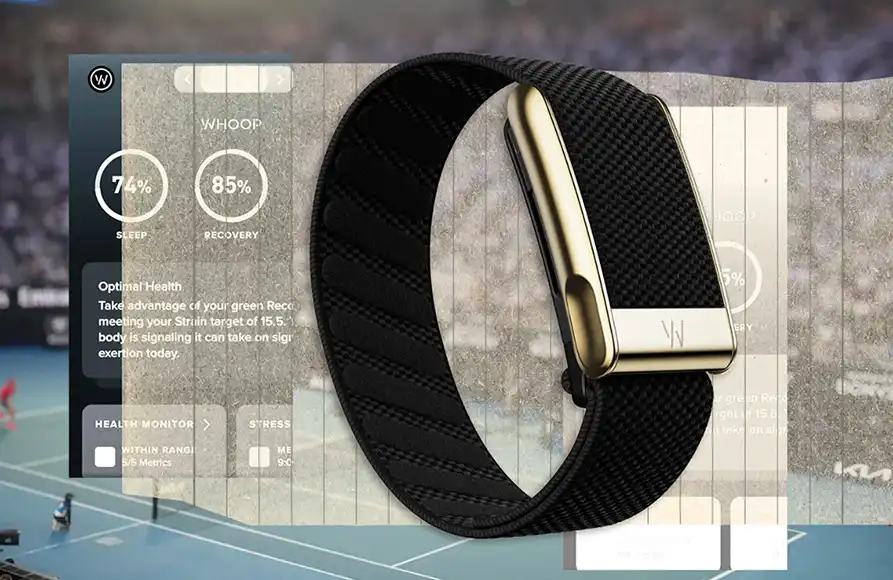
A strange kind of wristband began to appear in Silicon Valley in 2024. It has no screen, no time display, no message, not even a single LED.
OpenAI's Ultraman wears it, athlete Ronaldo wears it, a16z's partner wears it, and Sequoia and Benchmark all wear it. In addition to a wristband, there is another thing that is more hidden. A titanium ring, hidden on the middle or index finger, is not the same as a wedding ring, nor is it like jewelry.
It's just a watch that doesn't show time; in 2026, the valuation was even over $10 billion.
These things, which Silicon Valley sees as a social identity, look like they have three English words printed on the box, Made in China. To be precise, Made in Shenzhen.
This is Silicon Valley in 2026, one of the hottest racetracks for capital, healthy wearables.
I have Whoop and Fitbit compiled by Google on my wrist, and Oura on my finger. These three companies have brought a “body data detection” business to the level of 10 billion dollars.
The end of an era, three Nordic men and a Harvard boy
January 14, 2021. Fitbit founder James Park finally handed over his growing company to Google for $2.1 billion.
Just six years ago, Fitbit rang the bell on the NYSE, and at one point the market capitalization reached nearly $11 billion. It taught the world a number, 10,000 steps a day.
But the slogan “ten thousand steps” is too old.
The group of people who started wearing wearables in 2021 are no longer satisfied with knowing how far they have come. They wanted to know something darker. I wasn't stressed today, did I sleep well last night, and was my health already going downhill.
The successor to Fitbit was not a bigger watch. It's a ring from Finland and a wristband from Boston.
The story first goes back to the small Finnish town of Oulu in 2013.
With only four or five hours of sunshine in Oulu in winter, three engineers, Petteri Lahtela, Kari Kivelä, and Markku Koskela, got together to do something they didn't think anyone was serious about.
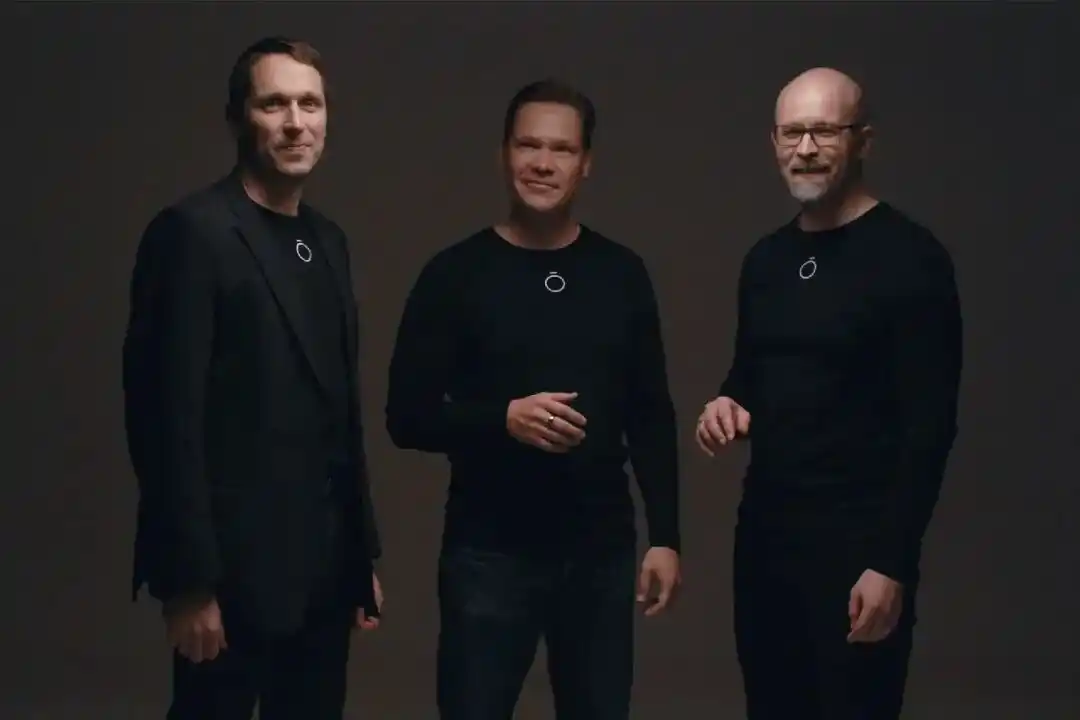
The Three Oura Brothers
At the time, all wearable companies were struggling with “exercise volume,” and their judgment was exactly the opposite. Less than 5% of people in the world exercise regularly, yet 95% of people have to sleep every day.
So the point of entry for Finns is not the wrist, but the finger. The finger has a high blood flow density, and the signal is stable; the key is that it can not be removed for 24 hours.
The prototype of the Oura Ring was drawn in a city that was always dreary.
The first generation was a bulky ring, and it looked much more rustic than it is now. It was crowdfunded on Kickstarter in 2015 and raised $650,000, and it didn't even touch the cusp. Apple Watch was the hit in Silicon Valley that year.
Oura is a Finnish startup that is only secretly discussed in biohacker circles and is unknown to almost no one in the rest of the world.
Another line of the story takes place in Boston.
On the Harvard campus in 2012, 22-year-old Will Ahmed was the captain of the Harvard squash team. He noticed something he couldn't figure out. People on the team who had the same amount of training had varying degrees of recovery the next day. Some feel refreshed; others feel like they've been run over by a truck. Coaches rely on the naked eye to determine who should train for another team. This method is no different from the 1950s.
He wants to make something, and every morning he tells the athletes if you can do it today. This is where Whoop started. In the early days, Will didn't have money to do marketing; he did stupid things. He went to LeBron James and Phelps's personal trainers, handed them a wristband, and asked them to try it on.
More than ten years have passed, and the bill has become like this.
Oura completed a $900 million Series E round in October 2025, valued at $11 billion, led by Fidelity Funds. As of 2025, 5.5 million rings have been sold, of which nearly 3 million have been sold in the past year. Revenue is $500 million in 2024, expected to break 1 billion in 2025, and 1.5 billion in 2026. It already secretly filed an IPO application with the SEC in May 2026.
Whoop completed the $575 million G round in March 2026, valued at $10.1 billion, and has more than 2.5 million members worldwide. Subscription revenue doubled year over year in 2025, with an annualized operating rate of $1.1 billion. The list of investors includes Ronaldo, LeBron James, and Rory McIlroy. Among the institutional investors are the Qatar Sovereign Fund, Abu Dhabi's Mubadala, Abbott Pharmaceuticals, and Mayo Clinic.
The two companies add up to $210 billion. That's double Fitbit's peak market value.
Oura and Whoop just don't want screens. No screen, no messages, no calls. Fitbit also continued to gain strength after opening up with Gemini this year.
They use fewer features and eliminate more functionality. Oura's teaching is that sleep determines health, and Whoop's teaching is that recovery values determine whether you can fight another round.
Step counts are for fat people, and recovery values are for social elites.
Why do wearables ignite at this time
Oura was founded in 2013. Whoop was founded in 2012.
These two companies have been working for a full ten years. Meanwhile, Google is also fighting hard against these two companies, and Fitbit has made huge changes.
Oura's Series D valuation in December 2024 was only $5 billion, and the E Series in October 2025 more than doubled to 11 billion dollars. Whoop was valued at $3.6 billion in the 2021 Series F, and in 2026, the G Series directly surged to 10.1 billion, almost tripling.
The real take-off in valuations all happened after 2023. why?
Because ChatGPT came out.
This is the secret hidden in the deepest part of this business. It's not a health business at all.
Whoever gets long-term physiological data that users don't leave for 24 hours will get an opportunity in the AI era, and this ticket is scarce than WeChat's social relationship chain back then.
First, let's talk about an overlooked truth.
Wearables before 2023 had a dead end. The data was tested and no one understood. Do you know what the HRV 42ms means when you see it? Do you know what to do when you see 1 hour and 23 minutes of deep sleep? Fitbit died here back then; it told you the data, but it didn't tell you then.
The advent of big models solved this “and then” for the first time.
As early as September 2023, Whoop connected to OpenAI's GPT model to launch Whoop Coach, then launched Daily Outlook, which gives you a personalized briefing every morning about the weather, what yesterday affected your recovery, and whether you should have that 9 o'clock important meeting today. Oura went even further, and in February 2026, it released its own Big Language Model, focusing exclusively on women's health, from menstrual cycles to menopause. Data, explanation, action, this closed loop has broken through for the first time.
This is the real reason why Fidelity, ICONIQ, and the Qatar Sovereign Fund are willing to value Oura at $11 billion and Whoop at $101 billion. They didn't buy a health company; it was the only entry point for users' physical data in the AI era. This set of valuation logic is a routine to invest in Snapchat and Instagram back then. The investment was not a product; it was a place where data was accumulated.

Ronaldo and other sports stars endorse Whoop
This is the real reason why Fidelity, ICONIQ, and the Qatar Sovereign Fund are willing to value Oura at $11 billion and Whoop at $101 billion. What they bought was an entry point for users' physical data in the AI era; health is just a shell. This set of valuation logic is the same as investing in Snapchat and Instagram back then; the focus is on the location of data accumulation.
Fitbit was slow to respond for a few years and didn't catch up until May 2026.
On May 7, Google changed the name of the Fitbit App to Google Health. At the same time, a 12-gram fitbit air bracelet without a screen was launched. Starting at $99, it also had no screen, no notifications, and no buttons. The companion Gemini AI Health Coach began charging a subscription fee of $9.99 a month on the same day.
It's exactly the same as the Whoop trick. Screen-less hardware plus AI plus monthly fees.
Google has also opened up the ecosystem. Apple Watch users and Oura users can import data into Google Health and let Gemini help interpret it. Apple's HealthKit shuts down, and Oura and Whoop each manage their own data.
Google simply put it down and do a summary. If birds that get up late have bugs to eat, they have to do an open ecosystem.
Let's take a deeper look. In the future, everyone will have a personal AI agent, probably Siri, maybe ChatGPT, maybe Xiaoai or Doubao.
But essentially it requires feeding data. OpenAI took the text data, Midjourney took the image data, Google took the search data, and the physical data section is currently empty. Whoop, Fitbit, and Oura are grabbing that spot.
The dividend of the last era was traffic. The dividend of this era is data in your body.
Huaqiangbei, the supply slip behind every US stock IPO bell
Whoop CEO Will Ahmed has publicly announced that the next step is an IPO. Oura has quietly submitted an application. Two $10 billion IPO candidates line up ahead, waiting to ring the NYSE bell in 2026 or 2027.
But if you open up their supply chain, the shipping address is not Massachusetts, nor Helsinki, but Longhua, Baoan, and Dongguan.
Of course, we are already familiar with this script; the Chinese manufacturing industry has been acting for 20 years. Foxconn is the foundry for Apple, Lixun Precision assembles the AirPods (it is doing more than 70% of the global share), Lansi Technology makes glass panels for the iPhone, and the Ningde era supplies power batteries for Tesla.
Every time the US stock bell rings, there is a supply order from Huaqiangbei behind it.
This time it's the smart ring's turn.
If you take an Oura Ring 4 apart, the titanium case probably comes from the Dongguan precision processing factory that made the case for Apple. They easily took over Oura's work; after all, the raw materials, CNC machine tools, and polishing process were all ready. The PPG optical sensor, accelerometer, and miniature battery inside almost all came from the Pearl River Delta. Behind the Whoop 5.0 wristband called a quick-drying knit is a textile foundry in Jiangsu and Zhejiang.
Silicon Valley actually does very little. Define products, write algorithms, build brands, and receive subscriptions.
The really difficult process is also in China.
Putting the sensor, chip, battery, and antenna into a 2-gram titanium ring also requires waterproof, 7-day battery life, and no feeling when worn. This is not something that can be achieved by any OEM.
In September 2025, there was an incident that spread all over the tech world. A YouTuber named Daniel Rotar is wearing a Samsung Galaxy Ring to get home. Before the security check, he discovered that the lithium battery in the ring had begun to expand, and the ring got stuck in his finger and couldn't be removed. He was denied boarding at the airport because the swollen lithium battery was prohibited from flying. He was eventually taken to the hospital, where he relied on ice water to cool down and medical lubricant to push the titanium ring off his finger. The doctor didn't dare to cut it; cutting the titanium case would probably detonate the lithium battery inside.
This incident revealed a detail. The tiny battery in the ring has no room for the watch to cool down, and if something happens, it's a medical accident.
There are only a few factories in the world that can make this kind of thing with a stable yield; most of them are concentrated in the Shenzhen and Dongguan area. In their workshop, the production line for Apple, the production line for Samsung, and the production line for Oura are probably separated by a single wall.
Unfortunately, if you can make Oura's supply chain, you can't make Oura.
Chinese manufacturers have no shortage of technology, production capacity, and designers. What they lack is the right to translate heart rate data into Readiness Score and brand premiums that make a16z partners willing to renew their monthly fees.
Aging has become the new luxury
This was probably the early morning of a 35-year-old engineering director in San Francisco.
The Oura ring vibrated slightly 6 minutes before the alarm went off. It determined that you were in a light sleep phase and woke you up most comfortable. The first thing you do when you open your eyes is touch the phone next to your bed. The Oura app jumped out of today's Readiness Score, 73, yellow. Attached below is a brief suggestion from an AI consultant. Last night's HRV was slightly lower, and today's hard training recommendation was changed to light exercise.
He sighed and pushed CrossFit, which was originally scheduled for 7 o'clock, to the evening. Then I opened the fridge and got a frozen berry, some kind of antioxidant recipe Bryan Johnson recommended.
He didn't open a stock account this morning, didn't click on Slack, and didn't read the news. He confirmed one thing first, what is my physical value today.
This is the real starting point of this business. It's the entrance.
American millennials, those born between 1981 and 1996, will be concentrated in 2026 between the ages of 30 and 45.
This is the first generation in history to start tracking their steps at age 20. They didn't go to the hospital for medical examinations until age 60 like their parents. At age 30, they began to worry about HRV, deep sleep time, fasting blood sugar, and visceral fat ratio. A generation raised by quantifying itself has collectively entered middle age.
The spiritual leader of this trend is Bryan Johnson. This 48-year-old tech tycoon, sold Braintree and its Venmo to PayPal for 800 million US dollars. He now spends 2 million dollars a year on an anti-aging program called Project Blueprint, which measures more than 100 physiological indicators every day.
He even did one thing that was scolded by the internet, transfusing his 17-year-old son's plasma into himself for multi-generation plasma exchange experiments. Netflix also made a special documentary for him, “Don't Die, the Man Who Wants to Live Forever.”
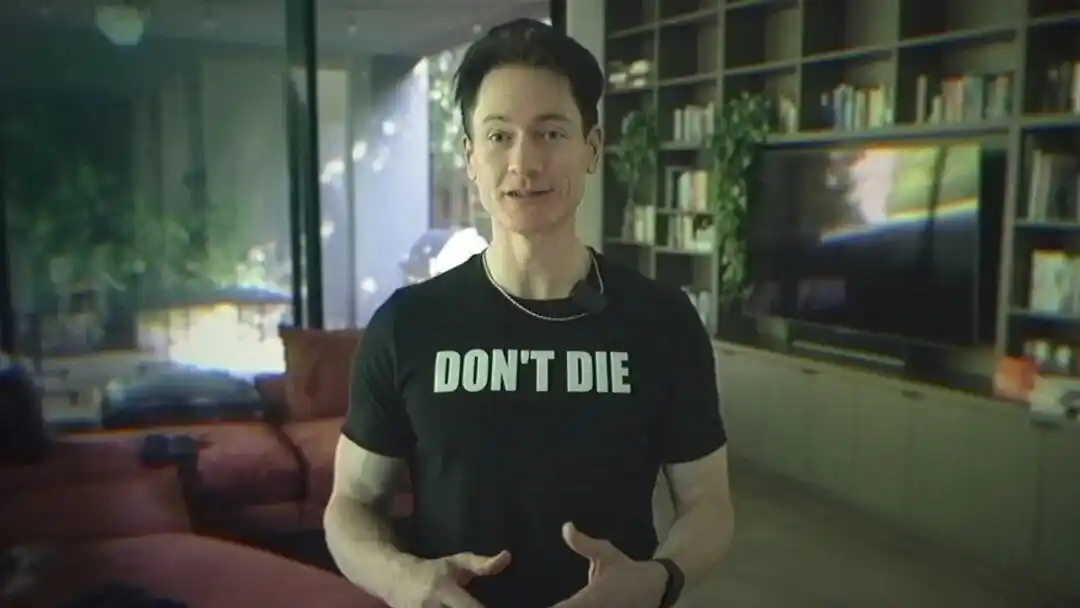
Bryan Johnson
The Chinese internet laughed at him over and over again as a weirdo. What he did, however, defined Silicon Valley's spiritual undertone in 2026. Anti-aging is the new luxury item.
Luxury cars and luxury watches are the totems of our parents. This generation of Silicon Valley upstarts are no longer showing off their Rolex on their wrists; they are showing off the titanium ring on their finger; they are showing off that I know my body better than you.
The Chinese side is a spiritual homogeneity. Wang Xing's marathon has gone viral countless times. Zhang Yiming got up early and was repeatedly spread for fitness, and even the rumor that Li Yanhong's medical examination report was abnormal was trending.
The anxiety of first-tier middle class people has changed. They used to be anxious about housing prices; now they are anxious about metabolic syndrome. They used to dry their bags, now they dry their sleep scores, they used to dry their babies, and now they bask their blood sugar on an empty stomach.
Midnight gyms in first-tier cities are filled with financial, internet, and consulting practitioners. They wear Apple Watch on their wrists, but more and more people have an extra ring or bracelet from Amazon.
However, the deepest fear of Silicon Valley executives is not getting fat; it is premature aging.
At age 35, this generation began asking if I was already going downhill. Whoop directly gave this anxiety a product called Healthspan. It has a core indicator called WHOOP Age, which tells you your physical age. You're 38, but your body is 42. Once these numbers are printed on the screen, no one can pretend they haven't seen them.
I used to be anxious about not being able to buy a house, but now I can't buy health with anxiety. You can do anything about the former; once the latter is displayed, you can only renew your subscription.
There is a type of anxiety called subscription
The absolute values of the two devices cannot be compared with each other, nor are they equivalent to clinical measurements. Recovery points and sleep points are never as accurate as medical treatment, but the emotional value far exceeds what is necessary. What you buy for less than $6 a month is a sense of certainty, so it's essentially a psychological product.
To put it bluntly, it's no different from fortune telling; just replace the eight characters of your birth date with HRV.
Looking at the camera from a distance, Oura and Whoop are selling a new type of middle class religion called quantifying the self.
There is only one doctrine: your body can be measured, optimized, and managed. What Keep said back then about self-discipline gave me freedom is the same rhetoric, except Whoop increased its price by 5 times and sold it to Silicon Valley executives.
And the San Francisco engineering director, wakes up tomorrow morning, and the first thing he does is open the Oura app. Take a look at today's scores, then grab your phone and start your day.
The moment he put the ring on, he thought he had bought health.
Actually, he subscribed to anxiety. AI, on the other hand, turned this anxiety into a concern that a subscription can be renewed forever.
Twitter:https://twitter.com/BitpushNewsCN
Compare the TG exchange group:https://t.me/BitPushCommunity
Compare TG subscriptions:https://t.me/bitpush
