


What the market is afraid of is not an interest rate hike, but that they can't guess Walsh
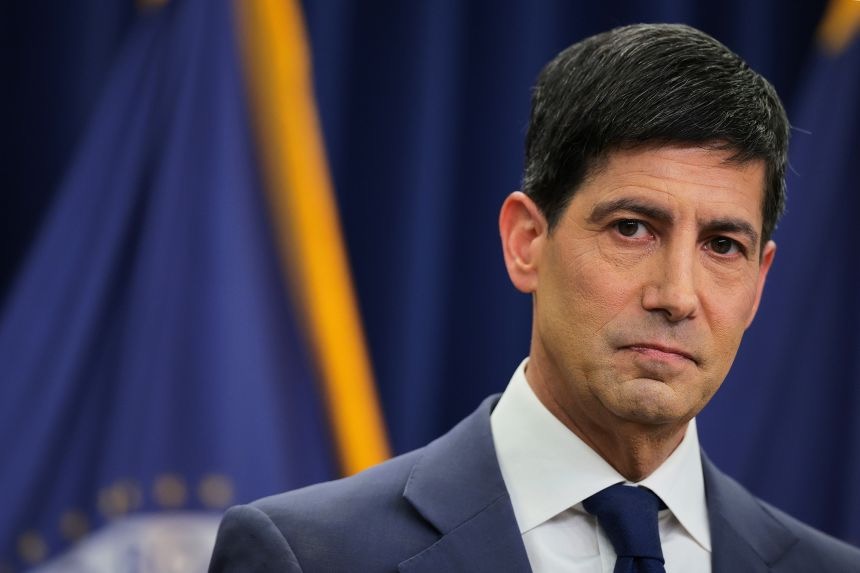
Markets haven't been so confused for a long time before the Federal Reserve's interest rate meeting.
Early Thursday morning Beijing time, the Federal Reserve will announce the July interest rate decision. The futures market is still dominated by a “stand still” scenario, yet the probability of interest rate hikes of about one-third is taken into account at the same time.
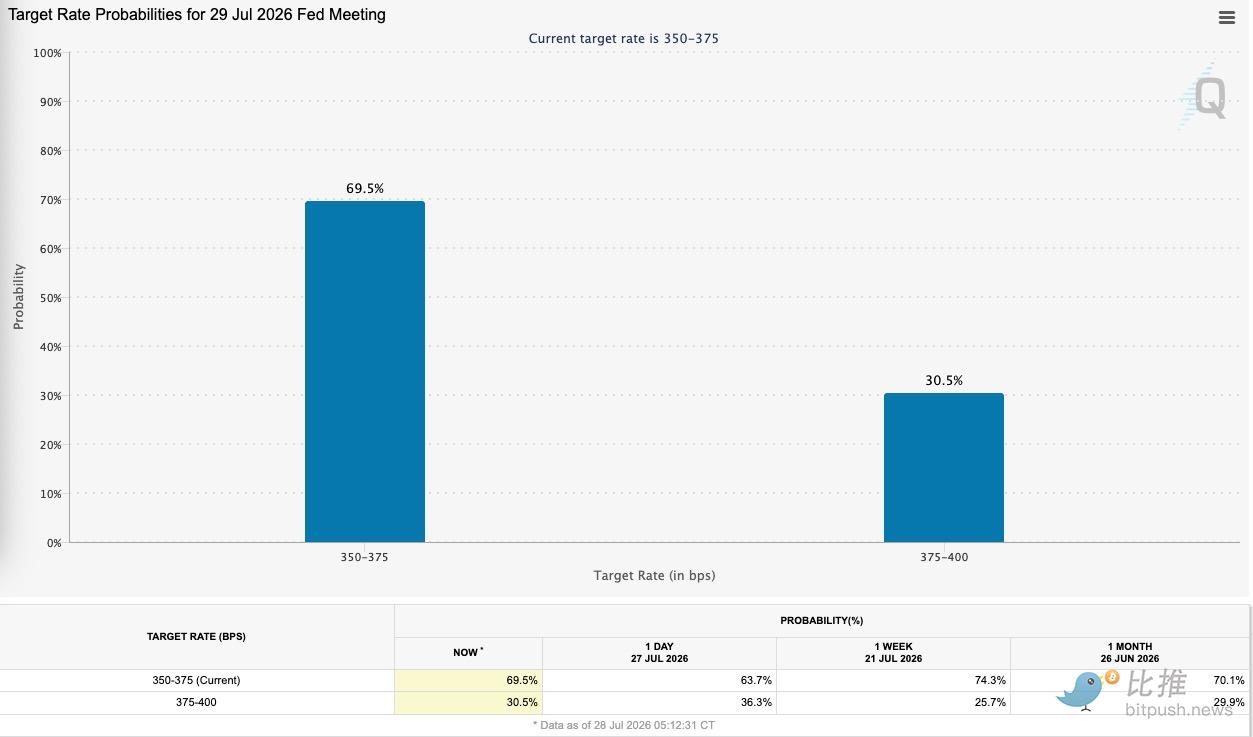
For a conference without bitmaps and economic forecasts, this kind of disagreement is extremely unusual: whether interest rates are raised or not, people may be caught off guard.
The reason it's so hard to guess is because economic data gives answers in opposite directions.
In June, the US CPI fell from 4.2% to 3.5% year on year, and the core CPI also fell from 2.9% to 2.6%; non-farm payrolls only increased by 57,000 people, but the unemployment rate fell to 4.2%, and wage growth did not get out of control again.
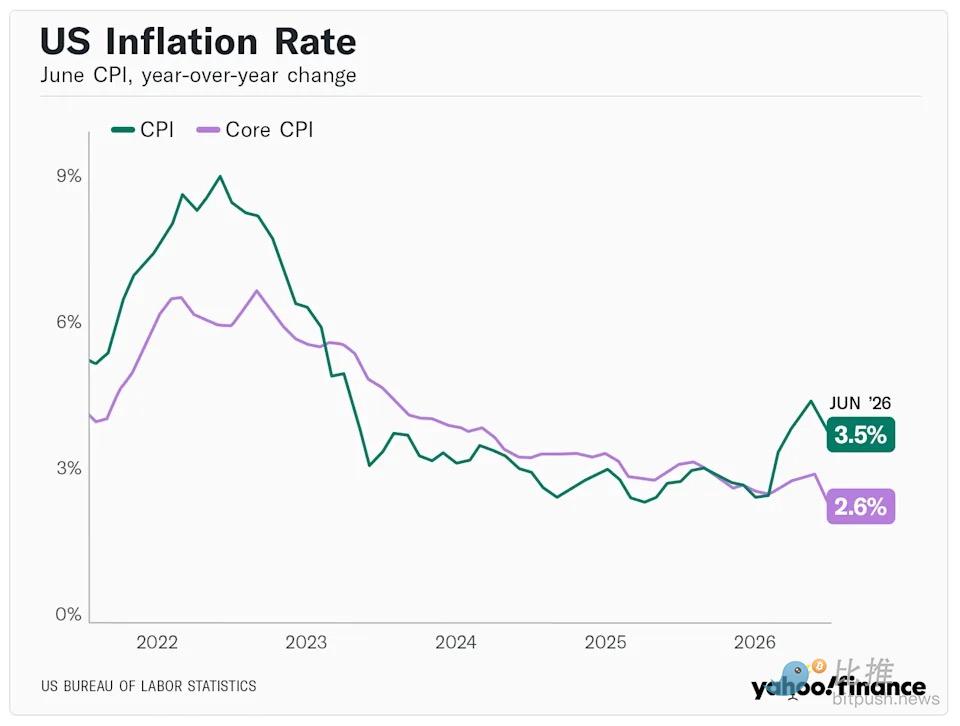
Inflation is cooling down, and employment is not slowing down significantly. According to traditional logic, the Federal Reserve can just wait a little longer.
The problem is that oil prices and geopolitical conflicts can push up energy costs again at any time, and the AI investment boom continues to drive demand for electricity, chips, and equipment. The Federal Reserve is not facing typical overheating demand, but rather a combination of supply shocks, strong investment, and stubborn inflation.
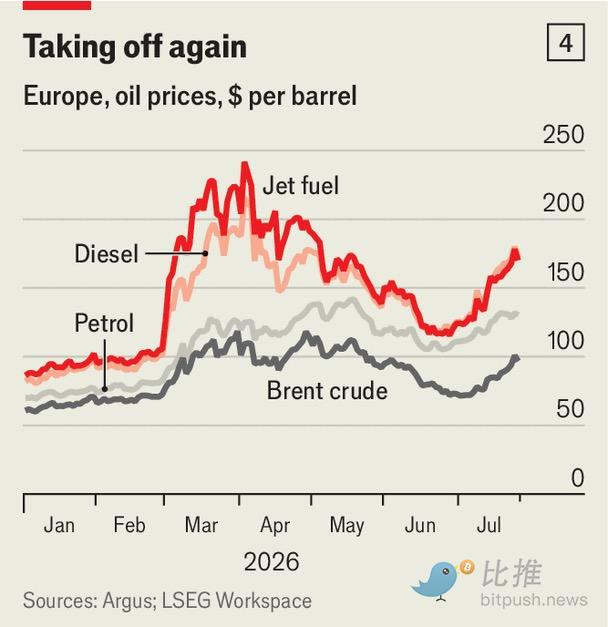
Of course, interest rate hikes cannot increase oil supply, but they can prevent energy price increases from gradually spreading to wages, service prices, and inflation expectations. It also makes “staying on hold” no longer a risk-free option.
Walsh isn't just a hawk
The market's deepest impression of Walsh was his lack of patience with inflation.
In his congressional testimony in July, Walsh stated bluntly that long-term inflation “is mainly determined by monetary policy” and that the Federal Reserve “has zero tolerance” for continued high inflation. When he was the governor of the Federal Reserve in the past, he was also often more concerned about rising inflation than the Federal Reserve staff, and opposed maintaining excessive policy easing even after the crisis ended.
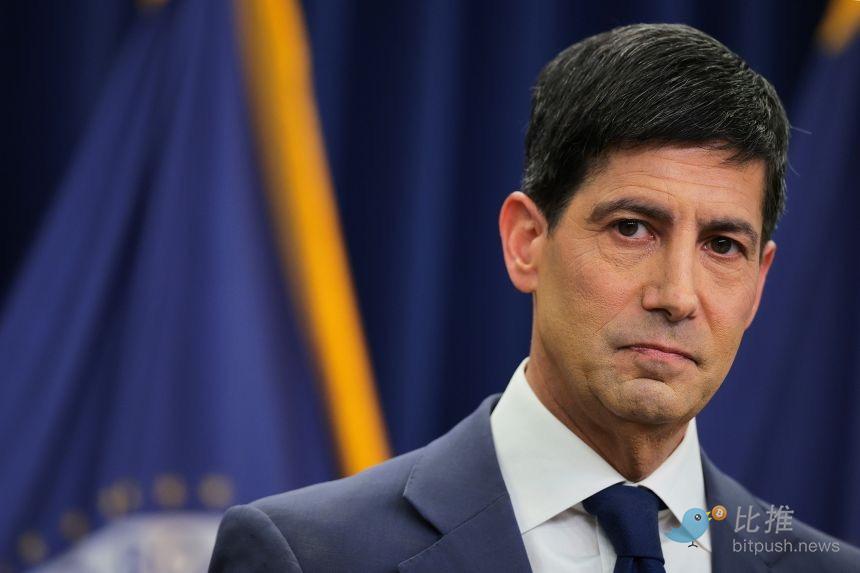
However, understanding Walsh only as an “interest rate hiker” is still not accurate enough.
He believes that productivity increases, especially efficiency improvements brought about by AI, can make the US economy grow faster without necessarily creating higher inflation. At the same time, he has long advocated reducing the Fed's balance sheet and reducing the central bank's support for the bond market and asset prices.
Wall Street summed up this set of ideas as “QT in exchange for interest rate cuts”: policy interest rates can be lowered, but the Fed's balance sheet must become smaller.
Analyst at Citadel SecuritiesthinksUnder this framework, “Fed put options” will be further away from the market; Walsh's reduction in forward-looking guidance may also cause market volatility to be higher than in the past for a long time. To put it more bluntly, Walsh may not always choose higher interest rates, but he wants investors to rely less on the Federal Reserve to bail out the market.
This is exactly where the market is least used to.
Over the past ten years, the Federal Reserve has usually released early signals to allow the market to complete most of the pricing before the meeting. But Walsh is more willing to keep his options open and re-examine the Federal Reserve's communication methods, balance sheet system, and inflation framework.
So even if there is no rate hike this week, investors may not really be relieved. A pause may be just a temporary wait for data, or it may be the last observation period before the start of the interest rate hike cycle.
As soon as interest rates rise, tech stock valuations shrink first
If the Federal Reserve unexpectedly raises interest rates, the impact will not stop at 25 basis points.
Former St. Louis Federal Reserve Chairman Brad warned that the Federal Reserve rarely “just add it once.” The Bank of America also believes that the real question is whether decision makers are ready to start a cycle of at least a few interest rate hikes. Once the answer is positive, the market will reprice terminal interest rates, and two-year US Treasury yields and real interest rates are likely to rise.
For US stocks, this means, above all, that valuations are under pressure.
The current rise in US stocks is highly dependent on AI and large technology stocks, and the valuation of such companies is largely based on profits after many years. The higher the interest rate, the less valuable future profits will be when converted to today.
What's more troubling is that tech giants are at the peak of capital expenditure. Data centers, chips, and power facilities require huge investments. As capital costs rise, the market no longer only asks “how much revenue AI can bring”, but also whether these revenues can cover increasingly expensive investments.
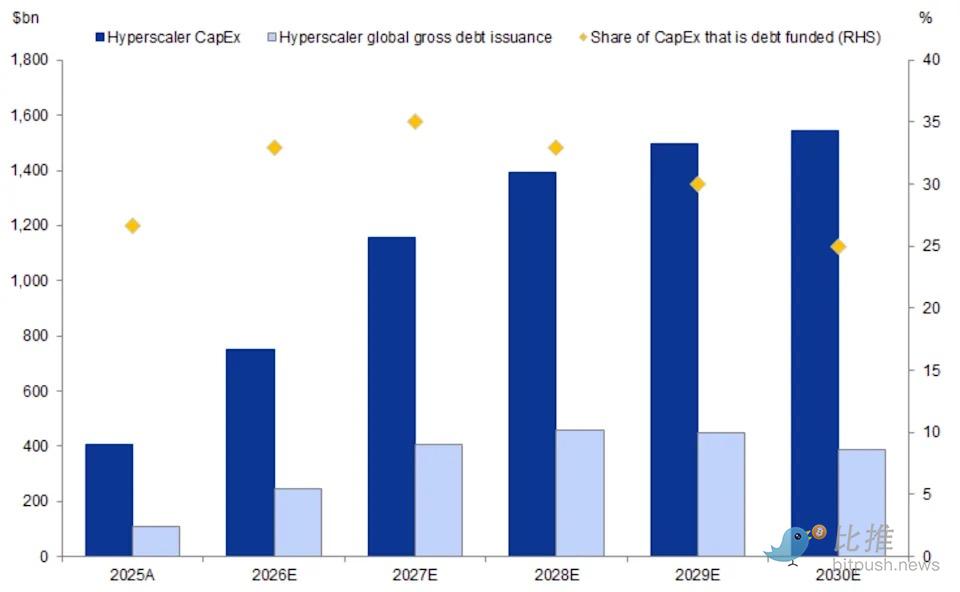
Goldman Sachs anticipates that by 2027, approximately 35% of these AI-related capital expenses will be raised by issuing investment-grade bonds ($400 billion in debt/$1.14 trillion in total expenses), which means AI investments are increasingly dependent on leverage.
Recently, chip stocks have clearly fluctuated due to market concerns about excessive investment in AI. Kristina Hooper, chief market strategist at Man Group, described the current market as “very bubbly,” and investors seem to be overreacting to any imperfection.
Highly leveraged companies, small-cap growth stocks, and unprofitable tech companies are generally the most vulnerable; companies with stable cash flow, low debt, and pricing power are likely to have the upper hand.
Instead, the most complicated scenario is “stand still, but the wording is hawkish.” US stocks may first rise because there was no interest rate hike, then return to gains due to rising expectations of interest rate hikes in September. What the market really wants to hear is how Walsh describes the next steps.
A more sensitive crypto market
The crypto market may be even more sensitive to Walsh than US stocks.
Bitcoin currently fluctuates around $64,000, and its short-term pricing still cannot bypass the US dollar, real interest rates, and global liquidity. Unexpected interest rate hikes will increase returns on holding cash and US bonds, strengthen the dollar, and force leveraged funds to shrink; Bitcoin will be directly pressured, and less liquid altcoins tend to react more violently.
But what is really worth being wary of is the “interest rate cut+downsizing” that Walsh may be promoting.
Interest rate cuts sound easy, but downsizing means that bank reserves are reduced, and the market needs to absorb more long-term treasury bonds. The result may be a decline in short-term policy interest rates, but long-term US bond yields cannot fall, or even rise due to rising maturity premiums.
This will create a combination that is not friendly to risk assets: the US dollar has not weakened significantly, long-term financing costs are still high, and the market will not receive the liquidity dividends familiar from previous interest rate cut cycles.
At the beginning of this year, the market saw a marked decline in Bitcoin simply because Walsh might be in charge of the Federal Reserve and push for downsizing. Wilson Asset Management strategist Damien Boey pointed out at the time that although Walsh favors lower interest rates, the exchange conditions are a smaller Federal Reserve balance sheet, which will hinder transactions such as gold and cryptocurrency that rely on liquidity expansion.
Therefore, trading in the crypto market is never just about “raising interest rates” or “cutting interest rates,” but how much “water” is actually in the financial system.
Walsh's most distinct style since he took office was to spare words like gold. Forward-looking guidelines were directly removed, and the market no longer had a “guiding light.” If he emphasizes inflationary credibility, the market will begin to set prices and raise interest rates continuously; if he chooses to wait but refuses to give a road map, the volatility will only increase.
The most essential change of the Walsh era was established: the Federal Reserve no longer tried to eliminate market surprises, but intended to preserve them. For US stocks and crypto assets, volatility itself is becoming a new policy variable.
Author: Little Bear Cookies
Twitter:https://twitter.com/BitpushNewsCN
Compare the TG exchange group:https://t.me/BitPushCommunity
Compare TG subscriptions:https://t.me/bitpush
