


On the eve of SpaceX's first earnings report, Musk was so anxious that he stayed up late to play
Author: Ga Roku
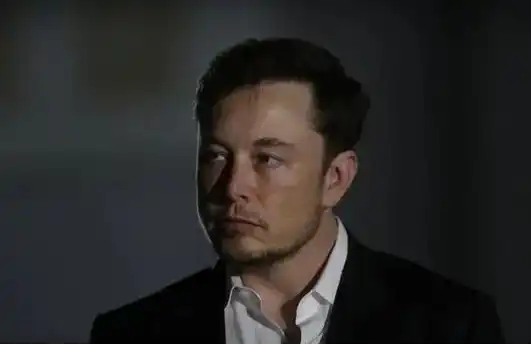
Recently, in addition to Oracle founder Ellison taking his six-married Chinese wife to shopping in Newport, Los Angeles, there is also the fact that Musk, the former richest man in the world, became addicted to “Eildon's Ring” again after SpaceX's stock price fell.
This isn't the first time Musk threw himself into a game during a high-pressure period. In 2022, after deciding to buy Twitter, he played “Eildon's Ring” at a Vancouver hotel until 5:30 a.m. This is what Musk's former girlfriend said, and it was later written in “The Biography of Musk.”
Musk's anxiety this time came from a sharp drop in SpaceX's stock price.
On the first day of listing on June 12, SpaceX closed at $161, surpassing $2.1 trillion in market capitalization, directly among the top six US stocks. Four days later, on June 16, the intraday market hit an all-time high of $225.64, and the market capitalization once reached $2.94 trillion, briefly surpassing Microsoft. Musk's net worth reached 1.45 trillion US dollars that day, making it the richest time humans have recorded.
Today, seven weeks later, the stock price has dropped from a high of $225.64 to $114, close to a standstill. The market capitalization has evaporated by about 1.2 trillion dollars, and Musk's personal book has evaporated by more than 750 billion dollars.
People close to Musk said that he has recently become super addicted to playing “Eildon's Ring”, and is also looking for employees to help him play games, even during meetings. It is common to slander employees at meetings. He was often late for evening meetings, and even postponed the 8 pm meeting until 2 in the middle of the night and there were people waiting for him.
Although we are unable to confirm the truth of these news. However, Musk's anxiety reached its peak this week, as SpaceX's first earnings release this Tuesday coincided with the first round of large-scale lifting of the ban this Thursday.
Who is responsible for the $1.2 trillion evaporation
On June 16, the market capitalization of SpaceX, which had been on the market for 4 days, once reached 2.94 trillion dollars.
However, the good times didn't last long. SpaceX, which has low circulation and high valuation, experienced 51 days of unilateral decline. As of today, SpaceX's market value has evaporated by about 1.2 trillion dollars.
Musk himself is probably the one who has been most affected. He holds approximately 4.8 billion shares of SpaceX, plus 350 million options with an exercise price of $8.40, and approximately 700 million Tesla shares.
SPCX fell 16.4% in a single day on June 22, and he lost $152 billion a day. The net worth fell below 1 trillion dollars on July 1, officially losing his status as a trillionaire. The launch of the Starship was suspended on July 16, and another day it lost 45 billion dollars. On July 27, his net worth dropped to $695.7 billion. In five weeks, Musk's net worth evaporated by about 750 billion dollars, and the evaporated market value surpassed the net worth of the second and third richest people in the world combined.
And the most “dumb eaters can't tell you how bitter it is” are the millions of US retirement account holders who have never placed a SpaceX purchase order.
SpaceX was included in the Nasdaq 100 Index on July 7. According to the old rules, newly listed companies need to wait a three-month “maturing period” before they are eligible. Nasdaq has modified the rules specifically for SpaceX: companies whose total market capitalization exceeds their existing constituents can skip the waiting period. SpaceX was included in the index just 15 trading days after listing, making it the fastest ever NASDAQ 100.
J.P. Morgan estimates that the Invesco QQQ Trust Fund alone, which manages about $480 billion and tracks the largest ETF on the NASDAQ 100, generated around $4.3 billion in passive buying demand. Adding up all the products tracking the Nasdaq 100, over 200, managed assets of about $800 billion, and the total passive capital flow was between $22 billion and $27 billion. The vast majority of this money entered the market before and after the market closed on July 6 and opened on July 7. At that time, the SPCX price range was $157 to $161. As of July 22, QQQ held 39.7 million shares of SPCX, with a market capitalization of US$4.57 billion and a combined weight of 0.98%.
In other words, millions of 401 (k) holders became SpaceX shareholders at a price of around $160. Their asset allocation included a stock with a net loss of $4.9 billion in 2025, a market sales ratio of 115 times higher, and less than a month of listing. Based on the closing price of $114.53 on August 3, the loss was about 28%.
However, they did not make this purchase decision themselves.
What kind of company is SpaceX today?
On February 2, 2026, SpaceX acquired Musk's AI company xAI on an all-stock basis, with a valuation of 250 billion US dollars, and the consolidated entity was valued at 1.25 trillion dollars. In May, Musk announced that xAI no longer exists as an independent company. On July 6, the company officially changed its name to SpaceXAI. The trademark application documents include satellite data centers, orbital computing power services, and AI software. The reason given by Musk is that global AI electricity demand “cannot be met by ground-based solutions at all,” and moving the data center to space is “the only logical solution.” SpaceX has applied to the US Federal Communications Commission to deploy up to 1 million AI satellites.
Plus Cursor. On June 16, the day the stock price peaked, SpaceX announced the exercise of previously obtained options to acquire Anysphere, the parent company of the AI programming tool Cursor, for 60 billion US dollars. It was the largest venture capital-backed startup acquisition on record. The purpose of the acquisition is to connect Cursor's programming data to the training pipeline of the big model Grok, and also allow Cursor to use xAI's Colossus supercomputing cluster.
So, a rocket company bought an AI programming tool using the shares it just went public to buy an AI programming tool in order to train a big model and run it in a data center ready to launch into low-Earth orbit.
SpaceX will henceforth need not only finance rockets, satellites, and terrestrial networks, but may also need to fund Musk's broader technical ambitions. The problem is that its balance sheet isn't light.
Figures disclosed in the IPO prospectus: Revenue for the full year of 2025 was US$18.7 billion, with a net loss of approximately US$4.9 billion. Revenue for the first quarter of 2026 was US$4.69 billion, net loss was approximately US$4.3 billion, and capital expenditure was close to US$10 billion. AI-related spending as a share of capital expenditure was 61% in 2025 and has risen to around 76% in early 2026. Capital expenditure for the full year of 2025 was approximately $21 billion, which was more spent than earned. Looking ahead, analysts agree that capital expenditure will reach US$48.7 billion in 2026 and rise further to US$118.4 billion in fiscal year 2028. Debt is expected to increase more than fivefold during the same period, soaring from US$41.7 billion to US$218 billion.
So what kind of company is SpaceX today?
Arguably, this is not a company that makes rockets and satellite internet, but rather an AI infrastructure company. Musk uses Starlink subscription cash flow and his own stock to pay for AI computing power bills.
However, the situation within the AI department is much worse than the previous rumors.
Bloomberg Businessweek published an investigation based on interviews and internal documents from dozens of people familiar with the matter on July 16. In the spring of this year, Michael Nichols, a system operations executive who was previously responsible for Starlink Engineering for a long time, became the president of xAI and took over the department. Musk gave him only one mission: catch up with Anthropic's Claude. Every time Claude updates, Musk wants Grok to keep up. Several internal projects are directly named after Claude, and several channels in Slack have competitors' product names. Nichols' inaugural memo wrote: Immediate goals, match Claude's performance, and make Grok “maximally useful.”
But what Nichols took over was a mess of ruins. Dozens of employees left their jobs after the merger, including several co-founders. The March plan was to lay off up to 30% of employees. As a result, people were fired, but no one notified them. Recruitment was also paralyzed in chaos, and there was no news after the candidate was interviewed because the human resources department was understaffed and couldn't even complete the process. The pre-training team was reduced to less than five people at one point. The departure list also includes the head of post-training and a co-founder from French AI company Mistral who only joined within a year. Some employees began to doubt Musk's judgment, believing that someone who started by building cars and rockets is simply an layman when it comes to big models.
Follow-up coverage by the US tech research media The Information was even more decisive: xAI's 11 original co-founders have all left. More than 50 researchers and engineers turned to Meta and the emerging AI research company Thinking Machines Lab. After the departure of Lianchuang Group, the company structure has been in a state of almost continuous change for a long time. Musk once personally managed dozens of direct subordinates.
A company that plans to spend $118.4 billion in capital expenses in 2028 has run out of core research team in the AI department. The CEO is managing dozens of people, and the CEO is also managing rockets, satellites, a car company that has just turned negative in cash flow, and a social networking platform.
The first financial report hit, and the first round of large-scale lifting of the ban
After the market on Tuesday, August 4, SpaceX released its first quarterly earnings report since listing. This is the first time Wall Street has seen this company's full operating data.
Let's first take a look at what each agency is expecting from SpaceX this quarter.
Visible Alpha, a subsidiary of S&P Global, agreed that total revenue was $6.9 billion; Bloomberg agreed to expect $6.81 billion; Zacks agreed to expect $6.72 billion; and Koyfin's data was $6.82 billion. It is roughly around $6.8 billion, implying a year-on-year increase of about 15% and a sharp month-on-month jump from $4.69 billion in the first quarter. It sounds good, but the market is not waiting for growth itself, but whether it can accelerate.
In terms of losses, companies expect to lose between $0.22 and $0.26 per share, and Koyfin expects adjusted profit before tax, interest, depreciation and amortization of approximately $2.05 billion. A loss of $0.64 per share is expected for the full year 2026, which is only expected to return to earnings of $0.63 per share in 2027.
More important than the total number is the division structure. SpaceX currently has three business segments: Starlink satellite internet, Falcon and Starship launch services, and AI computing power and Grok models. The market expects Starlink's operating margin to reach 35.9% this quarter, with its profits offsetting operating losses in the launch and AI sectors. Analysts also expect Starlink's revenue to grow by more than 50% year over year to $4.7 billion in the third quarter.
In other words, for a company with a market capitalization of 1.4 trillion US dollars, the entire valuation story still only stands on Starlink's business alone.
But there are also cracks in Starlink's own story. By the end of the first quarter, Starlink had approximately 10.3 million subscribers in 164 countries around the world, doubling year-on-year and growing very fast. The problem is that the average monthly revenue per user dropped from $86 a year ago to $66, and management says this figure will continue to decline as Starlink expands overseas and lower price markets.
Prior to the first earnings report, the brokers' differences over SpaceX had been exaggerated to the point where it was almost absurd. When a company goes public, underwriters have a quiet period (this time until July 7) before analysts can officially release coverage reports. The target price is the expected stock price for the next 12 months given by analysts based on their own valuation model. It is not a forecast of financial reports, but a judgment of the company's long-term value. On July 7, more than a dozen banks released their first coverage reports at the same time. As soon as the results were announced, the market discovered how far-fetched the differences were.
Brian Gesuale, an analyst at the US investment bank Raymond James, gave the highest total of $800, saying SpaceX is “one of the most defining industrial infrastructure companies of the 21st century”. The core logic is that Starship can keep the cost of entering orbit extremely low. Adam Jonas, chief analyst at Morgan Stanley, gave $300, based on a long-term forecast of $3.3 trillion in revenue in 2040. Goldman Sachs analyst Eric Sheridan gave $205. Also in the middle are J.P. Morgan $225, Bank of America $235, Wells Fargo $230, UBS $210, Citibank $200, Macquarie $250, and Royal Bank of Canada $225.
The bearish side: HSBC opens coverage with a “hold” rating, with a target price of $115, which is below the launch price of $135. CFRA, an independent research agency under S&P, gave a direct “sell” rating of $115, citing “extremely aggressive growth strategies, excessive valuation expectations, and significant capital intensity.” The fair value given by Morningstar, one of the world's largest independent investment research institutions, is estimated to be even lower, at only $62, less than half of the issue price.
As many as 23 banks participated in this offering, 18 of which gave target prices. The median was $225, and the average was around $237. From the lowest of $62 to the highest of $800, the difference was 13 times. At the moment, the stock price is around $114, which is still far below the sellers' median.
As can be seen, this group of people who know SpaceX the most can't even agree on what range its reasonable valuation falls within.
And for Tuesday's SpaceX call.
Adam Jonas, chief analyst at Morgan Stanley, listed a few things he wanted to hear in the latest report: whether SpaceX plans to add more than 2 gigawatts of computing power next year; whether there are new large-scale new cloud computing partnerships; Grok's usage trends on Cursor and the growth rate of Cursor's annual recurring revenue. He also identified three risk points: if capital expenditure guidelines clearly exceed 50 billion US dollars, another round of financing before the end of the year, and a slowdown in Starlink user growth. The first one is almost bound to happen.
This time, SpaceX also launched a special question collection page built by Grok, an AI chatbot. The public can submit questions and vote. The approach follows Tesla's previous model of using Say Technologies to solicit questions from shareholders. Judging from Reddit, the largest forum community in the US, and Stocktwits, retail investment community, the two most concentrated claims are: whether management will give detailed data on the division scale for the first time, and whether it will provide any kind of comfort for the lifting of the ban on Thursday.
The first shareholders are finally able to sell
On Thursday, August 6th, the first batch of SpaceX unbans arrived.
Unlike traditional 180-day one-time cancellations, SpaceX designed rolling releases in stages to spread supply over several months to avoid cliff-style smashing in a single day. The trigger for the first tier is the second full trading day after the release of the second quarter earnings report. The target was employees and some early investors, with a ratio of 20% of their restricted shares, up to 9115 million shares.
This figure is nearly half more than the total number of shares SpaceX sold at the time of its IPO, which is about 629 million shares, including overallotted shares.
Another one is more sentimental: Currently, the market value of all SPCX freely tradable shares is around $86 billion. At $114.53, more than $104 billion of sellable shares were released on this day. In other words, the number of sellable shares that poured into the market on this day is larger than the entire current circulation market in the market. The $104 billion needed to find a rival market in a pool of 86 billion dollars.
In terms of shareholder composition, 7 percent of employees' shares will each be released in five installments on the 70th, 90th, 105th, 120, and 135th days after listing. Meanwhile, Musk himself and a number of undisclosed large institutional holders signed a 366-day lock-up agreement until June 12, 2027.
An engineer who joined in 2019 and has exercised a single digit price. Selling at $114 is still tens of times more profitable. What he needs to consider is the house down payment, tax planning, and centralized position risk. Wealth management agencies already provide services specifically for SpaceX employees, reminding them that the corresponding withholding tax deadline for August sales is September 15.
What has clearly stated that it will not sell is Coatue Capital, a major US technology investment fund. One of their investors said “I'll keep it” in a CNBC interview and added something worth remembering: Some of the biggest mistakes he made were all from optimizing for the short term. The example he gave was Nvidia. Selling it back then was one of his biggest mistakes.
ARK Fund founder “Sister Wood” Kathy Wood bought on dips at a position where SpaceX had evaporated the entire Tesla market value.
Duan Yongping, one of the most famous value investors in the Chinese investment community and founder of Backgammon, also stepped in this position. On July 23, he posted an operation record on the snowball: he sold SpaceX's $115 exercise price put option and received a $23.26 premium. This means that if SpaceX falls below $115 when it expires, he will pick up the goods at 115, deducting the premium already received. The actual cost is $91.74, and as long as it doesn't fall below 92, he won't lose. If the stock price is still above 115 at maturity, he will earn this premium in vain. The five-month yield is 25.35%, and the annualized rate is about 60%.
The most systematic warning comes from former US Securities Regulatory Commission Chairman Gensler. He called what was about to happen a “big rebalance”. The original phrase was: “All those venture capital institutions and sovereign wealth funds will want to take risk off the table.” He estimated that investors may reduce their exposure by one-third, half, or even three-quarters, thereby creating significant selling pressure. The probabilistic judgment he gave was: looking back in six months, this wave of IPOs may be OK, but the same or even greater possibility is that the lifting of the ban will trigger a systematic sell-off.
It is worth mentioning that the “big short” Michael Berry, famous for shorting the subprime mortgage crisis, studied SpaceX and finally chose to quit. Famous CNBC host Jim Cramer gave the simplest judgment on the July 28 program: if you want to buy, you can buy some first, but if you want to buy a lot, at least wait until the first wave of the ban is lifted on Thursday, and let it lower the price a bit. He added a common phrase that should be kept in mind this week: Generally speaking, supply increases and prices fall.
However, two more variables were seriously underestimated this week.
On Wednesday, August 5, the ISM Non-Manufacturing Index for July was released, and the market expected 54.5. On Friday, August 7, the July Non-Farm Payroll Report was released. The day the ban was lifted, August 6, is sandwiched between these two macro-data sets.
Wednesday's data was strong. Expectations of interest rate cuts moved backwards, and long-term interest rates rose. For a company that has negative free cash flow and relies on financing to maintain capital expenditure, rising interest rates directly hit valuations, and the pressure to lift the ban has been amplified. Wednesday's data was weak, expectations of interest rate cuts heated up, growth stocks as a whole benefited, and the impact of lifting the ban may be diluted. But non-agriculture on Friday is the real double-edged sword: too strong data pushes up interest rates, too weak data triggers concerns about recession, and volatile growth assets are still under pressure.
For SPCX, which is both a growth stock and an asset-heavy breed, the two directions of macro data are not very friendly. What it needs is lukewarm heat, and this is exactly the least likely result that two data can give at the same time in a week.
Well-known Wall Street strategist Tom Lee has warned that the NASDAQ and S&P 500 could see a bear-like trend in the second half of 2026. One of the headwinds he named was the lifting of the SpaceX ban. When a change in the share structure of a weighted stock can be written into the general market outlook, this incident is no longer just an individual stock incident.
Of course, there is a possibility that SpaceX will run out of favor. It fell 52% in 51 days, and there was no major business-level bad news during this period. Starship successfully completed a test launch on July 24. The main driver of this period of decline is the expectation that the ban will be lifted; the market has already traded ahead of schedule and pressured. If Tuesday's earnings report shows segment caliber and Starlink's profitability is verified, and at the same time, the actual sell-off scale on Thursday falls short of expectations, the resolution of the suspense itself is beneficial. Bears account for more than 30% of the circulation market. If the gap is exhausted, they may be forced to make up, and the rebound will be quite impressive.
Whether up or down, Musk will experience one of the most stressful days since he revealed his identity this week.
Remember the last time Musk publicly admitted that he was “closest to a mental breakdown” was in 2008. That year, SpaceX's Falcon 1 rocket failed to launch three times in a row. Tesla was burning a lot of money, the global economy was in financial crisis, and he himself was still going through a divorce.
Musk later recalled that the roughly $1.8 billion he received from selling PayPal was almost entirely betting on Tesla and SpaceX. SpaceX had “almost no money” before its fourth launch in September 2008. Musk said that if it fails again this time, the company will completely end.
But the rocket succeeded. A few months later, NASA gave SpaceX a contract of about $1.6 billion, and Tesla investors also injected capital before Christmas. Musk later called 2008 “the worst year of my life.”
Today, Musk is facing yet another new crisis.
Interestingly, the writer of “The Biography of Musk” came to a conclusion after filming Musk for two years: Musk is not only able to withstand high pressure; he has an almost instinctive desire for high pressure.
The 2018 Tesla Model 3 production capacity hell has just gone through the hardest phase, and the stock price has begun to stabilize. Then on August 7, Musk suddenly tweeted: “We are considering privatizing Tesla for $420. Funding has been secured.” The tweet led to the suspension of intraday trading of Tesla shares, which later led to securities fraud charges from the US Securities Regulatory Commission. In the end, Musk was forced to resign as Tesla's chairman for three years, and the individual and company each paid 20 million US dollars in fines.
A word that people close to Musk often mention when talking about Musk: demon mode, demon mode. His ex-wife often used this term to describe the state in which he became extremely productive and at the same time extremely dangerous under high pressure.
And today, maybe we can look forward to it. In today's high-pressure state, what surprises can Musk bring us?
Twitter:https://twitter.com/BitpushNewsCN
Compare the TG exchange group:https://t.me/BitPushCommunity
Compare TG subscriptions:https://t.me/bitpush
