


Interview with Dr. Cao Jing, founder of BitMax: The cold thinking behind not hitting hot spots and rejecting the bubble, but the initial projects all increased by more than ten times

This weekComparing Bitpush对Dr. Cao Jing, CEO of BitMax ExchangeAn exclusive interview was conducted. In the interview, Dr. Cao Jing explained the development of crypto trading platforms in recent years, new trends in the crypto finance landscape, and BitMax's products and ideas.
BitMax (BTMx.com)It is a digital asset trading platform created by Wall Street's senior quantitative trading team. It adheres to the three core values of efficiency, transparency, and stability, adheres to the brand positioning of “leading the industry with product innovation”, and is committed to providing a wide variety of financial products and related services to institutional and individual customers, and is a leader in the digital asset trading industry.
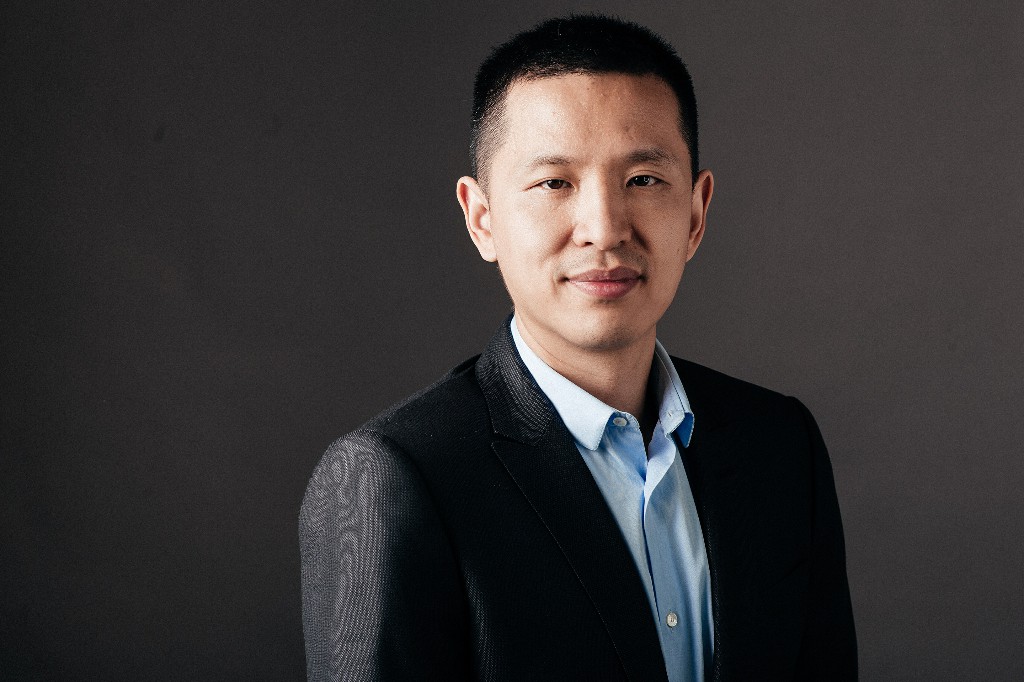
Dr. Cao JingHe is the co-founder and CEO of the BitMax (BTMx.com) exchange, a Ph.D., from the University of Chicago. He has worked for Knights Capital and Barclays Bank, and founded the quantitative trading fund Delpha Capital Management (Delpha Capital Management) in New York. He is one of the few entrepreneurs in the cryptocurrency industry with many years of experience in quantitative trading and venture capital on Wall Street.
[Interview Highlights]
“The mechanism of deflation plus dividends is the core of BitMax platform coins. This is where BitMax is different from any other platform currency. BitMax shares the core benefits to our coin holders to the greatest extent.”
“The current value of BTMX in the market is undervalued, but the reasonable price will slowly return. It may be undervalued for a while, but it will always return to normal prices and will not be undervalued forever.”
“BitMax's coin listing strategy is small but sophisticated. Listing is the beginning of a cooperative relationship between the project party and the exchange. The exchange needs to know what the project party wants and what best serves the interests of the project party. Of course, the exchange on the project side hopes that the coin can circulate on the exchange, and it is hoped that this coin can reach people who have not reached it before.”
“I don't think a project's IEO or no IEO will have any impact on the fundamentals of this project. First, it's just a financing method. The project party is different from the previous public offering to finance through an exchange. Second, it is a market promotion method, which can greatly concentrate the enthusiasm of exchange users.”
“I have always believed that in terms of safety, institutional guarantees account for 70% and technical guarantees account for 30%. Many security incidents can be avoided. Of course, exchange security is an eternal topic. The methods of hackers and coin thieves are constantly evolving, and the methods for protecting exchange security are also constantly evolving. I think we should not only guarantee security technically and institutionally, but also evolve accordingly in terms of legislation, data tracking, and transparency, so that we can deal with increasingly rampant security issues.”
“I want to say to every cryptocurrency investor or user, every industry has an upward cycle and a downward cycle. But overall, the crypto market has far more regulations than the 2017 mature regulations in terms of regulation, technology, and application.”
'First, investment enthusiasts should always follow the hot spots in the market, and the second is to do their homework. Choose the direction you want to invest in, choose reliable projects, reliable currencies, and reliable exchanges. ”
[Full text record]
“Every problem is a business opportunity”
Comparing Bitpush:We all know that BitMax was founded by Wall Street's senior quantitative trading team. From the underlying technology to product design to service concept, it embodies the concept of “reinventing Wall Street and sublimating Wall Street”. Let's first ask Dr. Cao to introduce you to the original intention of starting BitMax, the history of the past two years, and the current state of BitMax.
Dr. Cao:Before I first founded BitMax, I myself was always doing quantitative trading in the secondary market. I started watching the cryptocurrency market in 2017, which is quite late.
At that time, everyone knew that the entire cryptocurrency market was very prosperous in 2017. There was a wave of peaks in terms of both currency prices and trading volume. I also paid attention to this situation. There were also large price fluctuations in trading volume, and there were also large price fluctuations. So I started studying it from the perspective of a trader.
The results of the study were quite surprising, because the exchanges at the time, including several giants, were at a relatively early stage in terms of system performance, security, and compliance. Not to mention the second- and third-tier exchanges. On the one hand, we are discussing where to trade, and on the other hand, we have written down many areas that we hope the exchange can improve.
Later, I felt that out of so many questions, every question was a business opportunity. If we started an exchange ourselves, would we do a better job than them, so we had the idea of doing an exchange, and an interest group would discuss this issue, and the whole idea took shape during the discussion.
Afterwards, I had a chat with investment friends around me. Everyone was very supportive, so I got the BitMax founding team. BitMax has also invested in traditional venture capital, including top domestic VCs such as Sequoia Capital and Jingwei Capital. That's how I did it after that.
“The mechanism of deflation plus dividends is the core of the BitMax platform coin”
Comparing Bitpush:As one of BitMax's core products, we know that the Bitmax platform coin BTMX and the economic model behind it were ingeniously designed by Dr. Cao, and currently dominates the industry. Can you ask Dr. Cao to explain BTMX's economic model, circulation status, and existence value in an in-depth manner in simple and easy-to-understand language.
Dr. Cao:The BTMX model mainly focuses on two points, because now almost all currencies focus on these two points: one is the right to hold the coin, and the other is whether the circulation situation is deflating. Therefore, many exchanges use users who hold coins to participate in IEO, or exchange repurchases, etc. BitMax is the only exchange that takes both of these to the extreme.
First, 80% of our exchange's spot and leveraged income is placed in a fund pool to pay dividends to users holding platform coins every day. This should be the highest ratio among all exchanges, and BTMX is deflating every day. Of all the platform coins you've seen, this is the only one with dividends and deflationary attributes; there probably won't be a second one.
Moreover, our dividends are still very high. The number of our dividends to coin holders in 2019 was 15 million USDT — there should be several million in the first half of this year, but no specific data has been released yet — this is the aspect of holding dividends. This is also why 70-80% of our platform coins are locked up and not in circulation on the market, because everyone feels that getting dividends is very good, and there is no better way to invest than this.
Our release and deflation are also quite creative. All purchases on our platform will consume platform coins, and spent platform coins will be permanently locked up and not put into circulation. Every time two BTMX is destroyed, one will be released from private equity, so platform coins will always deflate.
We have deflated 22 million platform coins so far this year, and the circulation in the market is almost 220 million. The amount of deflation in the first half of this year accounted for almost one-tenth of the circulation.
The mechanism of deflation plus dividends is the core of BitMax platform coins. This is where BitMax is different from all other platform coins. BitMax shares as much of the core benefits as possible with our coin holders.
Comparing Bitpush:Judging from the comparative data, BTMX's price increase was quite large this week.
Dr. Cao:The reasonable price of platform coins in the market will always slowly return. They may be undervalued for a while, but they will always return to normal prices and will not be undervalued forever.
“BitMax's coin listing strategy is small but refined”
Comparing Bitpush:We all know that now, listing service (listing service) has become one of the core competencies of exchanges to seek high-quality projects and attract users. BitMax has great experience and advantages in the selection of project parties and the design of the coin listing strategy. From LTO at the beginning to RUNE last year to RVX, ORN, and FIO are all superstar projects. Can Dr. Cao give us a brief explanation of BitMax's selection criteria for project parties and design ideas for go-to-market strategies for projects (especially initial projects)?
Dr. Cao:Our strategy for listing coins is mainly less and less refined. First of all, we will cooperate with all listed companies. Except for particularly decentralized projects, such as Bitcoin, as long as it is a BitMax listing project, there will be official cooperation. We think that listing the coin is not just about putting the trading pair up for the transaction. Listing the coin is actually a very complicated process. It takes a month to prepare before listing the coin. After the coin listing, there is also continuous promotion, community activation, and promotion for the project party. These all involve the cooperative relationship between the project party and the exchange.
We have always advocated providing a very complete range of services to the project parties. From one month before listing to three months after listing, we have even been serving for two years for LTO projects.
Actually, this is very simple. First, we need to know what the project party wants and what best suits the interests of the project party. Of course, the exchange on the project side hopes that the coin can circulate on the exchange, and it also hopes that this coin can reach people who have not reached it before.
For example, we have a lot of overseas projects on BitMax, so these projects have many common pain points: it is very popular overseas, but no one knows about the Chinese market because none of the entire project team can speak Chinese — at this point we will help promote it in the Chinese market.
A classic example is LTO. LTO is a European project. After we promoted it to China, the currency price increased 20 times on Binance, and then we first started staking and leveraging.
To serve the project party and connect with the project party, it is necessary to know very clearly what the project party's needs are, how to better serve the project party's investors, and how to better serve the project party's trading group. So after the service is good, it is tantamount to better serving the exchange's trading users, so this is actually a win-win relationship between investors, trading users, and project parties.
What we recommend is to help the project party build an ecological structure, not that once the coin is listed, it won't matter. Take Stake as an example. From the initial coin listing, to helping the project party launch it, to helping it launch staking for the first time, the completion of this ecosystem will indeed make BitMax's entire listing process or listing service very different from other exchanges.
Another example is ORN. ORN is BitMax's initial project. The coin listing has increased 30 times in 4 days. You can compare our trading volume with that of another exchange that was launched at the same time. Our trading volume is almost 100 times that of our counterpart. The other party has basically no trading volume. If you look at the wallet, you'll find that basically all of the currency assets are on our side.
The reason is actually quite simple. Our service to the project side is not the same as the other party's direct coin listing, including support for the entire promotion, market warm-up, and activity, as well as support for the project side's staking and project ecosystem. Like other exchanges, listing coins is not a level of service at all. Basically all investors and users are on our side, and the project party itself is also very happy.
In fact, I personally received a lot of feedback from investors and project parties, and they thought our service was excellent. This is a significant difference between us and other exchanges. It helps the project party build a complete ecosystem rather than just listing coins.
“This year's exchange IEOs are all very cautious and picky”
Comparing Bitpush:This is really invaluable. The IEO model was popular in the cryptocurrency industry in 2019, but now it seems to have fallen silent. How is BitMax different from other exchanges in this regard?
Dr. Cao:Binance first started IEO in the first half of last year. I think its original purpose was a marketing tool. I don't think that a project's IEO or no IEO will have any impact on the fundamentals of this project. First, it is a financing method. The project party is different from the previous public offering to finance through an exchange. Second, it is a market promotion method, which can greatly concentrate the enthusiasm of exchange users.
But looking back at last year's IEO, basically all exchanges had mixed IEOs until the end, because first of all, there weren't that many high-quality projects on the market. This was the first one.
The second is that many users are in a wave, so after the popularity passed, the project side, including currency prices, publicity, etc. were not as good as expected.
You can take a look at the IEO projects in the entire market last year. Exchanges including Binance and Huobi did not perform so well. This is why everyone was very careful when doing IEO this year.
This year's trend is not the same as last year. Last year's IEO projects can artificially create some popularity as long as they want to do IEO, so this year is not the same. This year, people will choose projects or sectors that are popular themselves for IEO.
I think this strategy is an improvement over last year. For example, the DeFi sector is currently popular. If it is a hot project, plus IEO hotspots on exchanges, plus some other publicity methods, the results may be much better than last year, and the number and frequency of IEOs is not as high as last year. This is also a good thing for the entire market. Because the market doesn't have that much money to support so many IEOs.
This year, I think all exchanges have learned the lessons of last year. First, they are more careful, and second, they are more picky about choosing projects.
“Full position leverage makes trading easier.”
Comparing Bitpush:Let's go back to BitMax's product section. We know that BitMax has a “full position leverage” product that is unique and pioneered by the entire industry. This “full position” concept enabled BitMax's leveraged products to directly become No. 1 in the industry. I've always been curious. How did Dr. Cho come up with the concept of “full storage”? Please ask Dr. Cao to give our readers a comprehensive introduction to BitMax's flagship product — leverage.
Dr. Cao:The concept of a full position was not actually invented by me. The full position concept is basically a common model in traditional finance, including the US stock market. We are just replicating this traditional financial mechanism into the currency world.
It's very simple to use. The full position model became popular when people started IEOs on various exchanges last year, and many people needed to hedge platform coins.
Let me give you an example. For example, if you participate in Binance's IEO, you need to buy Binance Coin (BNB). If BNB is traded on another exchange, then you need to borrow the coin, then you need to short sell this coin, finally buy the coin back, and then return the coin. This is a generally applicable trading process for other exchanges.
However, on BitMax's side, our transactions are so simple. There are no steps for borrowing or repayment at all. We only need to deposit USDT to our side, or deposit any other asset to us, directly sell BNB and go short, and directly buy back BNB to return the coins. The entire procedure can be operated with just one click. Very simple and easy to understand, very convenient for short-term operations.
This is why our leveraged products have suddenly become one of the most recognized and easy to use leveraged products in the industry. Furthermore, our leverage also has an important advantage. Under the full position model, we support nearly 50 types of leveraged assets. When depositing any type of asset, you can short BNB without depositing a specified USDT or BTC — this is very convenient for users, because there is no need to sell their coins to cash out, then transfer the coins and then borrow the coins. This operation is too complicated. Therefore, our operation is very simple and easy to understand, and has been well received by many trading users.
“BitMax's Staking Solves Asset Liquidity and Flexibility Issues”
Comparing Bitpush:Well, BitMax's leverage is really excellent; for users, convenience is king. Also, I know that BitMax's “full position” concept directly contributed to this year's new star product: BitMax Innovation Staking. BitMax staking is also deservedly the best in the industry. Could Dr. Cao please tell us about the differences and advantages of BitMax Staking compared to other competitors in the industry, as well as the current user base and user feedback of this product?
Dr. Cao:Our staking product has been online for almost three months, and we have received a lot of positive reviews. Basically, all staking communities feel that Bitmax should rank first in terms of exchange staking, regardless of any aspect.
From launch until now, the base of users participating in our staking has also grown exponentially. Our staking has actually solved some of the major pain points of staking in the market.
First, there is the issue of liquidity of staking assets. For example, traditional staking locks up assets so they can't move. If I want to stake ATOM, I can earn interest there after locking it up, so what if I suddenly find that I need money to buy another coin, but all of my money is in ATOM? It may take many days to unpledge, but once unpledged, there is no chance to operate that coin.
This is a bit like a bank term deposit. Although interest is relatively high, liquidity is locked in. This is a big problem. However, when staking at BitMax, staking assets can be used as margin for leverage. In other words, if your ATOM is stored with us, you can also operate Bitcoin, which has no effect at all. This greatly solves the liquidity problem and increases the utilization rate of assets.
Second, staking and unlocking on BitMax is instant. If you unstake ATOM elsewhere, it may take 7 or 14 days before unstaking. On the BitMax side, you only need to click once, and the pledge will be immediately unpledged.
The first point is to solve the problem of asset utilization. The second point addresses the issue of asset flexibility. Therefore, having these two advantages will make many users choose to stake on our side rather than on other nodes.
“We need to be a bridge between the West and China, traditional markets, and currency circles”
Comparing Bitpush:If you want to count BitMax's recent big moves, what you can't miss is the contract product that just launched this year, and the follow-up function was launched shortly thereafter. BitMax is almost the first major exchange to launch a copy function. On behalf of our readers, I would like to ask Dr. Cao, why did BitMax launch a tracking function, and what kind of function and significance does it have in BitMax's ecology and liquidity? What impact will it have on the entire coin industry and retail users respectively? With the launch of the tracking function, what kind of expectations does BitMax have?
Dr. Cao:It's like this. Previously, we knew that copy products are generally third-party products, and that they are connected to the trading operations carried out by the exchange through an API. One big problem this will cause is what to do if the network connection is unstable, including network delays back and forth, which can cause some orders to not keep up. For example, I followed you on my order, but my order is probably half a second late than yours, and many times I miss out on trading opportunities.
Therefore, we have always felt that doing copy orders on exchanges is a very good thing, because it is directly operated in the background, which can avoid network delays. In other words, a few milliseconds after the trader with the order placed the order, all the copy trader's order can be completed. There will be no network disconnection issues, and there will be no API disconnection issues, especially during extreme market conditions, and there will be no API disconnection issues.
The delay in our tracking feature has been reduced by at least ten times. This is a great thing for users who follow orders. Another point is that BitMax is not the same as many domestic exchanges. We have a very high proportion of overseas users, so we have always wanted to bring the trading strategies of overseas users domestically and the trading strategies of good domestic traders overseas.
The two sides will have very good communication on the tracking system. Currently, our top seller is an outstanding trader from the Russian community, with almost 100 copy users. There are many Chinese users among his followers, so he is also very happy when we chat with him privately. He feels that the BitMax platform has given him an opportunity to get out of Russia and expand into Asian markets such as China and South Korea. He felt very grateful.
In fact, this is also consistent with the original concept of BitMax. We need to open up a bridge between the West and China, and open up a bridge between traditional finance and the currency industry. Therefore, the launch of the tracking system also fulfilled a minor goal we had previously anticipated from this aspect.
“BitMax is not only a high-quality coin, but also supports the project ecosystem”
Comparing Bitpush:Hearing this, I really feel that all of BitMax's product features are considered from the viewpoint of user convenience. Compound's COMP token was very popular some time ago, and many exchanges quickly added support. What is the strategy for BitMax to launch this type of token?
Dr. Cao:Our Bitmax move to launch DeFi is also quite big. But we're still saying that. Unlike some exchanges, as long as it's a DeFi coin, we go to it; we still pay attention to two things:
The first is the quality of the listing project, and the second is that we hope to have all-round cooperation with the project party to bring more benefits to our trading users, and also provide the project parties with more traffic and more exposure, and build their international community. We are moving very early in this regard. Bitmax has been developing the DeFi section since last year. This year, we can indeed see that our work last year has borne fruit, and we are also very happy.
Second, the projects we have launched are all very high-quality projects in DeFi. Including Compound, we also have plans to go online, but we don't want to just go online, because the ecosystem of the Compound coin is very complicated, and if we prepare for it later, we must provide technical support for the entire ecosystem of the Compound coin, not just one coin.
Therefore, this should be in line with our consistent coin listing philosophy. First, we need high-quality coins, second, we will support the entire ecosystem of this coin, and third, support the market, community, and users.
Comparing Bitpush:In other words, our BitMax listing strategy is actually very careful, and it is also very responsible for investors.
Dr. Cao:That's why everyone saw that we added six coins in a row, at least a tenfold increase, and the community was also very popular. Everyone now has a perception that as long as it is on BitMax, it must be a boutique coin. This is also a big thank you to our business colleagues for bringing us so many quality projects. We will work hard to continue this trend and hope to bring you better projects.
“Exchange security depends on the system for 7 points and technology for 3 points”
Comparing Bitpush:The Twitter hacking incident last week can be said to have caused shock within and outside the community. For exchanges, safety has always been a very important factor. What does Dr. Tsao think of the impact this incident may have on the industry? How does BitMax protect the security of user data and funds?
Dr. Cao:First of all, the Twitter hacked incident was not only that Twitter related to blockchain and cryptocurrency was hacked; many traditional companies and big V tweets were hacked. According to what I know, this time it was Twitter's third party scheduling service that was hacked, not Twitter itself.
This is something that no one expected. First, BitMax doesn't use a third-party service, because our philosophy is that we basically install everything ourselves, and it will take a long time, but there are no technical bottlenecks when upgrading, and there are guarantees in terms of technical support, upgrades, and security. This is why we have no problems with BitMax when basically all exchanges have a history of being hacked.
Second, the security of exchanges mainly relates to users' assets. The security of BitMax users' assets is well known in the industry. Not only did we spend a long time building our own security team, but we also have very strict systems in terms of mechanisms, procedures, and individuals to ensure the security of our wallets.
There were a lot of exchange security incidents a few years ago, but recently they have slowly abated. With the exception of the two Korean exchanges, there are basically no incidents of exchange theft that have been seen so far, and the hacking of the Korean exchange is also due to institutional problems.
I have always believed that in terms of safety, institutional guarantees account for 70% and technical guarantees account for 30%. Many security incidents can be avoided. Of course, exchange security is an eternal topic. The methods of hackers and coin thieves are constantly evolving, and the methods for protecting exchange security are also constantly evolving. I think we should not only guarantee security technically and institutionally, but also evolve accordingly in terms of legislation, data tracking, and transparency, so that we can deal with increasingly rampant security issues.
“Investors should keep up with hot topics and do their homework”
Comparing Bitpush:Yes, security is also an issue that the entire ecosystem needs to face. At the end of the interview, is there anything else Dr. Cao would like to tell our Bitpush readers?
Dr. Cao:I want to say to every cryptocurrency investor or user, every industry has an upward cycle and a downward cycle. But overall, the crypto market has far more regulations in terms of regulation, technology, and application than it was in 2017.
Two or three years ago, it was common for exchanges to go down, etc., but now this problem has basically been eliminated. There was no regulation at all before; now, whether in Singapore, India, South Korea, or even the US, there have been many regulatory advances.
The previous projects included a large amount of one-dollar coins, but now they are more projects that are of real quality and can actually solve real problems, so the overall speed of cryptocurrency development has exceeded my expectations.
I think to be an investment enthusiast, the first is to always follow the hot spots in the market, and the second is to do your homework. Choose the direction you want to invest in, choose reliable projects, reliable currencies, and reliable exchanges.
Thank you all for supporting us for a long time, and I hope everyone will work with us to make the entire cryptocurrency ecosystem healthier in the future.
Comparing Bitpush:Yes, I just want to choose a reliable exchange like BitMax. Thank you Dr. Cao. (end)
Photo Credit: BitMax
Author's comparison
This article is from Bitpush.news. The source must be indicated for reprinting.
