
公售 · 192
Remember NFTs? The price of the new project exceeds that of Bored Ape

Remember NFTs? The price of the new project exceeds that of Bored Ape

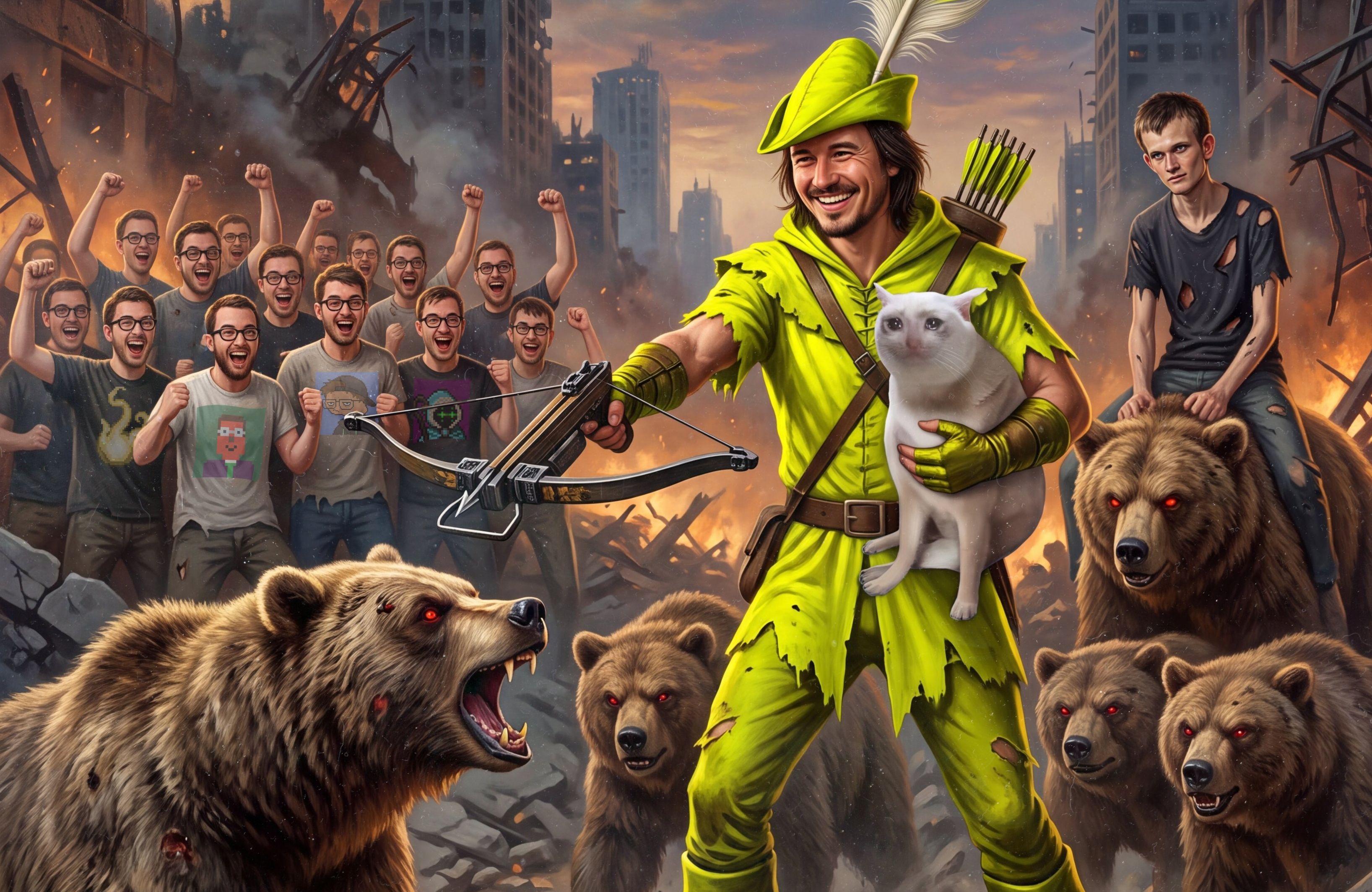
Author: CookieRobinhood's NFTs are getting more and more attention, and the most immediate catalyst was an interaction between Robinhood CEO Vlad Tenev and Beeple's tweet. NFTs have been around for a long time, and Beeple is one of the few people who can also have a boosting effect on NFT assets. It's a bit like “whatever Beeple draws, whatever it goes up”. In the tweet above, Vlad appears as an NFT savior, holding Cash Cat with the caption “Robinhood is saving NFTs.” Vlad replied, “Someone always has to do this.” As the “second protagonist” in the picture, the Cash Cat NFT series's floor price rose to a maximum of around $660, a fivefold increase in 2 days. Before Vlad launched this direct catalyst, the floor price of StonkBroker, the leading NFT on the Robinhood chain, once surpassed 13 ETH (about $25,000), but now it remains at 11.75 ETH. Judging from the price of a single NFT, this series has surpassed BAYC, and its total market value once surpassed 100 million US dollars, surpassing many old blue-chip NFTs such as Pudgy Penguins and Milady. Are NFTs really revived on the Robinhood chain? How can I quickly get started on this track that has been forgotten by everyone for a long time? Meme Coin/NFTMeme Coin comes with an NFT series. This is the first Robinhood NFT project category worth mentioning in this article. In addition to CashCat, $HOODRAT has also launched a supporting NFT series, and this one is directly carried out by the meme coin project, so there is no need to worry about whether the community will recognize it or not. However, $HOODRAT's current market value is only about 3 million US dollars, making it difficult for NFTs to rise anywhere. We mentioned Cash Cat NFTs at the beginning of the article. Although this NFT series doesn't come from the official Cash Cat meme coin, after Vlad tweeted, it had 3 imaginable logics: - Currently, the market value of $CASHCAT is around US$1.5-160 million. Based on the highest floor price of 660 US dollars over the past few days, the corresponding market value of the entire NFT series is only 6.6 million US dollars. If the price of $CASHCAT continues to stabilize, break through new highs, and continue to rise, then the price of the NFT will seem more cost-effective - what if Vlad swaps his X avatar for a Cash Cat NFT? - Although it is not a part of the $CASHCAT project, there aren't any examples of a successful meme that came from the original project party. The most typical example is $SPX6900/AEON. The highest AEON has reached a market value of about 25 million US dollars, corresponding to a single floor price of about 7,500 US dollars. After a short period of FOMO, the floor price of Cash Cat NFTs has fallen back to about 375 US dollars. This is a normal correction, and it will still be An NFT collection that occupies a key position on the Robinhood chain depends on the height of $CASHCAT and whether it can be widely recognized by the $CASHCAT community. Therefore, this type of project should be tracked from two aspects: - A coin with a meme image that has risen well. Recently, $hmm on Pons has suddenly skyrocketed quite a bit. If the latter can withstand the current sharp correction, NFTs will also be picked up. It's just not easy to say which series - it's already led by the meme coin project or related meme coin NFTs that have already run out of price. Follow the price trend of the meme coin itself and observe whether the odds for the corresponding NFTs are appropriate StonkBroker is currently the top 3 most expensive NFT series, all of which are “StonkBroker series”. StonkBroke...
8d ago律动BlockBeats#NFTs

ZachXBT once again accuses the LAB project of manipulating the market and harming the interests of retail investors. Over 95% of the tokens have been controlled

Comparing the news, on-chain detective ZachXBT posted another long article exposing the LAB project and its founder (@vsadkovv). The LAB token soared to $6 billion FDV, but the background was very opaque. The team was founded by Vova Sadkov and Mark, and its Eesee project previously made many investors unhappy. The current LAB circulation data is chaotic, the government has not clearly announced clear token allocations, and there is a high degree of overlap between investors and trading platforms. Most importantly, insiders probably control more than 95% of the tokens, and retail investors are simply unaware of the actual circulation situation. In addition, the LAB team unilaterally changed the public sale lock-up period from 3 months to 9 months, while defaulting on marketing expenses, giving KOLs and giant whales special treatment and requesting advertising. The founder mixed project funds with personal accounts, and a large amount of funds went directly to the trading platform's deposit address. Insiders can sell off without the complete knowledge of retail investors. The on-chain shows that insiders have recently proposed hundreds of millions of LABs from trading platforms, worth hundreds of millions of dollars, and are similar to the methods of many previous manipulated projects. ZachXBT called on the trading platform to conduct a thorough investigation and remove or freeze the relevant funds. Furthermore, ZachXBT specifically states: This is not a shorting recommendation. Under such high supply control, shorting instead becomes fuel.

100d ago
The Evolutionary History of Web3 Airdrop: Inventory of 12 Classic “Anti-Theft” Projects

The Evolutionary History of Web3 Airdrop: Inventory of 12 Classic “Anti-Theft” Projects

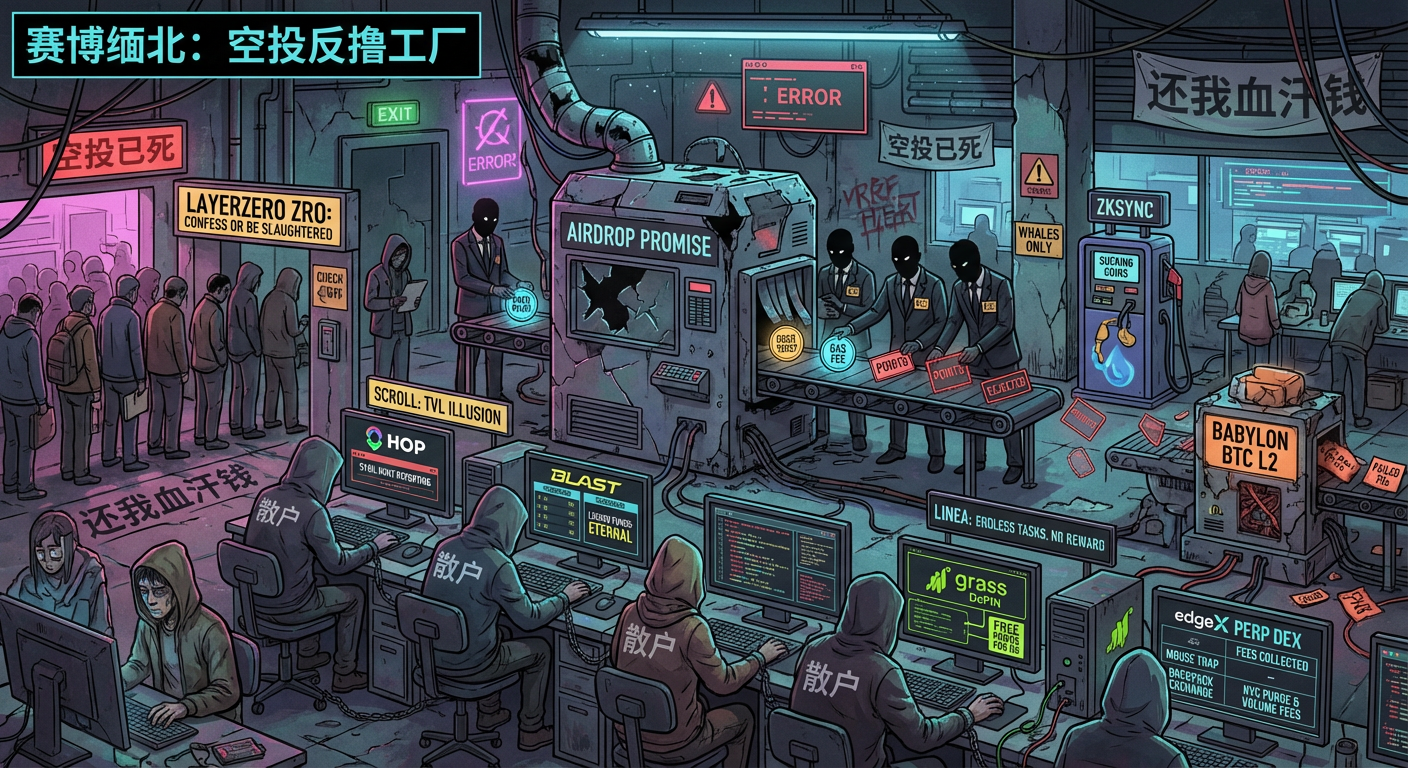
Author: Biteye Original title: A Brief History of Web3 Airdrop: Taking stock of 12 iconic anti-roll projects. Airdrop in the coin industry was a “myth of getting rich” with blood. It was the Uniswap, ENS, and Arbitrum era. Early users and project parties achieved mutual achievements, and evangelists shared dividends with the builders, forming a short but real “golden honeymoon”. However, setting the clock from 2023 to 2026, the entry of huge capital, the extreme internal volume of professional studios, the endless expansion of the project party's appetite, and the airdrop circuit completely changed its flavor. The “Interactive Good News” became a “cyber harvest farm”, and the profit from early dividends became a systematic reverse harvest. Retail investors are being redefined: free testers, low-cost liquidity providers, and a steady stream of data producers. In an environment where long-term rules are not transparent and expectations are repeatedly rewritten, the end result is often not a reward, but rather zeroed out, diluted, or even directly eliminated. In this article, we take stock of 12 iconic “anti-corruption” projects in airdrop history and review how trust has been exhausted step by step. 1. Hop Protocol (HOP): Start the “witch” era. ●Backlash process: Cross-chain bridge star HOP pioneered the creepy “Community Report Witch (Sybil)” mechanism. The rules are extremely demagogic: whistleblowers can segregate their share of the reported address. While in a trance, I thought Shang Martingale, who had committed adultery a few thousand years ago, had traveled to Web3. ●Anti-bullying characteristics: The masses fight against the masses and mutual harm at the bottom. The project side handed over the dirty work of on-chain address correlation review to users, used human greed to incite the community to bite each other, and even uploaded the reporting list directly to GitHub for “reuse” throughout the industry. ●Profound impact: After HOP, Cha Witch became the “political correctness” of all coin issuing projects, and on-chain interaction changed from “experiencing decentralized products” to a cat and mouse game with extreme domestic consumption. The fight against witches itself is necessary, but the practice of completely handing over censorship to the community and even encouraging mutual harm has seriously damaged the community's ecology. 2. Blast: The father of all evil's “points system” ● Backlash process: Blast, which has Paradigm's top aura, abandons traditional interaction models and requires users to lock up ETH or stablecoins in exchange for “points.” The rules have changed many times. Large players and top NFT players have profiteed a lot, and after being locked up for a few months, token earnings can't even beat the risk-free financial management interest for the same period. ●Backlash characteristics: capital diversification and blind box games. Users were wrapped up in endless FOMO and became free ATMs for the project's TVL data. ●Profound impact: Since Blast, the “point doll” has become the standard in the industry. The original intention of the points system was to allow users to participate for a long time, but frequent rule adjustments and serious income imbalances ultimately caused users to lose trust in the project. Web3 workers became Web2 migrant workers, and the decentralized spirit that Web3 is proud of completely died due to capital calculations. 3. LayerZero (ZRO): The tipping point for the collapse of trust ● Backlash process: After 18 months of cross-chain interaction caused users to burn huge gas fees, the project party launched the most stringent witch review in history on the eve of coin issuance, and even required users to “voluntarily surrender” in exchange for a portion of the reserved share, otherwise it was directly zeroed out. A large number of real active users and small studios have been cleared. ●Characteristics of counterfeiting: Extremely arrogant “presumption of guilt”. The project side wiped out the sky-high processing fees contributed by users, but instead prevented and humiliated users like thieves. ●Profound impact: LayerZero personally destroyed the grand narrative of “multi-chain interaction”. The amount of witches' bribery is in need of scrutiny, but the rough implementation of the “presumption of guilty+voluntary surrender mechanism” has further accelerated the collapse of trust. Since then, stinky penguins have left behind their smell for ten thousand years, and “rebellion” has become the sword of Damocles hanging over the heads of all woolly people. Retail investors fully understand: in the face of absolute power of explanation, your efforts are worth nothing. 4. zkSync (ZK): The complete end of the L2 interactive airdrop era ● Backlash process: As one of the four L2 kings in the past, zkSync has satisfied the community's appetite for several years. After absorbing hundreds of millions of dollars in gas fees, its airdrop rules unleashed an astonishing black box: drastically reducing the weight of transactions and activity, and instead using “fund retention for a specific period of time” as the core threshold. As a result, the massive amount of long-term interactive users that accompanied the growth of the project did not receive any revenue; instead, internal mouse barns and new models that saved money by surprise were eaten up by huge numbers...

130d agoLuxurytracy

Fabric has opened ROBO airdrop claims

According to Twitter, according to official sources, Fabric has opened ROBO airdrop claims, and eligible users can claim ROBO tokens before 3:00 (UTC) on March 13. Earlier, Fabric, a general robotics open network owned by OpenMind, announced the launch of the native token ROBO and began public sale on January 26th at Kaito Capital Launchpad. The public sale is valued at $400 million, with a funding target of $2 million, 0.5% of the total amount of tokens sold, and 100% released during TGE.

176d ago

Fabric opens ROBO airdrop registration page

Comparatively, according to official sources, Fabric has opened the ROBO airdrop registration page. Users must complete registration between February 20 and February 24, 03:00 UTC time window. The portal only shows eligibility status. The specific collection method and distribution amount will be announced later. Earlier, Fabric, a general robotics open network owned by OpenMind, announced the launch of the native token ROBO and began public sale on January 26th at Kaito Capital Launchpad. The public sale is valued at $400 million, with a funding target of $2 million, 0.5% of the total amount of tokens sold, and 100% released during TGE. Yesterday, Coinbase announced the addition of ROBO to its listing roadmap.

182d ago

Binance: ESP token pre-TGE public sale with a hard cap of 3 BNB

In comparison, Binance Wallet will launch an exclusive ESP token sale event Pre-TGE Prime Sale with Espresso on February 10th. During the event, users can subscribe for a share of Espresso tokens ESP through Binance Wallet. This subscription uses an oversubscription model, and each user can deposit up to 3 BNB. The token distribution will be prorated based on the total amount of BNB deposited by all participants. During the subscription period, users are required to have the necessary Binance Alpha points to participate. The tokens will be distributed prorated, that is, calculated based on the amount each user deposits as a proportion of the total deposit amount. After the subscription period ends, users can receive a key (Key) representing their ESP token allocation on the BNB Smart Chain (BSC) within Binance Wallet. The collection process must be completed on the priority sales activity page. Any extra BNB will be automatically refunded. The actual ESP tokens will be airdropped directly to the user's Binance Alpha account on the day of the token generation event (TGE), and users can trade them.

194d ago

AC's new project Flying Tulip has raised a total of US$225 million

In comparison, Flying Tulip, a unified on-chain financial system founded by Andre Cronje, founder of Sonic Labs, announced that it has raised an additional US$25.5 million in private token rounds, with a total of US$225 million in institutional financing rounds. The project has raised an additional $50 million through the Impossible Finance platform and plans to conduct a public offering through CoinList. At present, it has received more than US$1.36 billion in investment intentions, leaving only an amount of approximately US$400 million. Flying Tulip will launch a token sale on CoinList. The public sale plans to raise $200 million, accounting for 20% of the total FT token supply (2 billion coins), and the token price is $0.10, corresponding to FDV of $1 billion. The public sale will begin at 00:00 on February 3 and end at 21:00 UTC on February 6, with a minimum purchase amount of $100. According to reports, Flying Tulip aims to integrate spot trading, loans, perpetual contracts, insurance, and native stablecoins (ftUSD) into a unified agreement structure. The tokens participating in this sale will be protected by the Perpetual PUT structure. The FT NFTs received by participants include redemption rights, and can choose to hold and destroy the tokens to redeem funds at the original price, or unlock the tokens for free trading (the right of redemption will be lost after unlocking).

204d ago

AC's new project Flying Tulip (FT) will be listed on CoinList to open public sale

According to Twitter, according to official sources, Flying Tulip, a unified on-chain financial system founded by Sonic Labs founder Andre Cronje, will launch token sales on CoinList. The public sale plans to raise $200 million, accounting for 20% of the total FT token supply (2 billion tokens), and the token price is $0.10, corresponding to FDV of $1 billion. The public sale will begin at 00:00 on February 3 and end at 21:00 UTC on February 6, with a minimum purchase amount of $100. According to reports, Flying Tulip aims to integrate spot trading, loans, perpetual contracts, insurance, and native stablecoins (ftUSD) into a unified agreement structure. The tokens participating in this sale will be protected by the Perpetual PUT structure. The FT NFTs received by participants include redemption rights, and can choose to hold and destroy the tokens to redeem funds at the original price, or unlock the tokens for free trading (the right of redemption will be lost after unlocking).

205d ago

ZAMA's pre-market contract fell below the community public sale round price of $0.05

Comparing news, the market shows that ZAMA's pre-market contract price fell below the community public sale price of 0.05 US dollars and is currently reported at 0.043 US dollars, a 24-hour drop of nearly 10%. According to previous news, a total of 7,651 investors participated in the ZAMA Community Public Sale round to raise US$121 million.

205d ago

Zama: The auction contract has entered the settlement stage, and it is expected that the bidder distribution results will be disclosed in the next few days

According to the news, privacy agreement Zama posted an article on the X platform announcing that the auction contract has entered the settlement stage after the public sale ends, and bids sold through platforms such as CoinList will also be included in the public auction contract. Bidders will be able to check the final distribution results on the official platform within the next few days, and the application opening date is February 2. According to previous information, Zama raised more than US$121 million with 17,446 bids from 7,651 investors in this public sale.

209d ago