共识 · 7382

Goldman Sachs Raises CoreWeave Price Target to $139, Maintains Neutral Rating

Comparative news, according to Goldman Sachs's August 20 research report, CoreWeave's second-quarter revenue was in line with expectations. The EBIT profit margin was 200 basis points higher than the market consensus, and the 2026 revenue guidance exceeded market expectations by 1%. The revenue backlog increased 5% month-on-month to US$104 billion, adding more than US$25 billion in committed orders since the third quarter. Active electricity installed capacity increased from 1 GW in the first quarter to more than 1.5 GW, and the contracted electricity installed capacity reached 4.2 GW. Goldman Sachs raised its 12-month price target from $121 to $139, which has 53% upside from the current share price and maintains a neutral rating. Goldman Sachs believes that CoreWeave's short-term certainty is clear: demand continues to lead supply, intergenerational pricing for old and new GPUs remains high, and production capacity is expanding as scheduled. Next-generation chips (Blackwell, Vera Rubin) continue to hit new highs, and recent A100 contract deliveries have been extended to 2029. The share of enterprise customers has increased (Caterpillar, IBM, Nissan, ZF), and demand for AI computing power is spreading from tech giants to the real economy. Goldman Sachs expects EBITDA to increase from $3.1 billion in 2025 to $31.3 billion in 2028. A neutral rating reflects waiting for software and platform services to become a more definite contributor to profit margins before making more positive judgments.
1d ago
US Stock Value Investing Is Heading Into Another Trap

US Stock Value Investing Is Heading Into Another Trap

Source: Shenchao TechFlow Original title: (Opinion: Value investing in US stocks is not equal to fundamental investment) When “fundamentals are dead” becomes a consensus, investors who blindly organize giants will eventually experience astonishing capital destruction. Guide: When the market shouted “fundamentals are dead” and the capital frenzy formed a group of tech giants, the author used an astronomy discovery to unravel the logical loopholes behind this narrative. Starting from the composition of valuation multiples, this article reminds investors to distinguish between the true quality of an enterprise and the premium that the market is willing to pay. It is particularly cautionary about long-term allocation in the crypto and technology sector. I promise this introduction won't be as long as the last one on the weather. But please give me 90 seconds. More than 100 years ago, a woman named Henrietta Levitt was doing the tedious job of measuring the brightness of thousands of stars on photographic negatives (the way they were imaged before film appeared). She noticed one characteristic of a class of pulsating stars: the slower they pulsate, the brighter they themselves are. ¹ This might just seem a little interesting today, like “OK, that's pretty cool.” But at the time, astronomers couldn't tell the difference between a dark star very close to Earth and a very bright star far away. For them, the two left the same stain on the photographic film. Visual brightness is a messy mix of these two variables: how bright the thing itself is, and how far away it is from us. Henrietta's work decouples these two things: if you can observe the rate of pulsation, you can know its true luminosity; if you know its true luminosity, you can reverse the distance based on how dark it looks. Astronomers call it “standard candlelight.” A few years later, a man named Edwin Hubble discovered one of these pulsating stars, applied Levitt's math, and discovered what he had always thought was a cloud of gas within our galaxy; in fact, it was an entire independent galaxy, one million light years away. So in simple terms, the observable universe has grown about a trillion times larger, just because one person has figured out how to tell the difference between what things look like and what they actually look like. That in itself is obviously pretty cool. But another interesting thing is that around the same time period, two other astronomers each independently drew a scatterplot. One axis was actual luminosity, and the other axis was temperature. They discovered that stars are not randomly distributed in this space, but rather clustered into different families. The meaning behind this is: stars with the exact same visual brightness may and do belong to a completely different family, have a completely different past, and most importantly, have a completely different future... So what is written in the star? Over the past few years, there has been much discussion about markets, narratives, capital, company building, and financial nihilism. This feeling seems to have reached a feverish climax as the tech and financial world begins to face a very different future than a few decades ago. What is particularly clear is that separating progress from asset prices has become more noisy and in many ways more repulsive. But as an investor who makes a living by buying assets that (hopefully) outperform, a simple framework is: forward returns are roughly equal to growth in fundamentals multiplied by changes in valuation multiples (and multiplied by the dividends you've collected along the way). In this case, the valuation multiplier can very cleanly correspond to the smudges on the photographic film. It's an observable data point, but it entangles two things that the market can't directly see: how good the company actually is, and how far (or how long) its future cash flow is now. I think most of the money that can be made comes from investors who are most capable of unraveling these two variables earlier than others (or “perception of differences”), and we will continue to see astonishing capital ruin for investors who treat their stains as stars. Value investing is not equal to fundamental investing. I think there is a misunderstood view: fundamental investing has historically dominated the creation of excess returns. Most of these legends come from the Graham, Buffett, and Tiger Foundation lineage, as well as numerous narratives built around this group of people. It is believed that by some point in the 2000s, this approach was no longer effective, and anyone who invested in this way was overwhelmed by momentum, trends, and “direct buying tech giants.” The conclusion was (and still is?) It's “fundamentals are dead.” ² The modern version of “fundamentals don't matter” itself isn't stupid. It's rooted in a lot of ideas that many of us on the Compound team have written before. The biggest companies get the most mechanical purchases, and the software industry has a winner-take-all economic law. AI means that giants can transform scale into moats faster than challengers, and there are also reasons why the market's microstructure embeds momentum more deeply into our market infrastructure. These are all real...

1d ago深潮TechFlow#US stocks
From 4 models to more than 500, OpenRouter was acquired after growing 30,000 times in three years

From 4 models to more than 500, OpenRouter was acquired after growing 30,000 times in three years

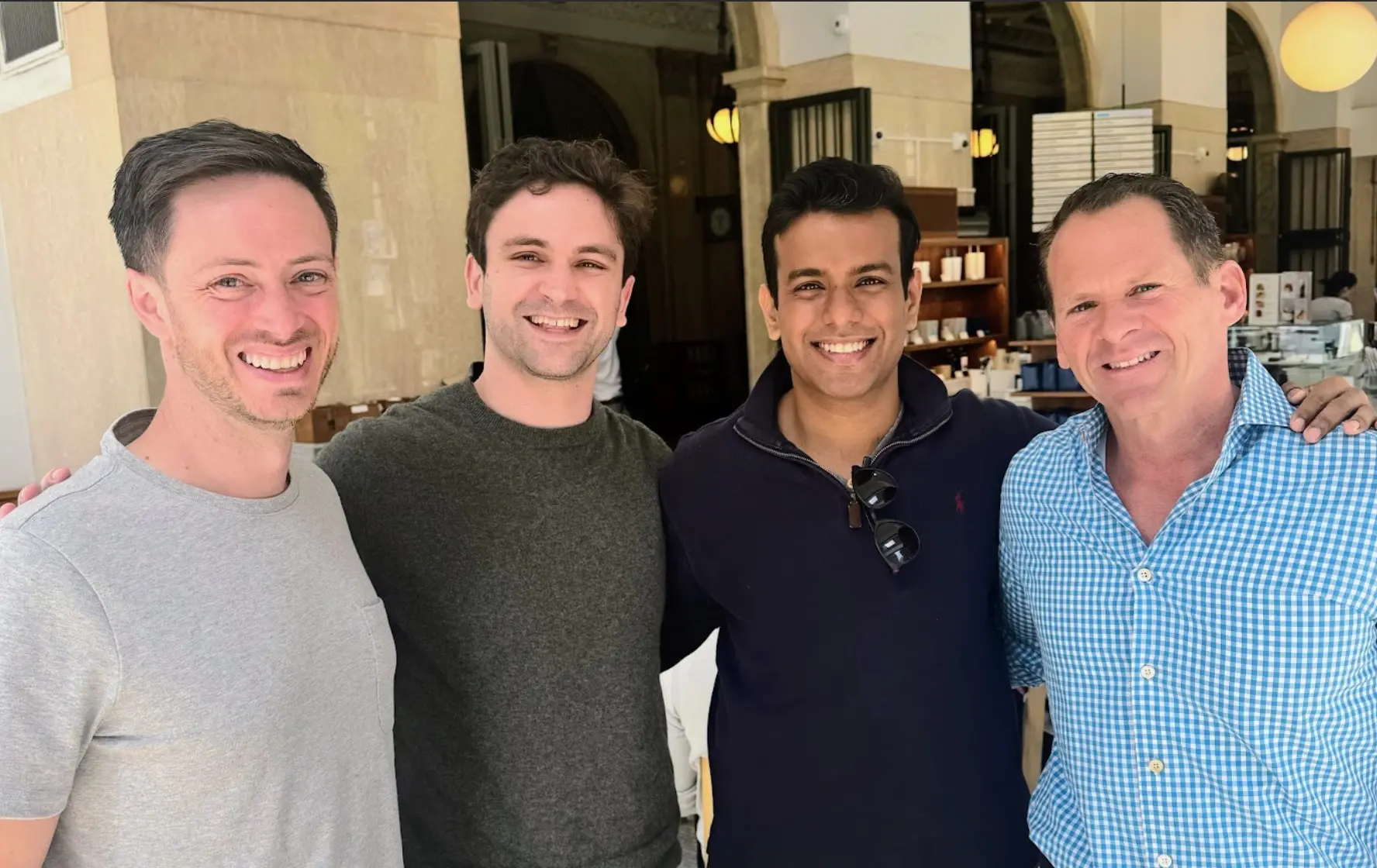
Author: Menlo Ventures Compiled by: Jia Huan, ChainCatcher Original title: Early Investors Behind OpenRouter Revisited Investments Today, OpenRouter announced that it has reached an acquisition agreement with Stripe. OpenRouter was launched in 2023, just over three years ago. OpenRouter was initially launched as a “unified interface for LLM” and only supported 4 models at the time: GPT-3.5, GPT-4, GPT NeoXt and Cohere xlarge by Together. When the company was founded, it was based on two core judgments: first, AI will eventually be used on a large scale and penetrate various fields; second, there will be many different models on the market, each with trade-offs, and users will choose different models according to different needs. As it turned out, both judgments far exceeded expectations at the time. Since its launch, the number of tokens processed by the OpenRouter platform has increased by about 30,000 times. Currently, it has exceeded 4,500 trillion tokens on an annualized basis, and the scale of expenditure on the platform has reached a very impressive level. Meanwhile, the number of models supported by OpenRouter has grown from the original 4 to over 500. Figure: OpenRouter Token usage growth from inception to acquisition Menlo Ventures is fortunate to be part of this journey. In March 2025, we participated in OpenRouter's seed funding round through the Anthology Fund set up in partnership with Anthropic. OpenRouter founder and CEO Alex Atallah previously founded OpenSea, which was once valued at $13.3 billion. His co-founders include tech guru Louis Vichy, whom he met on Discord, and highly executive COO Chris Clark. In May 2025, we led OpenRouter's Series A funding round, with Matt joining the company's board of directors, and Deedy as a board observer. Earlier this year, after seeing OpenRouter's rapid growth in customer numbers and revenue, and the company built a product route with stronger “model intelligence” capabilities around model selection and evaluation, we continued to step up Series B financing. In the tech industry, it often takes years for an idea to change from the judgment of a few people to industry consensus. And just a few weeks ago, this happened: from Ramp to Cursor, more than 10 companies launched their own model routing products almost simultaneously. In just a few years, OpenRouter has become one of the most important companies in the AI era. Picture: Group photo when deciding to lead OpenRouter Round A At first glance, Stripe doesn't seem like the most natural buyer of OpenRouter, but the two companies are actually strikingly similar. Both use an API that can be directly accessed to simplify the otherwise complicated transaction process and charge a certain percentage of the fee. It's just that OpenRouter deals with AI models. As Stripe has always said, the two companies combined and are still doing the same thing: increasing “internet GDP.” In fact, over a year ago, OpenRouter called itself the “Stripe of LLM.” OpenRouter's core value OpenRouter was one of the first companies Deedy came into contact with after joining Menlo in 2024. This company is almost right at the heart of our AI infrastructure investment logic. Menlo presented two judgments necessary to invest in OpenRouter in the 2024 Enterprise AI Report: AI spending will increase dramatically, and developers will not only use one model, but multiple models at the same time. Figure: Menlo's initial contact email to OpenRouter As someone who can also write code and actually use these models, we realized long ago that there is a very clear difference in cost, latency, and performance between the different models...

2d agoburnking#OpenRouter

The outlook for the Federal Reserve's interest rate decision: Inflation concerns and policy differences are the focus of attention

Comparative news. According to Kim Ju reports, Tim Dewey, chief US economist at SGH Macro Advisors, said that it has become more common in the past few years for several officials of the Federal Reserve to vote against interest rate decisions recently. In particular, in a period where the economy is facing multiple pressures and policy paths are unclear, there may be strong differences among officials, leading to more votes of dissent. Regarding the minutes of the upcoming US Federal Reserve meeting, Dewey believes that the core of the market's attention will be how widespread the concerns of officials about inflation are. He pointed out that at the time, inflation seemed to be significantly higher than the Federal Reserve's target, and policymakers feared that inflation would not quickly fall back to the target level. At the same time, the labor market is thought to have stabilized, which makes some officials strongly believe that the Federal Reserve should raise interest rates to contain inflationary pressure. Therefore, the market will focus on how many officials within the Federal Reserve actually agree with this judgment, and whether concerns about inflation have reached consensus among a wider range of decision makers. The extent of disagreement among officials over policy paths will also be an important clue in judging future interest rate trends.

3d ago

MemeCore announces a $1 billion strategic deal with ZeroStack

Comparatively, MemeCore announced that its core team members have reached a $1 billion strategic deal with Nasdaq-listed crypto infrastructure asset management company ZeroStack (NASDAQ: ZSTK). According to the announcement, memeCore will contribute related assets to ZeroStack in exchange for ZeroStack shares and pre-financing warrants (pre-financing warrants). The deal aims to strengthen the connection between the memeCore ecosystem and the US open capital market and advance the development of decentralized AI, digital assets, and blockchain infrastructure. MemeCore said the partnership will further integrate its Meme economic ecosystem, decentralized AI applications, and digital asset infrastructure to support future ecological expansion and capital market financing. MemeCore previously launched a Layer 1 blockchain for the “Meme 2.0” economy, which focuses on connecting community-driven assets through the Proof of Meme (PoM) consensus mechanism. This article is sponsored by GENG, Build Your Fortune on GENG (https://geng.one)

3d agoburnking
Xu Jiayin destroyed the second generation of Northeast China's wealth of 4.2 billion

Xu Jiayin destroyed the second generation of Northeast China's wealth of 4.2 billion

Source: Phoenix News Finance “Company Research Institute” Recently, a ruling by the Hong Kong High Court brought an old account that had been sunk for five years back to the table. Yingjia International Real Estate applied to the court for an injunction to stop Evergrande's liquidators from collecting the debt, but it was rejected. The liquidators wanted HK$5.97 billion, with principal and interest. And behind this huge dispute is a fixed growth game that took place during the peak of Evergrande Auto. In 2021, a second-generation wealthy person from Northeast China paid out 4.2 billion yuan, and Evergrande shares in exchange were nearly zero. What was thought to be just a bridge loan was turned into a huge debt of nearly HK$6 billion hanging over an offshore shell company. Cross-border crossing of HK$01 billion, a seemingly seamless closed loop. On January 24, 2021, Evergrande Motor issued an announcement to complete the IPO with six subscribers. A total allocation of 952 million shares, or HK$27.3 per share, raised a total of HK$26 billion. At that time, Evergrande Auto's market capitalization once surpassed 600 billion Hong Kong dollars, putting pressure on BYD and topping the domestic car companies' market capitalization list. Heyirong International Trading Co., Ltd., controlled by Wang Kaiguo, born in 1989, is also one of the subscribers. It promised to invest HK$5 billion to win about 183 million new shares, with a 12-month sales ban. The paper agreement has been settled, yet the financial problem is looming. It is necessary to mobilize funds in the amount of HK$5 billion to participate in Hong Kong stock subscriptions. The formal foreign exchange approval cycle is long, and Xu Jiayin cannot wait. Add up the two sides and come up with a quick way to pay. The whole process was implemented in three steps. The first step is domestic loans. In March 2021, Heyirong signed a RMB loan agreement with Evergrande, and Heyirong lent funds equivalent to HK$5 billion to Evergrande. From April 7 to 9, Heyirong remitted a total of RMB 4.2 billion to the Guangzhou Kailong Real Estate Co., Ltd. account designated by Evergrande in three transactions. Based on the exchange rate on the day of the transfer, it was just HK$5 billion. The second step is overseas loans. Also in March 2021, Guoxiong Holdings, a subsidiary of Evergrande, signed a loan agreement with Yingjia International Real Estate, wholly-owned by Wang Lihua. Guoxiong loaned HK$5 billion to Yingjia for a period of two years, repaid on a regular schedule without interest, and accrued interest on a 4% annual interest rate. From April 7 to 9, the HKD was also credited to the Yingjia account in three installments. The third step is to complete the IPO. After receiving HK$5 billion, Yingjia immediately transferred the full amount to Hongchang International Trade, another Hong Kong entity controlled by Wang Kaiguo. On April 9, Hongchang International successfully obtained Evergrande Motor's share certificate for 183 million new shares. According to Yingjia International Real Estate's claim in the lawsuit, there was an internal agreement between Evergrande's former management and Yingjia International Real Estate that no actual repayment was required for the above loans. However, on January 29, 2024, the Hong Kong High Court issued a winding-up order for China Evergrande. The liquidator took over the assets and contract files, and this loan agreement with complete procedures and complete settlement of funds was overturned. The old management's verbal tacit agreement was not binding on the liquidators. The contract is written in black and white with a principal amount of HK$5 billion and 4% overdue interest. This is a real claim with legal effect. In May 2025, Guoxiong Holdings officially issued a letter requesting Yingjia International Real Estate to repay nearly HK$6 billion in principal and interest. Yingjia refused to comply with the contract and in turn applied to the Hong Kong High Court for an injunction in an attempt to prevent Guoxiong Holdings from filing a winding-up petition. During the trial, Yingjia International Real Estate changed its arguments several times. First, they claimed that the loan was a false transaction, then changed their rhetoric to saying that there was a special funding arrangement, and finally put forward the core statement: the two parties had an oral subsidiary agreement exempt from enforcement. In response, presiding judge Chen Jingfen found that the oral subsidiary agreement claimed by Yingjia was “recently fabricated,” and rejected all of its defenses one by one. Chen Jingfen said that the loan contract signed in writing in the case and the funds were paid in full constituted a real claim. It was impossible to deny the legal effect of the formal contract based only on an oral agreement claimed by one party afterwards. The execution of the judgment on August 7 means that Evergrande's liquidators can officially commence the winding-up procedure against Yingjia and recover nearly HK$6 billion in claims. However, Yingjia itself is only an offshore shell company; it is still unknown how many actual assets it has that can be executed under its name. These offshore shell companies often only assume the functions of holding shares and transferring capital, making it difficult to get a glimpse of the real trading context of Fujia. To understand the private capital giant's layout in the A-share market, we also need to start with Wang Kaiguo, the core agent who was pushed to the front of the stage. 02 He took 5 directors' seats at age 32 and quietly left the market on April 21, 2021. Financial Street Holdings issued a director candidate announcement. The name “Wang Kaiguo” first appeared in the official disclosure documents of A-share listed companies. Five days later, on April 26, Goldwind Technology announced the “Proposed Election of Non-Executive Directors” on the Hong Kong Stock Exchange...

3d agoWendy#Evergrande #BYD #Wang Kaiguo #Xu Jiayin
Why is capital chasing AI Native and ignoring the old Internet

Why is capital chasing AI Native and ignoring the old Internet

Capital doesn't reward being old-fashioned, not because old-fashioned people are at fault. The old part is clearly priced. There is no bad information, so there is no excess profit. Global venture capital was $510 billion in the first half of 2026, surpassing $44 billion for the full year of 2025 in one and a half months. More than 70% have entered AI; OpenAI and Anthropic took 217 billion dollars, accounting for 43%. With that much money, you'd think everyone could share a little bit. The truth is that distribution is more extreme than total volume, and the first sieve doesn't screen the industry, it screens people. The category that has been screened out now has an unkind name: the internet is old. Let's just say one thing: the “old man” in this article has nothing to do with age. It refers to a set of methodologies that have been formed in the mobile internet cycle, have been tested over and over, and have brought huge returns to holders. The person holding it may be 45 years old or 32 years old. It was this methodology that was being repriced, not the year of birth. Confusing these two things is Lao Deng's most common mistake and one of the most comfortable mistakes — because if the problem is someone else's age discrimination, you don't need to change a single word. 01 What is AI Native The term has been misused. They can use ChatGPT not called AI native, nor AI in the company name, let alone in their twenties. There are three things that really separate people. First, the starting point is a model, not a requirement. The order in which Lao Deng makes a product is: look at what the user wants, write down the requirements, and find technology to implement it. The order of AI natives is reversed: first figure out what level the model is capable of today and what step it is likely to reach tomorrow, and then move from this capability boundary to the external product. The former uses the model as a tool, and the latter uses the model as the foundation. There was no difference between these two kinds of things made by humans in the first edition; by the third edition, there was a difference of one species. Article 2. The default unit of an organization is not a person. The division of labor in the Internet age is the division of one thing into ten people. AI Native's division of labor is to take ten things from one person and add a bunch of agents. The CEO of a domestic application company said that the team consists of less than ten people, but a large number of AI work at night, and the first thing employees do every morning is check the work the AI handed in the night before. Cursor's side is even more extreme. Public reports mention that the company doesn't have a product manager; engineers write their own code, talk to users themselves, and participate in recruiting people themselves. Article 3. Information is first-hand. AI Native's input sources are papers, model cards, GitHub issues, original discussions on X, and self-run evals. Lao Deng's input sources are industry summits, closed-door meetings, brokerage reports, interpretation of public accounts, and finding someone to drink coffee with. This one is the least obscure and most lethal; I'll talk about that separately later. I'm satisfied with all three. The 25-year-old is an AI native, and so is the 45-year-old. I'm not satisfied with the three rules; I'm still an old man at the age of 25. AI natives are a state, not an age group. The trouble is that tickets in this state are works, not resumes. 02 The two lists spread the results of this round on the table. These are two lists. The first one is an all-AI native company. Their valuations are not rising; they are exchanging orders of magnitude. List 1 · Upstream OpenAI raised $122 billion in a single round of financing in Q1 2026, followed by $852 billion, the largest private equity financing in history. Anthropic Q2 had a single round of $65 billion, after investing $965 billion, accounting for about half of the total global venture capital for the quarter; the revenue operating rate in May reached about $47 billion. DeepSeek raised about 70 billion yuan in its first round of financing in May 2026. In April of the same year, Liang Wenfeng raised his direct shareholding from 1% to 34%, and controlled a total of about 84.29% of the shares through related entities. The Dark Side of the Moon (Kimi) was estimated at $4.3 billion in December 2025; it went for three consecutive rounds from January to February 2026 to reach 18 billion; the D round in May was about $2 billion, breaking 20 billion dollars after the investment; the July round surpassed $3.5 billion, after investing 35 billion dollars; the pre-IPO target was 50 billion dollars. ARR broke 100 million in March, 200 million in May, and held steady at 300 million US dollars in June, with APIs accounting for more than 70%. Smart Spectrum · MiniMax successively landed in Hong Kong stocks in early 2026, with a market capitalization exceeding 100 billion yuan. It was one of the first major model companies listed in China. The second one...

4d agoWendy#AI #DeepSeek
Fireworks that came out of Meta to talk about open source and closed source. Who will win?

Fireworks that came out of Meta to talk about open source and closed source. Who will win?

Author: Silicon Valley Vector Silicon Valley Coordinates Editor: Peggy, BlockBeats Original title: Silicon Valley Coordinates x Fireworks Co-Founder Benny Chen: Open Source Models, Token Growth, Inference Optimization, and Model Customization Editor's Note: In the context of open source models speeding up and approaching cutting-edge closed-source models, industry discussions are shifting from “who has the most capable model” to “who can put models into production at a lower cost”. However, when model capabilities converged and token consumption increased, a lower-level question began to emerge: are companies really willing to pay a cheaper model call, or exclusive intelligence that can perform specific tasks in a stable manner? Recently, Cao Qingyun, host of “Silicon Valley Coordinates”, had a conversation with Chen Yufei, co-founder of Fireworks AI. Located between models and enterprise applications, Fireworks mainly provides customers with open source model inference, performance optimization, and customization services. Rather than simply discussing whether open source can catch up with closed sources, Chen Yufei's observations are closer to actual workloads: where tokens flow, why companies pay, and what is still missing from the model from proof of concept to production. In this conversation, Chen Yufei disassembled “who wins between open source and closed source” into a set of lower level structural questions: can token growth be converted into revenue, can generic capabilities replace vertical accumulation, can the low price model pass corporate evaluation, and how the inference platform can gain value between cloud vendors and application companies. First, the scale of use and commercial value of the open source model are diverging. In the past, the ability to catch up and call price were the main indicators for judging the competitiveness of open source; today, the Fireworks platform processes about 40 trillion to 50 trillion tokens every day, and the actual usage of the open source model has rapidly expanded. However, free traffic, promotional subsidies, and model price differences will cause Token statistics to overestimate some demand. Customers may heavily use lower-cost models and still hand over the highest budget to the best-performing closed source model. This means that the next phase of open source is not just expanding traffic, but proving that it can meet or even surpass cutting-edge models for high-value tasks, and turn cost advantages into willingness to pay. Second, the general model and the vertical model are beginning to evolve in different directions. In the past, every time a cutting-edge model was upgraded, it was possible to directly eliminate a number of fine-tuned models; now, vertical applications such as law, medical care, and programming are accumulating more detailed evaluations, data, and workflows, and their optimization goals are gradually separated from cutting-edge laboratories. Generic models need to increase the upper limit of capabilities, while vertical models require stable delivery of results in limited scenarios. The former can solve a wider range of problems, while the latter has a better understanding of how users define “right.” This means that the barrier for vertical companies is not just having a customized model, but being able to continuously transform industry needs into an evaluation system and migrate over and over again as the basic model is updated. Third, the bottleneck in enterprise AI implementation is shifting from model supply to evaluation capabilities. In the past, enterprise proof of concept often relied on trial experience and subjective judgment; now, when AI enters production processes such as call centers, legal searches, and medical assistance, it is no longer possible to support procurement decisions simply by “looking good.” Businesses must know what tasks the model works for, when it fails, and how much the cost and quality of switching from closed source to open source changes. Assessment is therefore no longer an ancillary tool, but an infrastructure connecting procurement, training, and production deployment. Who can define tasks, establish test distributions, and continuously update standards can truly control model choices. Fourth, the value of inference platforms is shifting from “selling cheap computing power” to organizational models, hardware, and workflows. In the past, inference optimization was mainly understood to reduce the cost of a single token; now, caching, task splitting, model routing, and context management can all directly change the task completion rate. Different models don't have to compete for the same position; they can act as performers and advisors separately. Fireworks' business logic is also based on this: instead of building asset-heavy hardware, revenue is tied to actual use of customer models through training, customization, and continuous reasoning. But the main rival in this path is not a single new cloud company, but a large cloud vendor that can simultaneously control computing power, software, and customer portals. Fifth, the rise of the open source model may not reduce infrastructure requirements; on the contrary, it may reduce model layer premiums and further push value towards reasoning and computing power. Tech giants continue to increase capital spending, not just calculating short-term returns, but measuring missed AI cycles...

4d ago律动BlockBeats#AI

There are no bears in US stocks: the historic dangerous window of the midterm elections opens, and August to October may experience significant fluctuations

Comparative news, Bank of America's latest global fund manager survey shows that global fund managers' allocation of stocks has risen to the highest level in nearly five years, and market consensus is highly congested. Net 56% of respondents overpaid stocks, the highest since November 2021, and cash positions fell to an all-time low of 3.5%. Michael Hartnett, chief investment strategist at Bank of America, pointed out that the current market has formed a highly consistent expectation that there will be no macroeconomic landing, no interest rate hike by the Federal Reserve, no AI capital expenditure cuts, no big victory for the Democratic Party, and no bears. He believes that current positions are more suitable for withdrawing or rotating within risky assets rather than continuing to expand overall risk exposure. According to the survey, 72% of respondents do not expect the Federal Reserve to raise interest rates before the November midterm elections, and 71% do not expect hyperscale cloud computing companies to cut AI capital spending this year. However, the AI bubble has been listed as the biggest tail risk, and capital expenditure for hyperscale cloud computing companies is considered the most likely source of credit incidents. Meanwhile, BTIG's chief market technology strategist Jonathan Klinsky warned that August 18 to October 11 is usually one of the hardest stages of market performance in the US midterm election year. Historical data shows that since 1990, with the exception of 2006, the S&P 500 has experienced a decline of at least 7% between August and October of every midterm election year. Currently, S&P has risen more than 13% in 500 years and is at an all-time high, while US 10-year and 30-year Treasury yields have risen above 4.7% and 5.2% respectively, and rising energy prices and financing costs may further put pressure on the stock market. Klinsky advises investors to reduce their risk exposure or hedge against this historically high-risk window.

4d ago

Ethereum's EIP-12188 Proposal to Reduce Consensus-Layer Block Retention Window Receives Developer Support

In comparison, Ethereum developer Kevaundray submitted a EIP-12188 proposal on GitHub, recommending reducing the consensus layer (CL) block retention window to reduce the storage pressure on nodes. The proposal is currently under public review and has received support from some Ethereum client developers. Developer dapplion expressed support for the idea, and Lighthouse client contributor Michael Sproul believes that the tweak will not cause significant issues with Lighthouse's operation. The proposal points out that as Ethereum's historical data requirements change, reducing the retention time of historical blocks in the consensus layer can optimize the use of node resources. The discussion mentioned that execution layer (EL) historical data clipping may affect some long-term running nodes to provide old block data, but the developers believe this will not threaten network security or the normal operation of the node. Currently, EIP-12188 has not been merged and is subject to further review and community discussion.

4d ago