
周报 · 828
Is “Cow Lai” really here? Bitcoin skyrocketed, and $2,743 billion bears were brutally liquidated

Is “Cow Lai” really here? Bitcoin skyrocketed, and $2,743 billion bears were brutally liquidated

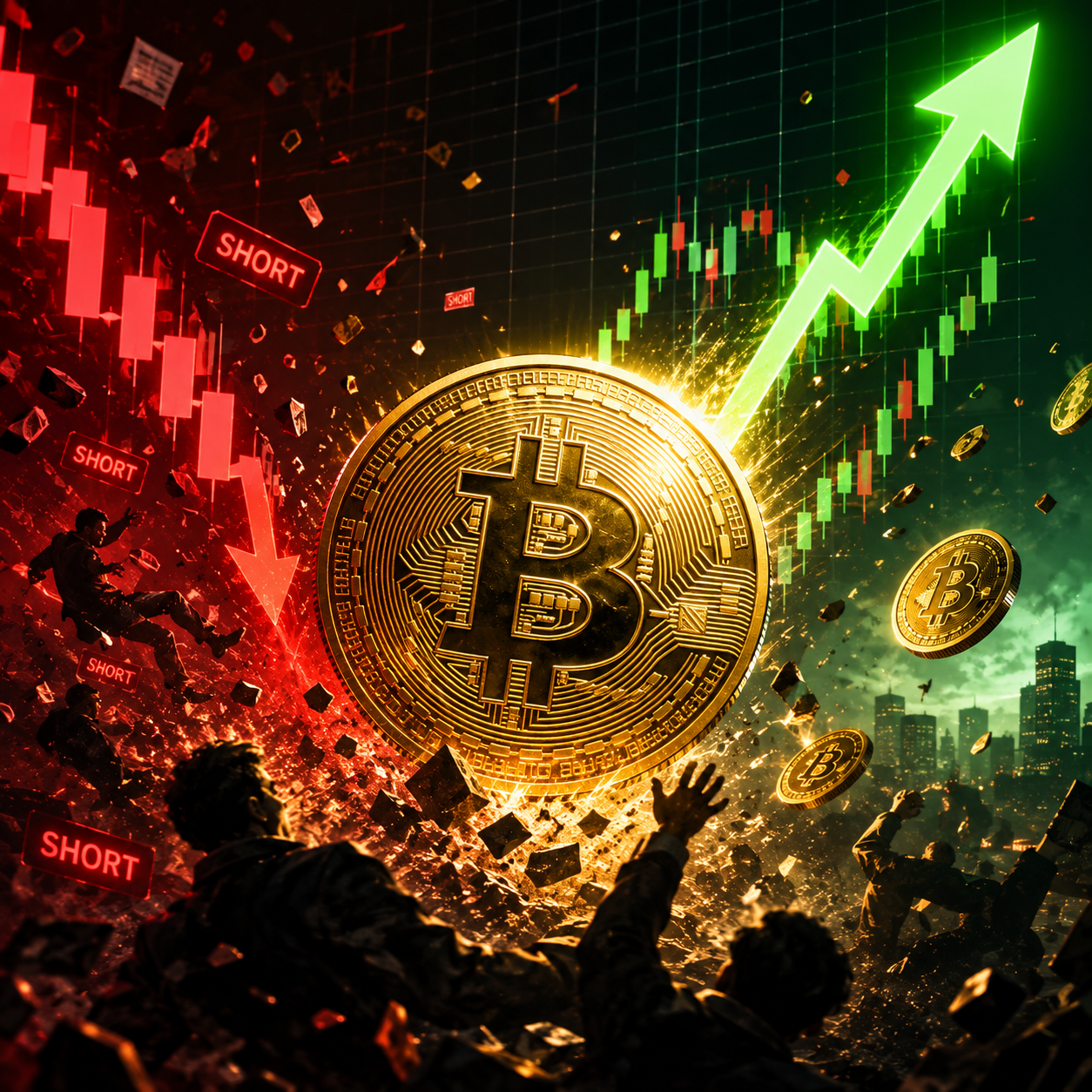
Source: PanNews Author: Nancy Original title: Is “Cow Coming” Really Here? Bitcoin changed overnight, and bears hit the main points of the biggest liquidation day in history: Bitcoin rebounded strongly on August 19, with an intraday increase of more than 7.4%, once approaching 70,000 US dollars, a new high since the beginning of June; Ethereum simultaneously broke through 2,300 US dollars. Over the past 24 hours, the entire network closed out more than 2,986 billion US dollars, of which short liquidations reached 2,743 billion US dollars, setting a new record for short liquidation in a single day. The recovery in the market was driven by multiple factors: the US Treasury expanded the scale of long-term treasury bond repurchases to improve liquidity; the SEC proposed new crypto asset issuance rules to exempt some registration requirements; and Trump met with crypto business executives and made supporting remarks, urging Congress to pass the Clarity Act. Furthermore, the net inflow of Bitcoin spot ETFs has exceeded US$480 million in the past two days, causing large-scale short liquidation effects. On-chain data shows that spot demand is about to improve, with a median increase of about 18.1% over the next 60 days. However, Glassnode pointed out that high real interest rates are still a suppressing factor, the market is still bottoming out, and the capitulation is not completely over. VanEck believes that 8 of the 12 capitulation indicators have been triggered, but this is not a sign of bottoming out. The potential cumulative window may be from September to November. Standard Chartered Bank expects Bitcoin to rise to 100,000 US dollars by the end of 2026. If it effectively breaks through $65,500, it may confirm the low in the cycle. CEO Strive believes that the long-term downward trend in the US dollar may bring the strongest macro tailwind to Bitcoin. Overall, there are positive signs in the market, but continued strengthening still requires verification of demand, liquidity, and macro environment, and investors should maintain reasonable positions. While the movie “Cow Lai” continues to be popular, the market's expectations for a “return to the bull market” are also constantly being ignited. Coincidentally, the crypto market also suddenly ushered in a long-lost “bull attack”. Bitcoin's strong counterattack overnight led to a collective recovery of the market. For the crypto market, which has been dormant for a long time, this surge not only means a breakthrough in price, but also a return to market volatility. After the market heated up rapidly, market sentiment was instantly ignited, and coin industry players even ridiculed that “native families are finally getting better.” Meanwhile, this sudden strong rebound also simultaneously triggered a single-day liquidation wave of bears on an astonishing scale. Bitcoin fought back strongly. On the evening of August 19, the bears experienced the biggest wave of liquidation in history. On the evening of August 19, Bitcoin broke out of a long-lost positive line and strongly broke through the consolidation range that continued for several months. According to CoinGecko data, Bitcoin suddenly experienced a strong rebound, with an intraday increase of more than 7.4%, once approaching 70,000 US dollars, a new high since the beginning of June. Ethereum strengthened at the same time. At one point, the price broke through 2,300 US dollars, reaching a new high of nearly three months. Mainstream assets rose collectively, rapidly driving the overall recovery of the crypto market. Over the past 24 hours, the total crypto market capitalization has risen by around 7.5%, recovering to around $2.46 trillion. However, this sudden surge also turned into a large-scale bear slaughter. According to CoinGlass data, the total amount of online liquidations in the past 24 hours has exceeded 2,986 billion US dollars, and more than 175,000 traders have been forced to close their positions. Among them, the biggest single liquidation occurred in the BTC-USD contract on the Hyperliquid platform, which amounted to about US$48.8 million. Judging from the historical scale, this wave of liquidations has surpassed the single-day liquidation record of about 2.23 billion US dollars during the “tariff shock” in February 2025, ranking the eighth largest liquidation event in crypto history. What is more noteworthy is that this liquidation almost showed a one-sided pattern of bears squeezing. According to CoinGlass data, in the past 24 hours, the amount of short liquidation reached US$2,743 million, far exceeding the liquidation scale of about US$243 million for longs. This figure even surpassed the scale of short liquidations of about 2.46 billion US dollars on the largest settlement date in history on October 10, 2025, setting a new record for the scale of short liquidations in a single day in the crypto market. The crypto market welcomed multiple benefits. Trump's bullish remarks ignited optimism behind the collective reversal of the crypto market's decline, mainly driven by multiple factors such as improved macro liquidity, bearish shortfall, regulatory optimism, and the return of ETF funds. At the macro level, the US Treasury expanded the scale of long-term treasury bond repurchases, which became the core trigger for this round of market recovery. The Ministry of Finance announced that it will double the maximum limit of liquidity support repurchases of 10-year to 30-year treasury bonds from at least US$2 billion to US$4 billion. The measures will be implemented on September 9 and will continue until November 4. The market generally interpreted this as strong support for the liquidity of the treasury bond market, which effectively lowered long-term yields. The yield on 30-year treasury bonds declined markedly from a high level of about 5.33% to 5.34%. And the decline in US bond yields...
2d ago22#Blood washes empty heads

“1011 Insider Whale” agent: Follow SpaceX's subsequent unban window, Bitcoin is still waiting for a breakthrough signal

In comparison, “1011 Insider Whale” agent Garrett Jin released the latest weekly market analysis report to review recent asset trends such as the Korean stock market, gold, Bitcoin, and SpaceX: Regarding SpaceX, Garrett Jin said that the team previously warned to focus on buying opportunities on the day the restricted stock ban was lifted on August 6. At that time, the ban on about 9115 million internal shares was lifted, and the size of tradable shares more than doubled. At the same time, about 35% of tradable shares were in an empty state, and the market generally expected stock prices to be under pressure. However, SpaceX then bucked the trend, with a cumulative increase of about 22% over the two days, increasing its market capitalization by about $327 billion, and regaining an IPO price of $135. Based on the previous hint position of around $110, the weekly increase was about 35%. Garrett Jin believes that the large-scale lifting of the ban combined with high short positions has instead become a market catalyst, and the market absorbed the selling pressure ahead of schedule. However, SpaceX continues to face the lifting of the ban, including about 319 million shares on August 20, and about 700 million shares each expected to be released in September and October, so the area around $160 is more suitable as a profitable area rather than a rising position. In terms of macro assets, Garrett Jin said that the recent increase in gold exceeded expectations, rising 7.8% in a week, hitting a maximum of $4,467, mainly driven by weakening expectations of the US dollar, weak US employment data, and lower market expectations of interest rate hikes. However, the short-term gold trend is already overcrowded, and the pullback may provide an opportunity to increase positions in the next round. In contrast, Bitcoin's performance is relatively weak. It is currently fluctuating around $6.36,000, and is still limited by the $62,500 support and $65,000-$70,000 resistance range. But he believes that the bottom structure that started at $57,700 in July is still gradually forming. On the Korean market, Garrett Jin said the team had previously waited for SK Hynix (000660) to fall back to a key support area before rearranging. The stock recently stepped back to around 1.42 million won, hitting the second support area of the previous “double bottom” structure, then rebounded rapidly. On August 13, it once rose to 1.634 million won during the intraday period, and closed up 5.9%. He believes that the Korean stock market is currently still in a phase of broad volatility, rather than a new round of trending markets. The previous short-term transactions of overseas capital have not been converted into long-term allocation, and the pressure brought about by leveraged ETFs is still affecting the market. Strategically, Garrett Jin sees the area around 1.63 million won as the first stage take-profit area, and the next target is around 1.85 million won.

9d ago
US stocks and gold are rising, so why is only BTC “pretending to die”?

US stocks and gold are rising, so why is only BTC “pretending to die”?

Source: Foresight News Author: Glassnode Compiled by: AidiDiaoJP is allergic to good and immune to negative: When the “fear” of Bitcoin only stays on the lips, the most squeezing change in history is imminent. The global market has repeatedly reached new highs, yet Bitcoin hasn't moved at all. This edition of the report focuses on this “standstill”: a theft in which the market is almost asleep, the bottom signal that surrenders through boredom rather than panic, and an options market that is priced as “immovable,” yet emotionally sensitive to any fuss. Abstract Stocks and gold exploded, crude oil prices declined sharply, and Bitcoin barely moved. 594 BTC were stolen, and sleeping coins surged 200 times the amount stolen; the price was unsensitive to either. The bottom signal was assembled through boredom rather than surrender, yet it still hasn't touched the true bottom of every previous bear market. Institutional buying over the past two years is still going backwards. Options pricing doesn't move much in either direction, yet sentiment reverses with every small wave of the market. This deep squeeze has almost always been an upward breakthrough in history; when it was formed this time, the demand engine had not yet started. The week Bitcoin was absent placed the main market on the same axis and based on zero. This week was clear at a glance. The two major stock indexes both broke records, and gold rose at the same time, while crude oil opened on Sunday, which instantly erased the supply risk premium due to news of a tight downgrade, opening sharply lower. Bitcoin is the only asset that also trades over the weekend, but it is slightly below the position left by last week's report, falling more than four percentage points behind the S&P 500. Apart from the protagonist of this report, everything else has moved. What follows is an attempt to explain this. The Federal Reserve stands still, and fears that it will quickly subside, and the stock market's market is hanging on the FOMC. The Federal Reserve kept interest rates unchanged on July 29, and the market's first reaction was to sell: S&P closed at its lowest point this summer, and fear in the stock market peaked. The reassessment took only one trading day. The speed at which fear subsides is a level that has only been seen ten times since 2009. Four days after the resolution, the index closed at 7,737 points, breaking the record high since June. The European Stoxx 50 also set its own record on the same day. The key is this order: the market first sells “patience,” takes a nap, and then takes four days to determine that “patience” is actually good news. The improvement in forward-looking data was read as good news because the underlying data had changed. The leading economic indicators reversed a year-long decline in two months, while consumer confidence recorded the steepest February rise since the beginning of 2024. The central bank is standing still and forward-looking data is improving, which is tantamount to removing the risk of further tightening and allowing growth to do its own work; the stock market has accurately priced this. Bitcoin has absolutely no price for all of this. Whether it is resting weak or anesthetized, later data will answer. A 25-minute stress test In the early morning of Friday, July 31, the market experienced a stress test that no one named. Within 25 minutes, the attackers used a five-year old key generation vulnerability in the Coldcard hardware wallet to exfiltrate around 594 BTC, worth around $38 million, from around 500 self-hosted wallets. The theft ended almost as soon as it began. However, the reaction it triggered on the chain continued for several days, and it was also the clearest natural experiment of holder behavior in this cycle. The “resurrection supply over 1 year” (the amount of coins moved again after at least 1 year) surged to about 119,000 BTC over the next three days, 200 times the amount stolen. Holders of the entire ecosystem have removed the coins from seeds that may be broken. Compared to three weeks of normal traffic, this is an isolated spike. Only about one-tenth of these ended up on the exchange, and the number of new addresses returned to the baseline within three days. The supply of wallets held for less than a month has risen 40% since then, and continues to rise. This is a migration to a new cold wallet, not a sell-off and liquidation. On the spot side, there was almost no registration of this incident. The largest old currency in the current cycle was forced to move, causing neither measurable selling pressure, nor a discernible price reaction. A market that is immune to core self-hosting groups being robbed, with neither active buying nor active selling — and this is the state that the indicators for the next cycle describe. The bottom zone, but there is no liquidation to wash away the bottom signal of boredom, Bitcoin's bottom signal usually comes through pain: a capitulation-style sell-off pushes the share of profitable supply to the extreme, while volatility soars. This round, however, went to the same area through boredom. Profit compression is in place, but it was worn out by months of decline, and the volatility was on the floor rather than the ceiling when it arrived. The destination is familiar, and the way to go is in the bottom...

15d ago22#Bitcoin

Goldman Sachs: Good AI spending can't stop the selling pressure on Korean stocks, and the size of leveraged ETFs falls short of peak value

Comparing news, Goldman Sachs said in the latest Korean Market Weekly Report that despite recent continuous purchases of KOSPI by foreign investors and Alphabet raising AI capital expenditure expectations to reinforce the semiconductor demand narrative, the Korea Composite Stock Price Index fell by about 2% last week. Goldman Sachs pointed out that the return of foreign capital is mainly concentrated in the technology sector, but the Korean market is still facing medium term capital outflow pressure, and foreign holdings in the semiconductor sector are close to a historically low level. Meanwhile, KOSPI expects EPS to be lowered by 0.4% over the next 12 months, and the automobile sector is under the greatest pressure to adjust profit expectations. In terms of capital leverage, South Korea's retail financing balance has dropped from a peak of US$25 billion to US$22 billion, and the size of leveraged ETFs has dropped from US$53 billion to US$26 billion. Goldman Sachs believes that AI capital expenditure is still the main supporting factor in the Korean stock market, but declining profit expectations, low foreign positions, and fluctuating risk appetite may continue to amplify short-term fluctuations in the index.

26d ago

Analysis: Bitcoin's rebound faces quadruple pressure, rising US bond yields exacerbate market risks

Comparing news, CryptoQuant analyst Axel Adler released a weekly analysis saying that the US 10-year Treasury yield recently rose to about 4.7%, close to the upper limit of the past five year range. The high interest rate environment is tightening financial conditions, increasing financing costs and asset discount rates, and increasing pressure on risky assets. Currently, the futures market expects the probability that the Federal Reserve will raise interest rates at the next meeting of about 38%, but 104 economists surveyed by Reuters generally expect interest rates to remain unchanged. In terms of the Bitcoin market, Axel Adler notes that after rebounding about 11% from a June low of around $59,000 to close to $66,000, BTC has now fallen back to around $6.43 million. The market is experiencing four potential risks at the same time: first, the volatility was drastically compressed, and the actual volatility fell by 31% in July to the 8th percentile of the historical range; second, demand in the US spot market continued to weaken. In the past two and a half months, there was no continuous inflow of capital; third, there was insufficient liquidity in market purchases, stablecoins continued to flow out of exchanges, and new capital activity was close to the annual low; fourth, investors were still losing money, and profits rebounded and some chose to exit the price stress. Additionally, Adler mentioned that MicroStrategy founder Michael Saylor (Michael Saylor) has not continued to buy Bitcoin on a large scale recently, but has published lengthy articles and recommended 38 books on the development of civilization, money, energy, and technology in an attempt to establish a theoretical framework for Bitcoin as a result of long-term financial evolution. Adler believes that the market is currently still in a critical observation phase, and we need to focus on changes in liquidity, recovery in US demand, and improvements in investor behavior.

27d ago

Wintermute Weekly Report: CPI fell beyond expectations and the situation in Iran heated up, and BTC bucked the trend and closed up as the strongest risky asset of the week

In comparison, according to Wintermute OTC trader @Jjay_dm, the CPI fell 0.4% month-on-month in June, the biggest monthly decline since April 2020. Overall inflation fell from 4.2% to 3.5%. The market immediately priced the July FOMC as standing still, and the probability of a September rate hike also dropped from over 75% to 63%. However, the US reinstated its naval blockade of Iranian ports and carried out air raids for the fourth night in a row. Brent crude oil soared 15.54% in a single week, hitting a maximum of 87 US dollars/barrel. The upward pressure on energy inflation is already building up, making the sustainability of this CPI decline questionable. Meanwhile, China's Moonshot released the open source model Kimi K3, claiming that the performance is comparable to the cutting-edge models of OpenAI and Anthropic, directly impacting the AI computing power narrative. TSMC fell 7% in a single day, the Philadelphia Semiconductor Index hit the worst weekly performance in 15 months, NASDAQ fell 4.16%, and Nvidia once gave up the world's top market capitalization position to Apple. The crypto market bucked the trend and became the best performing risk asset of the week. Within minutes of the release of the CPI data, BTC pulled from around $62,000 to $64,900, and ETH jumped 7% to $1,884 in a single day. CoinGlass data showed that approximately $134 million of short positions were forcibly closed in the first hour.

31d ago

Wall Street looks at Korean stocks: KOSPI's price-earnings ratio hits a 20-year low, Goldman Sachs maintains a 12,000-point target price recommended dipping layout

Comparatively, the global semiconductor sell-off is compounded by momentum reversal. South Korea's KOSPI index has accumulated a cumulative decline of nearly 25% since the June 22 high and fell 8.8% in a single week this week. The 12-month forward price-earnings ratio fell 5.78 times as of July 16, below the bottom of the 2008 global financial crisis, the lowest since 2004. Goldman Sachs passed a stress test in its July 17 weekly report that even if earnings per share were lowered by 41% (the worst level during the financial crisis), the KOSPI corresponding point was still about 8,965 points, which is far higher than the current level, indicating that the current valuation has shown positive skewed risk-return characteristics when estimated at 13 times the bottom of EPS in 2008. Looking at the net market ratio, the forward net market ratio has fallen back to 1.43 times, while the forward ROE remains high at about 25%. The degree of divergence between the two is rare. UBS added that if Samsung Electronics and SK Hynix are excluded, KOSPI's overall forward price-earnings ratio is 8.79 times, which is still below the historical average. There was a marginal shift in foreign investment trends: foreign investment turned to net purchases of about 19 billion won this week, mainly into the automotive and retail sectors, but the technology sector still had net sales of about 76.6 billion won; the won appreciated 1.2% against the US dollar this week. However, Goldman Sachs Korea's stock risk barometer reading is -2.7, and it is still in a deep safe haven zone. At the regulatory level, the Korean government introduced a series of new regulations for single-share leveraged ETFs: the cash deposit was raised from about 3 million won to 30 million won on August 5, alternative collateral was prohibited from August 19, the listing of new products was suspended, and the marketing of existing products was immediately prohibited. The minimum trading unit is to be raised from 1 unit to 20 units in November. UBS believes that the 30 million won all-cash deposit requirement will significantly reduce retail participation space, but the market has already completed some deleveraging ahead of schedule — the total size of single-stock leveraged ETFs has dropped from a peak of about 2.4 trillion won on June 25 to about 1.7 trillion won. Goldman Sachs pointed out that although the balance of securities financing fell from a peak of 38 trillion won to 33 trillion won, South Korean investors' deposit balances rose to 110 trillion won. The ratio of financing balance to deposit declined markedly, and the overall systemic risk of leverage was limited. At the strategic level, Goldman Sachs maintained the 12,000-point target price proposal's low layout, while UBS maintained a target price of 9,200 points and switched to a barbell strategy, that is, adding defensive side configurations such as consumption, medical care, and construction, removing the cycle and growth sectors that had increased significantly in the early stages. Both institutions acknowledge that Korean stock valuations are at historically extremely low levels, but they have different ways of dealing with short-term fluctuations and uncertainty in AI demand.

34d ago

Stable coin supply resumed growth last week, and perpetual contract trading volume continued to slow

Comparative news, on July 13, Lookonchain released the weekly report on the chain from July 6 to July 12, showing that the total supply of stablecoins increased by about US$121 million last week, changing from negative to positive; DEX spot trading volume rebounded slightly, but perpetual contract trading volume continued to slow down. Furthermore, a total of 7 companies reduced their holdings of 909.3 BTC, or $56.96 million last week; Strategy did not increase or decrease BTC holdings for a week, while Bitmine continued to increase 27,801 ETH worth about $49.12 million.

40d ago

Data: Bitcoin is still in the late stages of bottoming out, and long-term holders' selling pressure and ETF net outflows have not abated

Comparing news, Glassnode's latest weekly report indicates that Bitcoin has continued to operate below the actual market average and short-term holder cost basis for the past five months, and is still in a deep value range, indicating that although the market bottoming process is progressing, it has not yet been completed. On-chain data shows that long-term holders' loss cashing out accounts for 43% of the total realized value. Recently, the average daily loss cashout peak rose to US$280 million, the highest level since December 2022, indicating that selling pressure has not cooled down significantly.

44d ago

A total of 41.8% of the circulating supply was destroyed, and the pump.fun weekly agreement cost reached $7.2 million

Comparing the news, Sapijiju posted an article on the X platform stating that pump.fun published the first official weekly report. From June 29 to July 5, Bonding Curve, PumpSwap, and Terminal agreements totaled $7.2 million, of which 50% of the net cost was used for PUMP repurchase and destruction. In the past 7 days, about 3.7 million US dollars of PUMP were repurchased and destroyed, and 41.8% of the circulating supply has now been destroyed. Bonding Curve's weekly trading volume reached $553 million, and PumpSwap's trading volume reached $1.65 billion; the previously launched Tokenized Agent launch option was removed based on community feedback; Pump App's new Swap service was launched, and the transaction speed was shortened from 1 to 2 seconds to 300 to 400 ms; after the launch of the low KYC deposit channel, the platform's deposit transaction volume increased by an average of about 21% per day; Terminal launched an offline token token token Features: JS package size has been reduced by 35%, and the search function has added active viewers, wallet screening, and OG filters; since GO launched, related posts have received over 18 million views. Currently, about 3,000 bounty tasks have been created, and 18,000 submissions have been received, and a total of over 600,000 US dollars in rewards have been paid.

46d ago