
央行数字货币 · 1844
Overnight skyrocketing 20%! Trump is sending a big signal, the crypto market is crazy

Overnight skyrocketing 20%! Trump is sending a big signal, the crypto market is crazy

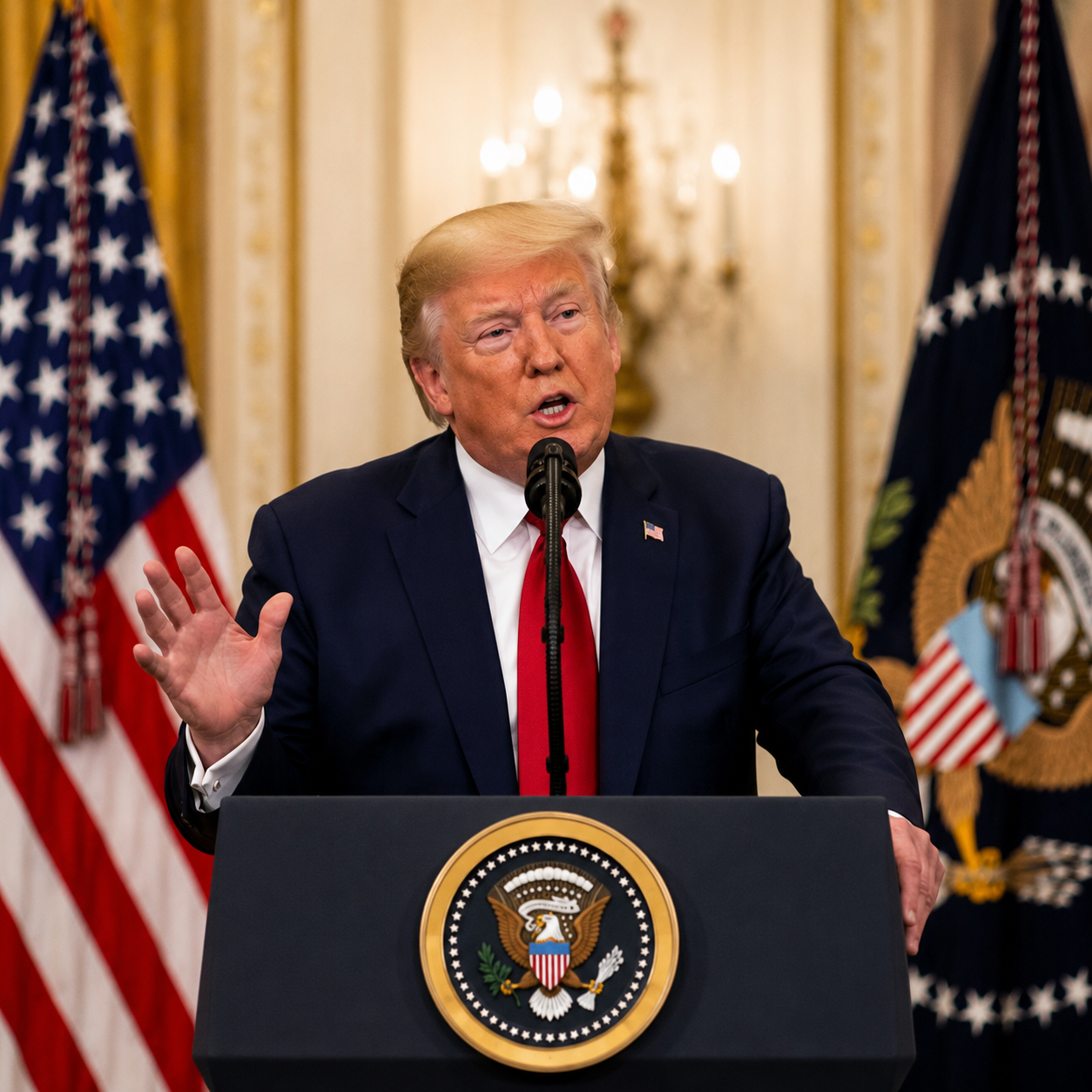
Source: Trump's White House speech compilation: Odaily Planet Daily Original title: What did Trump say on the night of the cryptocurrency explosion? The White House organized a “Cow Comes” show! Core point of view: At the White House cryptocurrency industry executives gathering, Trump explained the results of his administration's policies to promote the development of digital assets, emphasized America's position as a global leader through executive orders, legislation, and regulatory reforms, and called on Congress to pass the CLARITY Act to strengthen competitive advantage. Key elements: 1. Participants included SEC Chairman Paul Atkins, CFTC Chairman Michael Selig, and executives such as Coinbase, Robinhood, and Ripple, highlighting the trend of cooperation between the industry and the government. During the conference, BTC once surpassed 70,000 US dollars, ETH rose nearly 20%, and the market response was positive. 2. Trump announced the dismissal of former SEC Chairman Gary Gensler, terminated “Operation Blockpoint 2.0,” and signed an executive order banning CBDC and launching “Project Crypto” to reform the rules. 3. The government establishes US strategic Bitcoin reserves and digital asset reserves to use Bitcoin as a permanent asset of the Treasury; the “GENIUS Act” paves the way for widespread adoption of US dollar stablecoins. 4. The CFTC approved the first Bitcoin perpetual futures contract and promoted Hyperliquid compliance into the US, showing the gradual implementation of the regulatory framework. 5. Trump criticized the high interest rate policy, arguing that interest rates should be cut to support growth when economic data is strong; he emphasized that the fintech revolution has created jobs and wealth, and that the stock market has reached 80 new highs in a year and a half. 6. He called on Congress to pass the “CLARITY Act” as market structure legislation to ensure that the US continues to lead competitors such as China in the fields of encryption and AI. Editor's note: In the early morning of August 20, Beijing time, the White House held a meeting of cryptocurrency industry executives. Trump himself attended and delivered a speech. Government executives such as SEC and CFTC, industry representatives from Robinhood, Coinbase, Ripple, Gemini, a16z, etc., and senior traditional finance executives such as the Intercontinental Exchange and NASDAQ all attended the conference. Perhaps influenced by this positive signal, the cryptocurrency industry soared at night. At one point, BTC broke the $70,000 mark, and ETH rose close to 20%. Below is Trump's own statement on his speech at the conference. Seriously, a group of important people came to the scene today. If you love the world of finance as much as I do — I really love finance — all of you here today are big names in the financial world. It's incredible that you might not know some of them, but anyone in the financial world should know every one of them. Thank you so much for being here today. We're excited to welcome some of America's best talent in finance, cryptocurrency, and technology. In Washington, D.C., we are about to welcome the first meeting of the US Commodity Futures Trading Commission (CFTC) Innovation Advisory Committee (Innovation Advisory Committee). It's a committee of very smart people who will give us suggestions and tell us what we should do. Right, Paul (referring to SEC Chairman Paul Atkins)? They'll tell us a few things. But I think Paul probably knows these issues better than anyone else, and he did a great job. We're very happy with Paul, and I think everyone thinks the same. He's really amazing. From the cryptocurrency market and prediction market, to traditional finance, to decentralized finance, the people in this room are making sure that the future of the commercial market can be created and improved here in the US. We are competing with many other countries for control of these markets, market share, and the profits, jobs, and everything else they create. And we did a great job. We are leading the way in every aspect, including artificial intelligence, and by a huge margin. We want to continue this lead. I would like to thank CFTC Chairman Michael Selig for his outstanding leadership. (Find someone first) Michael, come over... (Then suddenly found him around) Why am I so close that I almost didn't recognize you. At the same time, I would like to thank a very special person, someone who has been respected by everyone for a long time. I would have liked him to take this role — I wanted him to do this job before he became SEC chairman. Paul Atk...

2d ago22#BTC skyrocketed #Trump

Trump urges Congress to pass a fair version of the Clarity Act

Comparatively, US President Trump said during a meeting with crypto industry and financial institution executives at the White House that he urged Congress to pass a fair version of the “Clarity Act” (Crypto Market Structure Act) to establish a more clear regulatory framework for digital assets. Trump said the bill would help the US maintain its leading position in the cryptocurrency sector and open up space for the next round of innovation and entrepreneurship. He said the US needs clear regulatory rules to prevent crypto companies from moving overseas due to policy uncertainty. The conference included several crypto and finance company executives including Coinbase, Ripple, Robinhood, Kraken, Chainlink, and Gemini, as well as SEC Chairman Paul Atkins, CFTC Chairman Michael Selig, and White House crypto advisor Patrick Witt. The Clarity Act aims to clarify the powers of the SEC and CFTC in digital asset regulation and establish a federal-level crypto market regulation system. The bill is expected to be re-submitted to the Senate for consideration in September. Currently, the Republican Party still needs to seek the support of about 6 Democratic lawmakers to reach the 60-vote threshold. Additionally, Trump emphasized that his administration has promoted strategic Bitcoin reserves, a digital asset reserve plan, a ban on the Bank of America digital currency (CBDC), and crypto-related policies such as the Clarity Act. Earlier, the US SEC has proposed new crypto asset issuance rules, and plans to provide regulatory exemptions for some token offerings and lower the funding threshold for eligible crypto projects.

3d ago

CRS 2.0 involving crypto assets is coming: payment of overseas income taxation insurance benefits has begun

Comparative news, according to a Caixin report, with the normalization of CRS information exchange, tax authorities have been able to fully obtain dividends and cash value data for overseas insurance policies. Gaps in collection and administration are gradually being filled. Currently, payment of insurance benefits taxed on overseas income has begun. In addition, CRS, as the “eye of the sky” of the global tax system, is also being upgraded according to the schedule. CRS 2.0 is coming. The core changes include incorporating cryptographic assets, central bank digital currency (CBDC), and specific electronic currency products into the definition of financial assets, in line with the trend of gradual integration of digital assets into the mainstream financial world. Overall, from the multiple dimensions of overseas stock trading, overseas insurance, and offshore trusts, the iterative implementation of CRS2.0 resonates with the tightening of overseas income tax collection and administration. The two support each other, add efficiency, and jointly tighten regulations on cross-border tax sources.

16d ago

India expands global tax reporting rules to cover crypto assets and central bank digital currencies

Comparatively, according to the Economic Times of India, India's Central Direct Taxation Commission has revised the global tax reporting framework to expand the scope of application of the Foreign Account Tax Compliance Act and common reporting standards to specific crypto assets, central bank digital currencies, and digital currency products, while also tightening due diligence requirements for financial institutions. The updated compliance framework provides banks, mutual funds, insurance companies, custodians, and other investment entities with guidelines for reporting account identification, tax residency identification, and financial information reporting. Financial institutions are also required to conduct enhanced due diligence on high-value accounts with balances greater than $1 million.

18d ago

Survey: Switzerland's cryptocurrency usage rate reached 23%, more than double that of Germany

Comparing news, Bearingpoint's latest survey shows that 23% of Swiss adults use cryptocurrencies at least occasionally, which is significantly higher than the 18% in Austria and 11% in Germany. Furthermore, 37% of Swiss respondents think cryptocurrencies are worth investing in, 45% think they can be used as international trade or reserve currency in the future, and 44% say they are willing to use central bank digital currency (CBDC). The relevant ratio is higher than in Germany and Austria. According to the report, Switzerland has formed a mature crypto ecosystem since implementing the DLT Act in 2021, and Crypto Valley has gathered 1,749 blockchain and DLT companies. Germany, on the other hand, plans to rely on traditional banking channels such as DZ Bank and Dekabank to promote crypto asset services to narrow the popularity gap with Switzerland.

19d ago

The Bank of Korea's digital currency pilot is accused of lacking external independent security verification

Comparative news. According to Korean media Maeil Business, data from the Korea Financial Supervisory Service shows that during the first phase of the CBDC pilot project led by the Bank of Korea, the financial authorities did not carry out any independent security verification; only participating banks carried out their own prior security reviews. Before starting the project, only participating banks were self-assessed for IT vulnerabilities. The Financial Security Service, SK Shields, and the Woori Bank and Nonghyup Bank self-inspection teams jointly carried out the evaluation model of “supervised person self-inspection”. The central bank acknowledged questions about the safety of deposit tokens from the outside world in the pilot results report, and responded that the preliminary review was sufficient, but critics pointed out that the instructions were a self-assessment and not an independent third-party verification.

32d ago

The Bank of Korea's CBDC pilot, the second phase of the Han River Plan is expected to start as early as September

Comparatively, according to Yonhap News Agency, the second phase of the Bank of Korea's digital currency (CBDC) pilot project “Han Jiang Plan” is about to be officially launched. The Bank of Korea and commercial banks are making final preparations for the second phase of the real transaction test of deposit tokens. If preparations for system development and recruitment of participants are completed as planned, actual trading is expected to begin as early as September. In the first phase of transaction testing from April to June last year, 81,000 people participated through e-wallets and carried out 114,880 transactions using deposit tokens. The first phase examined deposit token payment systems, while the second phase focused on exploring commercialization. Additionally, South Korea's Ministry of Finance and Economy announced in its economic growth strategy for the second half of the year released on the 15th that it will implement a government bond tokenization pilot project linked to the Bank of Korea's institutional central bank digital currency (CBDC) next year.

33d ago

The ECB warns that the spread of stablecoins may erode the base of bank deposits, and the digital euro is advancing at an accelerated pace

In comparison, European Central Bank (ECB) Executive Committee member Piero Cipollone (Piero Cipollone) said that large-scale adoption of stablecoins may weaken the retail deposit base of commercial banks and change the competitive landscape of traditional banking systems. Speaking at the Italian Cooperative Banking Federation in Rome on Friday, Cippolone pointed out that digital payments are reshaping the banking industry while increasing Europe's dependence on non-European payment infrastructure. Banks are currently facing declining payment fee revenue and loss of transaction data due to the development of mobile payment service providers. As digital asset payment instruments such as stablecoins become more popular, commercial banks may face more pressure on deposit outflows. Cipollone stressed that the digital euro will help maintain its status as a public currency and ensure that banks continue to participate in the payment ecosystem while meeting the changing financial needs of customers. “The digital euro can not only maintain the role of public funds, but also ensure that banks maintain an important role in the payment system.” Cipollone said. On Tuesday, the ECB selected 36 payment service providers to participate in a 12-month pilot project for the digital euro, involving banks, fintech companies, and payment companies. The pilot is scheduled to start in the second half of 2027 to test the viability of a retail central bank digital currency (CBDC) operating in the Eurozone. The ECB previously stated that if relevant legislation and tests go smoothly, the digital euro may be officially issued as early as 2029. This article is sponsored by GENG, Build Your Fortune on GENG (https://geng.one)

36d agoburnking
Circle CEO 10,000 words long article: The agent economy is reconstructing everything, and the corporate era will come to an end

Circle CEO 10,000 words long article: The agent economy is reconstructing everything, and the corporate era will come to an end

Author: Jeremy Allaire, Co-founder and CEO of Circle Compiled by Jia Huan, ChainCatcher Original title: Circle CEO 10,000 characters long article: The Agent economy is disrupting value creation and circulation 1. Technology integration and the dissolution of companies Every platform-level transformation in the Internet era does not rely on a single invention, but several mature technologies collide at some point. The birth of the Web required a graphical interface, a commercial open Internet, a sufficiently fast modem, and an open software layer of web pages, links, and servers. Digital media, mobile internet, cloud computing, and social platforms all follow the same path. There is a recurring pattern behind this: when multiple capabilities are integrated, the marginal cost of an otherwise expensive activity will collapse to close to zero; once the cost collapses, the speed of this activity will explode. The Web has detonated the speed of information publication, mobile and social networking have detonated the speed of interpersonal communication, and cloud computing has detonated the speed of software production and delivery. Now, two new “operating systems” are being integrated, applying the same mechanisms to two things that the Internet has never natively digitized: intelligence and economic activity itself. The first is an intelligent operating system, that is, artificial intelligence in the form of a basic model and an agent system built on it. The second set is an economic operating system, or blockchain network, where values, contracts, and collaboration can be expressed and executed with software. The former reduces the cost of cognition and work to zero; the latter reduces the cost of transactions, settlements, and collaboration to zero. The two reinforce each other. Intelligence enables economic activity to run at machine speed, and the economic foundation allows machine intelligence to trade, exchange value, collaborate, and execute contracts. The core assertion is that the smart economy and the on-chain economy are not neighbors, but the same economy. The two are converging into a force to reshape the global economic system. Let's look at smart operating systems first. It is comprised of cutting-edge foundational model capabilities, as well as inference and agent infrastructure that enables models to execute at scale. Today, representatives include platforms such as Claude and Claude Code, OpenAI, and Codex. This is a new type of computer: instead of programming in traditional ways, it uses natural language to give instructions to produce results and complete work. The atomic unit of this type of work is an intelligent body, that is, a reasoning process that is sent to perform a certain task. Why is this important? First, let's look at what the company actually is. Without brands and buildings, a company is an information system organized around a set of familiar functions: product and engineering, marketing, sales, talent, finance, legal compliance, operations, and customer service. The vast majority of the cost of maintaining this system comes from manpower. Looking at the economy as a whole, manpower is the largest single operating expense. It usually accounts for one-quarter to one-third of revenue, and the service sector accounts for a higher proportion. Among intellectual and technology companies, this is almost absolute: almost all non-capital expenses are wages. In other words, such a company is essentially an “organized perception with a logo attached to it.” There is also a second huge market outside the company's walls: professional services such as consulting, lawyers, accounting, and agency agencies. In the end, it is also organized manpower rented from outside. These two huge cost pools are the target targets of intelligent operating systems. This is why the smart economy is disrupting classic business theories. Economists have long used transaction costs to explain why companies exist: the costs of coordinating, signing contracts, and trusting external labor are too high, so companies internalize “do it yourself cheaper.” Company boundaries are essentially delineated by coordination costs. When every non-physical work unit can be completed by an intelligent entity that can be discovered, contracted, and settled instantly, coordination costs begin to collapse, and the company's traditional boundaries become meaningless. The most intuitive result is a one-person company: one person directs a group of intelligence agents to do work that previously required multiple departments. Small, highly leveraged teams will also appear within large companies to execute the business on a scale far exceeding their own preparation. Economic accounts continue to be compounded because the three exponential curves are moving simultaneously: cognitive work continues to be transferred to smart devices, and the share of manpower in operating costs is declining; the cost of operating intelligent devices continues to drop, and the price of the same machine intelligence drops by about an order of magnitude every year; at the same time, the ability of intelligence continues to improve on almost all benchmarks. The combination of cheaper, more powerful, and more costly will unlock huge production potential. This disintegration will not happen evenly. It first appeared in software engineering because today's models are extremely good at understanding and writing code. Meanwhile, it...

39d agoWendy#Circle

The housing bill, which includes provisions banning CBDCs, is officially in force, and Trump has not signed it and is still law

Comparatively, the US “21st Century ROAD to Housing Act” (21st Century ROAD to Housing Act) has officially entered into force, which includes provisions prohibiting the Federal Reserve from issuing central bank digital currency (CBDC). According to reports, Trump previously stated that he will not sign the housing bill unless Congress first passes the “SAVE AMERICA ACT” (SAVE AMERICA ACT), which requires a federal election vote to provide proof of citizenship. However, after the bill was submitted to the White House, Trump did not sign or veto it within 10 days. According to the US Constitution, the bill automatically became law. The bill was previously passed by the Senate at 85:5 and the House of Representatives at 358:32 respectively. In addition to prohibiting the Federal Reserve from issuing CBDCs, the bill also covers content related to housing policy.

42d ago