战略性投资 · 23

Yunfeng Financial strategically invests in WooshPay, a global cross-border payment platform, and lays out AI+Web3 digital finance closed loop

Comparative news, according to Yunfeng Financial's official account, Yunfeng Financial Group (00376.HK) has completed a strategic investment in global financial infrastructure and cross-border payment service provider WooshPay. The specific investment amount was not disclosed. According to reports, WooshPay is a global payment platform strictly regulated by the UK Financial Conduct Authority (FCA) and Hong Kong Customs. It has provided cross-border capital transfer services to many benchmark customers such as Xiaomi, large education groups, and IoT listed companies. The business covers 170 countries and regions, and supports 155 types of fiat currencies and mainstream digital assets. Yunfeng Financial said that the investment aims to deeply integrate WooshPay's leading global payment and settlement capabilities with AlphaToken, the group's digital asset infrastructure, to build a four-terminal two-way channel of “asset side, client, infrastructure end and payment end” to create a full-link ecological closed loop covering “asset tokenization” and “compliant settlement.”
114d ago

United Nations Conference on Trade and Development: AI will become the dominant cutting-edge technology in 2033, and changes in the market share of blockchain and other technologies are relatively limited

Comparatively, the United Nations Conference on Trade and Development (UNCTAD) released a report on the 19th saying that by 2033, the global artificial intelligence (AI) market is expected to reach 4.8 trillion US dollars, and its share in cutting-edge technology has increased significantly, making it the most dominant key technology field. In contrast, the market share of technologies such as the Internet of Things, blockchain, electric vehicles, and solar photovoltaics has changed relatively limited. At the same time, the report warns that the rapid development of AI is mainly concentrated in a few major economies and large enterprises, which may exacerbate development imbalances between countries and enterprises, and calls for more widespread sharing of AI development results through strategic investment and more inclusive global governance mechanisms. (CCTV)

246d ago
S&P gave the “worst review,” but Tether's next step is more worth wary of

S&P gave the “worst review,” but Tether's next step is more worth wary of

Author: 100y Original title: To See Tether's Future, Look at Its Investments Compiled and Sorted by: BitPushNews Foreword A few days ago, S&P downgraded Tether's rating to the “worst level”, putting the world's largest stablecoin on the cusp once again. In traditional financial narratives, this seems to mean risk, doubt, and uncertainty; however, in the reality of the crypto industry, USDT's share continues to expand, and Tether's investment landscape is rapidly expanding. From gold and Bitcoin to global payments, infrastructure, and cross-border networks, a huge digital financial system is quietly taking shape. Downgrading and expansion are intertwined to form the most conflicting yet realistic financial picture of the moment: the more uneasy the traditional rating system is, the harder it is to ignore Tether's influence. Abstract The order of an empire has always been inseparable from the status of money. The continued expansion of the USDT (Tether) scale is heralding the quiet rise of a huge digital finance empire. This article will thoroughly analyze the 20 companies Tether has recently invested in and reveal the triple strategy of its imperial blueprint: use Bitcoin and gold as the foundation to strengthen trust, extend business reach to all continents, and build a closed loop covering retail and institutional users through perfect products and services. 1. Tether and the Digital Finance Empire 1.1 Money and Empire Source: Dyken Wealth Strategies Currency is a commonly accepted medium of exchange and unit of value in everyday life. However, from an imperial perspective, the role of money goes far beyond simple transactions; it can also be understood as a power tool covering political, cultural, and social functions. Throughout the history of the empire, currency played the following additional roles: a symbol of imperial order: the image of an emperor or imperial emblem engraved on coins symbolizes the authority of the empire in visual form, and becomes a token showing the user the imperial order. Tools for imperial rule: By centralizing minting and issuing rights at the center, marginal regions have to rely on the core empire's monetary system, thereby strengthening imperial rule. The measure of resource aggregation: The empire gathered resources from all over the world through taxes and donations, and currency was the key medium for standardizing and transferring these resources. Without exception, the status of money has always been synchronized with that of the empire. When an empire grows and reaches its peak, its currency becomes strong and supports the empire. When an empire declines, its monetary status also declines, hastening the fall of the empire. Today, terms like “empire” or “colony” are long gone, but we're far from getting rid of these concepts. The US plays the role of an empire supported by strong economic and military forces, and the US dollar already functions as the world currency. Many non-US countries have tried to challenge the dollar's dominance in modern society, but have failed. The US dollar accounts for about 57% of global foreign exchange reserves and about 50% of SWIFT international settlements, solidifying its position. 1.2 USDT's unstoppable source of growth: Artemis With the development of information technology, a large part of the global economy has moved to the internet. With the advent of blockchain technology, which made it possible to use money safely online, the on-chain economy grew rapidly, and the currency used on the chain — stablecoins — also rapidly expanded to about 300 billion US dollars. Among the many stablecoins, Tether's USDT is the most notable one. USDT makes it easy for people in many countries where their fiat currencies are highly unstable to access the US dollar, the imperial currency. Anyone with a connected mobile device can easily access dollars, even without a credit or bank account. This has opened the door to USDT's rapid growth, particularly in developing countries and third world countries. More importantly, despite the passage of the GENIUS Act and the gradual integration of blockchain into the mainstream of regulation, USDT's market share has not declined significantly. USDT's share remains above 60%, more than double that of USDC, which is ranked second. 1.3 Towards a huge digital finance empire Tether is building its own huge empire powered by its powerful currency USDT. But building an empire is no easy feat. Although USDT is linked to the US dollar, its reserves include not only highly liquid cash equivalent assets such as cash, US Treasury bills, and repurchase agreements, but also relatively less stable assets such as precious metals, Bitcoin, non-US government bonds, and corporate bonds. In major countries that have established stablecoin regulatory frameworks, these types of assets are not legally accepted as reserves. In fact, according to the EU's MiCA regulation...

267d agoWendy#Tether #invests #digital finance #Bitcoin #USD #financing #gold

Walnut Capital Co., Ltd. announced a strategic investment in EdgeAI Labs to advance the development of decentralized AI and edge computing technology

In comparison, Walnut Capital Co., Ltd. (stock code: 0905.HK) announced a significant strategic investment in EdgeAI Labs. This partnership will accelerate the development of EdgeAI Labs' decentralized platform, expand its global reach, and enable the company to provide more scalable and secure AI solutions to developers, businesses, and individual users around the world. As demand for decentralized AI and edge computing solutions continues to grow, EdgeAI Labs is uniquely positioned to meet this demand with its superior technology. The investment will support the company's mission to provide AI agents that can operate securely on user-owned devices, reduce reliance on centralized cloud infrastructure, and ensure data privacy and security. The partnership with Walnut Capital Ltd also highlights the importance of decentralized infrastructure in the evolution of Web3 and AI technology. The investment will enable EdgeAI Labs to further enhance its proprietary solution architecture and accelerate the global deployment of decentralized edge nodes, thereby greatly improving the company's operational capabilities. The investment of Walnut Capital Co., Ltd. is highly compatible with its strategic goal of promoting technological innovation in the fields of artificial intelligence, blockchain, and decentralized computing, providing valuable support to companies that are shaping the future of the digital economy.

282d ago

CMCC Global to launch Resonance Fund, a $25 million Sonic ecosystem fund

In comparison, Sonic Labs announced in its official blog that blockchain venture capital firm CMCC Global plans to launch the $25 million Sonic Ecosystem Fund Resonance Fund. The fund is dedicated to investing in the groundbreaking agreements and founders that shape the Sonic ecosystem. The fund mainly focuses on high-growth opportunities in DeFi and consumer-facing applications. Its core mission is to promote the monetization model of fees as a sustainable revenue model for smart contract developers and accelerate its popularity. Additionally, the fund hopes to expand the liquidity of the Sonic ecosystem through strategic capital allocation. Its investment strategy aims to capture value throughout the asset lifecycle, from early investments to emerging DeFi leaders and strategic investments in highly liquid assets within the Sonic ecosystem.

326d ago
Ten reasons to tell you: Why Ethereum is bound to rise

Ten reasons to tell you: Why Ethereum is bound to rise

Original title: Ten Core Reasons to Be Strong and Bullish on Ethereum Original Author: Ebunker When US Regulation Turns the Green Light, Traditional Wall Street Institutions Quietly Sweep Away Goods, Vitalik has already accumulated several ideas for Ethereum L1 expansion, and the Federal Reserve has secretly turned the pointer to cut interest rates — all the grand narratives are converging on the same main line: Ethereum. Regulatory unfreezing, technological iteration, macro trends, and four-wheel drive with an “ultrasonic” monetary mechanism are paving an acceleration track for the next 3-18 months. The net inflow curve of ETH ETFs continues to reach new highs, fuel costs on the blockchain explorer are about to break through 5 million units, and Ethereum returns to MA200; the on-chain staking rate is still rising, from the North American Ethereum microstrategy SharpLink writing ETH into the balance sheet, to Robinhood announcing that Europe can use Ethereum L2 to trade US stocks on the chain, to Hong Kong's announcement that ETH is being accepted as proof of immigrant assets, the core value of Ethereum is becoming Global consensus. Political games, capital momentum, agreement improvements, and iterations of foundation reforms are bursting simultaneously — there is only one key question left in the market: Are you ready? Next, these top 10 reasons will deconstruct how ETH can leap from industry consensus to a cross-cycle explosion engine. 01 The biggest regulatory advantage in history and the introduction of policies and drastic changes in the US regulatory stance brought new optimistic expectations to Ethereum. Paul Atkins, the new chairman of the US Securities and Exchange Commission (SEC), has expressed support for crypto innovation — a stark contrast to Gary Gensler's era. Atkins has withdrawn the Gensler era proposals for decentralized finance and self-escrow in favor of an “innovation first” strategy. At a recent round table, Atkins even emphasized that developers should not be penalized for writing decentralized code. This was a major policy shift: the SEC under Gensler had treated Ether as an “unregistered security” and investigated it. Today, under pro-crypto leadership, Ethereum enjoys a more defined regulatory outlook. As decentralized finance gains acceptance at the highest level — Atkins calls self-custody “a fundamental American value” — the threat of hostile regulation has clearly weakened, greatly encouraging institutions to participate in the Ethereum market. Furthermore, recent US legislative developments, particularly the Senate's GENIUS Act, mark a critical turning point in regulatory clarity for cryptoUSD stablecoins. These bills aim to establish a clear framework for paying stablecoin issuers, and given that Ethereum is the main settlement layer for regulated stablecoins such as USDC and PYUSD, and one of the most important public chains for the largest stablecoin USDT, their adoption will be strongly promoted: Content Source: U.S. Congress's comprehensive stablecoin framework “Guiding and Establishing the US Stablecoin National Innovation Act” (GENIUS Act) was successfully passed by the Senate in June 2025 with bipartisan support. It imposes strict standards on stablecoin issuers, requiring 100% cash or treasury reserve support, monthly audit disclosures, and bankruptcy protection for token holders. Crucially, it allows banks and non-bank companies to issue stablecoins under license and be regulated. As a stablecoin infrastructure, Ethereum validates dollar-backed tokens that mainly exist on the Ethereum network by clearly legalizing and regulating stablecoin issuance. Circle's USDC and PayPal's PYUSD, for example, are ERC-20 tokens on Ethereum and rely on Ethereum's security and global reach. The federal framework solidifies Ethereum's role as the backbone of settlement. Lawmakers themselves acknowledge that well-regulated stablecoins can “strengthen the dollar's position as the world's reserve currency,” while maintaining America's competitiveness. This mission essentially leverages public networks like Ethereum (USD stablecoins circulate in DeFi and payments). DeFi and dollar liquidity Ethereum's DeFi ecosystem, from lending protocols to decentralized exchanges (DEXs), runs on stablecoin liquidity. By legalizing stablecoins, the GENIUS Act effectively secures the foundation of DeFi. Participants can feel more confident using things like...

408d agoWendy#L2 #Ethereum #Ethereum topics #Reserve assets #custodial #pledge
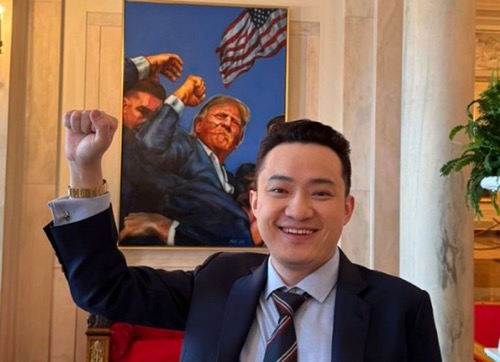
Sun Yuchen's NASDAQ gambling game: How to “bind” the Trump family for six years?

Sun Yuchen's NASDAQ gambling game: How to “bind” the Trump family for six years?

In the summer of 2019, when Sun Yuchen spent 4.57 million dollars to photograph Buffett's charity lunch, no one expected that this meal would be a stepping stone for him to enter the US business district in the future. Today, six years later, the founder of Bochang has successfully entered the core circle of the Trump family, and is even about to land Bochang on the NASDAQ through a “backdoor listing”. According to foreign media, the Financial Times reports, Wave Field plans to go public in the US through a “backdoor” method, and the deal is handled by Dominari Securities, a boutique investment bank linked to Trump's second son Eric Trump. Eric himself is expected to take a position in the newly established “Tron Inc.” (although Eric refuted this claim in a new tweet). This series of actions not only revealed the deep integration of the crypto industry with the core of US political power, but also outlined the timeline of increasingly close cooperation between Sun Yuchen and the Trump family. Origin: 2019 Buffett Lunch — Although the crypto world's first high-profile “breakers” did not directly intersect with Trump himself, the charity lunch between Sun Yuchen and Warren Buffett was undoubtedly an iconic event where Sun Yuchen and the entire cryptocurrency sector first attempted to have a dialogue with traditional American power elites. June 2019: Sun Yuchen filmed Buffett's charity lunch with a record-breaking $456.78.88 million, which became the focus of the global media for a while. Sun Yuchen's move was aimed at promoting the value of blockchain and cryptocurrencies to Buffett — a famous Bitcoin skeptic. Sun Yuchen said, “This is not only a highlight of my personal career, but also a major day for Bochang TRON and BitTorrent, and a symbol of the victory of the entire blockchain community.” Interestingly, he also specially invited the then-president to eat together on Twitter @了特朗普 at the time, but the two sides didn't establish a substantial connection at the time. July 2019: The lunch plan was cancelled for some reason. As the original lunch date approached, Sun Yuchen said on social media that she had cancelled lunch due to a sudden kidney stone outbreak. This change attracted widespread attention and speculation, and at one point had a negative impact on Sun Yuchen's personal image and the Bochang community. However, this incident gave Sun Yuchen himself and Bo Chang huge exposure on a global scale. It symbolizes the crypto world's efforts to break the circle and connect with traditional financial and political executives. This incident also established Sun Yuchen's image as a “circle breaker” in the crypto field, paving the way for his future interactions with more core political forces. Early: Prudence and wait-and-see under crypto regulation (late 2019 - early 2024) There was no clear direct intersection between Sun Yuchen and the Trump administration after Buffett's lunch in 2019. During this period, although the Trump administration's attitude towards cryptocurrencies fluctuated from time to time, Sun Yuchen, as a world-renowned crypto entrepreneur, has always faced certain regulatory challenges in the US. In particular, during the Biden administration, the US Securities and Exchange Commission (SEC) filed lawsuits against Sun Yuchen and several companies (including Wave Market), accusing them of unregistered securities issuance and market manipulation. This made Sun Yuchen avoid setting foot on the mainland of the United States for a while to avoid potential legal risks. End of 2024: First direct intersection — the real and direct commercial intersection of strategic investment and advisory roles began in late 2024, when Trump's re-election campaign for president was gaining momentum. September 2024: Trump family launches crypto project World Liberty Financial (WLF). It is a decentralized finance (DeFi) project that aims to provide lending services and plans to launch a stablecoin pegged to the US dollar. According to reports, the Trump family owns 60% of WLF Hold co LLC (WLF's parent company) through its company DT Marks DeFi LLC and is entitled to 75% of the proceeds from certain token sales. November 2024: Sun Yuchen invested heavily in WLF and became the largest investor. Sun Yuchen announced that the Bochang Foundation has invested up to 75 million US dollars in WLFI tokens to World Liberty Financial, a subsidiary of the Trump family. This investment has made the Wave Field Foundation WLF's largest institutional investor. The move not only injected much-needed liquidity into WLF, but also marked the first deep commercial bundle between Sun Yuchen and the Trump family. Becoming a WLF advisor: As his investment deepened, Sun Yuchen was appointed as an advisor to World Liberty Financial, further deepening his participation in the Trump family's crypto ecosystem. This time...

432d agoWendy#IPOs #Tron #TRUNP #public #Crypto listing topics #original #Sun Yuchen #Trump #custodial #Regulatory topics

T-Fund, a fund focused on the TON ecosystem, announced the establishment

Comparatively, T-Fund, a fund focused on the TON ecosystem, was announced. T-Fund was founded by Daniel Yang (@CryptoBoiDanny), the former head of global business development at the TON Foundation. It aims to provide strategic investment and comprehensive incubation support to project teams in the TON ecosystem to accelerate the development of the TON blockchain.

709d agoAlvin Liu#T-Fund #TON ecosystem
BlackRock and Other Bitcoin ETFs Are Depriving Bitcoin of Room to Grow?

BlackRock and Other Bitcoin ETFs Are Depriving Bitcoin of Room to Grow?

Between Bitcoin's widespread acceptance and increased institutional investment, there is a challenge of how to balance circulation supply with investment demand. Original title: BlackRock and other Bitcoin ETFs rob bitcoin of its room to grow Original author: MARC TAVERNER Source: blockworks Bitcoin has existed for more than 15 years, and more companies and brands now accept Bitcoin as a payment method. But for most people, paying with bitcoin is as unfamiliar as paying with Galaxy coins. In fact, today's Bitcoin isn't suitable for buying coffee. But it's probably funding a company that can change your life, which is why we need to give it some space to be used. Bitcoin is scarce by design. This makes it a reliable store of value, so people want to be allowed to use it. As Bitcoin becomes less and less used in everyday transactions (such as buying coffee), its popularity as a medium of exchange is growing in other areas; such as funds, venture capital, and strategic investments in startups by angel investors. We know this because we're seeing more and more startups seeking service providers that exchange Bitcoin for fiat money in order to do business (such as paying wages and office rent). We've also seen large institutional investors buy Bitcoin as an alternative investment, seeking to diversify their portfolios and seek rewards to hedge against market fluctuations. Of course, we've also seen the popularity of recently approved Bitcoin trading platform trading funds (ETFs), which include BlackRock being one of the biggest buyers of Bitcoin ever. As of May 2024, BlackRock's iShares Bitcoin Trust has accumulated over 274,000 bitcoins (worth around $16 billion at time of writing). For these reasons, Bitcoin is now clearly seen as a viable investment opportunity for major players. In turn, now is the time to worry that large players may monopolize the market to the detriment of companies, founders, and investors who still prefer to use Bitcoin as a medium of exchange. The control of Bitcoin by organizations like BlackRock (to fill their ETFs) threatens Bitcoin adoption because they limit Bitcoin's circulating supply. Meanwhile, price increases driven by these institutions make Bitcoin a more interesting investment asset. This is Bitcoin's dilemma, and it's already raising real questions. As more companies include Bitcoin on their balance sheets, they need to trade and exchange in a more liquid ecosystem. ETFs, on the other hand, aim not to “release” their bitcoins. So what's going to happen next? The only answer that actually works is regulation. It's not about deregulation of Bitcoin ETFs themselves, but rather to support regulatory approval for financial products that make more use of Bitcoin's value, so that ETFs are no longer the only option. Approving financial products that use other digital assets (such as the upcoming decision on an Ethereum ETF) can also reduce the pressure to buy ETFs. Furthermore, licensing and approving more payment and exchange channels between fiat currencies and bitcoins (this way, the way to obtain bitcoins is not just through a broker) can also help bring more bitcoins back to the market. In the Web3 ecosystem, more and more investors are using crypto assets to support promising startups. Many great projects and initiatives have already been funded through Bitcoin or other stablecoins, and we'll see more similar projects in the future. But in order to achieve this, we need to ensure that there is enough Bitcoin in circulation in the market. This requires more financial products with different purchasing models and different digital currency support, as well as more medium of exchange, so that investors and companies that fund companies with bitcoins can still grow. Most importantly, the world's companies like BlackRock should support this plan — if their Bitcoin ETF is an indication, demand for digital currency investment products will only grow...

830d agody zhang#2023 market #ETF #Ethereum #A store of value #Bitcoin #Bitcoin ETF #BlackRock
[Comparative Daily Picks] The British government plans to introduce laws on stablecoins and crypto staking within 6 months; Coinbase seeks to launch derivatives products such as perpetual futures contracts in Canada; Capital One negotiates to acquire Discover, a crypto company, or benefit

[Comparative Daily Picks] The British government plans to introduce laws on stablecoins and crypto staking within 6 months; Coinbase seeks to launch derivatives products such as perpetual futures contracts in Canada; Capital One negotiates to acquire Discover, a crypto company, or benefit

Web3 news selected for you every day by Bituo Editor: [The UK Government plans to introduce laws on stablecoins and crypto staking within 6 months] Betweet News. According to Bloomberg, the UK government plans to have legislators approve new rules governing stablecoins and crypto asset pledge services within the next 6 months, as pressure to put forward specific proposals before the upcoming election is increasing. British Treasury Secretary of the Economy Bim Afolami said in a speech today that the government is “vigorously promoting” legislation. He said, “We know very well that we want to complete these things as soon as possible. I think these things are doable in the next six months.” The UK Treasury first promised in October 2023 to provide more explicit information on specific areas of cryptocurrencies sometime in 2024, but broader proposals to include crypto exchanges and other industry providers in existing financial services rules are still pending. When asked if the guidance might also become legislation this year, Afolami said he was unable to provide a timeline. [Coinbase seeks to launch derivatives such as perpetual futures contracts in Canada] In comparison, Coinbase Canada Regional Director Lucas Matheson said in an interview that Coinbase is seeking to launch perpetual futures contracts and other derivatives products in Canada, and is in open dialogue with politicians and regulators such as the Ontario Securities Commission (OSC) to update the country's policies to achieve this goal. Additionally, Coinbase is applying for “restricted dealer registration,” a new type of guideline requiring exchanges to register with the Canadian government. To that end, Coinbase recently joined the Canadian Web3 Commission, a multi-party non-profit organization that aims to make Canada's legislative and regulatory initiatives more industry-friendly. [Capital One negotiates to acquire Discover, crypto company or benefit] In comparison, Reuters reports that Capital One, an American consumer lender supported by Warren Buffett, plans to acquire credit card issuer Discove. According to LSEG data, Discover Financial's market value is 27.6 billion US dollars, while Capital One's valuation is 52.2 billion US dollars. The deal will enable America's largest credit card company by loan size to surpass longtime rivals JP Morgan and Citibank, according to data compiled by industry research. Furthermore, the acquisition may benefit crypto companies. Currently, Capital One helps its clients enter the cryptocurrency market, and holders of Capital One accounts can safely transfer dollars to authorized and regulated cryptocurrency exchanges. Discover Financial has hired a new blockchain and digital currency product manager. If the acquisition is successful, it may promote the integration of crypto products or launch new products. [Forbes launches a permanent virtual world in The Sandbox] Comparing news, Forbes announced the formal establishment of permanent land in The Sandbox virtual universe. This strategic move not only marks Forbes' deeper involvement in the Web3 field, but also strengthens its belief in the transformative potential of the virtual universe. According to reports, the new Forbes virtual world experience is located on some plots west of “Dracula Castle” and north of “HODL Island” in the sandbox, and is currently open to the public. Forbes' virtual estate will serve as a dynamic community center designed to facilitate interaction, engagement, and collaboration among the Forbes Web3 community. [SkyBridge Founder: The reason the US SEC Chairman is cracking down on cryptocurrency is that he wants to be the next Secretary of the Treasury] In comparison, SkyBridge founder Anthony Scaramucci said that the real reason US Securities and Exchange Commission Chairman Gary Gensler is taking a tough stance on crypto is his desire to serve as Treasury Secretary during President Joe Biden's second term. Anthony Scaramucci further stated that although Gray Gensler is openly opposed to cryptocurrencies, he is essentially a cryptocurrency believer, adding: “Go to MIT to watch his 24-hour lecture, where Gary Gensler taught...

914d agoWendy#Compare Daily Picks