朱嘉明 · 53
September Web3 “Running Event” Guide

September Web3 “Running Event” Guide

Get a sneak peek at the September Web3 event, and don't miss the important summit. Article: angelilu, Foresight News A number of heavyweight events will be launched in September. First, Korea Blockchain Week will be ushered in, followed by the global blockchain industry's focus on Singapore. The industry-wide event TOKEN 2049 and the Solana Ecosystem Annual Summit will be held in Singapore. On the other hand, Hawaii in the US will host the first large-scale technology week, including topics such as Bitcoin and blockchain and surrounding events. Additionally, New York will host Mainnet 2024. Foresight News brings you the September “Running Guide” to explore this golden autumn feast of global Web3! KBW2024 Time: September 1 to September 7, 2024 Location: Seoul, South Korea Highlights: Korea Blockchain Week is one of the most influential blockchain events in Korea. The week-long event brings together leaders, innovators, investors, and developers in the global blockchain industry. The event highlights Korea's innovations in the blockchain and cryptocurrency field. Participants can learn more about Korea's blockchain ecosystem. Korea is one of the world's important cryptocurrency markets. The event may explore the latest Regulatory trends and policy trends. Foresight News has now included more than 140 events around KBW2024, which can be viewed here: https://foresightnews.pro/event/detail/1198外滩大会 Web3 Forum Time: September 5 Location: Huangpu World Expo Park, Shanghai Highlights: Ant Digital Technology will partner with Foresight News to host “Let's Talk” at the Inclusion Bund Conference on September 5 Future Realm: Web3 Forum on the “Materialization” of Digital Dreams”. This forum will discuss the latest developments and industry practices in Web3 technology, listen to the innovative voices of Asian financial centers, and find RWA's successful path from concept to implementation. Attending guests included Xiao Gang, member of the 13th National Committee of the Chinese People's Political Consultative Conference and former chairman of the China Securities Regulatory Commission; Zhu Jiaming, economist and Chairman of the Academic and Technical Committee of the Hengqin, Australia-Guangdong Deep Cooperation Zone Digital Finance Research Institute; Xu Changjun, Chairman of Langxin Group; and Bian Zhuoqun, Vice President of Ant Group & CEO of Ant Digital Technology and Blockchain Business President. Hawaii Blockchain Summit Time: September 16, 2024 Location: Hawaii, USA Highlights: Hawaii Blockchain Summit will be held in Hawaii on September 16. This event is an important part of Honolulu Tech Week, Hawaii's first large-scale tech week event, so it can attract a large number of tech talents from various industries to participate in the event, and is a key link connecting blockchain with the technology sector to promote cross-sector exchanges and innovation. The event focused on entry-level content, such as “Getting Started with Bitcoin,” and aimed to lower the threshold of blockchain technology and attract a wider audience to participate. Attending guests included industry figures such as Avery Ching, co-founder and chief technology officer of Aptos Labs, as well as local Hawaiian companies. TOKEN 2049 WEEK Time: September 16 to September 22, 2024 Location: Singapore Marina Bay Sands Highlights: TOKEN 2049 is held every six months in Dubai and Singapore. With its high-quality content and broad influence, it provides an important communication platform for the global blockchain and cryptocurrency industry. The event held in Singapore from September 16 to 22 is the most anticipated Web3 in Asia in the second half of 2024 In addition to industry pedestrians such as Solana Co-Founder Anatoly Yakovenk, Binance CEO Richard Teng, and Maelstrom CIO Arthur Hayes, guests included Oracle Red Bull F1 drivers Max Verstappen and Sergio Perez. Foresigh...

719d agody zhang#DeFi #Solana #WEB3 #Singapore #Korea
How can artificial intelligence make people lose jobs and make money?

How can artificial intelligence make people lose jobs and make money?

Mr. Chu Ka-ming's article “Artificial Intelligence is Transforming Economics and Economics” is very good and inspired us to think about artificial intelligence from an economic perspective. AI (artificial intelligence) will inevitably replace a large number of people, causing massive unemployment. But at the same time, it also brings opportunities to small companies and individuals that have never been seen before. Zhu Jiaming said, “1. Artificial intelligence has completely changed the subject of economic activity as we originally understood it. 2. Artificial intelligence has transformed the infrastructure of traditional economic activity. 3. Artificial intelligence has changed the composition of factors of production.” Since the advent of computers, factors of production and infrastructure have been changing, and it is not surprising that this change is mentioned. The most critical point is the first point in the statement. In other words, artificial intelligence, like humans, has a dominant position in economic activity. So what is the relationship between humans and robots? Names for people include nobility, free people, slaves, and citizens. Do robots have citizenship rights? Who can represent the power of robots? Should it have human rights or not? It's scary to keep thinking like this. But these are still far away. The question that affects us the most is: Will I lose my job? Zhu Jiaming said, “Strictly speaking, no one dares to say that their job will not be replaced by artificial intelligence today. Not only ordinary workers, engineers, and even scientists are included in the category of being replaced to a certain extent.” And all of this is within the scope of the law, and it scared the baby to death. The reason robots replace humans is that they have high productivity, which is so high that all human knowledge cannot be achieved by a single person; since robots can not be consumed, the cost is extremely low, and the cost of use is almost zero. Big tech companies understand this the most, and they began layoffs early on. Musk's secretary asked for a salary increase. As a result, Musk gave her a two-week vacation and got laid off when she came back. Because her job was replaced by a “smart tool.” We don't know what artificial intelligence will replace, but we can know what won't. If it is not replaced, it will be re-valued. Humans themselves won't be replaced. What assets can we own, can robots own? Seems like it won't work. This is a plus for humans. We can have lots of robots, can we fire robots, can robots fire us? Seems like an uncertain question. It's also a human plus. Humans have the ability to spend, and robots don't. This is also a plus for humans. Relationship ability, can robots establish their own group relationships? Robots have a network relationship, which cannot be understood as a group relationship. If not, communities made of people would exist. How can robots build their own communities? There is no organization without a community, and no individual, no matter how powerful, is an organization's rival. Manufacturing capacity. Robots are always subordinate. Even in fully automated production lines, autonomous robots with dangerous operations are still controlled by humans. The ability to learn has many advantages. Not a human plus. Thinking ability, including deep thinking and reasoning ability, is a plus for people. The ability to innovate, including imagination, is also a plus for humans. There are also non-economic factors, such as morality, belief, and self-control, which are all human bonuses and are not discussed in this article. Through discussion, we can rest assured that humans still have a huge advantage over robots until 2045. Artificial intelligence is still just our advanced tool. The current relationship between humans and robots is like the relationship between slaves and slave owners. In other words, the more slaves of every skill a slave owner hires, the more powerful they are. Slaves also consume; robots don't. If we think of a company as a slave owner, it is clear that the amount of robots it uses is an indicator to measure its company. This indicator is quantifiable. The social networking app Discoard has 650 employees. The software is really bad. They don't understand social networking at all, and they can't match the level of WeChat and Douyin. The biggest feature is that there are various robots. One of them is a smart mapping software called Midjourney, which only has 11 people. The two companies had the same turnover of $100 million last year. If this software is made independent, developed further, and added to a large number of apps, it is obvious that doing this job is a sales job. This type of salesperson can be part-time. In other words, in addition to maintaining our own systems, we can also maintain the same systems of other companies. How to find such a part-time job? Join the midjourney community to find people who need help. Although it's still very elementary, the community will improve. Achieving part-time jobs and passive income through the community was the biggest challenge brought about by Bitcoin. It challenges the corporate system. Taking a fixed wage seems out of place in the age of artificial intelligence. The Bitcoin community is also very rudimentary, and it is still a technical community. On top of that, improving the community system will have more vitality. Something like Midjourney was invented in America...

1219d agoWendy#AI #OpenAI #AI #Wish Visha
WeChat's New Year's masterpiece: installing the metaverse into a mini program

WeChat's New Year's masterpiece: installing the metaverse into a mini program

WeChat tests the “XR-FRAME” development guide, and the human-computer interaction method of future applets may shift from 2D to more three-dimensional 3D. Author: Kyle is a national-level app with a monthly activity of 1,309 million dollars, and every small WeChat upgrade can easily become a phenomenon. In the beginning of 2023, WeChat will expand its efforts to try to incorporate the metaverse into applets. Not long ago, WeChat officially posted the “XR-FRAME” development guide in the open community, which is a customized XR (extended reality) /3D application solution for applets. Simply put, after the launch of this solution, it will give the applet extended reality and 3D capabilities from the bottom layer, and transform the human-computer interaction method of future applets from 2D to more three-dimensional 3D. Currently, XR-FRAME is still in the testing phase. According to the officially released demo, the component can better present 3D effects and provide experiences such as AR face-swapping and AR games. According to reports, WeChat took the lead in targeting the test scenario of the XR applet in the e-commerce field, and launched various types of cases such as AR try-on and AR home improvement. From a strategic point of view, installing the metaverse into the WeChat Mini Program, Tencent is at risk. Economist Zhu Jiaming predicts that in the future, the basic form of people socializing will take place in the metaverse. If all of this actually happens, traditional social models such as WeChat will be disrupted. The possibility of defeating WeChat is not “Douyin” social networking, but a metaverse app. If the applet is going to be 3D, remember the popular mini game “Jump!” on WeChat? By pressing and holding the screen, the player makes the villain jump to the box in front of them to score points. If the villain falls by accident, the game ends. The game landed on the WeChat Mini Program in December 2017, drawing countless players to compete. A few months ago, the elimination game “Sheep Is a Sheep” was also popular all over the Internet using the WeChat Mini Program as a carrier. Since the launch of the WeChat Mini Program in January 2017, many phenomenal apps have been created in it. Relying on the huge WeChat user base, the applet provides developers with a new creative soil. Over the past 6 years, the platform capabilities and underlying framework of the applet have also been continuously upgraded. At the beginning of 2023, the applet revealed a big move — the XR framework is currently being tested. XR, or extended reality, is a synonym for VR (virtual reality), AR (augmented reality), and MR (mixed reality), which can bring the audience an environment of real and virtual integration and human-computer interaction. Not long ago, WeChat officially posted the “XR-FRAME” development guide on the WeChat Open Community. According to the description, this is an XR/3D application solution officially provided by the applet. It is implemented based on a hybrid scheme. The performance is close to native, effective, easy to use, strong expansion, progressive, and follows applet development standards. Currently, this underlying framework is still in the testing stage. The applet officially posted a detailed tutorial on the open community to guide developers on how to build an XR applet from scratch. Compared to the Canvas (canvas) component used in current applets, xr-frame brings more power. According to the introduction, it provides an xml (expandable markup language) method to describe 3D scenes, and integrates systems such as AR, physics, animation, particles, post-processing, etc., making it easy to get started. At the same time, complete PBR (physics-based rendering) effects, ambient lighting, and shadows are built-in, and environmental data can be quickly generated through panoramas. In addition, it also has advantages such as close to native rendering performance and strong scalability. Examples of XR applet development effects are easy to understand. The launch of xr-frame will give applets extended reality and 3D capabilities at the bottom, and will transform the human-computer interaction method of future applets from 2D to more three-dimensional 3D. According to the officially released demo, after getting xr-frame support, virtual 3D people, 3D objects, and 3D scenes can all be better presented in the applet. In addition, functions such as AR face swapping, scanning a plane to obtain AR games, and scanning specific images to obtain AR interaction can also be realized. This means that future WeChat applets will have more interactive applications. According to the pace of testing, the XR applet function is likely to be fully launched after the Chinese New Year, and the industry generally regards it as the core function of the next major WeChat version upgrade. Let the metaverse happen on WeChat? WeChat is testing the XR applet right at a time when the metaverse wave is turbulent. This move sends a signal that the WeChat Mini Program will take on Tencent's mission to lay out the metaverse to a certain extent. Although things like Meta, Baidu...

1311d agody zhang#VR #metaverse #WeChat #datum #gaming
VR/AR Explosion: Knocking on the “Door” to the Virtual World

VR/AR Explosion: Knocking on the “Door” to the Virtual World

What's it like to spend a week in the metaverse? As early as February 2019, a foreign tubing (YouTube) owner recorded his experience of spending a week wearing VR glasses. In the experiment, the tubing owner lived in a virtual world with VR eyes for 24 hours in an opaque environment. Examples include working in the forest in the early morning, dreaming under a vast starry sky, racing in a spaceship with friends over the city, and meditating with people from all over the world. Since natural daylight changes have not been seen for a long time, the tubing owner will perform 30 minutes of high-intensity simulated boxing and 15 minutes of yoga to address mild claustrophobia. The mirrored world of virtual space allows players to visit various places of interest and bustling cities around the world. The virtual world provides a new form of expression, which allows the tubing owner to paint freely in the 3D world. “More than just a digital window, not through a phone or screen, but actually coexisting with the virtual world. I think that's the point of VR.” Of course, after the experiment was over, the tubing owner used 24 hours to re-adapt to the physical world, no longer have to endure eye fatigue and headaches, seriously appreciated the beauty of nature for the first time, and fell in love with real life again. 1. The birth of the “door” Internet to the virtual world has spawned the emergence of a virtual world parallel to the physical world, and terminal devices are human ports to the virtual world. From desktop computers and mobile devices to the Internet of Things, the virtual world and the real world are becoming more and more integrated, and terminal devices are becoming more and more diverse. In the second half of 2021, the metaverse concept took the world by storm, rendering the idea of a mixture of fiction and reality to the extreme. For the metaverse, the use of entrance terminals reflects the progress of the metaverse. According to immersion and realism, entrypoints to the metaverse can be roughly divided into three categories. The first category is terminal devices such as mobile phones and computers. These terminals are 2D flat and cannot meet the requirements of high immersion; they are more of a “quasi-metaverse” concept. The immersive nature of the metaverse requires the reconfiguration of terminal devices. The second category is augmented reality devices, XR (extended reality), a collective term for various technologies such as VR (virtual reality), AR (augmented reality), and MR (mixed reality), as well as various somatosensory devices. This type of terminal can transmit vision, touch, etc. in the virtual world to people in the physical world, and support people in different spaces to interact in a virtual platform to achieve realism. This is a major breakthrough in the metaverse at this stage, but in the long run, the terminal entrances to the metaverse will become more diverse, and hardware devices such as smart headphones, smart contact lenses, and upgraded somatosensory devices may emerge in the next phase. The third category is brain-computer interface. In the future, brain-computer interfaces or the ultimate form of metaverse terminal devices can establish neural connections between brains and computers by implanting chips into the brain. In the future, humans may control computer mice, mobile phones, or any device through thought to truly achieve human-computer interconnection. Neuralink, a neurotechnology and brain-computer interface company owned by Tesla, has tested animals and successfully read animal brain activity. 2. At this stage, the battle for the metaverse portal terminal is still in its infancy. Many people compare the current level of metaverse to the Nokia era before the mobile internet. And in the construction of the entryway to the metaverse, VR and AR are at the forefront. Both VR and AR are augmented reality technologies, but there are differences in technical focus and technology path. Judging from the degree of development of technology, VR technology is ahead of AR technology. Data source: 01 Blockchain, 01 Think Tank According to public data compilation technology, VR/AR has finally ushered in a period of explosion. VR and AR began to develop as early as 2016, but due to the maturity of technological development, the appeal of the initial immersion stage is limited, and the past few years have remained tepid. Since the pandemic, work-from-home and entertainment have promoted the digitalization of offline scenes, and demand has driven the beginning of VR/AR tracks. And the popularity of the metaverse has added even more momentum. At present, VR has begun to target C-end consumers, and related products have also begun to be sold frequently. Data source: 01 Blockchain, 01 Think Tank According to public data collating investment and financing performance, VR/AR related industries are popular among capitalists. According to the “White Paper on Metaverse Industry Chain Ecology” published by the China Electronics and Information Industry Development Research Institute, as of April 2022, global VR/AR companies have received more than 43 investment and financing incidents this year, including 18 investment and financing incidents exceeding 100 million yuan, with a single maximum financing amount of 2.2 billion yuan, and a total financing amount of 8.2 billion yuan. The popularity of investment and financing in VR/AR related industries will maintain a high growth rate over the next few years. Data company IDC predicts 2026...

1456d ago01区块链#01 Blockchain
Zhu Jiaming: The laws of technology will dominate the digital economy cycle

Zhu Jiaming: The laws of technology will dominate the digital economy cycle

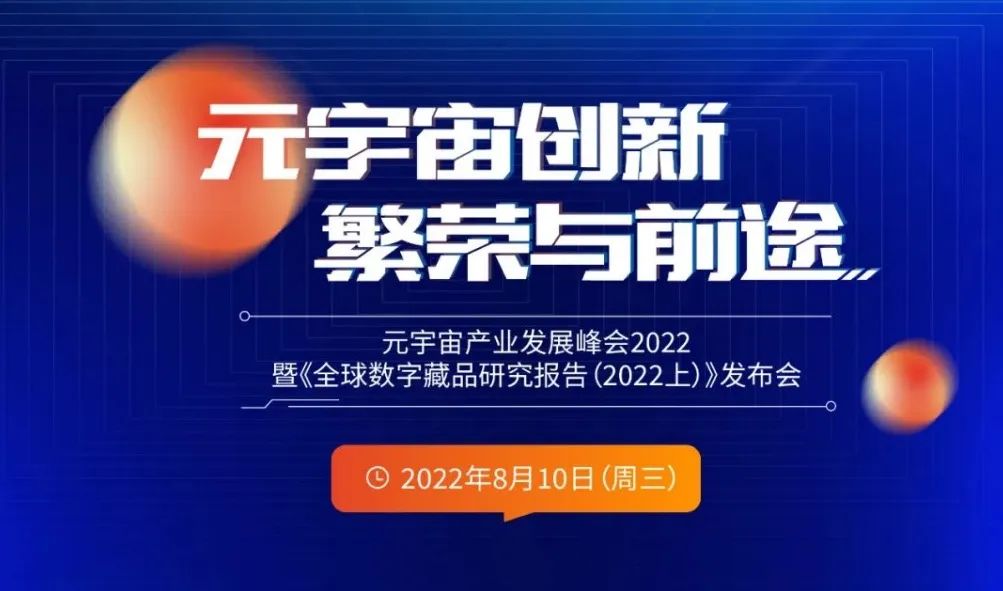
On August 10, 2022, the “Metaverse Innovation: Prosperity and Future - Metaverse Industry Development Summit 2022 and “Global Digital Collections Research Report (2022)” was successfully held. The summit was co-hosted by 01 Think Tank, the Zhongguancun Blockchain Industry Alliance, and ForeChain. The Hong Kong University of Science and Technology Digital Finance Laboratory, Hengqin Digital Chain Digital Finance Research Institute, the Beijing University of Posts and Telecommunications Science Park Metaverse Industry Collaborative Innovation Center and the China Science and Technology System Reform Research Group were academic supporters. At the conference, ForeChain and 01 Blockchain jointly released the “Global Digital Collections Research Report (2022)”. At the same time, a number of scholars, representative companies, investment institutions and industry experts were invited to conduct in-depth discussions on global trends in digital collections and metaverse innovation. At the end of the press conference, Zhu Jiaming, Chairman of the Academic and Technical Committee of the Hengqin Digital Chain Digital Finance Research Institute, gave a concluding speech on the conference. Zhu Jiaming believes that the entire conference design and discussion starts from reality, takes a micro approach, and focuses on professionalism. Therefore, in the afternoon, he added a few points from a macro and historical perspective. Zhu Jiaming believes that a very important part of the “Global Digital Collections Research Report (2022)” is providing data on the overseas NFT trading market, especially comparing the data for the first quarter and the second quarter. The report mentioned that from a global perspective, compared with the first quarter, the volume of NFT transactions, transaction volume, and number of buyers and sellers in the second quarter all declined on a large scale and drastically. Faced with such numbers, we need to think about a serious question: “Did the second quarter reflect the NFT market more realistically, or was the first quarter closer to the normal NFT transaction level for NFTs”? Zhu Jiaming's tendentious opinion is that it is likely that the explosive growth of NFT transactions from the fourth quarter of last year to the first quarter of this year is not necessarily a normal phenomenon. Therefore, the decline in NFT transactions in the second quarter was a return to rationality and a correction to the NFT bubble. Furthermore, it involves a deep question: how to view the cycle of the digital economy. Now, numerous facts prove that the digital economic cycle is different from the real economic cycle based on industrialization. Therefore, is it necessary to find out the characteristics of the digital economic cycle and the factors affecting the digital economy cycle? And what are the rules of the digital economic cycle? The biggest difference between the digital economic cycle and the traditional economic cycle is that the laws of technology dominate the digital economic cycle. The laws of technology have become the basic rules affecting the cycle of the digital economy era. The laws of digital technology, such as post-Moore's law, other chip laws and network laws are completely different from traditional economic laws. Currently, there are three transition periods: first, the transition phase from the Moore's Law period to the post-Moore's Law period; second, the transition phase from traditional classical computing to traditional classical and quantum computing coexisting; and third, the transition phase from robots to artificial intelligence robots and human-computer interaction. As can be seen, the digital economic cycle is limited by the superposition of these three transition stages, and is likely to be constrained by the evolution of “hard technology” related to the above. Zhu Jiaming's opinion is that the cycle of the digital economy involves the interaction of the four elements of hardware, products, organization, and finance, and a corresponding product appears every time. From cryptocurrencies, blockchain, DeFi, Web3.0, and NFTs to the metaverse, we'll discover that each concept's impact on capital and industry is not only limited, but increasingly shorter. Therefore, it is now difficult to use the concept of traditional business cycles to understand the digital economy we are experiencing and facing now. Zhu Jiaming emphasized that technology itself has vitality, and technology itself has its own needs. Because of the evolution of technology itself, everyone is in a very passive state. It will pose a natural challenge to the original legal system and system based on traditional economic systems and social systems that are purely “human.” Now, we can see it more and more clearly. The problem humans now have to face is not to adapt the development of science and technology to the traditional economic model and legal system, but how to adapt the operation of the economy and the legal framework to the development of science and technology. For example, in the metaverse, virtual people and digital humans occupy an important position, and human-machine relationships will be the most basic social relationship. Therefore, the legal system in the real world, which is characterized by humans, needs to be adjusted and transformed to adapt to the “governance” of social forms composed of virtual humans, digital humans, and intelligent robots. Chu Ka-ming specifically stated her concerns about the legal system. When technology becomes the biggest independent variable,...

1458d ago01区块链#01 Blockchain #Chu Ka Ming
Live streaming reservation is open! From September 16 to 28, 2022 Shanghai Blockchain International Week will be held entirely online

Live streaming reservation is open! From September 16 to 28, 2022 Shanghai Blockchain International Week will be held entirely online

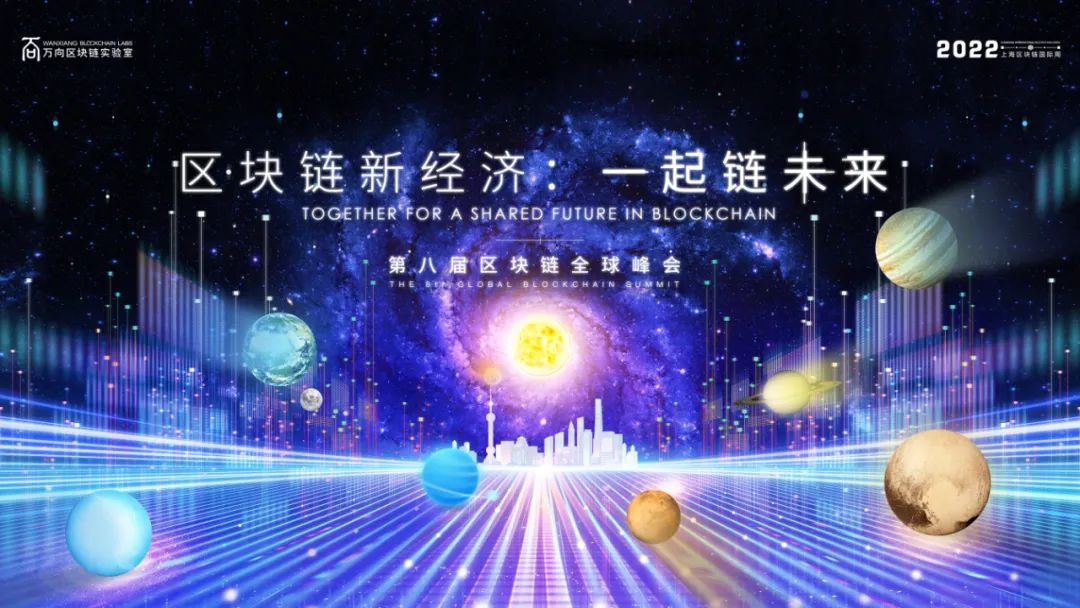
From September 16 to 18, the Wanxiang Blockchain Hackathon brought together outstanding blockchain projects from around the world. There were no restrictions at the bottom. Major ecological projects competed at the same time. Who can take the lead? On the open day on September 19, we will continue to bring exciting industry-themed events to present ideas and new ideas, with the aim of giving the entrepreneurial team more opportunities to show off. The high-profile 8th Blockchain Global Summit will last from September 20 (9:30-12:00) to September 28 (14:00-17:00 every day starting on the 21st), for 9 days, using a new conference format to break traditional stage restrictions. The opening ceremony and eight themed venues will cover key topics such as blockchain technology, Layer 2, DAO, Web 3.0, privacy and security, data protection, metaverse, and dual carbon+ Internet of Things. Not only will old friends who have visited the Wanxiang Summit every year share their latest thoughts, but are also very popular recently The Web3 Fengyun Project made a group debut. 3D virtual technology will allow all speakers to freely travel between Weiwei City and Geng Geng Xing River, collide their ideas, and share the future. The 8th Blockchain Global Summit was definitely an audiovisual feast not to be missed. Leaping through the solar system, our journey is an ocean of stars, a celestial system centered on the Sun and bound by the Sun's gravity. Blockchain, on the other hand, has developed an ecosystem that includes Web 3.0, NFTs, DAO, and the metaverse, using a white paper with innovative thinking as “gravity.” This system has not formed a final state; it is still in the process of continuous “expansion” and change. The 8th Blockchain Global Summit will set up nine major venues (3 hours each) according to the distribution of the solar system and the eight major planets. Through exchanges and dialogue, we can get a glimpse of future changes in blockchain. On September 20, Wanmu Xiang “Yang” - the 8th Blockchain Global Summit was grandly opened. On September 20, we will land on the Sun to embark on this “interstellar journey”. At the opening ceremony, some well-known industry figures and old friends from the Wanxiang Summit will all be presenting with new topics. A special guest of mystery will also be given a gift as a guest at the summit for the first time, bringing practice and thinking about the metaverse. September 21, Yellow “Gold” Era - Blockchain infrastructure looks up at the night sky. Venus is the brightest star humans can see. On September 21st, we will fly to Venus with world-renowned founders of blockchain technology to listen to them share the latest blockchain technology. On September 22, Han “Mu” Chunhua - Layer 2 Jupiter is the largest planet in the solar system. On September 22nd, zkSync and other Layer2 star projects will land on Jupiter to share with you some of the most impressive Layer2 expansion plans at present. Cold “wood” and spring flowers have their own differences. On September 23, accumulating “soil” into a mountain - private computing and data governance Saturn has a remarkable planetary ring system, which seems like a “protective jacket” wrapped around the planet. On September 23, we will invite experts and scholars from CertiK and other projects to discuss privacy computing and data governance, and explore ways to build a blockchain “protective cover”. On September 24, the “land” of the river - Dual Carbon, Blockchain and Internet of Things Earth is the “mother star” of humans. A green home is a prerequisite for sustainable human development. On September 24, we will gather on Earth to explore the application of blockchain, the Internet of Things and other technologies in dual carbon, and use digital technology to promote the green development of the Earth. On September 25, the “fire” of the metaverse - Mars in the metaverse, is a dream place for humans to migrate to space. The migration from the physical world to the digital world is another expansion of living space. The rise of the metaverse has expanded the boundaries of humanity. On September 25, we will land on Mars to explore infrastructure and practical applications of the metaverse and explore alternative human living space. On September 26, Yangyang “Star” River - Academic discussion on Uranus. Seen from a distance, it is a pure and clear ice blue. On September 26, we will host a special academic session, inviting experts and scholars such as He Zhiguo of the University of Chicago, economist/Zhu Jiaming, chairman of the Hengqin Digital Finance Research Institute, and other well-known experts and scholars to share their perspectives on hot topics such as blockchain, Web3, and the metaverse from different perspectives of technology, economics, finance, and social science. On September 27, the “water” of the Spring River was warm - DAO Mercury, the planet closest to the Sun. DAO, a decentralized autonomous organization, is a new way for human organizations to collaborate. Its concept adheres to the core idea of blockchain, from technological exploration to deepening organizational form experiments. On September 27th, we will leap over Mercury to explore the new management paradigm provided by DAO for social organizations. On September 28, “...

1471d ago万向区块链#Universal blockchain
Metaverse Innovation: Prosperity and Promise - Metaverse Industry Development Summit successfully held in 2022

Metaverse Innovation: Prosperity and Promise - Metaverse Industry Development Summit successfully held in 2022

Author | Chen Lishan Layout | Wang Jilongyan successfully held the “Metaverse Innovation: Prosperity and Future - Metaverse Industry Development Summit 2022 and the “Global Digital Collections Research Report (2022)” press conference on August 10, 2022. The summit was co-hosted by 01 Think Tank, Zhongguancun Blockchain Industry Alliance, and ForeChain. Bai Liang, CEO of 01 Think Tank, said that the metaverse has developed into a hub for digital technology innovation and evolved into a new business model. Under multiple factors of technological innovation, policy encouragement, and capital investment, the metaverse has shown an initial boom in digital technology infrastructure, software, hardware, and content. Digital collections and the development of the metaverse are associated to a certain extent. The development of the metaverse will further enrich the content of digital collections and innovate the forms and models of digital collections. Currently, digital collections have sprung up on the market, and their standardization, compliance, and sustainability have attracted great attention from the industry. In this context, ForeChain, 01 Think Tank, Zhongguancun Blockchain Industry Alliance, and “Lujiazui” magazine jointly released the industry report “Global Digital Collection Research Report (2022)”. The Hong Kong University of Science and Technology Digital Finance Laboratory, Hengqin Digital Finance Research Institute, and the Beijing University of Posts and Telecommunications Science Park Metaverse Industry Collaborative Innovation Center acted as academic guidance units, and cooperated deeply with Spark Chain. At the conference, ForeChain blockchain architect Yuan Jianwen and Chen Lishan, blockchain analyst at the 01 think tank, jointly presented the report's core data and opinions. Yang Bizhu, senior engineer at the Institute of Engineering and Communications Technology of the China Academy of Information and Communication Technology, explained the development trend of digital collection infrastructure using “Spark Chain Network” as an example. There were some trending changes in the NFT market in the first half of 2022. The secondary NFT market showed a downward trend in trading volume, transaction volume, and daily active users. From a platform perspective, OpenSea, the only NFT trading platform in 2021, is currently being challenged by other new trading platforms. In terms of the domestic digital collection market, it has been exploding since 2022. According to incomplete statistics from 01 Blockchain and Forechain, there are currently 998 digital collection platforms in China, of which 825 digital collection platforms were added in the first half of 2022. Looking at the digital collections that have already been distributed, the number reached 15.3692 million digital collections in the first half of 2022, an increase of 551.67% over the previous month, and the total circulation reached 653 million yuan, an increase of 1735.16% over the previous month. The virtual digital person TOP50 ranking list (second issue) was also released at the conference. Virtual human technology is one of the basic technologies of the metaverse. It has become a prerequisite for the metaverse to achieve immersion and participation, as well as an important way to metaverize offline industries. In order to better discover the value of virtual digital people in China, the organizer released the virtual idol top 30 list (phase 2) and the virtual employee top 20 list (phase 2) on the basis of continuous tracking of the virtual digital human race track, and will continue to track this track and update it every quarter. Jin Jian, director of the Industrial Internet and Internet of Things Research Institute of the China Academy of Information and Communication Technology and Secretary General of the Zhongguancun Blockchain Industry Alliance, gave a keynote speech on “Data Revolution and Meta Universe”, discussing the importance of data and how to harness the value of data, and pointed out that the metaverse is a new vision and blueprint put forward by all mankind for technological development, industrial transformation, social governance, environmental change, cosmic perception, etc., and is also a spatial form of the advanced digital economy. Liu Yang, acting director of the Hengqin Metaverse Industry Development Special Class Office, delivered a keynote speech on “Prospects for the Development of the Hengqin Metaverse”, pointing out that Hengqin's construction of a metaverse super experimental factory is a step in developing the metaverse industry, and introduced that the Super Experimental Factory platform is open and can better verify existing metaverse-related products and technologies. Wang Juan, Secretary General of the Digital Economy Committee of the Beijing Computer Society and Chairman of the Policy Group of the Zhongguancun Blockchain Industry Alliance, delivered a keynote speech on “The Future Space of Digitization in the Metaverse Industry”, pointing out that the development of the metaverse should be a new dimension rather than an old concept. We need to break out of our exhaustive inner circle. While innovating, we must consider issues of industry supervision, policy restrictions, and compliance, and promote the construction of new digital infrastructure to carry the development vision of the metaverse. Chen Xu, founding partner of MetaZ, a metaverse and future asset think tank, delivered a keynote speech on “Looking at Metaverse Development from the Competitive Landscape”. He analyzed the competitive landscape from several aspects of the external environment, infrastructure, core technology, and application scenarios, and pointed out that with the development of the metaverse, the competitive landscape has also become more complex and profound. This is a social economy...

1471d ago01区块链#01 Blockchain #web 3.0 #metaverse
Zhu Jiaming | Big Transformation, Big Design, Big Experiment: The Metaverse from the Perspective of Big History

Zhu Jiaming | Big Transformation, Big Design, Big Experiment: The Metaverse from the Perspective of Big History

This article is an excerpt from the recently published book “The Metaverse and the Digital Economy”, by Zhu Jiaming. We make history through our own observations, not history. ——Since the 20th century, Stephen Hawking, the concept of “era” has been prominent and has spanned far beyond: “Time” magazine, Times Square, “Keynes B-era”, “atomic energy era”, and “Cold War era” until the advent of the “IT era” and “internet age”, humans began a transformation from the industrial age to the information age and digital age, which meant the beginning of a brand new era. The information age and digital age have changed human ideological paradigms, scientific and technological models, and economic, political, and social lifestyles. Unlike the transformation from one era to another that has occurred many times in history, humans can only be in a passive state, such as from the Paleolithic Age to the Neolithic Age, or from the farming age to the industrial age. Now, from the transformation from the industrial age to the digital information age, humans already have the ability to participate, influence, and change. This transformation, which is currently underway, is the introduction of major designs and experiments by humans in order to achieve a more magnificent transformation. “The Metaverse and the Digital Economy” Author: Zhu Jiaming Publishing Time: June 2022 Press: Chinese Translation Press The Great Transformation: Characteristics, Causes, and Solutions Hungarian economist Karl Polanyi (1886—1964) is the proponent of the “Great Transformation” concept. Polanyi published a book, “The Great Transformation,” in 1944. The subtitle of the book is “The Origins of the Politics and Economy of Our Time.” The core content of the book is to explain in the context of macroeconomic history how self-regulating markets disintegrate society and spontaneous social opposition movements, and ultimately lead to a market society. Today, nearly 80 years have passed, and humans need to think about the political and economic origins of the current era, and the structural and institutional reasons for this social transformation. First, the basic characteristics of the Great Transformation. Major transformations are not a normal part of human society. If the characteristics of the Great Transformation are summarized, at least the following points are included: (1) The reason for the occurrence of the Great Transformation is not a single or simple one, but the result of a combination of multiple historical reasons. (2) The cycle of major transformation is a long cycle, spanning generations; in each long cycle, there are also short cycles guided by major historical events. For example, China in the 20th century experienced the Qing Empire and the Republic of China, the War of Resistance against Japan and the Liberation War, and a period of planned economy and reform and opening up after the founding of the People's Republic of China. (3) Major transformation processes include physical resonance and resonance, chemical synthesis, decomposition, and replacement reactions, and iterative processes. (4) Major transformations transcend geospatial limitations, and their transcendence has led to inevitable global impacts and changes. (5) The results of the major transformation are disruptive and are based on systematic restructuring on top of deconstruction. If the above characteristics of major transformations are established, especially based on disruption, resonance, and restructuring as standards, there have been the following three major transformations in human history. The first was the major transformation of the Axis Era c. The time is around the 5th century BC. The regions are ancient Greece, the ancient Jewish region, ancient India, and ancient China distributed at 30 degrees north latitude. This is a transformation of human civilization from static to dynamic, changing internal dynamics, laying the foundation for the future of human ideology and showing the broadest institutional arrangement for future society. The second was the Renaissance era's major transformation. The Renaissance occurred in the 14th to 17th century, peaked in the 16th century, and originated in Florence, Italy. The Renaissance ended the Middle Ages and pioneered modern society. The third was the major transformation of the industrial age that began with the Industrial Revolution. The period begins from the 18th century to the end of the 19th century and the beginning of the 20th century. The Industrial Revolution began in England, completed in North America, and then spread to the rest of the world. If you re-examine the major historical transformations that have already occurred, you will find that every new major transformation does not presuppose that the effects of the previous major transformation have disappeared; on the contrary, it includes the factors and influences of previous social patterns. Second, the basic reason for the Great Transformation. (1) Sudden changes in climate and natural environment. For example, the cause of the worldwide “17th century crisis” was the advent of the Little Ice Age, the glorious revolution of England in the West, and the fall of China's Ming dynasty in the East. The current greenhouse effect has caused the disappearance of glaciers, rising sea levels, the northward shift of the climate zone, and climatic anomalies, which have had a profound impact on human society. Sudden changes in climate and nature are the most important drivers of the Great Transition. (2) Thought movement. Examples include the 18th century Enlightenment centered around England and France, followed by a furious movement in Germany. (3) The scale of innovation. Like Schumpeter (Joseph S...

1538d ago01区块链#01 Blockchain #metaverse #Chu Ka Ming
The “Global Digital Collections Annual Report” press conference was successfully held!

The “Global Digital Collections Annual Report” press conference was successfully held!

Source | Forechain Publishing | Wang Jilongyan's “Global Digital Collections Annual Report” press conference was successfully held on March 26, 2022. “Global Digital Collections Global Trends and Chinese Innovation - Global Digital Collections Annual Report Conference” was successfully held. The conference was co-hosted by ForeChain and 01 Think Tank, with the Hengqin Digital Chain Digital Finance Research Institute and the Metaverse Industry Collaborative Innovation Center in Beijing University of Posts and Telecommunications Science Park as academic support units. At the conference, Bai Liang, founder of 01 Think Tank, delivered a speech. ForeChain and 01 Blockchain jointly released the “Global Digital Collections Annual Report 2021”. At the same time, a number of scholars, representative companies, investment institutions and industry experts were invited to conduct in-depth discussions on global trends in digital collections and innovation in China. ForeChain blockchain architect Yuan Jianwen and Chen Lishan, blockchain analyst at 01 think tank, presented the report's core data and opinions. In 2020-2021, the global digital collection market exploded. On the investment and financing side, there were 331 financing incidents throughout the year, and the total amount of financing revealed reached US$5.256 billion. On the trading side, the total transaction volume of NFTs in the crypto market exceeded 6.64 million throughout the year, with a total transaction volume of close to 3.4 million (ETH). From a risk perspective, the overseas NFT market is in deep sync with the cryptocurrency market, and giant whales have a big impact. Compared to traditional financial markets and cryptocurrency markets, the NFT market fluctuates more sharply and has additional risk points. Combining domestic regulations and market characteristics, NFTs have formed a digital collection market with Chinese characteristics. The domestic digital collection ecosystem does not involve the crypto-related industrial chain, and the secondary market for digital collections is developing more carefully. Judging from the characteristics and trends of development, digital collections are gradually becoming a new cultural and creative vehicle. Demand for organizations in various industries to interact with audiences through the distribution of digital collections is increasing, and consumer acceptance of this new collection method is also gradually increasing. At the conference, various business representatives, investment institutions and industry experts all gave constructive and innovative views on technology, development status, development trends, and legal regulation related to digital collections. Zhu Jiaming, chairman of the Academic and Technical Committee of the Hengqin Digital Finance Research Institute, advocates the popularization of NFTs. “Everyone can create NFTs, and everyone can be satisfied with non-homogenized needs, then there is hope for NFTs.” Zhu Jiaming believes that NFTs have ushered in a new era of non-homogenized existence that people pursue and appreciate. It is completely different from the industrial era where homogenization is the most mainstream. In other words, the current digital transformation is the transformation from homogenization in the industrial age to non-homogenization in the information age, and this historical process has just begun, and NFTs are the forerunners of this historical process. Chen Xiaohua, executive director of the Metaverse Industry Collaborative Innovation Center in the Science and Technology Park of Beijing University of Posts and Telecommunications, pointed out that currently there is a risk that the regulatory policy is unclear, and it is important to clarify whether digital collections are financial or technological, and the policy will characterize them according to this classification. Regarding the future of digital collections, Chen Xiaohua believes that personalized and diversified digital products will become a widely accepted form of art and an asset investment method. Digital collections fill gaps in the current field of input asset technology, enabling digital content to be capitalized and efficiently distributed. Zhang Yulin, president of the Beijing Cultural Investment Culture and Technology Industry Integration Fund, stressed that the development of digital collections must ensure standardization. Disorderly development may cause NFTs to not survive in China and lose China's international voice in this market. Furthermore, Zhang Yulin called for the spirit of maker and said that the industry has great value in the future market and future society. We should not look at and develop digital collections from the perspective of interests, but from various perspectives such as spirituality and social governance. Li Rui, vice president of Quchain Technology, proposed a methodology for the technology chain when talking about the circumstances in which the technology itself is suitable to go on the chain. One is multi-party participation, the second is the trust or privacy issues that exist in multi-party participation, the third is to ensure the immutability of data in the case of multi-party participation, and the fourth is whether it is necessary to provide transmission efficiency for all links of data and achieve effective storage and traceability. Zhang Jiong, founder of StarTurbit, compared the characteristics and differences of the public chain and the affiliate chain, and pointed out several issues that need to be addressed when developing domestic public chain digital collections, including: on-chain compliance issues; transactions, delivery, and delivery may face tax issues; KYC certification issues for users; and full-life cycle management of enterprises issuing digital assets on the chain...

1606d ago01区块链#01 Blockchain
Zhu Jiaming: The Digital Economy and the Non-Homogenous Era — NFTs, Virtual Demand, and Virtual Supply

Zhu Jiaming: The Digital Economy and the Non-Homogenous Era — NFTs, Virtual Demand, and Virtual Supply

Source | Digital Asset Research CIDA Layout | Wang Jilongyan Editor's Note: On March 26, 2022, ForeChain and 01 Think Tank hosted the “Global Digital Collections Global Trends and Chinese Innovation - Global Digital Collections Annual Report Conference”. The Hengqin Digital Finance Research Institute is the academic supporter of the conference. Zhu Jiaming, Chairman of the Research Institute's Academic and Technical Committee, delivered a speech on the title “Digital Economy and the Non-Homogenous Era — NFTs, Virtual Demand, and Virtual Supply”, advocating the popularization of NFTs. “Everyone can create NFTs, and everyone can be satisfied with non-homogenized needs, then there is hope for NFTs.” Thinking also has a period of time to cultivate and a period of time to harvest. ——Ludwig Wirtgen's digital economy and the heterogeneous era — NFTs, virtual demand, and virtual supply The Merge Source: Nifty Gateway I chose a background today. It is an NFT product that reached a price of 91.8 million dollars that went on sale on December 4 last year. It is called The Merge in English. What everyone sees in this work is just a few balls. The publisher of the work is digital artist Murat Pak. He first created a token, ASH, and then released this NFT. More than 20,000 people participated in the purchase of the work, and the final sale price of the work reached US$91.8 million. The Merge includes a range of characteristics of NFTs. However, its most fundamental characteristic is that it has created a unique and unique virtual creative supply, which has given rise to some people's original virtual needs. Combined with blockchain-supported smart contracts and tokens, it has finally realized transactions. All in all, this is a typical NFT case. Quantum still image source: Kevin McCoy It is widely acknowledged that Quantum (Quantum), which was released in New York in 2014, was the first NFT. The author is artist Kevin McCoy, and it's been eight years since then. However, it was 2021 that NFTs entered the public eye and attracted the attention and participation of all sectors. Here are a few basic observations and thoughts on NFTs: 1. Existence is the foundation of NFTs, and NFTs are an expression of existence. The premise of so-called NFTs is NF (non-fungible), that is, non-homogenization. This world is made up of various non-homogenized material and spiritual beings. The phenomenon of non-homogenization in the real world is everywhere. The German mathematician Gottfried Wilhelm Leibniz (1646-1716) famously said: “No two leaves are exactly the same.” Each person has a unique life course. It could even be said that every life is a non-homogenous performance art. Therefore, existence is a non-homogenized “set”. Therefore, existence and non-homogenization are equivalent and are prerequisites for NFTs. Ancient agricultural society, economic behavior, and even financial and monetary behavior were all non-qualitative. It can be said that non-homogeneity is a basic characteristic of the existence of human civilizations since ancient times. 2. Homogenization is a trend in human civilization that coexists with non-homogenization. In the course of human civilization, there is still a strong pursuit of homogenization. This is true in the field of thought, spirit, and values, as well as in economic activity and social activity. In the industrial age, homogenization became the mainstream of economic activity. The non-homogenized handicraft industry before the industrial age was replaced by homogenized products produced by large machines. The essence of large industries is to pursue low costs, high profits, and marginal benefits, and requires standardization and scale. People need to gather to work in the factory. Because of homogenization, both micro and macroeconomics can be quantified. In short, there is no industrial revolution without homogenization; the industrial age is an era of high homogenization. As a result, people showed homogenization in clothing, food, lodging, and travel. Consumerism is based on homogenized consumerism; advertising is for the demand for homogenization; famous brands are a result of homogenization; mass media is also the homogenization of intangible products. It can be said that the industrial age is an era dominated by homogenization. 3. The information society promotes the return of non-homogenization. Because of digital technology, the digital economy and the information society, people have begun digital transformation, that is, they have begun to transform and return from homogenization to non-homogenization. Because of digital technology, people can break through the physical and physical limitations of the structure of the industrial age, and people's imagination and creativity can flourish. In the information society, everyone is a producer, creator, and consumer of information. Information products in immaterial form are not needed, nor are there...

1607d ago01区块链#01 Blockchain