柏亮 · 30
Beijing Internet Finance Industry Association Hong Kong Stablecoin and RWA Development Frontier Seminar successfully held

Beijing Internet Finance Industry Association Hong Kong Stablecoin and RWA Development Frontier Seminar successfully held

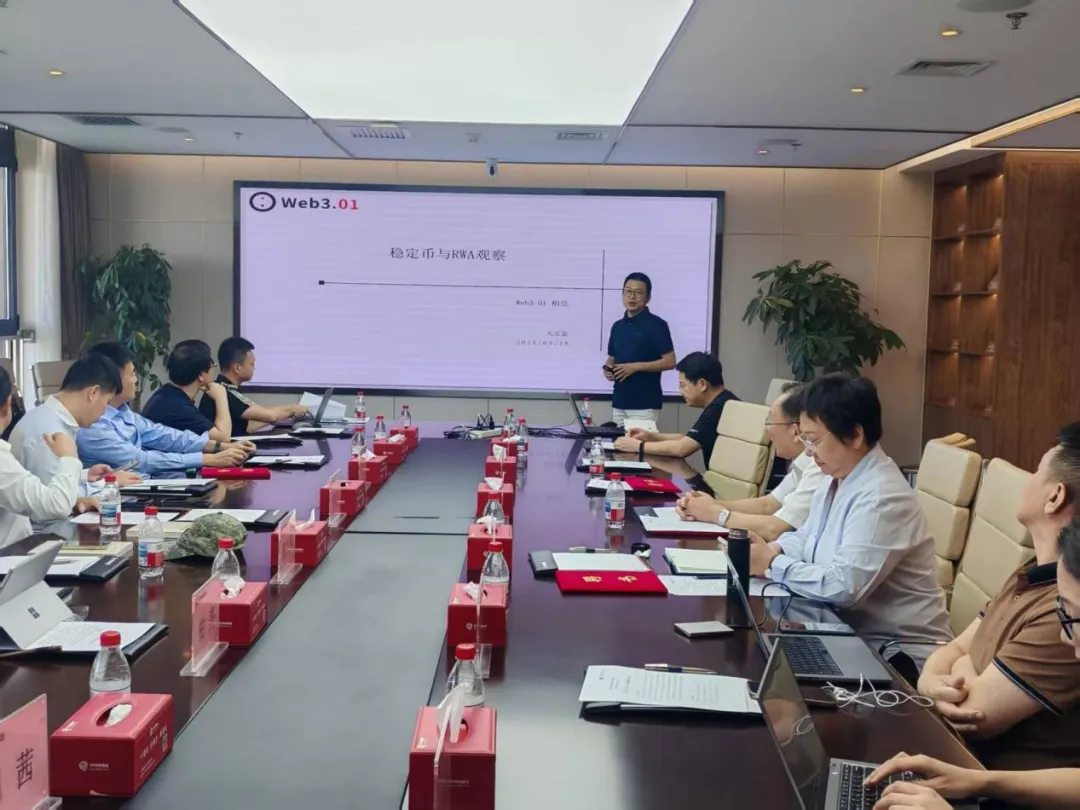
Source: 01 Metaverse Original link: https://mp.weixin.qq.com/s/0VOy28ntVjdSO9ZUmGArPQ2025年9月18日,由北京市互联网金融行业协会主办的“香港稳定币与RWA发展前沿研讨会”在91科技大厦顺利举行. Association leaders, professors from well-known domestic universities, industry experts and business representatives gathered to have in-depth exchanges on the compliance path, practical cases and future trends of stablecoins and RWA (real world assets) to inject new momentum into digital asset research and industry connections. The Association's president, Xu Zewei, delivered an opening speech. He said that Hong Kong's core status as a free port has never changed, and that the accelerated return of international capital not only confirms its position, but also shows firm confidence in the Chinese economy. This market trust resonates with domestic development confidence and innovation energy, and has laid a solid foundation for stablecoin and RWA compliance research. He stressed that the Association has included this field in the research category, and in the future, it will give full play to its role as a bridge link and gather resources from all parties to promote in-depth research and compliance practices. Subsequently, the Association announced the establishment of the Digital Asset Research Center, awarded a license on site and appointed Bai Liang, CEO of 01 Finance, as the center director to coordinate research organizations, industry exploration and leadership, and industrial resource docking. At the same time, the Association issued letters of appointment for “Digital Asset Research Center Expert Committee Members” to the first group of experts. The candidates included well-known scholars such as Professor Guo Hua and Professor Guo Tianyong of the Central University of Finance and Economics, Professor Wang Lai of the Shanghai University of Political Science and Law, as well as business executives in the industry. The expert committee will continue to expand, and more authoritative figures covering the fields of law, finance, technology, etc. will be hired in the future to establish a comprehensive research support system. During the opinion sharing session, guests from all walks of life contributed their insights. Bai Liang, CEO of 01 Finance, reviewed the stablecoin development process, saying that the stablecoin market has gone from barbaric growth to compliant development. RWA tokenization is injecting vitality into global finance. Hong Kong's practice in tokenized green bonds and other fields provides an important reference sample for the industry to understand relevant system design and operation models, and the integration of stablecoins and RWA will become a key driving force for the development of digital finance. From a legal perspective, Professor Wang Lai of the Shanghai University of Political Science and Law suggested conducting thematic discussions according to enterprise types to accurately explore Hong Kong's compliance path; Professor Guo Tianyong of the Central University of Finance and Economics emphasized the need to balance cross-border capital flows and regulatory requirements and be wary of systemic risks; Professor Guo Hua focused on the core contradiction between “real name and anonymity” and proposed that interaction mechanisms between stable coins, RWA and digital yuan should be gradually explored; Guo Dagang, strategic adviser to the Beijing Internet Finance Industry Association, called for the establishment of a synchronized institutional restraint and risk control framework to ensure steady development. In combination with practice, business representatives believe that asset tokenization needs to solve the underlying asset authenticity and compliance issues, and at the same time establish and improve transaction mechanisms and investor appropriateness management systems. Guo Dagang said that in the next step, the Association will focus on promoting the establishment of a special stablecoin and RWA compliance research team to continuously track domestic and foreign policy and market trends, study cross-border capital flows and risk control plans, and promote industry-university-research cooperation to ensure that research results can be applied in a timely manner. At the end of the conference, Xu Zewei said that stablecoins and RWA are strategic opportunities to promote the integrated development of digital finance. The Association will rely on the Digital Asset Research Center to regularly organize research and exchanges to form a series of research results and policy suggestions to provide reference for regulatory decisions and provide direction for industry development. In particular, he mentioned that on July 9, the Association issued a “Risk Reminder on Being Wary of Using New Concepts such as “Stablecoins” to raise funds illegally” through its official WeChat account to remind the market to pay attention to related potential risks. The holding of this seminar continued the Association's consistent risk warning and industry self-discipline spirit, and also reflected the attitude of actively promoting research and industrial practice on the premise that risks are manageable. He hopes that through the joint efforts of academia, industry, associations, and regulation, the practice of stablecoins and RWA in China will be healthy and orderly. Twitter: https://twitter.com/BitpushNewsCN比推 TG Community: https://t.me/BitPushCommunity比推 TG Subscriptions:... https://t.me/bitpush
332d ago01区块链#01 metaverse
2025 Hongru Global Financial Governance Forum “Stablecoins and RWA: Changing Global Payment and Asset Management Systems” was successfully held

2025 Hongru Global Financial Governance Forum “Stablecoins and RWA: Changing Global Payment and Asset Management Systems” was successfully held

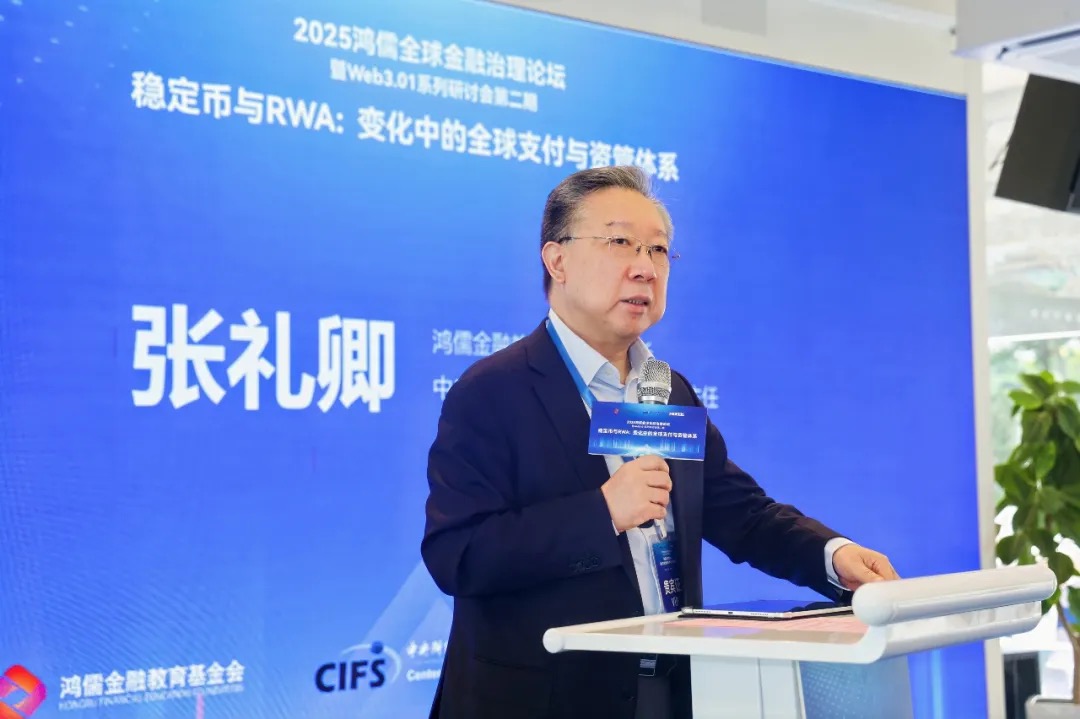
Source: 01 Metaverse Original link: https://mp.weixin.qq.com/s/hkNHhskgygFbWv72PUkXIg2025年7月18日,由鸿儒金融教育基金会、中央财经大学国际金融研究中心和清华大学五道口金融学院科企大湾区校友联合主办,零壹智库承办的“2025鸿儒全球金融治理论坛”在深圳成功举办. The theme of this forum is “Stablecoins and RWA: The Changing Global Payment and Asset Management System”. Zhang Liqing delivered a welcome address and opening speech Professor Zhang Liqing, Chairman of the Hongru Financial Education Foundation and Director of the Center for International Finance Research at the Central University of Finance and Economics, delivered the opening speech. Professor Zhang pointed out that since 2023, the European Union, Singapore, Hong Kong, China, and the United States have successively completed legislative procedures for compliance management of stablecoins, making provisions on the definition of stablecoins, entry thresholds for issuers, currency stabilization mechanisms and maintenance of reserve assets, circulation compliance requirements, and special regulatory rules for important stablecoins, indicating that the issuance of stablecoins, which had previously grown savagely, is entering a stage where stablecoins are being strictly regulated. Currently, academia, industry, and regulators have not reached a complete consensus on stablecoins and RWA. From an international perspective, the Trump administration actively supports the development of compliance with crypto assets and stablecoins, while the Bank for International Settlements and the European Central Bank, led by Lagarde, have taken a very cautious or even relatively negative stance. From a domestic perspective, the industry has many expectations, but the regulatory authorities are more cautious. In view of this situation, it is very meaningful to communicate and even argue through forums, meetings, etc. Professor Zhang Liqing stressed that due to anchoring fiat currency or other assets with stable value and peer-to-peer value transfers through blockchain, stablecoins have obvious advantages as a cross-border payment tool; however, they also have many problems and flaws, including weakening monetary sovereignty, affecting monetary policy and banking system stability, and facilitating money laundering and terrorist financing. In the future, as compliance regulations are strengthened, the superiority of stablecoins in terms of speed and cost as a means of cross-border payment will weaken, and the growth in market capitalization and transaction volume is likely to slow down. US dollar stablecoins are expected to increase demand for US treasury bonds in the short term, thereby consolidating the US dollar's hegemonic position; however, in the long run, the increase in demand for US bonds is unsustainable, and it is impossible for US dollar stablecoins to stop the eventual decline of the dollar's status. While continuing to push forward the central bank's digital yuan and “currency bridge” project tests, China should step up research on offshore RMB stablecoins. Professor Zhang Liqing believes that the essence of RWA is to transform real-world valuable assets (such as real estate, stocks, bonds, receivables, etc.) into digital tokens through blockchain technology, so that traditional assets can be traded, distributed, and managed on the blockchain, which is of positive significance in revitalizing existing assets and promoting their rational allocation on a global scale. This process is closely linked to the development of stablecoins and will have a significant impact on the entire financial system. There are currently quite a few successful cases overseas. However, due to capital controls, RWA cannot be implemented in mainland China for the time being. Relevant parties should actively carry out relevant research and explore the possibility of piloting it within a certain range. Joyd delivered a keynote speech Joyd, Vice Chairman and Secretary General of the Shanghai Development Research Foundation, delivered a keynote speech on “Exploring the Essence, Role, and Development Prospects of Stablecoins from the Rise and Fall of Libra”. Joyd pointed out that the original purpose of Libra was to establish a “borderless currency and financial infrastructure to serve billions of people,” yet Libra declined because it hit the red line of regulation. The essence of stablecoins is a digital asset payment tool that uses blockchain and distributed account technology to achieve relatively stable prices through a value anchoring mechanism. Compared to Libra, stablecoins are a mixture of “decentralization” and “centralization,” and the relationship with fiat money is an attachment rather than a replacement. Stablecoins can link virtual assets with the real economy, improve cross-border payments, and preserve value for residents in some developing countries; in the short term, they are beneficial to expanding the use of the US dollar and may enhance the status of the US dollar, but there are also hidden risks, which have a major impact on the global monetary system, but it is difficult to say about restructuring or disrupting it. Joyd believes that the development prospects of stablecoins depend on the positions of major countries, the attitude of international economic organizations, the central bank's digital currency CBDC progress, and its own operation. The most likely outcome for stablecoins is to complement fiat currencies rather than replace fiat currencies. Song Min delivered a keynote speech Professor Song Min, President of the Hong Kong Society of International Finance, delivered a keynote speech on “The Impact of Stablecoins on the Financial System: Risk and Regulation” to discuss in depth...

383d ago01区块链#01 metaverse #stablecoins
RWA+ stablecoin compliance innovation and development summit held, industry compliance development became the focus of attention

RWA+ stablecoin compliance innovation and development summit held, industry compliance development became the focus of attention

Source: 01 Metaverse Original link: https://mp.weixin.qq.com/s/YA882zToeji1VsZoToUMhg7月23日,由中央财经大学金融创新与风险管理研究中心、中国移动通信联合会区块链与数据要素专委会、国声智库文化发展中心、新华网上市公司研究院联合主办的“RWA+稳定币合规创新发展峰会”在北京召开. With the theme of “RWA+ Stablecoins: New Changes in Global Payments, Asset Allocation and Financial Systems”, the summit brought together dozens of industry experts, academic representatives and business people from relevant departments in mainland China, Hong Kong and Macau, Singapore and the US to discuss cutting-edge issues of real-world assets (RWA) and stablecoins in compliance innovation, technology application, and regulatory frameworks. Gu Weiyu, the host of the “RWA+ Stablecoin Compliance, Innovation and Development Summit” live summit and director of the Financial Innovation and Risk Management Research Center at the Central University of Finance and Economics, pointed out that the combination of RWA and stablecoins is an important force in promoting the integration of finance and the real economy in the digital age, and the industry needs in-depth discussions across fields and borders to clarify the development logic. Qiu Xiaomin, executive vice director of the Xinhua Online Market Research Institute, said that the development of stablecoins and RWA has become an important issue in the global economy. The US and Hong Kong, China and other places have introduced regulatory frameworks, but we need to be wary of issues such as liquidity management and money laundering risks. At the summit, many experts and scholars, including Zhao Jian, director of the Xijing Research Institute, Bai Liang, CEO of the 01 think tank, Guo Hua, professor at the Central University of Finance and Economics, and Li Junfeng, a professor at the Central University of Finance and Economics, conducted in-depth discussions on the business development and policy supervision of stablecoins from the dimensions of the international monetary system, regulatory practices, and technology application. During the technical application and practice sharing session of the summit, Liu Meeting, vice president of Sanwei Xin'an, explained in detail the security fundamentals of RWA and stablecoins from a cryptographic perspective. He believes that the integration of technologies such as blockchain and private computing is the key to trustful integration of physical assets onto the chain, and that anti-quantum cryptography and other technologies will improve the level of security compliance. Chen Xiaohua, director of the Blockchain and Data Elements Special Committee of the China Mobile Communications Federation, introduced the agency's practical results in the field of data elements, including formulating data asset standards and promoting the “RWA Ecological Partner Action Plan.” He stressed that the development of the industry needs to focus on physical fields with stable returns, such as new energy and the industrial Internet, to achieve the value of stablecoins through deep integration of technology and industry. At the opening ceremony of the RWA and Stablecoin 50-person Forum, Xu Yunfeng, executive director of Guosheng Think Tank, said that the summit not only built a platform for cross-regional and cross-sector exchanges, but also provided a concrete gripper for the development of the industry by releasing practical projects. With the rapid evolution of the global RWA and stablecoin markets, China needs to collaborate in theory, policy and technology, use Hong Kong as a fulcrum to connect with international rules, and at the same time rely on the mainland's huge physical assets and application scenarios to explore compliance development paths with Chinese characteristics...

390d ago01区块链#01 metaverse #RWA #stablecoins
China's Stablecoin Strategy: From Avoiding Hegemony to Restoring Order

China's Stablecoin Strategy: From Avoiding Hegemony to Restoring Order

Authors | Wang Yang, Bai Liang, Wang Yang, Bai Liang: For China, stablecoins provide a historic opportunity — not to challenge the US dollar's dominant position in the market, but to disrupt the US dollar's structural hegemony. The international monetary system is currently undergoing the most profound transformation since World War II. The US “GENIUS Act” is an attempt to maintain the status of the US dollar by regulating stablecoins, but it may be counterproductive. For China, stablecoins offer a historic opportunity — not to challenge the dollar's market dominance, but to disrupt the dollar's structural hegemony. Understanding this difference is a prerequisite for developing the right strategy. 01 Dollar hegemony and dollar dominance: essential differences Many analysts confuse “USD Hegemony” (USD Hegemony) with “USD Dominance” (USD Dominance), but these are two completely different concepts. The dominance of the US dollar means that the US dollar accounts for the largest share of international trade and reserves — currently it accounts for about 88% of global foreign exchange transactions and 60% of official reserves. This dominance is based on market choices: the US dollar has the best liquidity, the deepest market, and the most stable. Even if the RMB is fully convertible, it is extremely difficult to shake this dominance based on efficiency in the short term. The dollar's hegemony is something else entirely. It's not a market share issue; it's a structural power issue. Specific examples include: First, monopoly control of global payment infrastructure. The SWIFT system processes more than 90% of global cross-border payment information, while CHIPS (Clearing House Interbank Payment System) processes more than 95% of US dollar settlements. The US can cut off visits from any country or agency at any time. After Iran was kicked out of the SWIFT system in 2012, foreign trade fell by 30%. It's not because the counterparty doesn't want to do business with Iran, but because it's technically impossible to complete the payment. Second, the jurisdiction to settle dollars is extended. Any dollar transaction, no matter where in the world, as long as it passes through the CHIPS system, is theoretically governed by US law. In 2014, BNP Paribas was fined 8.9 billion US dollars for violating US sanctions against the Sudan and Iran. None of these transactions took place within the US, but since US dollars were used and settled through CHIPS, they automatically fell under US law. Third, the collateral effects of financial sanctions. US secondary sanctions mean that not only are the targets directly affected, but any third party doing business with the target is also at risk of being sanctioned. This creates a “contagious fear” — you don't dare to trade with a sanctioned entity, even if you're not sanctioned yourself. The Huawei incident fully demonstrated this power: it's not that global suppliers don't want to sell products to Huawei, they don't dare. Use an image analogy: the dollar dominates the swimming competition in the Olympics. The US athletes are indeed the strongest, winning most gold medals, but athletes from other countries can still participate and still have a chance to win prizes. The hegemony of the US dollar is like: not only do American players swim the fastest, they also serve as referees, control doping tests, disqualify other players at any time, and even throw away the water in the entire pool. In recent years, we have indeed seen how the US is using a drug testing system to target athletes in specific countries — the same logic as financial sanctions. 02 China's actual situation and strategic choices Facing this pattern, China must clearly understand the limitations of its own conditions. Currently, the offshore RMB is only 200 to 300 billion US dollars, mainly concentrated in Hong Kong; currently, the total size of US dollar stablecoins USDT and USDC has exceeded 200 billion US dollars. Under the premise of not opening up capital accounts, the internationalization of the RMB faces structural barriers: without sufficient RMB circulation overseas, it is impossible to form a deep RMB asset market; without a deep market, it is impossible to attract central banks to use RMB as a reserve currency. This “chicken first or egg first” dilemma is difficult to break through the traditional path. However, stablecoins offer a new possibility: through digital tokens, it is possible to create an international circulation mechanism for RMB without fully opening up capital accounts. More importantly, stablecoins can not only serve the internationalization of the renminbi, but can also be a tactical tool to disrupt the US dollar hegemony system. The key is proper positioning: challenging the dollar's dominance in the short term is unrealistic or unnecessary, but weakening its hegemonic base is both likely and urgent. China can adopt a “avoidance of reality and attack falsehood” strategy — not in the field where the US dollar is strongest (liquidity, network effects), but in its most vulnerable area (excessive financialization,...

401d ago01区块链#01 metaverse #stablecoins #Stablecoin topic #USA #hongkong
Conversation with Hu Dinghe: From Bitcoin to the Metaverse

Conversation with Hu Dinghe: From Bitcoin to the Metaverse

Editor's note: Since its inception, Bitcoin has had a profound impact on the global digital economy: on the one hand, it has spawned a complex cryptocurrency market; on the other hand, it has spawned an all-encompassing blockchain technology system. They have created new business models and are also “absorbed” by traditional finance and industry. New ecosystems such as the metaverse and AIGC can also be seamlessly connected to them. Scholar Hu Dinghe studied in depth during his visit to Harvard University and wrote “The Time of the Storm on Bitcoin”. Editorial board member Bai Liang of this magazine and Mr. Hu Dinghe had a conversation about the development and future trends of Bitcoin over ten years; at the same time, we have excerpted the chapter “Bitcoin 2022” for the benefit of readers. As stated in the book's introduction, “Bitcoin is an economic phenomenon; it itself is still growing and evolving, and so are the questions and answers.” Bitcoin and the virtual currency market derived from it are still in the early stages of development, and different countries and regions around the world face different regulatory rules. The contents of this book and this conversation are all opinions and family comments, and do not involve any investment suggestions. 01 Bitcoin did not appear by chance Bai Liang: You have studied the development process of Bitcoin since its inception and wrote the book “Meeting Bitcoin in the Wind”. A “turbulent event” means that Bitcoin did not appear by chance, but rather the result of various factors such as society, economy, and technology. What do you think were the conditions that led to the birth of Bitcoin? Was it a coincidence or a necessity? Hu Dinghe: I do believe that the emergence of Bitcoin was not an accident, but an inevitable result of social, economic, and technological factors. From an economic point of view, in 1976, Hayek officially proposed the denationalization of money, believing that only denationalization of money can control the circulation of money and prevent artificial depreciation of the currency. He believes that inflation is caused by the country controlling the amount of currency issued, and is unavoidable, even in Europe and America. In reality, currency issuance in Europe and America is not something that can be decided unilaterally by the government; it also requires various institutions such as the parliament and central bank to play, control, and consult with each other before making a decision. However, Hayek believes that even so, as long as the currency is controlled by the country, it will inevitably be overissued. In fact, the same is true. The amount of British pounds and dollars has increased greatly in the past 100 years, and as a result, they have all depreciated very much. The dollar's purchasing power is probably only about 3.87% of what it was 100 years ago. In terms of technology, Bitcoin is the result of the co-evolution of multiple technologies. In 1981, the hash chain data was continuously complete, and the predecessor of blockchain technology began to appear. In 1982, an untraceable cryptographic online payment system appeared again. In 1991 and 1992, private keys and proof of work mechanisms appeared. In 1998, an experiment with distributed digital currency appeared. In 2001, the SHA256 algorithm, or secure hashing algorithm, appeared. In 2008, after the global financial crisis caused inflation, “Satoshi Nakamoto” sent an email. He believed that in order to solve the inflation caused by the financial crisis, it was necessary to create a decentralized currency, a currency with peer-to-peer payments. This is Bitcoin. He believes that only a currency such as Bitcoin, which has no center, no authority, and no third party guarantees, but can also establish a trustworthy mechanism, can solve the inflation caused by the financial crisis. In my opinion, this is an inevitable result of the development and application of the concept of a market economy to digital currencies. The great Adam Smith founded Market Economics. Theoretically, the production and sale of products are all completed through a completely competitive market. However, in terms of currency, it is still up to the country to control it, issue it by the country, and increase the credit of the authorities. I think in fact, currency is also a special product. Like other products, it can also be distributed and used through market competition, so that everyone can freely choose. If we think that an enterprise or product is completely controlled by a state-owned company, and that it is better to use market competition to do better, then currency may also achieve optimal choices through market competition, bringing maximum benefits to society. Bitcoin is a completely market-based currency, while fiat currency is controlled by the state. Thank you for the interview with me today. It may have been an accumulation. Suddenly I changed my mind and my mind was illuminated: If the market economy may gradually replace the planned economy, why can't market currencies compete with planned currencies (that is, fiat currencies)? Think about how convenient WeChat and Alipay have brought! Competition will inevitably lead to optimization, leading to the maximization of human social welfare. In the spring of 1992, Comrade Xiaoping fearlessly and shockingly proposed a socialist market economy, making a name for a vibrant market economy. Now, can't we realistically think and discuss the issues of market currency and digital currency as reforms deepen? 02 Bitcoin is already difficult to manipulate Bai Liang...

1176d ago01区块链#01 metaverse #Bitcoin #Hu Dinghe
Conversation with Hu Dinghe: From Bitcoin to the Metaverse

Conversation with Hu Dinghe: From Bitcoin to the Metaverse

This article was first published in “Value Line” magazine Editor's note: Since its inception, Bitcoin has had a profound impact on the global digital economy: on the one hand, it has spawned a complex cryptocurrency market; on the other hand, it has spawned an all-encompassing blockchain technology system. They have created new business models and are also “absorbed” by traditional finance and industry. New ecosystems such as the metaverse and AIGC can also be seamlessly connected to them. Scholar Hu Dinghe studied in depth during his visit to Harvard University and wrote “The Time of the Storm on Bitcoin”. Editorial board member Bai Liang of this magazine and Mr. Hu Dinghe had a conversation about the development and future trends of Bitcoin over ten years; at the same time, we have excerpted the chapter “Bitcoin 2022” for the benefit of readers. As stated in the book's introduction, “Bitcoin is an economic phenomenon; it itself is still growing and evolving, and so are the questions and answers.” Bitcoin and the virtual currency market derived from it are still in the early stages of development, and different countries and regions around the world face different regulatory rules. The contents of this book and this conversation are all opinions and family comments, and do not involve any investment suggestions. 01 Bitcoin did not appear by chance Bai Liang: You have studied the development process of Bitcoin since its inception and wrote the book “Meeting Bitcoin in the Wind”. A “turbulent event” means that Bitcoin did not appear by chance, but rather the result of various factors such as society, economy, and technology. What do you think were the conditions that led to the birth of Bitcoin? Was it a coincidence or a necessity? Hu Dinghe: I do believe that the emergence of Bitcoin was not an accident, but an inevitable result of social, economic, and technological factors. From an economic point of view, in 1976, Hayek officially proposed the denationalization of money, believing that only denationalization of money can control the circulation of money and prevent artificial depreciation of the currency. He believes that inflation is caused by the country controlling the amount of currency issued, and is unavoidable, even in Europe and America. In reality, currency issuance in Europe and America is not something that can be decided unilaterally by the government; it also requires various institutions such as the parliament and central bank to play, control, and consult with each other before making a decision. However, Hayek believes that even so, as long as the currency is controlled by the country, it will inevitably be overissued. In fact, the same is true. The amount of British pounds and dollars has increased greatly in the past 100 years, and as a result, they have all depreciated very much. The dollar's purchasing power is probably only about 3.87% of what it was 100 years ago. In terms of technology, Bitcoin is the result of the co-evolution of multiple technologies. In 1981, the hash chain data was continuously complete, and the predecessor of blockchain technology began to appear. In 1982, an untraceable cryptographic online payment system appeared again. In 1991 and 1992, private keys and proof of work mechanisms appeared. In 1998, an experiment with distributed digital currency appeared. In 2001, the SHA256 algorithm, or secure hashing algorithm, appeared. In 2008, after the global financial crisis caused inflation, “Satoshi Nakamoto” sent an email. He believed that in order to solve the inflation caused by the financial crisis, it was necessary to create a decentralized currency, a currency with peer-to-peer payments. This is Bitcoin. He believes that only a currency such as Bitcoin, which has no center, no authority, and no third party guarantees, but can also establish a trustworthy mechanism, can solve the inflation caused by the financial crisis. In my opinion, this is an inevitable result of the development and application of the concept of a market economy to digital currencies. The great Adam Smith founded Market Economics. Theoretically, the production and sale of products are all completed through a completely competitive market. However, in terms of currency, it is still up to the country to control it, issue it by the country, and increase the credit of the authorities. I think in fact, currency is also a special product. Like other products, it can also be distributed and used through market competition, so that everyone can freely choose. If we think that an enterprise or product is completely controlled by a state-owned company, and that it is better to use market competition to do better, then currency may also achieve optimal choices through market competition, bringing maximum benefits to society. Bitcoin is a completely market-based currency, while fiat currency is controlled by the state. Thank you for the interview with me today. It may have been an accumulation. Suddenly I changed my mind and my mind was illuminated: If the market economy may gradually replace the planned economy, why can't market currencies compete with planned currencies (that is, fiat currencies)? Think about how convenient WeChat and Alipay have brought! Competition will inevitably lead to optimization, leading to the maximization of human social welfare. In the spring of 1992, Comrade Xiaoping fearlessly and shockingly proposed a socialist market economy, making a name for a vibrant market economy. Now, can't we realistically think and discuss the issues of market currency and digital currency as reforms deepen? 02 ratio...

1178d ago01区块链#01 metaverse
Privacy Computing: Building the Foundation for the Next Step in the Digital Economy

Privacy Computing: Building the Foundation for the Next Step in the Digital Economy

This article is a preface to the latest book “Private Computing: New Infrastructure for the Digital Economy” by 01 Think Tank. Bai Liang/Wen talks about the development of the digital economy without data security, and the digital economy where data cannot be efficiently distributed is deadlocked. The balance between safety and circulation is not sufficient to be achieved through institutional arrangements alone. Problems brought about by technological development require technology to solve them. Privacy computing came into being. This “luck” has accompanied the development history of the Internet and the digital economy. Technological breakthroughs and industrial developments in private computing are also changing and reshaping the future history of the Internet and the digital economy. The development of computers and the Internet has been one of the main engines of social and economic development over the past 50 years. It has brought unprecedented efficiency and created a new factor of production—data, and the other side of it—data security issues. For countries and governments, businesses and organizations, and individuals, data risk has become the most important everyday threat. The unprecedentedly prosperous digital economy brought about by computers and the internet will be paralyzed and stagnated without data security. Threats to data security, in brief, can be divided into threats from the private sector and threats from authorities. Threats to the private sector include issues such as data monopoly, data breaches, data theft, and data trafficking. For example, in terms of data monopoly, acts that infringe on consumers' rights and interests by “choosing one of two” and “killing big data” based on the advantages of data monopoly are endless. In terms of data breaches, in addition to some typical cases brought to the attention of the media, there are also numerous “secret leaks.” According to an analysis by the US Defense Information Systems Agency, the vast majority of security breaches (96%) were not reported and therefore never detected (footnote, Shelly Davidoff, “The Big Data Breach: The Privacy Crisis and the Data Security Opportunity”). The power agency's threat to data security is nothing more typical than the behavior of US intelligence services after 9/11. Some of the laws passed by the United States after the 9/11 incident greatly expanded the powers of intelligence agencies in gathering and monitoring information. In January 2011, the US established a data collection system in Utah called “Achieving and Protecting the Nation's Cybersecurity.” The device's capabilities include monitoring all phone calls, emails, text messages, Google searches, or other electronic communications (whether encrypted or not) sent or received by US residents, and all of these communications will be permanently stored for data mining. The Prism plan and upstream collection plan revealed by Snowden are also comprehensive monitoring of personal information. Snowden described the government's surveillance of individuals as “omniscient, omniscient, omniscient collection, omnipresent processing, omnipresent use, and all-encompassing partnership.” The impact of data security issues can be described as ubiquitous. For example, in international relations, the Snowden incident included the interception of information from other countries by US intelligence agencies; the national political situation, the Cambridge Analytical Company incident, which profoundly affected the US and UK elections; commercial operations and data breaches caused a large number of commercial crises, so that cybersecurity insurance became an important type of insurance; personal life and privacy issues became one of the biggest hidden dangers in personal life. In the face of growing data security issues, major countries around the world are strengthening legislation and supervision. For example, on May 25, 2018, the European Union's “General Data Protection Regulation” was passed, known as the strictest data privacy law in human history; on January 1, 2020, the US “California Consumer Privacy Act” came into effect, which emphasizes “free flow of data” and “development of the digital economy” while protecting privacy; China passed the “Personal Information Protection Law” in November 2021. The administrative penalties for illegal acts are particularly strict. The circumstances are serious, and the most punishable A fine of 50 million yuan or 5% of the previous year's turnover exceeds 4% of the EU GDPR regulations. Whether to meet legal and regulatory requirements or market needs, we have developed an increasingly large technology industry chain around data security. Privacy computing is one of them. 2. There are always people thinking about the other side of technological development. This is a blessing. Almost in sync with the development of computers and the Internet, the development of private computing has also gone through more than 40 years. Privacy computing technology is a type of information technology where multiple participants collaborate to process their own data, perform joint modeling and calculation, analyze output results, and extract the value of data under the premise of protecting the data itself from being leaked to the outside world. In 1978, Rivest and others proposed the idea of homomorphic encryption. The vision is to enable data processing to directly perform corresponding calculations on ciphertext without decryption, to better protect the security of the entire life cycle of data. In 1982, Yao Qizhi, then professor of computer science at the University of California at Berkeley, first proposed the theory of secure multi-party computing, and later proposed the famous...

1326d ago01区块链#01 metaverse #Bai Liang
Hong Kong's “Declaration” opens a breakthrough for Mainland NFTs

Hong Kong's “Declaration” opens a breakthrough for Mainland NFTs

Source | 01 Blockchain Author | Pak Leung Hong Kong announced its ambition to compete for a global virtual asset center in the digital economy era through the “Policy Declaration on Hong Kong's Virtual Asset Development” (“Declaration”). The mainland industry has also been ignited; it may even be more burning than Hong Kong. The “metaverse” is in full swing in the mainland, and dozens of regions and cities have released metaverse development plans. However, in the development of the metaverse, apart from investment in related industries, what the industry is most concerned about is the transaction of virtual assets in the metaverse economy. NFTs are the main vehicle for this type of virtual asset. The mainland has strict restrictions on virtual asset transactions, and NFTs became “digital collections” after “de-financialization” in the mainland. However, the functions and markets of digital collections are far from meeting the needs of metaverse development. The establishment of a compliant virtual asset market in Hong Kong may open up a breakthrough for the mainland's NFT market by drawing on the experience of cross-border transactions in traditional financial markets. Meanwhile, the “NFT confirmation, overseas transaction” proposed by Hengqin provided an idea of “mainland confirmation of rights, overseas transactions.” Mainland NFT restrictions There is broad scope for the development of the metaverse and NFTs in the mainland, but due to the stage of market development and regulatory requirements, the development of the virtual asset trading market is limited. For example, in NFTs, the mainland government and institutions have basically no longer used this term in public statements, but instead used “digital collection.” In April 2022, the China Internet Finance Association, the China Banking Association, and the China Securities Association released the “Initiative on Preventing Financial Risks Related to NFTs”, which “resolutely curbs the trend of financial securitization of NFTs and strictly prevents the risk of illegal financial activities”: does not include financial assets in the underlying NFT products; does not weaken the non-homogenized characteristics of NFTs through division of ownership or batch creation, and carry out token issuance and financing (ICO) in disguise; does not provide services such as centralized trading, continuous listing transactions, standardized contract transactions, etc. ; Virtual currencies such as Bitcoin, Ether, and Tether are not used as pricing and settlement tools for NFT issuance transactions; financial institutions do not directly or indirectly invest in NFTs and do not provide financing support for investing in NFTs. There is basically no convenient secondary market for digital collection transactions in the mainland, eliminating the possibility of financialization. Currently, there are thousands of digital collection platforms, but the overall transaction scale is still very small. The metaverse and creator economy will generate a large number of virtual assets. Virtual asset transactions provide a new way for entrepreneurs, creators, and investors in this field to monetize returns. Without a virtual asset market, returns can only be achieved through traditional sales revenue and equity appreciation, and excessive revenue from innovation cannot be obtained. Just like the blockchain industry in the past few years, the business model of most blockchain companies has actually become software outsourcing and has not created a new business model or economic model. As a result, investment opportunities to obtain social capital have declined, and the growth rate of blockchain entrepreneurship has also declined. Until now, there are no blockchain-supported listed companies born in mainland China. The issue of NFT planning in Beijing and Shanghai has received sufficient attention. Among the metaverse industry policies in various regions this year, the policies of first-tier cities such as Beijing and Shanghai all expressed concern and development of the NFT market. The “Beijing Urban Sub-Center Metaverse Innovation and Development Action Plan (2022 to 2024)” states “Vigorously develop digital asset trading services. Explore the full life cycle management of digital asset rights to provide safe, stable and trustworthy digital asset trading services. ... Track cutting-edge trends in NFT technology,... explore digital cultural and artistic asset trading and financial service systems supported by blockchain and digital finance, explore the construction of digital asset platforms, and achieve the creation, distribution and circulation of digital assets.” The “14th Five-Year Plan for the Development of the Digital Economy in Shanghai” states “supporting leading enterprises to explore the construction of NFT trading platforms, research and promote the digitalization of NFTs and other assets, the global circulation of digital IP, and digital rights protection.” The “Shanghai Action Plan to Cultivate a New Circuit for the “Metaverse” (2022 to 2025)” states “Pilot the establishment of a digital asset trading section on the Shanghai Data Exchange to cultivate and improve the digital asset factor market and promote the standardized development of the digital creative industry. Gradually improve compliance transaction mechanisms for digital assets, digital art, digital film and television copyright, etc.” However, it is very difficult to break through the regulatory system; it is rooted in the mainland's real economy structure, capital structure, investor structure, and financial culture. Predictably, the mainland is unlikely to liberalize NFTs with financial attributes over a long period of time. The Hong Kong market's “Declaration” states, “Hong Kong has a booming virtual asset...

1380d ago元宇宙之心MetaverseHub#Bai Liang
Global Blockchain Industry Development Monthly Report (August)

Global Blockchain Industry Development Monthly Report (August)

Research institutions: 01 Blockchain, 01 Think Tank Report Editor-in-Chief: Bai Liang, Baicheng Writing Team: Chen Lishan Data Support: Yang Guang Summary There were 137 financing incidents in the global blockchain-related industry in August 2022. Of these, 135 revealed specific financing amounts, and the total amount of financing exceeded 2.156 billion US dollars. The average amount of financing for a single project was US$159.704 million. In the financing round, early-stage financing occupies an absolute position. Seed Angel and Round A series (including Pre-A, A, and A+ rounds) had 71 and 29 cases, respectively. The financing amount for 65% of the invested projects is in the range of 1 million to 10 million US dollars. On-chain application scenarios are hot. In terms of segmentation, projects related to NFTs, games, web 3.0, and network/agreements were very popular in the financing market in August. In August 2022, in the global blockchain sector financing ranking, there were 11 financing incidents with a single loan amount exceeding 50 million US dollars or more. Among them, there were 5 cases where a single loan amount exceeded 100 million US dollars. 1. Overview of global blockchain investment and financing According to incomplete statistics from 01 Blockchain, there were 164 financing incidents in the global blockchain-related industry in August 2022. Of these, 135 revealed the specific amount of financing, and the total amount of financing exceeded US$2.56 billion (based on the real-time exchange rate on September 8). Specifically: (1) In August 2022, the average financing amount for a single project reached 15.970,400 US dollars. Judging from the global blockchain-related financing situation in the past year, there were an average of 140 financing incidents in a single month, the highest in December 2021, with 197 cases. The amount of financing has shown a downward trend in the past year. In August 2022, the monthly financing amount was US$2.56 billion. This figure was up from July, but decreased by about 70% compared to the previous year. Figure 1. Data sources on the amount and amount of financing in the global blockchain industry: 01 Blockchain, 01 Think Tank, based on publicly funded projects, the average monthly financing amount for a single project fell to 15.9.704 million US dollars/starting in August 2022, further strengthening the downward trend since this year. Figure 2. Average monthly funding trend (unit: 10,000 US dollars) Data source: 01 blockchain, 01 think tank (2) A round and previous financing rounds account for 73%. Looking at financing rounds, early financing occupies an absolute position. Seed Angel, Series A (including Pre-A, A, and A+ rounds), and strategic investments were the main forms of financing in the blockchain sector in August, with 71, 29, and 20 cases, respectively, accounting for 52%, 21%, and 15%. Figure 3. Global blockchain industry financing round distribution data source: 01 Blockchain and 01 Think Tank (3) had outstanding performance in million-level financing, accounting for 65% of the projects with disclosed financing amounts in August, 65% of the funded projects were in the range of 1 million to 10 million US dollars; financing incidents of 10 million US dollars, less than 1 million US dollars, and hundreds of millions of dollars accounted for 27%, 4%, and 4%, respectively. Figure 4. Global blockchain industry financing range distribution data source: 01 blockchain, 01 think tank (4) Regional distribution of global financing incidents 43 cases occurred in the US. From a regional perspective, the US led with 43 financing incidents in a single month in August. Singapore and China each had 11 and 10 cases in a single month, followed by 5, 4, and 3 cases in the UK, India, and Germany, respectively. Furthermore, both Estonia and Japan have 2 cases per month, while the blockchain industry in 16 countries, including Indonesia and Spain, has raised 1 case in a single month. Figure 5. Global blockchain finance industry distribution map data source: 01 blockchain, 01 think tank (5), popular reference blockchain industry classification standards from various organizations such as the Token Connect Research Institute and the Information Center of the Ministry of Industry and Information Technology of China. Combined with 01 blockchain's own experience, we divided the blockchain industry into three categories: blockchain infrastructure and infrastructure (bottom layer), expandable technology and solutions (expansion/data layer), and industry applications (application layer). On this basis, it is subdivided into three categories: infrastructure/technology/solutions, and digital asset-related application scenarios There are more than 10 second-level categories, such as financial application scenarios, real economy application scenarios, and on-chain application scenarios. Each category is then subdivided into more than 100 three-level categories. Looking at the distribution of financing volume in the secondary industry, there were 86 on-chain application scenarios, 36 digital asset application scenarios, and 30 and 12 infrastructure/technology solutions and real economy application scenarios, respectively. Figure 6. Global blockchain financing secondary industry distribution data source: 01 blockchain, 01 think tank from three-level segments...

1443d ago01区块链#01 Blockchain
Du Yu: Understanding the current market from the perspective of WEB3.0

Du Yu: Understanding the current market from the perspective of WEB3.0

On August 10, 2022, the “Metaverse Innovation: Prosperity and Future - Metaverse Industry Development Summit 2022 and “Global Digital Collections Research Report (2022)”, co-hosted by the Zhongguancun Blockchain Industry Alliance, 01 Think Tank, and ForeChain, were held grandly. The conference invited more than 10 academics and industry experts from universities, representative companies, investment institutions and law firms to discuss in depth global trends in the metaverse and digital collections and innovation in China. At the conference, the Zhongguancun Blockchain Industry Alliance, ForeChain, and 01 Blockchain jointly released the “Global Digital Collections Research Report (2022)”. A round-table forum on the theme “Compliance and Prospects for Digital Collections Under the Metaverse Outbreak” was held during the summit. The round table was hosted by Bai Liang, founder of 01 Think Tank. Zhou Wenjiang, Deputy Secretary General of Zhongguancun Blockchain Industry Alliance, Xiao Sa, Beijing Dacheng Law Firm Senior Partner Wang Fenghe, Beijing Yingke Law Firm Senior Partner Wang Yueming, China Productivity Promotion Center Association Digital Economy Working Committee expert, and Du Yu, a former venture capitalist of Sequoia China and author of “WEB3.0: Empowering the New Era of the Digital Economy”, participated in the roundtable discussion. The picture shows Mr. Du Yu attending the 2022 Metaverse Industry Development Summit Roundtable Forum — Compliance and Prospects for Digital Collections under the Metaverse Outbreak. Du Yu shared the topic of “Understanding the Current Market Situation from the Perspective of WEB3.0” from two perspectives. One is to observe from a research perspective as an author, and to observe the project as an investor. First, from a research perspective, Du Yu defined the differences between the two concepts of digital collections and NFTs from his own perspective. Du Yu believes that digital collectibles and NFTs are not a concept. Digital collections are more of a domestic term, and an NFT is an overseas statement. The differences between the two can be viewed in detail in three dimensions. First, most domestic digital collections are based on domestic affiliate chains. Overseas mainstream NFTs are distributed on public chains, especially Ethereum and Polygon. That's its first big difference. Second, when purchasing on the only digital collection platform such as Art and Magic Core, domestic users use RMB to buy. However, overseas NFTs are not purchased with fiat currency; they are purchased with digital currency. First, you need to have a digital wallet, such as the cryptocurrency ETH. Third, current domestic digital collections do not support secondary transactions, but overseas NFTs support secondary market transactions. If you make a distinction from the above three dimensions, you'll find that these two are not the same thing, so it's easy for us to get lost if we mix them up many times. Next, from an investor's perspective, Du Yu analyzes why the public recently felt that the digital collection market is beginning to move from hot to cold. Du Yu shared his observations from three different perspectives. The first is from a macro and regulatory perspective. Recently, we have discovered that the government has been promoting the digital economy. There is no doubt about this general direction. In particular, in May, the Central Office and the State Office issued “Opinions on Promoting the Implementation of the National Cultural Digitalization Strategy”, and digital collections are only one application scenario in the field of cultural digitization. According to Du Yu, the first stage card point facing the entire “digitization of culture” is actually digitization, not digital assets. Du Yu believes that before talking about digital collections, more infrastructure companies should use their technical value to help complete the digitization process of China's cultural treasures. It is only after this “digitization” process that it evolves to the stage of “digital collectivization”. However, the first step of “digitalization” is currently insufficient. Du Yu discovered that the current proportion of “code farmers” in the domestic cultural industry is relatively low, which also shows that the degree of digitalization of the cultural industry is still low. If the first step isn't completed well, the collection that can be distributed and disseminated later is limited. Therefore, Du Yu believes that now we still need to vigorously develop the first step of “digitalization.” Currently, there are also people who have proposed the NFR concept, because the concept of an NFT or token is very close to finance, and it is easy to touch the red line, but Rights is the value that blockchain technology itself brings to the industry in terms of affirming rights. This is definitely a positive aspect. Second, from an enterprise perspective. Recently, Dachang is also gradually shrinking the digital collectibles business segment. From an industrial perspective, Du Yu believes that if we use digital collectibles as a SKU, the unit price is lower and the audience is narrower. This kind of business is not currently a sizable direction for Internet giants, so I don't think there is any need to overinterpret Dachang's backward actions on this matter. Du Yu believes this is a normal business decision that is in line with business logic. If an industry has tried it for a while and it hasn't...

1456d ago01区块链#01 Blockchain