


China's Stablecoin Strategy: From Avoiding Hegemony to Restoring Order

Authors | Wang Yang, Bai Liang
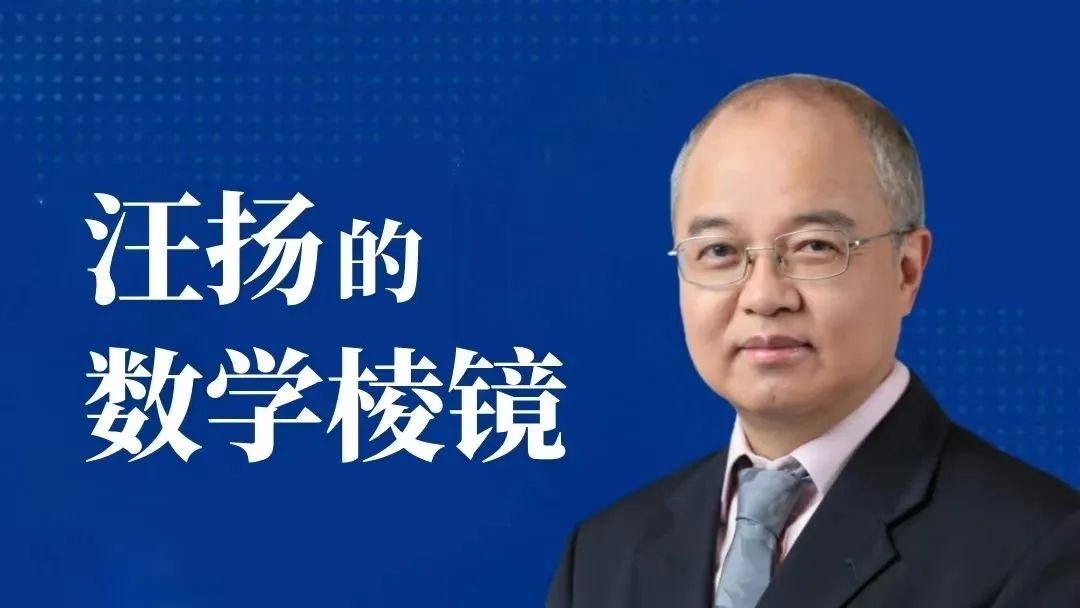
Wang Yang and Bai Liang: For China, stablecoins provide a historic opportunity — not to challenge the US dollar's dominant position in the market, but to disrupt the US dollar's structural hegemony.
The international monetary system is currently undergoing the most profound transformation since World War II. The US “GENIUS Act” is an attempt to maintain the status of the US dollar by regulating stablecoins, but it may be counterproductive. For China, stablecoins offer a historic opportunity — not to challenge the dollar's market dominance, but to disrupt the dollar's structural hegemony. Understanding this difference is a prerequisite for developing the right strategy.
01
Dollar hegemony and dollar dominance: essential differences
Many analysts confuse “USD Hegemony” (USD Hegemony) with “USD Dominance” (USD Dominance), but these are two completely different concepts. The dominance of the US dollar means that the US dollar accounts for the largest share of international trade and reserves — currently it accounts for about 88% of global foreign exchange transactions and 60% of official reserves. This dominance is based on market choices: the US dollar has the best liquidity, the deepest market, and the most stable. Even if the RMB is fully convertible, it is extremely difficult to shake this dominance based on efficiency in the short term.
The dollar's hegemony is something else entirely. It's not a market share issue; it's a structural power issue. Specific examples include: First, monopoly control of global payment infrastructure. The SWIFT system processes more than 90% of global cross-border payment information, while CHIPS (Clearing House Interbank Payment System) processes more than 95% of US dollar settlements. The US can cut off visits from any country or agency at any time. After Iran was kicked out of the SWIFT system in 2012, foreign trade fell by 30%. It's not because the counterparty doesn't want to do business with Iran, but because it's technically impossible to complete the payment.
Second, the jurisdiction to settle dollars is extended. Any dollar transaction, no matter where in the world, as long as it passes through the CHIPS system, is theoretically governed by US law. In 2014, BNP Paribas was fined 8.9 billion US dollars for violating US sanctions against the Sudan and Iran. None of these transactions took place within the US, but since US dollars were used and settled through CHIPS, they automatically fell under US law.
Third, the collateral effects of financial sanctions. US secondary sanctions mean that not only are the targets directly affected, but any third party doing business with the target is also at risk of being sanctioned. This creates a “contagious fear” — you don't dare to trade with a sanctioned entity, even if you're not sanctioned yourself. The Huawei incident fully demonstrated this power: it's not that global suppliers don't want to sell products to Huawei, they don't dare.
Use an image analogy: the dollar dominates the swimming competition in the Olympics. The US athletes are indeed the strongest, winning most gold medals, but athletes from other countries can still participate and still have a chance to win prizes. The hegemony of the US dollar is like: not only do American players swim the fastest, they also serve as referees, control doping tests, disqualify other players at any time, and even throw away the water in the entire pool. In recent years, we have indeed seen how the US is using a drug testing system to target athletes in specific countries — the same logic as financial sanctions.
02
China's Actual Situation and Strategic Choices
Faced with this pattern, China must clearly understand the limitations of its own conditions. Currently, the offshore RMB is only 200 to 300 billion US dollars, mainly concentrated in Hong Kong; currently, the total size of US dollar stablecoins USDT and USDC has exceeded 200 billion US dollars. Under the premise of not opening up capital accounts, the internationalization of the RMB faces structural barriers: without sufficient RMB circulation overseas, it is impossible to form a deep RMB asset market; without a deep market, it is impossible to attract central banks to use RMB as a reserve currency.
This “chicken first or egg first” dilemma is difficult to break through the traditional path. However, stablecoins offer a new possibility: through digital tokens, it is possible to create an international circulation mechanism for RMB without fully opening up capital accounts. More importantly, stablecoins can not only serve the internationalization of the renminbi, but can also be a tactical tool to disrupt the US dollar hegemony system.
The key is proper positioning: challenging the dollar's dominance in the short term is unrealistic or unnecessary, but weakening its hegemonic base is both likely and urgent. China can adopt a strategy of “avoiding reality and attacking falsehood” — not confronting the dollar's strongest areas (liquidity, network effects), but seeking breakthroughs in its most vulnerable areas (excessive financialization, misuse of sanctions).
03
Three Arrows in One: China's Stablecoin Strategic Framework
Based on the above analysis, I suggest that China should simultaneously promote three types of stablecoins to form a system with mutual support and complementary functions:
First arrow: offshore renminbi stablecoin (SRMB). This is the most direct but also the most limited option. Digital tokens anchored to the offshore RMB can serve trade settlements along the “Belt and Road”, especially in regions where traditional banking services are inadequate. Through smart contracts, functions such as trade finance and supply chain finance can be realized, and financing costs for small and medium-sized enterprises can be reduced.
However, it is important to recognize its limitations: the size of SRMB is limited by the total amount of offshore renminbi, making it difficult to expand on a large scale in the short term. More importantly, it mainly serves trading partners who are already willing to use RMB, and has limited appeal to expanding new users. Therefore, SRMB is more of a defensive tool to ensure that existing RMB settlements are not encroached upon by other stablecoins.
Second arrow: the Chinese version of the US dollar stablecoin (Panda-USD). This is the most strategic design. China currently holds about 700 billion US dollars of US Treasury bonds, and these reserves can only receive meager coupon income for most of the time. To make matters worse, these reserves also face valuation risks due to changes in US monetary policy and, in extreme cases, the political risk of being frozen. Instead of keeping these reserves “dead money,” activate them as productive capital.
Panda-USD's innovation lies in its dual-function design. On the one hand, it's a stablecoin backed entirely by US Treasury bonds, and is technically impeccable. On the other hand, it can be a financing tool for Chinese companies to develop overseas. The specific operation mechanism is as follows:
When undertaking overseas projects, Chinese companies can obtain low-interest loans from the Panda-USD reserve pool by collateralizing assets or future project earnings. Interest rates can be set at a level slightly higher than the yield on US Treasury bonds, for example 50-100 basis points higher. This not only covers operating costs and risks, but is far lower than the financing costs of enterprises in international markets. Companies that receive Panda-USD loans will naturally promote the use of Panda-USD during project implementation — payment of wages to suppliers, contractors, employees, etc.
This has created a positive cycle: China's US debt reserves are no longer static “dead money,” but have become “living water” to support the global expansion of Chinese companies. Businesses received low-cost financing, driving the practical use of Panda-USD and expanding its acceptance and circulation. Some of the revenue generated by the project will flow back in Panda-USD, enhancing the sustainability of the entire system.
More importantly, this arrangement has left America in a moral dilemma. To oppose Panda-USD is to oppose China's use of US debt to support global development — and these US bonds were originally bought with real Chinese money. If Chinese companies use Panda-USD to build infrastructure in Africa, invest in clean energy in Latin America, and develop the digital economy in Southeast Asia, what is America's opposition? These are legitimate business activities that promote global development.
Another possibility is to use US bonds held by China to support stablecoins denominated in RMB or Hong Kong dollars, so that reserve assets in RMB and Hong Kong dollars are close to USDT and USDC, which is conducive to the promotion of RMB and Hong Kong dollar stablecoins.
The third arrow: Global Coin (Global Coin) — the core of the strategy. This is where the whole system innovates and is the key to changing the rules of the game in the long term. Global Coin anchors a basket of currencies, but its significance goes far beyond a simple synthetic asset.
The composition of the currency basket must reflect a strategic vision rather than simply reflect the current situation. The initial weight distribution I suggest is: USD 28-30%, RMB 25%, and EUR 25%. These three currencies together account for about 78-80%. The remaining 20-22% was distributed to: yen 5-6%, pound 4-5%, Saudi riyal 3-4%, Indian rupee 2-3%, Korean won 2-3%, Singapore dollar 2-3%, Swiss franc 2-3%.
This weighting design is deeply considered. First, setting the RMB's weight at a level close to the euro and the US dollar reflects expectations for the future international currency pattern. This isn't the reality today, but it may be a reality 10-15 years from now. Through Global Coin's weight settings, we are shaping expectations and guiding the future.
Second, the inclusion of the Saudi riyal is of special strategic importance. Although Saudi Arabia's economy is not very large, as the world's largest oil exporter and OPEC leader, its currency choice is iconic. If Saudi Arabia accepts the use of Global Coin for oil transactions, it will fundamentally shake the petrodollar system. Given that China is already Saudi Arabia's biggest buyer of oil, this arrangement is not impossible.
Keen readers will notice that there is no Russian ruble in this list. This is not ignoring Russia's status as a major energy exporter and BRICS member, but is based on practical considerations of the current international situation. The inclusion of the ruble at this stage poses an unnecessary risk of politicization to Global Coin and may hinder its promotion in key markets.
But that doesn't mean a permanent exclusion. The design of Global Coin should include a dynamic adjustment mechanism, with membership and weight reviews every two years. The review criteria should be objective and transparent, including: trade volume, GDP size, monetary stability, financial market depth, use of international reserves, etc. When the international situation changes and certain currencies meet objective criteria, they should be added through prescribed procedures. This mechanism design not only maintains flexibility, but also avoids politicized operations.
In fact, not including the ruble for now may benefit both Russia and China. As far as Russia is concerned, it can continue to deepen bilateral local currency settlement arrangements with China. Since this arrangement does not involve a third party, it is less affected by external interference. As far as China is concerned, it is possible to prevent Global Coin from being labeled an “anti-American coalition” in the first place. Global Coin's success requires broad international acceptance, and premature geopoliticization will jeopardize this goal.
To ensure the success of Global Coin, the Chinese government should take decisive measures. The most critical step is to give Global Coin the status of “legal tender” in foreign trade and require all Chinese enterprises to accept Global Coin unconditionally in international trade (it is necessary, not only acceptable). This is not a recommendation; it is mandatory. Specific implementation can be carried out in stages:
Phase 1 (within 6 months): All state-owned enterprises and listed companies must accept Global Coin payments. A certain percentage can be set, such as accepting up to 20% of contract amounts to be settled in Global Coin. At the same time, companies that accept Global Coin are granted certain tax benefits or export tax rebates.
Phase 2 (within 1 year): Expanded to all import and export enterprises, increasing the acceptance rate to 50%.
Phase 3 (within 2 years): Global Coin becomes an officially accepted currency along with RMB, and all foreign-related economic activities must be accepted.
This kind of coercive promotion may seem overbearing; in fact, it is necessary. The establishment of a network effect requires critical mass; it is too slow to rely on spontaneous market choices alone. China's annual import and export trade volume has already exceeded 6 trillion US dollars. If 30-50% of it is settled using Global Coin, it will immediately create a trillion-level circulation volume, which is enough to establish Global Coin's international status.
More importantly, this will create a demonstration effect. When international suppliers find that using Global Coin is more stable, more convenient, and more advantageous when doing business with China, they will naturally consider using Global Coin to trade with other countries to reduce exchange costs. In particular, for countries that also export raw materials to China and import manufactured goods from China, the use of Global Coin can greatly simplify the settlement process.
Global Coin's governance structure must be inclusive and professional. It is proposed to establish a “Global Currency International Governance Committee”, which can be headquartered in an international financial center such as Hong Kong or Singapore. Each currency in the “basket” sends a representative, but voting rights can be distributed according to currency weight. The voting mechanism can be considered similar to the design of both houses of the US Senate. Key decisions (such as weight adjustments) require weighted voting and delegate voting to be passed simultaneously to ensure that no single agency or country can control it.
04
Implementation Strategy: Avoiding the Fragmentation Trap
In advancing its stablecoin strategy, China must avoid repeating Europe's mistakes. Many European countries are each promoting digital currency projects, and as a result, they have fallen into the dilemma of different standards and competition with each other. China's advantage is that it can carry out top-level design to ensure strategic coordination.
Specifically, the right to issue “fiat stablecoins” should be strictly controlled. Other financial institutions can participate and share the benefits by investing in shares, providing services, etc., but they cannot issue independently. This avoids market fragmentation, ensures centralized network effects, and facilitates regulation and risk control. Currently, 200 institutions have applied for stablecoin licenses in Hong Kong, which is an extremely bad sign of fragmentation. Strict control of fragmentation must be a major prerequisite for China's major stablecoin strategy; otherwise, there will be no future.
For issuers of other licensed stablecoins, three points should be clarified: first, other stablecoins other than the above three types of stablecoins have no legal status, that is, they are not “required to be accepted” and “can be used” within the scope of compliance; second, all licensed issuers should act as agent issuers for the above three stablecoins to issue the above three stablecoins and obtain corresponding benefits; third, in any stablecoin issuer's payment scenario, they must unconditionally accept (but not limited to) the above three stablecoins as payment instruments.
In terms of implementing entities of Global Coin, it is recommended to adopt the “government guidance and market operation” model. Reducing the geopolitical aspect is conducive to international promotion. At the same time, control at critical moments is ensured through mechanisms such as gold stocks.
The technical architecture must balance innovation and compatibility. All three stablecoins can be issued based on existing mature public chains such as Ethereum to ensure technical reliability and ecological compatibility. At the same time, develop an autonomous and controlled efficient private chain as a backup and upgrade path. The key is to achieve cross-chain interoperability, so that users can switch seamlessly between different technology platforms. Here, we need to emphasize the importance of public chain issuance: without this step, not only will Global Coin advance much slower or impossible, but it will also greatly increase the risk of being besieged due to geopolitics.
Also, making good use of Panda-USD's loan mechanism has additional strategic value. Through loan contracts, China can require borrowers to use Panda-USD for a specific percentage of transactions, or even require their upstream and downstream partners to open Panda-USD accounts. This kind of “viral” promotion is more effective than any marketing. At the same time, the loan approval process is also a process of screening and nurturing participants in the Panda-USD ecosystem. Prioritizing support for projects in strategic regions and key industries can ensure that Panda-USD's usage scenarios cover the most valuable economic activities.
Importantly, this loan support must be market-based and sustainable. It must not be turned into a disguised subsidy or aid; otherwise, it will distort the market mechanism and attract international criticism. The key is to find a balance between commercial viability and strategic goals — interest rates low enough to attract quality companies, yet high enough to cover risk and operating costs.
05
Time window and historical opportunity
Now is the best time to advance this strategy. The introduction of the US “GENIUS Act” revealed its anxiety about the development of stablecoins getting out of control. However, the scope of jurisdiction of the Act is limited to the US, and it is beyond the reach of stablecoins issued overseas. This has created a valuable window of time for China.
More importantly, global dissatisfaction with the dollar's hegemony is piling up. From Europe's INSTEX system to India's rupee-ruble trade with Russia, countries are looking for ways to circumvent US dollar sanctions. However, most of these efforts are limited to bilateral arrangements and lack scalability. China's Global Coin can provide a multilateral solution that integrates these scattered efforts into a unified platform.
Technological development has also reached a tipping point. After years of development, blockchain technology is mature in terms of performance, security, and user experience. More importantly, the boom in the DeFi (decentralized finance) ecosystem has provided rich application scenarios for stablecoins. Stablecoins are no longer just a payment instrument, but an infrastructure for the entire digital finance ecosystem.
06
Geopolitical considerations: balancing ideals with reality
Global Coin's currency choices reflect a basic principle: to pursue monetary justice while maintaining strategic pragmatism. The decision not to include the ruble for now may disappoint some, believing that it is a way to bow down to Western pressure. But the essence of strategy lies in prioritizing priorities — the primary goal is to establish a viable alternative system rather than establishing too many enemies in the first place.
China and Russia can deepen financial cooperation through other mechanisms. For example, a direct exchange mechanism between SRMB and the digital ruble can be established to bypass US dollar intermediaries. Regional payment arrangements can also be promoted within the framework of the Shanghai Cooperation Organization. These bilateral and regional arrangements can be developed in parallel with Global Coin and complement each other.
The important thing is to maintain strategic strength and patience. Rome wasn't built in a day, and the Bretton Woods system has also gone through years of negotiations. Global Coin takes time to prove its worth and neutrality. Once credibility and network effects are established, expanding membership is a no-brainer. At that point, it wasn't us inviting anyone else to join; it was someone else asking to join.
07
Saudi Factors: Leveraging the Fulcrum of Energy Finance
Adding the Saudi riyal to the Global Coin basket seems to give it too much weight (3-4%, compared to Saudi Arabia's share of around 1% of global GDP); in fact, it is a very farsighted strategic arrangement. This sends a clear signal to Saudi Arabia and the entire Gulf region that they will have a place in the post-oil international financial system.
China can propose a package of solutions: use Global Coin to buy Saudi oil while supporting Saudi Arabia's “Vision 2030” transformation plan, including financing and construction of projects such as NEOM New City. If Saudi Arabia agrees to accept Global Coin as one of the currencies for oil pricing and settlement (even just part of the contract), it will have a huge demonstration effect.
This is not an immediate end to the oil dollar, but rather to provide a gradual transition path. Oil can be priced in US dollars and Global Coin at the same time, so that the market can gradually adapt; for example, the Shanghai Futures Exchange can price in US dollars and Global Coin at the same time. But once this opening was opened, the petrodollar monopoly was broken. Other commodities — iron ore, copper, food, etc. — may follow suit with Global Coin pricing.
08
Expected resistance and response plan
The US will inevitably counter China's stablecoin strategy, but our three-arrow strategy makes it difficult to find a focus point. Attacking the SRMB will have limited impact; instead, it will promote the independence of the RMB settlement system. If Panda-USD is banned, it would be tantamount to admitting that the US dollar needs protectionism and damage the dollar's credibility. Panda-USD's loan mechanism, in particular, makes America's opposition even more ridiculous — should the US ban China from using its own US debt to finance global development? This is completely morally and logically untenable.
The US counteraction against Global Coin will be more intense, as it directly challenges the structural position of the US dollar. Possible countermeasures include:
1.Technical blockade: US companies are prohibited from providing technical services to Global Coin. Response: Prepare technical autonomy in advance while maintaining cooperation with European and Asian technology companies.
2.Market access: Global Coin is prohibited from being used within the US. Response: Not seeking the US market initially, focusing on Asia, Africa, Latin America and Europe.
3.Pressure from allies: demand that allies join forces to boycott. Response: This is where the wisdom of setting the weight of the yuan and the euro close to the US dollar lies — Europe has no incentive to boycott an international currency that gives 25% of the weight to the euro.
4.Legal action: Suing on various grounds. Response: Strict compliance, transparent technology, and internationalized governance, making it impossible for lawsuits to find strength points.
Chinese companies are forced to accept the Global Coin policy, and the US may challenge it in places such as the WTO. But China can defend it: this is a measure to facilitate international trade, similar to the fact that the euro must be accepted within the Eurozone. Furthermore, Global Coin contains 30% of the dollar component, which actually promotes the use of the US dollar.
The more likely situation is that the US will adopt a “cut sausage” strategy and gradually exert pressure through technical standards, compliance requirements, and market entry. In this regard, China should prepare multiple plans: maintain open standards in terms of technology and connect with the mainstream of the international community at any time; adopt a “transcendental” strategy in terms of compliance, be more strict than the US in anti-money laundering, etc., and occupy a high moral ground; adopt a rural encirclement strategy in the market, promote it first in emerging markets and Belt and Road countries, and then enter developed markets.
09
Conclusion: From Monetary Sovereignty to Monetary Justice
China's stablecoin strategy is essentially an attempt to revise the international monetary system after World War II. At the beginning of the design of this system, there was a “Triffin dilemma” — the US dollar must not only serve the interests of the United States, but also assume international responsibilities, and the two will inevitably conflict. The history of the past 70 years shows that when conflicts occur, America always chooses to put its own interests first.
Stablecoins offer the possibility to overcome this predicament. Through multilateral arrangements such as Global Coin, it is possible to create an international monetary system with no single point of failure. This is not about eliminating the dollar; it is about eliminating the monopoly position of any single currency. In this sense, China is not only promoting innovation in monetary technology, but also the return of international monetary justice.
Forcing companies to accept Global Coin, China is not engaging in monetary hegemony, but is creating a true international currency. Back then, the US dollar became an international currency based on the Marshall Plan and the institutional arrangements of the Bretton Woods system. Today, China's promotion of Global Coin relies on a combination of trade volume, technological innovation, and governance mechanisms.
Setting the weight of RMB in Global Coin to be close to the US dollar and the euro is not arrogant pride, but rather a correction of the current international weight of RMB assets and reasonable expectations for the future. China is already the world's largest manufacturer, largest trading country, and the second-largest economy, and the renminbi should have taken a corresponding position in the international monetary system. Through the Global Coin transition arrangement, it is possible to first achieve the RMB's internationalization goals without fully opening up capital accounts.
Just as Keynes proposed the Bancor plan at the Bretton Woods Conference, an attempt to create a real international currency, it was rejected by the US based on its strength advantage. Today, 80 years later, technological progress and changes in the power balance have made it possible to achieve this ideal. China should seize this historic opportunity, not to establish RMB hegemony, but to end any form of monetary hegemony.
While America is busy building walls to protect vested interests, China should be busy paving the way to connect the world. The end of this path is a new international monetary order that is truly multi-polarized and fairer. And stablecoins are the cornerstone of paving this path.
(Author Wang Yang is a famous mathematics professor, vice-president of the Hong Kong University of Science and Technology (2020-2025), and chief scientific advisor to the Hong Kong Web3 Association. Bai Liang is the CEO of 01 Think Tank and the founder of Web3.01. (This article represents the author's opinion only.)
