比亚迪 · 44

Mecamand passed the Hong Kong Stock Exchange hearing. It is the first unicorn company in Xiong'an New Area

Comparatively, Mecamand (Xiong'an) Robotics Technology Co., Ltd. passed the Hong Kong Stock Exchange listing hearing on August 16, becoming the first company to declare and pass the hearing from Xiong'an. The company was founded by the Tsinghua Overseas Returnees team in 2016 and moved its registered place of registration to Xiong'an in 2024. It is the first unicorn company in Xiong'an New Area. Mercamander positions “AI+3D vision+robot” and independently develops the Mech-GPT multi-modal large model and “eye to hand” full-stack technology system. In 2025, it ranked first in the global AI+3D vision-guided general intelligent robot component market with a 22.1% share. Revenue from 2023 to 2025 increased from $181 million to $389 million, adjusted net loss narrowed to $109 million, and the share of overseas revenue rose to 50.3%. The company has deployed more than 27,000 units, and its customers include Ningde Times, BYD, Toyota, BMW, etc. Previously, it was invested by institutions such as Qiming Venture Capital, Intel Capital, Meituan, IDG, and Sequoia China.
3d ago
Xu Jiayin destroyed the second generation of Northeast China's wealth of 4.2 billion

Xu Jiayin destroyed the second generation of Northeast China's wealth of 4.2 billion

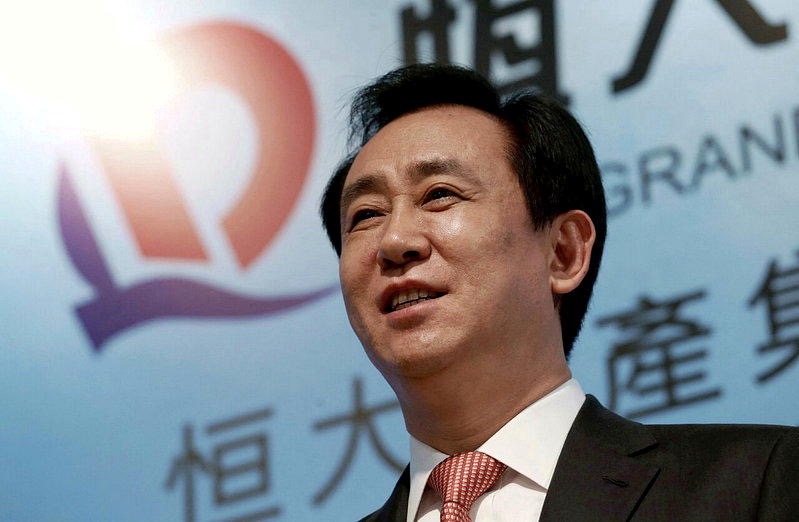
Source: Phoenix News Finance “Company Research Institute” Recently, a ruling by the Hong Kong High Court brought an old account that had been sunk for five years back to the table. Yingjia International Real Estate applied to the court for an injunction to stop Evergrande's liquidators from collecting the debt, but it was rejected. The liquidators wanted HK$5.97 billion, with principal and interest. And behind this huge dispute is a fixed growth game that took place during the peak of Evergrande Auto. In 2021, a second-generation wealthy person from Northeast China paid out 4.2 billion yuan, and Evergrande shares in exchange were nearly zero. What was thought to be just a bridge loan was turned into a huge debt of nearly HK$6 billion hanging over an offshore shell company. Cross-border crossing of HK$01 billion, a seemingly seamless closed loop. On January 24, 2021, Evergrande Motor issued an announcement to complete the IPO with six subscribers. A total allocation of 952 million shares, or HK$27.3 per share, raised a total of HK$26 billion. At that time, Evergrande Auto's market capitalization once surpassed 600 billion Hong Kong dollars, putting pressure on BYD and topping the domestic car companies' market capitalization list. Heyirong International Trading Co., Ltd., controlled by Wang Kaiguo, born in 1989, is also one of the subscribers. It promised to invest HK$5 billion to win about 183 million new shares, with a 12-month sales ban. The paper agreement has been settled, yet the financial problem is looming. It is necessary to mobilize funds in the amount of HK$5 billion to participate in Hong Kong stock subscriptions. The formal foreign exchange approval cycle is long, and Xu Jiayin cannot wait. Add up the two sides and come up with a quick way to pay. The whole process was implemented in three steps. The first step is domestic loans. In March 2021, Heyirong signed a RMB loan agreement with Evergrande, and Heyirong lent funds equivalent to HK$5 billion to Evergrande. From April 7 to 9, Heyirong remitted a total of RMB 4.2 billion to the Guangzhou Kailong Real Estate Co., Ltd. account designated by Evergrande in three transactions. Based on the exchange rate on the day of the transfer, it was just HK$5 billion. The second step is overseas loans. Also in March 2021, Guoxiong Holdings, a subsidiary of Evergrande, signed a loan agreement with Yingjia International Real Estate, wholly-owned by Wang Lihua. Guoxiong loaned HK$5 billion to Yingjia for a period of two years, repaid on a regular schedule without interest, and accrued interest on a 4% annual interest rate. From April 7 to 9, the HKD was also credited to the Yingjia account in three installments. The third step is to complete the IPO. After receiving HK$5 billion, Yingjia immediately transferred the full amount to Hongchang International Trade, another Hong Kong entity controlled by Wang Kaiguo. On April 9, Hongchang International successfully obtained Evergrande Motor's share certificate for 183 million new shares. According to Yingjia International Real Estate's claim in the lawsuit, there was an internal agreement between Evergrande's former management and Yingjia International Real Estate that no actual repayment was required for the above loans. However, on January 29, 2024, the Hong Kong High Court issued a winding-up order for China Evergrande. The liquidator took over the assets and contract files, and this loan agreement with complete procedures and complete settlement of funds was overturned. The old management's verbal tacit agreement was not binding on the liquidators. The contract is written in black and white with a principal amount of HK$5 billion and 4% overdue interest. This is a real claim with legal effect. In May 2025, Guoxiong Holdings officially issued a letter requesting Yingjia International Real Estate to repay nearly HK$6 billion in principal and interest. Yingjia refused to comply with the contract and in turn applied to the Hong Kong High Court for an injunction in an attempt to prevent Guoxiong Holdings from filing a winding-up petition. During the trial, Yingjia International Real Estate changed its arguments several times. First, they claimed that the loan was a false transaction, then changed their rhetoric to saying that there was a special funding arrangement, and finally put forward the core statement: the two parties had an oral subsidiary agreement exempt from enforcement. In response, presiding judge Chen Jingfen found that the oral subsidiary agreement claimed by Yingjia was “recently fabricated,” and rejected all of its defenses one by one. Chen Jingfen said that the loan contract signed in writing in the case and the funds were paid in full constituted a real claim. It was impossible to deny the legal effect of the formal contract based only on an oral agreement claimed by one party afterwards. The execution of the judgment on August 7 means that Evergrande's liquidators can officially commence the winding-up procedure against Yingjia and recover nearly HK$6 billion in claims. However, Yingjia itself is only an offshore shell company; it is still unknown how many actual assets it has that can be executed under its name. These offshore shell companies often only assume the functions of holding shares and transferring capital, making it difficult to get a glimpse of the real trading context of Fujia. To understand the private capital giant's layout in the A-share market, we also need to start with Wang Kaiguo, the core agent who was pushed to the front of the stage. 02 He took 5 directors' seats at age 32 and quietly left the market on April 21, 2021. Financial Street Holdings issued a director candidate announcement. The name “Wang Kaiguo” first appeared in the official disclosure documents of A-share listed companies. Five days later, on April 26, Goldwind Technology announced the “Proposed Election of Non-Executive Directors” on the Hong Kong Stock Exchange...

3d agoWendy#Evergrande #BYD #Wang Kaiguo #Xu Jiayin
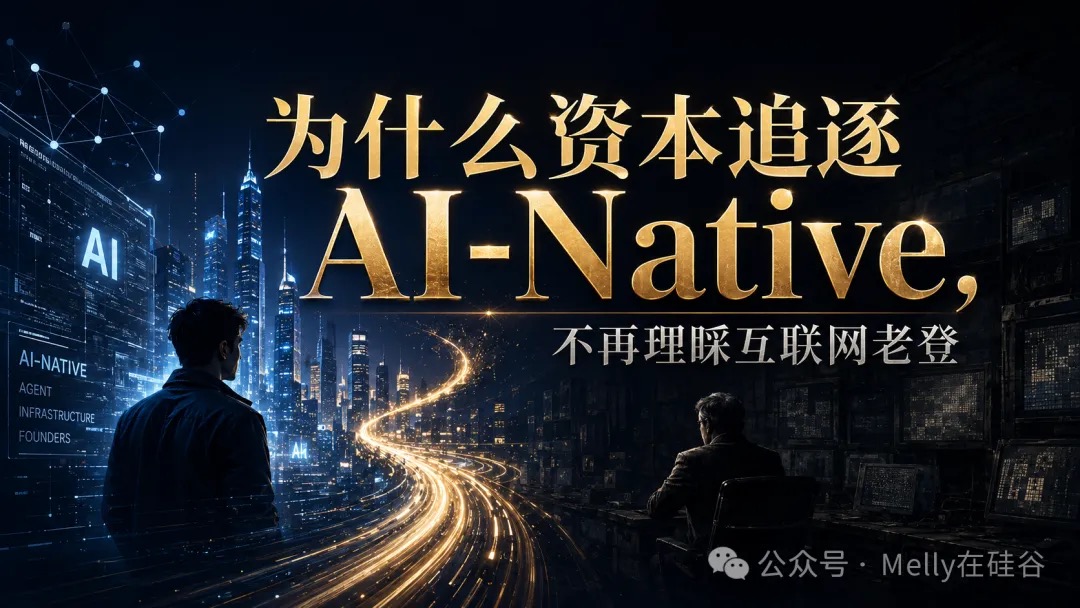
Why is capital chasing AI Native and ignoring the old Internet

Why is capital chasing AI Native and ignoring the old Internet

Capital doesn't reward being old-fashioned, not because old-fashioned people are at fault. The old part is clearly priced. There is no bad information, so there is no excess profit. Global venture capital was $510 billion in the first half of 2026, surpassing $44 billion for the full year of 2025 in one and a half months. More than 70% have entered AI; OpenAI and Anthropic took 217 billion dollars, accounting for 43%. With that much money, you'd think everyone could share a little bit. The truth is that distribution is more extreme than total volume, and the first sieve doesn't screen the industry, it screens people. The category that has been screened out now has an unkind name: the internet is old. Let's just say one thing: the “old man” in this article has nothing to do with age. It refers to a set of methodologies that have been formed in the mobile internet cycle, have been tested over and over, and have brought huge returns to holders. The person holding it may be 45 years old or 32 years old. It was this methodology that was being repriced, not the year of birth. Confusing these two things is Lao Deng's most common mistake and one of the most comfortable mistakes — because if the problem is someone else's age discrimination, you don't need to change a single word. 01 What is AI Native The term has been misused. They can use ChatGPT not called AI native, nor AI in the company name, let alone in their twenties. There are three things that really separate people. First, the starting point is a model, not a requirement. The order in which Lao Deng makes a product is: look at what the user wants, write down the requirements, and find technology to implement it. The order of AI natives is reversed: first figure out what level the model is capable of today and what step it is likely to reach tomorrow, and then move from this capability boundary to the external product. The former uses the model as a tool, and the latter uses the model as the foundation. There was no difference between these two kinds of things made by humans in the first edition; by the third edition, there was a difference of one species. Article 2. The default unit of an organization is not a person. The division of labor in the Internet age is the division of one thing into ten people. AI Native's division of labor is to take ten things from one person and add a bunch of agents. The CEO of a domestic application company said that the team consists of less than ten people, but a large number of AI work at night, and the first thing employees do every morning is check the work the AI handed in the night before. Cursor's side is even more extreme. Public reports mention that the company doesn't have a product manager; engineers write their own code, talk to users themselves, and participate in recruiting people themselves. Article 3. Information is first-hand. AI Native's input sources are papers, model cards, GitHub issues, original discussions on X, and self-run evals. Lao Deng's input sources are industry summits, closed-door meetings, brokerage reports, interpretation of public accounts, and finding someone to drink coffee with. This one is the least obscure and most lethal; I'll talk about that separately later. I'm satisfied with all three. The 25-year-old is an AI native, and so is the 45-year-old. I'm not satisfied with the three rules; I'm still an old man at the age of 25. AI natives are a state, not an age group. The trouble is that tickets in this state are works, not resumes. 02 The two lists spread the results of this round on the table. These are two lists. The first one is an all-AI native company. Their valuations are not rising; they are exchanging orders of magnitude. List 1 · Upstream OpenAI raised $122 billion in a single round of financing in Q1 2026, followed by $852 billion, the largest private equity financing in history. Anthropic Q2 had a single round of $65 billion, after investing $965 billion, accounting for about half of the total global venture capital for the quarter; the revenue operating rate in May reached about $47 billion. DeepSeek raised about 70 billion yuan in its first round of financing in May 2026. In April of the same year, Liang Wenfeng raised his direct shareholding from 1% to 34%, and controlled a total of about 84.29% of the shares through related entities. The Dark Side of the Moon (Kimi) was estimated at $4.3 billion in December 2025; it went for three consecutive rounds from January to February 2026 to reach 18 billion; the D round in May was about $2 billion, breaking 20 billion dollars after the investment; the July round surpassed $3.5 billion, after investing 35 billion dollars; the pre-IPO target was 50 billion dollars. ARR broke 100 million in March, 200 million in May, and held steady at 300 million US dollars in June, with APIs accounting for more than 70%. Smart Spectrum · MiniMax successively landed in Hong Kong stocks in early 2026, with a market capitalization exceeding 100 billion yuan. It was one of the first major model companies listed in China. The second one...

3d agoWendy#AI #DeepSeek

2026 Fortune 500 revealed: Amazon tops the list, Alphabet becomes the most profitable company in the world

Comparatively, the 2026 “Fortune” Fortune 500 list was released on July 28. The total revenue of the listed companies was about 43.1 trillion US dollars, more than one-third of global GDP, and an increase of about 3.2% over the previous year. Amazon reached the top for the first time, ending Walmart's record of leading for 12 consecutive years; the National Grid ranked third. Alphabet took the title of “World's Most Profitable Company” from Saudi Aramco with a net profit of US$132.17 billion. Nvidia ranked second in the profit list, and TSMC was the only Chinese company to enter the top ten profit list. A total of 141 companies are listed in the US, 122 from China (including Taiwan), and 40 from Japan. The total revenue of listed companies in China is about 10.4 trillion US dollars, and the average profit is 4.5 billion US dollars, which is about 40% of the average profit of US companies (11.24 billion US dollars). JD (41st) ranked first among private companies in mainland China, while Alibaba (56th), Tencent (97th, entering the top 100 for the first time), Pinduoduo (255), and Meituan (311th) all improved their rankings. The average profit of the 38 listed companies in the high-tech sector reached US$21.98 billion. Nvidia jumped 38 places to 28, TSMC rose 44 places to 82nd place, and SK Hynix ranked 210. Micron Technology and Chaowei Semiconductors returned to the list after many years. The division of the automobile industry intensified. BYD ranked 91st, and the Ningde era rose sharply from 43 places to 260th. For the first time, Chery was listed as a listed company. The biggest increase in the ranking was that of Wistron Group, which jumped 298 places to 198th place.

25d ago
Changxin went public or Fuying trillion yuan. This small town, which was ridiculed back then, gambled to win Chinese chips

Changxin went public or Fuying trillion yuan. This small town, which was ridiculed back then, gambled to win Chinese chips

Source | A Little Bit of Finance Author | Curated by Zou Jun | Tristan can make a city earn 1 trillion dollars once a company goes public? Recently, Changxin Storage Station's Science and Technology Innovation Board subscription threshold is expected to create the largest A-share IPO this year. The only domestic company that can mass-produce mainstream DRAM memory chips is already a popular fried chicken in the AI community. After the news came out, many people calculated another account: How much can Hefei actually make? According to the Tianyancha App, Changxin is headquartered in Hefei, and entities related to Hefei's state-owned assets hold a total of about 36.79% of Changxin's shares. Some agencies predict that Changxin's market value may reach 3 trillion yuan after listing. Based on this calculation, Hefei's book revenue may exceed 1 trillion yuan. What is the concept of 1 trillion? That's about the GDP of Hefei for a whole year. Everyone is amazed at Hefei's huge profits, but they forget that ten years ago, every time the central provincial capital took action, it was viewed by the entire industry as a big gamble they could not control. Hefei invests in star companies such as BOE and NIO. Which one was not initially described as crazy and later punched in the face of the questioner? This provincial capital, which was ridiculed as the “largest county town in China” back then, relied on heavy betting time and time again to become the “best venture capitalist” in the city club. Changxin's listing is just the latest footnote. What makes people curious is why is Hefei able to step on the right spot every time, and where does it bet on the next bet? Hefei's “Three Big Gambles” Hefei's counterattack began in 2008. The global financial crisis that year saw layoffs and contractions everywhere, yet Hefei did something that no one could understand — it wanted to be introduced to BOE. Today's young people probably don't know. Back then, LCD panels in China were stuck to death. Most televisions, computers, and mobile phones need to be imported as long as they have a block screen. Samsung and LG in South Korea, Sharp in Japan, and Youda in Taiwan basically have the final say. In 2008, the global economy was cold, and money bags were tightened everywhere. BOE's performance at the time was poor, and its stock price fell to suck. No one dared to touch the asset-heavy panel line. Wang Dongsheng, the founder of BOE, was looking for money to build a sixth-generation line, but almost no place was willing to pick it up. The reason is simple. A six-generation line requires investment of more than 10 billion dollars. The risk is high and the return is slow. No one wants to go through this muddy water. Hefei said, “I'll come.” The total fiscal revenue of Hefei in that year was only about 30 billion dollars. At the time, Hefei's attitude was very clear; they were breaking the pot to sell iron, and they also wanted to bring in this sixth-generation line. In the end, Hefei promised to pay 60 to 9 billion dollars, which is equivalent to spending less than half a year. Seen at the time, this decision was almost crazy. In an inland provincial capital, they are busy eating their own meals. What kind of high-risk LCD panels are they going to buy? There is a lot of ridicule on the internet, saying that Hefei punches people with swollen faces and makes them fat. But in the end, they got punched in the face. After BOE's Hefei 6th generation line was put into operation, it directly broke the overseas panel monopoly. Within a few years, China became the world's largest producer of LCD panels, and BOE also became the world's largest, and its market capitalization soared. What Hefei received was far more than just that equity return. Because after BOE landed, upstream and downstream slowly became attracted. Corning for glass substrates, Sanli Spectrum for polarizers, Lianyong for driving chips... they built factories one by one in Hefei. The display industry alone has consumed hundreds of billions of dollars in output value in Hefei. It's not about investing in a project; it's about “throwing a seed into a forest.” Because only by turning the project into an industrial cluster can upstream and downstream complete support without leaving the province, reduce costs, and preserve technology. Individual projects may lose, but once the industrial chain grows, it takes root. For a city, if it has its own industrial cluster, taxes, employment, and talent have all settled down, and only then can the economic base stand. After winning the first big gamble, Hefei also found a way: seize the key links in the industrial chain, turn it into a climate, and the upstream and downstream will naturally gather. In 2016, it took another gamble, betting on DRAM memory chips. DRAM is the memory in mobile phones and computers. Your phone card doesn't stick, and it depends on how many apps you can open at the same time. In 2016, China's presence in this field was almost nil. Samsung, Hynix, and Micron monopolize over 90% of the global market. China spends more money on importing chips a year than buying oil, and DRAM is the bulk of it. The DRAM industry burns money fast and returns are slow, and how many major international companies are still at a standstill after burning tens of billions of dollars. In 2016, Hefei and Zhu Yiming, founder of Zhaoyi Innovation, co-founded Hefei Changxin, with a total investment of over 150 billion dollars. Back then, Hefei's fiscal revenue for the whole year was only around 100 billion dollars. This amount of money was equivalent to spending more than a year on the family budget. Questions are once again flooding in: a city in inland China, why? In response to this, Hefei chose to continue to work hard. 201...

30d agoWendy#AI #semiconductors #chips #Changxin Storage
Investors couldn't grab a share, and Li Yanhong's biggest IPO surfaced

Investors couldn't grab a share, and Li Yanhong's biggest IPO surfaced

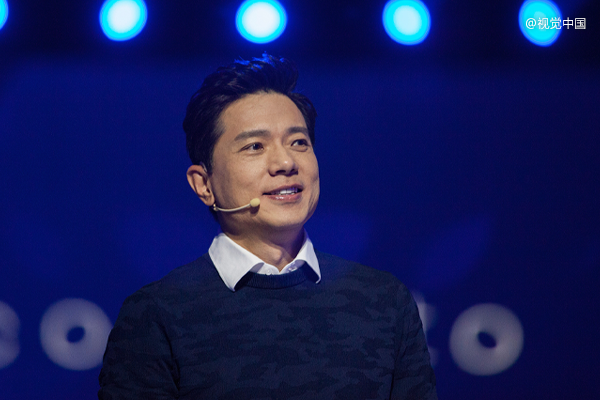
Author: Wu Qiong, Investment Industry PEDaily Original title: Li Yanhong's biggest IPO is here “I can't get a share.” This scene is appearing on Kunlun Core. Since the filing was confidentially submitted to the Hong Kong Stock Exchange at the beginning of the year, Kunlunchip's listing is getting closer and closer. Now is the time to compete for a share of the cornerstone. Thus, Li Yanhong's biggest IPO has surfaced — according to foreign media reports, Kunlunchip's target valuation is about 50 billion US dollars (about 340 billion yuan). If it goes public, its market value will surpass Baidu. With such size, it's no wonder that Kunlun Core is always regarded by the outside world as the most valuable asset in Baidu's AI stories. Baidu's turnaround battle will soon be clear. Li Yanhong's biggest IPO will surpass Baidu at this moment, and the mood is strong. Back in time at the beginning of this year, Baidu announced that Kunlunchip has submitted a confidential listing application form (Form A1) to the Hong Kong Stock Exchange through its co-sponsor to apply for approval to list and trade Kunlunchip shares on the main board of the Hong Kong Stock Exchange. Since then, the IPO of Kunlun Core Hong Kong shares has always been carried out underwater. Now that half a year has passed, and as preparations for the IPO continue to advance, Kunlunchip has reached a critical stage before listing. According to The Information, the company is currently in contact with potential investment institutions. This is the last window for investors to enter Kunlun Chip through the primary market, but the threshold is not low: According to reports, Kunlun Chip gives priority to investors who promise to buy chips during distribution, and requires that the purchased chip value reach 3 to 7 times the subscription amount. This means that if investors want to get the cornerstone share of Kunlun Core, they must first “distribute” the goods. As a result, simple financial investors may be stopped at the door. Kunlun Core is more favored by industrial investors who themselves have the ability to continuously purchase. In the end, only a few make it to the table. One investor told the investment community that “competition for the share of the cornerstone is fierce” and that more people are “hard to find a seat.” Needless to say, the outside world has high expectations for Kunlun Core. According to reports, Kunlun Core's target valuation is about 50 billion US dollars (about 340 billion yuan). This is not out of the blue. According to IDC data, in the 2025 Chinese AI accelerator server market, Kunlun Core and Cambrian are tied for third place among domestic manufacturers, each shipping about 116,000 cards. Earlier, the Goldman Sachs Research Report pointed out that if the market gave Kunlun Core a valuation multiple similar to the Cambrian period, the equity value held by Baidu would be as high as 22 billion US dollars. At a time when demand for AI computing power exploded, the Cambrian market capitalization surpassed trillion dollars this week. As a result, there was a fierce competition for shares of Kunlun Core Cornerstone. Of course, Baidu will be the biggest winner. Recall that Li Yanhong explained in an announcement at the beginning of the year that one of the benefits that Kunlunchip's spin-off will bring is to enhance Kunlunchip's image among its customers, suppliers, and potential strategic partners to gain more business. Baidu will also benefit from its growth through shareholding. The effect was immediate. After this news came out, Baidu rose for four consecutive trading days, and the latest market value of Hong Kong stocks exceeded HK$300 billion. If Kunlunchip's target valuation of 50 billion US dollars is achieved, Baidu's shareholding value will exceed 100 billion dollars as its controlling shareholder. In this way, Li Yanhong also ushered in another bright moment — Kunlunchip's market value will surpass Baidu. Investors gathered to wait for a hidden, low-key, super return, but it has become a masterpiece Li Yanhong is proud of. The story of Kunlun Core can be traced back to 2011. The predecessor was Baidu's Smart Chip and Architecture Department. A team from leading companies such as Baidu, Qualcomm, Marvell, and Tesla began Baidu's path of core development. Until 2021, Baidu will officially become independent of its Kunlun chip business and establish a new company, Kunlun Chip (Beijing) Technology Co., Ltd. Along with Independence, there was also a luxury financing. The lead investor was CPE Yuanfeng. Investors included IDG Capital, Junlian Capital, Yuanhe Puhua, etc., with a valuation of about 13 billion yuan at the time. Since then, Kunlun Core has been well known to the outside world. However, this is the only time Kunlunchip has publicly announced financing. However, according to corporate research, Kunlunchip completed several shareholding changes in five years, and many well-known investment institutions took office one after another — in July 2022, shareholders such as General Technology Venture Capital, Zhongbi Fund, and Qianshan Capital were added; just half a month later, CITIC Securities and Linxin Investment also became Kunlunchip shareholders. In 2023, BYD, Zhongguancun Science City Company, Sanya Yuhai Fund, and China Internet Investment Fund appeared one by one; since then, there has been no shortage of faces such as the Social Security Fund Zhongguancun Independent Innovation Special Fund, the Beijing Artificial Intelligence Industry Investment Fund, Shunxi Fund, and CITIC Construction Investment Capital, and the lineup has become more luxurious. Perhaps the listing was already underway. In July of last year, Kunlunchip added 15 new shareholders in one fell swoop, including China Mobile's fund, Beijing Government Guidance Fund, Beijing Shangao Juntai Fund, and Guohai Innovation Capital...

50d agoburnking#AI topics #IPOs #Li Yanhong

Samsung Foundry plans to win orders from Meta and Anthropic, and is expected to turn a loss into a profit in the fourth quarter

Comparatively, according to Korean media reports, Samsung Electronics' foundry business is increasing its share in the global AI chip market at an accelerated pace. Following the acceptance of Tesla's AI chip order last year, Samsung is currently promoting customized chip (ASIC) production cooperation with Meta and Anthropic. According to reports, Meta is negotiating a contract with Samsung for the design and production of next-generation ASICs worth over 10 trillion won. Meta's third-generation AI accelerator “MTIA” plans to switch from TSMC to large-scale mass production using Samsung's most advanced 2 nm process, and the Samsung System LSI division will jointly design the early chip architecture to match its rapid 6-month generation R&D cycle. Additionally, American AI company Anthropic is also evaluating the development of a proprietary ASIC using Samsung's 2nm process to further internalize its AI infrastructure. Industry insiders pointed out that with the concentrated influx of AI chip orders from global tech giants and the automotive chip foundry agreement currently being negotiated with BYD (BYD), the medium- to long-term order reserves for Samsung's foundry business are expected to approach 50 trillion won, and it is expected to turn operating profit into profit in the fourth quarter of this year.

50d ago

Due to tight production capacity at TSMC, Google, AMD, and BYD have increased OEM orders for Samsung chips

Comparatively, according to a report by Nikkei Asia (Nikkei Asia), companies such as BYD, Google, AMD, and Tesla are increasingly turning to Samsung Electronics to seek chip foundry services due to the surge in demand for AI infrastructure and the tight production capacity of TSMC's advanced chips. People familiar with the matter revealed that BYD is in negotiations with Samsung to produce future generations of autonomous driving chips; Google is discussing the next generation Axion processor and some TPU chips expected to be launched by Samsung in 2028; and AMD is also discussing the production of some future CPUs by Samsung starting 2028. Additionally, Tesla's upcoming AI6 chip will also be manufactured at Samsung's Texas plant. Industry insiders pointed out that although Samsung still lags behind TSMC in chip yield, its available production capacity advantages make it an extremely attractive choice. At the same time, due to TSMC's production capacity restrictions and geopolitical factors, more and more Chinese and US companies are adopting diversified supply chain strategies to distribute orders among multiple foundries.

66d ago
Goldman Sachs's latest research report: The storage industry's golden window is not over

Goldman Sachs's latest research report: The storage industry's golden window is not over

Article: Tide Research, Shenzhen TechFlow Original Title: Interpreting Goldman Sachs Research Report: Storage Out of Stock Until 2028, Continue Buying On June 1, Goldman Sachs released the daily Asia-Pacific stock review “The 720,” with a long list of names Samsung, Hynix, Kioxia, MediaTek, Lenovo, and BYD on the cover. It looks like an exhaustive shopping list, but when you read it, you'll find that it has an absolute core: a memory chip. Goldman Sachs's biggest judgment in this issue is that the current storage upcycle “will last longer” (higher for longer), and the shortage will continue until 2028, and the market has far underestimated its length. The evidence lies in valuation: most storage stocks are still trading at mid-single digit price-earnings ratios. The market believes that this is just another normal cyclical rebound; Goldman Sachs doesn't see it that way. Let's break it down in terms of importance, and a quick list of targets is attached at the end. The highlight: the storage will be out of stock until 2028. The three companies were collectively upgraded by Goldman Sachs to compare this cycle with the past. The conclusion is that this time is different. There are three reasons: demand for AI servers is more visible, supply growth is limited, and long-term supply agreements die the more they sign (lock the price). When the three are combined, supply and demand for DRAM, NAND, and HBM will be tighter in 2027 than in 2026, and the shortage will continue until 2028. The most intuitive one is Goldman Sachs's DRAM supply and demand map. A negative number indicates that supply is in short supply. The deeper the gap, the more supported the price. Goldman Sachs has now lowered all of its 2026-2028 predictions to a deeper shortage range. Among them, in 2027, the original forecast of -2.5% was changed in one fell swoop to -5.9%, which almost doubled. Translated as an adage saying: Goldman Sachs believes that storage plants will run out of stock more and more every year after next year, which means that the price increase will continue for a longer period of time. When it came down to specific companies, the three companies were passively manipulated: Samsung Electronics: raised the target price for 12 months to 480,000 won to maintain the purchase. SK Hynix: Raised the 12-month target price to 3.5 million won to maintain the purchase. Kioxia (Kioxia): From holding to buying, the new target price is 93,000 yen. Kioxia is the only rating upgrade in this issue. Goldman Sachs's logic is worth looking at separately: it believes that this cycle's profit peak is higher than previously anticipated, and it can last for two to three years; it doesn't fall back as soon as it hits back. Based on this, Goldman Sachs raised Kioxia's operating profit forecast for the 2027-2029 fiscal year by 16% to 48% at one time, and the gross margin is expected to remain high at around 80%. Giving a judgment on a company with a strong cycle business such as storage that has a high profit and is sustainable for three years is quite a strong statement. The “whole family bucket” of the AI computing power chain: From chips to optical modules to data center storage, this issue has almost reversed the AI hardware supply chain in China and Asia. The logic is unified on one main line: global cloud vendor (hyperscaler) capital expenditure is accelerating, and money flows down this chain. MediaTek (MediaTek): Purchase, target price is NT$5,000. The highlight is its transformation from mobile phone chips to data centers and custom ASICs (AI chips designed for specific customers). The company's goal is to get $2 billion in data center/AI ASIC revenue in 2026 and take 10% to 15% of the $70 to 80 billion ASIC market in 2027. Eoptolink (Eoptolink): Buy, the target price was raised to RMB 841. It is an optical module, a key component responsible for high-speed data transmission in AI data centers. Goldman Sachs is optimistic that it will start rolling out 1.6T optical modules in the second quarter, accelerate in the second half of the year, and expand production in Thailand, raising profit forecasts for 2027 and 2028 by 5% and 6%, respectively. Biren (Biren): Buy, target price increased to HK$70.7. The domestic AI chip manufacturer, Bili166, received a first-class safety and reliability rating. Goldman Sachs expects it to turn a loss into a profit in 2027 and raise its revenue forecast for 2026 to 2030 by 4% to 28% as the product migrates to AI chips with higher computing power and is selling more and more expensive. Huaqin Technology (Huaqin): The purchase is the target of this “new coverage” issue. The target price for A-shares is 149 yuan, people...

82d agoLuxurytracy