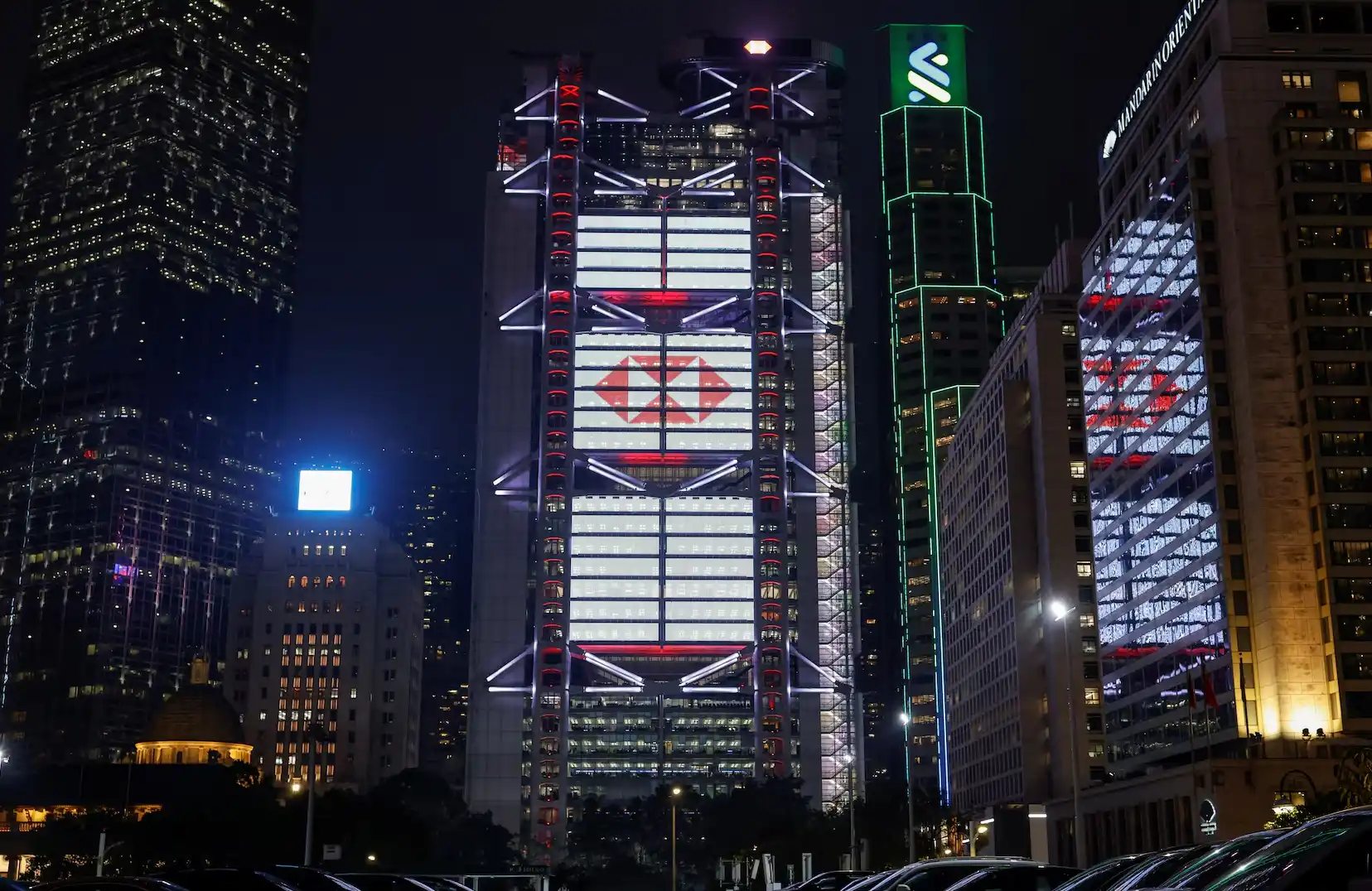
港元稳定币 · 66

HSBC Hong Kong: Preparations for the launch of the Hong Kong dollar stablecoin are progressing as scheduled. Details will be announced soon

Comparing news, recently there is a market opinion that the attitudes of the first two Hong Kong dollar stablecoin license holders were divided, and HSBC showed a negative attitude. This may be related to a direct conflict with its main business. In response to the above public opinion, an HSBC Hong Kong spokesperson said that HSBC continues to be active in the digital asset sector in Hong Kong. “We are planning to launch in the second half of 2026. Preparations are progressing as scheduled. Details will be announced shortly.” The spokesperson said that HSBC Hong Kong's decision to issue HKD stablecoins stemmed from market demand for digital currencies and improved payment efficiency, while reflecting its commitment to serve the digital asset ecosystem. In the early stages, the application scenario focused on enabling HSBC customers to make on-chain P2P and P2M payments and invest in tokenized products in a safe and secure manner. Although retail payments in Hong Kong are already quite efficient, stablecoins can provide consumers with additional options to help them participate in the ever-expanding digital ecosystem. The move will complement HSBC Hong Kong's existing tokenized deposits, digital bonds and gold tokens to further enhance the product portfolio. (CLS)

3d ago
HKD stablecoin “big retreat”: 36 applicants, only 2 left

HKD stablecoin “big retreat”: 36 applicants, only 2 left

Source: Foresight News Author: Joe Zhou Original title: The Hong Kong Dollar Stablecoin “Great Retreat” is strategically negative and tactically aggressive. The participants in the HKD stablecoin are waiting for a reason to get them excited. “We are not optimistic about the HKD stablecoin.” An industry insider close to the regulatory level said bluntly to the author, “Being optimistic about stablecoins does not mean being optimistic about Hong Kong dollar stablecoins — these are two completely different things.” He paused and added: “Let the least willing and least motivated institutions dominate the Hong Kong dollar stablecoin and marginalize the most motivated and thoughtful institutions. How can this be done?” This is not personal prejudice. I learned from many participants in the Hong Kong stablecoin business that the ownership of the first two Hong Kong dollar stablecoin licenses already reflects the embarrassment of “passive defense” supervision: Standard Chartered Bank-led Anchoring Fintech Co., Ltd. took the initiative, while the other licensed institution “didn't want to do it at all” — this is already an open secret in the community. At the same time, companies with strong intentions to explore the Hong Kong dollar stablecoin scenario, such as Ant Group, JD Technology, and Yuancoin Technology, have failed to actually enter the market or have no core dominance. “Engaged, but not optimistic.” Two people from different institutions, both close to the Hong Kong stablecoin business, spoke almost in unison. Currently, the situation of Hong Kong dollar stablecoins is showing three subtle patterns: one type of institution is optimistic about the stablecoin circuit but has reservations about the Hong Kong dollar stablecoin, but they have to “take their place”; another type of institution is not enthusiastic about stablecoins and is being forced to enter the market by regulation; there is also a category of institutions that have the will, resources, and scenarios, but are turned away because of their status. This misalignment is the most realistic footnote to the Hong Kong dollar stablecoin's “Great Retreat”. One license, two attitudes, three positive reactions for Standard Chartered, negative for HSBC — one license, two attitudes. In September 2025, 36 institutions flocked to apply for a HKD stablecoin license, which was very exciting. Nearly a year has passed, and today in August 2026, few people have taken the initiative to mention the Hong Kong dollar stablecoin. The hustle and bustle has receded, and there are only two real players left: Standard Chartered and HSBC. A brand-new business model was eventually completely handed over to organizations that are mainly engaged in traditional business models. Market sentiment is as cold as ice. “Everyone in the community knows that HSBC is not active.” Two people from different Hong Kong licensed crypto exchanges invariably told the author. On 10 April 2026, the HKMA issued the first batch of two HKD stablecoin licenses to Anchorage Financial Technology Co., Ltd. (Standard Chartered Bank (Hong Kong), Hong Kong Telecom and Animoca Brands) and Hong Kong Shanghai Banking Corporation Limited. However, according to industry sources, the two institutions have very different attitudes towards stablecoins. Standard Chartered has shown some initiative and has begun to lay out a global stablecoin strategy. On July 2, 2026, Standard Chartered and USDC issuer Circle jointly announced the launch of an institutional-grade USDC one-stop access service. On August 12, 2026, Anchorage Financial launched the first phase of the Hong Kong dollar stablecoin HKDAP. Currently, it is only open to institutional distributors and professional investors such as HashKey and OSL, and plans to expand to retail users as early as the end of 2026 depending on market conditions. HSBC is a different story. “HSBC is passive; they only do it when they are pointed at their nose.” An industry insider spoke bluntly to the author. Compared with Standard Chartered's aggressive promotion, HSBC's Hong Kong dollar stablecoin program is clearly behind schedule until the second half of 2026. Behind this delay is HSBC's careful consideration of the stablecoin business based on real interests. “HSBC is more inclined to implement tokenized deposits rather than stablecoins.” A person close to HSBC revealed. The root cause is that stablecoins directly conflict with HSBC's main business. According to the data, about 85% of HSBC's payment business revenue comes from net interest income based on deposits, and the payments business itself accounted for about 22% of its total revenue in 2025. HSBC's core business model is to absorb low-cost deposits and earn interest spreads through loans and investments — and stablecoin issuance just diverts bank deposits and shakes its foundation. What's more, the business of issuing compliant stablecoins itself is far from being “profiteering”: revenue is highly dependent on the interest rate environment, yet profits are being encroached upon by various channels such as issuance, hosting, and distribution. For HSBC, which has deposit and loan spreads as the core and holds a large number of customer deposits, active all in stablecoins not only erodes its deposit base, but also does not earn significant profits, and lacks internal commercial driving force. In addition to Standard Chartered and HSBC, the reaction of 13 licensed crypto exchanges to the Hong Kong dollar stablecoin was also mixed...

8d ago22#Hong Kong dollar stablecoin

Anchorpoint, a subsidiary of Standard Chartered Bank, officially launches the first phase of the Hong Kong dollar stablecoin HKDAP

Comparatively, according to The Block, Anchorpoint, a subsidiary of Standard Chartered Bank, officially launched the first phase of the Hong Kong dollar stablecoin HKDAP on Wednesday, opening test access to institutional distributors and professional investors. Anchorpoint was established as a joint venture between Standard Chartered Bank, HKT and Animoca Brands. It was granted a stablecoin issuance license by the Hong Kong Monetary Authority (HKMA) in April this year, and was one of the first licensed institutions. This article is sponsored by GENG, Build Your Fortune on GENG (https://geng.one)

10d agoburnking

Standard Chartered Hong Kong says it plans to announce the issuance of the Hong Kong dollar stablecoin HKDAP in August

Comparatively, Standard Chartered Hong Kong and Greater China and North Asia Chief Executive Officer Luen Wai-yee announced that the official issuance of the Hong Kong dollar stablecoin HKDAP will be announced within August. At the same time, it will also sign a contracted distributor. As a stablecoin issuer, it will not directly connect with terminal users, but will distribute it through the formulation of approved distributors to its related enterprise and institutional customer base applications, including SMEs, traders, service providers, fund companies, and even individual users. tokenize B2B2C assets. (HK01)

19d ago

Anchorage Fintech, led by Standard Chartered, is expected to launch the Hong Kong dollar stablecoin HKDAP as soon as possible

Comparing news, Anchorpoint (Anchorpoint), led by Standard Chartered Bank (Hong Kong), is expected to announce the launch of stablecoins as soon as the end of this month, according to reports from people familiar with the matter in Hong Kong's “Letter”. Anchorpoint plans to launch HKDAP, a stablecoin pegged to the Hong Kong dollar. Virtual asset trading platforms including OSL Group and HashKey Exchange will act as distributors. An Anchorpoint spokesperson told the letter that preparations for the phased issuance of HKDAP, a regulated stablecoin linked to the Hong Kong dollar, are progressing according to the plan, and the latest developments will be announced in due course.

32d ago

Anchorage Financial will soon announce the launch of the Hong Kong dollar stablecoin HKDAP

According to the “Letter” report, Hong Kong stablecoin issuance is about to begin. Anchorpoint (Anchorpoint), led by Standard Chartered Bank (Hong Kong), is one of the institutions that first obtained two stablecoin issuer licenses from the Hong Kong Monetary Authority in April this year. Standard Chartered and Anchorpoint Finance issued a joint announcement as soon as the end of this month (that is, within the next two weeks) to announce the launch of HKDAP, a stablecoin linked to the Hong Kong dollar. The Hong Kong Monetary Authority announced in April this year that it would grant anchorage finance and HSBC the first batch of stablecoin issuer licenses.

33d ago

HSBC plans to offer stablecoins denominated in non-HKD

Comparing news, Gu Zhongyi, general manager of HSBC's global escrow products, said that the plan is to consider providing stablecoins denominated in non-Hong Kong dollars. It is expected that this type of product will optimize cross-border transfer services in Hong Kong and other regions after implementation; at the same time, HSBC is also considering connecting to other stablecoins regulated in Hong Kong. Gu Zhongyi added that HSBC plans to launch a Hong Kong dollar stablecoin in the second half of the year as soon as possible. The issued stablecoins will be integrated into the investment and payment process within the app to support investment in tokenized assets. (mobile payment network)

74d ago
The earliest Crypto players are living the way they hate the most

The earliest Crypto players are living the way they hate the most

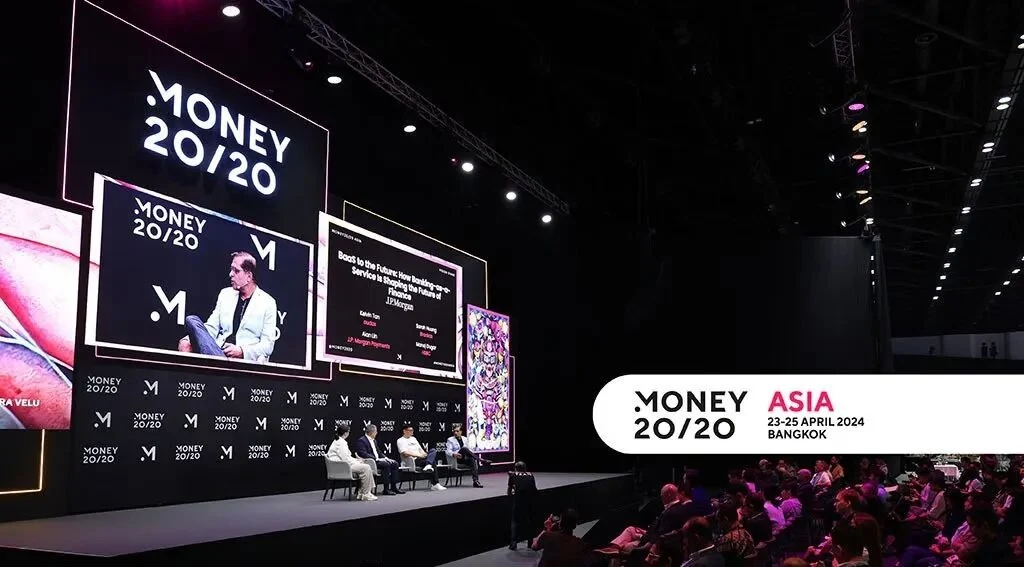
Author: Web3 Xiaolu Hong Kong Carnival × Bangkok Money 20/20 Observation Note Original title: The group with the most Crypto is becoming the least Crypto at Hong Kong Blockchain Week in April this year. What impressed me the most was not which panel, but a picture. After 10 p.m., at a tea restaurant in Wan Chai, four or five people huddled together at a table while eating stir-fried beef and talking about what they were going to do next. A friend who used to make stablecoin payments said that their team has completely switched to AI; another, who works with on-chain data, said he is now half his energy helping AI companies set up data pipelines. No one talks about currency prices, no one talks about narratives, even the term Web3 doesn't come up much. My feeling at the time wasn't surprising; it was a strange sense of familiarity — this group of people sat at the same table three years ago and must have been talking about DeFi, NFTs, and chain games. They're still those people, just as excited, and just as committed. I went to Hong Kong Carnival and Bangkok Money 20/20 this time, and after watching it, I kept on my mind saying: The group of people with the most crypto is becoming the least crypto. After the ebb of Web3, what is left? After running these two stops, I probably have an answer of my own. 1. Hong Kong: Familiar faces. Let's talk about Hong Kong first on unfamiliar topics. At this carnival, there are obviously few coin industry projects, and the hustle and bustle of distributing T-shirts everywhere and full of narratives the previous two years has dissipated. This year's official theme is “Mountain, Wind, Cloud, Sea”, and the positioning is very clear — say goodbye to the coin trading narrative. This sentence was posted three years ago, and the stage would have boo full of boos. However, no one felt wrong this year, because people didn't talk about coins in the first place; instead, they reached a tacit agreement. After walking around the exhibition, the faces were familiar: OKX Wallet, TRON, ZA Bank, HashKey, and Xinhuo. But the subject of their conversation changed, and the main theme focused heavily on two words: RWA and AI. RWA continues to be popular last year, but to be honest, everyone knows who is actually working on the project and who is doing the show. I think one judgment was established: RWA in Hong Kong is essentially the commercialization of financial management and investment — moving real assets onto the chain, making them more efficient and easier to distribute across borders. This is exactly what Hong Kong is best at: designing institutions and commercializing finance. The bubble has receded, and Hong Kong is more comfortable — the restlessness that didn't belong to it in the beginning has finally dissipated. AI is even more interesting. Almost every panel talks about the combination of AI and Web3, but I've listened to a few, and frankly, most of the discussions are at the level of “these two things should be combined.” As for how to combine and what problems to solve, no one can explain clearly. My feeling is that Web3 got together with AI not because it had a clear idea, but because if it didn't get together, there really wasn't a story to tell. Moreover, the guests on stage probably knew that they were chatting. But let's live before we talk about it; this is originally the survival philosophy of this community. There is nothing new about the Hong Kong dollar stablecoin. The licenses have all been issued, but after asking around, the two major banks each have their own rhythms, and none of them are in a hurry to make a high profile. It turned out that it seemed like nobody cared. But what really touched me was the people offstage. The busiest people at the venue this time were not the guests, but those dressed casually, wearing exhibition cards, and shuttling back and forth in the negotiation area — those doing BD, running the community, working on content, and helping the project connect resources. They don't have a beautiful resume, and they aren't necessarily “professional” in speaking, but their understanding of the industry grew from bumping into trouble one meal at a time. This understanding did not appear in the report; it was made in exchange for time. Whether an industry can get through the cycle depends not only on how many star companies are at the top, but also on how many people underneath are willing to continue refining when there is no applause. The Web3 chassis is still there. But what runs above the chassis has completely changed. 2. Bangkok: The stablecoin Trojan horse flew from Hong Kong to Bangkok, and the picture changed. Money 20/20 is a pure fintech B2B exhibition. The entrance fee is not cheap, and everyone who comes dressed like they wanted to meet customers. There are often vacant seats in the Panel area, but the business negotiation area next door is full from opening to closing. What surprised me was that stablecoins and crypto-native companies made up about one-third of the exhibitors. OSL, Circle, Ripple, Fireblocks, Cobo, Pyth... at least a dozen...

116d agoLuxurytracy
Hong Kong, the most anxious, can't wait for the next My Little Pony: stablecoin licenses are only issued to old aristocrats

Hong Kong, the most anxious, can't wait for the next My Little Pony: stablecoin licenses are only issued to old aristocrats

Author: Vibrant BlockBeats Original title: The stablecoin license dispute comes to an end: Hong Kong, the most anxious, can't wait for the next Little Pony In July 2024, the Hong Kong Monetary Authority announced the list of the three participants in the stablecoin sandbox. One of the three families is Yuancoin Technology. The founder is Chen Delin. No one knows this name in the Hong Kong financial community. He was the president of the HKMA for a full ten years and personally created the financial supervision framework in Hong Kong today. After retiring, he started a business, and with 40 million dollars in financing, he went into a sandbox he designed himself. Two years later, in April 2026, the first batch of stablecoin licenses was announced. Norman Chen lost the election. This April, the launch of the Hong Kong stablecoin license was packaged as a milestone in financial innovation. But if you peel away those bright narratives about “Embracing Web3,” you'll see a completely different story. With this license, Hong Kong revealed its plight at a time when the old and the new era alternated. The city was once perfectly shaped by its history, and today, it is also stuck in this heavy period of history. The competition for a Hong Kong stablecoin license is more like an “arranged marriage” that was destined to end from the beginning. A total of 36 institutions have submitted applications for stablecoin licenses. There are long queues, including tech giants, established brokerage firms, and Web3 native upstarts with real money. However, in the end, only two licenses were issued, and the approval rate was only 5.5%. In addition to Yuan Coin Technology by Norman Chan, the former Chief Executive of the HKMA, JD.com Chain, a former Sandbox participant, and OSL, Hong Kong's largest licensed virtual asset exchange, are among them. Those institutions that had strategic will and hot money to try to expand their horizons in the digital currency wave ended up being completely destroyed. So, who got the tickets? One is HSBC. This established institution, which has been issuing banknotes in Hong Kong for 160 years, plans to launch a HKD stablecoin in the second half of 2026 and integrate it into PayMe and mobile banking apps. Its way of entering the Web3 world is by packing something new securely into the old bottle it is most familiar with. The other one is Anchorage Fintech. It is a temporary patchwork enterprise to obtain a license. Standard Chartered Bank holds 50.5%, Animoca Brands accounts for 37.5%, and HKT accounts for 12%. Standard Chartered requires compliance endorsements, Telecom values payment scenarios, and Animoca wants on-chain channels. No one on the three sides was sure to gnaw down this hard bone alone, so they chose to keep warm in a group. Without exception, these two approved institutions are old aristocrats in the traditional financial system, and they are also banknote issuers. Why did Hong Kong's supervisory authorities issue this license, which represents the future of financial infrastructure, to the people who seem to need it the least? Why are those passionate entrepreneurs leaving the market? The answer is probably realistic. In the eyes of regulators, stablecoins have never been a business, but rather an infrastructure. Infrastructure, on the other hand, is bound to be entrusted only to the “own people” who know the roots best. The regulatory threshold for Hong Kong stablecoin licenses with limited returns and unlimited risk is so high that only banknote issuers can meet the requirements, but when they actually sit at the table, people will discover that this is actually an almost unprofitable business. As required by Hong Kong's Stablecoin Ordinance, issuers are required to maintain 100% high-quality asset reserves. This means that for every 100 yuan stablecoin issued, 100 yuan in cash or short-term treasury bonds must sit safely and securely in the bank. This money cannot be used for loans, nor can it be chased for high profits. At the same time, the issuer must bear a minimum paid-up capital of HK$25 million, operate carefully under strict bank-level anti-money laundering standards, and promise to respond to users' redemption requests within one working day. Let's compare virtual banks in Hong Kong. There are currently 8 fully licensed virtual banks in Hong Kong. They can be used for high-interest loans and securities investments, but since opening in 2020, none of these 8 banks have made a profit. Total losses in 2024 reached several billion Hong Kong dollars, and no one has been profitable since opening. Virtual banks with full licenses are still struggling with losses. Stablecoin issuers who can only buy short-term treasury bonds and live on meager interest. The situation is imaginable. They must bear unlimited responsibility for maintaining currency stability, and also silently swallow the high costs of compliance and technical infrastructure. At the end of the day, this is actually a business with limited returns and unlimited risks. It's hard to say that Standard Chartered and HSBC are the real winners in this game; they can be understood as being forced to the table. If HSBC doesn't apply, it's tantamount to relinquishing the bottom line of the digital HKD to Standard Chartered; if Standard Chartered doesn't apply...

130d agoburnking#WEB3 #custodial #stablecoins #financing