硅谷 · 1586
US Stock Value Investing Is Heading Into Another Trap

US Stock Value Investing Is Heading Into Another Trap

Source: Shenchao TechFlow Original title: (Opinion: Value investing in US stocks is not equal to fundamental investment) When “fundamentals are dead” becomes a consensus, investors who blindly organize giants will eventually experience astonishing capital destruction. Guide: When the market shouted “fundamentals are dead” and the capital frenzy formed a group of tech giants, the author used an astronomy discovery to unravel the logical loopholes behind this narrative. Starting from the composition of valuation multiples, this article reminds investors to distinguish between the true quality of an enterprise and the premium that the market is willing to pay. It is particularly cautionary about long-term allocation in the crypto and technology sector. I promise this introduction won't be as long as the last one on the weather. But please give me 90 seconds. More than 100 years ago, a woman named Henrietta Levitt was doing the tedious job of measuring the brightness of thousands of stars on photographic negatives (the way they were imaged before film appeared). She noticed one characteristic of a class of pulsating stars: the slower they pulsate, the brighter they themselves are. ¹ This might just seem a little interesting today, like “OK, that's pretty cool.” But at the time, astronomers couldn't tell the difference between a dark star very close to Earth and a very bright star far away. For them, the two left the same stain on the photographic film. Visual brightness is a messy mix of these two variables: how bright the thing itself is, and how far away it is from us. Henrietta's work decouples these two things: if you can observe the rate of pulsation, you can know its true luminosity; if you know its true luminosity, you can reverse the distance based on how dark it looks. Astronomers call it “standard candlelight.” A few years later, a man named Edwin Hubble discovered one of these pulsating stars, applied Levitt's math, and discovered what he had always thought was a cloud of gas within our galaxy; in fact, it was an entire independent galaxy, one million light years away. So in simple terms, the observable universe has grown about a trillion times larger, just because one person has figured out how to tell the difference between what things look like and what they actually look like. That in itself is obviously pretty cool. But another interesting thing is that around the same time period, two other astronomers each independently drew a scatterplot. One axis was actual luminosity, and the other axis was temperature. They discovered that stars are not randomly distributed in this space, but rather clustered into different families. The meaning behind this is: stars with the exact same visual brightness may and do belong to a completely different family, have a completely different past, and most importantly, have a completely different future... So what is written in the star? Over the past few years, there has been much discussion about markets, narratives, capital, company building, and financial nihilism. This feeling seems to have reached a feverish climax as the tech and financial world begins to face a very different future than a few decades ago. What is particularly clear is that separating progress from asset prices has become more noisy and in many ways more repulsive. But as an investor who makes a living by buying assets that (hopefully) outperform, a simple framework is: forward returns are roughly equal to growth in fundamentals multiplied by changes in valuation multiples (and multiplied by the dividends you've collected along the way). In this case, the valuation multiplier can very cleanly correspond to the smudges on the photographic film. It's an observable data point, but it entangles two things that the market can't directly see: how good the company actually is, and how far (or how long) its future cash flow is now. I think most of the money that can be made comes from investors who are most capable of unraveling these two variables earlier than others (or “perception of differences”), and we will continue to see astonishing capital ruin for investors who treat their stains as stars. Value investing is not equal to fundamental investing. I think there is a misunderstood view: fundamental investing has historically dominated the creation of excess returns. Most of these legends come from the Graham, Buffett, and Tiger Foundation lineage, as well as numerous narratives built around this group of people. It is believed that by some point in the 2000s, this approach was no longer effective, and anyone who invested in this way was overwhelmed by momentum, trends, and “direct buying tech giants.” The conclusion was (and still is?) It's “fundamentals are dead.” ² The modern version of “fundamentals don't matter” itself isn't stupid. It's rooted in a lot of ideas that many of us on the Compound team have written before. The biggest companies get the most mechanical purchases, and the software industry has a winner-take-all economic law. AI means that giants can transform scale into moats faster than challengers, and there are also reasons why the market's microstructure embeds momentum more deeply into our market infrastructure. These are all real...

1d ago深潮TechFlow#US stocks
Whoever sings down Anthropic may be disappointed

Whoever sings down Anthropic may be disappointed

Author: Alan Walker, Silicon Valley Original title: Is Anthropic's Growth Slowing Down? Source of controversy. Claude Code ARR tracking chart produced by TickerTrends. The latest data is $15.12 billion for the week of August 10, 2026, accounting for 21.9% of Anthropic's total ARR. Please note: This is an estimate from a third party agency and is not an official disclosure of Anthropic. The first section below explains how important this difference is. Alan Walker from Silicon Valley made an appointment for dinner in Hong Kong. After some hard work, he discovered that this picture had been retweeted more than 30 times, and the matching statement was similar — “Anthropic's growth has leveled off; 2 trillion dollars is a bubble.” Alan saved the image, zoomed it in, and looked at it again. The problem isn't in this picture. This picture is very well done, and the data is probably done seriously. The problem is that almost everyone who retweeted it was using it to answer a question it couldn't answer at all. 01 Let's first figure out who made this picture, there is a Claude icon in the upper left corner. The color scheme is Claude's familiar orange. At first glance, it looks like an official product. It's not. The author of this picture is TickerTrends and has his name written in the upper right corner. It is a third-party data tracking agency that uses various external signals (application data, payment panels, recruitment, channel caliber, etc.) to estimate the revenue of an unlisted company. The line in the picture is written very honestly: “tracked allocation” -- the percentage of allocations that have been tracked. Let's be clear: Anthropic has never publicly disclosed Claude Code's individual ARR numbers, not once. Every point on this curve has been estimated by an outsider. For example, this is like someone using “long queues at the entrance of a restaurant every day” to estimate its turnover and then draw a beautiful weekly curve. The length of the team does correlate with turnover, but in the middle there is turnover rate, customer unit price, takeout ratio, private room business — you see that the team is three short weeks, and the kitchen is probably being renovated in those three weeks. What is more important is the caliber itself. ARR's algorithm is “revenue for the most recent period times 12.” Enterprise software contracts are not executed evenly every day; they are signed batch by batch. Big orders signed at the end of a quarter will jump a week's curve by a large margin; if the next quarter's big orders aren't signed, the curve will go sideways. Weekly ARR tracking is extremely insensitive to this kind of blocky landing—it will paint the “pace of signing” as a “change in demand.” In a nutshell, what you have in your hand is an unofficial weekly map estimated by an outsider, with a very blunt caliber. Judging by the weight of the “bubble” under it is tantamount to using body temperature to measure blood pressure. 02 I hit myself in the face on this picture. I haven't seen anyone mention it, but it's the most interesting part of the whole thing. The picture shows two numbers: Claude Code is $15.12 billion, or 21.9% of Anthropic's total ARR. By dividing: calculate 15.12 billion ÷ 21.9% = about $69 billion. This is Anthropic's total ARR for the week ending August 10, implied by this image. The official caliber figures reported by Bloomberg, Reuters, and CNBC on August 17 were — $65 billion at the end of July. Clear: This chart, which is being used to prove “slowing growth,” its own implied total number of companies is 4 billion US dollars higher than the official figure ten days ago. Further 10 days until today, if the trend continues, more than 70 billion is a reasonable estimate (this sentence is an inference, not data). In one sentence, people who retweeted only read the number 151.2 and the height of the column, skipping the 21.9% next to it. And that 21.9% said: This company went a step further when everyone shouted “it's slowing down.” I only believe in the two numbers on the same picture that is beneficial to my opinion; this is not called analysis. 03 You are looking at the picture below. The money in the picture above has the upper and lower two pieces. Above is the absolute amount (how many billion dollars), and below is the percentage change (how much more than a percent increase from four weeks ago). The vast majority of people's reasoning is: below...

1d agoWendy#Anthropic #ARR #IPOs #MiniMax
Fireworks that came out of Meta to talk about open source and closed source. Who will win?

Fireworks that came out of Meta to talk about open source and closed source. Who will win?

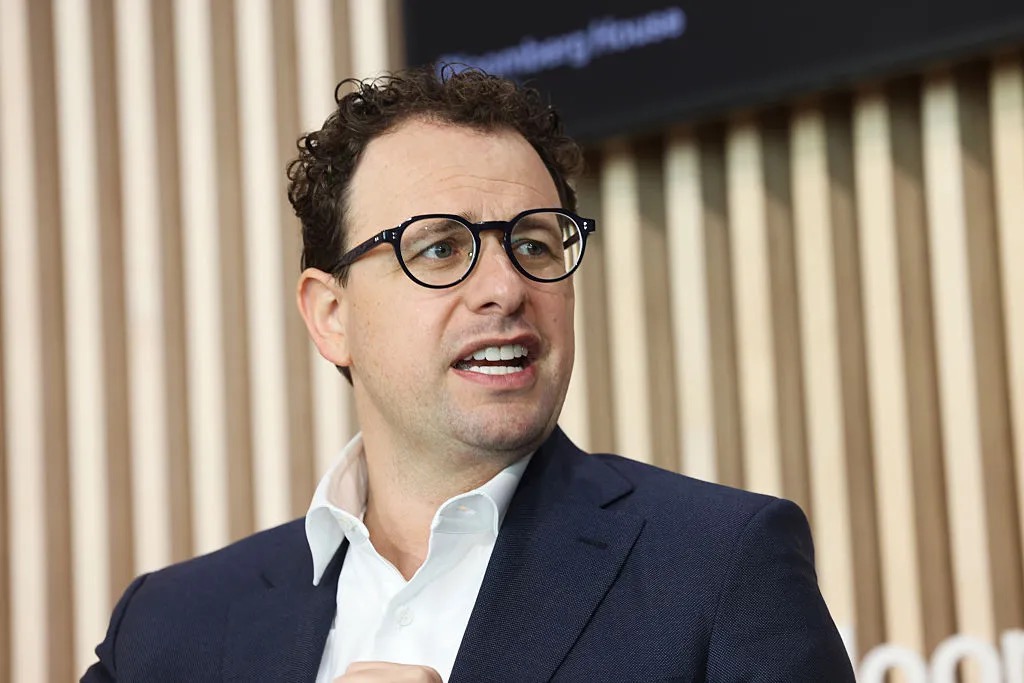
Author: Silicon Valley Vector Silicon Valley Coordinates Editor: Peggy, BlockBeats Original title: Silicon Valley Coordinates x Fireworks Co-Founder Benny Chen: Open Source Models, Token Growth, Inference Optimization, and Model Customization Editor's Note: In the context of open source models speeding up and approaching cutting-edge closed-source models, industry discussions are shifting from “who has the most capable model” to “who can put models into production at a lower cost”. However, when model capabilities converged and token consumption increased, a lower-level question began to emerge: are companies really willing to pay a cheaper model call, or exclusive intelligence that can perform specific tasks in a stable manner? Recently, Cao Qingyun, host of “Silicon Valley Coordinates”, had a conversation with Chen Yufei, co-founder of Fireworks AI. Located between models and enterprise applications, Fireworks mainly provides customers with open source model inference, performance optimization, and customization services. Rather than simply discussing whether open source can catch up with closed sources, Chen Yufei's observations are closer to actual workloads: where tokens flow, why companies pay, and what is still missing from the model from proof of concept to production. In this conversation, Chen Yufei disassembled “who wins between open source and closed source” into a set of lower level structural questions: can token growth be converted into revenue, can generic capabilities replace vertical accumulation, can the low price model pass corporate evaluation, and how the inference platform can gain value between cloud vendors and application companies. First, the scale of use and commercial value of the open source model are diverging. In the past, the ability to catch up and call price were the main indicators for judging the competitiveness of open source; today, the Fireworks platform processes about 40 trillion to 50 trillion tokens every day, and the actual usage of the open source model has rapidly expanded. However, free traffic, promotional subsidies, and model price differences will cause Token statistics to overestimate some demand. Customers may heavily use lower-cost models and still hand over the highest budget to the best-performing closed source model. This means that the next phase of open source is not just expanding traffic, but proving that it can meet or even surpass cutting-edge models for high-value tasks, and turn cost advantages into willingness to pay. Second, the general model and the vertical model are beginning to evolve in different directions. In the past, every time a cutting-edge model was upgraded, it was possible to directly eliminate a number of fine-tuned models; now, vertical applications such as law, medical care, and programming are accumulating more detailed evaluations, data, and workflows, and their optimization goals are gradually separated from cutting-edge laboratories. Generic models need to increase the upper limit of capabilities, while vertical models require stable delivery of results in limited scenarios. The former can solve a wider range of problems, while the latter has a better understanding of how users define “right.” This means that the barrier for vertical companies is not just having a customized model, but being able to continuously transform industry needs into an evaluation system and migrate over and over again as the basic model is updated. Third, the bottleneck in enterprise AI implementation is shifting from model supply to evaluation capabilities. In the past, enterprise proof of concept often relied on trial experience and subjective judgment; now, when AI enters production processes such as call centers, legal searches, and medical assistance, it is no longer possible to support procurement decisions simply by “looking good.” Businesses must know what tasks the model works for, when it fails, and how much the cost and quality of switching from closed source to open source changes. Assessment is therefore no longer an ancillary tool, but an infrastructure connecting procurement, training, and production deployment. Who can define tasks, establish test distributions, and continuously update standards can truly control model choices. Fourth, the value of inference platforms is shifting from “selling cheap computing power” to organizational models, hardware, and workflows. In the past, inference optimization was mainly understood to reduce the cost of a single token; now, caching, task splitting, model routing, and context management can all directly change the task completion rate. Different models don't have to compete for the same position; they can act as performers and advisors separately. Fireworks' business logic is also based on this: instead of building asset-heavy hardware, revenue is tied to actual use of customer models through training, customization, and continuous reasoning. But the main rival in this path is not a single new cloud company, but a large cloud vendor that can simultaneously control computing power, software, and customer portals. Fifth, the rise of the open source model may not reduce infrastructure requirements; on the contrary, it may reduce model layer premiums and further push value towards reasoning and computing power. Tech giants continue to increase capital spending, not just calculating short-term returns, but measuring missed AI cycles...

4d ago律动BlockBeats#AI
Ali sells his “son” who earns 2 billion dollars a year: All in AI to buy GPUs in exchange for money

Ali sells his “son” who earns 2 billion dollars a year: All in AI to buy GPUs in exchange for money

Source | Pencil Dao Author | Huang Xiaogui Original title: Ali sells his son who earns 2 billion dollars a year: In exchange for 10.1 billion yuan to buy a GPU, Alibaba sold a “chicken that can lay eggs.” On August 17, Zhou Bingshu, CEO of Lingxi Mutual Entertainment, issued an internal letter stating that Alibaba will sell its shares in Lingxi Mutual Entertainment, Xinchen Capital will become the new shareholder, and the original management team will continue to be responsible for the company's operations. According to the 21st Century Economic Report, Alibaba sold Lingxi Mutual Entertainment for at least 1.5 billion US dollars (about 10.1 billion yuan). Currently, Alibaba and Xinchen Capital have not officially disclosed the transaction amount. Lingxi Mutual Entertainment is a high-quality asset, with an annual net profit of 1.5 billion to 2 billion yuan; with “Three Kingdoms Strategy Edition”, a stable cash cow, the number of global users surpassed 100 million. “Exchange money to buy a card (GPU).” Huang Wei (pseudonym), a person familiar with Alibaba, told Pencil that the sale at this time was to concentrate resources and invest in computing power, and Ali, who is all in AI, has already entered a state of “full agent and model development, and scene access.” - 01 - Sold cash cow and invested in AI Lingxi Mutual Entertainment in Guangzhou. Its predecessor, Jian Yue Technology, was founded by Zhan Zhonghui, a former NetEase executive. In 2017, Ali acquired Jianyue Technology at a valuation of about 1 billion yuan and became a subsidiary. In September 2020, it officially launched the “Lingxi Interactive Entertainment” brand. What really gave this company a foothold in the Chinese game industry was “Three Kingdoms: Strategy Edition”, which was launched in 2019. According to Sensor Tower's previous data, the game's revenue in the first two years of its launch was over 1 billion US dollars. In recent years, Lingxi Mutual Entertainment's annual revenue is about 3 billion yuan to 4 billion yuan, which is roughly equivalent to the revenue scale of game manufacturers in central China. Also, according to industry media estimates such as “Game Grapes”, Lingxi Mutual Entertainment's profit in 2025 will be about 1.5 billion to 2 billion yuan. Ali sells a profitable business to invest in a direction that is still burning money — AI. In fiscal year 2026, Ali's capital expenditure reached 126.063 billion yuan, a record high. Most of this is AI computing power infrastructure and data center expansion. This input is directly reflected in the financial statements. In fiscal year 2026, Ali's revenue reached 1.02 trillion yuan, up 3% year on year, but operating profit fell 64%; adjusted EBITA fell 56%. Free cash flow declined from positive 73.9 billion yuan to negative 466 billion yuan. But this isn't a gamble without a future. Ali CEO Wu Yongming revealed, “(Ali) almost none of the cards are empty.” As of the end of March this year, Alibaba Cloud's revenue reached 41.6 billion yuan, an increase of 38% over the previous year, of which external commercialization revenue increased 40%; revenue from AI-related products was close to 9 billion yuan in a single quarter, accounting for about 30% of external revenue, and has maintained three-digit growth for 11 consecutive quarters. Ali predicts that in about a year, AI-related revenue may account for more than half of cloud business revenue. Today, growth is limited by supply, not demand. The ceiling of demand is far from being reached, but the ceiling of supply is just around the corner. At a time when cash is in high demand, but computing power continues to be exchanged for income, it's like “the family has an emergency, lacks money, and sells something for the family.” Huang Wei described Ali's sale of Lingxi Mutual Entertainment in this way. Lingxi Mutual Entertainment's annual profit is 1.5 to 2 billion yuan. It is a good asset, but it is not a core asset. The game business has a limited strategic relationship with AI, cloud, and e-commerce. Retaining it makes more than 1 billion dollars in profits; selling it will take back more than 10 billion dollars in cash at once and invest in AI. And this isn't the first time. In fiscal year 2026, Ali has successively disposed of many assets such as Gaoxin Retail, Yintai Department Store, and Trendyol Local Lifestyle Services. Each of these businesses has its own situation, but the underlying logic is the same: shrink non-core and concentrate resources on the main line of AI. Lingxi Mutual Entertainment sold 10.1 billion yuan, which is a bit higher than the 7 billion to 9 billion yuan expected by the market. Xinchen Capital's premium bid shows that in the eyes of buyers, this is a high-quality asset. For Ali, being able to sell at a high level is also considered a good time to sell. - 02 - Give me some more cards, I can make more money. The whole industry is buying cards. Overall, the 2026 GPU procurement budget of leading domestic manufacturers was raised from 160 billion yuan at the beginning of the year to about 230 billion yuan, a sharp increase of 44% within half a year. The industry's outlook for 2027 is more aggressive — GPU-related investment is likely to double to 500 billion yuan. The world is more exaggerated. According to data from Jibang Consulting, the total capital expenditure of the world's nine largest cloud vendors will exceed 886.7 billion US dollars in 2026, an increase of nearly 90% over the previous year. Amazon $220 billion, Google...

4d ago铅笔道#AI #GPU #Alibaba

US Department of Justice launches antitrust investigation against venture capital giant a16z

According to Bloomberg, according to Bloomberg, the US Department of Justice is launching an antitrust investigation against Andreessen Horowitz (a16z), the top venture capital in Silicon Valley, focusing on the fact that its partner also serves as a director at several competing AI companies — co-founder Ben Horowitz is the director of Databricks, and partner Martin Casado is the director of Fivetran. The two companies compete in the field of data processing. Casado also previously served as a director at dbt labs (acquired by Fivetran in June). The investigation, which has continued for almost a year, began with an antitrust review of Fivetran's acquisition of dbt labs. Although the acquisition was unconditionally approved, the investigation into the position of director continues. Such investigations usually end in the resignation of a director. a16z has a close relationship with the Trump administration. The two founders donated millions of dollars to the Trump campaign in 2024 and successfully promoted the weakening of the security fence on AI policies. a16z has assets under management of $90 billion and recently raised $15 billion in funds, with portfolios including SpaceX, OpenAI, and Cursor.

4d ago
High school dropout, net worth over 100 million at age 25: he relied on chips to become Europe's youngest billionaire

High school dropout, net worth over 100 million at age 25: he relied on chips to become Europe's youngest billionaire

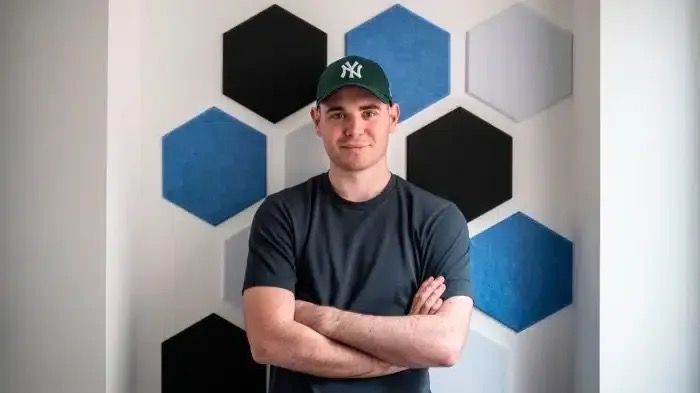
Source: Forbes Original title: Europe's youngest self-made billionaire is born: 25, starting when he dropped out of high school. In 2017, James Dacom dropped out of high school and founded CoMind, a brain monitoring startup. Four years later, he received a Till scholarship and gave up college to focus on building his first startup. Today, the 25-year-old is the youngest self-made billionaire in Europe with Olix, a chip company that was founded only two years ago, and his shareholding in CoMind (he is still running the company, the exact share ratio is not disclosed). 01Orix is headquartered in London and was founded in 2024. At the beginning of August, the company raised $312 million from investors such as New York investment company Fundomo, NASDAQ listed chip design company Arm, US quantitative fund Hudson River Trading, and Netflix co-founder Reed Hastings. The valuation tripled to $3.3 billion in six months. The UK government's sovereign AI fund also participated in this round of investment. After a new round of financing, it is estimated that Dacom, who holds 30% of the company's shares, joined the billion-dollar club. He also holds 12% of CoMind's shares. The company raised US$102.5 million in August 2025, but the valuation was not disclosed. Neither Orix nor Comind responded to Forbes' requests for comment. Counting Dakom, there are now 11 self-made billionaires in the world who have not yet reached the age of 30. Only four of them are from outside the US, and Dacom is one of them. Europe's second-youngest self-made billionaire after Dacom is Arvid Lunnemark (Arvid Lunnemark), the co-founder of popular AI code editing company Cursor, now 26 years old. This Swede went to the US to study at MIT, co-founded the company with three college friends in 2022, and currently lives in San Francisco. On August 14, local time, SpaceX bought Cursor for 60 billion US dollars. The wealth of Lunnemark and the three co-founders all almost doubled, reaching an estimated 2.4 billion US dollars. The oldest Cursor co-founder was Sualeh Asif (Sualeh Asif), a Pakistani native who is also 26 years old. Coincidentally, recently another 26-year-old Swedish billionaire almost doubled his wealth. He is Fabian Hedin (Fabian Hedin), the co-founder of Lovable. Herding lived in Stockholm, a few months older than Lennemark. In December of last year, his “Ambient Programming” startup was raised at a valuation of $6.6 billion, making him a billionaire. On August 12, Lovable announced that it would refinance $400 million at a valuation of $13.3 billion. Herding's net worth almost doubled to an estimated $3.1 billion. 02 These young giants are in the midst of an entrepreneurial boom spreading around the world, and this wave is spawning a wave of younger and younger billionaires at an alarming rate. In the US, the title of the youngest self-made billionaire has changed hands several times over the past year. Currently, the youngest self-made billionaire in the world is Surya Midha (Surya Midha) of the United States. In October of last year, Mercor, the AI recruitment startup he co-founded, raised it at a valuation of 10 billion US dollars, and at the age of 22, his net worth increased to 2.2 billion US dollars. Mida narrowly beat co-founders Brendan Foody (Brendan Foody) and Adarsh Hiremath (Adarsh Hiremath) in the battle for the title, both of whom were about two months older than Mida (they are now 23). Mida took over the title from Polymarket's Shayne Coplan (Shayne Coplan) at the time, while Coplan, 28, took this honor from Scale AI's Alexander Wang a few weeks ago. The latter was 29 years old. Dakom's big bet is based on the idea that Nvidia's AI chip is powerful, but not all tasks need to be done with it. His idea is to develop special chips for different aspects of the AI model inference stage (that is, the stage of model generation and output), rather than just using a single type of chip. Orix chips also use photonic technology, where data is transmitted between chips in the form of light rather than electrical signals, thus helping to reduce latency and power consumption. The company is also deliberately avoiding expensive high-bandwidth storage hardware, which is currently in short supply. According to a company press release, Orix plans to do so in 2027...

4d agoWendy#AI #CoMind #Olix #chips
Meta can't keep the Chinese University of Science and Technology hegemony: the big model in Silicon Valley, the Chinese are starting to form their own games

Meta can't keep the Chinese University of Science and Technology hegemony: the big model in Silicon Valley, the Chinese are starting to form their own games

He dropped a $100 million, four-year “contract” in exchange for leaving after 14 months — the talent Zuckerberg had taken from OpenAI and left Meta. In the summer of 2025, Zuckerberg personally knocked out Jiahui Yu (Jiahui Yu), the head of multimodal research, from OpenAI using a salary plan with a total value of up to 100 million US dollars and covering four years. Silicon Valley is on the sidelines, and the industry calls it “stealing people at sky-high prices.” However, just 14 months later — on August 14, 2026, the star researcher, whom Meta had high hopes for, announced his departure and started his own business. A year ago, the blockbuster in the industry ended up being held for a shorter period of time than an NBA season. Just eight days before leaving his job, Muse Spark, the multi-modal model he led, had just been updated to version 1.2. From forming the team to continuously launching the four product lines Muse Spark, Voice Mode, Muse Image, and Muse Video, Yu Jiahui's year at Meta covered almost the entire process of this new team from construction to intensive delivery. Muse Image finished second in the Arena Wensheng Trials Test, beating Google Nano Banana, behind OpenAI GPT Image 2; Muse Video ranked third in the Wensheng video rankings. For Meta, this is certainly an impressive report card. But for Yu Jiahui, this is just an interlude. In his departure statement, he said he was “increasingly drawn to an issue that is critical to the future of humanity but has yet to be fully explored.” Details of the new company have not been disclosed, but he has decided to leave. From the junior class to the history of Yu Jiahui, the top in Silicon Valley, he is at the “top” level for any major AI company. Born in 1995 in Cixi, Zhejiang. In 2012, while still in his sophomore year of high school, he was admitted early to the Junior Class College of the Chinese University of Science and Technology. During his undergraduate studies, he won several contests, including the National Parallel Application Challenge Championship. After graduating in 2016, he went to the University of Illinois at Urbana-Champaign (UIUC) to study for his PhD in computer vision. This scholar trained many famous figures in the field of AI, such as Zhou Xi, founder of Yuncong Technology, and Han Xu, founder of Wenyuan Zhixing. After graduating from her PhD, Yu Jiahui's career progressed step by step. He has worked as a senior research scientist and manager at Google Brain and Google DeepMind, and has participated in the development of visual modules for the Gemini multi-modal project. Joined OpenAI in October 2023 as the head of the Perception (Perception) team, leading the development of GPT-4O and O-series inference models. In June 2025, Zuckerberg personally stepped down, and Yu Jiahui joined former OpenAI researchers such as Zhao Shengjia, Bi Shuchao, and Ren Hongyu into Meta's newly formed super intelligent team. According to foreign media Wired, Meta's compensation package was as high as $100 million — although Meta CTO Andrew Bosworth later clarified that this was not a one-time signing bonus, but a four-year total compensation plan that included stocks, bonuses, and performance conditions. But even so, this is one of the few sky-high contracts in the AI field. (Photo source: One mu of three-quarters of land) After conversion, even though Yu Jiahui only worked for 14 months, Meta paid an estimated cost of more than 25 million dollars for this short period of cooperation — but the actual cost of sunk was even higher. After all, the investment in team building and project start-up cannot be proportionately calculated. The fanaticism of the capital market is driving Silicon Valley's talent exodus, and Yu Jiahui's departure is by no means an exception. In fact, Silicon Valley in 2026 is experiencing an unprecedented “exodus” of AI talents. According to data from the research platform AlphaXiv, Meta alone has lost more than 200 well-known researchers, and another 929 researchers have “worked at Meta but have left their jobs.” In October of last year, Meta drastically cut more than 600 researchers in the AI business. In June of this year, with Llama 4's poor market performance and the company's implementation of more stringent performance reviews, it is expected that 15% to 20% of employees will be rated as “below expectations”, and many senior researchers have switched to competitors. Tech author Gergely Orosz pointed out that Meta's internal organizational restructuring and efficiency adjustments have caused engineers to feel uneasy, and many senior experts have begun to remain open to external opportunities. Google's situation is no less than happy...

4d agoBitpushNews#AI #Yu Jiahui #original #Silicon Valley

Stripe's negotiations with Advent to buy PayPal are heating up, and the deal may be valued at $53 billion

According to the news, takeover negotiations between payment giant PayPal and Stripe and private equity firm Advent Global Opportunities are heating up, and the two sides may reach a deal within the next few weeks. Earlier in July, Stripe and Advent proposed to buy PayPal for $60.50 per share, with a total valuation of about $53 billion, but PayPal did not accept the offer at the time. However, people familiar with the matter revealed that negotiations between the two sides have not been interrupted and are still progressing. Neither PayPal nor Stripe confirmed the news. PayPal declined to comment, and Stripe said it would not respond to market rumors or speculation. The potential sale comes at a time when PayPal is seeking to reverse growth difficulties. After taking office in March of this year, PayPal CEO Enrique Lores launched a restructuring plan to split the business into three major directions: payment and checkout and PayPal business, consumer financial services (including Venmo), payment services, and crypto business. Lores previously said that PayPal will return to its position as a technology company and strengthen its core payment capabilities. At the same time, the company plans to improve efficiency by cutting costs, and the scale of layoffs is expected to reach 20% within the next two to three years. PayPal was founded in 1998, and the founding team included prominent Silicon Valley figures such as Peter Thiel, Elon Musk, and Max Levchin. The company grew rapidly due to the e-commerce boom during the pandemic, but in recent years it has faced challenges such as slowing growth and pressure on stock prices. If the deal is completed, it will be one of the largest acquisitions in the fintech industry in recent years.

7d ago

Yu Jiahui, who was heavily funded by Meta, started a business as soon as the Muse Family Bucket was delivered

Comparing news, according to surveillance, Yu Jiahui announced that he is leaving Meta to start a new company. He joined Meta from OpenAI last year and formed TBD Lab with Zuckerberg and Wang Tao to be responsible for multi-modal research and development. After more than a year, he chose to leave the factory and start a business. While at Meta, Yu Jiahui participated in projects such as Muse Spark, Voice Mode, Muse Image, and Muse Video. Just before he left, Muse Spark had just been updated to version 1.2. He said that he is increasingly attracted to a problem that is very important to the future of humanity, but that few people are currently exploring, and he will invest all his energy into exploring it next. The name and exact direction of the new company have yet to be announced. Yu Jiahui previously led the OpenAI perception team and participated in Google DeepMind's Gemini multimodal research. When Meta formed the Super Smart Lab last year, he was one of the core researchers Zuckerberg recruited from OpenAI. When Yu Jiahui joined Meta, it was at the height of the competition for AI talent in Silicon Valley. Meta was revealed at the time to provide over $100 million in total compensation for the first year to a few top talents, but the company then denied that all core employees received this level. There is currently no evidence that Yu Jiahui himself received an annual salary of 100 million US dollars.

7d ago
Clark, the mysterious woman behind the $13 trillion IPO

Clark, the mysterious woman behind the $13 trillion IPO

When Indian Prime Minister Narendra Modi invited global AI leaders to meet in New Delhi earlier this year, each executive was only allowed to carry one entourage. Most people brought colleagues, while Anthropic CEO Dario Amodei brought his wife Cami Clark. Clark doesn't have any official position at Anthropic, yet he almost never misses her husband's important occasions — whether it's a front row seat at the Davos Forum or an Allen & Co. investor party in Sun Valley. According to people familiar with the matter, she is Amodei's most important strategic advisor and emotional pillar, while also managing the family's personal investment strategies and assisting in screening external investment invitations. More importantly, it was she who brought former Google CEO Eric Schmidt into Anthropic's early investor camp, laying an important foundation for the company's start. Clark's existence is under unprecedented scrutiny, as soon as Anthropic hit an IPO worth over 2 trillion US dollars (about 13.49 trillion yuan) this fall. The Wall Street Journal and The Information have recently released in-depth reports to restore the twists and turns of the “First Lady of Anthropic” from a Reno blue-collar family to the core of the world's hottest AI company — including a little-known past: she tried to raise funds from registered sex offender Epstein to seek investment in her adult film company. There is an alarming gap between the influence of Clark, a deliberately hidden “shadow advisor”, and his online presence. According to Wall Street Journal analysis and a source familiar with the matter, information about Clark on the Internet is extremely scarce, and some people have taken the initiative to delete related records. Her personal website has gone offline, her LinkedIn homepage has disappeared, and Instagram has stopped being updated. Amodei's Wikipedia page did not state that she was married until this summer, and she hasn't listed her wife's name yet. When I Google “Dario Amodei's wife,” a picture of her sister, Anthropic co-founder Daniela Amodei, often pops up. Even Anthropic's own AI chatbot, Claude, can only answer when asked about related questions: “Dario Amodei's marital status doesn't seem to have been clearly confirmed. “But in the real world, Clark's presence is very different. She accompanied her husband to high-profile events such as Davos, New Delhi, and Sun Valley, and made up for Amodei's lack of restrained personality with her outgoing social style. According to people familiar with the matter, she will take the initiative to discuss with politicians and potential investors before introducing them to her husband. At the Sun Valley conference in July of this year, she had lunch with Ivanka Trump and chatted with Jared Kushner — previously Amodei had approached Kushner to seek investment. A person who met the couple said that although the two have been together for over ten years, they “felt as close as a newlywed couple” when they saw them at an event recently. From Reno to Silicon Valley: A Winding Entrepreneurial Road Clark was born in Reno, Nevada in 1979 and grew up in a blue-collar family. According to a person familiar with her, she began working part-time at the plumber's union with her grandmother and aunt when she was 14 years old. After high school, she went to the San Francisco Bay Area to study architecture at the California Institute of the Arts, then worked in business development at high-end office furniture company Herman Miller, thus gaining her first window into the technology industry. In 1999, Clark, who was only 20, married 64-year-old Reno architect Waldemar Eklof III and divorced three years later. Since then, she has traveled between San Francisco, New York, and Los Angeles. Her San Francisco apartment was foreclosed by the bank in 2007 and filed for bankruptcy in 2009. However, she never stopped trying to start a business. Around 2009, Clark and Michelle Capocefalo co-founded Eddice, an adult film company targeting women, under the slogan “intellectually promising”...

7d ago华尔街见闻#AI #Anthropic #Dario Amodei