编译 · 5305
Dalio's latest warning: the US debt crisis may explode within three years. The antidote is...

Dalio's latest warning: the US debt crisis may explode within three years. The antidote is...

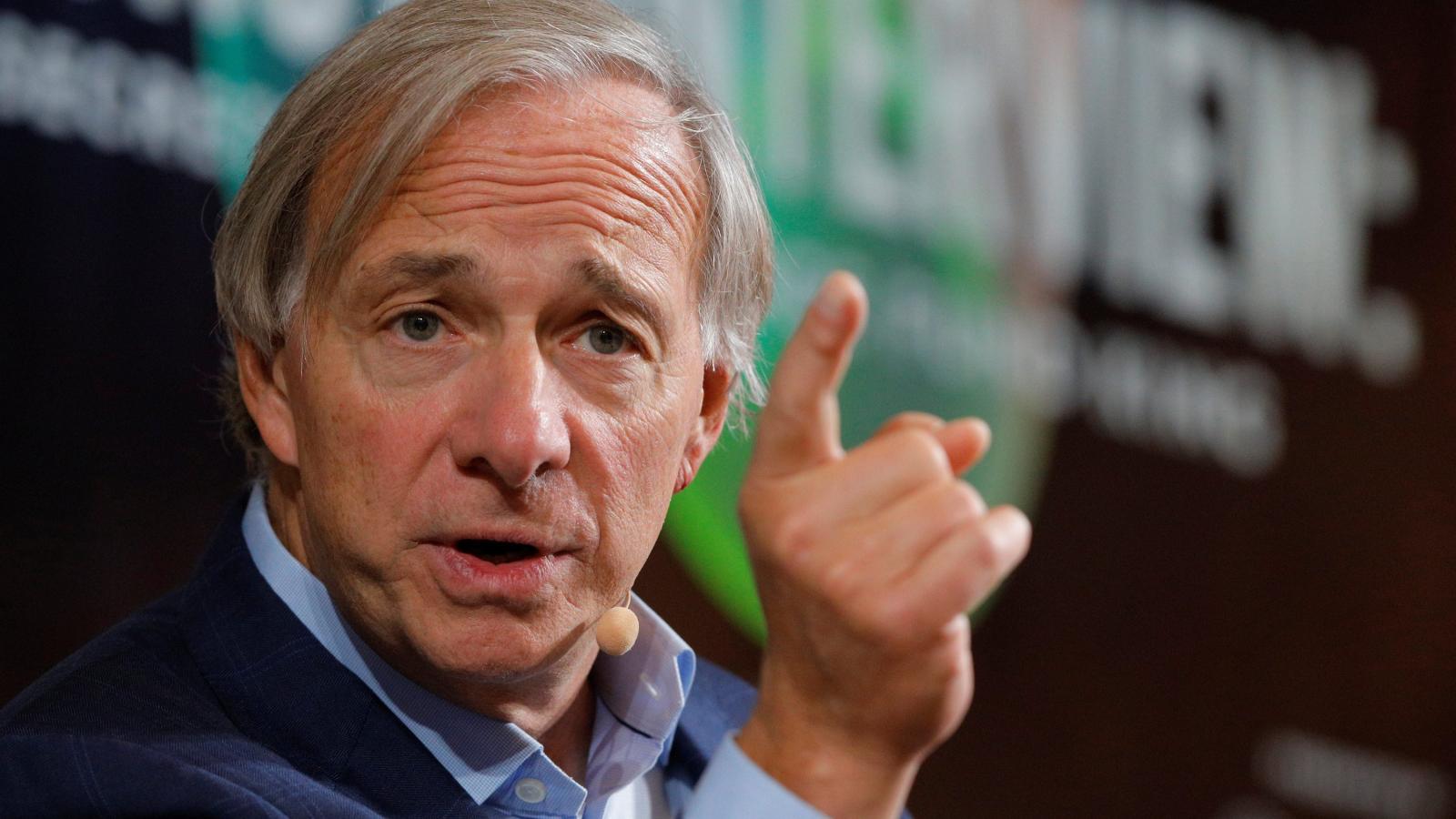
Author: Ray Dalio, founder of Qiaoshui Foundation Original title: How Countries Go Broke: The Dynamic Behind What is Incurable Now Compiled and organized by: bitPushNews In “How Countries Go Bankrupt: The Big Cycle,” I detailed an analytical framework to describe dynamic processes that are highly likely to occur due to unsustainable imbalances between debt supply and demand. Recently, three things happened at the same time: 1) The Japanese government sold part of its US Treasury holdings to return capital to Japan to support the yen and the Japanese capital market, and reduce exposure to US Treasury bonds while avoiding being forced to raise interest rates beyond its wishes in order to support the yen; 2) US bond yields hit new highs under long-term leadership, while the dollar weakened. The reasons include not only the current and anticipated supply of huge debt, but also weak demand for US bonds; 3) Treasury Secretary Bessent announced this week that the US Treasury would buy US Treasury bonds and be able to buy other US Treasury bonds The amount of capital used is limited, and many people ask me : Do these events fit the classic template I set out in my book? The answer is yes. To anticipate what might happen next, let's first review this operating mechanism. The operating mechanism explains in detail that the central government's debt dynamics are the same principles as the debt dynamics of individuals or companies. The only difference is that the central government has a central bank that can print money (this will depreciate the currency), and it can obtain funds from the public through taxation. Because of this, if you imagine how the debt dynamic would work if you or the business you run could print money, or get capital from people through taxation — then you can understand this process. But remember, your goal is for the entire system to work well, not only for yourself, but for all citizens. In my opinion, the credit/market system is like the human body's circulatory system, delivering nutrients to every corner that makes up the market and economy. If credit is used effectively, it can generate productivity and income to repay debt and interest on debt, which is a healthy state of affairs. However, if credit is not properly used to generate sufficient income to repay debts and interest, debt payments will continue to pile up like plaques in blood vessels, squeezing other expenses. When debt payments become very large, debt repayment problems arise, and eventually evolve into debt rollover problems — because debt holders are unwilling to continue to roll over and instead want to sell. Naturally, this will lead to a shortage of demand and sell-off of debt instruments such as bonds; when demand is scarce relative to supply, it either causes a) interest rates to rise, thereby suppressing the market and economic downturn, or b) the central bank “prints money” and buys debt, which will reduce the value of the currency, thereby driving up inflation (compared to the original level). Banknote printing also artificially lowers interest rates and harms lenders' returns. Both options are bad. When debt sell-offs are too large and difficult to contain, and the central bank has already purchased large amounts of debt, rising interest rates can cause the central bank to lose money and damage its cash flow. If this continues, the central bank will fall into a situation where net assets are negative. When this situation became serious, the central government and central bank needed to borrow money to repay the principal and interest of the debt, while the central bank printed money to provide loans due to insufficient free market demand, so a self-reinforcing spiral between debt/banknote printing/inflation formed. In summary, the classic indicators to pay attention to are the following: the ratio of government debt payments to government revenue (which is like the amount of plaque in the circulatory system), the ratio of government debt sold to the demand for government debt (this is like a plaque falling off and causing a heart attack), and the amount of government debt purchased by the central bank to cover the gap between the demand for government debt and the supply of government debt to be sold (this is like the central bank applying a larger dose of liquidity/credit to mitigate liquidity shortages, and the central bank has a risk appetite for these debts). These indicators usually rise over a long cycle of decades — debt and debt payments continue to grow in relation to income — until this state of affairs cannot continue because: 1) debt repayment expenses unacceptably crowd out other expenses, 2) the supply of debt that must be purchased is too large, causing interest rates to rise sharply, leading to a sharp decline in the market and economy, or 3) central banks are unwilling to let interest rates rise and suffer bad market/economic consequences, so they print large amounts of money and buy large amounts of government debt to cover the demand gap, thereby making the value of the currency significant Decreased. Either way, the return on bonds will be poor until the money and debt eventually become cheap enough to attract demand, or the government can cheaply buy back or repay...


1d agoBitpushNews#indebtedness #Bitcoin #economic crisis #US debt #DALIO #gold
Are Bitcoin's 80,000, 120,000, and 300,000 still far away?

Are Bitcoin's 80,000, 120,000, and 300,000 still far away?

Author: Debashree Patra Compiled by: Deep Tide TechFlow Original title: Bitcoin Sword Fingers at $80,000: Analysts Predict Breaking 120,000 Next Year and Shocking 300,000 in 2030 DeepWave Guide: Bitcoin rebounds strongly from around $63,000 to $75,401, completing a 5.8 times standard deviation increase within 48 hours, driving analyst Pierre Rochard to reaffirm his bullish roadmap — hitting $80,000 in 2026 and breaking through $120,000 next year. The sword in 2030 is $300,000. In the short term, bear liquidation and downtrend line breakouts provide momentum, but whether the leverage-driven surge can be turned into continued spot demand will determine whether the larger goal is realistic. Pierre Rochard's $80,000-$300,000 roadmap analyst Pierre Rochard (BitcoinPierre) expects Bitcoin to close around $80,000 in 2026. He believes that Bitcoin is not ready for a “parabolic rise,” but it is expected to break through $120,000 next year. In the longer term, he predicted that Bitcoin could reach $300,000 by 2030. The key variables in this forecast are the Federal Reserve and the broader macro environment. Rochard believes that if the economy is weak enough to allow the Federal Reserve to cut interest rates without reigniting inflation, Bitcoin will benefit from improved liquidity. He also pointed out that artificial intelligence (AI) may improve macroeconomic prospects by increasing productivity and reducing inflation. In that situation, interest rate cuts will create a more favorable environment for risky assets such as Bitcoin. The $80,000 target refocused on Bitcoin's latest price trend has shown signs of regaining momentum. BTC climbed from around $63,000 to $75401 in less than 48 hours. Previously, buyers successfully defended in the $63,000 area. Notably, Bitcoin formed higher highs and higher lows. This round of rebound was partly fueled by large-scale short liquidations. According to reports, as Bitcoin and Ethereum soared, around $14 billion to $17 billion of short crypto positions were liquidated, removing bearish leverage. Glassnode indicated an unusual pattern of this fluctuation. They said that Bitcoin's jump from around $75,401 was a 5.8 times standard deviation (5.8 sigma) of its 30-day volatility — the biggest upward move since October 2023. The last time Bitcoin closed at such a large daily rate was in February, which was only a rebound after a sharp drop of -14% the day before. And there's no crash to bounce back this time around — this is a 5.8 times standard deviation fluctuation compared to its own 30-day volatility, the biggest upward move since October 2023. — Glassnode (@glassnode) However, liquidation alone does not confirm the existence of sustainable spot demand. On-chain analyst Onchain Insights said that Bitcoin has broken through the annual downward trend line resistance and recovered to the $70,000 range. If it continues to close above this structural resistance, it may indicate a weakening of selling pressure and further upward momentum. Another analyst also said that short positions have limited resistance until $80,000, making it an important near-term target. The BTC giant whale sells for $74,000 and $80,000. The gap between these resistances is very large. ——CW (@CW8900) On Polymarket, the probability that Bitcoin will hit $80,000 in August rose to 13%, up 9 percentage points within 6 hours. BTC would need to rise about 14% more from $71,000 to reach $80,000. Can the $120,000 be recovered? Rochard expects Bitcoin to easily break through $120,000 next year if the macro environment turns favorable. His long-term goal of $300,000 by 2030 reflects broader bullish arguments around liquidity, supply, and adoption. His opinion was also supported by SkyBridge Capital CEO Anthony Scaramucci, who expected Bitcoin to surpass $100,000. He cites the halving cycle and new supply...

1d ago深潮TechFlow#Bitcoin
They all say stablecoins are suitable for cross-border payments; is it really faster and cheaper than Wise?

They all say stablecoins are suitable for cross-border payments; is it really faster and cheaper than Wise?

Author: Jonah Compiled by: Saoirse, Foresight News Original title: Do cross-border payments really need stablecoins? Everyone says stablecoins are better suited for cross-border payments. Is that really true? If the recipient of your transfer wants stablecoins themselves, then stablecoins are indeed an excellent cross-border solution. You can transfer money around the clock at almost zero cost and instant settlement. But the more difficult question, which is also the focus of this article, is the cross-currency scenario: what happens when one end inputs US dollars and the other end exports foreign currency (such as Mexican pesos). Most crypto industry opinion leaders will claim that stablecoins can fundamentally reduce the speed and cost of transfers in this scenario. However, people who are optimistic about stablecoins deliberately avoid the fact that fintech companies have already achieved low-cost, high-efficiency businesses of the same kind, and there is no need for stablecoins at all. So what problem do stablecoins solve? This article will sort out how the traditional agency banking system works, and also analyze the innovations made by modern fintech companies such as Wise to clarify the actual value of stablecoins. The proxy banking business assumes Alice, who is in the US, wants to send a peso to her friend Bob in Mexico. Both banks do not have branches in each other's countries, so payments cannot be completed directly. The two banks need to use a larger bank, or correspondent bank, to establish a connection. Alice's depositary bank holds funds in US dollars at this correspondent bank called GlobalBank; GlobalBank also holds pesos at BancomX Bank in Mexico. After Alice initiated the transfer, her bank withheld the funds in her account and issued instructions to GlobalBank. GlobalBank transfers $100 from the dollars stored by Alice Bank, completes the exchange according to its own exchange rate, earns the exchange rate spread, then tells BancomX to credit Bob's account and deduct its own processing fee. The entire process relies on the SWIFT system to coordinate information, and SWIFT itself also charges for messages. This underlying transfer mechanism is expensive and slow. The root cause is that all layers of intermediaries are profiting from it. In an ordinary consumer remittance scenario, the comprehensive cost of the agent banking system is about 15%, including transaction fees and foreign exchange spreads embedded in the exchange rate. In addition to this, a transfer usually takes 1 to 5 business days to complete, and each intermediary takes time to complete its own operation process. Modern fintech solutions In 2011, two friends in London had complementary financial needs: one person earned in euros but needed pounds to live in the local area; the other received a salary in pounds and had to repay a mortgage in euros to Estonia. As a result, they bypassed banks and paid each other locally: the British pound was deposited into the London account, the euro was deposited into the Estonian account, and the two funds did not flow across the border. This system later evolved into Wise. The two founders believe that this model of hedging and offsetting capital flows can be implemented on a large scale, and this model has indeed worked. Many other fintech companies have taken the same approach. Let's take another example of Alice sending money to Bob, this time using a service similar to Wise. Alice transferred dollars to the fintech company's US account; the company used its own peso funds stored in Mexico to complete the payment directly to Bob. The funds did not cross the border from beginning to end. Alice's perception of a cross-border transfer is essentially a financial institution that receives and withdraws money at the same time. Because of this, the user experience was almost instantaneous, and the fintech company needed to bear the asset liability risks associated with holding large amounts of foreign currency. In order not to touch the traditional banking system as much as possible, fintech companies will distort transactions. For example, if other users remit pesos overseas in reverse, fintech companies can internally hedge off the two capital flows. Once a currency's capital pool is seriously unbalanced, it is only necessary to seek help from the traditional banking system. At the bottom, fintech companies cobble together partner banks and various license resources, and local partners handle regions that cannot be covered by their own business. Under the premise of normal operation, this model is far superior to the traditional system. Wise only charges a small, publicly disclosed processing fee, using the actual mid-market exchange rate, no hidden exchange rate spread, and the comprehensive rate is only 0.52% (this value is mixed with some transfers in the same currency, and the foreign exchange rate is not disclosed separately). According to World Bank data, the average ratio of digital remittance services...

1d agoForesight News#agent #AI #Claude #GPT #wallets
They are all stealing earlier data. Where exactly is VC Alpha hidden?

They are all stealing earlier data. Where exactly is VC Alpha hidden?

Author: insights4vc Compilation: Shenchao TechFlow Original title: Private Equity Market Intelligence Warfare Heats Up: In the AI Era, Where Did VC Alpha Come From? Guide to Deep Wave: Venture capital returns are extremely concentrated, and finding a good company in the early stages is almost the life and death line of a fund. This article breaks down the latest evolution of private equity market data tools and whether they can actually bring in excess profits. This is a sobering map for investors who are using AI and research tools to find projects. Venture capital has always been an information business. The advantage often lies in timing: founders tell former colleagues instead of updating data first; new companies start recruiting people before they appear in the database; investors start watching a team before the funding is announced. This advantage is important because VC returns are highly concentrated. According to data from the 2026 Oxford Academic Study, 4.5% of the investment amount contributed to a return of about 60% in a long-term LP data set. [1] Therefore, missing a few excellent companies can affect the entire fund. But finding them early is only part of the problem. Investors also need to develop beliefs, get credits, obtain meaningful holdings, and keep things right for a few years. The private equity market data industry is now getting closer to the moment the company was born. PitchBook, Crunchbase, Dealroom, Tracxn, and CB Insights remain core recording systems for transactions, funds, valuations, and company history. PitchBook generated revenue of $174.7 million in the second quarter of 2026, equivalent to nearly $700 million in annualized revenue. [2] The new platform is not replacing this layer. They're extending this layer with faster updates, behavioral data, and signals that predate traditional company records. Three changes stand out the most. First, companies such as Harmonic and Specter are building a continuously updated map of companies and people, rather than relying mainly on regularly updated data. Second, specialty products are looking for earlier behavioral signals. Evertrace tracks metrics formed by founders, including company registrations, technical activity, research, and domain names. Frontrun monitors changes in selected venture capitals' interest maps on X. Third, the API and Model Context Protocol (MCP) are moving this data into the fund's own software and AI workflows. Crustdata represents the infrastructure side of this market, while Affinity complements first-party relationship data from emails, calendars, and CRM events. Adoption is visible, but evidence of excess return on investment is not clear. Harmonic says hundreds of venture capital teams use its platform, and Specter reports more than 300 investment institutions, Evertrace more than 200 funds, and Affinity more than 3,300 private equity firms. Listed company Tracxn disclosed that it had 2,289 customer accounts in fiscal year 2026. [3] [4] [5] [6] Most of these figures are self-reported by companies. Vendors rarely disclose the complete set of companies unearthed by their models, making it difficult to assess accuracy, recall rates, false positives, and the economic value of individual leads. No single signal alone is enough. Employee departures may be early but vague. Company registration is objective but common. GitHub activities are valuable in developer-led markets, but have limited relevance in other areas. Hiring speed and employee migration provide broader signals, while revenue, customer, and usage data are often more valuable for decision-making, but come later. When several credible industry experts focus on the same company, investors' attention can provide early signs, even though this signal is platform-dependent and may reinforce itself. The strongest defensive sources are likely to be hidden deeper in the data stack: historical time series that cannot be reconstructed later, accurate physical analysis across people and companies, authorized first-party fund data, and distribution through CRM systems, APIs, and agents. Public data is not necessarily proprietary. However, five years of correctly time-stamped change history can become a proprietary asset. AI is more likely to make these infrastructures more easily queried rather than eliminate the need for them. As research, classification, and workflow costs drop, clean data, sources, and institutional context become more valuable. Investment decisions, quotas, and relationships are still not something a simple layer of automation can solve. The likely outcome is that a broader market for private market intelligence will emerge, rather than an independent search for project software categories. A mature database will increase discoveries and...

1d agoburnking
If it's just tokenized assets and doesn't connect to DeFi, what's left of RWA?

If it's just tokenized assets and doesn't connect to DeFi, what's left of RWA?

Author: Jesus Rodriguez, co-founder of Sentora Compiled by: Luffy, Foresight News Original title: Does RWA still make sense without DeFi? Discussions in the RWA industry often begin with a simple vision: take a treasury bill, fund share, stock, invoice, megawatt hour, or GPU for one hour, then mint a token representing it. Is it useful? It's really useful. But can it be called transformative? It's far from there. This is like putting a bar code on a container and claiming that a global trade problem has been solved. Barcodes make containers recognizable and machine-readable, but they don't create ports, cranes, customs, insurance, financing, shipping routes out of thin air, or bring in buyers from afar. A token is simply an addressable token of interest, and DeFi is a marketplace operating system. The question really worth discussing is not how many types of assets can go on the chain, but how many assets can complete valuation, financing, hedging, transaction monetization, and loss disposal in a stressful environment, and there is no need for offline meetings and coordination every time a transaction occurs. Tokenization completes the representation of equity; what DeFi brings is actual utility. Tokenization is just a bar code, and a similar scene has happened in the history of the supply chain finance market. The reason why mortgages can be scaled up is not as simple as turning a paper document into an electronic record. To actually achieve large-scale expansion, a complete set of operating mechanisms was created around this type of asset: credit review, post-loan services, securitization, credit rating, warehousing and financing, repurchases, hedging, clearing and settlement, and loss allocation rules. RWA also needed to go through the exact same evolutionary process. An asset that can be adapted to DeFi requires six levels: legally enforceable rights, reliable data sources, clear transfer and redemption rules, enforceable secondary market liquidity, collateral parameters that match actual behavior, and a credible settlement and loss disposal path. Most tokenization projects, on the other hand, tend to stop at the top five levels. There is a simple test that can be used to test the maturity of an asset. It only requires answering three questions: How much is this asset currently worth? Can the agreement complete withdrawal and monetization at this point? If the first two judgments are all wrong, who bears the loss? When smart contracts can definitively answer the above three questions, RWA can truly become a basic component of finance. Before that, it was mostly just a digital packaging shell. The deepest technical contradiction of RWA's quadruple time clock is that RWA runs under multiple sets of different time clocks at the same time. The blockchain can complete settlement in seconds and operate uninterrupted for 7 x 24 hours; oracles may update prices every hour or every day; underlying traditional exchanges are closed at night and on weekends; custodians follow bank working days; and the asset redemption process may take 1 day, 5 days, or even 30 days. If you use such a slow-paced RWA asset to support fast-maturing DeFi liabilities, such as stablecoin loans. This is the term shift, and it is also the core model that banks have relied on for hundreds of years: using short-term debt to fund long-term slow assets. This model has practical value, but the risk must be reasonably priced. Imagine a scenario: At 2 a.m. on Sunday, assets hit the liquidation threshold. Smart contracts can seize tokens immediately, but the underlying real-world market won't open until Monday, and the issuer's redemption business will not be processed until Tuesday. On-chain liquidation has been completed, and real-world asset disposal has only just begun. This creates a clearing gap. DeFi requires immediate withdrawal for monetization, but the real world does not allow it. The time difference between the two. This gap has counterintuitive consequences. Even treasury bonds with very low volatility are riskier than native crypto assets that are more volatile when used as collateral. The price of ETH fluctuates drastically, but it can be traded around the clock; the price of RWA assets appears to be stable, and it may only be up to a dozen hours without a new price tag. A flat price sometimes represents safety, and sometimes it's just a disguise of stale data. Liquidity is an exit channel, not TVL. The digital public also has common misunderstandings about liquidity. Liquidity is not equal to TVL, does not equal the existence of a trading pair, nor does it mean that the issuer promises to eventually redeem it according to net worth. Liquidity refers to the ability to convert a position into the settlement asset you need at an acceptable discount within the time window allowed by your debt. Take a crowded theater for example: the size of the hall cannot determine whether it is safe in the event of a fire; what really matters is the width of the exit channel. One copy of RWA to...

1d agoForesight News#DeFi #RWA
Black eats black? Fake DeFi actually snatched out North Korea's Lazarus real hacker

Black eats black? Fake DeFi actually snatched out North Korea's Lazarus real hacker

Source: Security Company ANY.RUN Compiled by: Daily Planet Daily Original title: Fishing Show of the Year, Fake DeFi Picks Out North Korea's Lazarus, Real Madrid Fans, Real Madrid Fans. With a mathematical background, they only use AI to write code. Core point of view: By setting up a fake DeFi company, the security agency successfully infiltrated the “Famous Chollima” hacker group under North Korea's Lazarus Group, revealed its complete process of using false identities, AI tools, and remote collaboration to infiltrate Western companies, and revealed its evolving toolset and infrastructure. Key element: The researchers disguised themselves as recruiters and recruited three North Korean agents within a few months to record their operation behavior, tool usage, and collaboration patterns in real time through the ANY.RUN sandbox environment. Agents used forged driver's licenses, stolen social security numbers, and mule accounts to complete the onboarding process. Some of these documents were processed by Google Gemini and had SynthID watermarks, revealing signs of forgery. Attackers rely on AI tools such as ChatGPT and Google Gemini to encode, translate, and modify files, and use AstrillVPN, remote desktop software, and dedicated servers to covertly access corporate environments. The three agents showed insufficient skills during development, frequently searched for basic issues, and exposed more proxy server and infrastructure information induced by selective network outages and captcha. The investigation found that Famous Chollima aims to lurk within the enterprise for a long time and legally obtain access to code, systems, and intellectual property rights, and is not limited to short-term attacks, and the threat persists significantly. Crypto friends who are often phished have probably heard of the North Korean hacker group Lazarus Group. Its well-known “campaigns” include, but are not limited to: Bybit ($1.5 billion) theft, Ronin Network/Axie Infinity Bridge attack ($6.2 billion), DMM Bitcoin/Ginco related attack ($308 million), Harmony Horizon Bridge attack ($100 million), and Atomic Wallet attacks ($100 million), etc. And the key to the success of these attacks is social engineering — hackers usually disguise themselves as normal job applicants, lurk at crypto companies for years, and wait for the right time. Recently, security agency ANY.RUN joined forces with BCA LTD (a company dedicated to threat intelligence and hunting) and NorthScan (a threat intelligence program to uncover the infiltration of North Korean IT workers) to effectively crack down on North Korean hacker agents. The researchers created a fake DeFi startup and successfully recruited “Famous Chollima” agents under North Korea's Lazarus Group who specialize in human infiltration, to gain an inside perspective on the actions of North Korea's IT workers. The ANY.RUN sandbox environment shows the agent's behavior patterns in real time, revealing their evolving toolsets, remote access workflows, AI tool usage, and supporting infrastructure. This survey went beyond the simple recruitment process and showed in depth how these agents collaborated, obtained, and used company resources after joining the company. The findings suggest that the North Korean IT worker program not only poses a recruitment risk; once agents sneak inside the organization, they can legally obtain access to code, systems, intellectual property, and critical business processes. The following is a report co-authored by the three parties, compiled by Daily Planet Daily. ——————Introduction In December of last year, we fully recorded the infiltration cycle of “Famous Chollima” for the first time. From recruiting collaborators to help them join Western companies, to falsifying documents, shipping laptops to intermediaries, and even using AI tools to assist and translate in real time during interviews, everything is under control. In that survey, we pretended to be a middleman willing to interview them and lend them a laptop in exchange for a percentage of their salary. The point is that those laptops are actually ANY.RUN sandbox environments that record every click and every step they take. This provided us with massive metrics, hours of computer operation videos, and face-to-face contact images, making an unprecedented survey and making headlines in many media. (“Famous Chollima...

1d agoOdaily星球日报#wallet security #hacks

Arbitrum: Activate the Elara upgrade to provide optional compliance screening and priority fee functions for the dedicated chain

Comparatively, according to The Defiant, Arbitrum activated the ARBos 61 Elara upgrade on August 20, adding optional protocol-level transaction screening, priority fee support, and alternative data availability interfaces to the dedicated chain, and adjusted Arbitrum One's basic fee management and expanded Stylus contract capacity. The compliance screening function is disabled by default. Chain owners are required to actively configure an external compliance service provider (such as TRM Labs or Chainalysis) and set rules to double execute through simulated transactions and on-chain protection mechanisms. The priority fee function is also disabled by default and requires the chain owner to enable it through pre-compilation. Priority fee collection on Arbitrum One still requires a separate DAO vote. Elara also introduced the BaseFEeManager contract, which allows Offchain Labs to adjust the base fee within 0.01 to 0.1 gwei approved by the DAO, which is valid for two years. Stylus contract code size limit increased from 24KB to 96KB, not applicable to Solidity contracts.

1d ago
The New York Times: Ominous Omen? US debt surged above 40 trillion US dollars, with a per capita debt of 116,000

The New York Times: Ominous Omen? US debt surged above 40 trillion US dollars, with a per capita debt of 116,000

Source: The New York Times Compiled and Edited by: BitPushNews Original title: U.S. Debt Hits $40 Accumulated as America's Borrowing Binge ContinuesBitPush Note: The size of US federal government debt has once again broken through a historic integer node. According to data released by the US Treasury Department on the 19th, the total US debt surpassed 40 trillion US dollars for the first time, which is nearly 10 trillion US dollars more than last year's US gross domestic product (GDP), which means that every American is burdened with about 116,000 US dollars in debt. Here is the text: On Wednesday, the total amount of US Treasury bonds broke the $40 trillion mark for the first time. This is an ominous milestone for the US economy: for decades, the US has relied on continuous borrowing to support growing military spending, social security spending, and President Trump's tax cuts, and the fiscal ground has loosened. This year alone, the US will need to borrow more than 2 trillion US dollars to cover various financial expenses, including military expenses for the Iran war and large-scale tax cuts passed by the Republicans in 2025. Meanwhile, interest payments to US debt holders have also risen sharply. Currently, they account for nearly half of the total deficit, further dragging the US into a fiscal quagmire. Is this growing debt a crisis that must be addressed, or is it an alternative manifestation of America's economic strength? It's still a contentious topic. Deficits are also a battleground in a bipartisan political game — when the Republicans are in opposition, they have always been most vocal about reducing the deficit. “The scariest part of this is that we are beginning to see signs of a spiral in debt,” Mark Godwin, senior policy director at the “Committee for Responsible Federal Budget,” which supports deficit reduction, said of interest on debt. The inability of legislators to deal with the debt problem poses long-term risks. Although the US remains the world's largest economy, rising debt burdens may cause investors to demand higher interest rates on US Treasury bonds or question America's credibility, which could shake people's confidence in the US dollar as the world's reserve currency. Both Republicans and Democrats are responsible for America's debt burden. America is having to sell more and more debt to cover the costs of health-care programs, stimulus benefits, disaster relief, and day-to-day government operations. President Trump promised to restore fiscal order, yet many of his policies have exacerbated America's financial woes. When he first ran for president in 2016, Trump said he would eliminate the national debt within eight years by reaching a new trade deal and spurring economic growth. Since then, the national debt has doubled. During his second term, Trump's major measures to cut spending and increase revenue were unsuccessful. The Government Efficiency Department, initially headed by Elon Musk, promised to cut federal spending by $1 trillion. So far, the department claims to have saved just over $200 billion. The US Government Accountability Office said this month that the Government Efficiency Department's estimates lack reliability and transparency. By imposing comprehensive tariffs on imported goods, the Trump administration has previously made progress in increasing additional government revenue. However, this year, the Supreme Court ruled that some of these tariffs were illegal, forcing the federal government to refund more than 160 billion US dollars to companies that have already paid import tariffs, causing these plans to be thwarted. Treasury Secretary Bezent has set a goal of reducing the deficit from more than 6% of GDP when Trump took office to 3% by 2028. He admitted last week that this year's deficit situation is moving in the wrong direction. In an interview with Newsmax, Bezent gave several reasons for the growing deficit. He said that expenses related to the Iran war forced the US to increase military spending, and that tariff refunds weakened the Trump administration's progress in reducing the deficit as a share of GDP in 2025. The war in Iran has led to a rise in US energy prices, which has also dragged down economic growth and weakened economic expansion that Trump administration officials had hoped would increase taxes. Bessent also said that last year's tax cuts are increasing deficits as businesses are using a provision that allows them to immediately deduct plant construction and equipment costs. According to estimates by the Congressional Joint Committee on Taxation, these measures could cost $100 billion in fiscal expenditure this year. However, the finance minister said that despite the initial costs, these tax cuts will pay off in the future through increased revenue. “While this will currently widen the deficit, we are creating productive assets for future growth, and these assets will generate taxes in the future,” Bezent said. “I'd rather compare this to pulling out a slingshot, creating a large amount of potential energy, and then converting it into kinetic energy.” Although he believes that the fiscal trend will stabilize, investment...

2d agoBitpushNews#Trump #US debt #Federal Reserve
From 4 models to more than 500, OpenRouter was acquired after growing 30,000 times in three years

From 4 models to more than 500, OpenRouter was acquired after growing 30,000 times in three years

Author: Menlo Ventures Compiled by: Jia Huan, ChainCatcher Original title: Early Investors Behind OpenRouter Revisited Investments Today, OpenRouter announced that it has reached an acquisition agreement with Stripe. OpenRouter was launched in 2023, just over three years ago. OpenRouter was initially launched as a “unified interface for LLM” and only supported 4 models at the time: GPT-3.5, GPT-4, GPT NeoXt and Cohere xlarge by Together. When the company was founded, it was based on two core judgments: first, AI will eventually be used on a large scale and penetrate various fields; second, there will be many different models on the market, each with trade-offs, and users will choose different models according to different needs. As it turned out, both judgments far exceeded expectations at the time. Since its launch, the number of tokens processed by the OpenRouter platform has increased by about 30,000 times. Currently, it has exceeded 4,500 trillion tokens on an annualized basis, and the scale of expenditure on the platform has reached a very impressive level. Meanwhile, the number of models supported by OpenRouter has grown from the original 4 to over 500. Figure: OpenRouter Token usage growth from inception to acquisition Menlo Ventures is fortunate to be part of this journey. In March 2025, we participated in OpenRouter's seed funding round through the Anthology Fund set up in partnership with Anthropic. OpenRouter founder and CEO Alex Atallah previously founded OpenSea, which was once valued at $13.3 billion. His co-founders include tech guru Louis Vichy, whom he met on Discord, and highly executive COO Chris Clark. In May 2025, we led OpenRouter's Series A funding round, with Matt joining the company's board of directors, and Deedy as a board observer. Earlier this year, after seeing OpenRouter's rapid growth in customer numbers and revenue, and the company built a product route with stronger “model intelligence” capabilities around model selection and evaluation, we continued to step up Series B financing. In the tech industry, it often takes years for an idea to change from the judgment of a few people to industry consensus. And just a few weeks ago, this happened: from Ramp to Cursor, more than 10 companies launched their own model routing products almost simultaneously. In just a few years, OpenRouter has become one of the most important companies in the AI era. Picture: Group photo when deciding to lead OpenRouter Round A At first glance, Stripe doesn't seem like the most natural buyer of OpenRouter, but the two companies are actually strikingly similar. Both use an API that can be directly accessed to simplify the otherwise complicated transaction process and charge a certain percentage of the fee. It's just that OpenRouter deals with AI models. As Stripe has always said, the two companies combined and are still doing the same thing: increasing “internet GDP.” In fact, over a year ago, OpenRouter called itself the “Stripe of LLM.” OpenRouter's core value OpenRouter was one of the first companies Deedy came into contact with after joining Menlo in 2024. This company is almost right at the heart of our AI infrastructure investment logic. Menlo presented two judgments necessary to invest in OpenRouter in the 2024 Enterprise AI Report: AI spending will increase dramatically, and developers will not only use one model, but multiple models at the same time. Figure: Menlo's initial contact email to OpenRouter As someone who can also write code and actually use these models, we realized long ago that there is a very clear difference in cost, latency, and performance between the different models...

2d agoburnking#OpenRouter
Overnight skyrocketing 20%! Trump is sending a big signal, the crypto market is crazy

Overnight skyrocketing 20%! Trump is sending a big signal, the crypto market is crazy

Source: Trump's White House speech compilation: Odaily Planet Daily Original title: What did Trump say on the night of the cryptocurrency explosion? The White House organized a “Cow Comes” show! Core point of view: At the White House cryptocurrency industry executives gathering, Trump explained the results of his administration's policies to promote the development of digital assets, emphasized America's position as a global leader through executive orders, legislation, and regulatory reforms, and called on Congress to pass the CLARITY Act to strengthen competitive advantage. Key elements: 1. Participants included SEC Chairman Paul Atkins, CFTC Chairman Michael Selig, and executives such as Coinbase, Robinhood, and Ripple, highlighting the trend of cooperation between the industry and the government. During the conference, BTC once surpassed 70,000 US dollars, ETH rose nearly 20%, and the market response was positive. 2. Trump announced the dismissal of former SEC Chairman Gary Gensler, terminated “Operation Blockpoint 2.0,” and signed an executive order banning CBDC and launching “Project Crypto” to reform the rules. 3. The government establishes US strategic Bitcoin reserves and digital asset reserves to use Bitcoin as a permanent asset of the Treasury; the “GENIUS Act” paves the way for widespread adoption of US dollar stablecoins. 4. The CFTC approved the first Bitcoin perpetual futures contract and promoted Hyperliquid compliance into the US, showing the gradual implementation of the regulatory framework. 5. Trump criticized the high interest rate policy, arguing that interest rates should be cut to support growth when economic data is strong; he emphasized that the fintech revolution has created jobs and wealth, and that the stock market has reached 80 new highs in a year and a half. 6. He called on Congress to pass the “CLARITY Act” as market structure legislation to ensure that the US continues to lead competitors such as China in the fields of encryption and AI. Editor's note: In the early morning of August 20, Beijing time, the White House held a meeting of cryptocurrency industry executives. Trump himself attended and delivered a speech. Government executives such as SEC and CFTC, industry representatives from Robinhood, Coinbase, Ripple, Gemini, a16z, etc., and senior traditional finance executives such as the Intercontinental Exchange and NASDAQ all attended the conference. Perhaps influenced by this positive signal, the cryptocurrency industry soared at night. At one point, BTC broke the $70,000 mark, and ETH rose close to 20%. Below is Trump's own statement on his speech at the conference. Seriously, a group of important people came to the scene today. If you love the world of finance as much as I do — I really love finance — all of you here today are big names in the financial world. It's incredible that you might not know some of them, but anyone in the financial world should know every one of them. Thank you so much for being here today. We're excited to welcome some of America's best talent in finance, cryptocurrency, and technology. In Washington, D.C., we are about to welcome the first meeting of the US Commodity Futures Trading Commission (CFTC) Innovation Advisory Committee (Innovation Advisory Committee). It's a committee of very smart people who will give us suggestions and tell us what we should do. Right, Paul (referring to SEC Chairman Paul Atkins)? They'll tell us a few things. But I think Paul probably knows these issues better than anyone else, and he did a great job. We're very happy with Paul, and I think everyone thinks the same. He's really amazing. From the cryptocurrency market and prediction market, to traditional finance, to decentralized finance, the people in this room are making sure that the future of the commercial market can be created and improved here in the US. We are competing with many other countries for control of these markets, market share, and the profits, jobs, and everything else they create. And we did a great job. We are leading the way in every aspect, including artificial intelligence, and by a huge margin. We want to continue this lead. I would like to thank CFTC Chairman Michael Selig for his outstanding leadership. (Find someone first) Michael, come over... (Then suddenly found him around) Why am I so close that I almost didn't recognize you. At the same time, I would like to thank a very special person, someone who has been respected by everyone for a long time. I would have liked him to take this role — I wanted him to do this job before he became SEC chairman. Paul Atk...

2d ago22#BTC skyrocketed #Trump