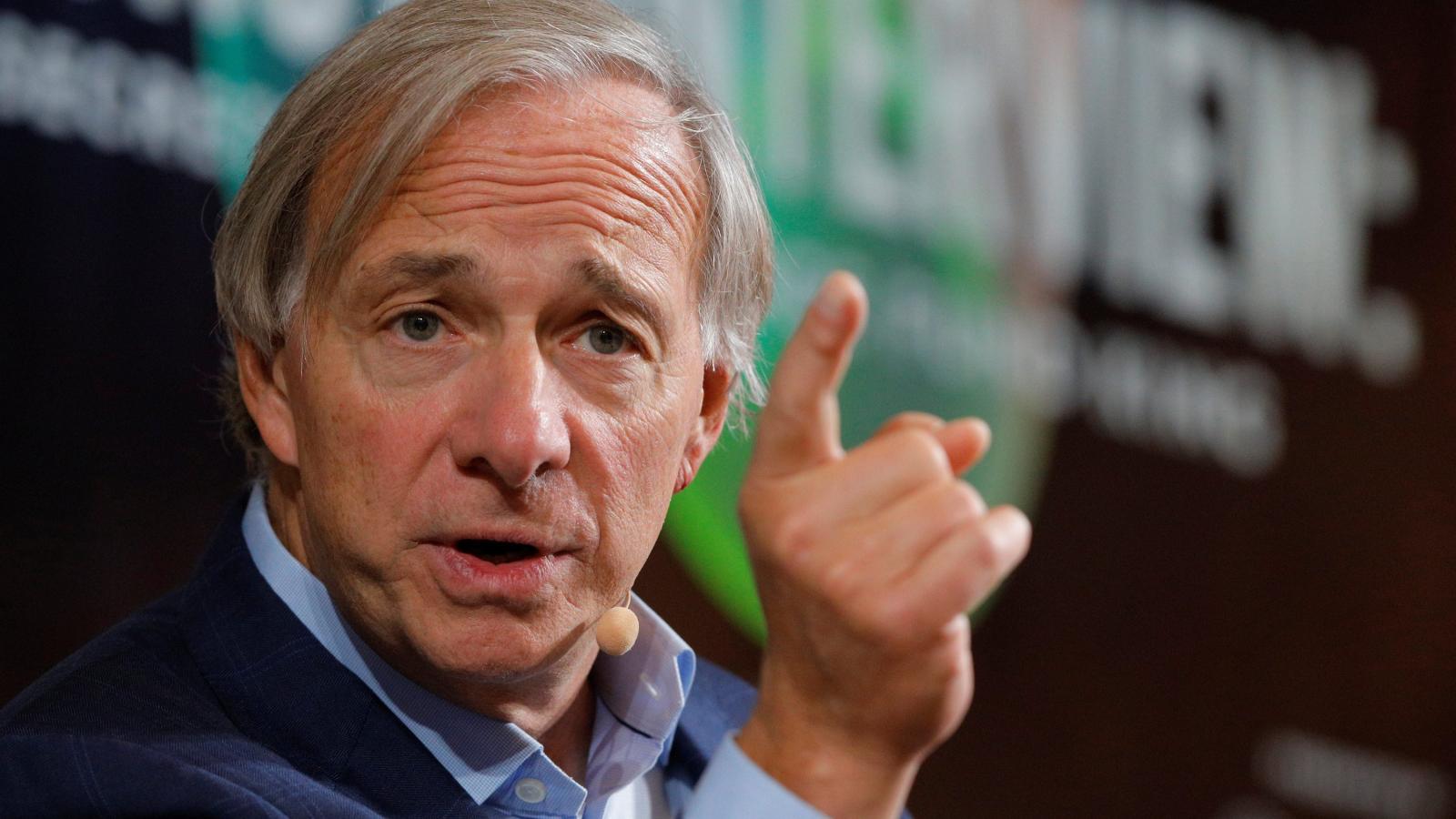
达利欧 · 78

Dalio, founder of Qiaoshui Fund: Warns that the US debt crisis will arrive within three years as soon as possible. It is recommended to reduce bond holdings and increase the allocation of gold and Bitcoin

Comparing news, Dalio, founder of the Bridgewater Fund, warned that the US annual balance gap is as high as 2 trillion US dollars, and that about 10 trillion US dollars of debt needs to be refunded urgently. If the current trajectory is not changed, the debt crisis “within three years, with an error of up and down” of two years, may arrive. In terms of asset allocation, Dalio suggests investors reduce their bond holdings to avoid debt risks; increase their holdings to 10% to 15% of the portfolio by allocating additional gold; and hold a small amount of Bitcoin to hedge against government credit risk. Dalio also called on the US to reduce the budget deficit from the current level of about 6% of GDP to 3%, including by cutting spending, increasing taxes, and lowering interest rates. Affected by these remarks, the price of gold rose to its highest level since May on Friday, and Bitcoin surpassed $77,000, the biggest weekly increase since 2023.

10h ago
[Comparative Daily News Picks] Anthropic plans to include anti-AI sentiment as the main risk factor in the prospectus; Strategy's stock price hit a two-month high, and STRC returned above $96; Bernstein: Even if the “Clarity Act” is not passed, the SEC and CFTC will speed up rule-making; Dalio: The US debt crisis may break out within three years, and it is recommended to increase gold holdings

[Comparative Daily News Picks] Anthropic plans to include anti-AI sentiment as the main risk factor in the prospectus; Strategy's stock price hit a two-month high, and STRC returned above $96; Bernstein: Even if the “Clarity Act” is not passed, the SEC and CFTC will speed up rule-making; Dalio: The US debt crisis may break out within three years, and it is recommended to increase gold holdings

Daily AI · Crypto · Macro · Market Highlights, Bitpush helps you set priorities ↓ AI · News [Anthropic plans to include anti-AI sentiment as the main risk factor in the prospectus]. According to CNBC, Anthropic is expected to list the public's negative sentiment about artificial intelligence and data centers as a risk factor in the IPO prospectus to be released in the next few weeks. According to people familiar with the matter, Anthropic recently held a pre-listing “market trial” meeting with bankers and investors. Investors focused on competitive pressure, the impact of open source models on profit margins, and the risks that may be brought about by a slowdown in data center construction. Anthropic is currently valued at close to $1 trillion in the private equity market and is preparing to hit a major IPO. However, as Americans' concerns about AI replacing employment and data center expansion heat up, the related backlash sentiment is becoming a new challenge facing the company's listing. The company has previously achieved an annualized revenue operating rate of more than 65 billion US dollars. [Apple cuts Siri and Vision Pro team positions, and resources shift to AI and new devices] Compared to news, Apple (AAPL.O) is laying off employees from various teams responsible for Siri's digital assistants and Vision Pro headsets. The total impact of this layoff is more than 200 people. Of these, about 100 jobs in the Vision Pro department have been abolished, and about 100 other positions in the Siri and software teams have been cut. The move is part of the company's efforts to focus resources on new devices and artificial intelligence. People familiar with the matter said that in this adjustment, Apple has basically shut down a team dedicated to the Vision Pro game business, while also reducing the size of the department responsible for producing immersive video content for the device. Apple admitted in a statement that the company is making adjustments to some teams “to drive business development and provide the best experience for users.” [Castle Securities: Over 80% of the overall risk in the Situational Awareness Fund portfolio has been divested] According to the Financial Times, Castle Securities founder Ken Griffin responded to the company's acquisition of Situational Awareness assets under Leopold (Leopold) in a letter to clients on Friday. According to a letter obtained by CNBC, Griffin told clients that Castle Securities had divested more than 80% of the overall risk in the original purchased portfolio by conducting more than 100 major transactions (with a market value of more than $4 billion). In his letter, Griffin wrote, “A transaction of this scale would not have been possible without the full cooperation of the transaction teams and lead brokerage teams of the banks serving the two companies. I am very grateful for their dedicated efforts to complete the portfolio transfer quickly.” Griffin also confirmed that the company's flagship multi-strategy fund, the Wellington Fund, had a return of 5.94% in July, which is the fund's best monthly performance since 2022. [AI cloud company Nscale seeks to raise 3 billion US dollars in US IPOs] In comparison, AI cloud company Nscale is reportedly seeking to raise 3 billion US dollars in a US IPO. In the crypto market [Strategy stock price hit a two-month high, STRC returned above $96], the Bitcoin treasury company Strategy (MSTR) stock price rose to a two-month high today as the Bitcoin price briefly broke through $79,400. It broke through $120 during the intraday period, then partially regained its gains. Meanwhile, the price of STRC, Strategy's preferred stock product, also surpassed $96 for the first time since June. Previously, STRC's price once fell below $70 due to concerns about its ability to pay dividends and the ability of the stock price to maintain the $100 target for a long time. [Bernstein: Even if the Clarity Act is not passed, the SEC and CFTC will speed up rulemaking] Comparing news, the Bernstein analyst team led by Gautam Chhugani released a report stating that regardless of the procedural voting results of the “Clarity Act” on September 15, the certainty of US crypto regulation is expected to increase. They expect the SEC and CFTC to accelerate rulemaking in areas such as native crypto asset issuance, tokenized stocks, perpetual futures, computing power derivatives, and predictive markets. This regulatory clarity of expectations has become one of the broader supporting factors in the crypto market. 【A...

12h agoBitpushNews#Compare Daily Picks
Dalio's latest warning: the US debt crisis may explode within three years. The antidote is...

Dalio's latest warning: the US debt crisis may explode within three years. The antidote is...

Author: Ray Dalio, founder of Qiaoshui Foundation Original title: How Countries Go Broke: The Dynamic Behind What is Incurable Now Compiled and organized by: bitPushNews In “How Countries Go Bankrupt: The Big Cycle,” I detailed an analytical framework to describe dynamic processes that are highly likely to occur due to unsustainable imbalances between debt supply and demand. Recently, three things happened at the same time: 1) The Japanese government sold part of its US Treasury holdings to return capital to Japan to support the yen and the Japanese capital market, and reduce exposure to US Treasury bonds while avoiding being forced to raise interest rates beyond its wishes in order to support the yen; 2) US bond yields hit new highs under long-term leadership, while the dollar weakened. The reasons include not only the current and anticipated supply of huge debt, but also weak demand for US bonds; 3) Treasury Secretary Bessent announced this week that the US Treasury would buy US Treasury bonds and be able to buy other US Treasury bonds The amount of capital used is limited, and many people ask me : Do these events fit the classic template I set out in my book? The answer is yes. To anticipate what might happen next, let's first review this operating mechanism. The operating mechanism explains in detail that the central government's debt dynamics are the same principles as the debt dynamics of individuals or companies. The only difference is that the central government has a central bank that can print money (this will depreciate the currency), and it can obtain funds from the public through taxation. Because of this, if you imagine how the debt dynamic would work if you or the business you run could print money, or get capital from people through taxation — then you can understand this process. But remember, your goal is for the entire system to work well, not only for yourself, but for all citizens. In my opinion, the credit/market system is like the human body's circulatory system, delivering nutrients to every corner that makes up the market and economy. If credit is used effectively, it can generate productivity and income to repay debt and interest on debt, which is a healthy state of affairs. However, if credit is not properly used to generate sufficient income to repay debts and interest, debt payments will continue to pile up like plaques in blood vessels, squeezing other expenses. When debt payments become very large, debt repayment problems arise, and eventually evolve into debt rollover problems — because debt holders are unwilling to continue to roll over and instead want to sell. Naturally, this will lead to a shortage of demand and sell-off of debt instruments such as bonds; when demand is scarce relative to supply, it either causes a) interest rates to rise, thereby suppressing the market and economic downturn, or b) the central bank “prints money” and buys debt, which will reduce the value of the currency, thereby driving up inflation (compared to the original level). Banknote printing also artificially lowers interest rates and harms lenders' returns. Both options are bad. When debt sell-offs are too large and difficult to contain, and the central bank has already purchased large amounts of debt, rising interest rates can cause the central bank to lose money and damage its cash flow. If this continues, the central bank will fall into a situation where net assets are negative. When this situation became serious, the central government and central bank needed to borrow money to repay the principal and interest of the debt, while the central bank printed money to provide loans due to insufficient free market demand, so a self-reinforcing spiral between debt/banknote printing/inflation formed. In summary, the classic indicators to pay attention to are the following: the ratio of government debt payments to government revenue (which is like the amount of plaque in the circulatory system), the ratio of government debt sold to the demand for government debt (this is like a plaque falling off and causing a heart attack), and the amount of government debt purchased by the central bank to cover the gap between the demand for government debt and the supply of government debt to be sold (this is like the central bank applying a larger dose of liquidity/credit to mitigate liquidity shortages, and the central bank has a risk appetite for these debts). These indicators usually rise over a long cycle of decades — debt and debt payments continue to grow in relation to income — until this state of affairs cannot continue because: 1) debt repayment expenses unacceptably crowd out other expenses, 2) the supply of debt that must be purchased is too large, causing interest rates to rise sharply, leading to a sharp decline in the market and economy, or 3) central banks are unwilling to let interest rates rise and suffer bad market/economic consequences, so they print large amounts of money and buy large amounts of government debt to cover the demand gap, thereby making the value of the currency significant Decreased. Either way, the return on bonds will be poor until the money and debt eventually become cheap enough to attract demand, or the government can cheaply buy back or repay...

15h agoBitpushNews#indebtedness #Bitcoin #economic crisis #US debt #DALIO #gold

Dalio: The US debt crisis may break out within three years; it is recommended to increase gold holdings

Comparing news, Bridgewater Fund founder Ray Dalio said that investors should reduce their bond holdings and allocate up to 15% of their capital to gold to hedge the risk of the US debt crisis he warned of. He warned that the crisis could erupt within three years. Dalio said in a Friday article that investors should diversify the allocation of assets and different markets. He said that reducing bond holdings and allocating about 10% to 15% of the investment portfolio to gold can both reduce risk and increase returns.

17h agoWendy#starters

Qiaoshui Fund sharply sold nearly 1.36 million shares of Micron Technology in Q2, and its shareholding ratio fell sharply by 92%

Comparatively, the Qiaoshui Fund founded by Ray Dalio revealed in the 13F position report for the second quarter of 2026 (reporting period ending June 30, 2026) that it reduced its holdings of 1,359,038 shares of Micron Technology and still holds about 116,700 shares, a reduction ratio of about 92%. This article is sponsored by GENG, Build Your Fortune on GENG (https://geng.one)

7d agoburnking

Dario Hashimizu warns that the AI bubble is approaching the level of 2000: wealth does not equal money, and the flood of new stock issuance is a key force to break through the bubble

Comparatively speaking, the founder of Qiaoshui Foundation, Ray Dalio issued the harshest market warning in the “CEO Diary” podcast, bluntly saying that AI fanaticism has pushed the market into a bubble zone similar to 1929 and 2000. When the host mentioned Jeremy Grantham's previous claim that the current is the biggest investment bubble in US history, Dalio directly responded: He's right. Dalio explains the core contradiction of the bubble mechanism with a simple deduction — investors buy shares of an AI company with $100 and use this as collateral to borrow money. When the market reverses and everyone needs cash at the same time, the price may collapse to $25, and the loan still needs to be repaid. Dalio emphasized that wealth is not equal to money. You have seen many people become rich, but wealth cannot be used for consumption. You have to sell your wealth to get money. The current market is more like gambling with an inexperienced influx of leveraged ETF investors. Dalio also pointed out that there are two major forces that usually break through bubbles — rising interest rates drive up the cost of debt financing, and a surge in stock issuance. Currently, the latter is a reality: SpaceX was listed in June but its stock price broke out, and S&P expects its free cash flow to remain negative until 2029; Anthropic has secretly submitted a listing application and appeared at a valuation of nearly $1 trillion as early as October; OpenAI has also submitted an application, with a valuation target of over $1 trillion. Dalio's bigger warning was not directed at the market itself, but rather the political and geographical conflict after the bubble bursts — Britain's change of six prime ministers in seven years is a symptom of running out of government funds and voters attacking each other on how to raise funds. The bursting of the AI bubble could be the trigger for political turmoil at the end of the 80-year cycle. Wall Street institutions such as Goldman Sachs and Apollo also recently sent a similar signal, indicating that there is a profit bubble in technology stocks, and the 60/40 portfolio strategy that worked for 40 years has failed.

18d ago

Dario Bridgwater: The AI revolution is real, but high valuations and leverage may be creating a new bubble

Comparing news, Rui Dalio, founder of Qiaoshui Foundation, said that AI has revolutionary value in changing production methods, but the current market has also shown some characteristics that are in line with the rules of historical bubbles. Investors may ignore the gap between technical value and market price. When asset valuations are far higher than actual profitability and the capital environment is tightened, the risk of a bubble may quickly be revealed. Dalio pointed out that the bursting of a bubble usually widens through the debt chain. Falling asset prices will depress the value of collateral, force highly leveraged investors to sell assets to repay debts, and further push prices down. If inflation rises again and the central bank raises interest rates, higher financing costs may also exacerbate market repricing. He believes that the global economy is in a long-term cycle of debt accumulation, widening gap between rich and poor, political division, and changes in the pattern of international power. Investors should avoid concentrating their wealth on a single asset and reduce risk through diversified allocations such as stocks, cash, gold, bonds, and real estate; among them, gold, as a hard asset that is difficult to create, can play a role in diversifying risk during periods of currency depreciation and rising financial pressure. Regarding the job market, Dalio believes that AI will replace some repetitive mental work, and that people who can collaborate with AI and continuously adapt to changes will have an advantage in the future. He stressed that even if the economy falls into recession, technological progress will not stop. This article is sponsored by GENG, Build Your Fortune on GENG (https://geng.one)

21d agoburnking
Under the AI frenzy, Dalio began to hint about long-term risks

Under the AI frenzy, Dalio began to hint about long-term risks

Author: Ray Dalio Compiled by: Shenchao TechFlow Original title: Dalio's latest warning: Don't be carried away by AI, the actual return of US stocks may reach -5% to -10% in the next 5-10 years Guide: Qiaoshui founder Ray Dalio posted an investment note on X to calculate an account for the current market dominated by several AI giants. His judgment is tough: high risk is a fact, low return is an opinion — the actual return on US stocks is likely to fall between -5% and -10% in the next 5 to 10 years. He's not advising you not to buy AI; he advises you not to bet all your chips on AI. This is the “Holy Grail of Investing,” which he summed up after more than 50 years of work, and now he's speaking publicly to everyone. Investment principles: How should you type in this deck of cards? This note talks about how to play this investment game in the current situation. You can think of it as bridge, poker, backgammon, or chess. It's your turn to take action. There is a computer next to help you judge the situation and give suggestions. To me, investing is what it feels like. Whether you have this computer at hand or not, I think you should ask yourself the question: how should I go about this step when the card is placed like this (in other words, what are the characteristics of the market and what forces are influencing it). I've been playing this game for a long time. At this stage, my goal is to pass on my style of play, and to go one step further, to create a platform where all kinds of people can use it to explore and invest in this matter, whatever they want — learn and review how they would do it in the first place and do it well. I believe there is a right or wrong way to handle this deck of cards in hand. So when you're in a specific situation, you should ask yourself, “How can I bet in this situation?” Also, you need to be able to give reliable answers. Next, I'd like to talk about what the market looks like now in my opinion, and what I think I should do (and I'm doing). How to play in this game today What are some of the most critical conditions, and how should I bet on them? In my opinion — and probably everyone else too — we are now in a market where very few companies are concentrated in a sector with amazing new technology (mostly AI), dominating the overall trend of the market. These companies account for a high proportion of market capitalization and have a huge impact on the market and economy. It's the same every time this happens. There is a lot of excitement, uncertainty, and fluctuation in the new technology sector, and these feelings are transmitted to global stock markets. Therefore, the ups and downs and uncertainties of this sector are very important. In addition to this, there are several other equally important variables, which are what I call the “five forces”: one is what is happening with debt and money, two is what is happening with political and social issues (these will greatly affect taxes and other politically-driven market factors), three is the impact of geopolitics on the market (such as those wars), four is what is happening in nature, and five is what is happening with new technology. I input these conditions into my investment system, and it calculates how to bet on these conditions, and at the same time, I myself am wondering what to bet on. When considering how to bet, the most important question to ask and answer clearly is: do you want a) to bet more heavily on new technology than the market index (such as the S&P 500) already implied, to surpass this sector or the companies you think are the best; b) maintain weight about the same as the index; or c) be scattered from this concentration? Almost everyone wants to buy the best assets, and they're doing it desperately, and this new technology seems to be changing almost everything. But history tells us that at this stage of the cycle, betting a high percentage of their chips on the few leading companies that produce this technology has failed the vast majority of people. There is logic behind this; in the past, it was always staged like this. The new AI technology is truly unique, but there have also been many new technologies in history that are unique and can be compared. You should check them out. If you choose to ignore them, then you have to give a good reason why this time isn't the case. The risk is really high. All the stories of great new technology in the past have been played out in the same way and with the same logic. High risk and huge uncertainty are inherent attributes of these new technology companies. Looking back at their performance in a similar situation, you'll find that even the revolutionary companies that eventually won in the long run (such as Microsoft and Apple) were beaten at similar moments along the way. Also, at the moment when new technology companies are just starting out (not looking back after the fact), it's not easy at all to determine who will succeed or who will lose; IBM is an example. If you unpack all of these cases, you'll understand that the future of new technology companies is highly uncertain; this is their nature. Lift...

66d agoLuxurytracy

Qiaosui Dali Ou Changwen talks about decision-making in the AI era: Principle thinking and AI must go hand in hand, and human insight is irreplaceable

Comparing news, Rui Dalio, founder of Qiaoshui Foundation, published a long article to systematically explain the principled decision-making methodology he adheres to in the era of artificial intelligence. Dalio pointed out that the investment field is a zero-sum game where the value of information that is widely known is very low, so even the most advanced AI's insight is not enough for people to follow blindly, and unique human understanding and insight are still irreplaceable. Qiaoshui's core experience over 50 years shows that decisions must be based on logical, understandable standards, and combine principled thinking with AI. Principle thinking does not judge based on feelings, but rather examines and systematizes decision criteria — thoroughly thinking about situations and causal relationships, writing down standards, backtesting historical performance as much as possible, and then computerizing and automating them. Standard derivation cannot rely on data mining or simply questioning AI; it should be transformed into a decision-making system based on logical understanding. Dalio described this process as a game between humans and AI: AI partners follow methods through systematic standards, and humans follow methods through principles in their heads. The two sides compare logic, talk, and debate, and finally align the reasons for thinking and decision making. The principles to be pursued must span time and across regions, trace as long history as possible, and test in various environments in various countries to verify their universality; if they fail, thoroughly study and correct the causal relationship. The output of the entire system is always accompanied by a reasoning process to ensure that the logic is clear and understandable, and that complex relationships are handled faster and less emotional than the human brain. Dalio said he is using this process in the family office to make full use of emerging AI technology, and plans to continue communicating the methodology to the outside world. Dalio also warned the market that it would either keep up with this cutting edge or lose competitiveness.

69d ago

Bitunix Analyst: Strong Non-Farmers Are Rewriting Market Pricing, AI Fanaticism and Geographic Risk Simultaneously Entering the Stress Test Phase

Comparing news, the three forces that focus on the global market — geographic risk, inflation risk, and capital demand — are beginning to impact the market at the same time. After Iran responded to Israel's military action with missiles, Trump personally intervened and attempted to lead the US-Iran agreement process, but Israel still reported that it intended to attack Iran's energy facilities, which meant that the energy supply risk had not yet been lifted. Meanwhile, US non-farm payrolls greatly exceeded expectations in May, which not only overturned the market's expectations of interest rate cuts during the year, but also rapidly heated up the probability of raising interest rates again before the end of the year. The market began to reprice higher interest rates and maintain a new environment for a longer period of time. Looking at policies and capital flows, the biggest change at present is not the risk of a recession, but rather the market is beginning to realize the dilemma faced by the Federal Reserve. Strong employment means that the demand side is still resilient, but the energy prices fueled by the Middle East conflict may further spread to inflation. In this context, the US CPI to be announced this week will be the key verification. If the rise in energy prices starts to be reflected in inflation data, the pressure on the Federal Reserve to remain hawkish or even rediscuss interest rate hikes will continue to increase. This is also the core reason for the recent sharp rise in US bond yields and the simultaneous pressure on gold and stocks. The market is re-evaluating the future direction of global liquidity. On the other hand, the AI industry is facing one of the most important stress tests since this bull market. Dalio described the current AI boom as a typical bubble not because AI has no value, but rather that the capital market is already pricing future growth far faster than actual profits can be realized. From Meta's plan to expand its AI footprint through stock financing, to large-scale computing power cooperation between Google and SpaceX, to the US government considering direct investment in AI companies, the market is entering a new round of capital expenditure competition. However, as interest rates rise, financing costs increase, and a large number of IPOs and additional shares continue to draw out market liquidity, whether the capital market can continue to support such huge valuations will become an important focus of observation in the coming quarters. For the crypto market, what really needs to be paid attention to is not a single event, but whether global liquidity has begun to enter a contraction cycle. If gold is competing with the US dollar, then Bitcoin is actually competing with global liquidity. Risky assets often benefit when the market believes that the Federal Reserve will continue to provide liquidity; but when the market begins to accept the possibility that high interest rates will last longer or even raise interest rates again, risk asset valuations face repricing pressure. Currently, the market is facing the triple challenge of energy inflation risks brought about by geopolitical conflicts, the withdrawal of capital from huge financing in the AI industry, and the shift in policy expectations from the Federal Reserve. This week's US CPI, Chinese inflation and financial data, ECB decisions, and SpaceX listing progress may all be important catalysts affecting market risk appetite. Market volatility will probably remain high until a new liquidity narrative is established.

75d ago