
非农 · 907

Next week's macro outlook: US and Iran sanctions, Jackson Hole, PCE, and Nvidia's earnings report are coming in four major variables. The gold sword points to $4,700

Comparing news, the global market will face multiple risk events next week. The escalation of US and Iran sanctions, Federal Reserve Chairman Walsh's debut at the Jackson Hole World Central Bank Annual Meeting, the release of PCE inflation data in the US for July, and the disclosure of Nvidia's earnings report may become core variables affecting risk asset trends. This week, the sharp rise in US long-term bond yields raised market concerns. After the Treasury expanded the scale of long-term US bond repurchases, the pressure on the bond market eased somewhat, but investors are still concerned about the US fiscal deficit, inflation, and developments in the Middle East. Driven by US debt sustainability concerns, the weakening dollar, and the Treasury Department's expansion of the US bond repurchase program, spot gold surpassed 4,600 US dollars/ounce this week, rising for the third consecutive week, and hit a high of around $4,632 on Friday. Analysts believe that if gold effectively breaks through $4,600, the next target may be at $4680 or even $4,700. Next week, the US-Iran relationship will be the primary focus of the market. US Treasury Secretary Bessent said that the Trump administration will announce new sanctions against Iran on Monday. Trump previously warned that any country providing support to Iran could face economic consequences. Meanwhile, transportation activities in the Strait of Hormuz continue to be blocked, and energy supply risks are driving crude oil to rise continuously. On the Federal Reserve side, the Jackson Hole Global Central Bank Annual Meeting will be held from August 27th to 29th, and Federal Reserve Chairman Walsh will deliver his first speech on August 28. The market is concerned about whether it will release future interest rate path signals and whether it can ease recent pressure on the US bond market. Currently, the market expects that the probability that the Federal Reserve will cut interest rates in September has declined, and traders will focus on Walsh's statement on the 2% inflation target, long-term interest rate, and monetary policy framework. In terms of economic data, the US core PCE price index for July will be released next week. This is the inflation indicator that the Federal Reserve is focusing on. The market expects core PCE to rise 0.2% month-on-month. If the data is higher than expected, it may weaken expectations of interest rate cuts and put pressure on gold; if it falls short, it may further drive the rise of precious metals. In addition, revised US second-quarter GDP values, durable goods orders, consumer confidence index, and revised non-farm payroll benchmark data will also be released one after another next week. On the corporate side, Nvidia's (NVDA) earnings report will be the focus of the US stock market. Technology stocks have recently been under pressure. The Nasdaq index fell about 2% this week, and the semiconductor sector fell by more than 4%. The market will focus on Nvidia's continued investment in AI infrastructure, the progress of Rubin chips, and the state of business in China. Analysts believe that if Nvidia's performance continues to strengthen AI growth expectations, it may become an important catalyst for the S&P 500 index to hit 8,000 points; if performance or guidance falls short of expectations, it may increase the pressure on technology stocks to adjust.

10h ago
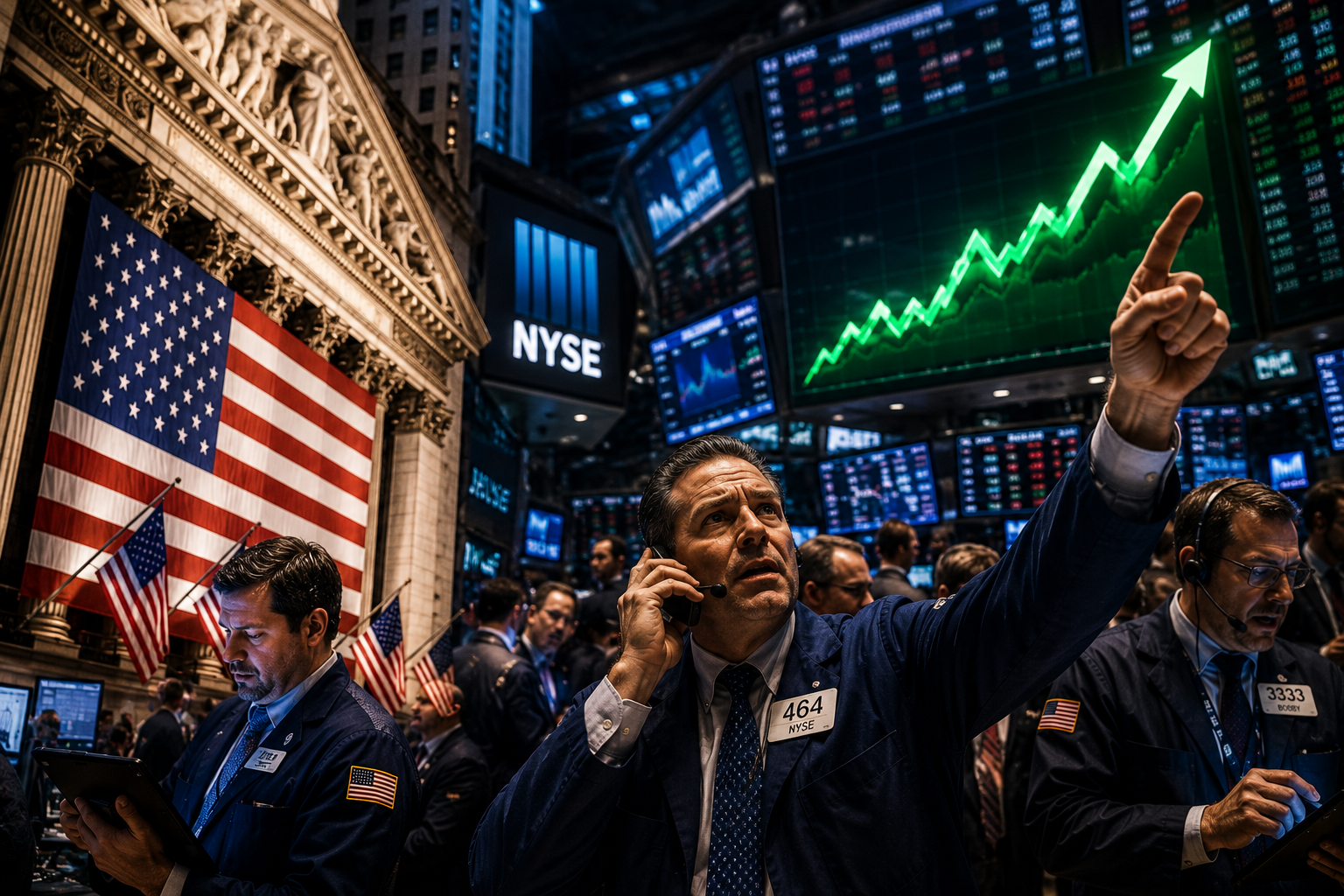
As soon as US stocks stopped falling, capital went crazy rising -- Wall Street was suddenly wary

As soon as US stocks stopped falling, capital went crazy rising -- Wall Street was suddenly wary

Source: Wall Street News Author: Xu Chao Original title: After the sharp fall in July, capital surged again, and the “panic index” of US stocks plummeted. Wall Street began to be wary. The strong rebound in US stocks created a calm image of a sharp drop in volatility, but Wall Street is sounding the alarm: the options market is now “biblical” and distorted. Under ostensible prosperity, the market position structure is extremely weak. As Nvidia's earnings report and the central bank's annual meeting approach, any external catalyst could set off a severe one-sided storm at any time. US stocks rebounded strongly from sharp deleveraging in July. Investors scrambled to catch up, and volatility indicators quickly fell back to a near-calm level. However, Wall Street traders and strategists are warning that under surface calm, the market structure already conceals fragility, and any external catalyst could trigger a rapid, self-reinforcing directional shock. The VIX Index plummeted from a July high of around 21 points to around 15 points — a level that has historically been on par with absolute calm in the market. Meanwhile, Goldman Sachs's internal panic index plummeted from 7.9 at the end of July to less than 1, hitting its lowest point since June 2024. Bloomberg market strategist Jan-Patrick Barnert pointed out that the position structure left over after large-scale deleveraging last month makes the market extremely vulnerable to dramatic changes in direction caused by mechanical capital flows before important risk events such as upcoming inflation data, Nvidia earnings reports, and the Jackson Hole Central Bank Annual Meeting. The three Wall Street trading platforms gave a nearly consistent description of the current August market: investors are selectively chasing the rise, but not out of full faith. Fundamentals may provide support for current index points, but market sentiment is far from being fully optimistic. Traces left by the rise: the options market is now “biblically” distorted. After the severe deleveraging round in July, buyers' institutional positions were generally light, but it just happened to have hit one of the strongest earnings seasons in recent years. At the same time, the market rotated, and stocks outside the AI sector and high-quality AI targets both became the core of risk taking. Charlie McEligott, a cross-asset strategist at Nomura Securities, said that “customers were caught off guard” and immediately began to rise. The evidence of this upward movement is not reflected in price trends, but is clearly imprinted in the options market: call options are being snapped up, and as the index soars away from everyone's hedging price, put options quickly lose value. McEligott described the resulting skewed bias as “biblical level.” Both the S&P 500 and Nasdaq 100 Index's 25-Delta bullish option bias fell to the lowest level in history in January, and the S&P 500 bullish options volume simultaneously reached record highs. Over the past week, the achieved volatility was significantly higher on rising days than on falling days — the only thing the market seemed to worry about was shorting subsequent gains. The volatility of individual stocks has been destroyed, and the risk behind the calm has not been eliminated. Volatility at the individual stock level has been erased on a large scale in the process. Goldman Sachs derivatives and capital flow expert Lee Coppersmith pointed out that the average monthly implied volatility of NASDAQ 100 constituent stocks fell 9.1 percentage points within three trading days, and the decline of S&P 500 constituent stocks also reached 6 percentage points. Coppersmith said, “In the AI era, we have seen larger fluctuations, only the fluctuation shock in August 2024 and the tariff incident in April 2025. “At that time, VIX broke through 60 points. However, in the past month, the highest point of VIX reached only about 21 points, then quickly fell back. However, this is probably where the trouble lies. Goldman Sachs's internal panic indicators have certainly fallen to a low point, but a non-farm payroll report showing employment losses of 23,000 people, US bond yields hovering around 4.7%, the latest episode of the yen intervention, and the unresolved Iran conflict all together form a picture of macroeconomic risks that should not be underestimated. Financial data is impressive, but the macroeconomic background is far from confirming that everything is improving. AI is no longer an overall position, but a stock selection list at the index level. The overall exposure seems to have completely changed to risk appetite. But underneath the surface, skepticism still exists. Artificial intelligence trading is still the core of the market, but the basket of leading thematic gains is fragmenting. Not all of the targets that were hit hard in July experienced a strong rebound — memory chip stocks are a typical example. Nick Savone, Global Head of Equity Advisory and Client Services at Morgan Stanley, wrote: “This may be a broader revelation of a week of familiar trading regaining life without simply returning to the old script. The degree of diversification is still extremely high, and deleveraging in July...

9d ago22#US stocks
Hash Global: Bitcoin bear market may be nearing its end

Hash Global: Bitcoin bear market may be nearing its end

Source: X Author: Jessica Feng (Hash Global BNB Fund Investment Manager), Henry Yang (Hash Global Investment Partner) Original title: Hash Global: Bitcoin hasn't risen yet, why are we starting to think the bear market might be over? Abstract: Bitcoin has been trading sideways between $62,000 and $65,000 for nearly two months, but on-chain chips have been reshuffled: more than 2.4 million BTC has been deposited in the $610,000 to $65,000 range. Concentration is rare, and a new bottom is being formed. Similar chip structures in history have predicted subsequent market trends. Changes in kinetic energy take precedence over price. Now is the time to enter the next round of cycle layout. Over the past six months, the popularity of AI has absorbed almost all of the market's attention, and even Crypto's last belief, Bitcoin, has been drastically shaken. Since falling below $70,000 in February, BTC has stepped back into the $58,000-$60,000 range three times. Strategy, an old player in the industry, began selling coins, and mining companies turned to AI. The prospects for the industry were bleak, and it also made the fears real time by time. While US stocks continued to rise and gold bottomed out, Crypto seemed to be forgotten by the world: BTC had been trading sideways between $62,000 and $65,000 for almost two months, and the 30-day implied volatility dropped to 36%, setting a multi-year low. The lack of vitality makes it difficult for the public to be optimistic about the market. But what we've been paying more attention to recently is “change” and “perspective,” that is, behind the price, the changes that are taking place in the market. The forces that weighed down the market in the early stages are weakening one by one: macro-austerity expectations have cooled down, the strategic lightning crisis has abated, and the outflow of institutional capital has stopped. Meanwhile, Bitcoin's on-chain chips are gathering again in the midst of consolidation. Everything seems to indicate that an inflection point is approaching, but these changes are not yet reflected in prices, as the market is waiting for more clear signals. Outside the market, AI transactions are cooling down, and a new round of capital switching is about to begin; in the market, the old OGs are still waiting for the last drop and slow to take action — the calm and quiet surface at the moment has just opened up the best angle and timing for us to enter. It is difficult to predict when the market will start, but what is certain is that we are entering the time window for the next round of layout. 1. Under the impression that the price has not changed, the chip structure has been reshuffled. The new bottom is forming a new bottom where BTC has tested the $60,000 mark three times, and has been clearly accepted each time. The price then rebounded to around $65,000, upward selling pressure reappeared, and the market fluctuated repeatedly between $63,000 and $65,000. On the face of it, the price has hardly changed, but on-chain chips have quietly completed a round of redistribution. Currently, more than 2.4 million BTC has been deposited in the $610,000 to $65,000 range, accounting for about 12% of the circulating supply; of these, around $63,000 alone, more than 1 million BTC has been collected, accounting for about 5.2% of the circulating supply. The concentration of chips has risen to a historically rare level. This change is more worthy of attention than short-term ups and downs. The bottom did not appear suddenly, but was “bought” by the market in repeated tug-of-war: some people left the market, others took over; old chips were constantly replaced, and new capital re-established the cost base at a lower position. As more BTC is concentrated in similar price ranges, a new price consensus has also been established. As a result, changes in kinetic energy often precede prices. Looking back at history, from May to November 2024, BTC also experienced a half-year adjustment after the ETF market. Before pulling from $60,000 to $100,000, the chain also had a highly concentrated structure around $50,000 to $60,000. In hindsight, the bottom of the construction at the time was a springboard for the subsequent launch of the market. History won't simply be repeated, but a similar chip structure indicates that the market is experiencing a round of similar bottom changes. 2. Directional choices are coming. The forces suppressing the market are being disrupted, and the concentration of chips represents an intensification of the game. The market is about to make a choice, but this is not enough to indicate the direction. What really tilts the balance upward is that several forces that previously drove the market decline are weakening. 1. Macro pressure is falling, and the risk of interest rate hikes has been reduced. The most important driving factor behind this round of adjustments is market concerns about higher interest rates. The geopolitical conflict boosted inflation expectations, the Federal Reserve sent hawkish signals, US bond yields and the US dollar strengthened, and risk assets naturally came under pressure. Recently, however, this logic of pricing high interest rates has begun to loosen. US CPI fell 0 month-on-month in June...

9d ago22#Bitcoin

Prior to the CPI data, traders were betting on a 50% chance of interest rate hikes in September, and the treasury bond market pricing bias data was moderate

Comparative news, according to the swap market trading situation, the probability of a 25 basis point interest rate hike currently included by traders is about 50%. After the unexpected weakening of non-farm payrolls in July, Wall Street almost formed a 50:50 extreme split pricing on whether the Federal Reserve raised interest rates by 25 bps in September, and the Federal Reserve under Walsh's leadership clearly reduced forward-looking guidance, making the market have to rely again on hard data to determine the policy path. The impact of July's CPI is clearly asymmetrical — that is, moderate inflation data can further weaken the reasons for interest rate hikes, but data that exceeds expectations and is more likely to quickly turn the September rate hike back into the benchmark scenario. As for the 10-year US bond yield, which is the anchor of global asset pricing, the current risk-return on the bond market has actually clearly skewed towards the pricing direction where the moderate CPI in July drove the rapid decline in yield, mainly due to the positive resonance between macro data and the CTA bond market position structure. (Zhitong Finance)

10d ago

Bank of America: CTA US debt bears are still high. Tonight's CPI may become an amplifier of volatility in the bond market

Comparatively, before the US CPI was announced, a technical risk that was easily overlooked in the bond market was heating up. Bank of America Securities pointed out in its latest report that the trend-tracking CTA remained high in US Treasury futures shortages after the unexpected weakening of US non-farm payrolls data. US bond futures were close to triggering bears' recovery last week, but as yields rebounded from a low level, models showed that these short positions have yet to be withdrawn. CTA generally refers to systematic trend tracking of funds. This type of fund does not mainly judge inflation, finance, or the Federal Reserve's policy itself, but rather trades assets such as stock indices, US bonds, foreign exchange, gold, and crude oil based on price trends, volatility, and stop-loss thresholds. Simply put, the more clear the market trend, the more likely CTAs are to follow the trend and increase positions; once the price reverses break through the model threshold, they may also concentrate on reducing or making up positions. Therefore, CTAs are more like market amplifiers. They are usually not the starting point for market direction, but they may reinforce fluctuations after key data is released. According to the Bank of America, 10-year US bond futures are still in a bearish trend. The current price is about 108.72. The short-term short recovery trigger level is around 109.41, and the higher trigger level is around 110.21. In other words, if the CPI is weaker than expected, driving up the price of US bonds and the decline in yields, CTA may be forced to make up for the shortfall, thereby further amplifying the rebound in the bond market; if the CPI is strong and US bond yields rise, CTA bears may remain in the market. The report points out that macro data will determine the direction, and CTA positions will determine whether the market is amplified by mechanical capital. Since US bond yields directly affect tech stock valuations, the dollar, and gold, the impact of CPI on cross-asset markets will also be amplified tonight. If yields decline rapidly, growth stocks and gold may be supported; if inflation data becomes strong again, overvalued technology stocks and precious metals will face repricing pressure.

10d ago

Bitunix Analyst: Non-agricultural disruptions are compounded by Japanese and US intervention, global assets are once again facing high capital cost constraints

Comparing news, non-farm payrolls in the US unexpectedly fell by 23,000 in July, the first negative increase since February this year. Although the unemployment rate fell to 4.1%, the total non-farm payrolls data for May and June were drastically revised, indicating that the resilience of the US job market is weakening. This makes the Fed's policy trade-off between inflation and employment more complicated. In particular, differences among officials over interest rate hikes have widened recently, and the risk premium of monetary policy will still be reflected in US bond yields and dollar asset valuations. Meanwhile, the summary of opinions from the Bank of Japan's July meeting sent a stronger signal of interest rate hikes. Some members believe that a more flexible or even more active approach to policy normalization should be adopted. The weak yen prompted Japan and the US to rarely intervene in the foreign exchange market, showing that the exchange rate issue is no longer just Japan's own monetary policy issue, but is gradually affecting US debt holdings, US dollar liquidity, and the global arbitrage trading structure. If expectations for subsequent interest rate hikes in Japan heat up further, the cost of Japanese yen arbitrage capital rises, it may also increase fluctuations in highly valued and highly leveraged assets. US debt is in another critical position. Besent recently supported the Japanese yen's intervention, discussed FIMA liquidity instruments, and adjusted long-term bond issuance statements, all essentially pointing to reducing the pressure on the long-term US bond market. However, in an environment where fiscal deficits, inflation, and energy costs are still high, the support that the Treasury can provide is limited. What really determines the long-term yield is still the path of inflation, the Federal Reserve's policy, and the market's pricing of US fiscal sustainability. The industrial side, on the other hand, presents a completely different picture. Demand for SpaceX, AI servers, HBM, and NAND is still booming, and corporate capital expenditure continues to expand, but SanDisk and Western Digital stock prices plummeted after earnings reports, reflecting that the question is no longer just whether performance has increased, but whether the company can continue to exceed already extremely high market expectations. The AI industry's core contradictions continue to focus on capital efficiency and affordability. Therefore, what the market really needs to observe this week is not a single data, but whether cooling employment can offset the pressure of inflation and fiscal factors on long-term interest rates, and whether AI's high capital expenditure can continue to be converted into sufficient cash flow to support high valuations. The US July CPI announced on Wednesday will be an important verification. If inflation is still sticky, weak agriculture may not be enough to provide room for a continued downward trend in interest rates; conversely, if inflation cools down at the same time as employment, the pressure of high interest rates on global risk assets will have a chance to be substantially relieved. Overall, global assets are still in an environment where high financial demand, high capital expenditure, and high capital costs coexist, and volatility and asset differentiation are expected to remain high.

11d ago

US stock futures indices rose slightly, and the market is concerned about the Strait of Hormuz agreement and inflation data

Comparative news, according to BIT (Bit.com) market data, US stock index futures rose slightly on Monday. Investors are concerned about the progress of negotiations between the US and Iran over the reopening of the Strait of Hormuz, as well as the inflation data to be released this week. As of press time, S&P 500 futures were up about 0.1%, Nasdaq 100 futures were up 0.2%, and Dow Jones Industrial Average futures were down about 71 points, or 0.1%. Iran said it is close to reaching an agreement with Oman to reopen the Strait of Hormuz, but Tehran still refuses to resume direct negotiations with the US until the relevant conditions are met. Last week, US Treasury Secretary Bessent said an agreement might be reached soon, but Trump later said that the US is currently only in a semi-negotiation state and hopes to continue putting economic pressure on Iran. The market is also paying attention to the US Consumer Price Index (CPI) and Producer Price Index (PPI) data released this week to determine the future interest rate path of the Federal Reserve. The July non-farm payrolls data released earlier unexpectedly contracted, driving the market to lower expectations for the Federal Reserve's interest rate hike. According to CME FedWatch data, traders currently expect the probability that the Fed will raise interest rates in September to be about 44%, down from 67% a week ago. The three major US stock indices all recorded their best weekly performance since April last week, and the S&P 500 index reached a record closing record high. Most of the Asian markets rose on Monday, with Nikkei 225 up 2.1%, Hang Seng up 1%, and Korea's KOSPI up 0.65%. The opening performance of the European stock market was lackluster, and investors continued to evaluate the impact of the situation in the Strait of Hormuz on the energy market and the global economy. WTI crude oil rose about 1% in early trading.

12d ago

Bitunix Analyst: Non-agricultural disruptions are compounded by Japanese and US intervention, global assets are once again facing high capital cost constraints

Comparing news, non-farm payrolls in the US unexpectedly fell by 23,000 in July, the first negative increase since February this year. Although the unemployment rate fell to 4.1%, the total non-farm payrolls data for May and June were drastically revised, indicating that the resilience of the US job market is weakening. This makes the Fed's policy trade-off between inflation and employment more complicated. In particular, differences among officials over interest rate hikes have widened recently, and the risk premium of monetary policy will still be reflected in US bond yields and dollar asset valuations. Meanwhile, the summary of opinions from the Bank of Japan's July meeting sent a stronger signal of interest rate hikes. Some members believed that a more flexible and even more active approach to policy normalization should be adopted. The weak yen prompted Japan and the US to rarely intervene in the foreign exchange market, showing that the exchange rate issue is no longer just Japan's own monetary policy issue, but is gradually affecting US debt holdings, US dollar liquidity, and the global arbitrage trading structure. If expectations of Japan's subsequent interest rate hikes heat up further, the cost of Japanese yen arbitrage funds will rise, which may also exacerbate fluctuations in overvalued and highly leveraged assets. US debt is in another critical position. Basent's recent support for yen intervention, discussions on FIMA liquidity instruments, and adjustments to long-term treasury bond issuance statements are all essentially aimed at reducing the pressure on the long-term US bond market. However, in an environment where fiscal deficits, inflation, and energy costs are still high, the support that the Treasury can provide is limited. What really determines the long-term yield is still the path of inflation, the Federal Reserve's policy, and the market's pricing of US fiscal sustainability. The industrial side, on the other hand, presents a completely different picture. Demand for SpaceX, AI servers, HBM, and NAND is still booming, and corporate capital expenditure continues to expand, but SanDisk and Western Digital stock prices plummeted after earnings reports, reflecting that the question is no longer just whether performance has increased, but whether the company can continue to exceed already extremely high market expectations. The AI industry's core paradox continues to shift to capital efficiency and affordability. Therefore, what the market really needs to observe this week is not a single data, but whether cooling employment can offset the pressure of inflation and fiscal factors on long-term interest rates, and whether AI's high capital expenditure can continue to be converted into sufficient cash flow to support high valuations. The US July CPI announced on Wednesday will be an important verification. If inflation is still sticky, weak agriculture may not be enough to provide room for a continued downward trend in interest rates; conversely, if inflation cools down at the same time as employment, the pressure of high interest rates on global risk assets will have a chance to be substantially relieved. Overall, global assets are still in an environment where high financial demand, high capital expenditure, and high capital costs coexist, and volatility and asset differentiation are expected to remain high.

12d ago

Agency: US CPI data for July may show that inflationary pressure has abated

Comparative news, according to a report by Jin Shi, institutional analysis indicates that the market generally expects the US CPI to rise 0.1% month-on-month in July after falling 0.4% month-on-month in June. Excluding fuel and food, the core CPI is expected to be 0.2% per month and 2.5% per annum, the smallest year-on-year increase since February. After the weak July non-farm payrolls report came out on Friday, the slowdown in inflation may help ease inflation anxiety within the Federal Reserve. Earlier, at the July 29th meeting, three officials voted for interest rate hikes. The CPI report may show that energy-related price pressures have cooled down, and this pressure intensified sharply in the months following the US-Iran war at the end of February. Retail gasoline prices fell to their lowest point in nearly four months in early July, then rebounded to over $4 per gallon at the end of the month. The report may also show that as aviation fuel costs stabilize, ticket prices have also declined.

13d ago