
风险提示 · 414

GPT-5.6 deletes user files by mistake, OpenAI adds 5 layers of protection to Codex

Comparative News, AI News, OpenAI Product Owner Tibo has reviewed the Codex file mistakenly deleted issue and announced the fixes that have already been launched. In rare cases, GPT-5.6 will mistake the path when cleaning temporary files. One of the most dangerous situations is to mistakenly treat $HOME as a temporary directory and directly delete all the files in the user's home directory. OpenAI now adds 5 layers of protection: 1. Read the target clearly before deleting. The codex has to check the path to be removed, and stops when the scope isn't clear. 2. Temporary files will only be placed in a new directory. System environment variables such as $HOME are no longer used as temporary directories. 3. Review high-risk delete orders first. The system will identify suspicious deletion commands and submit them for additional review. If the review does not pass, it will not be executed, and the model will be replaced with a safer approach. 4. Tighten Full Access. Full permissions are more difficult to misopen, risk alerts are more clear, and some particularly dangerous permission combinations have been further restricted. 5. Train codecs to make fewer such mistakes. OpenAI made the previous mistakenly deleted question into a playback test, while adding related reinforcement learning tasks and filtering destructive operations in the training data. Tibo said the new measures have significantly reduced such issues, while not significantly affecting Codex's ability to complete programming tasks properly. He still advises regular users to use sandbox mode first, and only enable Full Access in a trusted and recoverable environment.
3d ago

The data breach may have occurred as early as April, and users have been attacked by phishing and stolen

Comparing the news, on-chain detective Specter posted an article on the X platform saying that considering the time period covered by the stolen data, this may mean that the data leak occurred as early as April, no later than early May, but the parties concerned chose to remain silent until recently, roughly at the same time as Trezor announced their own data breach. Some users had already received phishing attacks and lost assets at the time, but the parties concerned denied the data breach without maintaining transparency, reminding users, or issuing risk alerts.

6d ago#On-chain dynamics

Analysis: Bitcoin may confirm a bearish bottom if it closes at $63,000 in August

Comparative news, according to Cointelegraph, Markus Thielen, founder of crypto research firm 10x Research, pointed out in the latest report that if Bitcoin's closing price stabilizes above $63,000 in August, it will trigger a number of cyclical indicators to turn bullish, thus confirming that the bottom of the bear market has arrived. Reports show that Bitcoin failed to reach this threshold in July and is currently quoted at around $63,140, which is only one step away from a confirmation signal. In terms of position strategy, 10x Research said it still tends to hold long positions, but if Bitcoin falls below key support levels and moving average, it will shift to a neutral position. In terms of risk alerts, the report indicates that if 10-year US bond yields continue to rise, the Federal Reserve may restart interest rate hikes in September; at the same time, the potential sell-off pressure on about 100,000 BTC brought about by miners transforming AI businesses, as well as the closing of positions by Bitcoin Treasury companies, all constitute supply-side pressure. This article is sponsored by GENG, Build Your Fortune on GENG (https://geng.one)

19d agoburnking

Security Warning: Coldcard Attacks Continue, Users Should Migrate Relevant Address Funds Immediately

Comparing news, Coldcard was attacked, and the stolen funds have now risen to 1367.05 BTC worth about US$88.6 million, involving 4,585 addresses. Galaxy research director Alex Thorn said the attack is still ongoing, and users who haven't migrated their funds should immediately transfer their assets out of the address generated by Coldcard. He also called on affected users to actively provide information to help track down the stolen funds and report them to law enforcement agencies. Thorn said that the three previously confirmed large-scale attacks have obvious programmatic characteristics, and the transaction pattern is similar, and may have been automatically orchestrated; the relevant stolen BTC is still at the attackers' address and has not been transferred. Recently, however, smaller opportunistic attackers have appeared, and will transfer and launder funds within a few hours. Some of the funds flow to overseas gaming platforms through cross-chain services such as THORChain. All Coldcard single-signature addresses generated after the March 2021 firmware upgrade may eventually be stolen, and users should complete the migration as soon as possible. Stolen funds had previously been silent for an average of 3.18 years, with a median of 3.55 years. The victims were mainly long-term holders. Thorn said that most of the stolen assets that have been discovered have not yet been moved, and the relevant addresses have been submitted to US law enforcement agencies and industry contacts. He believes that this incident has dealt a major blow to Bitcoin self-hosting, and the industry needs to improve security, education, and risk alerts about the complexity of self-hosting.

20d ago

Galaxy Research: Bitcoin losses related to the Coldcard bug have risen to $70 million

Comparing news, Galaxy Research said on Friday that more than 1,000 BTC from nearly 1,200 addresses, worth about $70 million, were transferred, and related transactions are thought to be related to a vulnerability affecting the Coldcard hardware wallet. Earlier, Coldcard manufacturer Coinkite issued a warning on Thursday that the Coldcard Mk3 device generated mnemonics issues with ongoing issues. As a matter of caution, the company reminds all users using Mk3 that generate mnemonics with the firmware version 4.0.1 or later released in March 2021 that their funds may be at risk. Coinkite then expanded the risk alert to include some Mk4, Mk5, and Coldcard Q firmware versions, and released emergency firmware updates for all affected models. Coinkite CEO Rodolfo Novak (also known as NVK) apologized on Friday and said the company “takes full responsibility” for the firmware vulnerability, admitting that the internal review process failed to uncover the issue. Novak also said the vulnerability may have been discovered using artificial intelligence, saying the incident reflects “the sobering reality of a new AI paradigm.” He warned that AI-assisted code reviews may uncover potential vulnerabilities faster than experienced security experts, and make it easier for attackers to take advantage of weaknesses in exposed code.

21d ago

Apple was sued for App Store crypto wallet fraud, and users lost more than $1.8 million

Comparing news, Apple was sued by the US District Court of Northern California for allegedly failing to effectively prevent cryptocurrency fraud apps in the App Store. Three users accused Apple of omissions in its security review mechanism, which caused them to download fake crypto wallet apps and accumulated losses of over $1.8 million. According to the lawsuit, the app involved impersonated Sparrow Wallet, but the official Sparrow Bitcoin wallet did not actually land on the iOS platform. Three users experienced asset losses after transferring Bitcoin to the fake app. One user lost around $875,000, another lost around $840,000, and the third lost around $120,000. The plaintiff believes that Apple has long used the App Store's strict review mechanism as a security advantage, claiming that its closed ecosystem can reduce the risk of malware and fraud, so it is responsible for fraudulent apps on the platform. The lawsuit also cites public criticism from the founder of Sparrow Bitcoin Wallet, saying that Apple had previously allowed counterfeit apps to appear on the App Store. The three plaintiffs requested a jury trial and sought recovery of losses and additional compensation, while also demanding that Apple increase App Store risk alerts and security disclosures. Apple responded that impersonating another app is a violation of App Store rules. The company will quickly remove the relevant apps, and stated that there are currently no counterfeit Sparrow Wallet apps in the App Store. According to data previously released by Apple, in 2025, its review team rejected more than 371,000 app submissions involving counterfeiting, spam, or misleading users.

26d ago
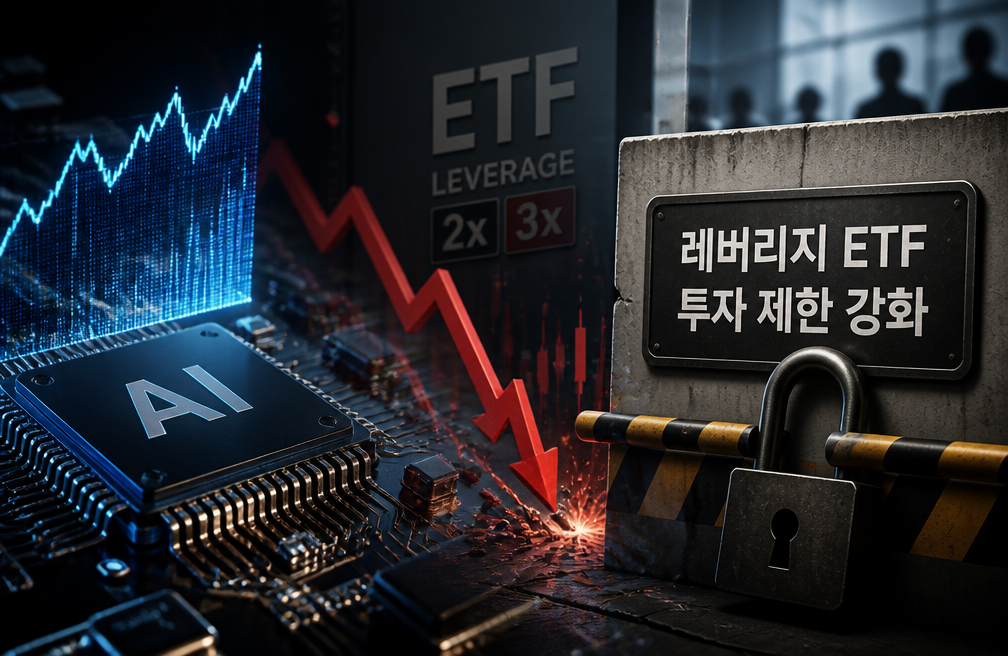
Low threshold leverage detonates chip stock transactions, and South Korea's regulations put an emergency on the brakes

Low threshold leverage detonates chip stock transactions, and South Korea's regulations put an emergency on the brakes

Author: Huohuo Original title: South Korea raises the entry threshold for leveraged ETFs, will the AI chip market be eaten back by the product mechanism? TL; DR · Korea will tighten leveraged ETF/ETN for a single stock ahead of schedule, and the 30 million won pure cash threshold will be implemented on July 31. · The new regulations will depress demand for new speculation, but established leveraged positions and daily rebalances may still amplify fluctuations. · Related subjects: Samsung Electronics (005930.KS), SK Hynix (000660.KS), KOSPI, Korea Single Stock Leveraged ETF/ETN. The Korea Financial Services Commission accelerated the tightening of the rules for leveraged products for individual stocks in late July, and brought the investor threshold for the phased implementation of the original plan ahead of schedule until around July 31. According to Korean media SBS on July 24, investors will need at least 30 million won of pure cash in their accounts to participate in such products in the future. Previously, the threshold was 10 million won, and alternative securities such as stocks, ETFs, and bonds can also be included at a certain rate. The new regulations apply to new or additional investments and cover single-share leveraged products listed at home and abroad. The core of being named this time is tracking a single stock leveraged ETF/ETN 2 times that of Samsung Electronics and SK Hynix. The regulation also suspends the listing of new similar products, restricts marketing of already listed products, and requires strengthened discount and premium management. What the market needs to look at is not just South Korea cooling down retail speculation. The more realistic question is that Korean chip stock transactions have expanded in the past two months. Much of this comes from AI semiconductor fundamentals, and how much of it comes from leveraged products that have increased trading pressure. Chip trading occupied the mainstream of the market for a short period of time. Instead of buying a basket of stocks, ETF/ETN focused on a single stock and tried to increase the daily rise and fall of the underlying stocks by about 2 times. Samsung Electronics rose 3% on the same day. The target increase for related products is roughly 6%, and it also amplifies when it falls. The launch of such products at the end of May coincided with the rise in AI semiconductor deals. Samsung Electronics and SK Hynix are originally the core players in the Korean market, and retail investors also prefer high volatility targets. Low thresholds, strong themes, and clear targets are superimposed, and the product is expanding rapidly. The Korean Financial Services Commission announced in English on July 16 that since the launch of related products on May 27, the market value and turnover have risen rapidly, causing the market to worry about increasing fluctuations in global memory chip stocks. This means that the trading structure is already beginning to affect the underlying stocks. According to Bloomberg, Samsung Electronics, SK Hynix, and related leveraged and inverse products once accounted for more than 70% of the trading value of the Korean stock market. This data is not a regulatory standard, but it is enough to explain why the regulation put the brakes on early after the product was launched less than two months after the product was launched. Daily rebalancing amplifies procyclical forces where products such as these have a real impact on the market, daily rebalancing. In order for the product to rise and fall by about 2 times every day, issuers and liquidity providers need to continuously adjust underlying stocks or related exposures. Frankly speaking, when underlying stocks rise, products may need to continue to increase their exposure in order to maintain target leverage. When underlying stocks fall, products may also reduce their exposure. This will create a procyclical force, buying after when it rises and selling when it falls. If the product is small, rebalancing is just a back-office operation. However, when related products and underlying stocks account for the majority of exchange transactions, it will change from technical details to part of the market price. This is also the reason why an explosion in transactions cannot be directly equated with increased demand for fundamentals. AI servers, HBM orders, and storage prices will affect the valuation of Samsung Electronics and SK Hynix, but when short-term capital is doubled in and out of the product, a large number of technical transactions will be mixed into the transaction. It's easy for investors to misjudge this tier. Seeing the expansion of transactions and rising stock prices, it is easy to understand that institutions continue to increase AI hardware assets. In actual transactions, retail subscriptions, capital increases, reverse product hedging, and daily rebalancing may co-create the illusion of liquidity. The cash threshold is due to the addition of speculative South Korea regulations to raise the cash threshold because it is more direct than a risk warning. The requirement to have 30 million won of pure cash in the account is equivalent to blocking part of the funds for small, high-frequency, and rolling participation. “Pure cash” is the core of this adjustment. In the past, investors could calculate the entry threshold for assets such as stocks, ETFs, and bonds at 70% of the market value, and the actual financial pressure was less. After the implementation of the new regulations, existing position prices cannot replace cash requirements, and the ability of retail investors to continue rolling their asset portfolios to participate in leveraged products will decline. The suspension of new product launches has released another...

29d agoburnking#AI #ETF
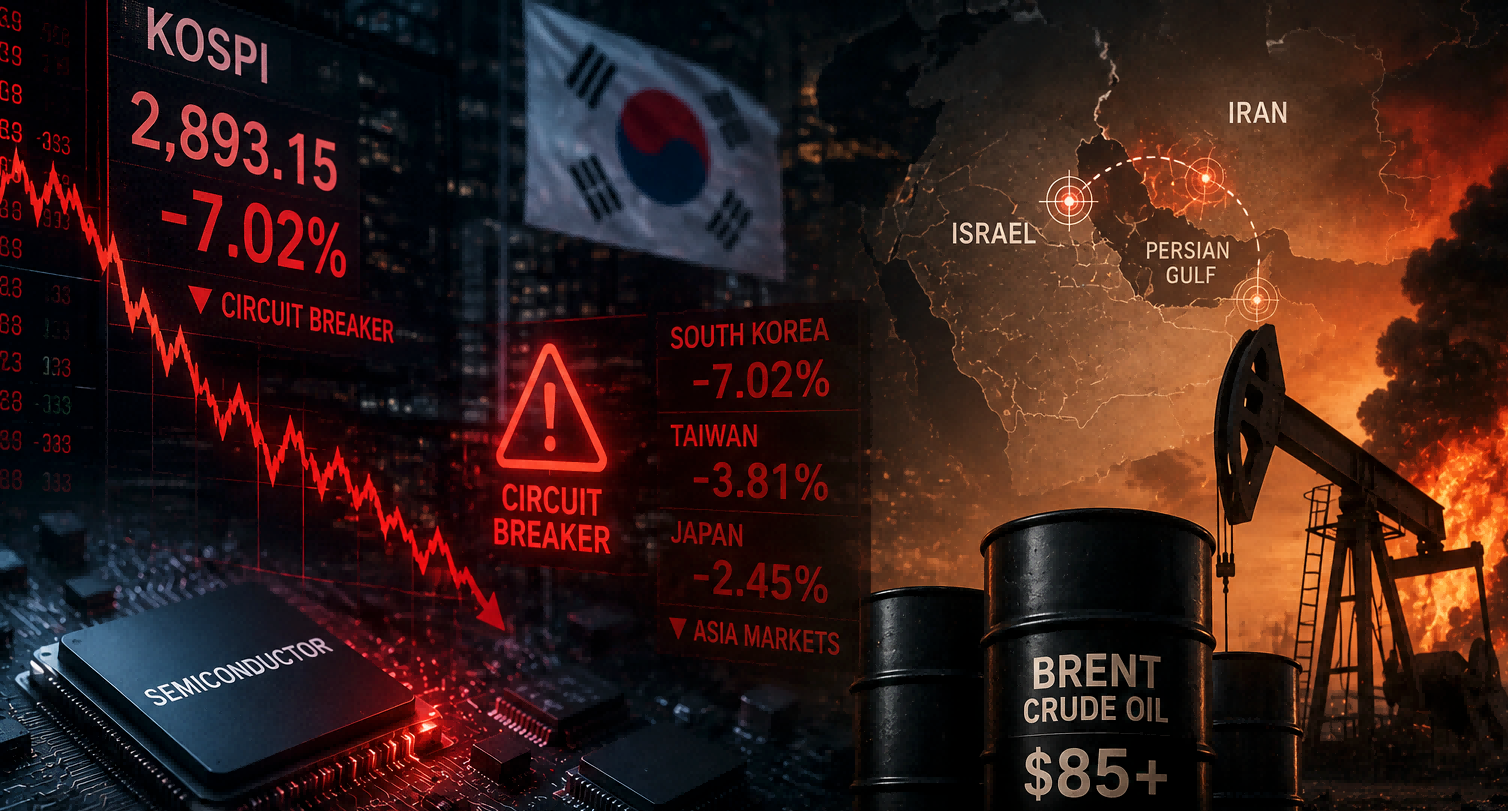
A wave of semiconductor sell-offs swept through Asia: Korean stocks plummeted 7%, triggering a meltdown, and the situation in the Middle East boosted oil supply above $85

A wave of semiconductor sell-offs swept through Asia: Korean stocks plummeted 7%, triggering a meltdown, and the situation in the Middle East boosted oil supply above $85

Author: Zhao Ying Original title: The wave of semiconductor sell-offs hit the Asia-Pacific stock market hard, with Korean stocks plummeting 7%, triggering a meltdown, and a new round of sell-off of 85 US dollars in semiconductor stocks hit the Asian stock market hard. South Korea's Kospi plummeted more than 7% and triggered a meltdown. The sustainability of AI transactions was questioned by the market; at the same time, the US-Iran conflict intensified concerns about the blockade of the Strait of Hormuz, and Brent crude oil rose to break 85 US dollars for 4 days. The unexpected weakening of inflation data has cooled expectations of the Federal Reserve's interest rate hike, and US debt has strengthened, but the risk of rising energy prices is laying new variables for the monetary policy outlook. A new round of semiconductor stock sell-offs has put pressure on Asian stock markets, and the sustainability of AI transactions has once again been questioned. Meanwhile, the continuing rise in the Middle East situation has driven oil prices to rise for the fourth day in a row. The decline in the Korea Composite Stock Price Index (Kospi) widened to more than 7% on Wednesday. SK Hynix and Samsung Electronics contributed a major part of the index's decline. The Tokyo-listed Kioxia Holdings fell more than 13%, and the Nikkei 225 index once extended to 3%. This round of sell-off dragged the MSCI Asia Pacific Stock Index down 1.5%, ending the previous two consecutive days of gains. Meanwhile, Brent crude oil rose for the fourth day in a row, breaking through $85.25 per barrel. The launch of a new round of air strikes by the US on Iran heightened market concerns about the interruption of energy supply in the Middle East. The chairman of the Korea Financial Services Committee said that the authorities will soon announce measures against leveraged ETFs to deal with the controversy that leveraged ETFs linked to Samsung and SK Hynix have increased stock market volatility. Furthermore, the Bank of Korea raised the benchmark interest rate from 2.50% to 2.75%, in line with market expectations. The sell-off in chip stocks intensified, and the resilience of AI trading was tested, and the semiconductor sector continued to be under pressure, becoming the core driving force behind this round of decline in the Asian stock market. After several months of sharp increases in stock prices, investors are beginning to demand stronger evidence that the surge in AI capital spending can translate into continued profit growth throughout the semiconductor supply chain. Bloomberg strategist David Savage pointed out that the market's lukewarm reaction to ASML's impressive performance report has deepened a worrying trend — Samsung Electronics' strong initial performance and TSMC's steady sales data have so far failed to support the increasingly weak rise in chip stocks. ASML previously raised its full-year sales forecast for the second time this year, and according to The Information, the company plans to raise prices for chip manufacturing equipment. The news quoted four people familiar with the matter. Despite this, the market reaction has remained lackluster. TSMC will release financial reports later in the day, which is seen as the next key point in evaluating the progress of AI infrastructure construction. David Savage said that as the company with the highest market capitalization in Asia, TSMC faces an extremely high threshold of expectations, and it remains to be seen whether it can reverse overall regional market sentiment. The Korean market triggered a fusing mechanism, and the regulatory authorities made an urgent statement that the sharp decline in the Korean stock market triggered the market protection mechanism. Kospi 200 index futures fell by more than 5%, and the Korea Exchange immediately launched a “sidecar” mechanism to suspend Kospi's programmatic trading. The Nikkei 225 index's decline widened to 3% at one point. The statement of the Chairman of the Korea Financial Services Committee reflects the high level of vigilance of the supervisory authorities about market fluctuations. Leveraged ETFs linked to Samsung and SK Hynix have recently been thought to have amplified stock price fluctuations to a certain extent, and the authorities promised to introduce countermeasures as soon as possible. The Bank of Korea announced an interest rate hike of 25 basis points on the same day, raising the benchmark interest rate to 2.75%, in line with market expectations. The situation in the Middle East is heating up, and geopolitical risks that continue to rise in oil prices have become another main line driving up oil prices. The temporary peace agreement between the US and Iran signed about a month ago has almost completely broken down in the past week, and the dispute between the two sides over control of the Strait of Hormuz continues. Most energy exports from countries such as Saudi Arabia, Qatar, and the United Arab Emirates must be transported through this strait. Trump said the bombing will be intensified until Iran stops attacking ships in the Strait of Hormuz and agrees to open the waterway. According to Xinhua News Agency, a spokesman for the Islamic Revolutionary Guard Corps of Iran posted on social media in the early morning of the 16th that Iran's current actions focus on destroying America's “offensive infrastructure” in the region, and that the next steps will be carried out later. The spokesperson wrote, “The enemy should not assume that they can continue to maintain the current fighting situation and drag the battle into a war of attrition.” David Russell of TradeStation said, “There is no pressure from the Federal Reserve to raise interest rates in the short term, but in the longer term, oil prices are the dominant factor. The energy sector boosted the market in June, but if the Strait of Hormuz is delayed in opening, this history may soon be a thing of the past...

37d ago谢伟伦#semiconductors #The price of oil #Korean stocks

The Ministry of Industry and Information Technology issued risk tips on preventing the hidden security backdoor hazards of the AI programming tool Claude Code

Comparing news, recently, the Ministry of Industry and Information Technology's Cybersecurity Threat and Vulnerability Information Sharing Platform (NVDB) monitoring revealed that the AI programming tool Claude Code has hidden security backdoor hazards and is seriously harmful. Claude Code is an AI programming tool developed by Anthropic in the US. It can independently complete code writing and repair tasks according to text requirements. Due to its built-in monitoring mechanism, sensitive information such as the user's region and identity can be sent back to the remote server without the user's consent. The affected Claude Code is version 2.1.91 to 2.1.196. It is recommended that relevant units and users immediately carry out comprehensive investigations, immediately uninstall or upgrade development terminals with the affected versions above to the latest secure version where the relevant backdoor code has been removed; strengthen the external authority control and traffic monitoring of development tools within the core business network segment to prevent illegal transmission of sensitive data.

45d ago

GigaYi Innovation: In the future, along with a marginal increase in production capacity in the niche storage market, product prices will drop significantly

Comparing news, GigaYi Innovation issued a stock trading risk warning. The company's memory chip industry has shown significant cyclical fluctuation characteristics in history. Currently, product prices are at historically high levels, and the trend of continuing to rise sharply is unsustainable, and supply and demand in the industry will eventually be rebalanced. In the future, with changes in multiple factors such as the macroeconomic environment, industry cycle, and market supply and demand relationships, prices of major products may drop by a considerable margin. At that time, product prices and gross margins of the company's storage business will all have a significant negative impact, leading to a decline in the company's overall profitability, and there is a risk that the company's operating performance will decline. The storage products currently operated by the company are niche storage products, that is, the main downstream supply is a broad and fragmented market other than mobile phones, PCs, and servers, such as consumer, industry, Netcom, and automobiles. The current rise in related product prices is mainly due to the significant increase in demand for AI in the mainstream storage market, causing major international storage companies to switch their business focus to related product fields. The niche storage market is mainly indirectly benefiting from tight supply. Unlike the mainstream storage market, the total downstream demand in the niche storage market is relatively stable. As industry prices rise rapidly, downstream demand has been suppressed to a certain extent. In the future, along with a marginal increase in production capacity in the niche storage market, prices will drop by a considerable margin. The company does not have a fab model. In the current context of overall supply shortages in the niche storage market, there is a risk that the supply of production capacity in upstream partner fabs will be further tight. The cumulative daily closing price increase deviation value for 10 consecutive trading days from June 15, 2026 to June 29, 2026 reached 73.42%, and the cumulative daily closing price increase deviation value for 30 consecutive trading days from May 18, 2026 to June 29, 2026 reached 125.60%.

54d ago