马化腾 · 83
After disbanding AI Lab and spending 84.6 billion dollars to buy cards in half a year, Tencent is going against the current

After disbanding AI Lab and spending 84.6 billion dollars to buy cards in half a year, Tencent is going against the current

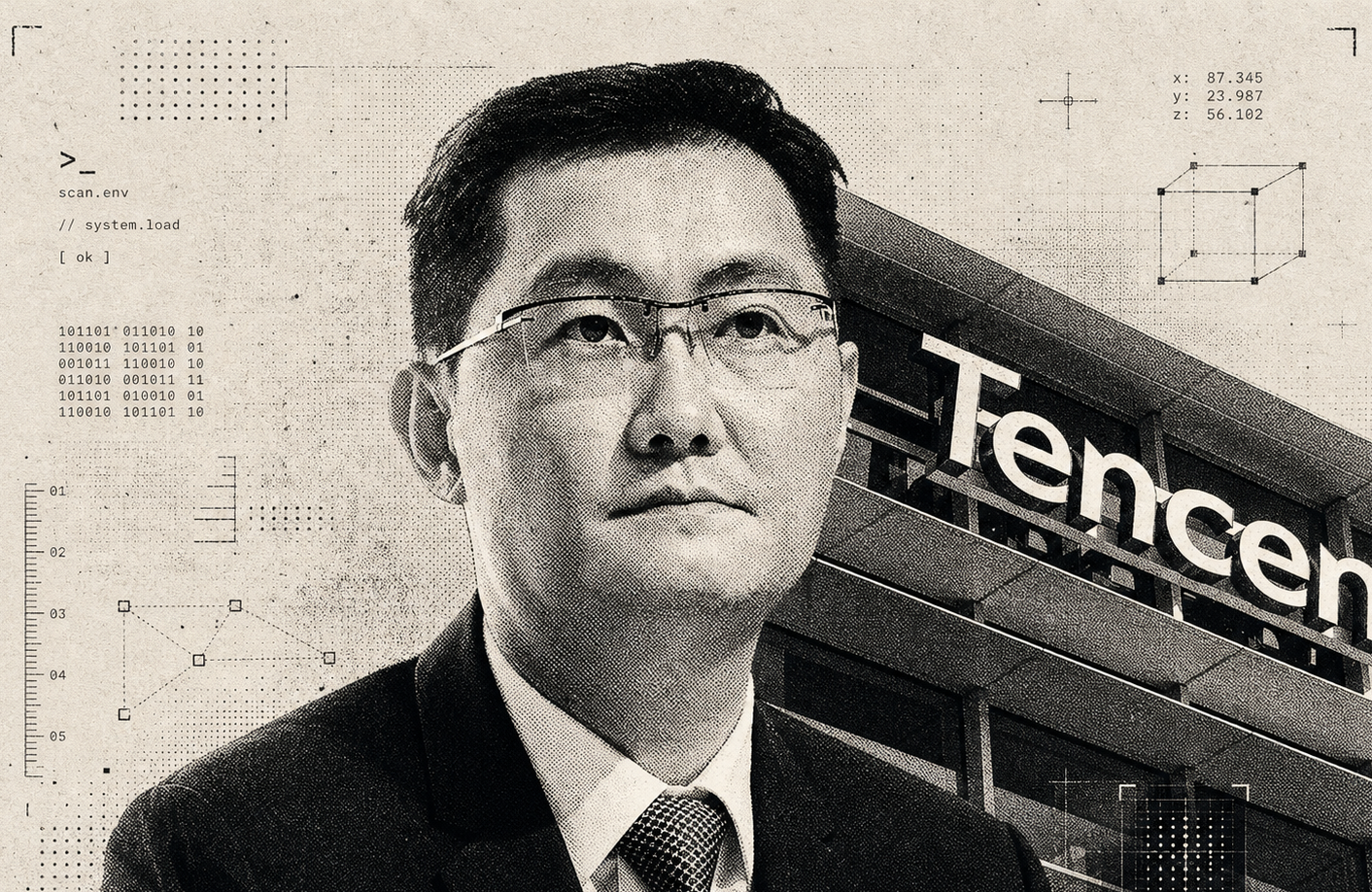
Author: Activision BeatingOriginal title: Tencent Still Has Dreams On August 12, 2026, Tencent released its financial report for the second quarter. Capital expenditure for a single quarter, $52.78 billion. Three months ago, that number was 31.9 billion. Moving forward a year, the total for the whole year would be less than 79.2 billion. This company has always been known for spending money with restraint. The speed at which it bought cards was once slow enough to make the market wonder if it actually wanted AI at the table. Now, it has brought the speed of spending money to this level within a year. At the earnings conference on the same day, Ma Huateng said that Tencent is “building a brand new, AI-enabled Tencent.” The hybrid was renamed HY, and Hy4 will be released soon. The last time this company described itself as “brand new” was in the era when WeChat was born. Tencent still has dreams. Its dream is not just AI; it needs to relearn to be an unstable company. In 2018, Pan Ran said in “Tencent Has No Dreams” that Tencent is a company like water. Water is good for all things, and there is no dispute; wherever there is a channel, it flows. Water has no personality, so water doesn't have dreams. It is natural for water to flow to a low place; backflow is for those who have reflux. In 2026, the 28-year-old company did something against nature. It admits that the article from eight years ago was right. It admits that it is no longer possible to live like water. On Wednesday, May 5, at 9 p.m., “Tencent Has No Dreams” was published. 13,000 words. At 2 o'clock in the evening, Liu Chiping and Tencent PR director Zhang Jun responded in the circle of friends. Liu Chiping said that Tencent is a larger organization and ecosystem than the outside world can imagine. “It's too narrow to reduce Tencent to the gains and losses of a product, a kind of strategic deployment, and one person's will.” At 2:19, a screenshot suspected of Ma Huateng's response began circulating in the circle of friends. At 2:39 the real Ma Huateng spoke up, saying “It's nice to have criticism” to a friend who cares about him. Afterwards, he said, “From writing the first line of code, my dream was how to make the best product, not how much money to make.” During the day, the national media quoted almost the full screenshot of Ma Huateng's response. Even Zhang Yiming spoke for Tencent in his circle of friends, saying this was a “Don Quixote imagination.” Tencent is not only powerful, but it is also constantly evolving in every dimension. Zhang Jun was on the long-haul flight that day. After landing, he said, “We certainly weren't as bad as the outside world thought, but the criticism also made us realize that we weren't as good as we thought.” Of course, there were a few different voices about that article at the time. Hong Bo said that many of the questions mentioned in the article are real questions, but is there only one correct answer for such a large company? “Perhaps the author thinks Zhang Yiming is the only correct answer. He is a bit superstitious about Zhang Yiming.” That article also recorded an earlier story. At the beginning of 2011, just after the 3Q war ended, Tencent held a general meeting to discuss what Tencent's ability to open up is. Ma Huateng asked the 16 executives who attended each to write down what they thought Tencent's core competencies were on paper, and came up with a total of 21 answers. Finally, decide on two. Capital, flow. The term capital was advocated by Liu Chiping. Opening up means releasing traffic and turning it into an investment. Traffic is open, capital is open, “I don't do it myself anymore.” These two terms have governed Tencent for ten years. The entrance to WeChat traffic and the exit of investment traffic is in the middle is a steady stream of cash generated by games and advertisements. JD's e-commerce portal entered the WeChat Jiugong grid. Sogou picked up the search, and Meituan took over the local life. Traffic is exchanged for shares, and shares are exchanged for allies. In ten years, Tencent's market capitalization has increased tenfold, surpassing Facebook's. When that article was published, it still looked invincible. If you look back and reread it eight years later, you'll find that the article predicted almost every time Tencent fell since then. Ten years later, on December 23, 2021, Tencent distributed 14.7% of JD shares to its shareholders, with a market value of about HK$100 billion. In January 2022, Sea holdings were reduced and $3.2 billion was cashed out. In November 2022, 9.6% of Meituan was split, or approximately HK$159.4 billion. The capital, which was designated as a “core competency” back then, was personally destroyed by Tencent. The water has flowed back and forth for the first time in decades. There is a section in the first AI Dream article that not many people paid attention back then. It's written in Tencent's AI. The Go program “Amazing Art” created by AI Lab successively lost to two amateur games. One is the personal hobby of Headline's vice president, and the other is an amateur work by several engineers on the WeChat translation team. Few people realize that...
5d ago动察Beating#AI
Office Agent's Summer: Big manufacturers are raising their knives and slashing their former self

Office Agent's Summer: Big manufacturers are raising their knives and slashing their former self

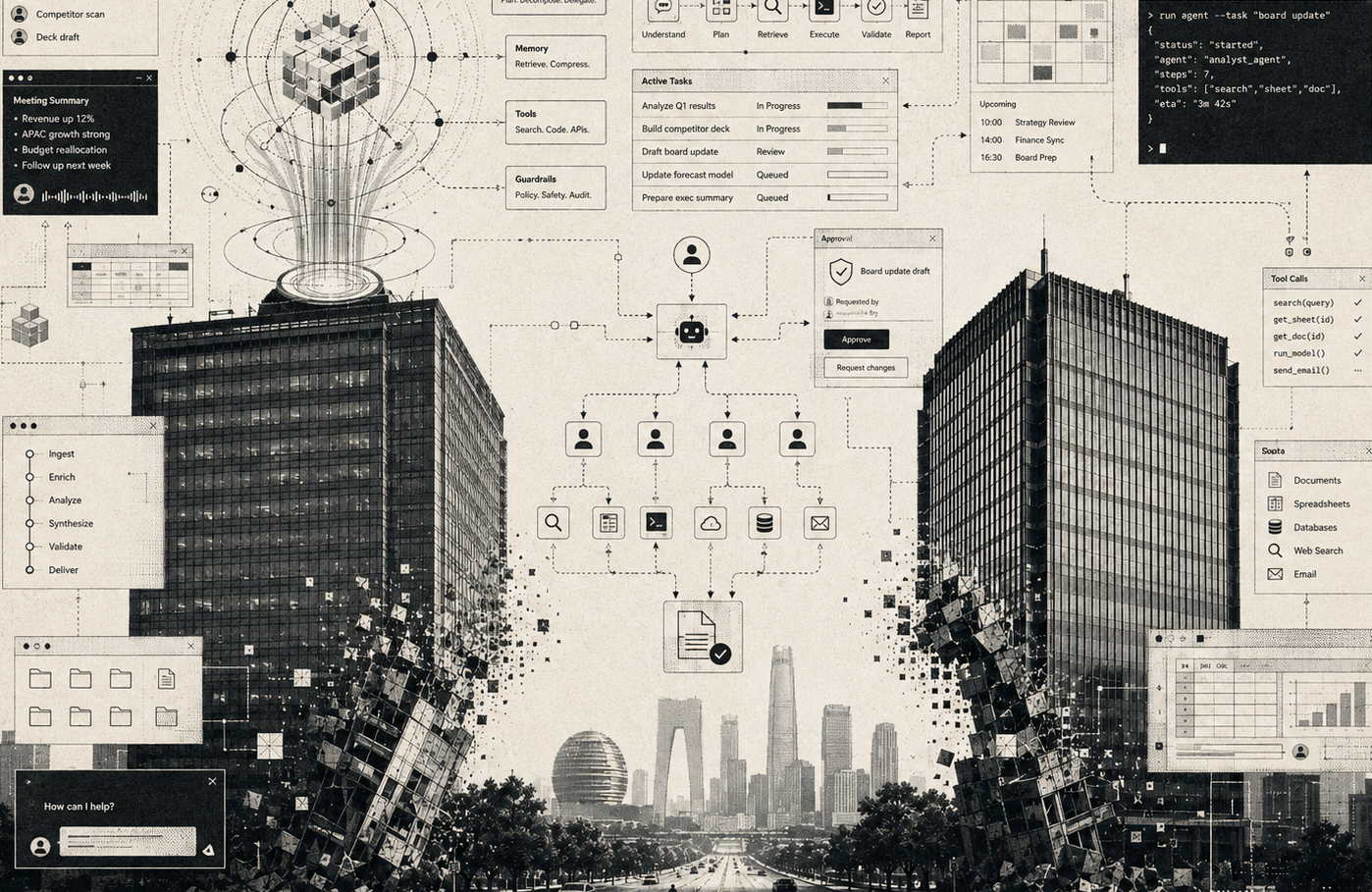
Author: Motion Detecting Original title: Twenty Years of the Internet in China, and Office Agent's This summer, there are two office buildings across the street in Hangzhou. On the roof of a building before the 2026 Spring Festival, a red and gold statue of Sun Wukong was erected next to the dowel's lightning symbol. The roof of the other building is the symbol of Feishu. On the day Sun Wukong stood up, photos were quickly uploaded on social media. Many people laughed that this was the most simple commercial battle. The meaning of DingTalk was probably one step higher than Feishu. The two have been playing for ten years. From whose messages you've read, to documents, forms, and customer lists, all the way to the roof. However, the monkey on the roof had empty hands and didn't wave. It's going to take out something, at the press conference a little over a month later. March 17, Xixi, Hangzhou. The founder of DingTalk was uninvited to stand at the press conference. He created DingTalk in 2015, left in 2021, and was invited back in 2025. On this day, he wants to release a new set of AI assistants. The name is Goku, and the logo uses the monkey on the roof of the building. Ali CEO Wu Yongming sat offstage. Needless to say, we need to break the nail and refine it again with AI. In the past, humans used DingTalk; in the future, AI used DingTalk. When talking about the logo, he removed the gold hoop from the monkey's head, saying it was already a battle over the Buddha. Offstage applause. The monkey that made a big fuss at Tiangong didn't go to Lingshan. He was crushed by Wuxing Mountain for 500 years. When he came out, he had an extra hoop on his head. He rolled all the way under the spell, and his temper was cleaned up little by little. The one who actually walked to Lingshan was already another monkey; he no longer wanted to be king. Fighting over the Buddha is the new name Qi Tian Daisheng got after walking that path. If you want to get there, you have to get rid of the original monkey first. This story is about Goku, but it's also about Ding Ning. What was ostensibly unveiled at this press conference was an AI product, but the one that really wanted to move was DingTalk itself. DingTalk has rewritten more than a thousand low-level abilities into instructions that AI can directly call. In the past, employees had to open approval, schedule, and business systems layer by layer on the screen. Goku could bypass this level, directly read data, adjust tools, and then move things on. Not only is there no way to hand it over, it's not just an entrance; it's also the company's internal organs that have been growing for ten years. However, after just 86 days, he left DingTalk on June 11. This incident is a bit dramatic, but returning to the Chinese Internet for the past 20 years is nothing new. Companies that have actually lived through cycle after cycle have almost all done the same thing, that is, hand over the next knife to their own people when the old business is still making money and the old products are still at their best. In the past 20 years of the Chinese Internet, no one has relied on protecting their former self until today. If you want to survive, you must first kill your former self. Big internet companies have been practicing this art for a long time to kill themselves at the pinnacle. October 2010, Shenzhen. Zhang Xiaolong wrote a letter to Ma Huateng, saying that QQ is a computer, and Tencent needs a communication tool born on a mobile phone. Tencent did not directly hand this matter to the QQ team. The three internal teams started construction at the same time. QQ, QQ address book, and QQ email each made one. Whoever did it first counts as who did it. That year, QQ was at its highest point. January 21, 2011, Guangzhou. The team that works for QQ email launched WeChat 1.0. Tencent took the lead. Two years later, something similar happened in Hangzhou. In 2013, Ma Yun said that the responsibility of the Alibaba Wireless team was to destroy Taobao. That year, Taobao was in the center of the stage. Two years later, mobile Taobao became the main battleground for Double 11. The words Taobao have been preserved, but the screen where people buy things has been replaced, and few people sit in front of a computer and open the Taobao web version. After another five years, it's Beijing's turn. August 2018, Zhichun Road. The China Airlines Building removed the four words “Today's Headlines” and replaced them with “ByteDance.” Today's headlines are still open, and are still being updated, as well as users and ads. That year, today's headlines are still national apps. It's just that TikTok has surpassed it. Three months later, Chen Lin became the CEO of Today's Headlines, and Zhang Yiming's official title was changed from “Today's Headline Founder and CEO” to “ByteDance Founder and CEO.” It's the same three times. Things that need to be used are making money and are getting a lot of attention. It seems like the last place the whole company should touch. But when it grows old on its own, the company will grow old with it. So you have to use it while it's still tough, hand over the next knife to your own person, let the new one grow from the inside, and then eat the old one little by little. The Division of the Losers, but it's bound to be...

10d agoburnking#agent

Tencent's intraday rise of more than 5% ushered in a narrative reversal: WorkBuddy users rose by two orders of magnitude, WeChat AI opened up more room for imagination

Comparative news. According to Bitget market data, the Hong Kong stock Tencent Holdings rose more than 5% during the intraday session today, and its stock price rose to HK$453. Tencent, which was once questioned about AI slowing down, is facing a narrative reversal. Ma Huateng confessed at the shareholders' meeting in May that he thought he had boarded the boat a year ago, but later discovered that the boat was leaking. But in just a few months, WorkBuddy's monthly activity surpassed 20 million, daily activity exceeded 13 million, and the DAU/MAU ratio reached 65%-75%, making it as sticky as a Slack office tool. 43 versions were released in three months, and updated as usual during the May Day holiday. Tencent internally positioned it as the third phenomenal product after QQ and WeChat. The key to WorkBuddy's ability to break through is two barriers: one is minimal installation — the desktop client plus the WeChat applet, the mobile phone sends instructions and automatically executes on the PC after WeChat authorization, completely bypassing the high threshold of command line deployment for similar products abroad; second, the Tencent Family Bucket ecosystem was activated in the Agent era — it has already opened Tencent Documents, Tencent meetings, corporate WeChat, and more than 30 external tools. The SkillHub skill library has been expanded from 79,000 to 790,000. Just send last week's sales data as a PPT to colleagues attending the conference Automate data reconciliation, file generation, and distribution, the transition from chat bots to helping you do the work turns a fragmented toolchain into a moat. At the same time, the first phenomenal product to be promoted in Tencent's history is a sign that it is truly determined to sink the B-side. More room for imagination comes from WeChat AI. WeChat's AI assistant, Xiaowei, launched a small-scale grayscale test on June 20. It supports voice or text messaging, friend circles, calling applets to reserve registration and takeout orders, and even generate applet prototypes through natural language. This is the first time that the 1.43 billion monthly active super app has entered the smart circuit. According to probabilistic weighted estimates, WeChat AI Agent can bring in incremental revenue of about 126 billion yuan and incremental operating profit of about 88 billion yuan by 2030; however, Goldman Sachs is wary of three major concerns: the self-developed WeLM model and mixed elements may duplicate resources, inference costs or erosion after full promotion, Q4 predicts 5%-17% of the adjusted operating profit, and the short-term monetization path is still unclear. The core of the differences between the two institutions lies in the pace: J.P. Morgan believes that the public beta has turned WeChat AI from an abstract option to a trackable milestone, and Goldman Sachs believes that the asymmetry between short-term costs and benefits requires more quarterly verification. In terms of the underlying model, Hybrid Yuan 3 Preview has accessed 131 Tencent products. The number of token calls is 10 times higher than the second generation. The OpenRouter platform ranks first in terms of usage, but the judgment that Ma Huateng can't sit still is still valid. Ecology is the natural soil for Tencent to act as an agent, but WeChat AI has to handle the complex proposition of transactions, advertising, payment, merchants, fairness, and supervision. The ceiling is higher and the friction is greater.

47d ago

DeepSeek launched the mapping mode, but can't recognize Liang Wenfeng

Compared to the news, DeepSeek officially launched the web version of the mapping mode, and the app is in closed beta. Judging from the functionality, the map recognition model launched this time is still in its early stages. The reporter tested the model several times using photos of DeepSeek founder Liang Wenfeng. After a few minutes of thinking, the model gave quite a few wrong answers, and finally simply admitted, “I'm really unsure. Guessing names is not recommended because guessing wrong is worse than saying 'I don't know. '” However, in tests by other netizens, faced with a picture of founder Liang Wenfeng, DeepSeek even identified it as the “young version” of the Dark Side of the Moon founders Yang Zhilin and Ma Huateng. It is worth noting that on the eve of the launch of the mapping model, DeepSeek was just revealed to have finalized an initial round of financing of over 50 billion yuan. According to market news, the core of DeepSeek's investment terms is: whether for large companies or VC funds, Liang Wenfeng's most important requirement is not to dig into DeepSeek's people or suggest that they go out to start a business. The reporter asked DeepSeek insiders about the relevant situation and learned that the statement was basically true.

65d ago
After the AI carnival, where is the new investment window?

After the AI carnival, where is the new investment window?

Author: Think AI, Aaron Original title: Missed the surge in AI stocks, what now? This round of AI stock rises for three and a half years, and there is no sign of stopping; people in the AI bubble fell into contemplation after watching the collapse of US stocks last year. The Korea Index has blown up 19 times this year, and the general market index has risen 4 times since last year. Hynix has risen 260% during the year, either at a new high, or on the way to a new high; US storage giant Micron broke through a market capitalization of 1 trillion US dollars and became the top 10 companies by market capitalization during the year, rising more than 10 times a year; the Japanese side previously invested in SoftBank in Ali, and its stock price has continued to rise continuously due to heavy investment in AI, making it the company with the highest market capitalization in Japan. Domestic Yushu and Changxin have already passed the meeting. Changxin's market capitalization is 1.5-2 trillion dollars, directly reaching the top 5 of A-shares; while AI companies Nvidia, Google, etc. are always fearful of rising; news even broke that domestic housing prices in Shenzhen and other countries are picking up. Since semiconductor and AI companies have exceeded expectations, executives of these companies have begun to grab buildings in batches. However, there is another scene. Loans to buy gold at the beginning of the year are still being held up, and domestic consumer stocks are still plummeting. Many netizens said that they have completely missed this wave of the AI bull market and are very anxious every day. What should we do now? Few people make money always look at the data first. In 2025, the profit ratio of A-share retail investors was only about 18.9%, the loss ratio was as high as 81.1%, and the per capita loss was about 21,000 yuan. The loss ratio of small retail investors under 100,000 yuan is even close to 98.7%. This is when the general market index closed up nearly 20% in 2025, the biggest increase of 80% in 50 years of science and innovation, and the overall rise last year. Wind data shows that in 2025, 500 stocks doubled, and more than 120 companies more than tripled. When the market recouped in January-April 2026, faith in AI collapsed, and institutions cut their meat at a low point. At the time of the decline, AI stocks experienced a wave of holdings reduction, and the shareholders + executives of Zhongji Xuchuang (Optical Module) reduced their holdings by 4.914 billion yuan, then the stock price rose by another 35%; Li Qiong, the majority shareholder of Kunlun World Wide, planned to reduce his holdings by 35.86 million shares, and the stock price plummeted 20% after the announcement, but then rebounded 40% within 1 month, and some of the shareholders who reduced their holdings “sold on the floor”. A special report on the reduction of holdings in the AI sector of brokerage firms in China indicates that in the AI computing power sector in 2026, the potential profit loss due to premature holdings reduction by institutions exceeds 200 billion yuan (calculated based on the average increase after reducing holdings), yet many institutions that firmly hold AI are betting in the wrong direction. At the end of 2025, institutions bet on vertical applications such as AI education and AI healthcare. As a result, vertical applications never exploded. In 2026, these sectors fell by an average of more than 20%, while the computing power sector rose by 50% +; when it came overseas, short selling was endless. The world-renowned fund, Bridgewater Fund, drastically reduced its holdings of Nvidia (nearly two-thirds), Alphabet (more than half), Amazon (9.6%), and Microsoft (35%) in Q3 2025, followed by an average increase of more than 80% from Q4 2025 to Q1 2026; there were even not a few shorters, and short positions in the US stock market recently hit a new high since 2012. According to the data, the total leverage ratio of hedge funds has risen to around 293%, and the S&P 500 short exposure and days-to-cover indicators have both set records. As strong as Buffett, he began reducing positions early. In 2026, Q1 cash reserves reached a record high of US$397.38 billion, completely skipping the AI market and missing out on the sharp rise in US technology stocks. There are many waves at the same time, but it is undeniable that AI is still the most definitive and revolutionary opportunity in the current market. AI is not a short-term concept, but a revolution in underlying infrastructure like electricity and the Internet. Historical experience shows that many people who missed the first wave of technology stocks found opportunities at the application layer or in the next round of infrastructure upgrades. China also has unique room for AI self-research, application implementation, and repair shortcomings in the industrial chain. When we are confused and anxious, we might as well take a look at what the best people in the industry think. Maybe they can give us some guidance and enlightenment. Tencent's Ma Huateng, who has always been thought to be lagging behind in the AI era, has been catching up since last year, and his speech at the shareholders' meeting in May of this year sparked a heated discussion. Regarding AI, he said, “We thought we were on the boat a year ago, but later discovered that the boat was leaking. Now it feels like it's standing up and still can't sit down. I still want the boat to be a little faster.” Regarding “how to go next,” he pointed out, “If you can't watch others do it, just walk over there and grab farewell...

80d agoLuxurytracy
Those who are skipping the AI bull market don't panic: the multi-round wave of technology has only just begun

Those who are skipping the AI bull market don't panic: the multi-round wave of technology has only just begun

Author: Rejected Ai Original title: Missed the surge in AI stocks, what now? Artificial intelligence stocks have risen again; the Korean index has blown up again today. The large market index has risen 4 times since last year. Hynix has risen 260% during the year, either at a new high, or on the way to a new high; US storage giant Micron broke through a trillion US dollar market capitalization and became one of the top 10 companies by market capitalization in the US, which has more than tripled during the year, increasing more than 10 times a year; the Japanese side is betting heavily on AI's SoftBank, whose stock price surged more than 14% in the intraday period, and is expected to become the company with the highest market capitalization in Japan. Domestic Yushu and Changxin have already passed the meeting. Changxin's market capitalization is 1.5-2 trillion dollars, directly reaching the top 5 of A-shares; while AI companies Nvidia, Google, etc. are always fearful of rising; news even broke that domestic housing prices in Shenzhen and other countries are picking up. Since semiconductor and AI companies have exceeded expectations, executives of these companies have begun to grab buildings in batches. However, there is another scene. Loans to buy gold at the beginning of the year are still being held up, and domestic consumer stocks are still plummeting. Many netizens said that they have completely missed this wave of the AI bull market and are very anxious every day. What should we do now? In fact, most people don't make any money, take a look at the data first. In 2025, the profit ratio of A-share retail investors was only about 18.9%, the loss ratio was as high as 81.1%, and the per capita loss was about 21,000 yuan. The loss ratio of small retail investors under 100,000 yuan is even close to 98.7%. This is when the general market index closed up nearly 20% in 2025, and domestic stocks like Cambrian broke out more than 5 times higher. Also, under the favorable atmosphere of the overall rise last year. However, when the market recovered in January-April 2026, faith in AI collapsed, and many people cut their meat at a low point. At the time of the decline, AI stocks experienced a wave of holdings reduction, and the shareholders + executives of Zhongji Xuchuang (optical module) reduced their holdings by 4.914 billion yuan, then the stock price rose by another 35%; Li Qiong, the majority shareholder of Kunlun World Wide, planned to reduce his holdings by 35.86 million shares, and the stock price plummeted 20% after the announcement, but then rebounded 40% within 1 month, and some shareholders who reduced their holdings “sold on the floor”. A special report on reducing holdings in the AI sector of brokerage firms in China indicates that in the AI computing power sector in 2026, potential profit losses due to premature holdings reduction by institutions exceeded 200 billion yuan (based on the average increase after reducing holdings), and this is still the case for institutions. At the end of 2025, bets were placed on vertical applications such as AI education and AI healthcare. As a result, vertical applications never exploded. In Q1 of 2026, the average decline in these sectors was over 20%, while the computing power sector rose by 50% +; when it came overseas, short selling was still constantly emerging. The world-renowned fund, Bridgewater Fund, drastically reduced its holdings of Nvidia (nearly two-thirds), Alphabet (more than half), Amazon (9.6%), and Microsoft (35%) in Q3 2025, followed by an average increase of more than 80% from Q4 2025 to Q1 2026; there were even not a few shorters, and short positions in the US stock market recently hit a new high since 2012. According to the data, the total leverage ratio of hedge funds has risen to around 293%, and the S&P 500 short exposure and days-to-cover indicators have both set records. As strong as Buffett, he began reducing positions early. In 2026, Q1 cash reserves reached a record high of US$397.38 billion, completely skipping the AI market and missing out on the sharp rise in US technology stocks. There are many waves at the same time, but it is undeniable that AI is still the most definitive and revolutionary opportunity in the current market. AI is not a short-term concept, but a revolution in underlying infrastructure like electricity and the Internet. Historical experience shows that many people who missed the first wave of technology stocks found opportunities at the application layer or in the next round of infrastructure upgrades. China also has unique room for AI self-research, application implementation, and repair shortcomings in the industrial chain. Many people think they are missing out on AI; in fact, they are only missing out on a certain period of Nvidia's increase. That's a pity, of course, but that doesn't mean it's over. Not every technological revolution in history was completed in a year. The Internet has been used for more than ten years, smartphones have been used for ten years, and cloud computing has also been used for more than ten years. If AI were really a technological revolution at the same level, it wouldn't just be a round of stock prices. As Ma Huateng said: Artificial intelligence is an opportunity for the industrial revolution. Ren Zhengfei pointed out that artificial intelligence may be the last industrial revolution in human history. Since it is an industrial revolution, the opportunity to combine AI with all walks of life has only just begun. The big model is smart enough, but now it's just Claude's first to make a profit, on the coding agent circuit. The next round of structural...

82d agoburnking#AI #AI topics #US stock topics

Ma Huateng responds to Tencent's AI questions: admits that the AI process has been tortuous. It has now boarded the ship but has not yet stabilized

Comparing news, at Tencent's shareholders' meeting, Chairman of the Board of Directors and CEO Ma Huateng gave the most candid response to questions from the outside world about whether Tencent's AI is lagging behind. He said, “We thought we were on the boat a year ago, but later discovered that the boat was leaking. Now I feel like it's standing up and still can't sit down. I still want the boat to be a little faster.” Ma Huateng acknowledged the company's tortuous journey in the field of artificial intelligence and used humorous metaphors to outline the current situation: already on board, but not yet settled down. At the same time, Ma Huateng stressed that Tencent is not necessarily the fastest in the industry to seize the opportunity, but it sticks to the right path and plays steady with its unique advantages. “If you can't watch others do it there, just walk over and grab other people's land. We also robbed others in the past, but then basically failed.”

101d ago
Lobster hasn't grown, big manufacturers have fenced the net: the OpenClaw ecosystem is facing a land crisis

Lobster hasn't grown, big manufacturers have fenced the net: the OpenClaw ecosystem is facing a land crisis

Author: Golem Original title: Free Mirroring or Rodeo is King? The founder of OpenClaw bombarded Tencent for plagiarism. When major domestic manufacturers scrambled to launch the “One-Click Install OpenClaw,” controversy followed. On March 12, Peter Steinberger, founder of OpenClaw, publicly questioned Skillhub created by Tencent on X, making it impossible to quickly capture data due to a drop in the official speed, adding that “they copied, but they did not support this project in any way.” Faced with the controversy, Tencent quickly responded and expressed understanding of Peter Steinberger's concerns, saying that SkillHub is Tencent's localized Skills platform based on the OpenClaw ecosystem. As a local mirror site, it not only always indicates Clawhub as the data source, but also processed 180GB of traffic (870,000 downloads) for users in the first week of launch, and only pulled 1GB of non-concurrent requests from official sources. Meanwhile, Tencent expressed its willingness to become a sponsor. As a matter of course, this round of responses by Tencent has clearly explained the question of “whether the source site is being insanely consumed”, which is most likely to trigger a backlash from public opinion, but Peter didn't buy it after reading it, saying that this was not the point. He could use SkillHub as an official fifth mirror and download statistics simultaneously, but Tencent should take the initiative to communicate with it beforehand. Although this is the end of the matter, if you only understand this incident as “the founder of OpenClaw launched an emotional attack” or “the big manufacturer's normal localization was misunderstood,” then you really underestimate the problem. The problem is not mirroring, but the “overbearing” of big manufacturers. If you only look at technical actions, this is actually not unusual. In the Chinese developer ecosystem, mirroring open source projects is a routine operation. International open source infrastructures such as npm, PyPI, and Docker Hub all have a large number of local images in China. Because of this, Tencent denied that the Skillhub it created was a plagiarism, but rather a localized Skills platform. It explained that it was not scavenging and emptying the official website, but was distributing, speeding up, and adapting to help OpenClaw land in China. In a sense, Tencent's approach has indeed met the most realistic needs of “shrimp farmers” in China. OpenClaw is so popular in China that not everyone is willing or able to have stable access to the original community, let alone the installation, discovery, and retrieval experience of many Skills itself is still very original. Skillhub But the question is, are mirror sites naturally innocent? The answer is not necessarily. Because what open source agreements allow, what community ethics accept, and what will eventually happen in commercial reality, there are often three different sets of accounts. At the level of the agreement, as long as the license is followed and the source is indicated, many mirroring and redistribution acts are established; at the level of community ethics, Tencent's SkillHub marks OpenClaw's official source status, and also actively reduces the bandwidth costs of the origin site, and seems to have taken responsibility. However, Tencent forgot that OpenClaw is not a small open source project requiring deliberate resource injection from big manufacturers. It is the most popular project and has received the most stars on GitHub. At this point, Tencent's act of not saying hello became “overbearing.” Because it's no longer just a mirroring issue, it quickly involves three more sensitive issues: who represents the official ecosystem, who is taking away the user portal, and who defines download, distribution, and statistical caliber. This is where Peter is really uncomfortable. It indicates that Tencent's behavior will directly affect download statistics. Peter doesn't support Tencent's localization of OpenClaw in China. Instead, he thinks it's best to be able to communicate in advance, rather than having Tencent set up the platform first, take over users, and then explain under pressure from public opinion that he is actually here to help. Also, from the perspective of commercial reality, once a platform shell such as SkillHub forms in scale, the official and statistical power that the OpenClaw community originally possesses can easily be marginalized. Today is a localized Skills platform, tomorrow may be the “Default Skills Distribution Marketplace”, and later, it may be “who decides what Skills are seen, installed, and commercialized.” This is the real danger sign behind this controversy. It is also the most familiar scene on the Chinese Internet over the past 10 years: the Rodeo Campaign. The big factory is not “raising lobsters”; they are using AI to secure lobster in the past...

162d agoburnking#AI #OpenClaw #originators

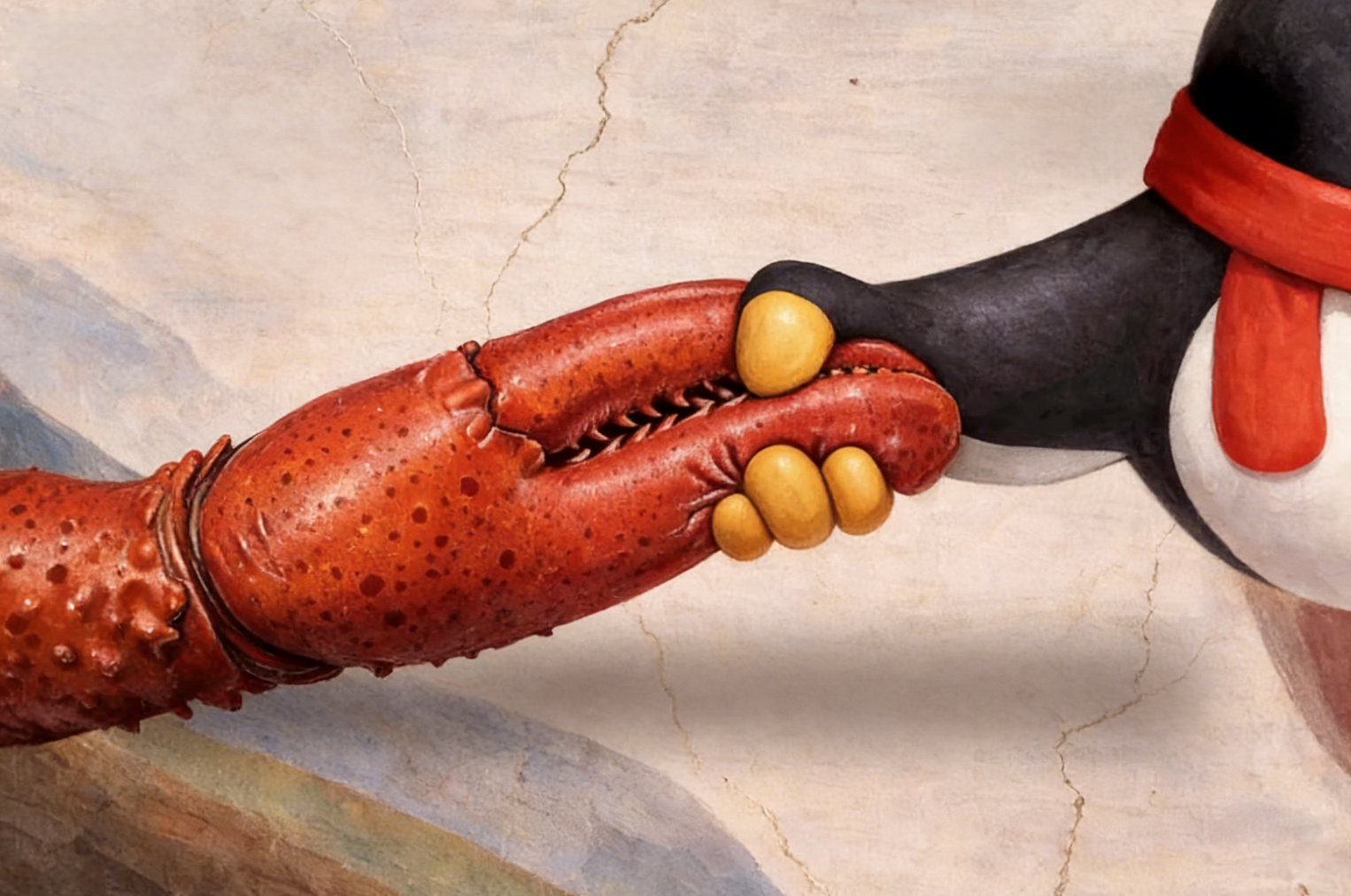
Ma Huateng: Tencent is launching the “Lobster Family Bucket”

Comparatively, on March 10, Tencent announced a matrix of all of its “lobster” products. Ma Huateng posted an article in his circle of friends detailing his “lobster” products: self-developed lobster, local shrimp, corporate shrimp, cloud desktop shrimp, safe quarantine shrimp, cloud security, knowledge base... and a number of products arrived one after another.

164d ago
Sun Yuchen's 2016 Investment Thoughts: How to Predict Tencent, Tesla, and the Crypto Era?

Sun Yuchen's 2016 Investment Thoughts: How to Predict Tencent, Tesla, and the Crypto Era?

Author: Jaleel Plus Six Original title: Sun Yuchen's 2016 Investment and Entrepreneurship Thoughts: Buying Tencent and Buying Tesla, How Can He Predict This Era? Recently, the hottest commercial battle in the traditional industry is not the Lao-Luo war against Sibemo. At the end of the hustle and bustle, there was actually no getting around a simple question: Why are “pre-made dishes” so common in restaurants now? The answer is four words: replicability. A company, like McDonald's, can only become a big business if it achieves 60 points of quality and standardizes it. Who would have thought that Sun Yuchen nine years ago had already explained this “60-point large-scale entrepreneurship logic” very thoroughly. Taking the perspective from restaurants back to business and investment, you'll find his series of “leap choices” back then: mining Bitcoin in 2012, reverse-investing when Tesla was shorted, shifting from investing to entrepreneurship, and moving from apps to blockchain. Reviewing the content related to investment and entrepreneurship in Sun Yuchen's “The Road to Freedom of Wealth Revolution” course, we can find the reason “why Sun Yuchen after the 90s earned a net worth of tens of billions”, the framework and logic of his investment and entrepreneurship circuit. This is also a strong reference value for young people who are still investing in entrepreneurship today. To make it easier to read, Rhythm BlcokBeats was organized “from light to deep” and extracted the highlights of the last part of this set of open courses on investing and starting a business as a continuation of “Sun Yuchen's Lecture 9 Years Ago: Why Not Buy a House, Don't Buy a Car, Not Get Married?” and “Why are Chinese people only three generations rich? The final article after “Sun Yuchen Gives a Cruel Answer 9 Years Ago” came to a complete end. Deer don't always pass by; you have to lie back and wait 1. What should you invest in to make yourself rich quickly? Sun Yuchen: Investing itself is actually a big proposition at this stage. I'm sure it will take a lifetime for many people to learn how to invest. I think there are a lot of targets now that are actually all good. For example, for example, stocks of some very good internet companies, such as Tencent, I think there is no risk in buying Tencent shares, at least for now, including even though I said, don't use buying a house as a strategy, but I think if you have a lot of money, buying a house in Beijing or North China is actually close to the front line. At least buying a house in Beijing and Shanghai is not a loss-making business, but none of these are my recommendations. The most recommended thing I recommend is investing in yourself. I've already explained this very clearly. The biggest problem for most people is that they don't realize for a day that they should live for themselves. First of all, I don't think I'm selfish at all, because I haven't thought it out. If you can't even live for yourself, how can you still live for your wife? Therefore, the vast majority of people say we are investing in other things. For example, even if you invest in a house in Beijing or Tencent shares, you first ignore that you are the one who should be invested the most. Do you think you know housing prices in Beijing, or do you know Tencent's stock price? You're not Ma Huateng. But you definitely know yourself best: what kind of person you are, what shortcomings you need to make up for, and where you need breakthroughs in life and career. In particular, for the vast majority of post-90s and 95s, time and money are originally limited. If you spend 20,000 dollars to buy 100 shares of Tencent, even if it rises to 30,000 in 2 years and earns 10,000, then it's better to buy a few more eggs to eat, which will help your health even more. I don't think it's possible to become rich overnight except by buying lottery tickets in this world, so don't think about investing in anything other than yourself. So from this point of view, Bitcoin is actually not an “investment” that everyone understands for me; it is actually a kind of personal belief, a vote on a personal career. If anyone works for Tencent now, and you are optimistic about this company, of course I would suggest you spend all your money to buy the options Tencent gives you. Because this is not only Tencent's stock, but also your business, I really encourage young people to join a startup to get the startup's options, and then buy the startup's options. You must combine this investment with your own business, because a person doesn't actually have much capital in the first place, and you must combine everything with yourself. I think only in this way can you truly gain the advantage of concentrating resources and be successful. 2. How to grasp the timing of buying? Take a look back at your three investment experiences: Tesla, Bitcoin, and Vipshop. Sun Yuchen: Before talking about these three investments, let me share some macro background. Since the seventies and eighties of the last century, America...

340d agoburnking#Sun Yuchen