高考 · 64
After disbanding AI Lab and spending 84.6 billion dollars to buy cards in half a year, Tencent is going against the current

After disbanding AI Lab and spending 84.6 billion dollars to buy cards in half a year, Tencent is going against the current

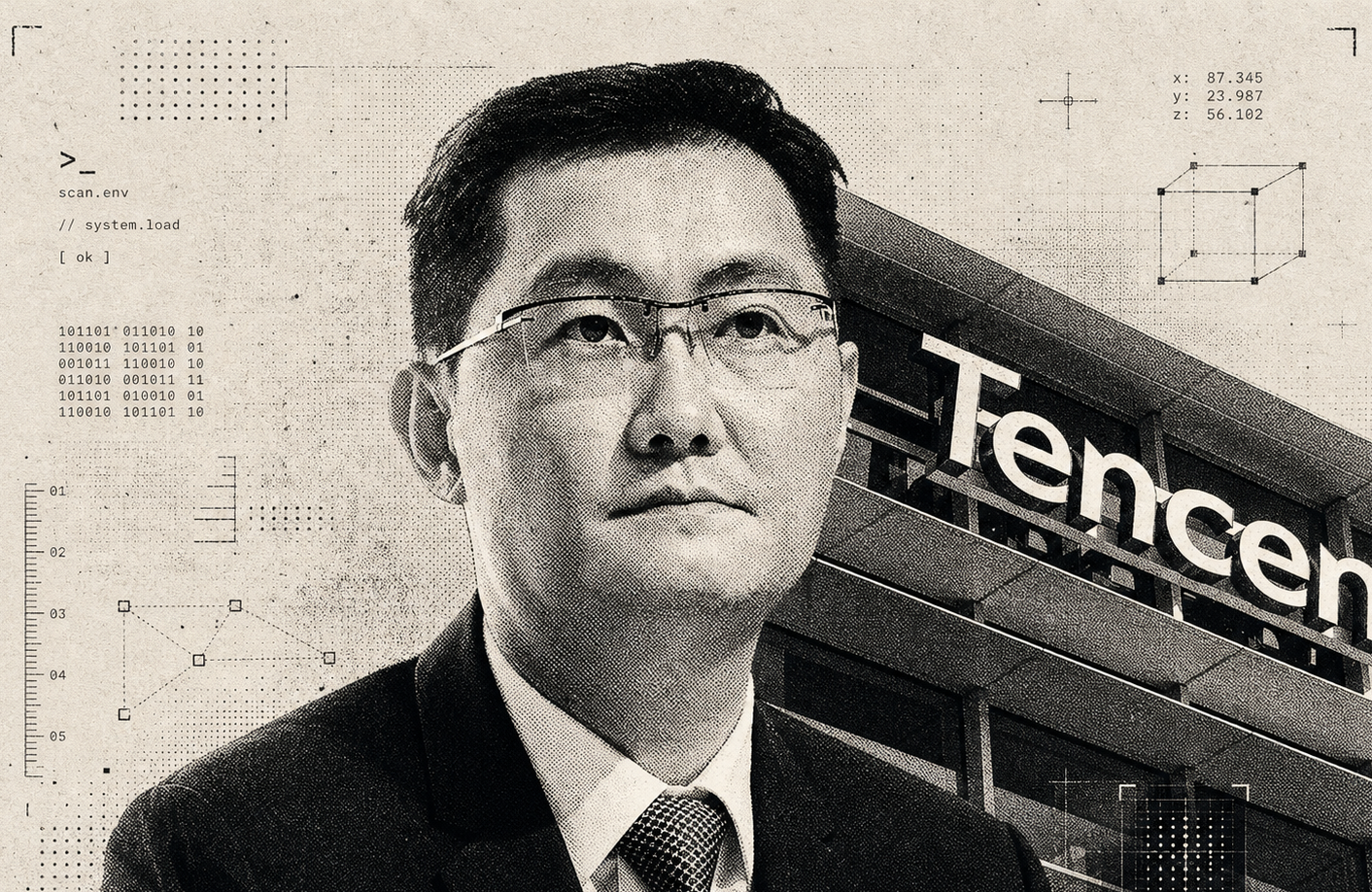
Author: Activision BeatingOriginal title: Tencent Still Has Dreams On August 12, 2026, Tencent released its financial report for the second quarter. Capital expenditure for a single quarter, $52.78 billion. Three months ago, that number was 31.9 billion. Moving forward a year, the total for the whole year would be less than 79.2 billion. This company has always been known for spending money with restraint. The speed at which it bought cards was once slow enough to make the market wonder if it actually wanted AI at the table. Now, it has brought the speed of spending money to this level within a year. At the earnings conference on the same day, Ma Huateng said that Tencent is “building a brand new, AI-enabled Tencent.” The hybrid was renamed HY, and Hy4 will be released soon. The last time this company described itself as “brand new” was in the era when WeChat was born. Tencent still has dreams. Its dream is not just AI; it needs to relearn to be an unstable company. In 2018, Pan Ran said in “Tencent Has No Dreams” that Tencent is a company like water. Water is good for all things, and there is no dispute; wherever there is a channel, it flows. Water has no personality, so water doesn't have dreams. It is natural for water to flow to a low place; backflow is for those who have reflux. In 2026, the 28-year-old company did something against nature. It admits that the article from eight years ago was right. It admits that it is no longer possible to live like water. On Wednesday, May 5, at 9 p.m., “Tencent Has No Dreams” was published. 13,000 words. At 2 o'clock in the evening, Liu Chiping and Tencent PR director Zhang Jun responded in the circle of friends. Liu Chiping said that Tencent is a larger organization and ecosystem than the outside world can imagine. “It's too narrow to reduce Tencent to the gains and losses of a product, a kind of strategic deployment, and one person's will.” At 2:19, a screenshot suspected of Ma Huateng's response began circulating in the circle of friends. At 2:39 the real Ma Huateng spoke up, saying “It's nice to have criticism” to a friend who cares about him. Afterwards, he said, “From writing the first line of code, my dream was how to make the best product, not how much money to make.” During the day, the national media quoted almost the full screenshot of Ma Huateng's response. Even Zhang Yiming spoke for Tencent in his circle of friends, saying this was a “Don Quixote imagination.” Tencent is not only powerful, but it is also constantly evolving in every dimension. Zhang Jun was on the long-haul flight that day. After landing, he said, “We certainly weren't as bad as the outside world thought, but the criticism also made us realize that we weren't as good as we thought.” Of course, there were a few different voices about that article at the time. Hong Bo said that many of the questions mentioned in the article are real questions, but is there only one correct answer for such a large company? “Perhaps the author thinks Zhang Yiming is the only correct answer. He is a bit superstitious about Zhang Yiming.” That article also recorded an earlier story. At the beginning of 2011, just after the 3Q war ended, Tencent held a general meeting to discuss what Tencent's ability to open up is. Ma Huateng asked the 16 executives who attended each to write down what they thought Tencent's core competencies were on paper, and came up with a total of 21 answers. Finally, decide on two. Capital, flow. The term capital was advocated by Liu Chiping. Opening up means releasing traffic and turning it into an investment. Traffic is open, capital is open, “I don't do it myself anymore.” These two terms have governed Tencent for ten years. The entrance to WeChat traffic and the exit of investment traffic is in the middle is a steady stream of cash generated by games and advertisements. JD's e-commerce portal entered the WeChat Jiugong grid. Sogou picked up the search, and Meituan took over the local life. Traffic is exchanged for shares, and shares are exchanged for allies. In ten years, Tencent's market capitalization has increased tenfold, surpassing Facebook's. When that article was published, it still looked invincible. If you look back and reread it eight years later, you'll find that the article predicted almost every time Tencent fell since then. Ten years later, on December 23, 2021, Tencent distributed 14.7% of JD shares to its shareholders, with a market value of about HK$100 billion. In January 2022, Sea holdings were reduced and $3.2 billion was cashed out. In November 2022, 9.6% of Meituan was split, or approximately HK$159.4 billion. The capital, which was designated as a “core competency” back then, was personally destroyed by Tencent. The water has flowed back and forth for the first time in decades. There is a section in the first AI Dream article that not many people paid attention back then. It's written in Tencent's AI. The Go program “Amazing Art” created by AI Lab successively lost to two amateur games. One is the personal hobby of Headline's vice president, and the other is an amateur work by several engineers on the WeChat translation team. Few people realize that...
5d ago动察Beating#AI
What kind of path did Liang Wenfeng follow when his 80,000 capital went to DeepSeek to shake Silicon Valley?

What kind of path did Liang Wenfeng follow when his 80,000 capital went to DeepSeek to shake Silicon Valley?

Author: Motion Cha BeatingOriginal title: Liang Wenfeng Youth Past Stories: 80,000 Capital, a Fiat, and One Man's Long March, January 27, 2025, Monday. Liang Wenfeng is playing with several middle school students on a court in Wu Chuan. Seven days ago, Deepseek-R1 was released. Seven days later, the news crossed the Pacific Ocean, causing turmoil in the US capital market. Nvidia's stock price fell by more than 16% in a single day, and the market value evaporated by nearly 600 billion US dollars. The US media picked up old words from the Cold War era and called this day a new “Sputnik moment.” DeepSeek is already at the top of the free app store list in both China and the US. People in Silicon Valley learned to read an unfamiliar Chinese name overnight. Interview emails flocked to Hangzhou from all over the world, and reporters went around asking where Liang Wenfeng had gone. No one found him. That afternoon, he wore a jersey and ran back and forth at a stadium in a county-level city in western Guangdong. The ball falls to his foot, he catches it, turns around, and passes it out. The world outside the field is shaking for him, and the game on the court continues. The next day was New Year's Eve. When Liang Wenfeng returned to Mililing Village, he had already pulled up a banner with white letters on the red background, “Warmly welcome Wen Feng, the pride and hope of his hometown.” Visitors came one by one, standing under the banner and taking pictures. Some people bent down, grabbed a handful of dirt from the side of the road, and carefully collected it, as if they wanted to take some good luck from this village. Liang Wenfeng's high school classmate, Mr. Chen, told the reporter that he promised to go back to Wu Chuan for the New Year, but after returning, he would find a place to hide. Children of Mililing Village In 1985, Liang Wenfeng was born in Mililing Village, Qinba Town, Wuchuan City. Wu Chuan is in western Guangdong. It is surrounded by rivers on three sides and faces the sea on the south side. The Jianjiang River came all the way down from the north, then suddenly turned a corner and flowed south into the sea. In the past, merchant ships running along the waterways were often anchored in the river bay, and the warehouses on the shore were connected, and it was very noisy. As a result, this county town received a very impressive name, “Little Buddha Mountain.” Wu Chuan also believes in reading. Xiajie Village, the hometown of Qing champion Lin Zhaotang, is not far from Mililing Village. The county register records that there was a champion here, 20 contestants, and 165 people. For hundreds of years, generations of young people have set out from here and followed the same narrow road to counties, provincial towns, and Beijing. Fame has long been a thing of the past, and the idea that studying can change one's life has always remained in this land. Mililing Village also has its own story. When talking about their ancestors, they talk about anti-Japanese general Leung Wah Shing, and Leung Tai-hee, who graduated from Sun Yat-sen University in 1936. According to village records, after liberation, nearly 100 students have been admitted to national key universities from here. However, Liang Wenfeng grew up in the 90s. It was the age of money in Guangdong. Factories were recruiting people, business was booming, and coastal cities were the same day by day. A young man who is willing to suffer hardships and dares to break through may not need to sit in a classroom for many years; he also has the opportunity to earn money he never dared to think of before. In contrast, studying is too slow. You have to work year after year, and no one can say for sure what you can get in return. Many parents in the village decided that studying was useless, and even made a special trip to Leung's family to persuade his father not to let his children continue reading. At that time, the imagination of fame that Mililing Village had accumulated over hundreds of years was being overshadowed by fresh and hot stories of wealth in Guangdong. Many years later, Liang Wenfeng talked about this past in an interview: “I grew up in a fifth-tier city in Guangdong in the 80s. My father is an elementary school teacher. In the 90s, there were many opportunities to earn money in Guangdong. At the time, quite a few parents came to my house; basically, my parents felt that studying was useless. But now that I look back, my ideas have all changed. Because the money wasn't easy to make, I probably didn't even have the chance to drive a taxi. Time has changed in one generation.” “Time has changed in one generation.” This phrase refers to the 90s, and it also refers to 2024. When he said this, he was doing another thing that was just as slow and just as difficult to explain. Liang Wenfeng's father taught at Meiyi Elementary School and later became the Deputy Teaching Director. Her mother was also a teacher and taught at Bianling Elementary School. This family doesn't have much to do with scientific research, but books are piled up in the attic all year round. According to local media reports, the largest collection of books was in the thousands. My father set two rules for the family. At the dinner table, we don't talk about studying; we only talk about family life; after dinner, the whole family finds a book to read on their own. Whether Liang Wenfeng did well or not, his father rarely questioned him. What he says more often is that solving problems is more important than scores. The Leung Family's most valuable appliance is a Feiyue radio. A black case, a metal knob, and an antenna that can be pulled out one section at a time. When the switch is turned, a rustling current sound comes out of the speaker. After the frequency is adjusted, the sound from a faraway place slowly comes out of the noise. When Liang Wenfeng was in fourth grade, he took this radio apart. Remove the screws,...

17d agoburnking
Tsinghua genius+rock drummer, this guy from Chaoshan is making Silicon Valley uneasy

Tsinghua genius+rock drummer, this guy from Chaoshan is making Silicon Valley uneasy

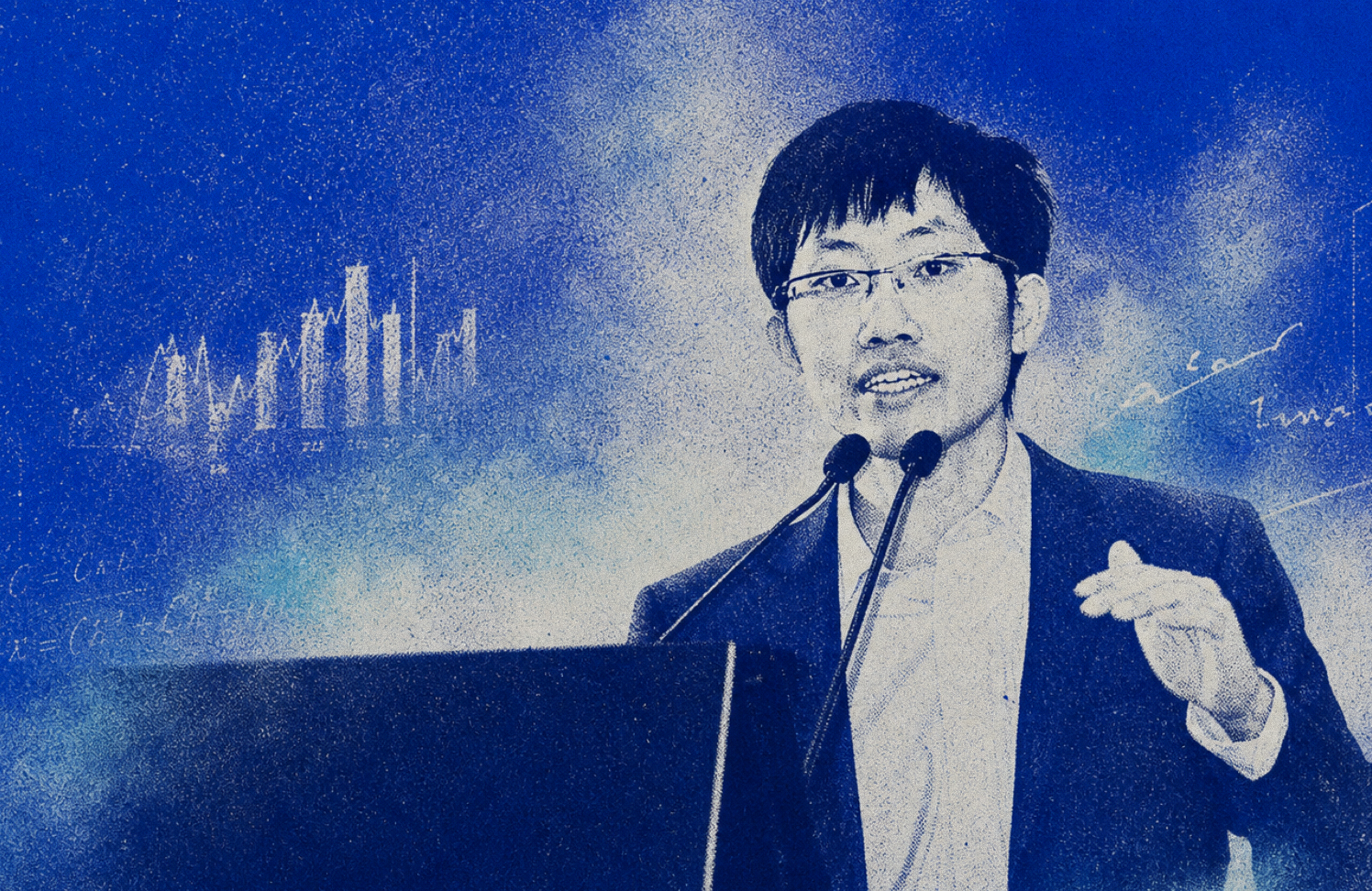
In the middle of the night of July 16, 2026, when Yang Zhilin's Kimi K3 model went online, no one anticipated what would happen next. On the first day, it reached the top of the Arena AI front-end code arena with 1,679 points, beating Claude and GPT. Some people overseas call it the “DeepSeek 2.0 Moment.” The next day, Musk wrote “Impressive” on social platforms and immediately announced that his new model with 2 trillion parameters “may surpass Kimi”. The dark side of the Moon responded: “Welcome Musk to the '2 Trillion+ Club'.” On the third day, Kimi's user requests exceeded estimates, approaching the cluster's carrying limit, and the team issued an announcement late at night to suspend new user subscriptions. On the fourth day, US White House officials publicly accused the dark side of the Moon of “stealing technology” and “circumventing chip export controls.” On the fifth day, NASDAQ opened down 1.8% due to factors such as the K3 release, and the Philadelphia Semiconductor Index fell 5.2%. On the sixth day, Bloomberg reported that K3 is thought to be able to narrow the AI gap between China and the US. Some scholars pointed out that the gap may narrow to two to three months. On the 7th day, Hu Xijin sent an article reminding Yang Zhilin to “not go to America for a while.” In seven days, a post-90s Shantou native messed up Silicon Valley, the White House, and Wall Street at the same time. Code as instrument, rock and roll as bone Yang Zhilin was born in 1992 to an ordinary family in Shantou, Guangdong. Her growth trajectory was unique from the beginning. As a teenager, he had two hobbies: rock and roll and code. He attended Jinshan Middle School in Shantou in high school. He was selected for the Informatics Olympiad training course without any programming background. Most of his classmates have been writing code since middle school; he started ridiculously late. However, just one year later, he won the first prize in the Guangdong Division of the National Youth Informatics League and was eligible for Tsinghua promotion. But he wanted to prove that he was more than just a “caretaker.” He participated in independent enrollment and went through the college entrance examination again, and decided to take the college entrance examination as an ordinary college candidate — 667 points, the top science champion in Shantou City. He was accepted to Tsinghua three times and became a legend in the local area. Yang Zhilin (center), winner of the 2011 Shantou Science College Entrance Examination, was offered free air tickets by Air China. (Source: Hualong Chaoshan Network) After entering Tsinghua, he was transferred to a thermal energy project — commonly known as a “burning boiler”. In his sophomore year, he made a decision that was puzzling to others: switch majors to computer science. The reason it's very “rock”: Love it. And this love comes from a novel by Haruki Murakami — a programmer character in the novel who writes code late at night to implement technology, making him full of hope. Transferring majors meant finishing everyone's freshman programming classes. But in the end, he graduated with the first grade, scoring over 95 points in 90% of the majors. At the same time, he formed the rock band Splay in Tsinghua as a drummer and songwriter. The band's name comes from the data structure “Splay Tree” — an ingenious pun. In the 2014 Tsinghua School Song Contest, they won the “Best Original Song Award”. (First grade, countless papers) Many years later, when recalling her biggest regret as an undergraduate, Yang Zhilin said, “My band didn't win the title in the original competition; they only won an original song award.” Entrepreneurship is written in the DNA of Chaoshan people. In 2015, Yang Zhilin graduated with the first place in the Tsinghua Computer Department and went to Carnegie Mellon University to study under Ruslan Salakhutdinov, Apple's first AI director. Graduated after four years—a full two years faster than the usual six years. While reading the blog, he did two jobs that were frequently quoted later: Transformer-XL and XLNet, which were cited more than 20,000 times in total. Transformer is the underlying framework for all big models today, and his work is equivalent to making key node improvements on this skeleton. As a result, he became the most cited researcher in the field of NLP in China under 35. After K3 was released, Yang Zhilin was furious, and many people were asking: Why didn't he stay in the US? Some people speculate that it's because of the visa; others say the H-1B didn't win. Rumors spread so much that his mentor Russ Salakhutdinov had to come forward and clarify: the truth is that at Yang Zhilin's level, there are countless opportunities to stay in the US and close to graduation. Apple wanted to recruit him, and Google and Meta also provided opportunities. Stanford and MIT both asked him if he wanted to work as a postdoctorate, and an Apple executive even gave him a position in the Beijing office. Salakhutdinov said, “I remember him telling me that if he didn't even get a chance to start a business, he would regret it for the rest of his life. I respected his decision and he was right.” In February 2023, Yang Zhilin began concentrating on the first round of financing. He later recalled that it was an extremely narrow window: “If de...

29d agoWendy#AI #KIMI #original #Yang Zhilin
A fraudulent AI glasses service with three-day rental and upgrade instructions that are clearly priced

A fraudulent AI glasses service with three-day rental and upgrade instructions that are clearly priced

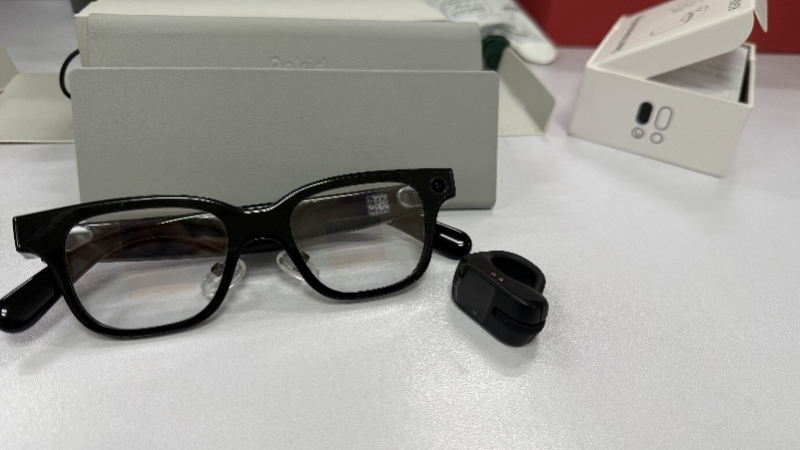
Author: Southern Metropolis Daily A pair of glasses. You can take pictures and search questions by touching the lens. The answers are projected on the lens in the form of subtitles, visible only to the wearer... AI smart glasses are becoming an “test artifact” in the eyes of some students. Recently, South China Agricultural University reported that students used AI glasses to cheat in final exams, which attracted widespread attention. An investigation by reporters from Southern Metropolis Daily and the Nandu Big Data Research Institute found that platform rental merchants put up “silent search” signs and even provided “special upgrade” services, and indicated that more than 300 glasses were rented out by college students during the final week of the term; on social platforms, many students exchanged experiences of cheating using AI glasses. After renting and testing, the Nandu reporter discovered that AI glasses can indeed silently search questions. Technological development brings efficiency improvements, and the associated misuse of technology. How to prevent and fill management gaps as soon as possible is even more worth thinking about. The new trend of widespread cheating: College students posted to exchange exam experiences. This semester, college student Kobayashi “passed” the higher mathematics exam with the help of a pair of AI smart glasses. These glasses went on sale in September 2025, cost 3,299 yuan, and are equipped with four major AI models. The eyeglass frame has a built-in miniature camera, which is equipped with functions such as taking photos to search and solve questions. After large model analysis, the answers are projected directly onto the lens in the form of subtitles, and only the wearer can see them. On social platforms, many students posted about their experiences using AI glasses to take the exam. Observations showed that some college students used AI glasses to take the final exam, while others successfully passed the primary and secondary school teacher qualification exam. The Nandu reporter contacted Kobayashi through the comment section. He told the reporter that he spent 300 yuan to rent these glasses before the exam, and after the rental period ended, he simply bought one because he had other tests to deal with. In order to improve the accuracy of the search questions, he also spent money specifically to buy a set of “training instructions” on a second-hand platform. Many students posted on social media to share their experiences using AI glasses to take the exam. Another user, Xiao Li, explained the details of the usage process to reporters. In order to evade surveillance, he used a matching operating ring to operate the glasses. “Otherwise, you can only touch the glasses with both hands, which is too obvious in the exam room.” In order to cope with the inspection by the procurator, he also prepared a pair of ordinary thick-legged black-rimmed glasses similar to AI glasses. There were also people who didn't get through the situation. Xiao Zhang shared his experience of being discovered to cheat using AI glasses in the comments section. Due to “not much learning,” Xiao Zhang spent nearly 400 yuan to rent glasses and a matching ring to cope with the exam. He discovered that the lenses reflect green light easily, so he deliberately wore a hat to block the light. According to his recollection, the teacher at the exam room watched him for a long time, then walked over and asked him to hand over his glasses. The reporter noticed that in the comments section where they exchanged experiences of cheating with AI glasses, several students also said that if they cheat with AI glasses, they will face far heavier disciplinary sanctions than the department itself. Cheating plan with a clear price: More than 300 AI glasses are sold out. Since AI glasses are usually expensive, many students choose to rent them. An investigation by the Nandu reporter found that AI glasses from brands such as Lucky can be rented directly on shopping platforms, and some stores even directly list “test only” in the product title. A second-hand trading platform has also published a large amount of no-deposit rental information for AI glasses, and many use “silent search” and “silent search” as selling points to attract students. Meanwhile, there are also quite a few accounts that rent AI glasses on short video platforms. Browsing revealed that the AI glasses rented out for the search and answer function are mainly two models, Rocky Rokid Glasses and the Qianwen Quark AI Glasses S1, in addition to smart glasses from brands such as Inmo and Halliday. Rental information on AI glasses on a second-hand platform. A complete commercial promotion chain has been formed around the use of AI glasses to cheat. Not only are renters familiar with how to use AI glasses to cheat, but they also actively sell a complete set of “solutions” to renters. For different test scenarios and needs, merchants will recommend corresponding models. Whether it is a paper test paper or a computer test, whether you only need to display a copy on the lens or search online, there are corresponding products to choose from. A merchant recommended different brands and models of AI glasses for different test scenarios. When the Nandu reporter consulted a merchant as a renter, the other party took the initiative to explain that the rental glasses would be equipped with a “blackout sticker” to cover the warning lights that would light up during shooting, and even recommended renting an operating ring at a higher price, which is “more convenient to use.” On shopping platforms, a large number of merchants publicly sell such blackout stickers, claiming that they can “block and not affect shooting.” Another merchant revealed more business details to reporters. He said that the final exam season is the peak rental season. All of the 300 Lucky glasses on hand are out of stock. “Renting a machine...

31d agoburnking#AI
The “Everything Is Possible World Model”: How can a vague concept support the $10 billion financing narrative?

The “Everything Is Possible World Model”: How can a vague concept support the $10 billion financing narrative?

Author: Motion Detective BeatingOriginal title: Everything Is Possible World Model The term World Model is almost being sold out by investors. Li Feifei's World Labs completed financing of 1 billion US dollars in February this year, with a valuation of 5 billion US dollars. A year ago, it was only valued at 1 billion dollars. Yang Likun's new company, AMI Labs, raised around a billion dollars in seed round, setting the record for the largest seed round in the history of European AI startups. There were 25 cases of financing related to the World Model in the first quarter in China. Some companies took two consecutive rounds of 2.5 billion dollars in a month, and the valuation jumped from 5 billion to 10 billion dollars. What's even more surprising is that don't look at investor FOMO like this. Currently, the entire AI industry has yet to agree on what the four words “world model” actually mean. It's a word that hasn't even been defined, and it's already worth tens of billions. Every day they shouted slogans to find an anti-consensus, and in the end, they invested their money in the absence of consensus, and then called it an outlet. However, I recently heard from a few big VC investors that they could clearly see the bubble in this direction themselves, and it wasn't that no one had taken a picture of the table during the internal rehearsal session and discussed it back and forth. The conclusion was that they still had to vote. If you don't vote, next year's LP will ask you why you missed the world model; if you vote, even if you make a mistake in the end, it will be the whole industry's fault. However, when the money is hot enough, it is time to ask an impolite question. Since no one can say exactly what it is, what exactly is everyone voting for? First of all, let's be fair about the process. There was something really about this concept. In 2018, two researchers published a paper titled “World Models.” They let AI create a dream for themselves in a racing game. First, master the car in the dream, and then run back in the game. At the time, ChatGPT didn't exist, and this paper was only circulating in a small circle of researchers. Yang Likun has actually been adhering to this research direction for a long time. In the years when all of Silicon Valley bet money on the big language model, he repeatedly reiterated his view that by predicting the next word, machines would never be able to touch human intelligence, so it must be made to understand the physical world. I've been saying this for almost ten years, but the wind hasn't blown this way for him. People like him didn't turn away after hearing the wind; in their perception, there really is something about the world model. However, when “something really does” enter the venture capital industry, it usually has to go through a process first. This process will process a research direction into a term that can be wholesale. The venture capital community's favorite has never been a technical concept; it's the franchisability of a technical concept. The world model is a child of choice in this regard. It is more technological than the “metaverse,” sexier than “spatial intelligence,” broader than “embodied intelligence,” and fresher than “multi-modal.” Most importantly, it's very difficult to falsify. In BP, the harder it is to prove falsification, the more valuable it is, because not being able to falsify means that new investors can be found to take over in the next round. What the story earns is money that cannot be falsified. The world model was folded, and it had the current splendor. If you make a game, say you are a model of the world; if you make a short story, you say you are a model of the world; if you make a video tool, you say you are a model of the world; if you make a simulation robot, you say you are a model of the world. Further on, those who make advertising materials, educational courseware, metaphysics fortune-telling, and virtual people to chat with will be able to enter the world model circle as long as they dare to blow it. Earlier, at an event, I heard investors share in a round table. Each field of medicine, finance, and law can be viewed as an independent world. According to this usage, my car repair master downstairs also has a world model in his mind. It specifically predicts when the Third Ring Road will be blocked. The accuracy rate is higher than most assisted drivers I've ever used. Not long ago, I also saw a robotics company announce that it is building a model of the industrial world and a model of the home world at the same time. I realized that the world used to be countable terms; they can be sold individually. It's not that no one has anticipated this grand event; the identity of the person who anticipated it is quite special. In March of this year, on the day AMI Labs funded that billion dollars, the company's CEO told the media that I predict “world model” will be the next buzzword. Within six months, every company will call itself World Model to finance. He was right. The only thing that wasn't accurate was the time; it didn't take six months at all. Habitual narratives Chasing narratives has long been a habitual act of investors and entrepreneurs. On May 10, 2015, a listed company whose main business is floor tiles and real estate issued an announcement saying that it wants to become the first internet finance company in China, it wants to change its name to “Pitumpi”, and the English name is directly registered as P2P Financial Information Ser...

47d agoburnking#AI #financing

DeepSeek founder Liang Wenfeng's old college entrance examination photo archaeology: Super Tsinghua line to enroll in Zhejiang University

Comparative news. According to monitoring, photos of Liang Wenfeng, the founder of Magic Square Quantification and Deep Search (DeepSeek), who won the 2002 college entrance examination and related newspaper reports came to light on social media. Reports show that Liang Wenfeng won the top spot in the Zhanjiang college entrance examination with a score of 806 that year. When his score reached the Tsinghua University admission line, he first volunteered to apply for the Zhejiang University electronic information engineering major. Liang Wenfeng was born into a family of teachers and attended Wu Chuan No. 1 Middle School in high school. According to a newspaper report with the title “The Champion in the College Entrance Examination” at the time, Liang Wenfeng had outstanding results in science during his high school. Under the key training of physics and chemistry teachers, his grades jumped from the top 100 in the first year of high school to the top 10, and remained in the top 3 places in the overall grade during his senior year of high school. He has been studying computers since middle school and often volunteered to repair computer equipment for the school. When he applied for the college entrance examination, Liang Wenfeng's college entrance examination results had already reached the Tsinghua University admission score line, but in the end, he chose to volunteer for the electronic information engineering major at Zhejiang University. The report said that at the time, Zhejiang University's comprehensive strength ranked third in the country, and electronic information engineering was also his ideal major.

72d ago
Who is the best at AI to do math questions for college entrance examinations? Did the “White Gods” roll over? Named by an official media

Who is the best at AI to do math questions for college entrance examinations? Did the “White Gods” roll over? Named by an official media

Dear readers, what have the KOLs on X been talking about in the past 24 hours? Note: The following content is compiled from the X platform. They are all personal opinions. They do not represent the platform's position, let alone constitute investment advice. How are the big AI models ranked for college entrance examination math papers? The god of white hair was named by the official media! China's 2 trillion AI data center construction, favorable policies, industrial chain benefits, discussion of stablecoins buying US stocks as a major trend This article is sponsored by GENG, Build Your Fortune on GENG (https://geng.one)Twitter:https://twitter.com/BitpushNewsCN比推 TG Exchange Group: https://t.me/BitPushCommunity比推 TG Subscription: https://t.me/bitpush

73d agoWendy#KOL
This post-80s Tianjin Wei will be the first person to go to Mars

This post-80s Tianjin Wei will be the first person to go to Mars

Author | Azuma, Odaly Planet Daily Original title: After the 80s, Tianjin Wei is about to become the first person to go to Mars, humans are finally about to embark on a journey to Mars, and the protagonist who is about to carry out this space mission that is destined to go down in human history is a native of Tianjin. In the early morning of May 22, Beijing time, SpaceX, which is about to go public, made a big announcement — F2Pool co-founder and Fram2 mission commander Chun Wang (Chun Wang) will board Starship (Starship) to carry out the first batch of manned interplanetary missions to Mars! The mission is scheduled to fly deep into space for two years, fly past Mars (without landing) after leaving the Earth-Moon system, and finally return to Earth. Prior to this mission, Wang Chun will also participate in the Starship's first commercial manned mission around the moon with Dennis Tito and Akiko Tito. The mission is expected to last a week and will fly about 200 km from the surface of the moon. On the eve of the launch of the Farm2 mission from Tianjin on March 31, 2025, Wang Chun was interviewed by the space media “Spaceflight Now” and revealed many previously unknown growth stories during the interview. Born in 1982 in Tianjin, China, Wang Chun was raised by his grandparents. He almost never left his hometown until he went to college in 2000. But since he was very young, Wang Chun has had a keen interest in traveling, and he always fantasizes about traveling around the world: “In 1987, when I was 5 years old, my grandfather brought back a map of the world he had picked up while walking. That map instantly became my favorite toy and ignited my curiosity. What really caught my eye was the huge empty area at the bottom of the map — the polar region. From that moment on, I was fascinated by the mystery and excitement of these remote and unknown places.” After leaving college, Wang Chun first went to work for a Norwegian software company in Beijing. Since then, his travel mileage has really skyrocketed — to save money, he often sleeps on his French colleague's couch or directly at his office, then commutes back to his home about 120 kilometers away on the weekend. Wang Chun mentioned, “Despite having a full time job, in 2007 alone, I used the weekend to travel 75,900 kilometers by train. All in all, I spent two months in the train in 2007. I went straight to the train station every Friday after work, and didn't return to the office until next Monday morning.” Over the next four years, Wang Chun further expanded his travel map. By train, he traveled to every province in China. In 2010, Wang Chun began his first trip abroad — Nepal and then India. That trip took him to the southernmost tip of the Indian subcontinent. He boarded the 16317 Himsagar Express (Himsagar Express), the longest running train in India at the time, and continued his journey in the country from Kanyakumari to Kashmir. That trip ended up costing him around $1000, which was all the savings he had at the time. “During those years, I was very obsessed with infrastructure and means of transportation, especially railways. I meticulously recorded every train trip, accurate to the minute or even the second, and posted these records on online forums and message boards. Some people once called me the nickname 'One Thousand Times High Speed Rail Man' because I was counting the number of times I took the high-speed rail and was moving towards the goal of riding 1,000 times.” Wang Chun revealed that as of March 20, 2025, he had ridden a total of 854 high-speed rail rides, but he has taken the civil aviation aircraft extremely close to 1,000 times. The accumulation of wealth, ability, and resources stemmed from the fact that in addition to cryptocurrency travel, Wang Chun also showed a strong interest in various emerging technologies. At age 7, Wang Chun first heard about computers, but it wasn't until he graduated from elementary school at age 13 that he had his first 486SX computer running MS-DOS 5.0. Wang Chun mentioned, “In addition to playing games, I also used it to write many interesting programs, the earliest of which was a gravity simulator, which can intuitively show the movements of the planets in the solar system... At school, I participated in various programming contests, including the International Informatics Olympiad (IOI) and ACM-ICPC (International Student Programming Competition)...

92d agoLuxurytracy
Zhao Changpeng bets on third-year Chinese college students for $11 million as education agents

Zhao Changpeng bets on third-year Chinese college students for $11 million as education agents

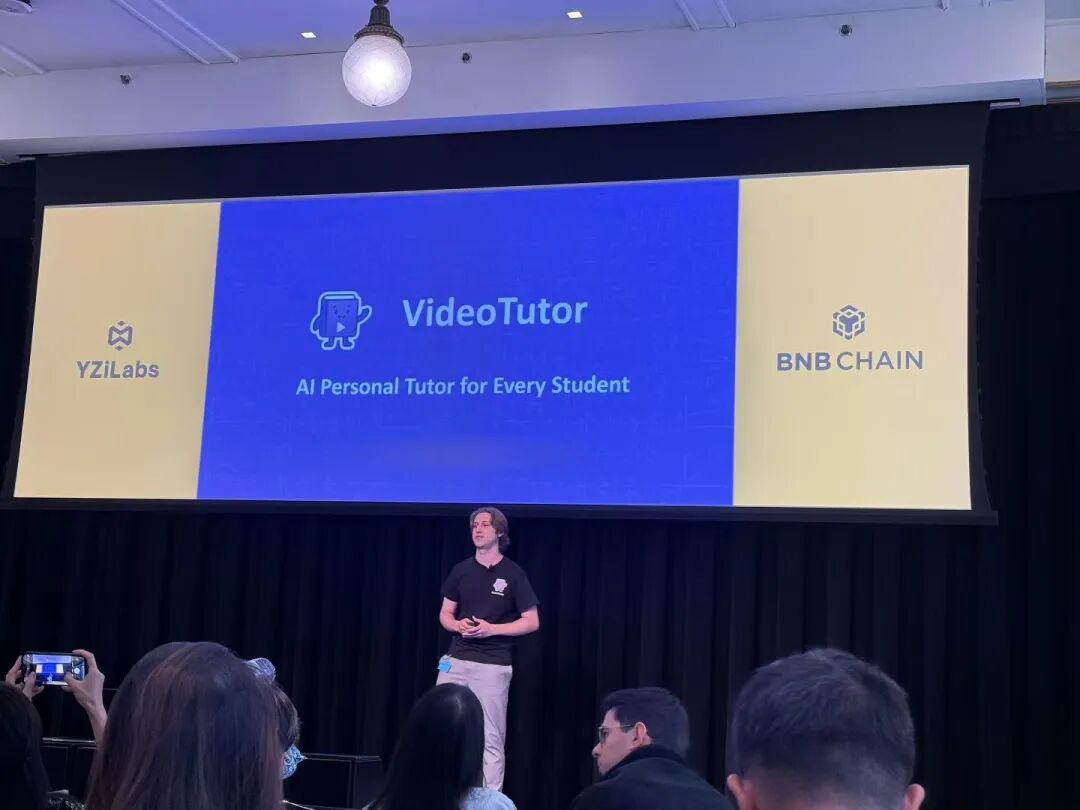
Author: Founder Park Original title: Zhao Changpeng invested in a Chinese third-year student, a $11 million seed round, a third-year Chinese student as an education agent, and a $11 million seed round. Silicon Valley students are currently the highest-funded product to start a business. VideoTutor, an educational agent product aimed at K12's education agent product, announced today that it has completed a $11 million seed round with the main theme of generating personalized teaching/explanation videos in one sentence. This round of financing was led by YZi Labs, and Baidu Venture Capital, Jinqiu Fund, Amino Capital, BridgeOne Capital, and a number of well-known investors participated. It is also the first AI product company YZi Labs has invested in. Founder Kai Zhao (Kai Zhao) said that VideoTutor received approval and support from Changpeng Zhao and the YZi Labs investment team, and eventually YZi Labs led this round of financing. They got more than 10 TS (Letter of Intent to Invest) and ultimately chose these companies. The first version of the product was launched on May 14 (launched at the Founder Park Product Market), which was approved by the market and verified by PMF. In less than 5 months, the $11 million seed round was completed. According to Kai, the core reason they were able to get this financing is that, on the premise that the direction is right, the “Little Genius Team” used visual learning methods to solve the pain points of studying in the US college entrance examination at the K12 circuit. “This field is more suitable for young people. In addition, they have very good hands-on engineering skills, and the founder himself has very good insight and experience, and the execution is very fast.” Not just them, Cursor, Mercor, Pika, GPTzero, etc., Silicon Valley university students are using AI products that have set new highs in financing one by one to refresh everyone's perception of AI entrepreneurship. Entrepreneurship in the AI era is really a bit different. We talked to these young people at VideoTutor and wanted to know why they were able to get this seed funding round and what kind of changes are happening in Silicon Valley startups today. Also, why do they want to recruit employees from major domestic manufacturers so much. Interviewees: CEO Kai Zhao, CTO James Zhan. Interview & Editor | Manhu The following is an interview, edited by Founder Park. 01 K12 track, visual learning is the real direction Founder Park: So many organizations are very optimistic about you. In your opinion, what is the core point that moved them? Kai: First of all, I think the direction is right. The AI education circuit has great potential and prospects. The fields of education we are entering are SAT and AP in the US college entrance examination. The target user group is K12 high school students. The gap between us and this user group is very small; there is basically no generation gap. We have gone through the entire exam preparation study cycle, know where the pain points of exams and exam preparation are, and can make a product that really solves the pain points of this group of people. Second, the team is excellent. James is from Gemini and is a core engineer in AI engineering and algorithms at Google. I myself have three educational entrepreneurship experiences. I started a business as an educational software business from the beginning of my freshman year, and participated in the creation of MathGptPro during my sophomore year, where the project was selected for the Miracle Innovation Forum, etc. Experience in successfully creating educational products. Third, the core of our AI education field is animation engines, and we are the core developers of VideoTutor, the team that knows the core technology the most, and can render animation engines very accurately. The team itself has very good marketing genes and knows how to spread the word. VideoTutor is very much in line with an investment consensus of mainstream American VCs, called the “Little Genius Team”, which means that this field is more suitable for young people. In addition, they have very good hands-on engineering skills, and the founder himself has very good insight and experience, and the execution is very fast. I think this is a common reason why all investors can be optimistic. VideoTutor appeared on NYSE Founder Park at YZi Labs EASY Residency Demo Day: Your product wants...

296d agoburnking#AI #invests
Chusho Honzen

Chusho Honzen

In financial markets, we always have some myths. For example, what is the right way to invest and win? It all seems to make sense. Eliminate weaknesses and reinforce them, continue to review mistakes in positions, and resolutely eliminate them, and concentrate limited bullets on positions with the best performance and greatest advantage to avoid mediocre returns caused by excessive dispersion, causing a large number of junk coins and junk stocks to lag behind the overall yield. Buffett also said that excessive diversification of investments should be avoided. He also often relies on heavy positions on a few high-quality stocks to outperform the market's growth rate. Removing strengths and making up for weaknesses means regularly reducing positions with the fastest growing positions and increasing positions with the slowest growth, so as to rebalance positions, so as to offset the risk of overestimation and seize opportunities for undervaluation through the cycle misalignment of different types. The Bridgewater Foundation's Copley said the same thing. The real mentality of retail investors is deeply influenced by a psychological effect called the endowment effect (endowment effect). This theory was first proposed in 1980 by Richard Thaler (Richard Thaler), winner of the 2017 Nobel Prize in Economics. The endowment effect reveals a common irrational characteristic of human decision-making: once an individual owns something, his evaluation of its value is significantly higher than before he did not own it. This challenges the assumption of a “rational person” in traditional economics. However, the endowment effect seems to play a different role in profitable positions and loss-making positions: for floating and profitable positions, the endowment effect is defeated by rapidly rising prices, and retail investors are often frightened that the market price quickly surpasses their own inner valuation, so they often rush to sell with a small amount of profit and fall back into the bag, thus missing out on the sharp rise of the main wave. However, for positions that have fallen into losses, the endowment effect has played a huge role. Retail investors are usually unwilling to cut meat and sell it at a lower price than their own psychological valuation, so they often fantasize that it will soon rise back, hesitate, and even fall into a deep trap, falling deeper and deeper. However, the education chain has discovered that this so-called irrational characteristic of adults, which “can't be controlled and must be tough”, does not seem to be innate or innate; it is likely acquired and educated. Perhaps because the vast majority of people came to this world and grew up in this society, most of them received mediocre education. For example, “Don't fantasize about getting rich; unexpected wealth is often a trap.” The act that led to this idea being stamped was a small increase. After making a small amount of money, they quickly settled into their own pockets and were afraid that they would make more money themselves. Taking 10 times to directly achieve a change in wealth level, I really didn't even dare to think about it, let alone have the courage to do it. “Persevere in difficult situations and never give up.” This is mostly the kind of encouragement I heard when I was a student, but it was also a decade of repeated memorization. We only learned to persevere with our lives, but not to give up wisely. As a result, I was stuck in my life at the end of my life, and my whole life was mediocre. As a result, they were locked in a losing position and could not be unlocked for the rest of their lives. If you take a close look at children, you'll see that children are not naturally like that. Children are born to chase their strengths and abandon their weaknesses. No one is perfect. According to the bucket theory, everyone is like a bucket surrounded by multiple wooden boards, and how much water it can hold depends on the shortest wooden board. So, the natural deduction is that you have to work hard to make up for your shortcomings. The more uniform, the better. Very wrong! This is a theory on paper invented by an ungrounded educator. However, there are actually teachers and parents who repeatedly force children to spend a lot of time making up for shortcomings. Is it true that so many teachers and parents are wrong? No, they're not wrong. Contradictory. What's the problem? The problem is that the purpose of schooling is to test. The exam consists of multiple subjects, and there is a limit on the number of points for each subject! In other words, no matter how much you concentrate on your strengths, you can only get a perfect score in the subject you are superior in. If you don't do well in other weak subjects, it will seriously lower your overall score. Exam education conforms to the wooden barrel theory. But this theory is just a piece of paper. It is absolutely out of touch with practice and society; it is the complete opposite. This is also the biggest obstacle that graduates encounter when they first enter society. That is, they need to adjust their mindset as soon as possible, abandon the mentality of making up for shortcomings developed in many years of school life, and switch to the mindset of concentrating energy and giving full play to their strengths in social life. Society The university's examinations are open, time-limited, and the “score” is not capped. We can compare the money you earn in society to the scores you get in school. For such an open exam where there is no maximum score,...

362d ago刘教链#Liu Jiaolian