GOAT · 138
How did AI16z, the leader of AI Agent tokens in the past, come to an end?

How did AI16z, the leader of AI Agent tokens in the past, come to an end?

Author: David, Shenchao TechFlow Original title: Drowning Tide, the End of “Cryptographic XAI” pioneer ai16z, ai16z, do you remember the name? If you remember, it means you experienced the AI coin boom in the cryptocurrency industry at the end of 2024. If you don't remember, it's normal. The AI Agent token category has been quiet for a long time. Cryptography x AI seems too much like a fake concept and an old-fashioned toy in the current version of AI tools that are gradually being implemented and rapidly progressing. Today, Shaw Walters, the founder of the Eliza OS project, wrote a long, long article to the effect that the ai16z token is completely dead, the foundation is closed, there will be no repurchases, and the holders will handle it themselves. He suggests you either sell it or “get a bunch of people to fry it up,” but don't expect him to do anything more. The tone of this letter isn't like a founder politely announcing the termination of the project, but more like a person falling down the door in disappointment after scolding everyone. He called the crypto community “a bunch of used to crying bags,” saying that a law firm sued him from the standpoint of the token holder. However, the Eliza OS Foundation had no money to file a lawsuit and lost all the rest of the money. Shaw also said that he used to have 25 million dollars of AI16z tokens in his wallet, but not a single one was sold and went all the way back to zero; now he lives on his savings, lives in a small, dilapidated bedroom in San Francisco, and writes code every day. From his point of view, he probably thought he was standing in a smoky market and using idealistic colors to develop, ultimately leaving behind a heart full of ruin, disappointment, and anger. I have no intention of judging these personal feelings. However, standing at the crossroads of changing hot spots, shifting industry focus, and the rise of AI, the shutdown of Eliza OS inevitably made people feel emotional about encryption X AI. It really started early in the morning and caught up in the evening episode. One step ahead. In October 2024, ai16z launched crowdfunding on DAOS.fun. The goal is to raise 420.69 SOL, equivalent to about 75,000 US dollars, to become an investment fund managed independently by AI. 420.69. Anyone familiar with crypto culture knows this is a rough number. Starting with the selection of the amount of capital raised, the undertones of this matter have already been decided. But it actually flew. In less than three months, ai16z's market capitalization reached $2.6 billion. It also brought in an entire category. Before GOAT, after VIRTUAL, various Agent concept coins were constantly emerging, and the entire AI Agent circuit grew from zero to close to 10 billion US dollars. Cryptography is conceptually one step ahead of others. What will the AI market look like at the end of 2024? ChatGPT has just turned two, and is often criticized for answering various illusions; Claude doesn't have the tools to directly operate a computer, and most people's understanding of an “AI Agent” is still at the conceptual level. The crypto market has already set a price for this concept. But there is one detail that not many people cared about at the time. Less than a week after ai16z went live, some cryptographic media published reports questioning it, saying that the AI agent at the core of the ai16z project, the “Marc IndReessen,” which claims to be able to make independent investment decisions, is actually a person operating, not the real agent himself. This question later also occurred on AIIxBT, a well-known crypto market analysis agent. At the time, it was difficult for such questioning to cause any uproar and FUD. The market capitalization continues to rise, the community continues to shout, and new AI Agent tokens continue to be issued... Looking back, this is probably the most accurate microcosm of the entire cryptographic AI narrative. True or false, it doesn't matter. In an environment of excessive fluidity, a leading version of the narrative is enough to cause a wave of speculation. The concept is realistic, the direction is right, but the token exists before the product, and the price comes before the technology. This is the essence of cryptography being one step faster. The future has arrived, but Rain Girl won't help but in 2026, AI Agent will actually arrive. There are CodeX and Claude in the west, and Workbuddy in the east, which are more suitable for domestic physiques. Looking back at the white paper's narratives living in the hype boom of cryptographic AI, such as helping people automatically analyze market conditions, process workflows, monitor public opinion, etc., have actually completely become reality. This is probably one of the few real-world stories in the crypto industry other than stablecoins. But the people who redeemed them...
17d agoburnking#agent #AI #AI agent #token

Trader PoorGoat holds more than $1.89 million in CATE's profit, and the yield exceeds 4950%

According to GMGN data, trader PoorGoat currently holds about 28.8 million CATE, with a cumulative surplus of about $1.8925 million, and a yield of 4957%. According to the data, its cumulative investment is about 382 million US dollars, and the average market value of open positions is about 1.2 million US dollars. Currently, the market value of CATE is about 66.2 million US dollars. Users are reminded that the price of meme coins fluctuates greatly, so investors are requested to participate carefully.

19d ago
How can crypto VCs find their next opportunity? Haseeb says “some things never come back”

How can crypto VCs find their next opportunity? Haseeb says “some things never come back”

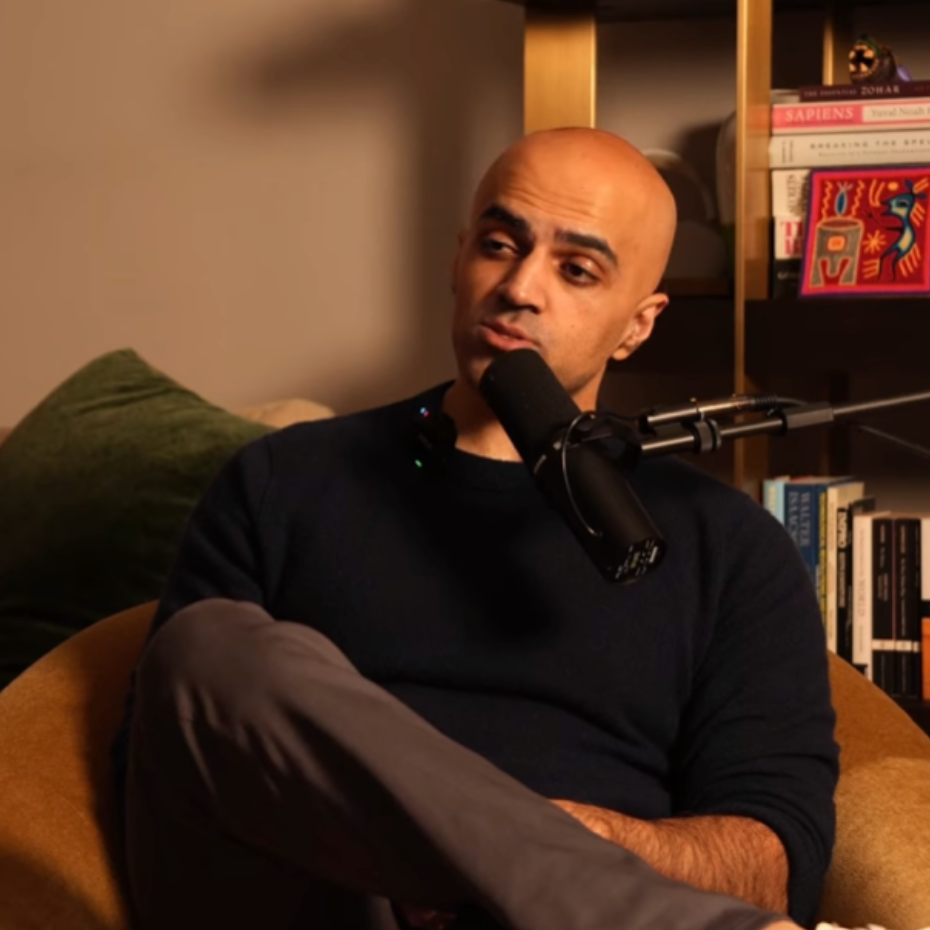
Author: Wu Says Blockchain Original title: Haseeb on Crypto VC: Sorry, Some Things Will Never Come Back In an interview with MAD Society on July 15, 2026, Dragonfly managing partner Haseeb Qureshi discussed crypto venture capital, founder judgments, and long-term trends in the industry. He believes that the key to venture capital is to seize a few non-consensus opportunities. Excellent founders should have outstanding “peak ability,” but lack of integrity and inconsistent words and actions are clear danger signs. Haseeb also said that it is difficult to form long-term enterprises in the direction of some structured products and the tokenization of individual assets, while the DeFi, stablecoin, payment and prediction markets will continue to exist; in the long run, cryptographic technology will eventually be incorporated into various financial and technology products, and the “crypto company” label may gradually disappear. The audio transcription was done by GPT, there may be errors, please watch the original video at YT. Poker and venture capital: How to establish judgment discipline in a long feedback cycle Haseeb Qureshi: There really isn't much compatibility between poker and venture capital. Poker is very similar to trading because they all have very fast feedback loops that can be iterated very closely and quickly. As soon as you play a hand, you'll know whether you won or lost, and whether your decision was right. But in venture capital, the feedback cycle is very slow. If you invest in a founder, it may take many years before you know if your original judgment was correct. In the first year, you may see some initial signs, such as the company is growing and seems to be starting to gain some market recognition. Even if a company has completed Series A or even Series B financing, it can still suddenly go awry. It may have looked like it was going well for several years, but the founders had a fatal flaw that eventually led them to lose the ball in their final offense in the final game of the season. So the reality is, it's hard to quickly judge whether you're doing a good enough job as a venture capitalist. Many funds raised funds by relying on the early book valuation of their portfolios, but it was only discovered in the end that there were no real winners in the entire portfolio. Let's say you invested in Axie Infinity or OpenSea early on, and you probably thought, “Wow, I'm an amazing investor, I did such a great job.” There are also several funds that have invested in FTX in the early stages. At the time, people would say, “My God, this guy is simply the son of choice in the investment world. Can you believe he participated in the FTX seed round?” But just a few years later, the situation became: “OK, this fund doesn't seem to be anything special now.” Because its brightest star project has already exploded. Venture capital is unique in this regard. This means, first, you must take the initiative to establish a feedback mechanism for yourself, rather than expect the world to give you direct feedback. Because as a venture capitalist, you have to keep learning and improving, but it often takes many years to know whether an investment is successful or not. Therefore, feedback must come more from your judgments about your own performance rather than from external results. For a lot of people, this is very difficult. Another difference between venture capital and poker is that venture capital is a team sport, while poker is a single player game. Of course you're playing cards with other people, but essentially you're facing the entire table alone. That's not the case with venture capital. You can only be successful if the founder you invest in is successful; you can only really win if your fund is successful and the projects carried out by the other partners in the fund are also successful. As a result, venture capital relies heavily on collaboration and interpersonal relationships. But if you're a poker player, you hardly need to care about anyone else in the world. As long as you sit at the table, play properly, and continue to make a profit, you can still be a successful poker player even if you don't have any friends. This is also a very different point between the two. Most really good venture capitalists are really good at dealing with relationships. I don't think I'm particularly good at this, but I'm definitely a lot better than the past and better at building relationships than most traders I know. Most traders don't need that. Just like poker players, they don't need to be friendly, be good at handling relationships, and don't need to have a large network of people. Therefore, the ability to really help you make good venture investments in poker is mainly the ability to think clearly about risk and the ability to control emotions well. I found that a lot of venture capitalists aren't really good at this. They can be very emotional, and it's hard to handle conflict. These two aspects are just right...

26d agoburnking

OpenClaw Summer Builder Bootcamp 2026 officially opens applications to help AI agents move from demo to real users

In comparison, the OpenClaw Summer Builder Bootcamp 2026, co-sponsored by Metis, ClawUP, GOAT Network, LaZai, CryptoChicks, and MindFuel, is now officially open for application. Designed to help AI builders turn early prototypes into products with real users. The project application channel has been opened and the deadline is June 24, 2026. Currently, the AI agent field generally faces the problem of demo to user implementation, and a large number of projects have stopped at the demo stage. The OpenClaw summer training camp lasted 8 weeks. Participants continued to advance in the three dimensions of product, infrastructure, and growth, completing tasks such as building and releasing AI agents on ClawUp, accessing x402 payment and ERC-8004 identity systems, and learning GEO growth strategies. The goal was to acquire real users and verify market demand. The project has set up a prize pool of $5,000. In addition to receiving an official certificate of completion, excellent teams also have the opportunity to receive mentor guidance, ecological resource support, and are recommended to enter the second phase of GOAT AI Builder Grants. High-potential projects can receive up to $1 million in support in the future. The project evaluation will focus on product quality, real user growth, and actual economic activity performance.

68d ago
When star cards become alternative assets: sports are entering the era of “fragmented finance”

When star cards become alternative assets: sports are entering the era of “fragmented finance”

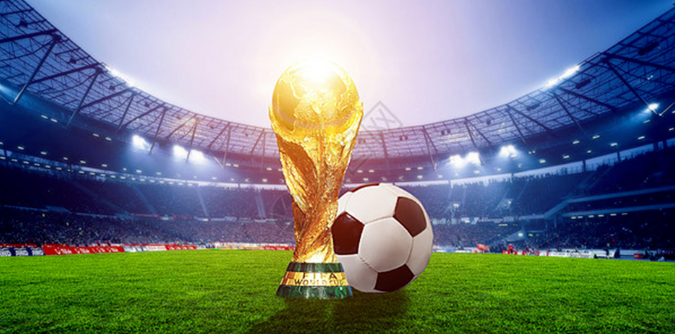
Author: Planet Little Flower Original title: The World Cup is approaching, sports are entering the “fragmented finance” era, and the World Cup is about to start. In addition to predicting that the market is struggling, another industry is quietly heating up. Recently, FIFA announced a new rule: all first-time World Cup players are required to wear a “World Cup debut patch (debut patch)” on their jersey. This means that even if you're a world-famous superstar, as long as you've never set foot in a World Cup before, such as Erling Haaland or Lamine Yamal, you need to wear this special badge. Some national teams that have returned to the World Cup after many years even need to be worn by the whole team. This isn't a complete “sense of ceremony” for World Cup rookies. Everyone who knows the star card industry knows that this patch will be removed, certified, and cut after the game, and then embedded in the star card. Eventually, it may become a 1/1 debut signature card, rated, auctioned, and traded, and the price may exceed that of a supercar in the future. Just in May of this year, FIFA announced a long-term exclusive collection licensing partnership with Fanatics. In the future, the World Cup related star cards, stickers, and collectibles system will officially enter the Fanatics/Topps era. You probably don't play Star Cards, but it's worth noting that behind these small cards, a world of alternative assets with a scale of more than 10 billion US dollars, a huge secondary market, and a long-term bullish and bear cycle has formed. At the same time, the entire sports world is also entering a new era of “fragmented finance.” Fans of sports leagues “breaking up history and selling for money” used to be concerned about “historical moments witnessed by a jersey,” but now people are probably concerned about “how many pieces of history can this jersey be torn apart.” After all, a jersey can belong to dozens of cards, hundreds of buyers, and can be resold countless times in the future, even forming a price curve that continues to rise or fluctuate greatly. A piece of cloth may go from a player's chest into a card factory, into a blind box, then into a rating agency, into an auction house, and eventually become an alternative asset in a certain investment portfolio. Soccer star cards are nothing new either. Since the 1970 World Cup, Panini has established a World Cup sticker and star card system. Many fans' childhood began with a World Cup sticker book. However, it has never been able to establish a mature and highly liquid “sports financial asset system” like the NBA. People who haven't touched this stuff may be surprised. Soccer has the largest fan base in the world, and the commercial value of superstars is also extremely high, yet the price, liquidity, and depth of the secondary market of soccer cards have not been comparable to the NBA for a long time. The reason behind this is that the NBA is inherently more suitable for “capitalization,” and soccer does not have a highly unified commercial operation system that continuously creates sentiment and scarcity like the NBA. Basketball is a sport with a high degree of individual heroism. It is a game where superstars kill superstars, standardize the data system, unify the league narrative, and the US industry is also very good at making stars. From draft nights, debuts, all-stars, MVPs, playoffs to championships, every node can be packaged as an asset. And the world of soccer is too scattered. National teams, leagues, clubs, Champions League, sponsors, and copyright systems are fragmented, making it difficult to form a unified and continuous financial narrative like the NBA. Understandably, the World Cup patch mentioned at the beginning of the article is that FIFA is actively experimenting to create “financial raw materials” for future high-priced star cards. The NBA used 70 years to turn paper into a financial asset. Many people probably learned about Planet Cards during the NFT bonus period, but in fact, the NBA star card market has been trading for over 70 years. In 1948, Bowman introduced the first batch of NBA player cards; in 1986, Fleer introduced the Michael Jordan Rookie card, which later changed the entire industry; in the 90s, with the Jordan era and the global expansion of the NBA, the star card market first entered a national frenzy. At that time, almost every shopping mall, convenience store, and toy store in the US sold cards. But soon, the industry went into its first major collapse. In the late 90s, a large number of publishers oversold, the number of cards printed out of control, and the market entered a big bear market. This period was later even called the “Junk Wax Era (Junk Wax Era)” in the collection community. What changed the industry was the “scarcity revolution” after 2000. In 2003, LeBron James joined the NBA. In the same year, Upper Deck launched Exqu...

95d agoburnking#NFTs #Predicting the market

What year is tonight? The established meme took over the monster coin market and led the cottage to continue its wild dance

Comparing the news, although RAVE, which surged 58x in half a month, temporarily stopped yesterday, woke up this morning and discovered that it was actually an old meme from three or four years ago that had taken the baton of the market. According to market information, ORDI, the established Bitcoin inscription leader, rose 70.6% in 24 hours, and the former Dragon 2 SATS also rose by nearly 30%. Neiro, the previous generation meme leader on Ethereum, also recorded an increase of 34.1% in a single day. The Solana ecosystem meme from two years ago ushered in a relatively modest general rise, with PNUT, MOONDENG, BOME, and GOAT all rising by more than 15% in a single day. On the other hand, the project token is no slouch. DeSci's leading BIO doubled in a single day and is now up 108.6%, while the NFT platform project BLUR has increased 35.4% in 24 hours. Users are reminded that currently, small market capitalization currencies fluctuate drastically, and users need to be careful when investing.

128d ago
“Crypto Standard-bearer” Lays Down His Scepter: Kyle Samani's Turn and the Turn of an Era for Web3 Narratives

“Crypto Standard-bearer” Lays Down His Scepter: Kyle Samani's Turn and the Turn of an Era for Web3 Narratives

Author: Zen, PanNews Original title: “The Best Crypto Investor in History,” Kyle Samani's transformation from ten years ago In early February 2026, Kyle Samani, who is regarded by many as Solana's strongest evangelist, announced that he will step back from Multicoin's daily management, saying that he will shift his energy to new technology fields such as AI, robotics, and life sciences, while still retaining personal crypto investments. What stinks industry sentiment even more is that shortly before the official statement, he posted and quickly deleted a passage: “Cryptocurrency isn't as fun as many people (myself included) thought. I used to believe in the vision of Web3 and DApps, and now I don't.” This “semi-retreat” can easily be read as a judgment. When the strongest crypto investors in the industry choose to abandon the “next generation Internet” narrative, does it mean that the industry's vision of non-financial killer applications can already be declared bankrupt? However, looking back at Samani's career, you'll see that this isn't essentially a breakdown of faith; it's more like a risk shift driven by his undertone of personality. In a “bittersweet moment,” this wasn't a clear exit; just like his past choices weren't necessarily wrong, but they weren't necessarily right either. The “Best in History” crypto venture capitalist's Decentralization Enlightenment The anecdotal story that Ethereum founder Vitalik Buterin was “forced” to quit internet addiction when talking about the concept of blockchain decentralization has always been the most relished story. Teenager Vitalik once woke up in anger that Blizzard removed the skills of his favorite warlock from “World of Warcraft” and fought against centralized platforms. Before entering the crypto industry, Kyle Samani actually had an experience of being “backstabbed” by centralized companies. Samani grew up in an affluent community in Austin, Texas, where his father was the owner of a local electronic medical record system development company called VersaSuite. Samani began studying programming at age 11, but he was uninterested in the less cool job of being a programmer. Therefore, after being admitted to NYU, Samani chose to major in finance with the intention of becoming a high-profile Wall Street elite. In college, Samani, who has a strong personality and is full of energy, befriended her classmate Tushar Jain. At that time, Bitcoin had begun to run quietly, and the two teenagers who would partner to found Multicoin Capital in the future didn't know where the future was going. Samani only knew that after studying in college for two years, she didn't think she was fit to be a banker, so she started studying programming again. After Tushar Jain (left) and Kyle Samani (right) graduated in 2012, both Samani and Jain worked for Samani's father's medical records company for a short time. Afterwards, the two started their own businesses around medical technology. Jain founded a data company to help doctors find patients to participate in clinical trials; Samani was attracted by Glass, which had just been released by Google, and co-founded a company called “Pristine” to develop Google Glass software for surgeons. Despite raising more than $5 million in venture capital, Samani expanded the team to nearly 30 employees. However, two years after Pristine was founded, when Google announced in 2015 that it would stop selling Google Glass to consumers, the “consumer-grade popularity narrative” hit the pause button. Samani realized she had to reorient herself and left Pristine at the end of the same year. This entrepreneurial experience made Samani experience the “pain of platform risk.” Therefore, the idea of having an open platform where such events don't happen is very appealing to him. Samani stumbled upon Ethereum in March 2016. A new chapter in his life began, and eventually led him to the cryptocurrency investment field. Samani, Ethereum, and Solana were formally established in Austin in August 2017. “In the early days of starting a business, we were really a group of people desperate to make money.” Samani said that when raising capital, Multicoin had no brand, no track record, and no operating infrastructure. They reached out to everyone in their network, friends, family, friends of friends to...

194d agoburnking#Samani #Solana #Ethereum
Gold-Plated Idols and Zero MEME: The Crypto-Absurd Drama Behind Trump's Mega-Statue

Gold-Plated Idols and Zero MEME: The Crypto-Absurd Drama Behind Trump's Mega-Statue

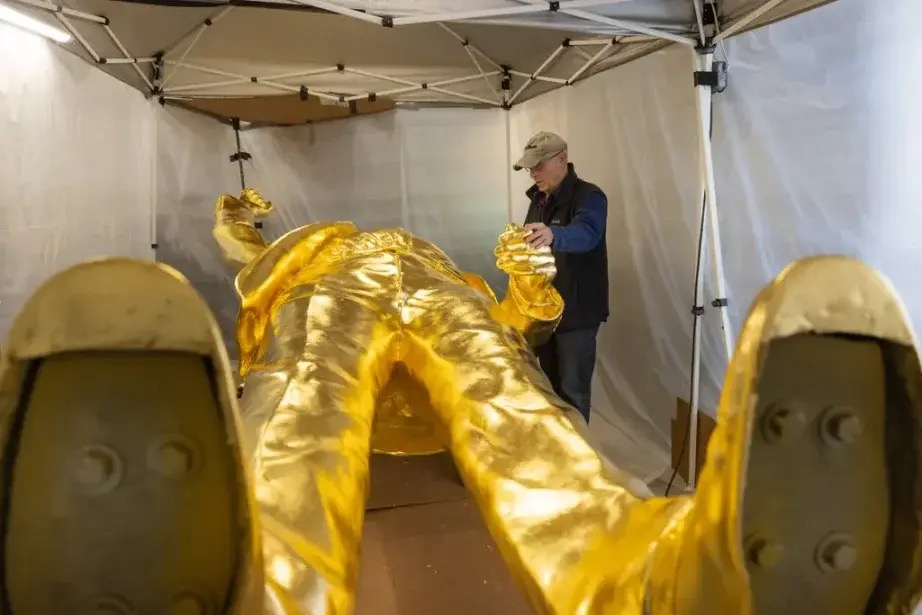
Original title: “Don Colossus” a Golden Statue of President Trump, Waits for Its Home Original Author: David Yaffe-Bellany, New York Times Compilation: Luffy, Foresight News Original Article Title: Gold-Plated Idols and Zero-Returned MEME Coins: The Absurd Drama Behind Trump's Giant Statue This statue of President Trump is called “Don Colossus.” It's 15 feet tall, sits on a 7,000-pound pedestal, and its overall height is comparable to a two-story building. This giant statue is cast in bronze, and the surface is also coated with a thick layer of gold foil. (Note: Don Colossus literally translates as “Don the Giant,” meaning that Trump is a giant.) For over a year, this gold-plated statue has been at the heart of one of the most bizarre Nugget projects of the Trump era. A group of cryptocurrency investors spent $300,000 and asked a sculptor to create this statue as a tribute to Trump, who has spoken out in support of cryptocurrencies. They then used the statue to create momentum for a meme called PATRIOT. What is surprising now is that this plan seems to be about to come to fruition. Last month, a concrete and stainless steel pedestal was inaugurated at Trump's integrated golf resort in Doral, Florida. According to news records checked by the New York Times, one of the organizers of the program, Trump's friend Mark Burns, revealed to collaborators that the president plans to attend the local unveiling of the statue. “This statue looks fantastic.” Trump wrote in a letter to Burns last December. Alan Cottrill inspected the gold-plated statue of President Trump designed by Alan Cottrill in Zanesville, Ohio, and almost everyone in the cryptocurrency sector is trying to profit from Trump's presidency: either to make a commercial deal with his family, or to seek deregulation from his administration. But few have acted as boldly as PATRIOT supporters. Meme coins are cryptocurrencies that have almost no practical function other than speculation. They are usually based on popular stories or celebrity images on the internet, and their value depends entirely on the price that online fans are willing to pay. The key to creating meme coins is to generate enough internet popularity to convince potential buyers that their price will continue to rise. Building a giant statue is an expensive way to build social media campaigns, but it's also a potentially profitable plan. According to one of the organizers of the program, investors who funded the statue received a large amount of this token, and the price of such tokens sometimes skyrocketed. Over the past few months, supporters of “Don Colossus” published a progress map of the statue's production on the X platform and formed an alliance in the “Make America Great Again” camp, with the goal of achieving a marketing success: to establish this statue in Trump's official industry. At the end of 2024, PATRIOT meme coins officially went on sale, coinciding with Trump's promise to make the US a “global cryptocurrency capital,” and the token price soared for a while. At an event held in Washington during the presidential inauguration weekend, supporters of the token gifted a bronze mini statue to Trump's former adviser Steve Bannon and interacted with other conservatives. However, repeated project delays and internal disputes have overshadowed this mining plan, and also gave the outside world a glimpse of the turmoil in the meme coin market: this market is full of scams, and investors often lose their money in the end. Last year, PATRIOT's price plummeted to almost zero. Investors also clashed with Ohio-based sculptor Alan Cottrill to complete the statue and boost the token. In a text transcript reviewed by the New York Times, Cottrill said investors still owed him $7.5 million in intellectual property fees for the statue. “You guys are using my copyrighted statue image to market your own tokens!” He wrote in a message to one of the coin supporters last month. “Right, haha, we've been planning to do that since day one.” Ashley Sansalone replied. Sansalone is a cryptocurrency developer, and in addition to PATRIOT, he is involved in another token project called Elon GOAT. Alan Cottrill was commissioned to design the Elon Musk sculpture Sansalone in a sound...

198d agoLuxurytracy

GOAT Network Releases BitVM2 Testnet V3 to Advance Bitcoin's Native Security and Unmanaged Governance

According to Twitter, GOAT Network officially released the GOAT BitVM2 testnet V3, a key step in implementing the native Bitcoin zkRollup. Using Bitcoin as the final ruling layer, the testnet aims to allow BTC to participate in real financial activities without relying on custodians, commissions, or multi-signature trust assumptions. Unlike BTCFi schemes, which mostly rely on escrow or mostly honest assumptions, GOAT BitVM2 uses the BitVM2 mechanism so that false claims or misconduct can be challenged in extreme cases, and ultimately determined by Bitcoin mainnet rules. Testnet V3 has key optimizations such as off-chain execution, Bitcoin anchored ranking, and withdrawal and dispute machines determined by Bitcoin. Later, BitVM2-GC will be introduced to drastically reduce challenge costs, making security assumptions realistic and verifiable for the first time.

205d ago