LP · 1953

The Sandbox confirms SAND cross-chain bridge vulnerability: Base and BSC networks are affected, and cross-chain functionality has been suspended

Comparing news, The Sandbox officially stated that the team has confirmed and fully controlled the recent SAND cross-chain bridge vulnerability incident involving the Base and BNB Smart Chain (BSC) networks. Officials say the impact of this incident was limited, involving less than 0.01% of SAND's total supply of tokens. SAND on Ethereum (Ethereum) and Polygon is unaffected, user wallets have not been compromised, and relevant coin holders and liquidity providers are not required to take action. According to reports, attackers have minted unsecured SAND tokens on the Base and BSC networks through exploits. Currently, The Sandbox has shut down the SAND cross-chain feature of the two networks, and SAND on Base and BSC have been isolated and cannot be transferred or exchanged for the time being. The Sandbox reminds users not to buy, sell, or trade SAND on the Base and BSC networks as liquidity on these networks has been affected. The team said it has completed a pre-incident snapshot and is formulating a compensation plan for affected liquidity pool (LP) users, while continuing to investigate the scope of impact of the vulnerability. A full incident report and technical review will be released later.

13h ago
They are all stealing earlier data. Where exactly is VC Alpha hidden?

They are all stealing earlier data. Where exactly is VC Alpha hidden?

Author: insights4vc Compilation: Shenchao TechFlow Original title: Private Equity Market Intelligence Warfare Heats Up: In the AI Era, Where Did VC Alpha Come From? Guide to Deep Wave: Venture capital returns are extremely concentrated, and finding a good company in the early stages is almost the life and death line of a fund. This article breaks down the latest evolution of private equity market data tools and whether they can actually bring in excess profits. This is a sobering map for investors who are using AI and research tools to find projects. Venture capital has always been an information business. The advantage often lies in timing: founders tell former colleagues instead of updating data first; new companies start recruiting people before they appear in the database; investors start watching a team before the funding is announced. This advantage is important because VC returns are highly concentrated. According to data from the 2026 Oxford Academic Study, 4.5% of the investment amount contributed to a return of about 60% in a long-term LP data set. [1] Therefore, missing a few excellent companies can affect the entire fund. But finding them early is only part of the problem. Investors also need to develop beliefs, get credits, obtain meaningful holdings, and keep things right for a few years. The private equity market data industry is now getting closer to the moment the company was born. PitchBook, Crunchbase, Dealroom, Tracxn, and CB Insights remain core recording systems for transactions, funds, valuations, and company history. PitchBook generated revenue of $174.7 million in the second quarter of 2026, equivalent to nearly $700 million in annualized revenue. [2] The new platform is not replacing this layer. They're extending this layer with faster updates, behavioral data, and signals that predate traditional company records. Three changes stand out the most. First, companies such as Harmonic and Specter are building a continuously updated map of companies and people, rather than relying mainly on regularly updated data. Second, specialty products are looking for earlier behavioral signals. Evertrace tracks metrics formed by founders, including company registrations, technical activity, research, and domain names. Frontrun monitors changes in selected venture capitals' interest maps on X. Third, the API and Model Context Protocol (MCP) are moving this data into the fund's own software and AI workflows. Crustdata represents the infrastructure side of this market, while Affinity complements first-party relationship data from emails, calendars, and CRM events. Adoption is visible, but evidence of excess return on investment is not clear. Harmonic says hundreds of venture capital teams use its platform, and Specter reports more than 300 investment institutions, Evertrace more than 200 funds, and Affinity more than 3,300 private equity firms. Listed company Tracxn disclosed that it had 2,289 customer accounts in fiscal year 2026. [3] [4] [5] [6] Most of these figures are self-reported by companies. Vendors rarely disclose the complete set of companies unearthed by their models, making it difficult to assess accuracy, recall rates, false positives, and the economic value of individual leads. No single signal alone is enough. Employee departures may be early but vague. Company registration is objective but common. GitHub activities are valuable in developer-led markets, but have limited relevance in other areas. Hiring speed and employee migration provide broader signals, while revenue, customer, and usage data are often more valuable for decision-making, but come later. When several credible industry experts focus on the same company, investors' attention can provide early signs, even though this signal is platform-dependent and may reinforce itself. The strongest defensive sources are likely to be hidden deeper in the data stack: historical time series that cannot be reconstructed later, accurate physical analysis across people and companies, authorized first-party fund data, and distribution through CRM systems, APIs, and agents. Public data is not necessarily proprietary. However, five years of correctly time-stamped change history can become a proprietary asset. AI is more likely to make these infrastructures more easily queried rather than eliminate the need for them. As research, classification, and workflow costs drop, clean data, sources, and institutional context become more valuable. Investment decisions, quotas, and relationships are still not something a simple layer of automation can solve. The likely outcome is that a broader market for private market intelligence will emerge, rather than an independent search for project software categories. A mature database will increase discoveries and...

1d agoburnking

CZ: Bitcoin is still following a four-year cycle, and crypto ushered in the most friendly policy environment

Comparing news, at the SALT conference held in Jackson Hole, Wyoming, CZ discussed the Bitcoin supercycle claim previously made at the Davos Forum and stated that the claim has not been fulfilled yet. Judging from the data, the market still follows a strict four-year cycle and is currently in a bear market phase; however, as the total market value continues to expand, the price fluctuation range will tend to narrow, similar to the stock price fluctuation pattern of large companies such as Amazon and Facebook. Referring to the US regulatory environment, CZ said that it is currently the most friendly period in the industry environment since he has been in business for 12 years, and believes that the US regulatory framework has an exemplary effect on the world, and that the securities laws and exchange regulatory structures of many countries all refer to the US. At the same time, Hong Kong is speeding up the promotion of relevant legislation in line with US regulatory ideas. In addition, CZ also discussed the allocation of its investment institution YZi Labs, which stated that currently about 70% of the capital is invested in the core crypto and blockchain circuit, about 20% is invested in AI, and the rest is invested in biotechnology and other fields. YZi Labs uses its own capital and is not bound by an external LP payback cycle. Investments value the positive impact of the project and execution of the founding team rather than a simple financial return model. In response to Hyperliquid, CZ said there is a misunderstanding within the industry that it will only maintain the CEX position as a Binance shareholder, but it is precisely because it believes in decentralization. If platforms that do not require KYC such as Hyperliquid can enter the US market in a compliant manner, it will open the doors of the entire industry, so that more Perp DEX and decentralized services can reach US and global users, and American consumers will also get better liquidity and prices as a result. This will benefit not only Hyperliquid itself, but also international centralized trading platforms, including Binance.

2d ago

Curve H1 progress: Llamalend V2 launched, FastBridge shortens cross-chain time, plans to increase protocol rates

According to Curve.Finance Governance, Swiss Stake AG submitted an H1 2026 progress report, Llamalend V2 has been audited by ChainSecurity and launched on the Optimism and Ethereum mainnet, supports LP Token and PT collateral, and introduces a new admin revenue fee for Curve DAO. FXSwap has entered the production optimization phase to conduct research on liquidity concentration, price_scale, and dynamic rates. FastBridge has launched Arbitrum, Optimism, and Fraxtal, shortening the withdrawal time of crvUSD from Tier 2 to Ethereum from about 7 days to about 15 minutes. The team has received the second phase of 8.725 million CRV and additional CRV and crvUSD funding to support operations until the end of 2026, and plans to submit a proposal to raise the DAO agreement fee share from 10% to 30%.

3d ago
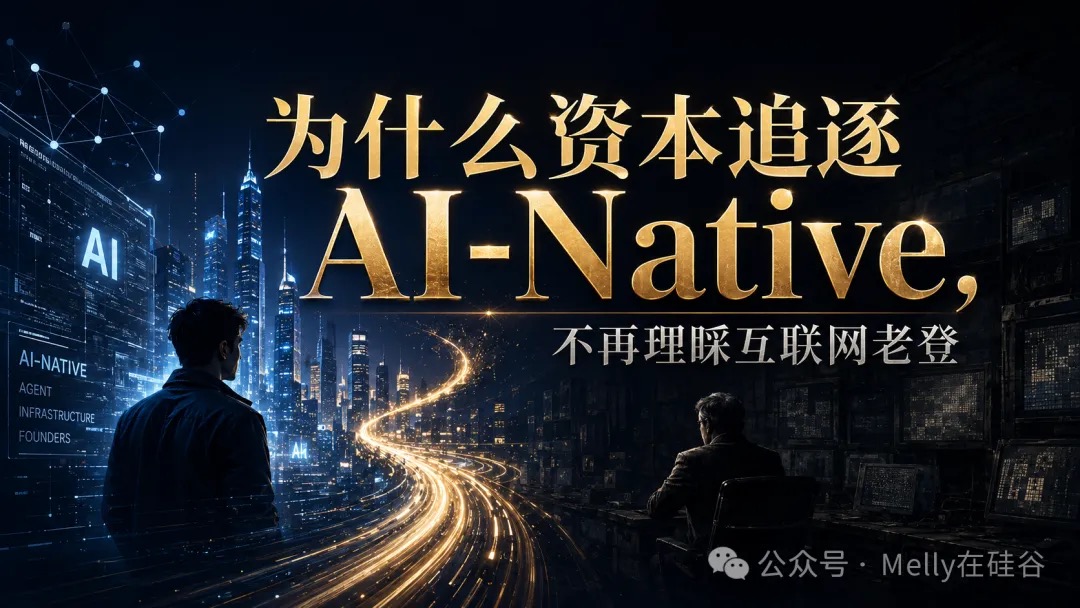
Why is capital chasing AI Native and ignoring the old Internet

Why is capital chasing AI Native and ignoring the old Internet

Capital doesn't reward being old-fashioned, not because old-fashioned people are at fault. The old part is clearly priced. There is no bad information, so there is no excess profit. Global venture capital was $510 billion in the first half of 2026, surpassing $44 billion for the full year of 2025 in one and a half months. More than 70% have entered AI; OpenAI and Anthropic took 217 billion dollars, accounting for 43%. With that much money, you'd think everyone could share a little bit. The truth is that distribution is more extreme than total volume, and the first sieve doesn't screen the industry, it screens people. The category that has been screened out now has an unkind name: the internet is old. Let's just say one thing: the “old man” in this article has nothing to do with age. It refers to a set of methodologies that have been formed in the mobile internet cycle, have been tested over and over, and have brought huge returns to holders. The person holding it may be 45 years old or 32 years old. It was this methodology that was being repriced, not the year of birth. Confusing these two things is Lao Deng's most common mistake and one of the most comfortable mistakes — because if the problem is someone else's age discrimination, you don't need to change a single word. 01 What is AI Native The term has been misused. They can use ChatGPT not called AI native, nor AI in the company name, let alone in their twenties. There are three things that really separate people. First, the starting point is a model, not a requirement. The order in which Lao Deng makes a product is: look at what the user wants, write down the requirements, and find technology to implement it. The order of AI natives is reversed: first figure out what level the model is capable of today and what step it is likely to reach tomorrow, and then move from this capability boundary to the external product. The former uses the model as a tool, and the latter uses the model as the foundation. There was no difference between these two kinds of things made by humans in the first edition; by the third edition, there was a difference of one species. Article 2. The default unit of an organization is not a person. The division of labor in the Internet age is the division of one thing into ten people. AI Native's division of labor is to take ten things from one person and add a bunch of agents. The CEO of a domestic application company said that the team consists of less than ten people, but a large number of AI work at night, and the first thing employees do every morning is check the work the AI handed in the night before. Cursor's side is even more extreme. Public reports mention that the company doesn't have a product manager; engineers write their own code, talk to users themselves, and participate in recruiting people themselves. Article 3. Information is first-hand. AI Native's input sources are papers, model cards, GitHub issues, original discussions on X, and self-run evals. Lao Deng's input sources are industry summits, closed-door meetings, brokerage reports, interpretation of public accounts, and finding someone to drink coffee with. This one is the least obscure and most lethal; I'll talk about that separately later. I'm satisfied with all three. The 25-year-old is an AI native, and so is the 45-year-old. I'm not satisfied with the three rules; I'm still an old man at the age of 25. AI natives are a state, not an age group. The trouble is that tickets in this state are works, not resumes. 02 The two lists spread the results of this round on the table. These are two lists. The first one is an all-AI native company. Their valuations are not rising; they are exchanging orders of magnitude. List 1 · Upstream OpenAI raised $122 billion in a single round of financing in Q1 2026, followed by $852 billion, the largest private equity financing in history. Anthropic Q2 had a single round of $65 billion, after investing $965 billion, accounting for about half of the total global venture capital for the quarter; the revenue operating rate in May reached about $47 billion. DeepSeek raised about 70 billion yuan in its first round of financing in May 2026. In April of the same year, Liang Wenfeng raised his direct shareholding from 1% to 34%, and controlled a total of about 84.29% of the shares through related entities. The Dark Side of the Moon (Kimi) was estimated at $4.3 billion in December 2025; it went for three consecutive rounds from January to February 2026 to reach 18 billion; the D round in May was about $2 billion, breaking 20 billion dollars after the investment; the July round surpassed $3.5 billion, after investing 35 billion dollars; the pre-IPO target was 50 billion dollars. ARR broke 100 million in March, 200 million in May, and held steady at 300 million US dollars in June, with APIs accounting for more than 70%. Smart Spectrum · MiniMax successively landed in Hong Kong stocks in early 2026, with a market capitalization exceeding 100 billion yuan. It was one of the first major model companies listed in China. The second one...

4d agoWendy#AI #DeepSeek
Don't bet 100 times more, just look for “cash bulls”: What other projects are worth investing in in a bear market?

Don't bet 100 times more, just look for “cash bulls”: What other projects are worth investing in in a bear market?

Source: Odailey Planet Daily Author: Asher Original title: Don't guess 100 times the coin, only bet on “cash cow”: What other projects in the bear market are worth investing in? The bear market only buys the most profitable items on each track, and the bull market then goes after short-term hot spots. Core point of view: In the context of the downturn in the crypto market, this article has selected four issued projects, Pump.fun, Hyperliquid, Uniswap, and Chainlink. They have shown profitability through a bear market with stable agreement revenue, providing a more realistic reference target for long-term investment. Key elements: 1.pump.fun's revenue in the past 30 days was 41.53 million US dollars, with a cumulative total of about 256 million US dollars in the first 7 months. The revenue depends on the popularity of Meme transactions on the Solana chain, but the average monthly cash flow capacity of tens of millions of dollars is outstanding. 2. Hyperliquid's cumulative revenue for the first 7 months was about US$352 million, surpassing Pump.fun. In June, it reached a new high of 60 million US dollars during the year. The revenue mainly comes from perpetual contracts and spot transaction fees. 3. Hyperliquid uses approximately 99% of the agreement fee to repurchase and destroy HYPE tokens, forming a simple investment logic of “profitable and continuous repurchase”. 4. Uniswap has earned 5.6 million US dollars in the past 30 days. It is the most profitable DEX. It accumulated about US$28.4 million in the first 7 months, benefiting from the official opening of the agreement fee after the implementation of the Unification proposal and its use for UNi's destruction. 5. Chainlink's revenue in the past 30 days was 4.57 million US dollars. The monthly revenue was stable in the range of 4.4 million to 5.8 million US dollars. The revenue came from service fees such as oracles and cross-chain services, and the cumulative transaction value facilitated reached 32.18 trillion US dollars. Since this year, the crypto market has continued to be sluggish. There aren't no hot spots on the chain; every once in a while, there are a few burgeoning memes, but these quotes often focus on new coins that have just been issued and hardly give the market time to fully study. Once the story ebbed down, prices quickly dropped back down. Most players who got on the bus halfway ended up losing money and making little money. Since blindly guessing the next 100 times the coin makes little sense. A more realistic investment logic is: if you are preparing to invest slowly in a bear market and wait for the next round of the bull market to return, what other projects are worth buying now? Compared to simply reading the story, a more direct screening criterion is whether the project itself still makes money or not. If a platform can still earn millions or even tens of millions of dollars in revenue every month in the crypto bear market, it at least indicates that users and demand are still there, and the project also has a stronger ability to cross the cycle. This type of platform token won't necessarily be the altcoin with the most exaggerated rise in the next round of the bull market. So, since this year, what other coin issuing projects have continued to make money? (The revenue data for the project in this article comes from Tokenomist and DeFilLama. The revenue caliber is uniformly adopted, that is, the actual revenue of the agreement after deducting distribution to supply-side participants such as LPs.) Pump.fun: The “shovel seller” on the meme circuit earns money from round after round of coin issuance boom. Apart from the two major stablecoin issuers Tether and Circle, Pump.fun is one of the most profitable crypto native projects in the past 30 days, with a revenue of 41.53 million US dollars. Looking at monthly data, Pump.fun's revenue from January to July was 51 million US dollars, 40 million US dollars, 38.1 million US dollars, 32.4 million US dollars, 32.4 million US dollars, 34.4 million US dollars, 26.6 million US dollars, and 33.7 million US dollars, respectively, with cumulative revenue of about 256 million US dollars for the first 7 months. Pump.fun's revenue peak was high at the beginning of the year, then the overall decline was evident in April and June, and there was some recovery in May and July. The core of Pump.fun's revenue comes from continuous trading of SGD on the platform. Currently, users are free to create tokens themselves, but trading during the Bonding Curve phase requires transaction fees. According to Pump.fun's latest rate, Bonding Curve's total fee rate is 1.25% per transaction, of which 0.95% goes to the agreement and 0.30% is distributed to token creators. Additionally, when tokens graduate from Pump.fun and enter PumpSwap, a graduation fee of 0.015 SOL will be charged. Pump.fun's revenue still depends on Solana's on-chain meme activity. When the on-chain market is lukewarm, revenue drops significantly, and recovers quickly when popularity picks up. But from the perspective of a bear market, it can be at 7...

4d agoOdaily星球日报#DeFi #MEME #invests

Uniswap founder: Related asset pairs will become the core engine for AMM to dominate the global market

Comparing news, Uniswap founder Hayden Adams (@haydenzadams) wrote that as the asset tokenization process accelerates, AMM (automated market makers) are ushering in structural opportunities. He pointed out that tokenization not only upgraded the market infrastructure, but also made the market programmable, fundamentally changing the way the market was created and the threshold for participation. On-chain liquidity spontaneously forms a “related asset pair” aggregation pattern — the more correlated asset pairs, the lower the LP inventory risk, the deeper the liquidity, and the smaller the efficiency gap between passive AMM strategies and active strategies, thus “breaking down” traditional market makers with lower capital costs. Using NVDA/SPY as an example, he pointed out that if stocks are traded in SPY instead of US dollars, market making costs will be drastically reduced, while bridging pairs (such as SPY/USD) will still compete with professional institutions.

4d ago

Uniswap will be deployed synchronously when the Arc mainnet goes live in September

Comparatively, Uniswap announced that it will complete deployment when the Arc mainnet is officially launched in September to provide developers with deep on-chain liquidity infrastructure and support the construction of DeFi applications such as lending, structured products, LP strategies, and token issuance. Arc is a public chain owned by Circle. It uses USDC as the gas token and has sub-second deterministic finality.

4d ago#On-chain dynamics

The issuance of Microsoft-linked data center bonds may increase to $3.9 billion

Comparatively, according to Bloomberg, a $3.9 billion bond issue related to Microsoft has attracted more than $8 billion in investor demand, prompting the issuer to increase the transaction size by about $1 billion compared to the initial target. The bond will be issued through a Blackstone-backed subsidiary of QTS Realty Trust LLC to finance a data center project in Georgia, USA. The debt is expected to be issued by two special-purpose liability subsidiaries of QTS's QualityTech LP. The coupon interest rate for this bond issue is expected to be around 6%. At the same time, it will be issued at a discount, bringing the actual yield of 7% to the middle. Although the bond is expected to receive an investment grade rating, its yield level is comparable to that of a single B-grade junk bond. Citi, Goldman Sachs, J.P. Morgan Chase, and Morgan Stanley held a conference call with investors last week to introduce the bond issue. The bank mentioned above is responsible for underwriting the transaction, and the bond has been promoted to the market for several days in a row. The bond deal is likely to be priced as soon as Tuesday, but related discussions are still ongoing, and the final issuance plan may still change.

4d ago

Solana yield protocol Paystream announces closure and liquidation

According to Twitter, Paystream, a protocol focused on on-chain earnings on Solana, announced the closure and liquidation on August 15. Founder Maushish said that the project has gone through many transformations, from the P2P loan agreement born at the hackathon, to the LP management terminal, to the perpetual contract funding rate arbitrage tool (Funding Rate Farmer). The latter was actually used. Users opened 185 positions and deployed a security deposit of 232,000 US dollars. The project was funded through MetaDAO, and a proposed restructuring in May drastically cut the remaining capital. The team was reduced from 6 to 1, and subsequent attempts to build automated treasury and payroll compliance products were unsuccessful. The team decided to stop operations, open source the capital rate arbitrage filter code, and announce the details of the liquidation proposal through MetaDAO.

7d ago