Meta · 3826

Muse Spark 1.2 cabbage price version rolled out: OpenCode is directly free for a limited time

Compared to Twitter News, AI Alerts, Meta's Muse Spark 1.2 Contributor version is rapidly being rolled out to third-party platforms. After OpenRouter was recently installed, the price was consistent with Meta's official one: $0.10 per million tokens were input, $0.20 was output, and the cache input was only $0.002. Regular Muse Spark 1.2 costs $1.25, 4.25, and $0.15, respectively. The Contributor version is not a low-end model. It uses the same models and capabilities, at the cost that the user's input and output can be used by Meta to train and improve the product. Based on the output price, it is about 95% cheaper than the regular version. There are quite a few places where you can use it now. OpenCode Zen even made Contributor a limited-time free model. Command Code has also been added, and even the lowest Go plans can be used. Vercel AI Gateway and nanoGPT also provide APIs, where Vercel can also directly access tools such as Claude Code, Codex, Hermes, OpenCode, and OpenClaw. Artificial Analysis's latest Intelligence Index for Muse Spark 1.2 xhigh is 57. It is true that this price is already ridiculously low, but the community's actual testing and evaluation are very divided. Some people use it as a cheap replacement for DeepSeek V4 Flash, while others report that long tasks and tool calls are still not reliable enough. It is suitable for open code and low-cost experiments, while private code must first consider whether the data is willing to be handed over to Meta.
1m ago

Trump traded more than 1,000 securities in June: traded Berkshire, Meta, and traded Palantir many times

Comparing news, the US Government Ethics Office's latest financial disclosure shows that US President Trump carried out more than 1,000 securities transactions in June this year, totaling about 78.1 million to 263.1 million US dollars based on the disclosed transaction amount range, involving companies such as Berkshire Hathaway, Visa, Mastercard, Cintas, Palantir, Meta, and Coinbase. Among them, the biggest transaction was the sale of the Vanguard ETF worth $5 million to $25 million on June 22. Additionally, Trump bought $1 million to $5 million worth of Berkshire Hathaway shares on June 18, then sold smaller positions on June 24; he also sold $1 million to $5 million worth of Meta shares on the same day and bought it again for a smaller amount later in the month. The disclosure also revealed that Trump traded Palantir several times in June, first buying it on June 3, then selling it on June 16 and 18, and buying it again on June 23 and 24. The White House said that Trump's investments are managed by an independent agency, and there is no conflict of interest. (Bloomberg)

1m ago

When US stocks opened, AI concept stocks generally rose, and ultra-microcomputers rose more than 2.66%

Comparative news, according to MSX.COM data, when US stocks opened, the Dow rose 0.52%, the S&P 500 index rose 0.41%, the NASDAQ rose 0.47%, and the VIX Panic Index fell 3.25%. AI concept stocks rose 2.66%, Baidu 2.43%, Astera Labs 2.19%, TSMC 2.03%, and Ambarella 1.87%. According to reports, MSX is a leading RWA trading platform. It has launched hundreds of RWA tokens, covering popular US stocks and ETF tokens such as Nvidia, GOOGL, MSFT, AMZN, META, TSM, and AMD.

1d ago
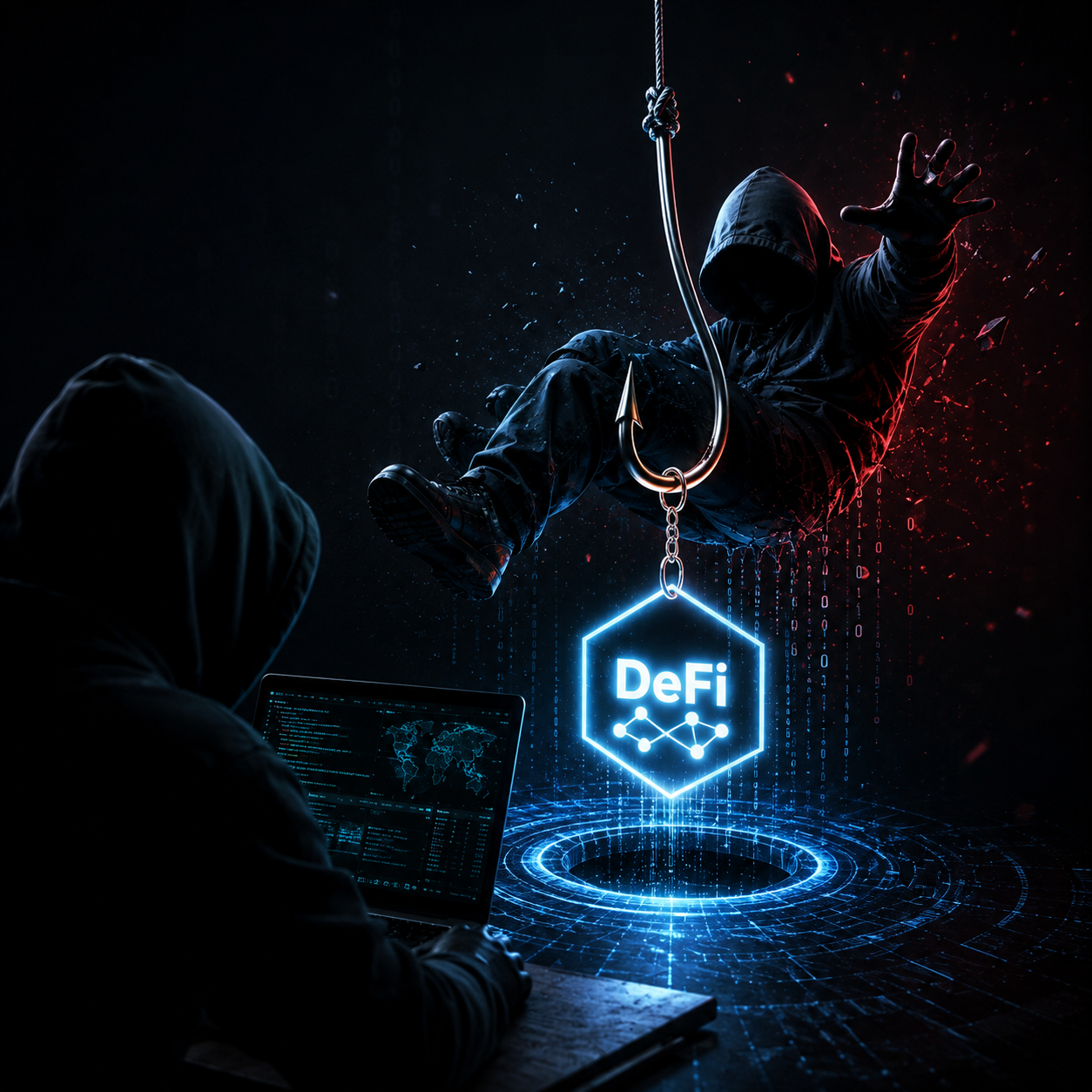
Black eats black? Fake DeFi actually snatched out North Korea's Lazarus real hacker

Black eats black? Fake DeFi actually snatched out North Korea's Lazarus real hacker

Source: Security Company ANY.RUN Compiled by: Daily Planet Daily Original title: Fishing Show of the Year, Fake DeFi Picks Out North Korea's Lazarus, Real Madrid Fans, Real Madrid Fans. With a mathematical background, they only use AI to write code. Core point of view: By setting up a fake DeFi company, the security agency successfully infiltrated the “Famous Chollima” hacker group under North Korea's Lazarus Group, revealed its complete process of using false identities, AI tools, and remote collaboration to infiltrate Western companies, and revealed its evolving toolset and infrastructure. Key element: The researchers disguised themselves as recruiters and recruited three North Korean agents within a few months to record their operation behavior, tool usage, and collaboration patterns in real time through the ANY.RUN sandbox environment. Agents used forged driver's licenses, stolen social security numbers, and mule accounts to complete the onboarding process. Some of these documents were processed by Google Gemini and had SynthID watermarks, revealing signs of forgery. Attackers rely on AI tools such as ChatGPT and Google Gemini to encode, translate, and modify files, and use AstrillVPN, remote desktop software, and dedicated servers to covertly access corporate environments. The three agents showed insufficient skills during development, frequently searched for basic issues, and exposed more proxy server and infrastructure information induced by selective network outages and captcha. The investigation found that Famous Chollima aims to lurk within the enterprise for a long time and legally obtain access to code, systems, and intellectual property rights, and is not limited to short-term attacks, and the threat persists significantly. Crypto friends who are often phished have probably heard of the North Korean hacker group Lazarus Group. Its well-known “campaigns” include, but are not limited to: Bybit ($1.5 billion) theft, Ronin Network/Axie Infinity Bridge attack ($6.2 billion), DMM Bitcoin/Ginco related attack ($308 million), Harmony Horizon Bridge attack ($100 million), and Atomic Wallet attacks ($100 million), etc. And the key to the success of these attacks is social engineering — hackers usually disguise themselves as normal job applicants, lurk at crypto companies for years, and wait for the right time. Recently, security agency ANY.RUN joined forces with BCA LTD (a company dedicated to threat intelligence and hunting) and NorthScan (a threat intelligence program to uncover the infiltration of North Korean IT workers) to effectively crack down on North Korean hacker agents. The researchers created a fake DeFi startup and successfully recruited “Famous Chollima” agents under North Korea's Lazarus Group who specialize in human infiltration, to gain an inside perspective on the actions of North Korea's IT workers. The ANY.RUN sandbox environment shows the agent's behavior patterns in real time, revealing their evolving toolsets, remote access workflows, AI tool usage, and supporting infrastructure. This survey went beyond the simple recruitment process and showed in depth how these agents collaborated, obtained, and used company resources after joining the company. The findings suggest that the North Korean IT worker program not only poses a recruitment risk; once agents sneak inside the organization, they can legally obtain access to code, systems, intellectual property, and critical business processes. The following is a report co-authored by the three parties, compiled by Daily Planet Daily. ——————Introduction In December of last year, we fully recorded the infiltration cycle of “Famous Chollima” for the first time. From recruiting collaborators to help them join Western companies, to falsifying documents, shipping laptops to intermediaries, and even using AI tools to assist and translate in real time during interviews, everything is under control. In that survey, we pretended to be a middleman willing to interview them and lend them a laptop in exchange for a percentage of their salary. The point is that those laptops are actually ANY.RUN sandbox environments that record every click and every step they take. This provided us with massive metrics, hours of computer operation videos, and face-to-face contact images, making an unprecedented survey and making headlines in many media. (“Famous Chollima...

1d agoOdaily星球日报#wallet security #hacks
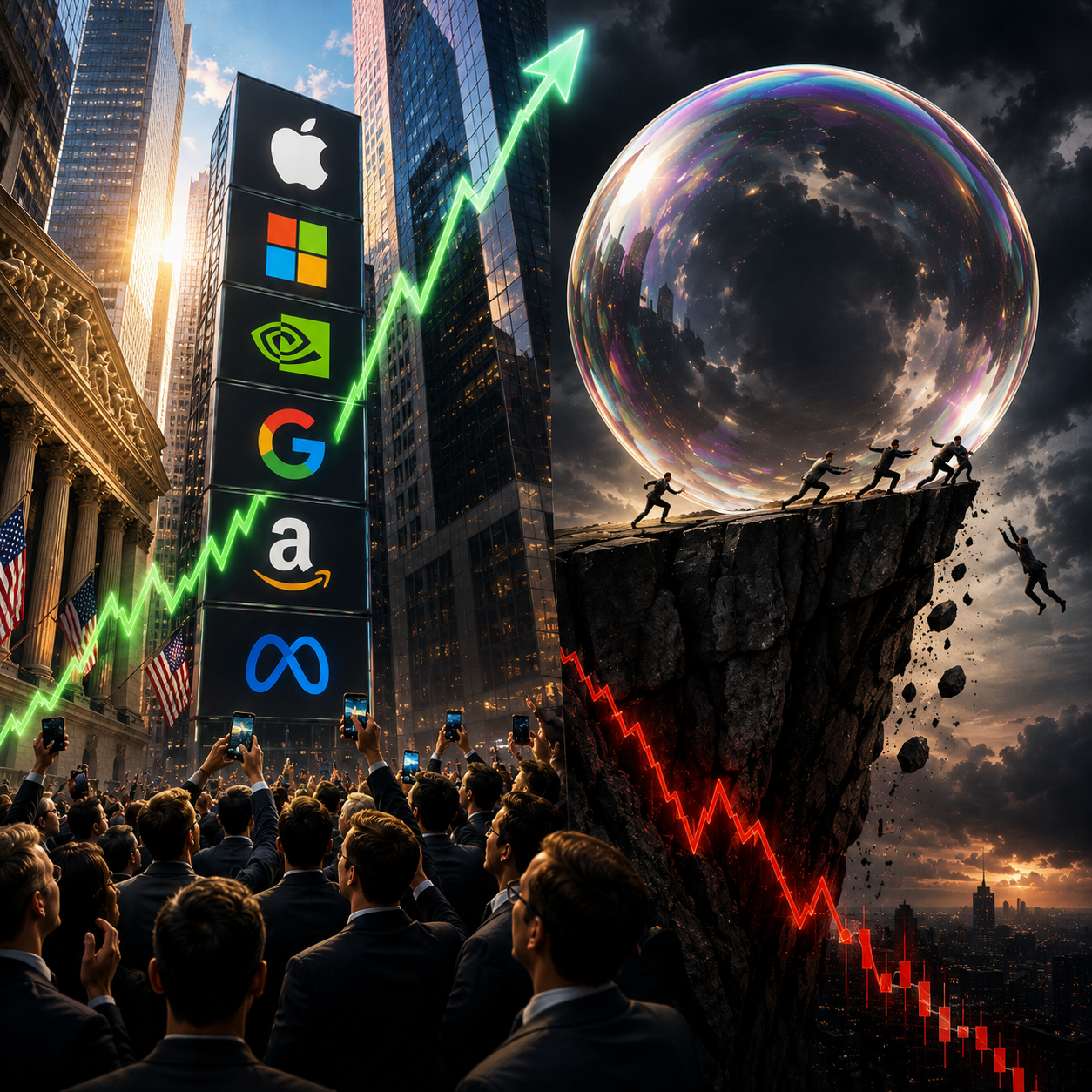
US Stock Value Investing Is Heading Into Another Trap

US Stock Value Investing Is Heading Into Another Trap

Source: Shenchao TechFlow Original title: (Opinion: Value investing in US stocks is not equal to fundamental investment) When “fundamentals are dead” becomes a consensus, investors who blindly organize giants will eventually experience astonishing capital destruction. Guide: When the market shouted “fundamentals are dead” and the capital frenzy formed a group of tech giants, the author used an astronomy discovery to unravel the logical loopholes behind this narrative. Starting from the composition of valuation multiples, this article reminds investors to distinguish between the true quality of an enterprise and the premium that the market is willing to pay. It is particularly cautionary about long-term allocation in the crypto and technology sector. I promise this introduction won't be as long as the last one on the weather. But please give me 90 seconds. More than 100 years ago, a woman named Henrietta Levitt was doing the tedious job of measuring the brightness of thousands of stars on photographic negatives (the way they were imaged before film appeared). She noticed one characteristic of a class of pulsating stars: the slower they pulsate, the brighter they themselves are. ¹ This might just seem a little interesting today, like “OK, that's pretty cool.” But at the time, astronomers couldn't tell the difference between a dark star very close to Earth and a very bright star far away. For them, the two left the same stain on the photographic film. Visual brightness is a messy mix of these two variables: how bright the thing itself is, and how far away it is from us. Henrietta's work decouples these two things: if you can observe the rate of pulsation, you can know its true luminosity; if you know its true luminosity, you can reverse the distance based on how dark it looks. Astronomers call it “standard candlelight.” A few years later, a man named Edwin Hubble discovered one of these pulsating stars, applied Levitt's math, and discovered what he had always thought was a cloud of gas within our galaxy; in fact, it was an entire independent galaxy, one million light years away. So in simple terms, the observable universe has grown about a trillion times larger, just because one person has figured out how to tell the difference between what things look like and what they actually look like. That in itself is obviously pretty cool. But another interesting thing is that around the same time period, two other astronomers each independently drew a scatterplot. One axis was actual luminosity, and the other axis was temperature. They discovered that stars are not randomly distributed in this space, but rather clustered into different families. The meaning behind this is: stars with the exact same visual brightness may and do belong to a completely different family, have a completely different past, and most importantly, have a completely different future... So what is written in the star? Over the past few years, there has been much discussion about markets, narratives, capital, company building, and financial nihilism. This feeling seems to have reached a feverish climax as the tech and financial world begins to face a very different future than a few decades ago. What is particularly clear is that separating progress from asset prices has become more noisy and in many ways more repulsive. But as an investor who makes a living by buying assets that (hopefully) outperform, a simple framework is: forward returns are roughly equal to growth in fundamentals multiplied by changes in valuation multiples (and multiplied by the dividends you've collected along the way). In this case, the valuation multiplier can very cleanly correspond to the smudges on the photographic film. It's an observable data point, but it entangles two things that the market can't directly see: how good the company actually is, and how far (or how long) its future cash flow is now. I think most of the money that can be made comes from investors who are most capable of unraveling these two variables earlier than others (or “perception of differences”), and we will continue to see astonishing capital ruin for investors who treat their stains as stars. Value investing is not equal to fundamental investing. I think there is a misunderstood view: fundamental investing has historically dominated the creation of excess returns. Most of these legends come from the Graham, Buffett, and Tiger Foundation lineage, as well as numerous narratives built around this group of people. It is believed that by some point in the 2000s, this approach was no longer effective, and anyone who invested in this way was overwhelmed by momentum, trends, and “direct buying tech giants.” The conclusion was (and still is?) It's “fundamentals are dead.” ² The modern version of “fundamentals don't matter” itself isn't stupid. It's rooted in a lot of ideas that many of us on the Compound team have written before. The biggest companies get the most mechanical purchases, and the software industry has a winner-take-all economic law. AI means that giants can transform scale into moats faster than challengers, and there are also reasons why the market's microstructure embeds momentum more deeply into our market infrastructure. These are all real...

1d ago深潮TechFlow#US stocks

Bitcoin surpasses Meta in market capitalization and rises to 13th place in the global asset market capitalization ranking

Comparative news, according to 8 Market data, Bitcoin's market capitalization was temporarily reported at 1.5 trillion US dollars, surpassing Meta (market capitalization of 1.39 trillion US dollars) and rising to 13th place in the global asset market capitalization ranking. Additionally, Ethereum's market capitalization rose to $283.89 billion, surpassing Dell to rank 72nd in global asset market capitalization.

1d ago
From 4 models to more than 500, OpenRouter was acquired after growing 30,000 times in three years

From 4 models to more than 500, OpenRouter was acquired after growing 30,000 times in three years

Author: Menlo Ventures Compiled by: Jia Huan, ChainCatcher Original title: Early Investors Behind OpenRouter Revisited Investments Today, OpenRouter announced that it has reached an acquisition agreement with Stripe. OpenRouter was launched in 2023, just over three years ago. OpenRouter was initially launched as a “unified interface for LLM” and only supported 4 models at the time: GPT-3.5, GPT-4, GPT NeoXt and Cohere xlarge by Together. When the company was founded, it was based on two core judgments: first, AI will eventually be used on a large scale and penetrate various fields; second, there will be many different models on the market, each with trade-offs, and users will choose different models according to different needs. As it turned out, both judgments far exceeded expectations at the time. Since its launch, the number of tokens processed by the OpenRouter platform has increased by about 30,000 times. Currently, it has exceeded 4,500 trillion tokens on an annualized basis, and the scale of expenditure on the platform has reached a very impressive level. Meanwhile, the number of models supported by OpenRouter has grown from the original 4 to over 500. Figure: OpenRouter Token usage growth from inception to acquisition Menlo Ventures is fortunate to be part of this journey. In March 2025, we participated in OpenRouter's seed funding round through the Anthology Fund set up in partnership with Anthropic. OpenRouter founder and CEO Alex Atallah previously founded OpenSea, which was once valued at $13.3 billion. His co-founders include tech guru Louis Vichy, whom he met on Discord, and highly executive COO Chris Clark. In May 2025, we led OpenRouter's Series A funding round, with Matt joining the company's board of directors, and Deedy as a board observer. Earlier this year, after seeing OpenRouter's rapid growth in customer numbers and revenue, and the company built a product route with stronger “model intelligence” capabilities around model selection and evaluation, we continued to step up Series B financing. In the tech industry, it often takes years for an idea to change from the judgment of a few people to industry consensus. And just a few weeks ago, this happened: from Ramp to Cursor, more than 10 companies launched their own model routing products almost simultaneously. In just a few years, OpenRouter has become one of the most important companies in the AI era. Picture: Group photo when deciding to lead OpenRouter Round A At first glance, Stripe doesn't seem like the most natural buyer of OpenRouter, but the two companies are actually strikingly similar. Both use an API that can be directly accessed to simplify the otherwise complicated transaction process and charge a certain percentage of the fee. It's just that OpenRouter deals with AI models. As Stripe has always said, the two companies combined and are still doing the same thing: increasing “internet GDP.” In fact, over a year ago, OpenRouter called itself the “Stripe of LLM.” OpenRouter's core value OpenRouter was one of the first companies Deedy came into contact with after joining Menlo in 2024. This company is almost right at the heart of our AI infrastructure investment logic. Menlo presented two judgments necessary to invest in OpenRouter in the 2024 Enterprise AI Report: AI spending will increase dramatically, and developers will not only use one model, but multiple models at the same time. Figure: Menlo's initial contact email to OpenRouter As someone who can also write code and actually use these models, we realized long ago that there is a very clear difference in cost, latency, and performance between the different models...

2d agoburnking#OpenRouter

Crypto, AI and betting firms drive 2026 midterm elections corporate political spending to record highs

Comparatively, according to Reuters, in the 15 months up to the end of the first quarter of 2026, US companies have invested a record $517 million in the 2026 House of Representatives and Senate elections, surpassing the previous high of 461 million US dollars in two years of the 2024 election cycle. Together, the crypto, tech, and online betting industries contributed at least $294 million, making them a major force in shaping the midterm elections. Fairshake Super PAC, which is mainly funded by Coinbase, Ripple, and a16z, had $193 million in capital at the beginning of the year; a16z donated more than $81 million to crypto and AI-related PACs. Elon Musk has invested over $90 million, and Meta has donated $65 million to four super PACs. AI-related organization Leading the Future raised $140 million, and Anthropic donated at least $40 million through dark money nonprofits. Online sports betting companies DraftKings, FanDuel and others donated over $72 million. AdImpact expects total political advertising spending to reach a record $11.6 billion in this midterm election. Related industries spend unlimited amounts of money through super PACs, associated PACs, and dark money non-profit organizations for advertising, voter mobilization, etc. Critics believe this amplifies the influence of niche issues such as crypto regulation, data center energy, and betting regulation. This article is sponsored by GENG, Build Your Fortune on GENG (https://geng.one)

2d agoburnking

AI-concept stocks had mixed ups and downs before the US market, and AVGO rose 1.01%

Comparative news, according to MSX.COM data, pre-market AI concept stocks had mixed ups and downs. MRVL fell 0.54%, AMD rose 0.29%, GOOGL fell 0.36%, MU rose 0.89%, and AVGO rose 1.01%. According to reports, MSX.COM is a decentralized RWA trading platform. It has launched hundreds of RWA tokens, covering AAPL, AMZN, GOOGL, META, MSFT, NFLX, NVDA and other US stocks and ETF tokens.

2d ago