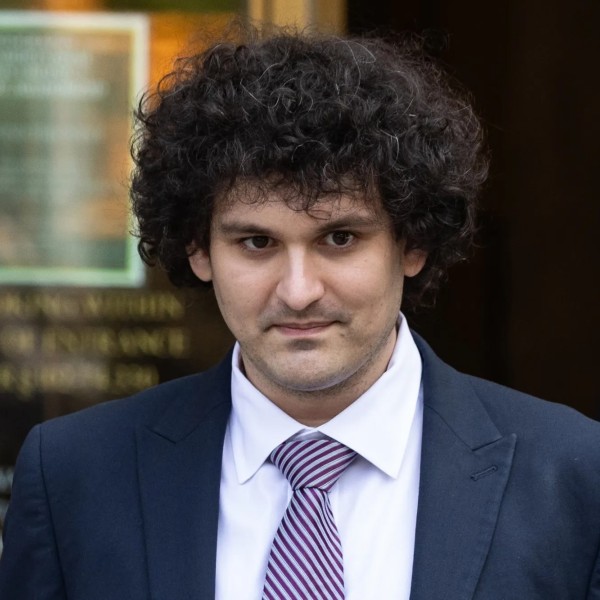
Nishad Singh · 101

Former FTX engineering director Singh reached a settlement with CFTC, confiscated $3.7 million in illegal proceeds and was subject to multiple bans

According to Bloomberg, the US Commodity Futures Trading Commission (CFTC) announced that it has reached a settlement with Nishad Singh, a former FTX engineering director, over the FTX crash. Under the settlement agreement, Singh was required to return $3.7 million of illegal proceeds, was banned from trading for five years, and was not allowed to register with the CFTC for eight years. In view of Singh's active cooperation in the investigation, the CFTC did not add additional monetary fines or compensation claims.

142d ago
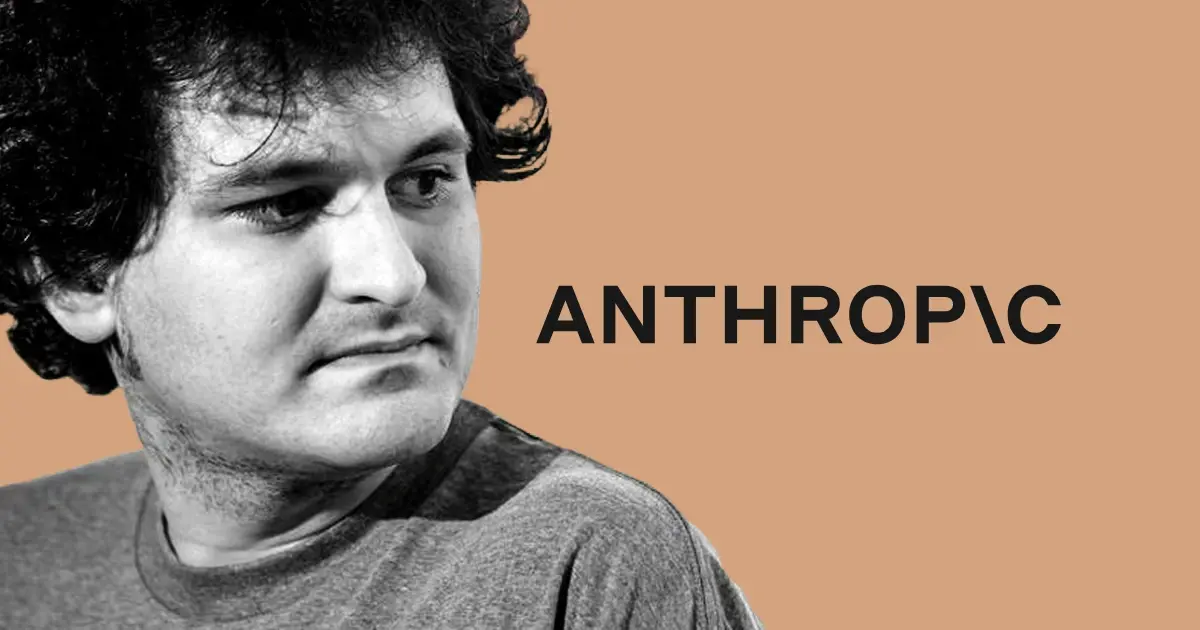
How to throw stolen money into AI unicorns: a crypto scammer's “altruistic” gamble

How to throw stolen money into AI unicorns: a crypto scammer's “altruistic” gamble

Author: Shenchao TechFlow Original title: 500 million becomes 300 billion: How did the crypto maniac SBF invest in the most valuable company in the AI era? Anthropic is probably not one of the most important AI companies on the planet today. Its large Claude model is deployed in the Pentagon, US intelligence agencies, and national laboratories, and is used by the US military for intelligence analysis and target screening of military attacks on Iran. Its annualized revenue soared from zero to $14 billion in less than three years. In February 2026, Anthropic closed $30 billion in Series G financing, and the post-investment valuation surpassed $380 billion. Amazon, Google, Nvidia, Microsoft, and tech giants are lining up to buy money. Over the past few weeks, it has been playing a game with the Pentagon over the weaponization of AI that the world is watching. And in the company's early financing history, there is one name that people still relish: Sam Bankman-Fried. In April 2022, ChatGPT didn't exist yet, and the AI circuit was far less popular than it is today. SBF, through Alameda Research, a hedge fund he controls, spent $500 million on Anthropic's Series B, eating 86% of the entire financing round in one go, and taking about 8% of the shares. Seven months later, the FTX empire collapsed, and SBF became the protagonist of the biggest fraud in cryptocurrency history, and was jailed for 25 years. The $500 million was FTX clients' deposits. But if SBF hadn't been caught, if that money had come from legal sources, 8% of the shares would theoretically be worth more than $30 billion, according to today's valuation of 380 billion dollars. 500 million became 30 billion, and the return rate was more than 60 times. In the entire history of venture capital, this absolute profit is enough to rank high. A crypto scammer serving a federal prison sentence almost made one of the craziest bets in AI investment history. Why did SBF find Anthropic in 2022? Why would he want to smash 500 million? Why did Anthropic take this money? The answer lies in a circle called “effective altruism.” A shared house, a movement, a check. In San Francisco in the mid-2010s, a group of people lived in the same type of shared house, attended the same kind of shared house, attended the same kind of parties, read the same kind of papers, and believed in the same philosophy. This philosophy is called Effective Altruism (EA). The core proposition is simple: charity should not be based on feelings; it should be based on calculation. Every dollar should go in the direction of mathematically “maximizing good results,” and in the opinion of an important branch of EA, the number one existential risk facing humans is not nuclear war, not a plague, but uncontrolled artificial intelligence. Dario Amodei is in this circle. He is the 43rd signer of Giving What We Can Pledge, pledging to donate at least 10% of his revenue, and he became a GiveWell fan back in 2007 or 2008. He lives in the same shared house with two people: Holden Karnofsky, co-founder of GiveWell and Open Philanthropy, one of the EA movement's most influential money allocators; the other is Paul Christiano, a core researcher in the field of AI alignment. At the time, Dario and Paul were both technical advisors for Open Philanthropy. Karnofsky later married Dario's sister Daniela. After getting engaged, the couple lived with Dario for a while. In January 2025, Karnofsky quietly joined Anthropic as a “technical employee” responsible for security policies. Anthropic hadn't even announced this appointment to the outside world when the Fortune reporter discovered the incident. It's an intimate social network. Amanda Askell, an early employee of Anthropic, is the former wife of William MacAskill, one of the founders of the EA movement. She is the 67th signer to GWWC, and her doctoral dissertation is on core topics in EA's philosophy, such as...

156d agoburnking#AI #Anthropic #Claude #SBF
From the 100 billion empire to prison complaints: a 35-page document tries to rewrite the ending

From the 100 billion empire to prison complaints: a 35-page document tries to rewrite the ending

Author: Sanqing, Foresight News Original title: Former giants are unwilling to accept the title, SBF jails a 35-page motion to file a “shady” lawsuit. On February 10, according to Inner City Press, FTX founder Sam Bankman-Fried (SBF), who is serving a prison sentence in California's Terminal Island prison, is actively seeking a reversal of the case. Her mother, Barbara H. Fried, a law professor at Stanford University, took his place The submitted pro se (self-defense) retrial motion has been officially submitted to the court. The 35-page document cites Federal Rules of Criminal Procedure Rule 33 and newly discovered evidence to press for the reversal of his 2023 fraud conviction and his 25-year prison sentence in 2024. Key arguments in the motion include: key witnesses (such as former Alameda Research Co-CEO Ryan Salame and former FTX.US executive Daniel Chapsky) did not testify in court, leading to serious flaws in the trial; prosecutors suspected of concealing evidence; the entire process was influenced by political factors, and SBF's vague statement was a victim of the Biden administration's “targeted attack.” The evidence and arguments submitted by SBF this time were not intended to directly prove his “innocence,” but rather adopted a legal strategy to challenge loopholes in the judicial process. Core allegation 1: “Tailored” witnesses and judicial abduction motions accuse the prosecution of counteracting the core circle and “silencing” witnesses in their favor through threats and inducements. Examples include the absence of former Alameda Research Co-CEO Ryan Salame. The motion cites Salame's public statements after August 2024 (including an interview with Tucker Carlson) as newly discovered evidence that the prosecution threatened to prosecute Salame's partner Michelle Bond in order to prevent Salame from appearing in court to prove SBF's innocence. As for Nishad Singh, the former engineering director who testified against SBF, the motion revealed that during pre-trial interviews, when Singh's initial statement did not meet the prosecution's expectations, the prosecutor angrily “knocked on the table” and criticized Singh's memory for being “untrustworthy.” SBF believes it was this high-pressure intimidation that forced Singh to change his testimony later. The motion formally requested the court to order the prosecution to hand over the relevant interview notes to prove that the prosecution concealed this coercive process. Core allegation 2: Disappearing “liabilities” and the mystery of fiat@ftx.com SBF submitted a sworn statement from former FTX data science director Daniel Chapsky to refute misappropriation allegations at the data level. The motion stated that the prosecution had used the huge negative balance in the fiat@ftx.com account as irrefutable evidence that SBF misappropriated clients' funds. However, in a statement, Chapsky countered that the prosecution's explanation was a “fundamental misstatement.” He pointed out that the account's negative balance corresponds to Alameda's cash and assets held off-chain. The prosecution only showed the jury a negative “borrower” number, but deliberately ignored the corresponding “lender” assets, thereby creating the illusion of a multi-billion dollar deficit out of thin air. Chapsky's data analysis further revealed that if properly accounted for most of 2022, Alameda's account on FTX actually maintained a positive balance of around $2 billion. The prosecution and expert witness Peter Easton misled the jury by deliberately showing only certain negative balance sub-accounts. Core allegation 3: The bankrupt law firm S&C's “asset erasure” SBF also targeted Sullivan & Cromwell (S&C), the law firm responsible for FTX's bankruptcy and restructuring. He alleges that S&C artificially created an “insolvent debt” in order to match the prosecution's conviction logic and earn sky-high lawyers' fees. The motion stated that FTX had a venture capital portfolio worth up to $8.4 billion at the time of bankruptcy (including an investment in Claude AI development company Anthropic). However, in the early days of bankruptcy, in order to close the funding gap, S&C and the prosecution had slightly poor liquidity but huge value...

192d agoburnking#Alameda #FTX #Research #Biden #VC
[Comparative Daily News Picks] Bitwise CIO: 2026 will be a record year for crypto ETF capital inflows; Tom Lee's fund analyst: BTC may fall to 60,000 to 65,000 US dollars in the first half of 2026; SWIFT will introduce blockchain ledgers to expand existing financial infrastructure

[Comparative Daily News Picks] Bitwise CIO: 2026 will be a record year for crypto ETF capital inflows; Tom Lee's fund analyst: BTC may fall to 60,000 to 65,000 US dollars in the first half of 2026; SWIFT will introduce blockchain ledgers to expand existing financial infrastructure

Bitwise Xiaobian's daily selection of Web3 news: [Bitwise CIO: 2026 will be a record year for crypto ETF capital inflows] Bitwise news, Bitwise Chief Investment Officer Matt Hougan said that the recent downturn in the crypto market is mainly due to “investors choosing to sell off in anticipation of the upcoming four-year cycle” and the “1011 market crash”. Once these negative factors dissipate, the market will rebound. Furthermore, Matt Hougan pointed out that the development trajectory of crypto ETFs is “extremely optimistic”. Some large brokerage firms have begun to enter the market. It is expected that 2026 will be a record year for crypto ETF capital inflows. As unique factors such as tokenization and institutional adoption become the main driving force for prices, the cryptocurrency market will gradually mature according to its own fundamentals. [Tom Lee's fund analyst: BTC may drop to $60,000 to $65,000 in the first half of 2026] In comparison, Sean Farrell, head of cryptocurrency strategy at Tom Lee's fund Fundstrat, stated in the “2026 Cryptocurrency Outlook” report, “Although I think Bitcoin and the entire crypto market will still have strong favorable factors in the long term, and support driven by liquidity is expected to appear in 2026, in the first quarter/second quarter of 2026, we There may still be a number of risks to be absorbed, which may present more attractive entry points. My benchmark judgment is that there was a more significant decline in the first half of 2026. Bitcoin could drop to $60,000—$65,000, Ethereum could drop to $1,800—$2,000, and SOL could drop to $50—75. These prices will provide a better opportunity for the layout before the end of the year. If this judgment turns out to be wrong, I'm still more inclined to maintain a defensive posture and wait for confirmation signs of a stronger trend. Bitcoin's year-end target is around $115,000, and Ethereum's year-end target is likely to reach $4,500. Under this framework, the relative strength of ETH will become more prominent. I think this is reasonable because Ethereum has more favorable structural capital flow characteristics, including no miner selling pressure, not being affected by MSTR related factors, and relatively low concerns about quantum risk.” [SWIFT will introduce blockchain ledgers to expand existing financial infrastructure] In comparison, Swift officially announced that it is cooperating with more than 30 banks around the world to promote blockchain-based ledger system design with the aim of expanding existing financial infrastructure and supporting large-scale tokenized asset circulation. Swift said the ledger will record and verify transaction sequences through smart contracts to operate in parallel with existing systems, solve the fragmentation problem of digital finance, and improve the efficiency of global cross-border payments and asset transfers. [Crypto industry supporter and US Senator Cynthia Lummis announced that she will not run for re-election] Comparing news, Wyoming Republican Senator Cynthia Lummis (Cynthia Lummis), who has been promoting cryptocurrency legislation for a long time, announced that she will not seek re-election and that her term will end in January 2027. Loomis is the chairman of the Senate Banking Committee's Digital Assets Subcommittee and has been at the center of congressional crypto regulatory legislation for many years, and has promoted crypto tax reform and Trump's strategic Bitcoin reserve legislation. She said that although she is no longer running for election, she will continue to focus on promoting important legislation in 2026. [Citi lowered target share prices for some crypto stocks, but is still optimistic about the industry] Comparing news, Wall Street Bank Citigroup (Citigroup) updated its digital asset stock report and lowered target share prices for some crypto stocks. Recently, the crypto market has generally declined, but it remains optimistic about this sector. Analyst Peter Christiansen and his team said in a Friday report: “Despite the recent increase in token volatility, we are optimistic about digital asset stocks.” Circle Financial (CRCL), the issuer of the USDC stablecoin, is still Citi's preferred stock, and the team reiterated its target price of $243, even though the stock recently dropped sharply to its current price of $83.60. Christiansen's next choice of stocks was Bullish (BLSH) and Coinbase (COIN). He said, “We believe BLSH is well-positioned to benefit institutional investors (especially the US) and traditional finance (Tra...

245d agoWendy#Compare Daily Picks

US SEC seeks to ban former core FTX executives from being directors or executives of listed companies for 8-10 years

Comparatively, the US Securities and Exchange Commission (SEC) has today submitted a “final consent judgment” proposal against Caroline Ellison, former CEO of FTX affiliate Alameda Research, Gary Wang, former chief technology officer of FTX, and Nishad Singh, former chief engineer. According to the settlement agreement, Ellison agreed to accept a 10-year ban on executives and directors, while Wang and Singh agreed to an 8-year ban. None of the three have denied the SEC's allegation that they violated the anti-fraud provisions of the securities law. The case stemmed from fraudulent investor practices that were revealed after FTX went bankrupt in November 2022.

246d agoWendy
From up the chain to the top: What do the biggest names in the coin industry look like

From up the chain to the top: What do the biggest names in the coin industry look like

In the wild stage of any industry, there are always pioneers who use the original stage of getting up early to stir things up and become new billionaires, and when they become new powerful people, their lifestyle often becomes mysterious and luxurious. Luxury homes are a symbol of their wealth and status. Over the years, the explosive growth of the cryptocurrency market has created a group of wealthy upstarts. The biggest names in the cryptocurrency industry have accumulated huge wealth through turbulence. Their wealth is not only reflected in digital wallets, but also turned into top luxury homes in the real world. Unlike traditional financial bosses, newcomers in the coin industry are often younger and more daring to show their wealth, and luxury homes have become the best stage for them to show their success. From 2020 to 2025, the global luxury housing market continued to heat up due to privacy needs and low inventory after the pandemic, and the biggest players in the coin industry took advantage of the opportunity to buy many sky-high properties. These luxury homes not only have excellent locations and luxurious designs, but also often have high-tech facilities, which perfectly meet the extremely high requirements of people in the coin industry for privacy and security. Below, we'll focus on the luxury property deals of several famous people in the cryptocurrency industry, sort out their prices, locations, and unique features, and take a look at their luxury homes. Coin industry mogul inventory EOS founder BB: $172.8 billion Italian luxury house Brendan Blumer is the CEO and chairman of Bullish, the parent company of EOS. He founded Gamecliff, an automated online game virtual item trading platform at age 14. Okay.com was launched in 2010 to create a collaborative data sharing ecosystem for the Asia-Pacific real estate market, and later developed into the largest digital real estate agency in Hong Kong. In 2017, he co-founded Block.one with Dan Larimer (BM), dedicated to blockchain technology research and development. Since founder BM left his job, Block.one's core team has almost all been BB's people. In March 2025, the Italian media “L'Union Sarda” reported that he bought the Romazzino (Romazzino) villa for a record 160 million euros (about 172.8 million US dollars). Apart from Villa Certosa (Villa Certosa), this deal is the most expensive transaction in the history of real estate in Sardinia and Italy. This villa in Romazzino (Romazzino) is one of the most luxurious mansions on the Costa Smeralda (Costa Smeralda) and is the former home of former Saudi oil minister Ahmed Zaki Yamani (Ahmed Zaki Yamani). Surrounded by 350 metres of coastline, the mansion covers an area of 2.3 hectares and has 28 bedrooms, 35 bathrooms, spacious terraces, 2 private beach entrances, 2 exclusive piers, 3 swimming pools, and approximately 23,000 square meters of gardens and supporting facilities. Big Brother Ma Ji: The $25 million Los Angeles Bird Streets mansion Huang Licheng, also known as “Big Brother Ma Ji,” is a former rapper and tech entrepreneur. In 1991, Huang Licheng became famous as a founding member of the pop/rap trio group LA Boyz. LA Boyz was active in the early to late 90s, released 13 albums and became popular in Asia, and eventually disbanded in 1997. After LA Boyz's success, Huang Licheng formed a hip-hop group in 2003” “Machi (Machi)” was another success. In 2017, Huang Licheng began entering the cryptocurrency sector with Mithril (Mithril). “Big Brother Ma Ji” was one of the earliest NFT players with a certain trading scale and is also a major BAYC player. His transaction frequency, NFT holdings, and sale prices will all have a certain impact on the NFT trading market and the floor price of blue-chip NFTs such as BAYC. In June 2023, Huang Licheng purchased a luxury home in the famous Bird Streets neighborhood of Los Angeles for $25 million. The luxury villa has 14,000 square feet of spacious space, facilities such as a wine room, marble bar, and large gym, and has 5 bedrooms and 8 bathrooms. This mansion on Bird Streets was initially listed for $34 million and was just completed in early 2022, but according to photos, Big Brother Maji bought it for about 75% less than the asking price a year later...

451d agoAlvin Liu#Coin circle #mansions

SBF's assets of $1 billion have been seized, including private jets, political donations, and Robinhood shares

Comparatively, according to the “Final Expropriation Order for Specific Property” issued by the US District Court for the Southern District of New York, former FTX CEO Sam Bankman-Fried (SBF)'s total assets were about 1 billion US dollars, including two private jets, large political donations, cryptocurrency balances, and Robinhood shares. The largest asset that was confiscated was 55.2 million Robinhood shares. On January 9, 2023, the US Department of Justice seized these shares, which later became the largest portion of the confiscated assets. In September 2023, Robinhood bought back these shares for $605.7 million. Additionally, the seizure order included two aircraft—a Bombardier Global 5000 and an Embraer Legacy, as well as the assets of Alameda Research, a trading company co-founded by SBF. Court documents also detail political donations made by Bankman-Fried himself or directed other FTX executives (such as Ryan Salame and Nishad Singh) on its behalf. The donations have been returned to the government, and include organizations and individuals from multiple political factions, including US congressional candidates and groups focused on in-state politics. SBF has also accumulated large amounts of cryptocurrency and cash, which are held at Binance.US and several banks, respectively. The confiscated cryptocurrencies include millions of USDT and large amounts of Bitcoin, Ethereum, Cardano, and Dogecoin.

549d agoWendy#Cardano #FTX #Robinhood #SBF #Ethereum #Bitcoin

FTX co-founder Gary Wang seeks to avoid jail before sentencing

FTX co-founder Gary Wang will be judged in a New York court on November 20. Gary Wang was unaware that Alameda Research was misappropriating FTX clients' funds and only learned about the incident after the fraud “went very well,” according to the sentencing memorandum filed on Wednesday. He is currently a full time software engineer. According to the memorandum, Gary's current work includes supporting “forensic firms, criminal investigators, and judicial professionals seeking to preserve evidence faithfully.” Gary's lawyer said Gary's wife, Cheryl Chen, is 9 months pregnant and is undergoing naturalization procedures, and that incarceration would cost her and her soon-to-be born son their main financial resources. SBF and Gary have been friends since high school, and the two met at a summer math camp. Gary also trusts others very much, according to the memo. Wang's attorney said, “Sadly, Gary's compassion and kindness made him take others lightly, even to the point of being naive. SBF took advantage of this quality, and Gary's obedience to the decisions he made. Despite Gary's undeniable talent in programming, he has made himself one of SBF's pawns.” Former FTX engineering director Nishad Singh pleaded guilty last month and was not jailed but instead released by supervisory supervision for three years. Former Alameda Co-CEO Caroline Ellison was sentenced to two years in prison in September for cooperating with prosecutors. Ryan Salame, former co-CEO of FTX Digital Markets, began serving seven and a half years in prison last month.

653d agoAlvin Liu#FTX #Gary Wang
[Comparative Daily News Picks] 21Shares submitted an S-1 Form to the US SEC for its XRP ETF; unclosed BTC, ETH, and SOL futures contracts surpassed $50 billion; WSJ: French users who spent more than $30 million on Polymarket betting on Trump's victory claimed “no political purpose”; Web3 raised $5.4 billion in the first three quarters of 2024

[Comparative Daily News Picks] 21Shares submitted an S-1 Form to the US SEC for its XRP ETF; unclosed BTC, ETH, and SOL futures contracts surpassed $50 billion; WSJ: French users who spent more than $30 million on Polymarket betting on Trump's victory claimed “no political purpose”; Web3 raised $5.4 billion in the first three quarters of 2024

Web3 news selected for you every day by the editor: [21Shares submits an S-1 form to the US SEC for its XRP ETF] According to the US Securities and Exchange Commission's public documents, 21Shares has submitted an S-1 form to apply for an XRP ETF. The name of this ETF is: 21Shares Core XRP Trust, to be listed on the Cboe BZX exchange, Coinbase Trust Custody Company will act as its custodian. Other companies are also seeking approval for a spot XRP ETF, including Canary Capital and Bitwise. [Data: BTC, ETH, and SOL futures open contracts surpass $50 billion] In comparison, according to The Block, BTC, ETH, and SOL futures unclosed contracts have broken the $50 billion mark. This is an important sign of market confidence, or at least a sign of the historic strengthening of market risk appetite before the US election. Take CME Bitcoin Options as an example. On October 29, the platform saw one of the largest transactions ever: 3,050 BTC call option contracts with an execution price of $85,000. The transaction consumed $4.6 million in option fees, $173,000 in volatile option fees, and brought up to $42 million in Delta risk, with a total nominal value of about $350 million. [WSJ: French users who spent more than 30 million dollars betting on Trump's victory on Polymarket said “no political purpose”] In comparison, according to the Wall Street Journal, French users who spent more than 30 million dollars betting on Trump's victory on Polymarket claimed “no political purpose.” The man claiming to be Théo said during a Zoom call with the Wall Street Journal reporter: “My purpose is just to make money,” he claims to be a French person who lived in the US and worked as a bank trader. According to reports, Théo opened Polymarket accounts under the names of Fredi9999, Theo4, PrincessCaro, and Michie, and bet on Trump in the 2024 election, with a bet amount of about 38 million US dollars. According to reports, if all of Théo's expectations for Trump's big win come true, he could get a return of more than $80 million, which is more than double the amount he invested. If Harris wins, Théo could lose all or most of $30 million, which he claims is the majority of his available liquid assets. [Crunchbase: Web3 companies raised $5.4 billion in the first three quarters of 2024] In comparison, according to Crunchbase's Web3 tracking data, Web3 startups raised more than $5.4 billion in venture capital in the first three quarters of 2024. Investors are increasingly targeting emerging markets where blockchain and artificial intelligence intersect, while projects focusing on decentralized blockchain infrastructure are also attracting large inflows of capital. In the last quarter alone, the influx of capital into blockchain companies reached $1.4 billion. Additionally, October's funding highlights include Glow raising $30 million to develop a decentralized solar grid and Nillion Network raising $25 million to advance its decentralized privacy platform. [The US government is in negotiations to return the maximum $13.25 million in political donations from former FTX executives] According to a new federal court document, the US government is in negotiations to return the maximum $13.25 million in political donations donated by former FTX executives. The document was approved by Lewis Kaplan, the judge responsible for the criminal case of former FTX executive Sam Bankman-Fried and his subordinates. The government requested continued negotiations with multiple Political Action Committees (PACs) until January 15, and the government requested more time to “discuss with the PAC the forfeitability of funds obtained by these entities from the defendants and their accomplices.” According to OpenSecrets data, Bankman-Fried or Nishad Singh, a former FTX engineering director, told this...

658d agoWendy#Compare Daily Picks

The US government is in talks to return the top $13.25 million political donation from a former FTX executive

According to a new federal court document, the US government is in negotiations to return a maximum of $13.25 million in political donations from former FTX executives. The document was approved by Lewis Kaplan, the judge responsible for the criminal case of former FTX executive Sam Bankman-Fried and his subordinates. The government requested continued negotiations with multiple Political Action Committees (PACs) until January 15, and the government requested more time to “discuss with the PAC the forfeitability of funds obtained by these entities from the defendants and their accomplices.” Bankman-Fried or Nishad Singh, a former engineering director at FTX, donated approximately $13.25 million to these groups, according to OpenSecrets data. Nishad Singh testified that he donated in accordance with Bankman-Fried's request and sometimes signed a blank check to donate.

658d agoWendy#FTX #PAC #SBF #Political donations