


From the 100 billion empire to prison complaints: a 35-page document tries to rewrite the ending
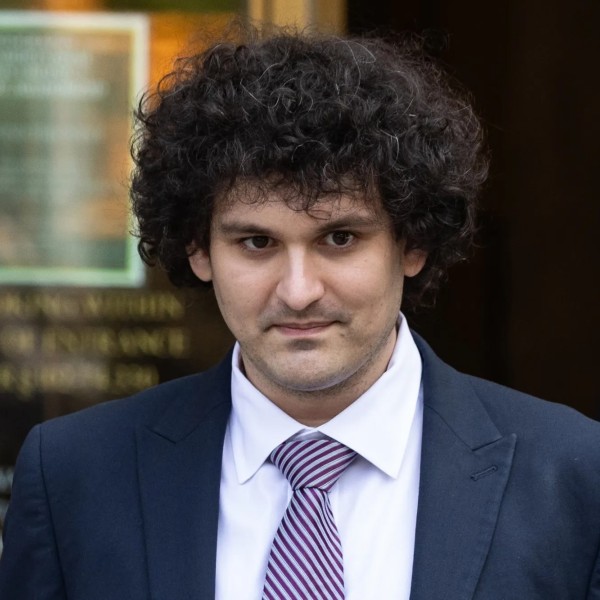
By Sanqing, Foresight News
Original title: In the past, the giants were unwilling to accept the appointment. SBF imprisoned a 35-page motion to file a “shady scene” against the trial
February 10, according to Inner City PressReportFTX founder Sam Bankman-Fried (SBF), who is currently serving a prison sentence in California's Terminal Island prison, is actively seeking reversal of the case, and the pro se (self-defense) retrial motion submitted on his behalf by his mother, Stanford University law professor Barbara H. Fried, has officially been submitted to court. The 35-page document cites Federal Rules of Criminal Procedure Rule 33 and newly discovered evidence to press for the reversal of his 2023 fraud conviction and his 25-year prison sentence in 2024.
Key arguments in the motion include: key witnesses (such as former Alameda Research Co-CEO Ryan Salame and former FTX.US executive Daniel Chapsky) failed to testify, leading to serious flaws in the trial; prosecutors suspected of concealing evidence; the entire process was influenced by political factors, and SBF's vague statement was a victim of the Biden administration's “targeted attack.”
The evidence and arguments submitted by SBF this time were not intended to directly prove his “innocence,” but rather adopted a legal strategy to challenge loopholes in the judicial process.
Core Allegation 1: “Tailored” Witnesses and Judicial Kidnapping
The motion accuses the prosecution of counteracting the core circle and “silencing” witnesses in their favor through threats and inducements.
Examples include the absence of former Alameda Research Co-CEO Ryan Salame. The motion cites Salame's public statements after August 2024 (including an interview with Tucker Carlson) as newly discovered evidence that the prosecution threatened to prosecute Salame's partner Michelle Bond in order to prevent Salame from appearing in court to prove SBF's innocence.
As for Nishad Singh, the former engineering director who testified against SBF, the motion revealed that during pre-trial interviews, when Singh's initial statement did not meet the prosecution's expectations, the prosecutor angrily “knocked on the table” and criticized Singh's memory for being “untrustworthy.”
SBF believes it was this high-pressure intimidation that forced Singh to change his testimony later. The motion formally requested the court to order the prosecution to hand over the relevant interview notes to prove that the prosecution concealed this coercive process.
Core allegation 2: Disappearing “liabilities” and the mystery of fiat@ftx.com
SBF submitted an affidavit from Daniel Chapsky, the former head of data science at FTX, to refute the misappropriation allegations at the data level.
The motion stated that the prosecution had used the huge negative balance in the fiat@ftx.com account as irrefutable evidence that SBF misappropriated clients' funds. However, in a statement, Chapsky countered that the prosecution's explanation was a “fundamental misstatement.”
He pointed out that the account's negative balance corresponds to Alameda's cash and assets held off-chain. The prosecution only showed the jury a negative “borrower” number, but deliberately ignored the corresponding “lender” assets, thereby creating the illusion of a multi-billion dollar deficit out of thin air.
Chapsky's data analysis further revealed that if properly accounted for most of 2022, Alameda's account on FTX actually maintained a positive balance of around $2 billion. The prosecution and expert witness Peter Easton misled the jury by deliberately showing only certain negative balance sub-accounts.
Core allegation 3: Bankrupt law firm S&C's “asset erasure”
SBF also targeted Sullivan & Cromwell (S&C), the law firm responsible for FTX's bankruptcy and restructuring. He alleges that S&C artificially created an “insolvent debt” in order to match the prosecution's conviction logic and earn sky-high lawyers' fees.
The motion stated that FTX had a venture capital portfolio worth up to $8.4 billion at the time of bankruptcy (including an investment in Claude AI development company Anthropic). However, in the early stages of bankruptcy, in order to close the funding gap, S&C and the prosecution artificially recorded these slightly less liquid but hugely valuable assets as zero or extremely low value.
SBF emphasized that the bankruptcy team finally confirmed that the client would receive 119 to 143 percent cash payments, which itself proved that “FTX was solvent and no money was lost” during the trial was true.
Core allegation 4: Political Targets and Judicial Bias
In the end, SBF played political cards and program cards. He hinted that he was a victim of the Biden administration's “political war.” As a former major financier of the Democratic Party, he was quickly cut and severely punished after the incident in order to calm public anger.
Furthermore, in view of the fact that presiding judge Lewis A. Kaplan repeatedly rejected the defense's evidence that “FTX is solvent” in the previous trial, the SBF not only requested retrial, but also specifically requested Judge Kaplan's recusal in the motion, on the grounds that the judge showed extreme bias and was unable to decide the case fairly.
Is this breakout battle destined to be a battle of trapped beasts?
The Rule 33 motion requires that evidence must be “newly discovered” after trial, and that the defense cannot obtain it through “due diligence” during the trial. The judge likely decided that Salame and Chapsky were known potential witnesses during the trial, and that the defense's failure to call them was a strategic choice or objective difficulty rather than “new evidence.”
Also, FTX's high payout rate (even over 100%) doesn't disprove that SBF didn't misappropriate customer funds at the time. As long as the client's funds are used without authorization (regardless of the purpose), the crime is immediately established. Whether subsequent assets have been added is generally regarded as irrelevant in legal convictions and may only affect the sentence.
With regard to charges of coercion, judges usually tend to accept the prosecution's procedural compliance statement unless there is clear audio or written evidence of direct coercion by the prosecution (such as a specific recording of “hitting the table”).
Furthermore, requiring a senior federal judge to avoid himself due to “prejudice” is rarely successful in judicial practice unless there is extremely clear evidence of a conflict of interest. Otherwise, such accusations would even further irritate the judicial system and be viewed as contempt for the courts.
Twitter:https://twitter.com/BitpushNewsCN
Compare the TG exchange group:https://t.me/BitPushCommunity
Compare TG subscriptions:https://t.me/bitpush
