OpenSea · 1829
Black eats black? Fake DeFi actually snatched out North Korea's Lazarus real hacker

Black eats black? Fake DeFi actually snatched out North Korea's Lazarus real hacker

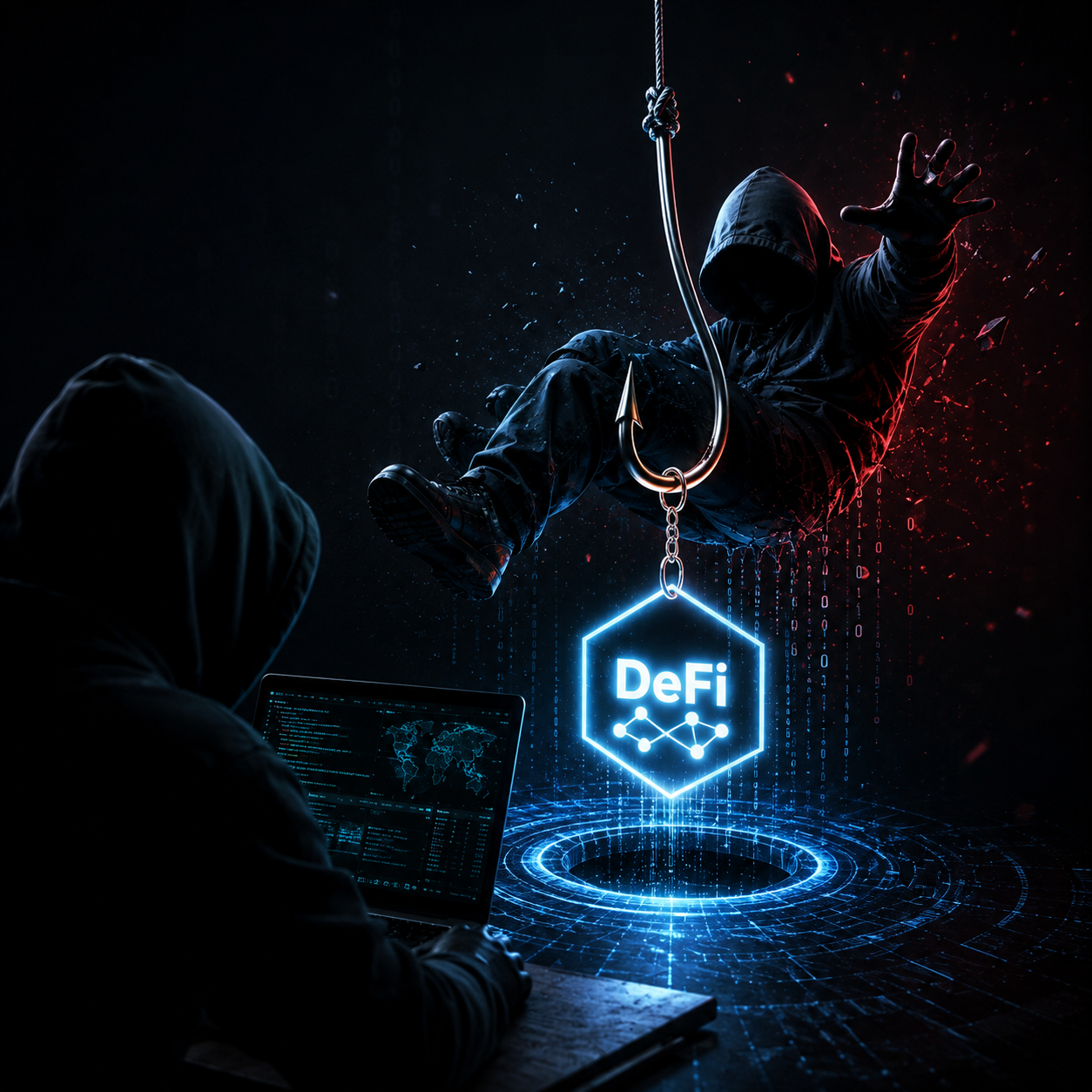
Source: Security Company ANY.RUN Compiled by: Daily Planet Daily Original title: Fishing Show of the Year, Fake DeFi Picks Out North Korea's Lazarus, Real Madrid Fans, Real Madrid Fans. With a mathematical background, they only use AI to write code. Core point of view: By setting up a fake DeFi company, the security agency successfully infiltrated the “Famous Chollima” hacker group under North Korea's Lazarus Group, revealed its complete process of using false identities, AI tools, and remote collaboration to infiltrate Western companies, and revealed its evolving toolset and infrastructure. Key element: The researchers disguised themselves as recruiters and recruited three North Korean agents within a few months to record their operation behavior, tool usage, and collaboration patterns in real time through the ANY.RUN sandbox environment. Agents used forged driver's licenses, stolen social security numbers, and mule accounts to complete the onboarding process. Some of these documents were processed by Google Gemini and had SynthID watermarks, revealing signs of forgery. Attackers rely on AI tools such as ChatGPT and Google Gemini to encode, translate, and modify files, and use AstrillVPN, remote desktop software, and dedicated servers to covertly access corporate environments. The three agents showed insufficient skills during development, frequently searched for basic issues, and exposed more proxy server and infrastructure information induced by selective network outages and captcha. The investigation found that Famous Chollima aims to lurk within the enterprise for a long time and legally obtain access to code, systems, and intellectual property rights, and is not limited to short-term attacks, and the threat persists significantly. Crypto friends who are often phished have probably heard of the North Korean hacker group Lazarus Group. Its well-known “campaigns” include, but are not limited to: Bybit ($1.5 billion) theft, Ronin Network/Axie Infinity Bridge attack ($6.2 billion), DMM Bitcoin/Ginco related attack ($308 million), Harmony Horizon Bridge attack ($100 million), and Atomic Wallet attacks ($100 million), etc. And the key to the success of these attacks is social engineering — hackers usually disguise themselves as normal job applicants, lurk at crypto companies for years, and wait for the right time. Recently, security agency ANY.RUN joined forces with BCA LTD (a company dedicated to threat intelligence and hunting) and NorthScan (a threat intelligence program to uncover the infiltration of North Korean IT workers) to effectively crack down on North Korean hacker agents. The researchers created a fake DeFi startup and successfully recruited “Famous Chollima” agents under North Korea's Lazarus Group who specialize in human infiltration, to gain an inside perspective on the actions of North Korea's IT workers. The ANY.RUN sandbox environment shows the agent's behavior patterns in real time, revealing their evolving toolsets, remote access workflows, AI tool usage, and supporting infrastructure. This survey went beyond the simple recruitment process and showed in depth how these agents collaborated, obtained, and used company resources after joining the company. The findings suggest that the North Korean IT worker program not only poses a recruitment risk; once agents sneak inside the organization, they can legally obtain access to code, systems, intellectual property, and critical business processes. The following is a report co-authored by the three parties, compiled by Daily Planet Daily. ——————Introduction In December of last year, we fully recorded the infiltration cycle of “Famous Chollima” for the first time. From recruiting collaborators to help them join Western companies, to falsifying documents, shipping laptops to intermediaries, and even using AI tools to assist and translate in real time during interviews, everything is under control. In that survey, we pretended to be a middleman willing to interview them and lend them a laptop in exchange for a percentage of their salary. The point is that those laptops are actually ANY.RUN sandbox environments that record every click and every step they take. This provided us with massive metrics, hours of computer operation videos, and face-to-face contact images, making an unprecedented survey and making headlines in many media. (“Famous Chollima...
1d agoOdaily星球日报#wallet security #hacks
From 4 models to more than 500, OpenRouter was acquired after growing 30,000 times in three years

From 4 models to more than 500, OpenRouter was acquired after growing 30,000 times in three years

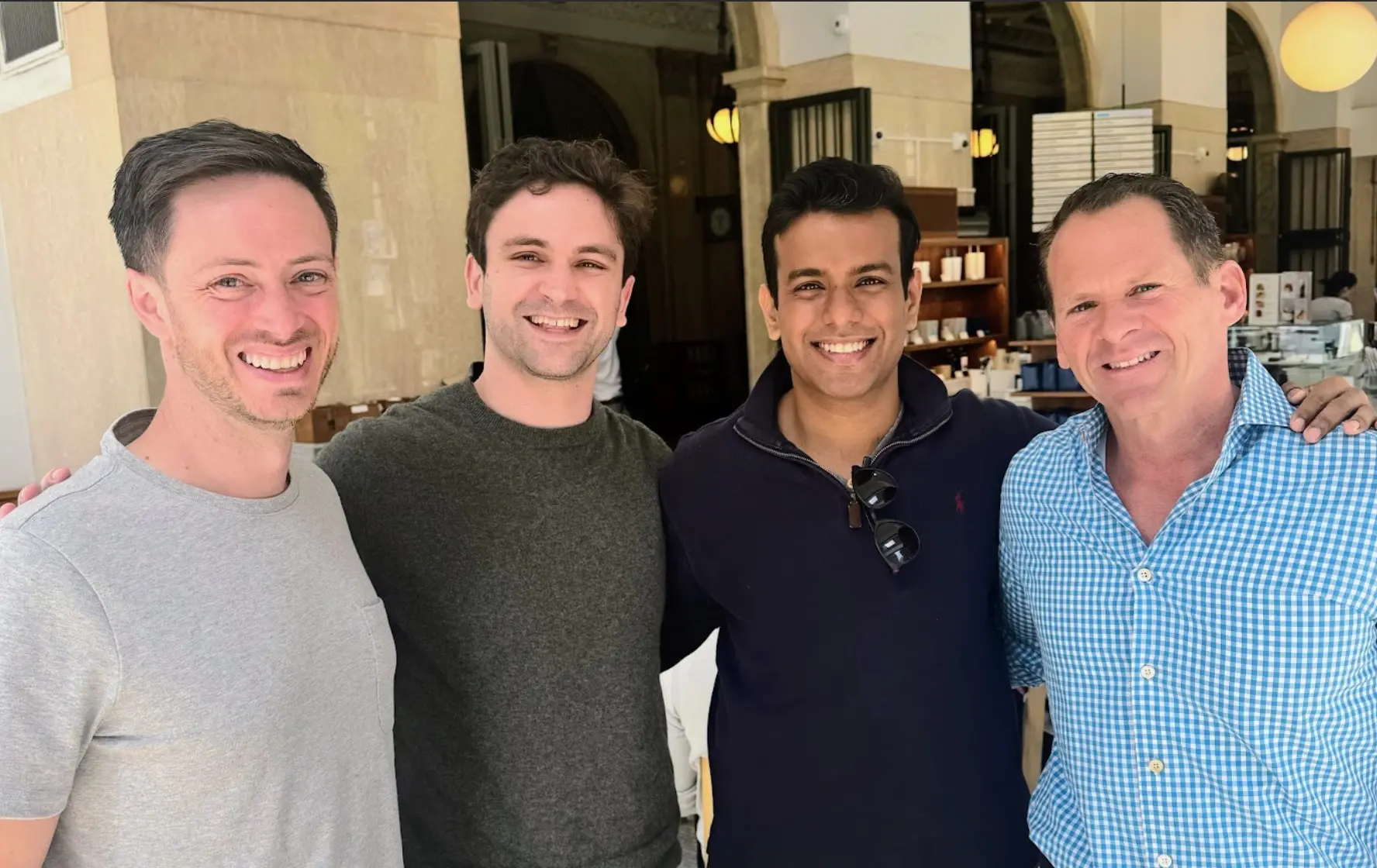
Author: Menlo Ventures Compiled by: Jia Huan, ChainCatcher Original title: Early Investors Behind OpenRouter Revisited Investments Today, OpenRouter announced that it has reached an acquisition agreement with Stripe. OpenRouter was launched in 2023, just over three years ago. OpenRouter was initially launched as a “unified interface for LLM” and only supported 4 models at the time: GPT-3.5, GPT-4, GPT NeoXt and Cohere xlarge by Together. When the company was founded, it was based on two core judgments: first, AI will eventually be used on a large scale and penetrate various fields; second, there will be many different models on the market, each with trade-offs, and users will choose different models according to different needs. As it turned out, both judgments far exceeded expectations at the time. Since its launch, the number of tokens processed by the OpenRouter platform has increased by about 30,000 times. Currently, it has exceeded 4,500 trillion tokens on an annualized basis, and the scale of expenditure on the platform has reached a very impressive level. Meanwhile, the number of models supported by OpenRouter has grown from the original 4 to over 500. Figure: OpenRouter Token usage growth from inception to acquisition Menlo Ventures is fortunate to be part of this journey. In March 2025, we participated in OpenRouter's seed funding round through the Anthology Fund set up in partnership with Anthropic. OpenRouter founder and CEO Alex Atallah previously founded OpenSea, which was once valued at $13.3 billion. His co-founders include tech guru Louis Vichy, whom he met on Discord, and highly executive COO Chris Clark. In May 2025, we led OpenRouter's Series A funding round, with Matt joining the company's board of directors, and Deedy as a board observer. Earlier this year, after seeing OpenRouter's rapid growth in customer numbers and revenue, and the company built a product route with stronger “model intelligence” capabilities around model selection and evaluation, we continued to step up Series B financing. In the tech industry, it often takes years for an idea to change from the judgment of a few people to industry consensus. And just a few weeks ago, this happened: from Ramp to Cursor, more than 10 companies launched their own model routing products almost simultaneously. In just a few years, OpenRouter has become one of the most important companies in the AI era. Picture: Group photo when deciding to lead OpenRouter Round A At first glance, Stripe doesn't seem like the most natural buyer of OpenRouter, but the two companies are actually strikingly similar. Both use an API that can be directly accessed to simplify the otherwise complicated transaction process and charge a certain percentage of the fee. It's just that OpenRouter deals with AI models. As Stripe has always said, the two companies combined and are still doing the same thing: increasing “internet GDP.” In fact, over a year ago, OpenRouter called itself the “Stripe of LLM.” OpenRouter's core value OpenRouter was one of the first companies Deedy came into contact with after joining Menlo in 2024. This company is almost right at the heart of our AI infrastructure investment logic. Menlo presented two judgments necessary to invest in OpenRouter in the 2024 Enterprise AI Report: AI spending will increase dramatically, and developers will not only use one model, but multiple models at the same time. Figure: Menlo's initial contact email to OpenRouter As someone who can also write code and actually use these models, we realized long ago that there is a very clear difference in cost, latency, and performance between the different models...

2d agoburnking#OpenRouter

Robinhood Chain's daily active users surged to 5.2 million, with Uniswap, stock tokens, and the NFT ecosystem as the main driving force

Comparing news, the Ethereum Layer 2 network Robinhood Chain recently showed abnormal growth in user data. Daily active addresses soared from the previous normal level of about 280,000 to 1.9 million on August 11, and further surpassed 5.2 million on August 12, drawing market attention. Judging from on-chain activity, this round of growth is mainly driven by three major applications: Uniswap (trading, liquidity pool, and Poolstrade launcher), StonKPit (stock token trading), and OpenSea (NFT trading). Among them, Uniswap contributed a relatively high level of activity. Robinhood Chain was initially connected to Uniswap as the main AMM liquidity infrastructure, while supporting OpenSea to trade stock tokens, NFTs, and community tokens. Robinhood's core strength is its native user portal. Through Robinhood Wallet integration, low threshold experience, and potential incentive mechanisms, the platform can quickly transform traditional financial users into on-chain users. Once combined with meme craze, new product launches, or ecological subsidies, it is easy to form short-term explosive growth. However, on-chain daily activity data also needs to be viewed with caution. A short-term surge of this scale may usually include a large number of robot addresses, mobile accounts, incentives for farming users, and low-quality interactive addresses. The actual number of effective users may be significantly lower than the statistical value. In the future, the market will focus on observing the continued growth of Robinhood Chain users. If activity is mainly driven by meme speculation, short-term activity, and gas subsidies, user data may decline significantly as popularity subsides.

8d ago

Meme coin STONKBROKER's market capitalization broke through $80 million and reached a new high, rising more than 43% in 24 hours

Comparative news, according to GMGN market data, the market value of the Robinhood chain meme coin STONKBROKER once surpassed 80 million US dollars and reached a record high. Now it has fallen back to 75 million US dollars. The 24-hour increase is over 43%, and the 24-hour trading volume has reached 5.7 million US dollars. Robinhood ecosystem project STONKBROKER recently launched a number of major updates, including a launchpad responsible for incubating ecosystem projects, and the launch of Broker Box, an FWA-like function that encapsulates stock tokens in a drawing card. The update received attention from KOLs and the community, including Ansem, and propelled the market capitalization to new highs. Furthermore, according to OpenSea market data, the NFT project StonkBrokers floor price rose to 9.75 ETH, up more than 28.8% in 24 hours, and the cumulative trading volume reached 1,763 ETH. The project has a fixed supply of 4,444 pixel-style stock broker PFP NFTs (ERC-721). Each NFT binds an ERC-6551 token to a wallet, and tokenized stocks (such as TSLA, AMZN, NVDA, AAPL, etc.) are pre-stored when minting, and can continue to receive rewards. Users are reminded that related projects are still highly uncertain, prices fluctuate greatly, and users need to be careful when investing. This article is sponsored by GENG, Build Your Fortune on GENG (https://geng.one)

14d agoburnking

NFT project StonkBrokers floor price rises to 9.225 ETH, up more than 20% in 24 hours

Comparatively, according to OpenSea market data, the NFT project StonkBrokers floor price rose to 9.225 ETH, up more than 20% in 24 hours, and the cumulative trading volume reached 1,734 ETH. The project has a fixed supply of 4,444 pixel-style stock broker PFP NFTs (ERC-721). Each NFT is tied to an ERC-6551 Token-Bound Account (token-bound wallet), and tokenized stocks (such as TSLA, AMZN, NVDA, AAPL, etc.) are pre-stored when minting, and can continue to receive rewards. With Anvil NFT AMM, you can exchange a fixed amount of 666,666 meme coins STONKBROKER (plus a small amount of ETH processing fee) from the protocol vault (Vault); in turn, you can sell the NFTs back for the same amount of tokens. Holders need to spend STONKBROKER to activate the NFT. The higher the activation level, the greater the weight of receiving stock token rewards. Part of the activation fee will be destroyed, and part will enter into the agreement. Fee Flywheel: Approximately 70% of Anvil AMM transaction fees are exchanged for real stock tokens and airdropped into an activated NFT-bound wallet. Users are reminded that related projects are still highly uncertain, prices fluctuate greatly, and users need to be careful when investing.

14d ago

OpenSea CMO Adam Hollander announced his departure, saying it was a personal decision

According to Twitter news, OpenSea's chief marketing officer Adam Hollander announced in an article on the X platform that he will leave his job this week after a year and a half in office. He said the decision was “more for personal reasons than professional reasons,” and emphasized that he is confident in the company's direction, products, and team. He is not leaving because of other job opportunities, and plans to focus on health, family, and personal life in the future. OpenSea co-founder and CEO Devin Finzer replied, “It's a pleasure to have worked side by side with you,” and said the team will continue to communicate with the community in an open manner. Hollander joined OpenSea in early 2025.

23d ago
How can crypto VCs find their next opportunity? Haseeb says “some things never come back”

How can crypto VCs find their next opportunity? Haseeb says “some things never come back”

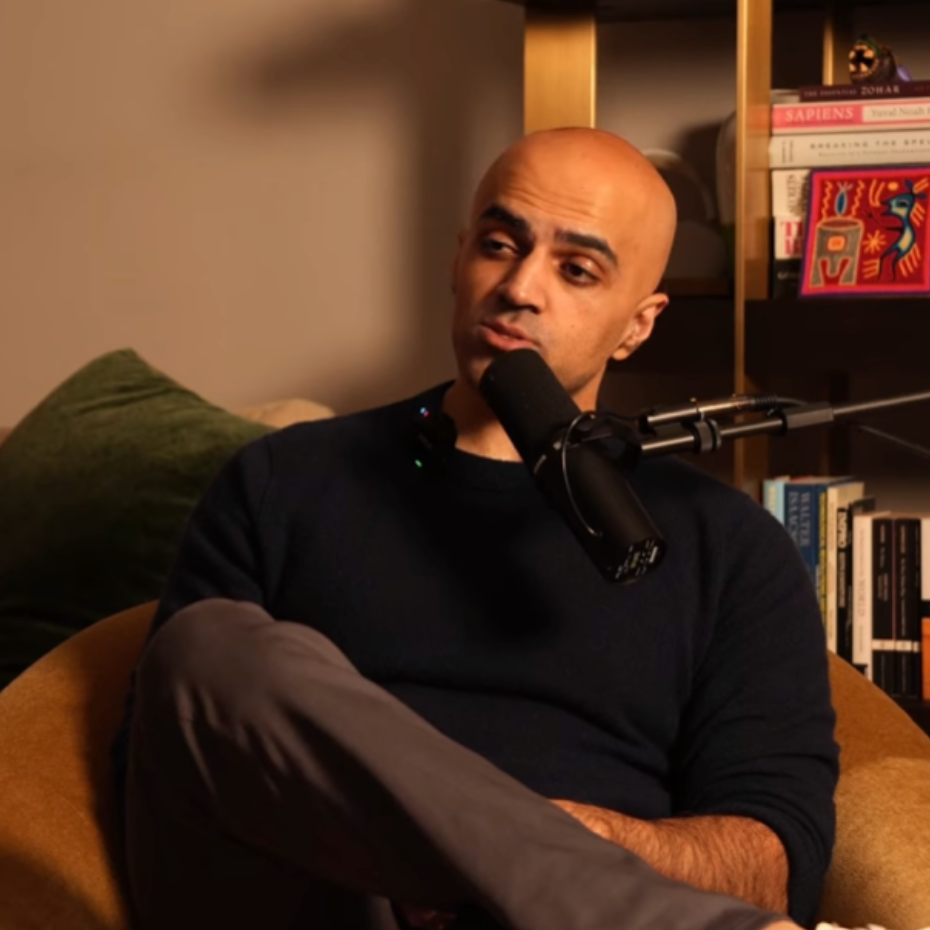
Author: Wu Says Blockchain Original title: Haseeb on Crypto VC: Sorry, Some Things Will Never Come Back In an interview with MAD Society on July 15, 2026, Dragonfly managing partner Haseeb Qureshi discussed crypto venture capital, founder judgments, and long-term trends in the industry. He believes that the key to venture capital is to seize a few non-consensus opportunities. Excellent founders should have outstanding “peak ability,” but lack of integrity and inconsistent words and actions are clear danger signs. Haseeb also said that it is difficult to form long-term enterprises in the direction of some structured products and the tokenization of individual assets, while the DeFi, stablecoin, payment and prediction markets will continue to exist; in the long run, cryptographic technology will eventually be incorporated into various financial and technology products, and the “crypto company” label may gradually disappear. The audio transcription was done by GPT, there may be errors, please watch the original video at YT. Poker and venture capital: How to establish judgment discipline in a long feedback cycle Haseeb Qureshi: There really isn't much compatibility between poker and venture capital. Poker is very similar to trading because they all have very fast feedback loops that can be iterated very closely and quickly. As soon as you play a hand, you'll know whether you won or lost, and whether your decision was right. But in venture capital, the feedback cycle is very slow. If you invest in a founder, it may take many years before you know if your original judgment was correct. In the first year, you may see some initial signs, such as the company is growing and seems to be starting to gain some market recognition. Even if a company has completed Series A or even Series B financing, it can still suddenly go awry. It may have looked like it was going well for several years, but the founders had a fatal flaw that eventually led them to lose the ball in their final offense in the final game of the season. So the reality is, it's hard to quickly judge whether you're doing a good enough job as a venture capitalist. Many funds raised funds by relying on the early book valuation of their portfolios, but it was only discovered in the end that there were no real winners in the entire portfolio. Let's say you invested in Axie Infinity or OpenSea early on, and you probably thought, “Wow, I'm an amazing investor, I did such a great job.” There are also several funds that have invested in FTX in the early stages. At the time, people would say, “My God, this guy is simply the son of choice in the investment world. Can you believe he participated in the FTX seed round?” But just a few years later, the situation became: “OK, this fund doesn't seem to be anything special now.” Because its brightest star project has already exploded. Venture capital is unique in this regard. This means, first, you must take the initiative to establish a feedback mechanism for yourself, rather than expect the world to give you direct feedback. Because as a venture capitalist, you have to keep learning and improving, but it often takes many years to know whether an investment is successful or not. Therefore, feedback must come more from your judgments about your own performance rather than from external results. For a lot of people, this is very difficult. Another difference between venture capital and poker is that venture capital is a team sport, while poker is a single player game. Of course you're playing cards with other people, but essentially you're facing the entire table alone. That's not the case with venture capital. You can only be successful if the founder you invest in is successful; you can only really win if your fund is successful and the projects carried out by the other partners in the fund are also successful. As a result, venture capital relies heavily on collaboration and interpersonal relationships. But if you're a poker player, you hardly need to care about anyone else in the world. As long as you sit at the table, play properly, and continue to make a profit, you can still be a successful poker player even if you don't have any friends. This is also a very different point between the two. Most really good venture capitalists are really good at dealing with relationships. I don't think I'm particularly good at this, but I'm definitely a lot better than the past and better at building relationships than most traders I know. Most traders don't need that. Just like poker players, they don't need to be friendly, be good at handling relationships, and don't need to have a large network of people. Therefore, the ability to really help you make good venture investments in poker is mainly the ability to think clearly about risk and the ability to control emotions well. I found that a lot of venture capitalists aren't really good at this. They can be very emotional, and it's hard to handle conflict. These two aspects are just right...

26d agoburnking

Forma: Forma Chain will be shut down, NFTs will migrate to Ethereum L1

Comparing news, Forma announced on the X platform that after careful consideration, it has decided to shut down Forma Chain because it is no longer sustainable to operate the chain. As a transition plan, Modularium and Forma NFTs will migrate to Ethereum L1 to ensure the permanent survival of the art and market. After the migration, NFTs are still accessible and can be traded on OpenSea or other Ethereum marketplaces, and Modularium will continue to serve as a display platform for these collectibles. The team strongly advises users to withdraw funds via the Forma Bridge. Any funds not withdrawn in a timely manner will be manually migrated to an EVM compatible chain to be announced later. The team emphasized that user funds and NFTs are safe, and specific timelines and migration steps will be announced later.

27d ago
Revenue is 50 times different from similar valuations. Why does Ansem say the buyback doesn't solve any problems?

Revenue is 50 times different from similar valuations. Why does Ansem say the buyback doesn't solve any problems?

Author: Shenchao TechFlow Original title: Ansem: Why do I think token buybacks don't solve any problems? In-depth guide: Ansem, a well-known Solana trader, wrote that the buyback mechanism itself does not create value; it is the “trust premium” between the team and community that determines the token valuation multiplier. He compared Hyperliquid (about $800 million in annualized revenue, about $65 billion in FDV) and pump.fun (about $4.4 billion in annualized revenue; FDV of only about $1.4 billion), pointing out that both are being repurchased on a large scale, but the valuation multiples are nearly 50 times different. One of the most enduring narratives of the crypto market is being challenged: when deal revenue is thrown into buybacks, token prices will rise. On July 16, well-known Solana trader Ansem (@blknoiz06) posted a long post on the X platform, making a counterintuitive assertion: the repurchase mechanism itself does not create value; what really determines the multiplier of token transactions is the “trust premium” between the team and the community. The post quickly garnered over 469,000 views, 3240 likes, and 509 retweets. Ansem selected the crypto industry's two highest-grossing protocols against each other. Hyperliquid's annualized revenue is about $800 million, and HYPE's FDV is about $65 billion; pump.fun's annual revenue is about $4.4 billion, HYPE's FDV is about $65 billion; pump.fun's annualized revenue is about $4.4 billion, and HYPE's FDV is about $65 billion; pump.fun's annual revenue is about $4.4 billion, and PUMP's FDV is only about $1.4 billion. Both teams are using most of their revenue for buybacks, but the valuation multiples are nearly 50 times different. Ansem concluded that the gap was not in the size of revenue, but rather in the trust built up in team behavior. Also spending money to buy back, why did Hyperliquid and pump.fun have drastically different valuations? Ansem dismantled the repurchase strategies of the two platforms in a post. Hyperliquid directly imported 97% to 99% of agreement fees into HYPE buyback and destruction. As of June 30, Hyperliquid's cumulative protocol revenue had surpassed $1 billion, and the annualized operating rate was close to US$840 million, according to CryptoNews data. The platform has destroyed more than 41 million HYPE tokens, worth more than $1 billion, and the circulating supply has been reduced by about 4.2%. As of press release, HYPE quotes are in the $60 to $67 range, and FDV is around $57 billion to $62 billion. pump.fun is just as aggressive. The platform's total revenue in 2025 was approximately US$970 million, and nearly 100% of the revenue was invested in PUMP buybacks, with a cumulative total of around US$213 million in repurchases. In April 2026, the team destroyed $370 million worth of PUMP tokens (about 36% of the circulating supply) in one go, and locked 50% of subsequent revenue into continuous destruction. However, PUMP is currently priced at around $0.0016, and FDV is around $1.4 to $1.7 billion. Pump.fun's annualized revenue is about half of Hyperliquid's, but FDV is less than 3% of Hyperliquid's. If the buyback mechanism is the core driving force for valuation, this multiple gap cannot be explained. Ansem's explanation: The trust premium is the core of pricing Ansem believes that the high valuation given to Hyperliquid by the market is rooted in the trust established by Jeff (founder of Hyperliquid) and his team. In his post, he cites a few points: Hyperliquid has never been overly committed; the team is only focused on producing products; user rewards are distributed strictly according to pre-determined on-chain metrics, and there is no secret box operation; the core user base has a very high trust rating for Jeff and the team. According to Ansem's original statement, this trust premium “is one of the main reasons why the token is trading so well.” Hyperliquid's historical behavior does support this judgment. The project is not accepting VC investment, and 70% of the total supply is distributed to the community; when launched in November 2024...

36d agoburnking#Ansem #Solana #token